

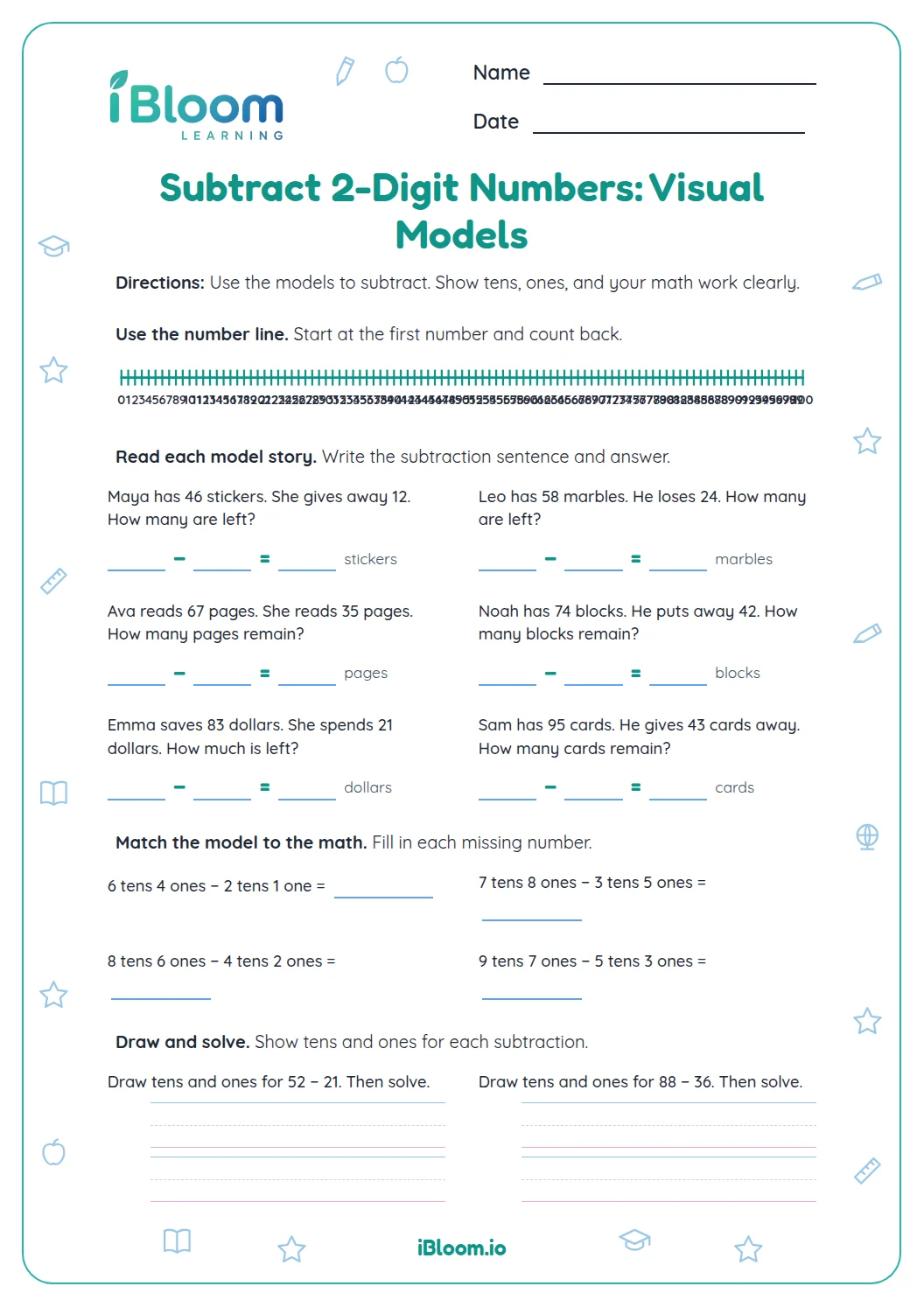
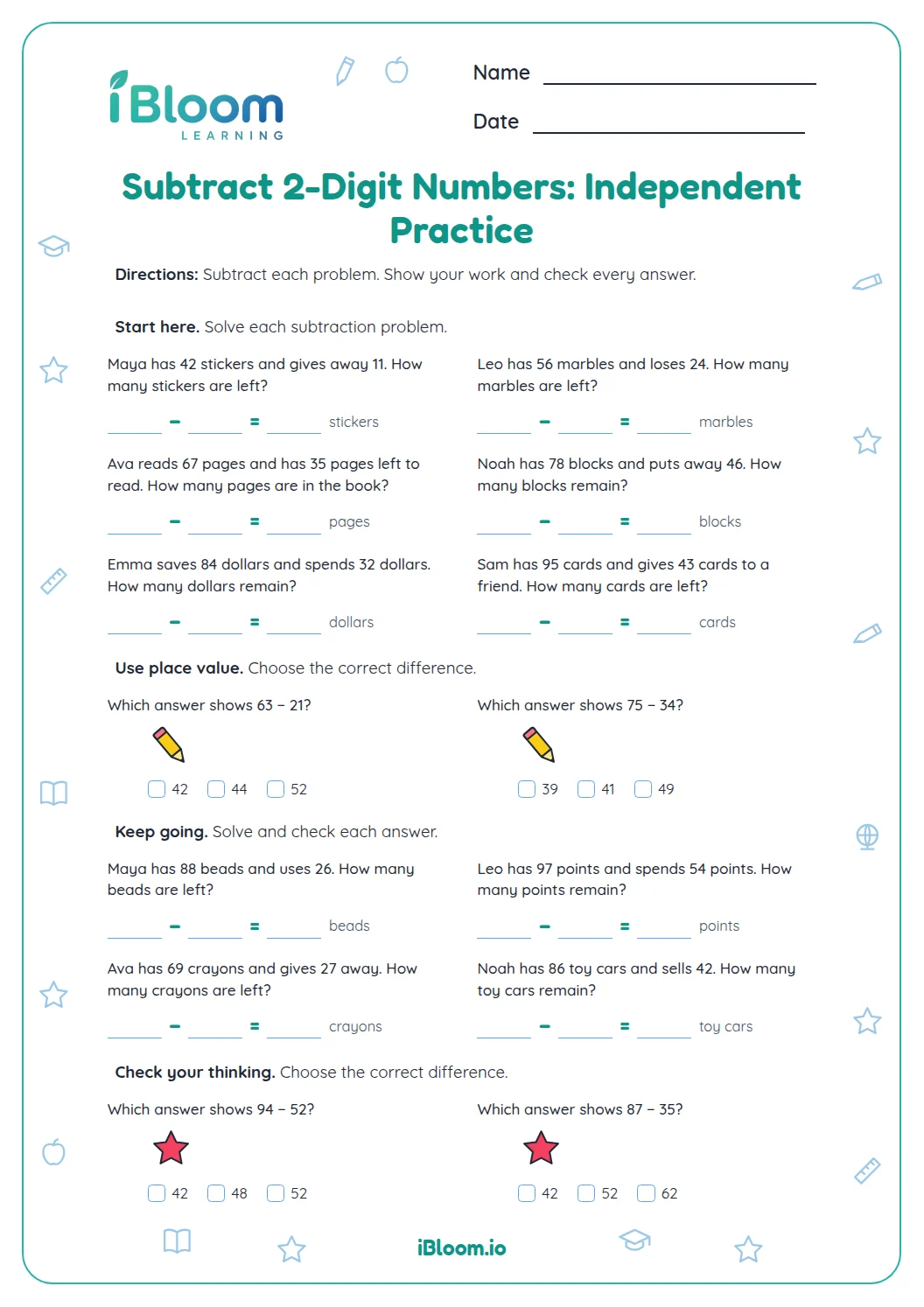
About this worksheet
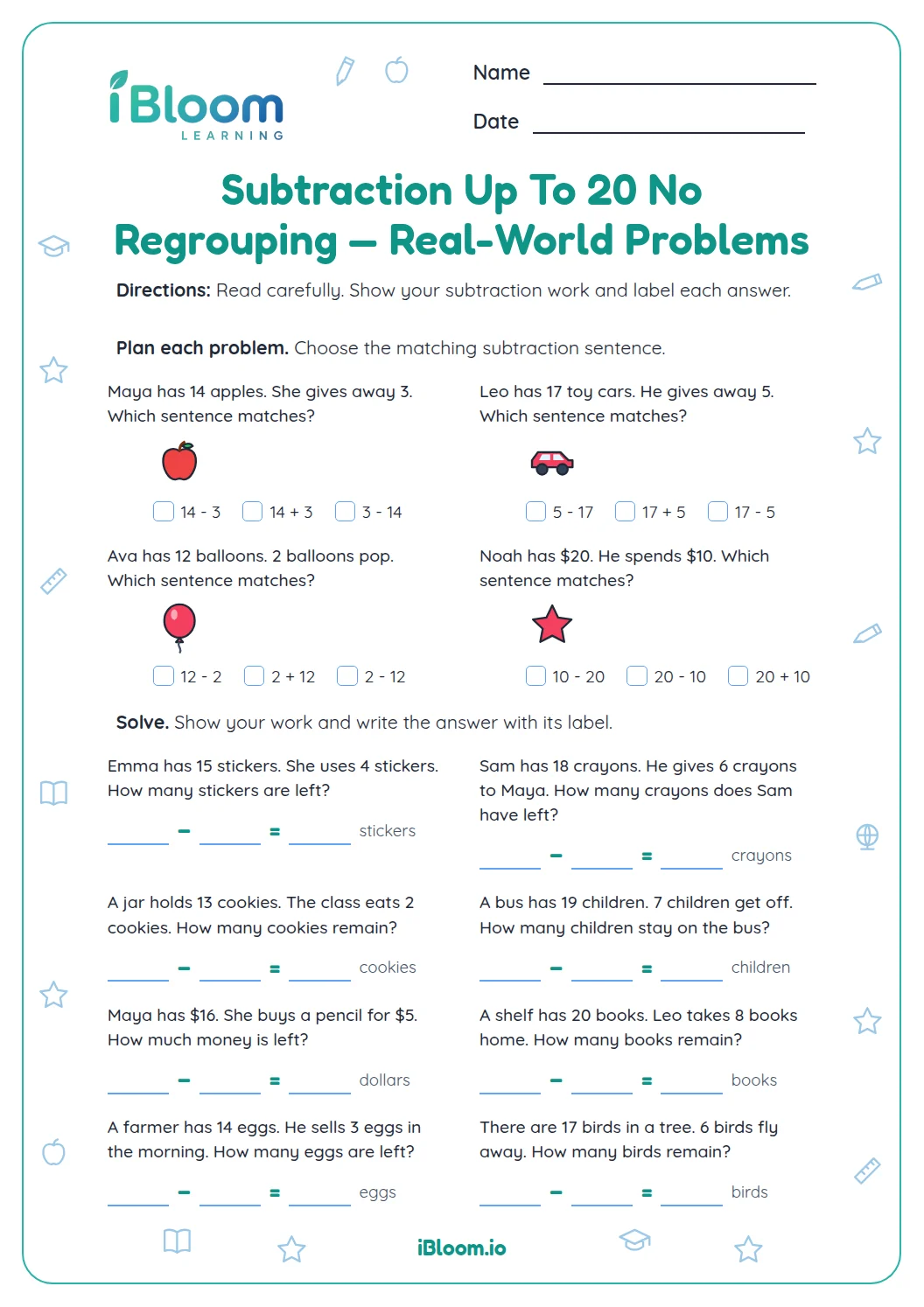
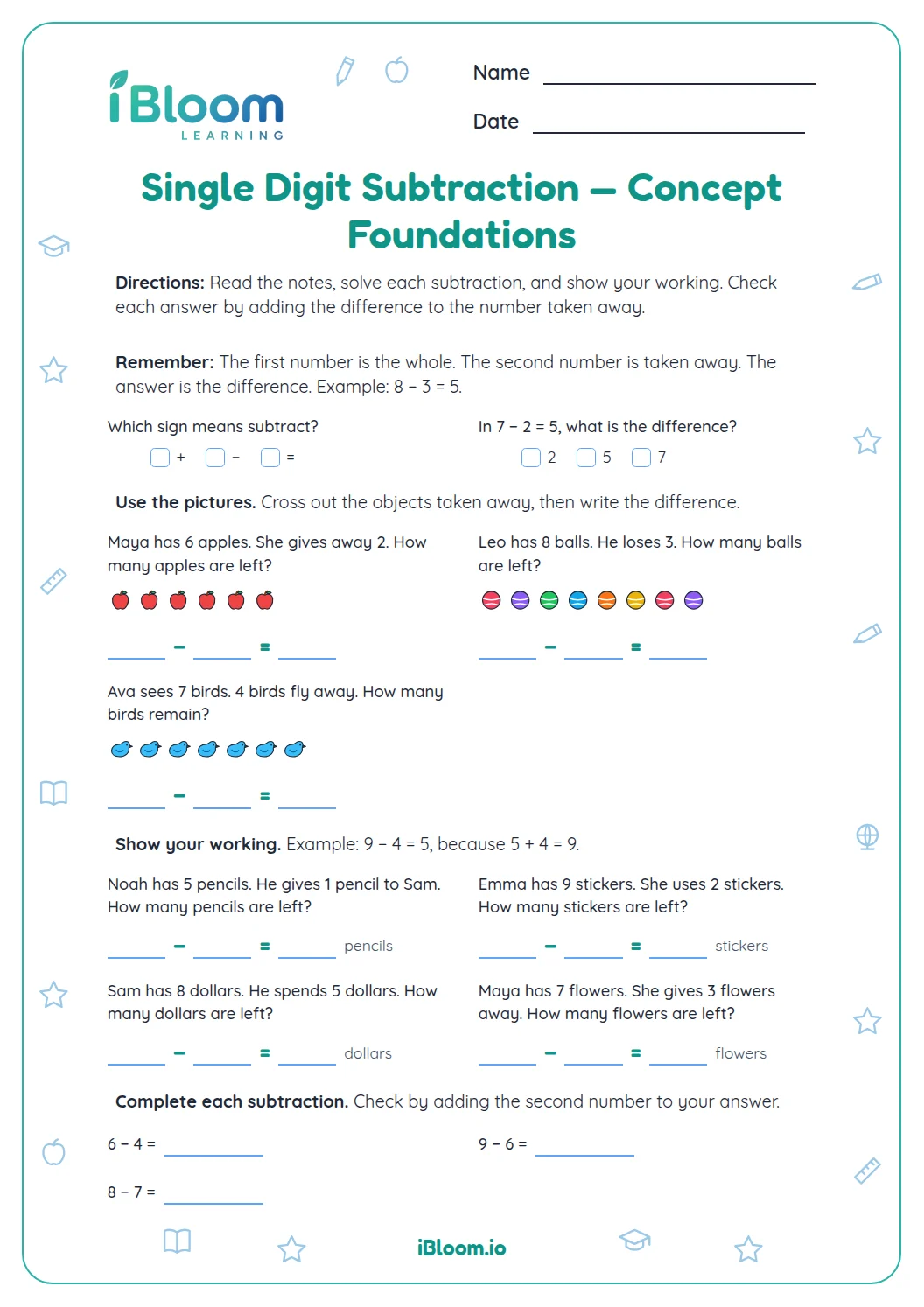
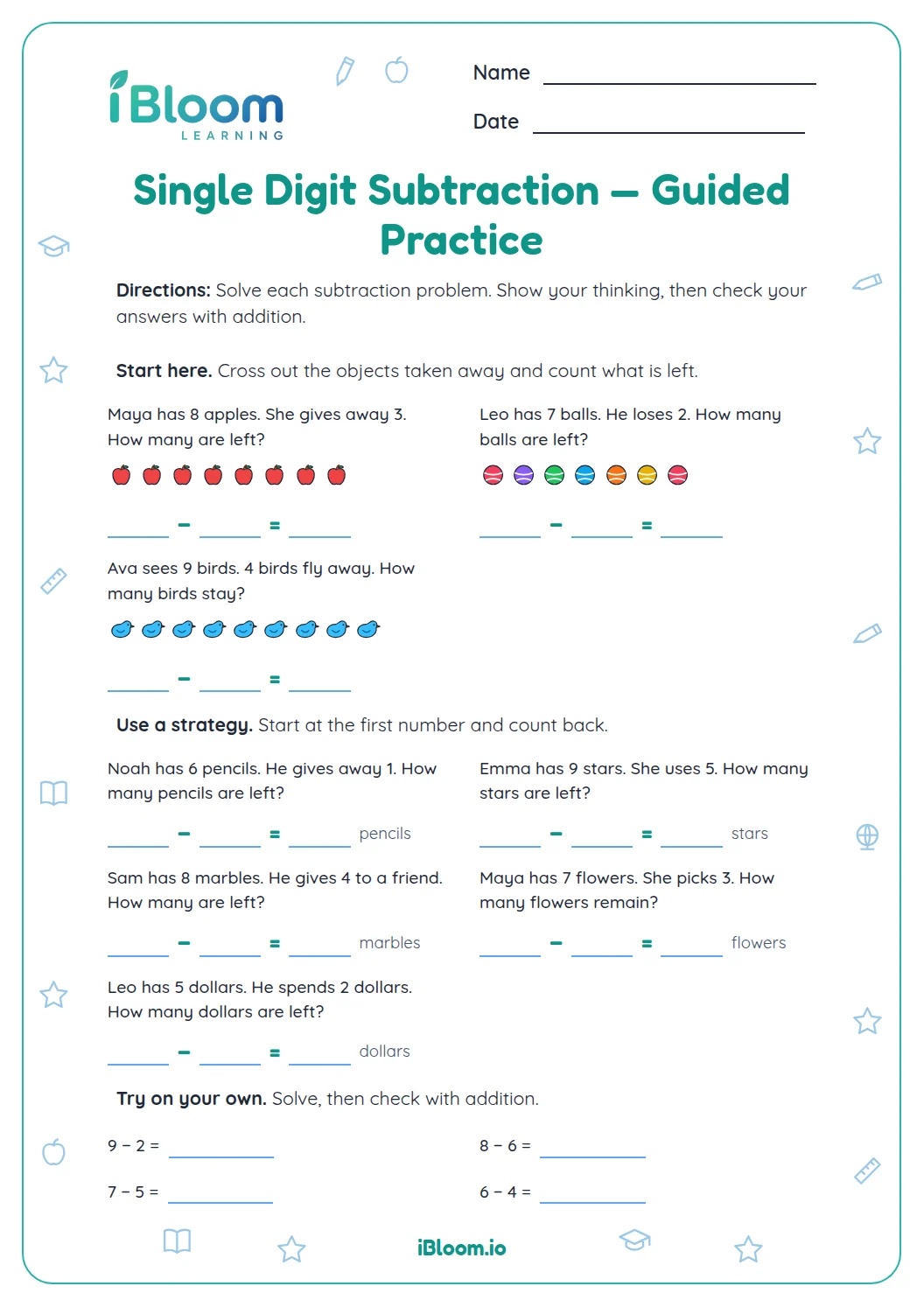
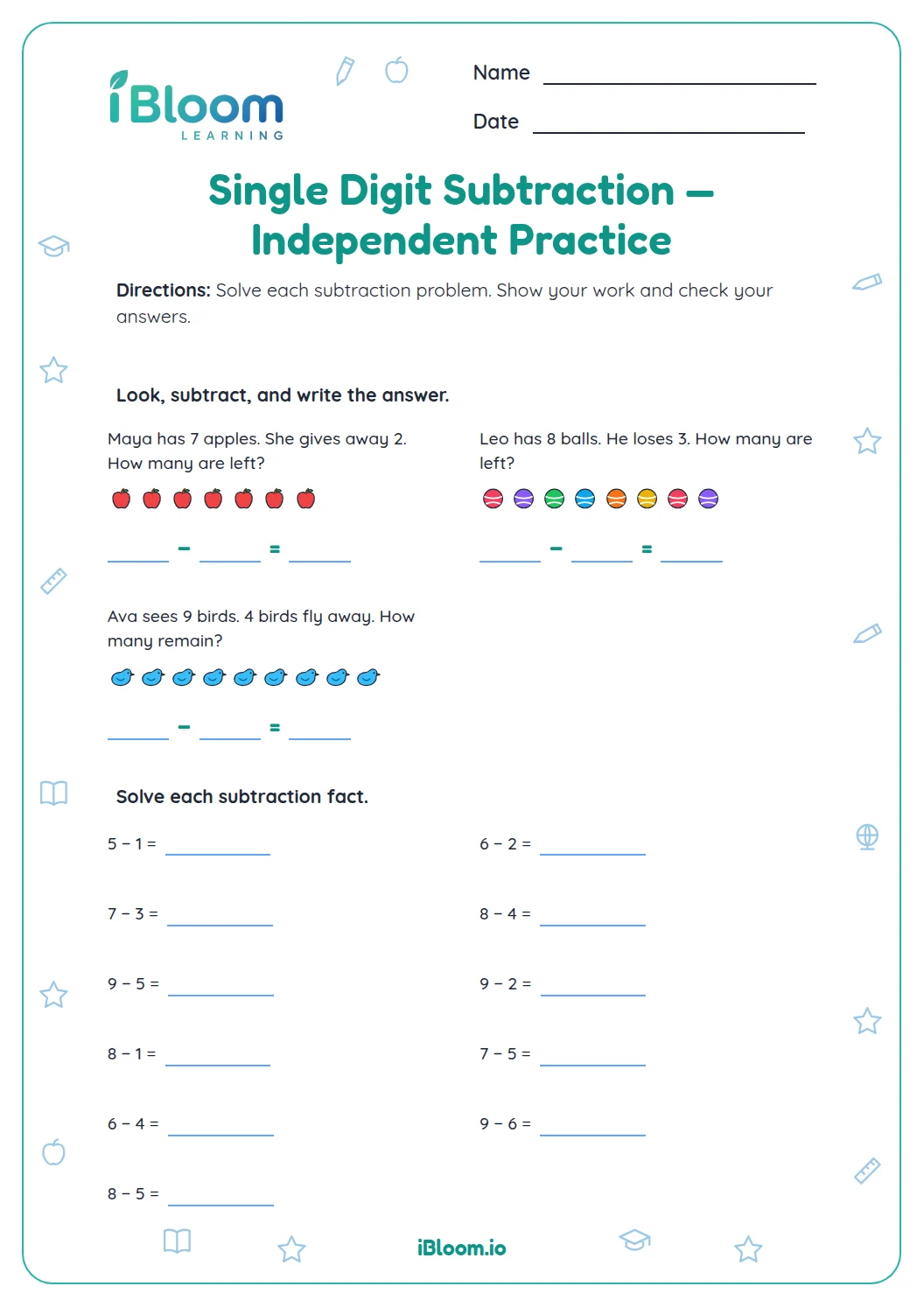
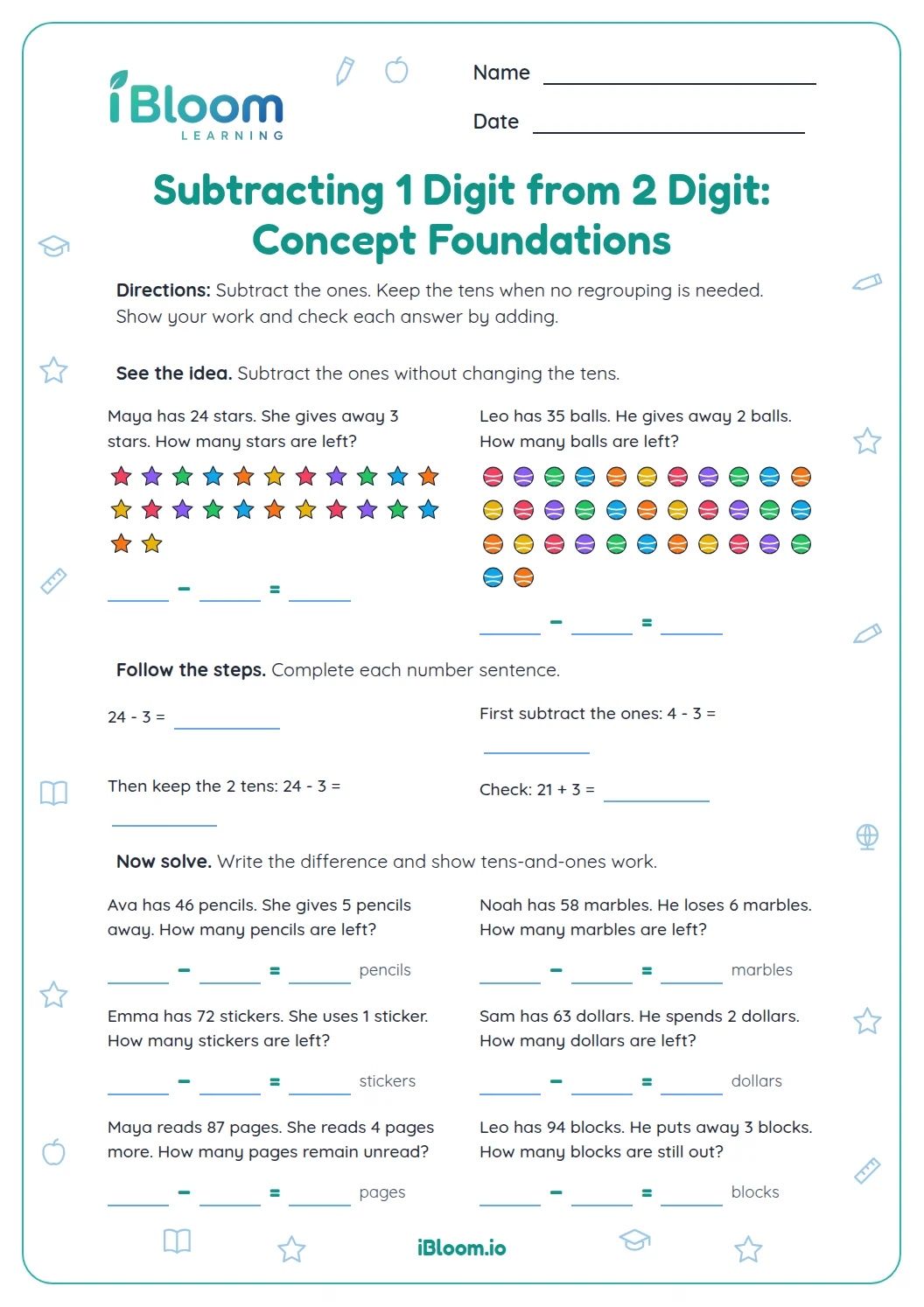
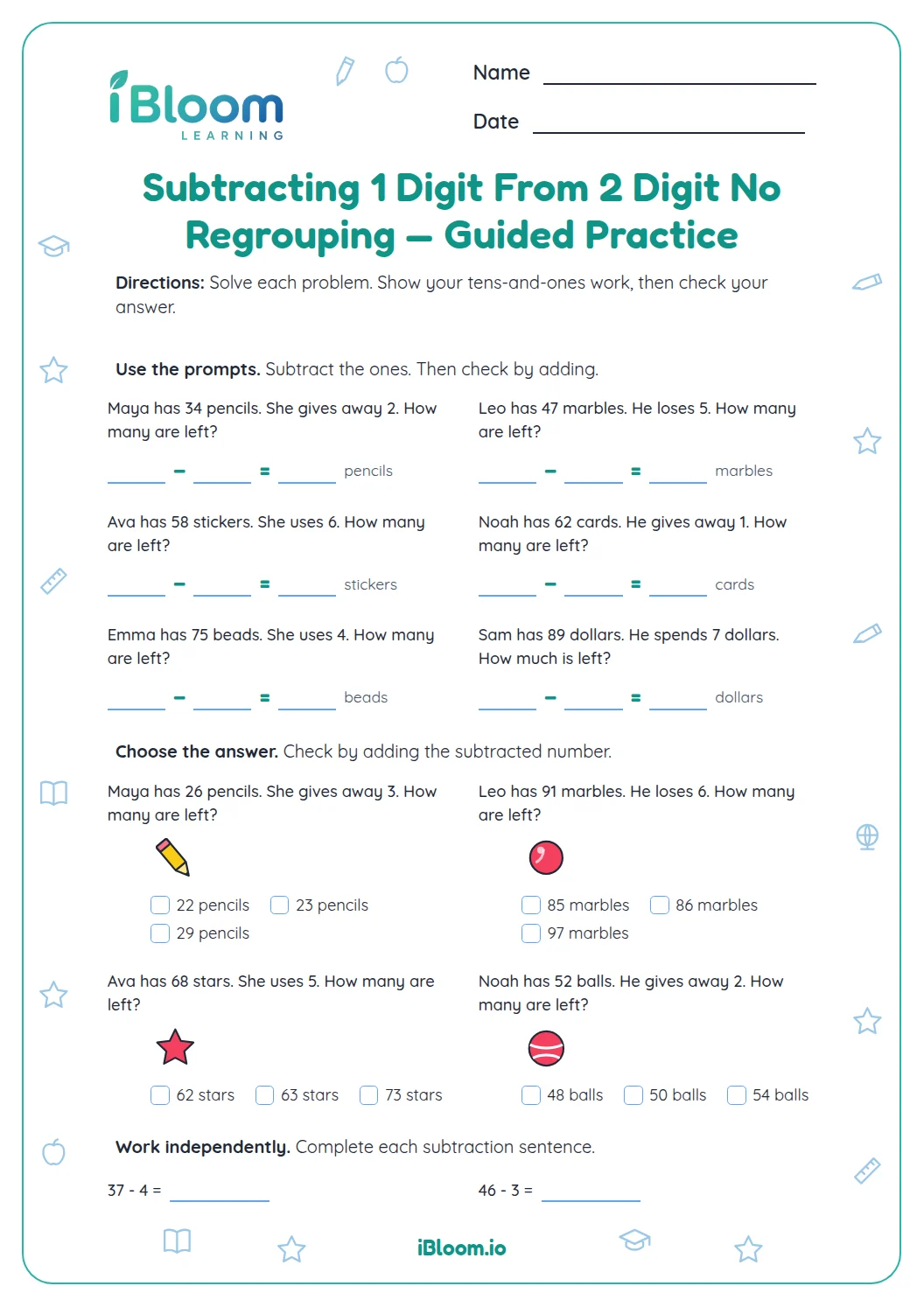
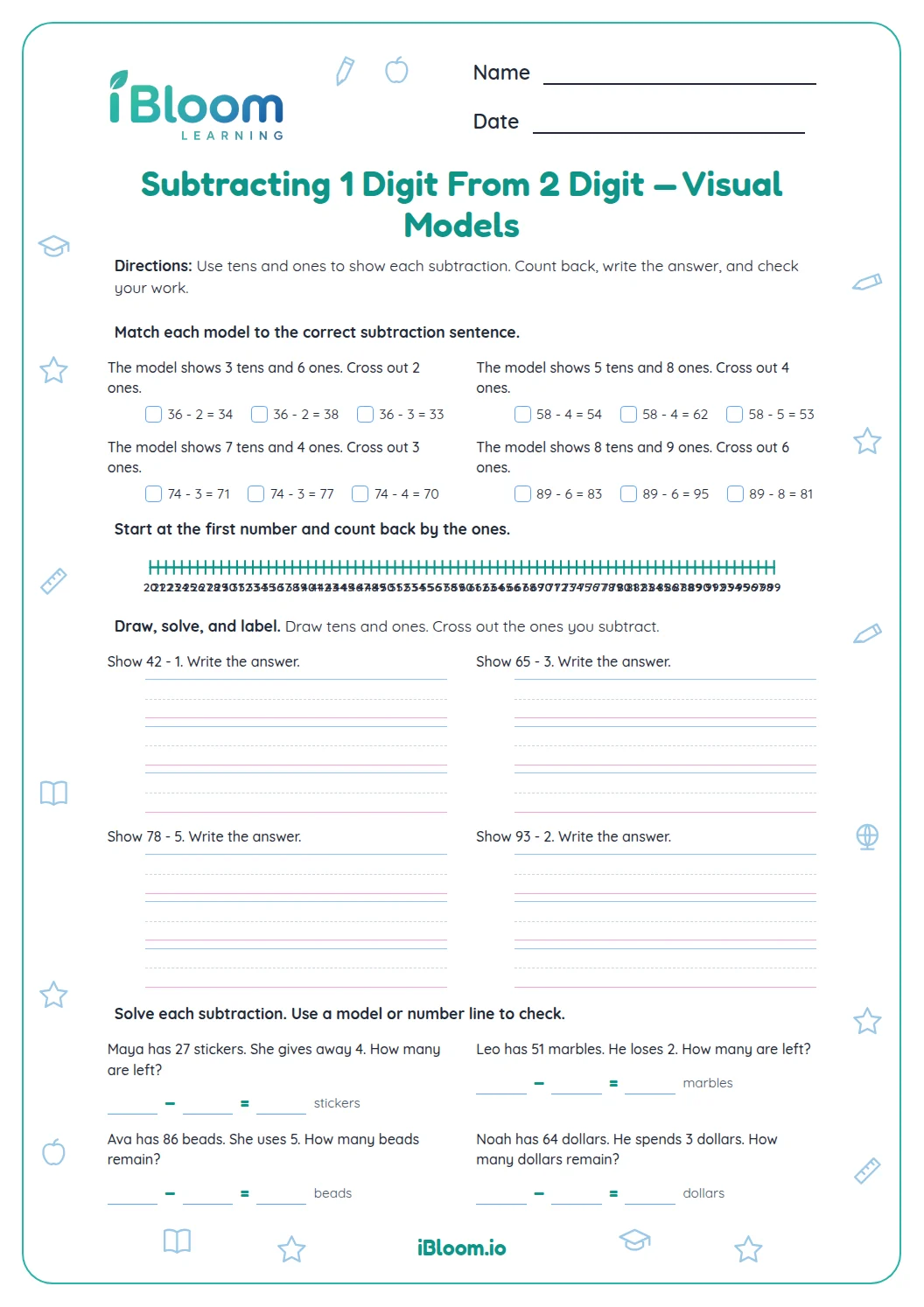
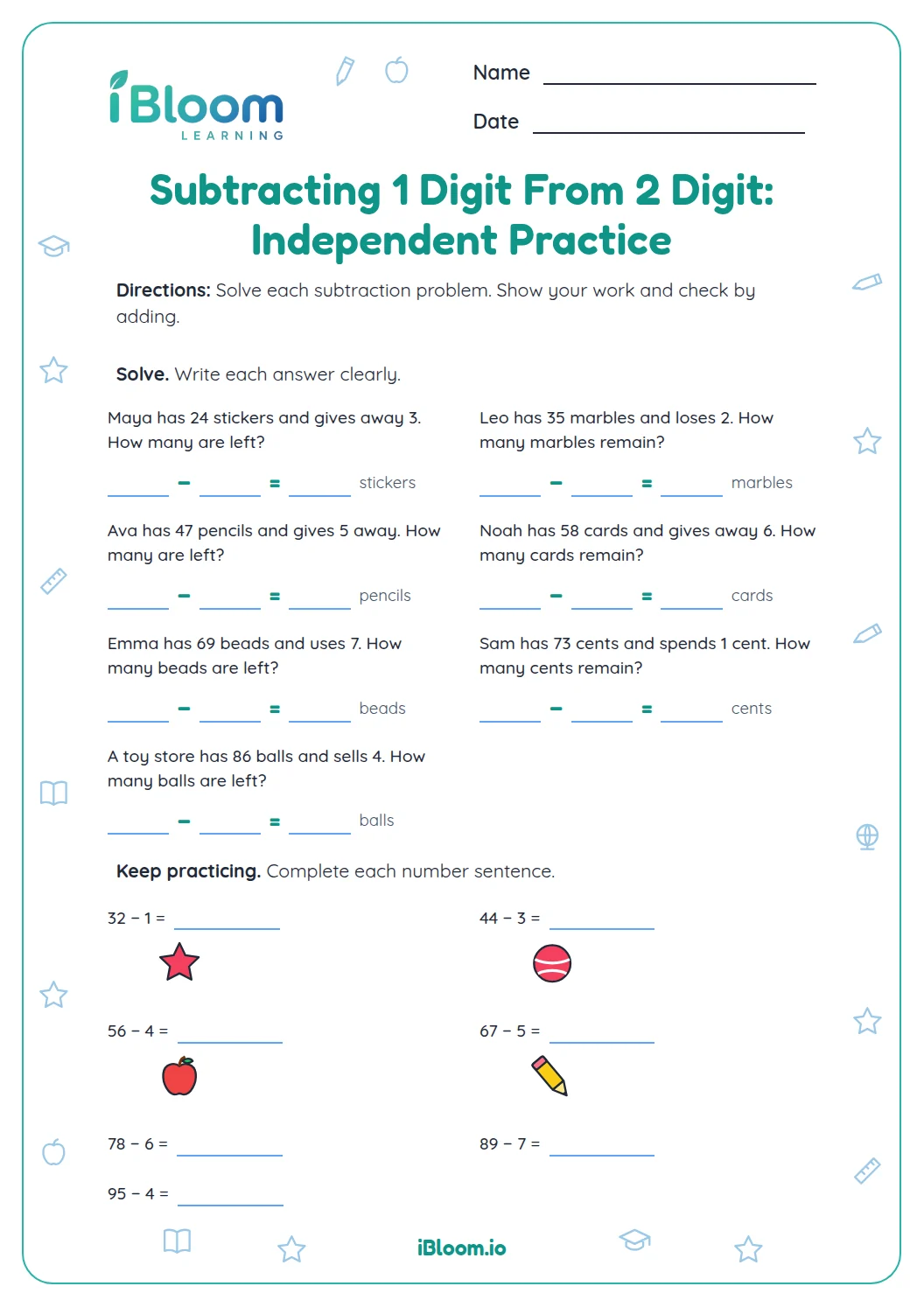
This Grade 2 worksheet gives children 16 subtraction problems within 20. The first part practices direct differences with no regrouping, the next asks for missing numbers in subtraction equations, and the final part uses short everyday stories. Children can check each difference with addition. The printable answer key is included. These questions support Common Core 2.OA.B.2, fluently adding and subtracting within 20 using mental strategies.
Aligned to 2.OA.B.2
How can I subtract within 20 without regrouping?
Break the first number into tens and ones when that helps. For 14 − 3, keep the ten and subtract 3 ones from 4 ones: 4 − 3 = 1, so 14 − 3 = 11.
Question 1 uses this idea. The ones digit 4 has enough ones to take away 3, so the ten stays unchanged.
- 114 − 3
- 2Subtract ones: 4 − 3 = 1
- 3Keep the ten: 10 + 1 = 11
- 4Check: 11 + 3 = 14
How can addition help find a missing number?
A subtraction equation can be checked with addition. In 17 − ___ = 12, ask what number added to 12 makes 17. Since 12 + 5 = 17, the missing number is 5.
This inverse relationship also catches errors in story problems: the leftover amount plus the amount taken away should equal the starting amount.
What is on this independent practice page?
The worksheet starts with familiar subtraction facts, then asks children to reason about a missing part and apply subtraction to classroom and home situations.
- Part A: calculate eight differences within 20.
- Part B: find the missing number in four equations.
- Part C: write a subtraction sentence for four short situations.
How to use this worksheet
- 1Read the subtraction sign and identify the starting number.
- 2Subtract the ones; keep the ten when the ones are enough.
- 3For a blank, use addition to find the missing part.
- 4In each story, identify the total and what is taken away or still needed.
- 5Check by adding the difference to the amount subtracted.
Common mistakes and quick fixes
The mistake
Subtracting the larger number from the smaller number.
The fix
Start with the number before the minus sign, then take away the second number.
The mistake
Forgetting the missing number is the amount taken away.
The fix
Add the answer to the missing part and see whether you reach the starting number.
The mistake
Answering a story without writing the matching subtraction.
The fix
Name the starting amount and the amount removed, then write the subtraction sentence.
Common Core alignment
This page strengthens mental subtraction within 20 and checks answers with addition.
Build fluency with subtraction facts within 20 using mental strategies.
On this sheet: Build fluency with subtraction facts within 20 using mental strategies.
Show the official wordingHide the official wording
Fluently add and subtract within 20 using mental strategies. By end of Grade 2, know from memory all sums of two one-digit numbers.
What to practice next
Make more practice
Further reading
Questions parents and teachers ask
What does “no regrouping” mean here?
The starting numbers are within 20, and each direct subtraction can be solved without trading a ten for ones. For example, 14 − 3 leaves the ten in place because 4 ones are enough to subtract 3 ones. All direct facts on the page follow this pattern.
How can addition check a subtraction problem?
Add the difference to the number taken away. For 14 − 3 = 11, the check is 11 + 3 = 14. If the sum does not return to the starting number, revisit the subtraction. The same check works for a missing number.
How should my child solve 17 − ___ = 12?
Think of the related addition fact: 12 plus what makes 17? The missing number is 5 because 12 + 5 = 17. This connects subtraction to addition and lets children check the answer. The worksheet uses missing-number equations that can be solved without trading a ten.
Are there word problems on the worksheet?
Yes. Four short situations ask children to find how many remain or how many more are needed. Each can be represented with subtraction before solving, such as 18 − 7 for cups still needed after seven have been set out. The numbers keep the ones small enough to subtract without regrouping.
Does the printable include answers?
Yes. A separate key lists all 16 answers. For the story section, children can compare both the final number and the subtraction sentence they used to represent the situation. This makes it easier to spot a correct calculation attached to the wrong story.