
About this worksheet
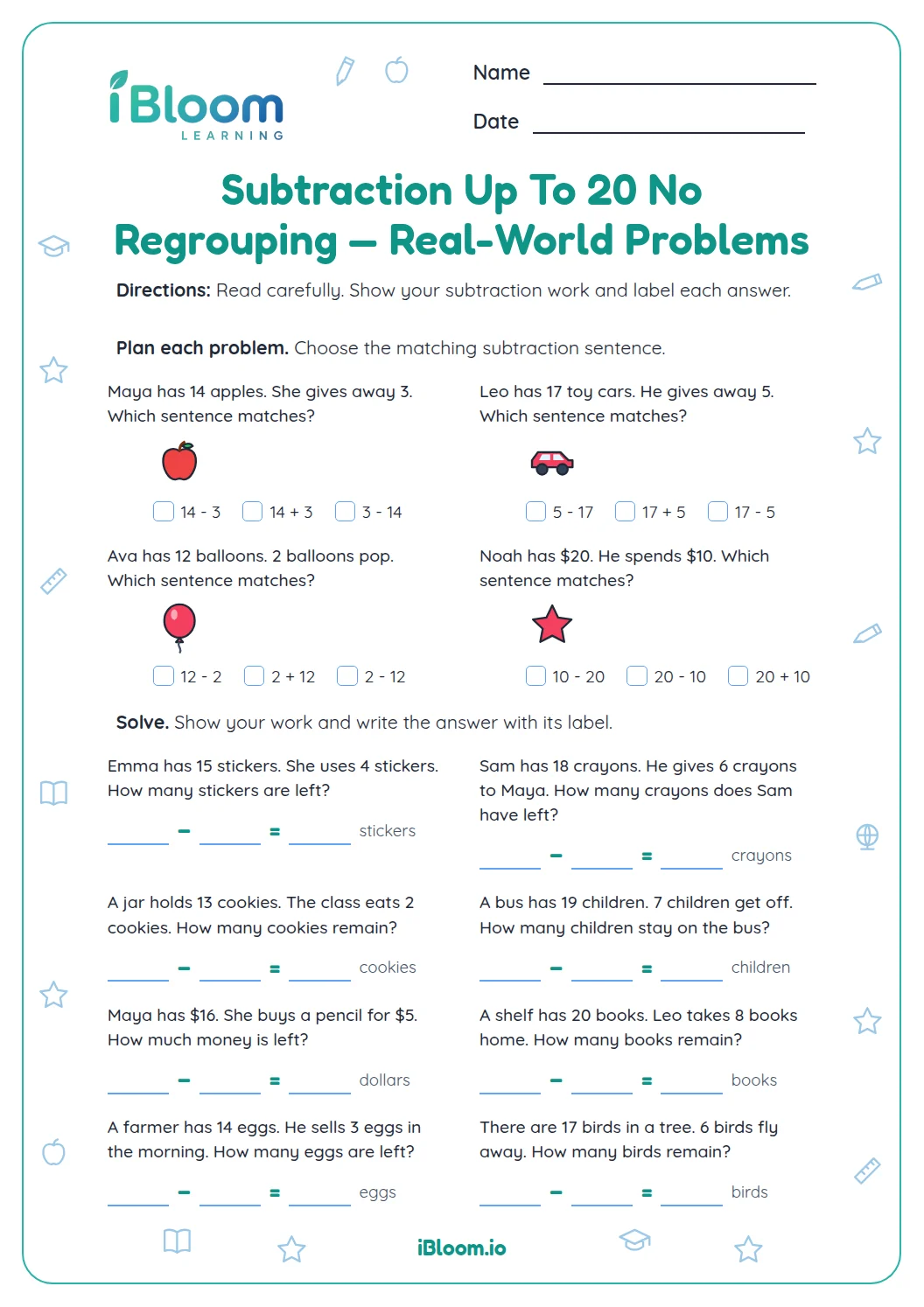
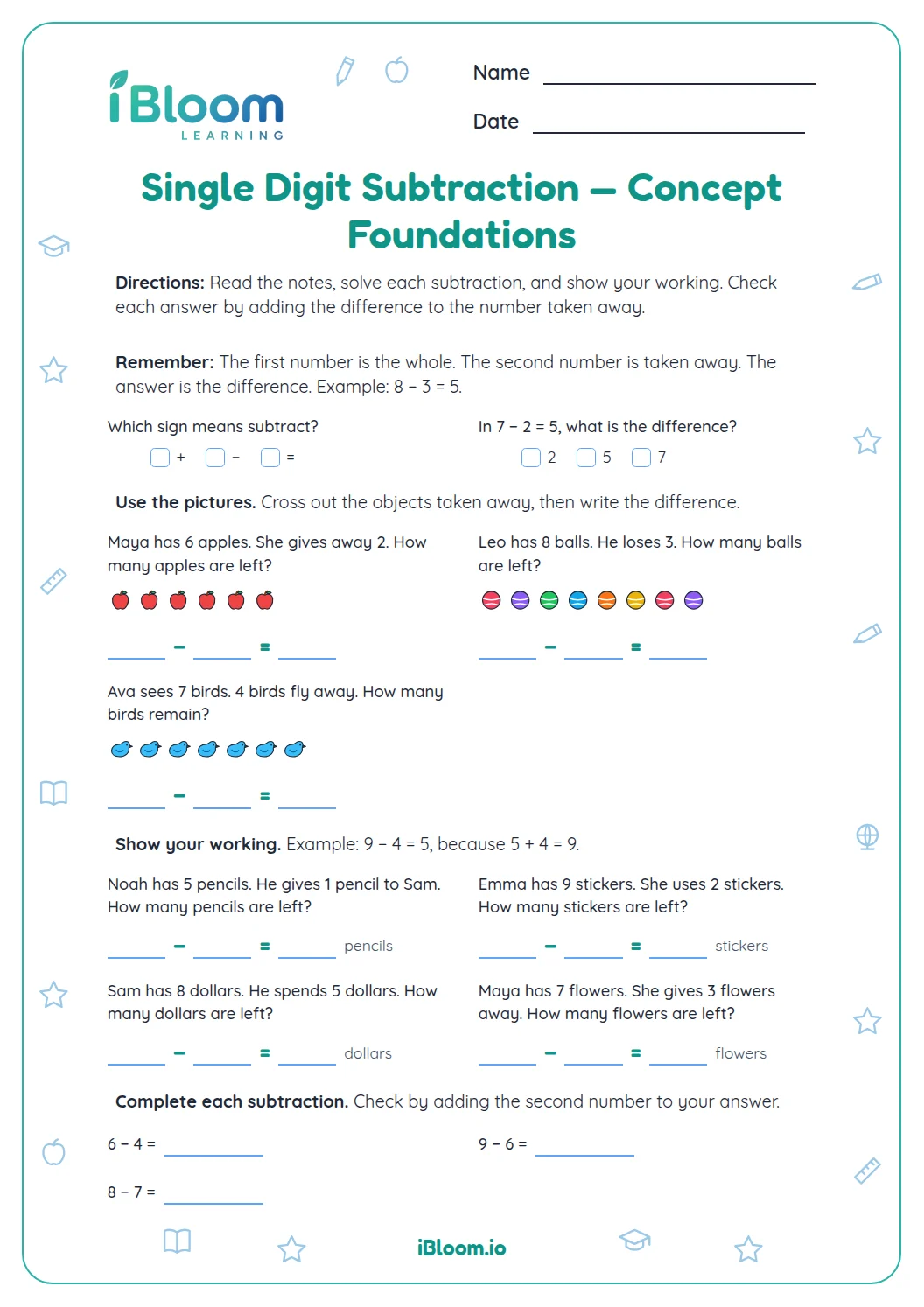
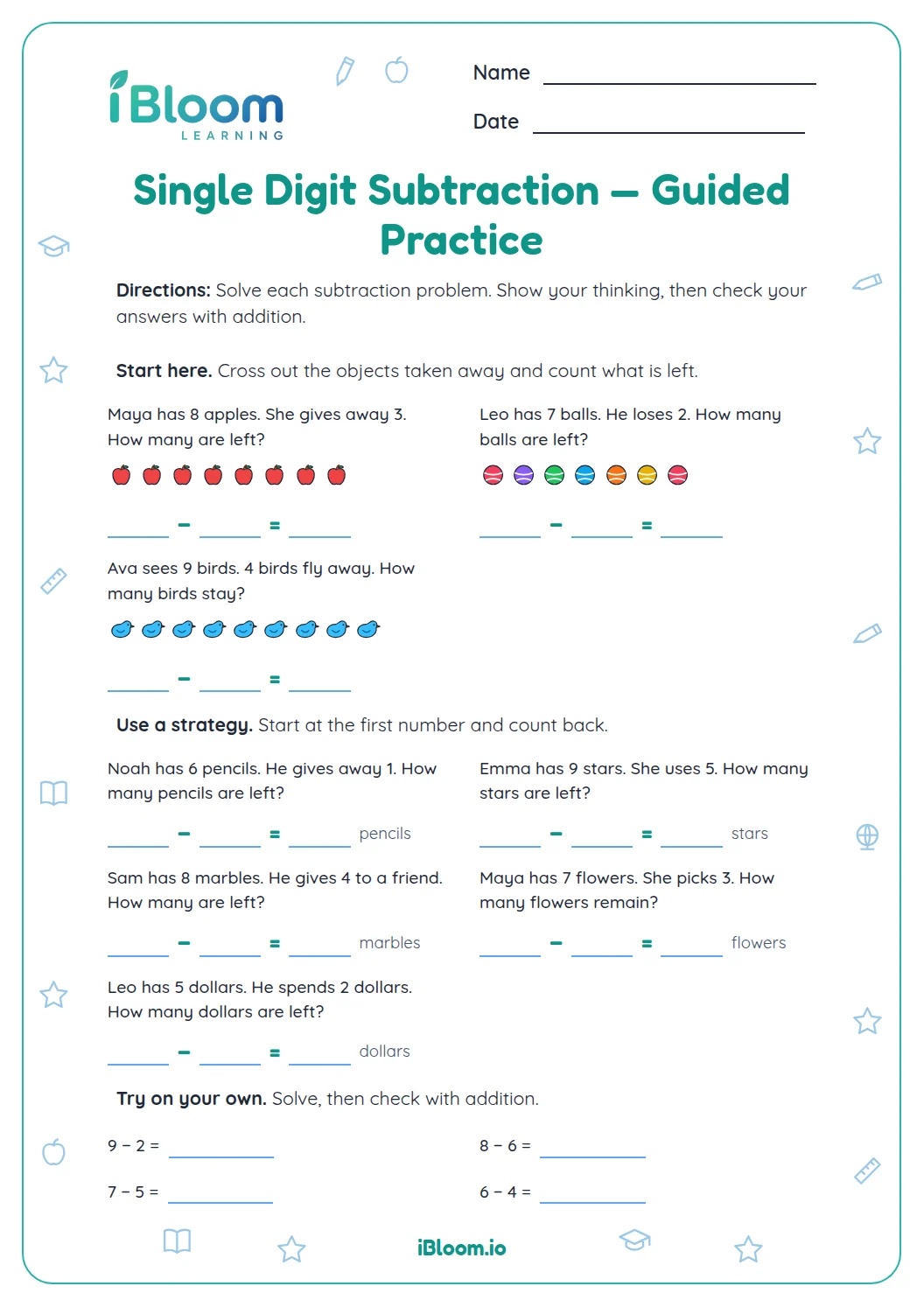
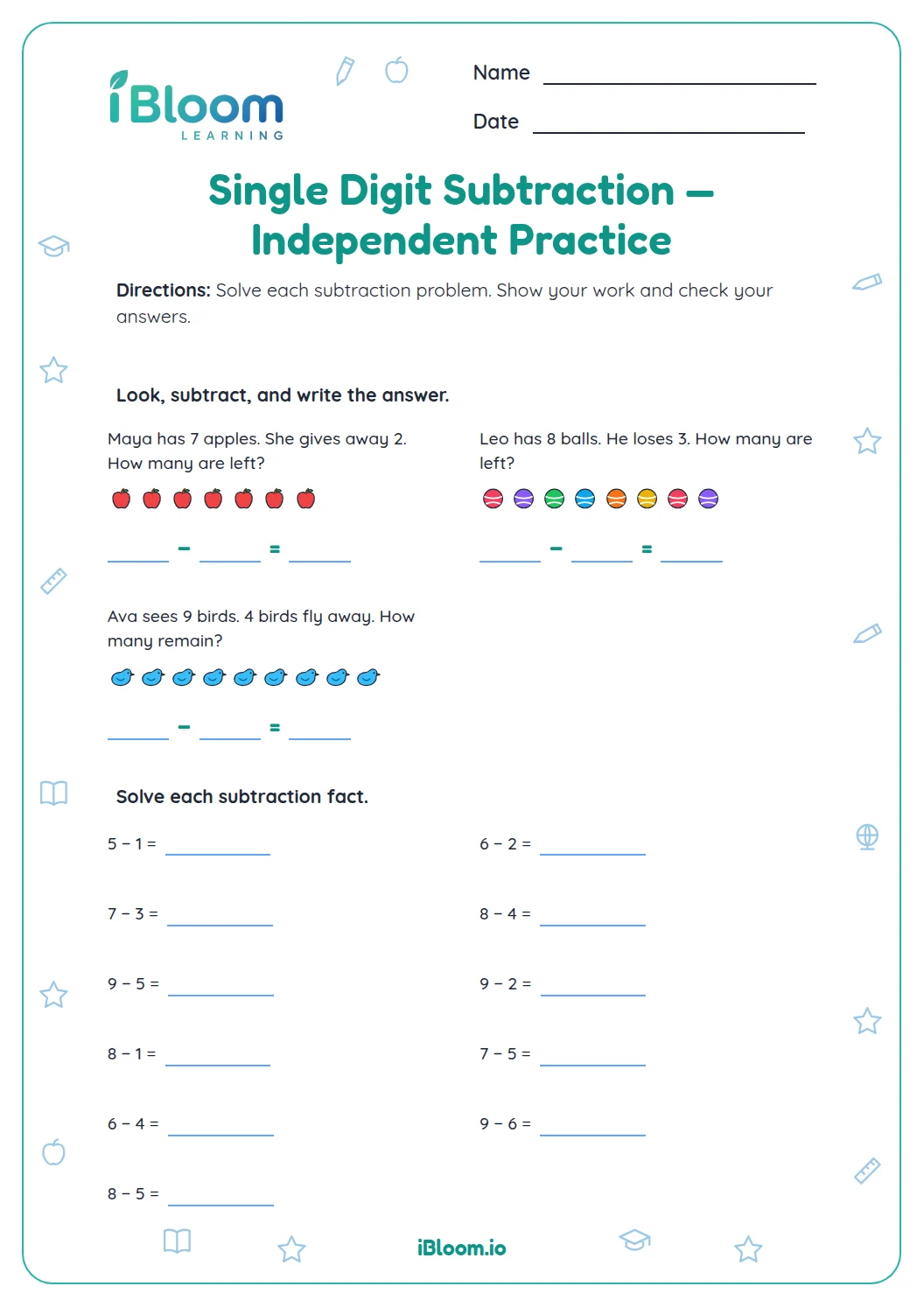
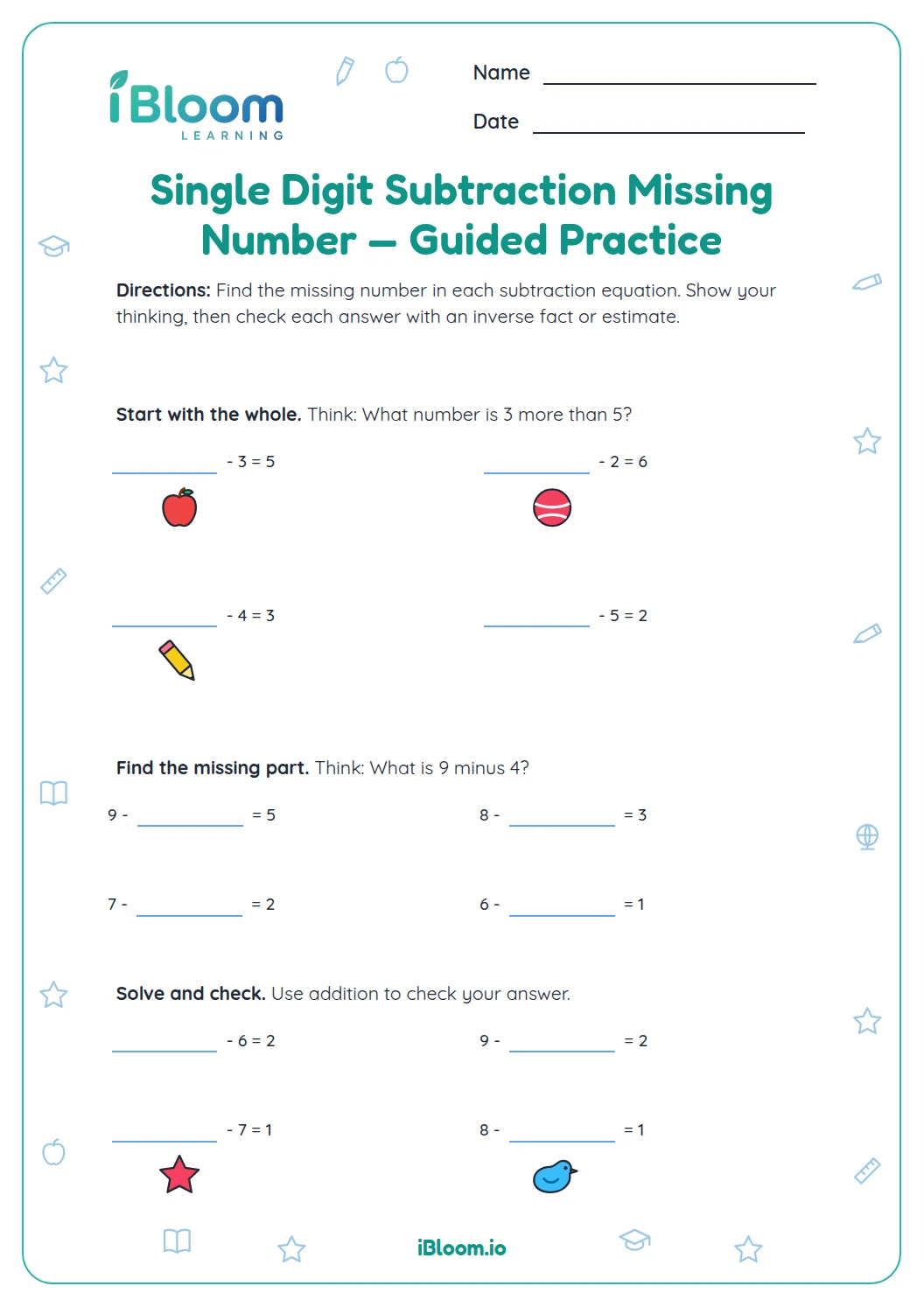
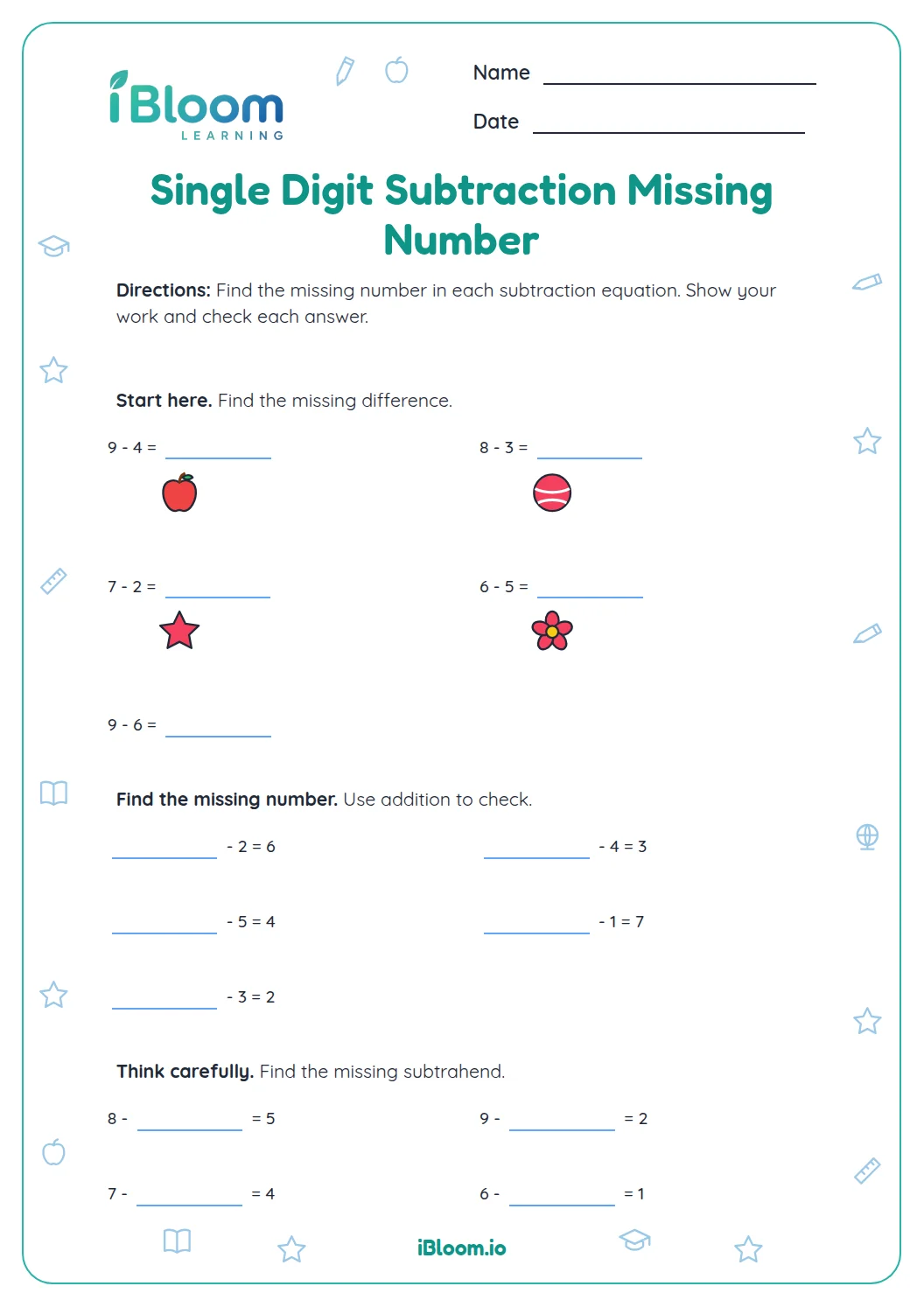
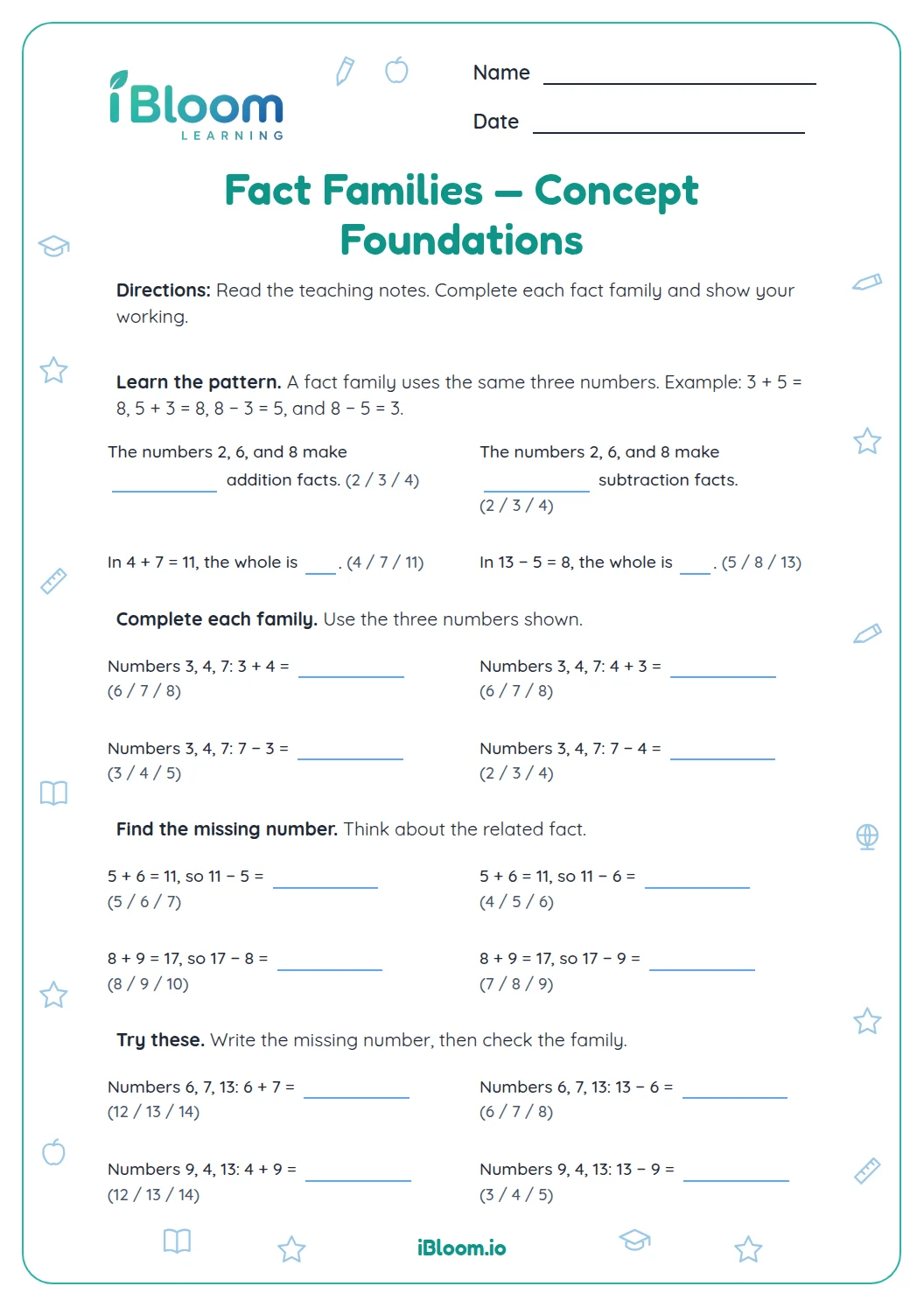
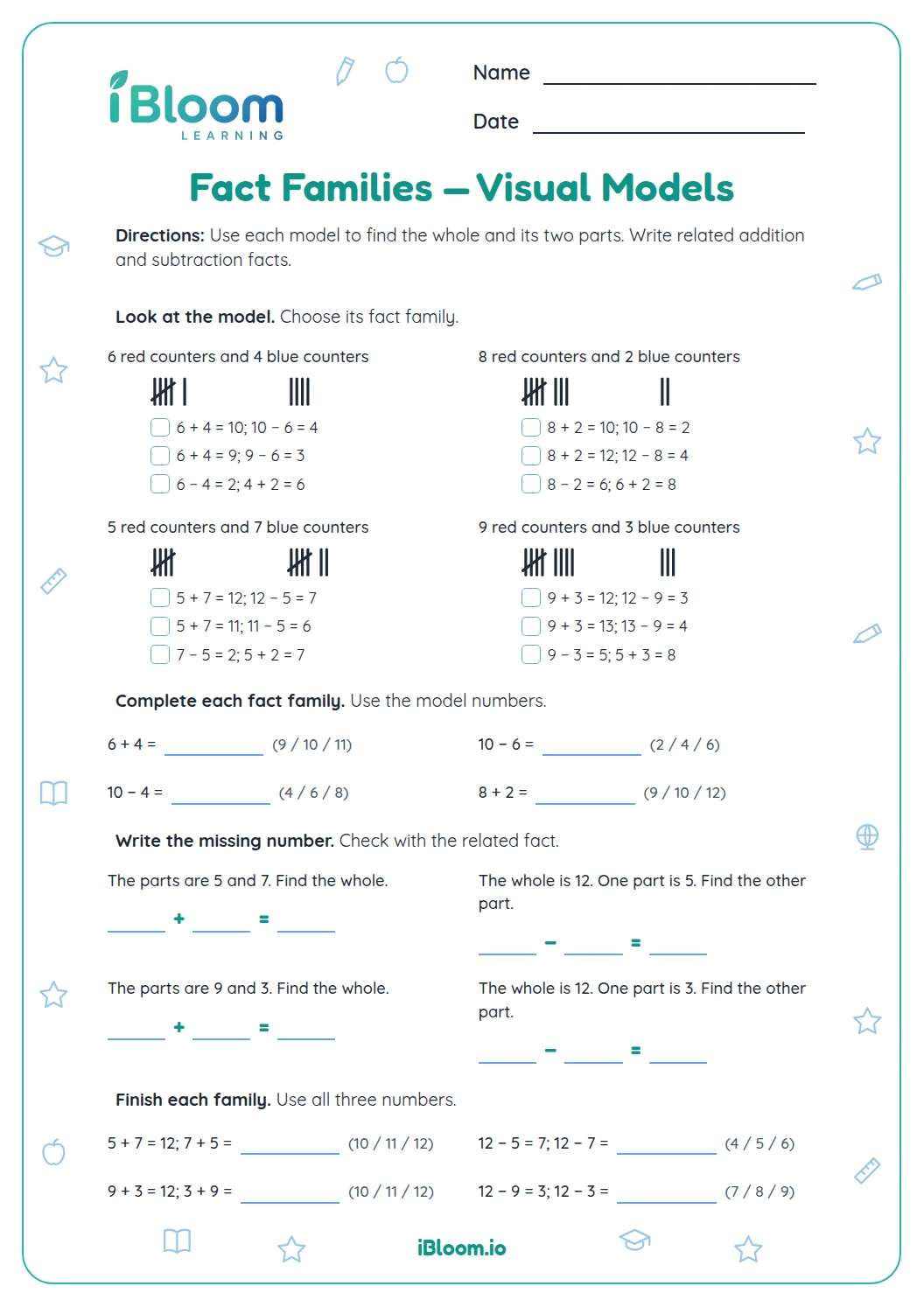
This Grade 2 printable offers 14 subtraction questions within 20. Children evaluate incorrect work, complete missing values in mental strategies, explain and check answers, and write a short subtraction story. The separate answer key includes exact answers and sample explanations. The practice supports CCSS 2.OA.B.2.
Aligned to 2.OA.B.2
How can a child explain a subtraction strategy?
A child can break apart a number, count back, count up to the starting amount, or use addition to check. The strongest explanation names the steps and shows why the answer fits.
For 16 − 8, one strategy is to subtract 6 to reach 10, then subtract 2 more to reach 8. Adding 8 + 8 checks the result.
- 116 − 6 = 10
- 210 − 2 = 8
- 3Check: 8 + 8 = 16
What kinds of subtraction reasoning appear?
The 14 questions begin with error analysis, continue with missing values and mental strategies, and finish with written explanations and a child-written story. Each subtraction stays within 20 and can be solved without regrouping.
How to use this worksheet
- 1Read the subtraction sentence carefully.
- 2Solve it with a strategy you can explain.
- 3Use addition to check a difference.
- 4For a story problem, identify the starting amount and what is taken away.
Mistakes to watch for
The mistake
Subtracting the smaller digit from the larger digit in each place
The fix
Keep the tens and ones in their place; do not reverse the operation.
The mistake
Forgetting the original ten when subtracting ones
The fix
Break apart the number and keep track of the ten you still have.
The mistake
Checking subtraction with another subtraction
The fix
Add the difference and the amount taken away to recover the start.
Curriculum alignment
This worksheet practices the standard below through its questions.
Fluently add and subtract within 20 using mental strategies.
On this sheet: Children solve subtraction within 20 using mental strategies and addition checks.
Show the official wordingHide the official wording
Fluently add and subtract within 20 using mental strategies. By end of Grade 2, know from memory all sums of two one-digit numbers.
What to practice next
Make more practice
Further reading
Questions parents and teachers ask
What strategies can children use?
Children can count back, count up, break a number apart, or use the relationship between addition and subtraction. The written questions ask them to show a strategy and check an answer, so the explanation can match the method that feels clearest.
How can addition check a subtraction answer?
Add the difference to the amount taken away. For example, if 16 − 8 = 8, then 8 + 8 should equal 16. This check works because subtraction and addition undo one another. If the sum does not return the starting number, revisit the subtraction steps.
What does “no regrouping” mean here?
No regrouping means the problems can be solved without exchanging a ten for ones. Children can focus on the meaning of each difference, choose a mental strategy, and check with addition. For example, 16 − 8 can be solved by subtracting 6 to reach 10, then 2 more to reach 8.
How many questions are included?
There are 14 questions in three parts: four reasoning choices, six missing values or mental strategy items, and four written explanations or story tasks. The exact answers and sample responses appear in the separate answer key, so students can try the reasoning before checking their work. The problems become more open ended as children move through the page.
Can a child use a different strategy than the answer key?
Yes. The written prompts accept a correct strategy that leads to the right difference and includes a valid check when requested. The answer key gives a model, but children may count back, break apart a number, or use addition.