


About this worksheet
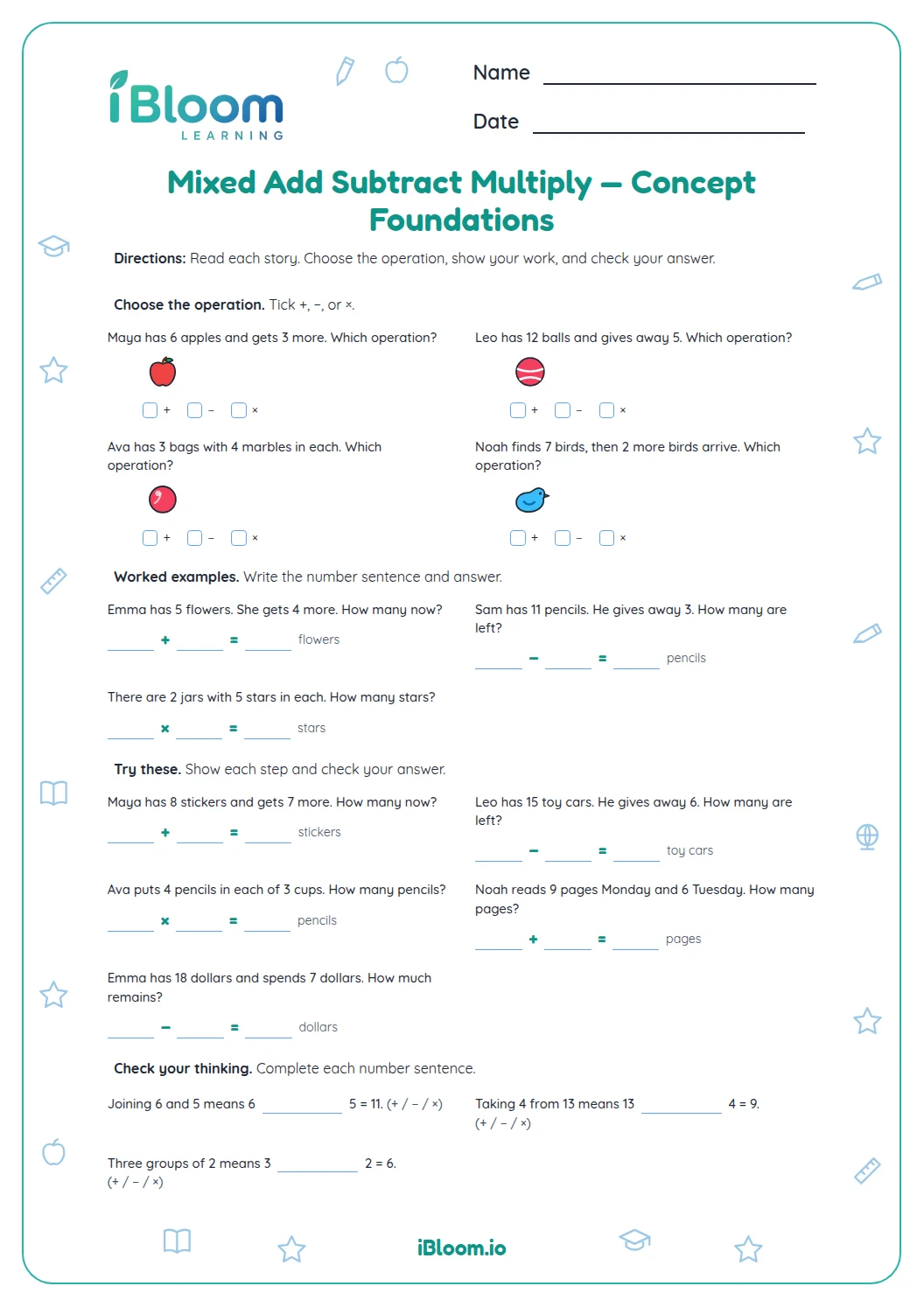
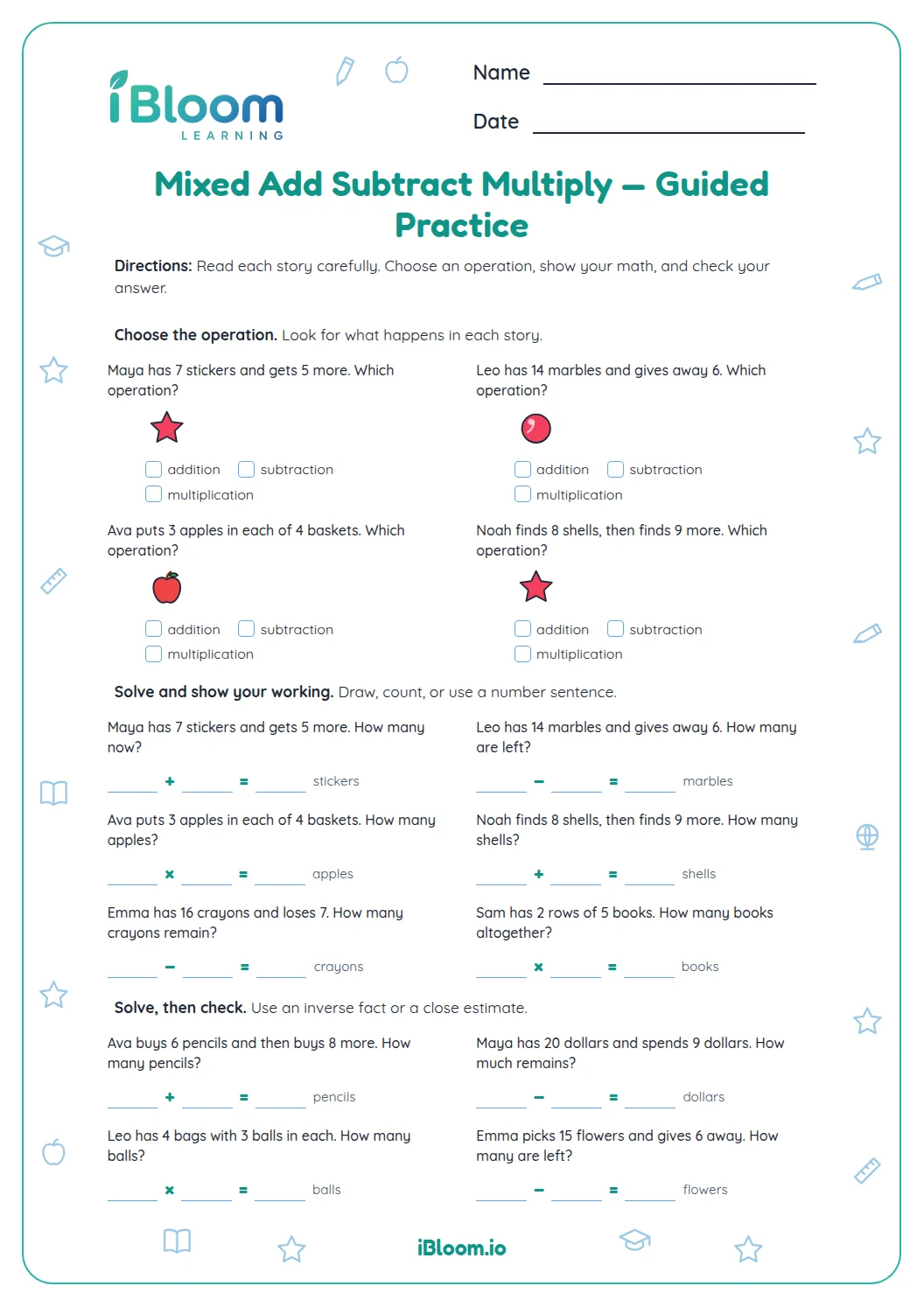
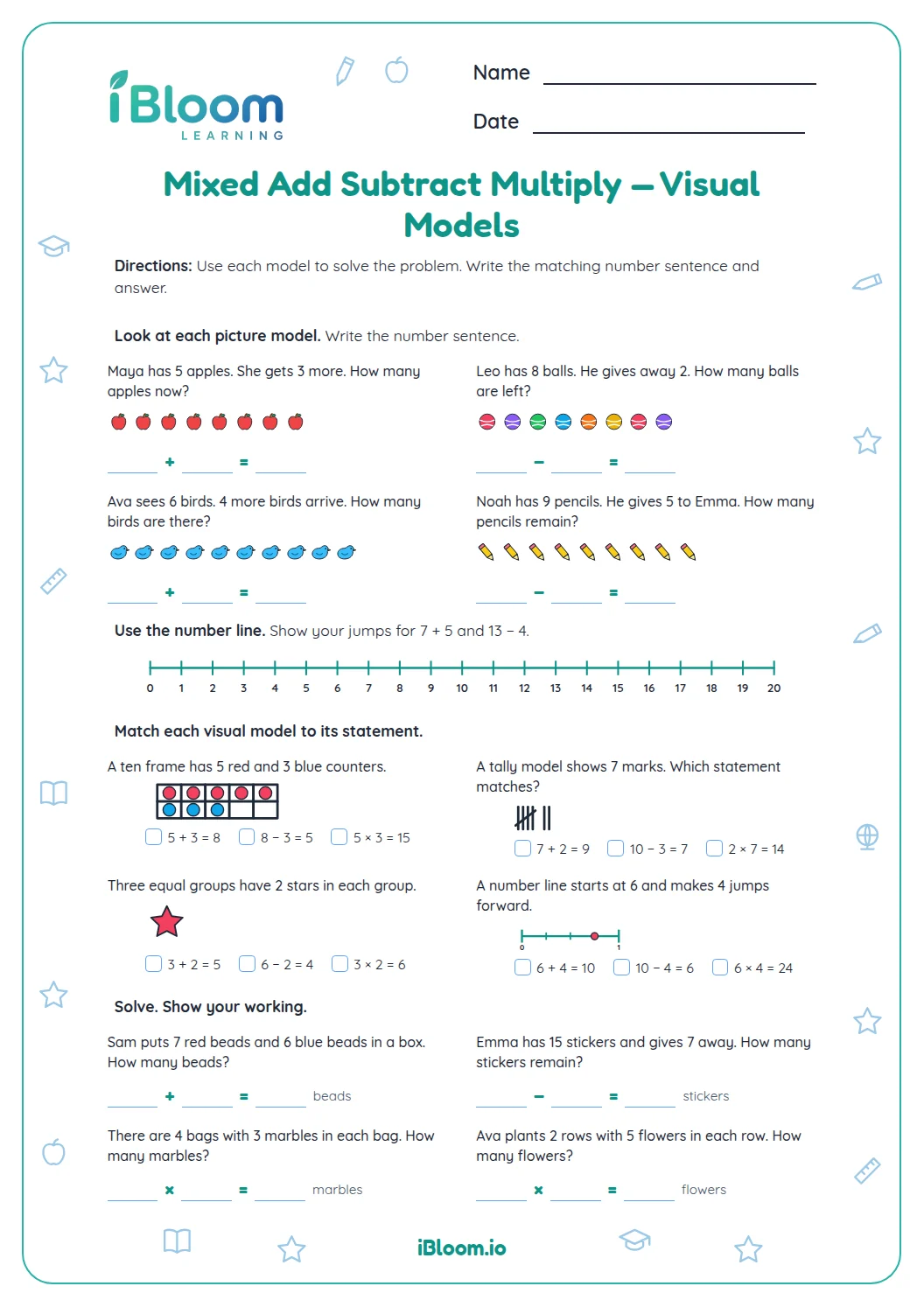
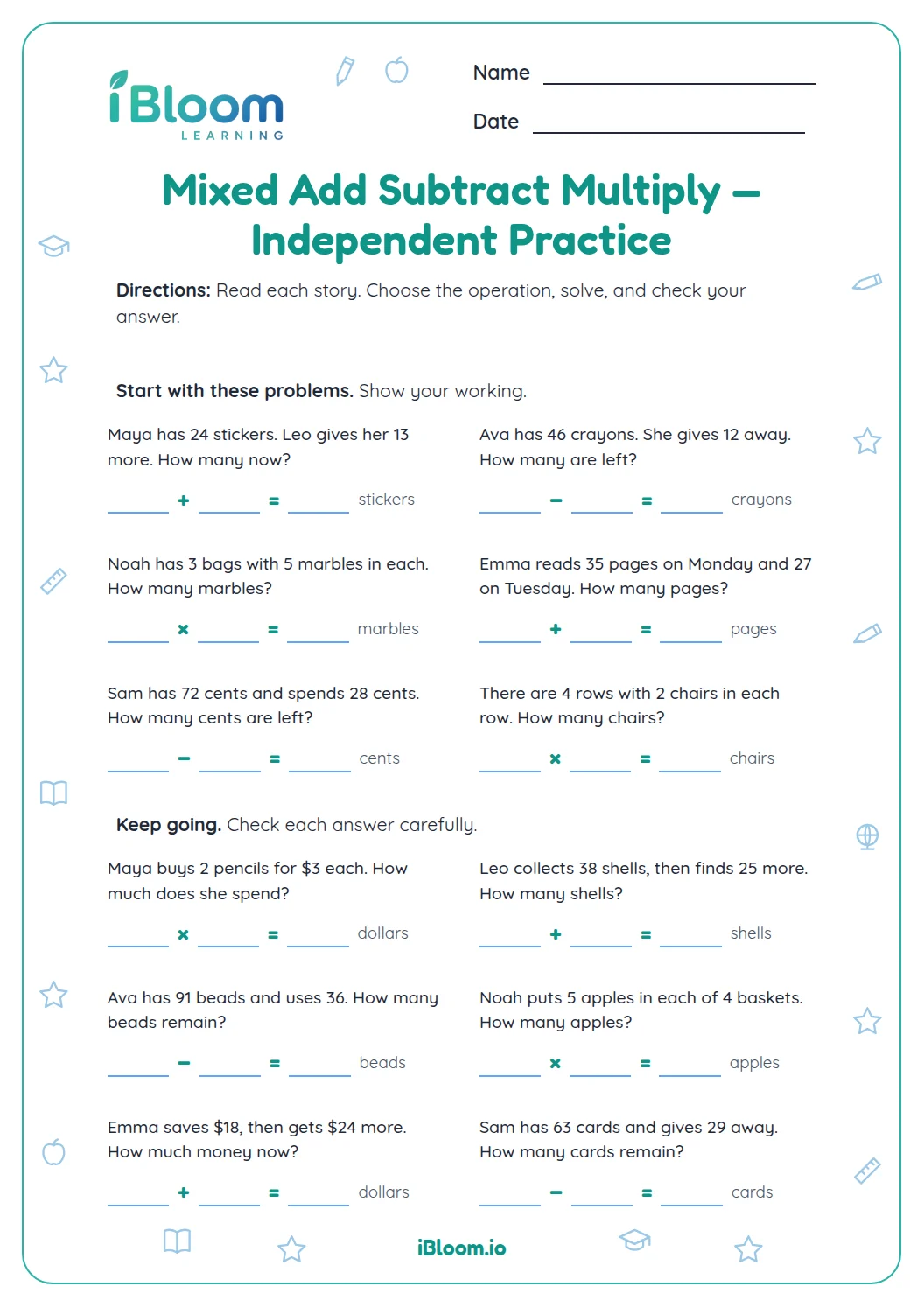
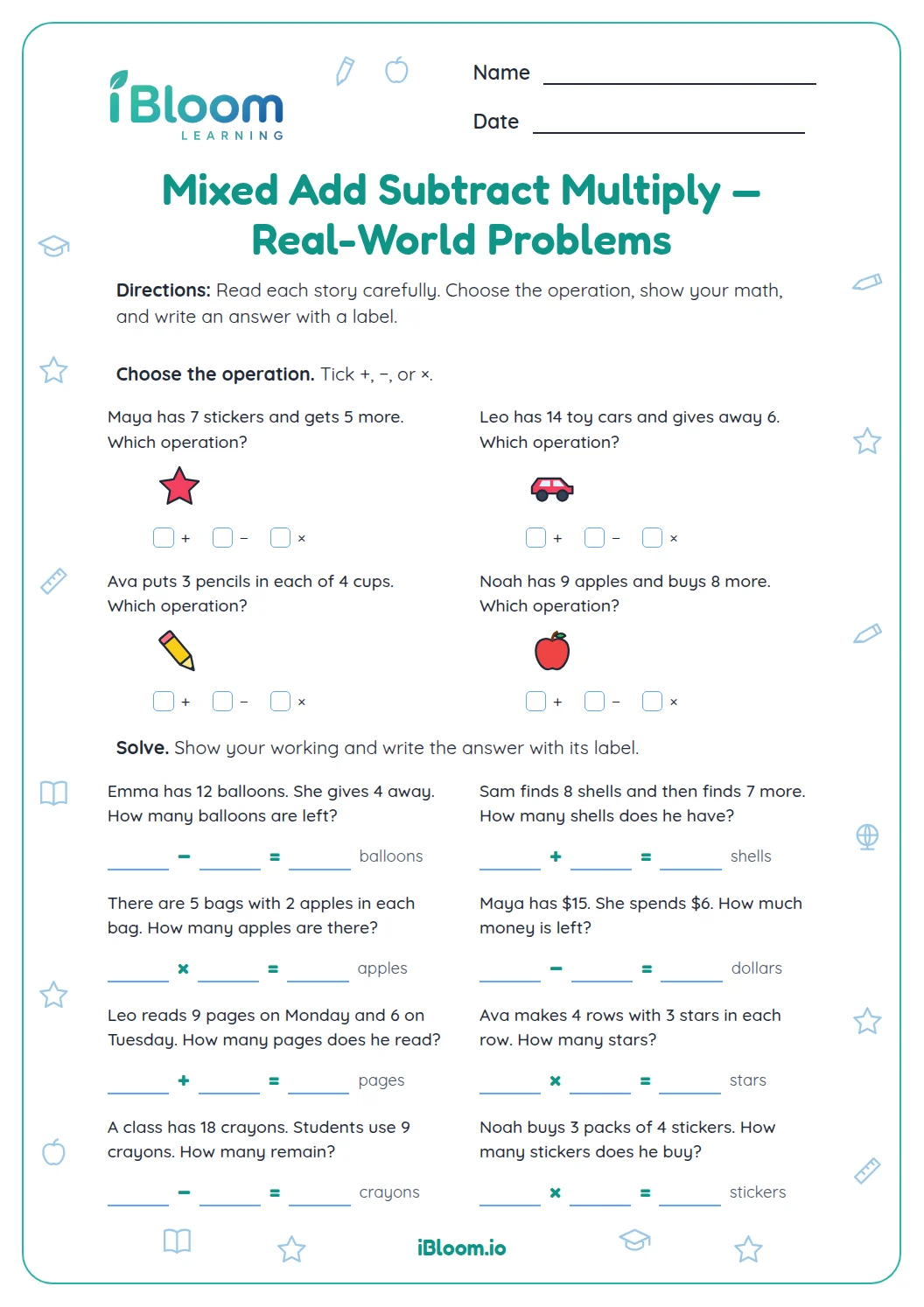
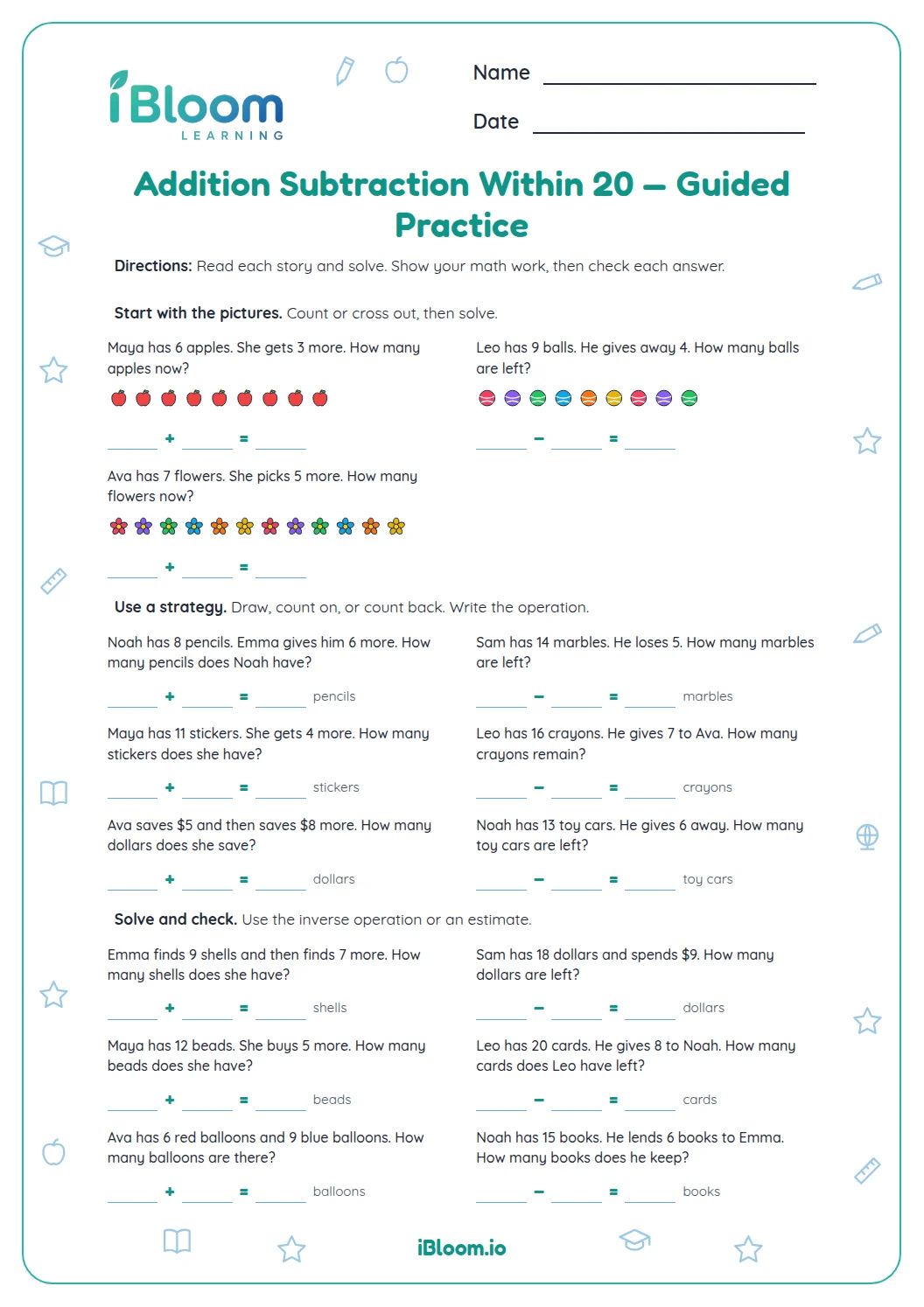
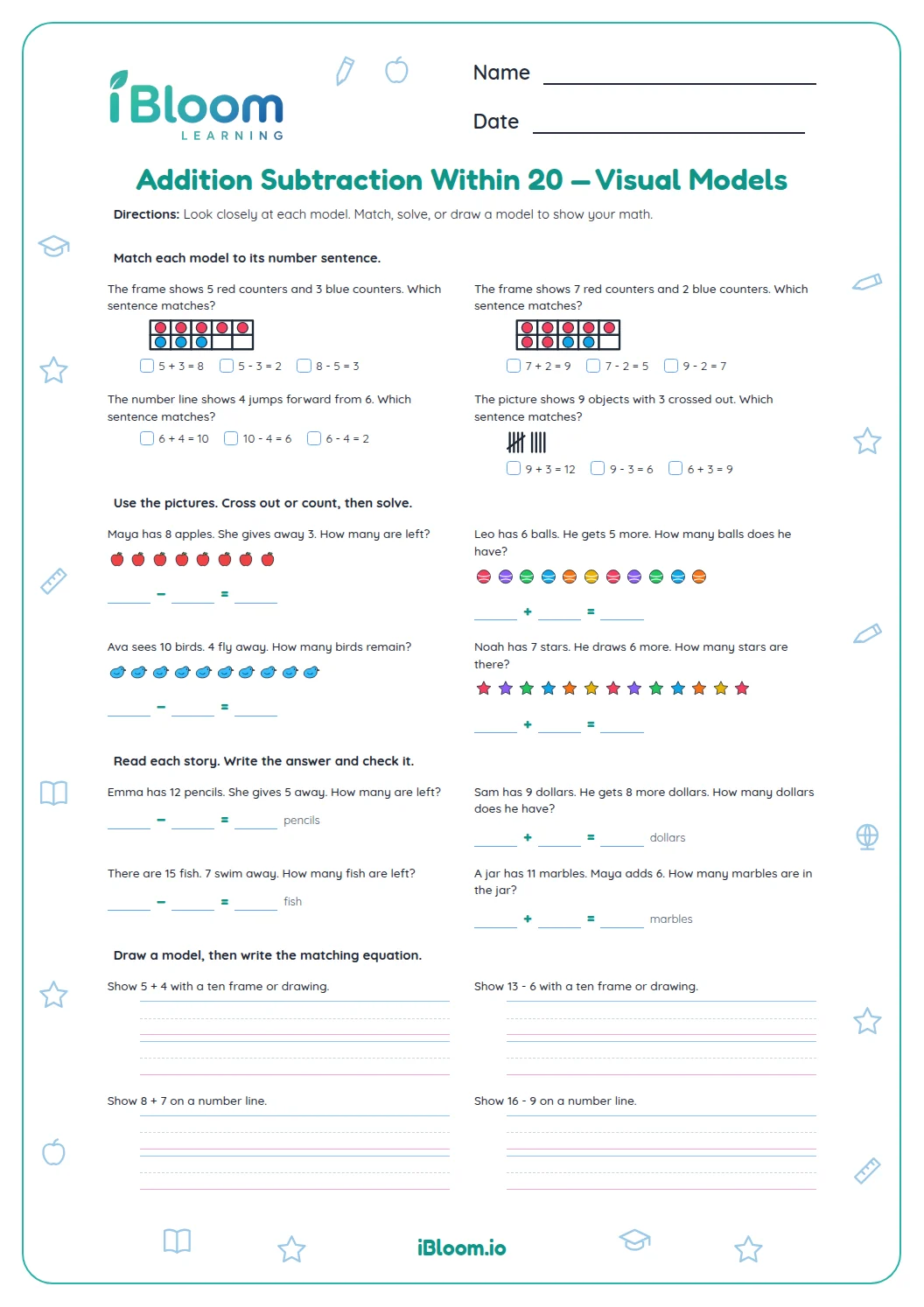
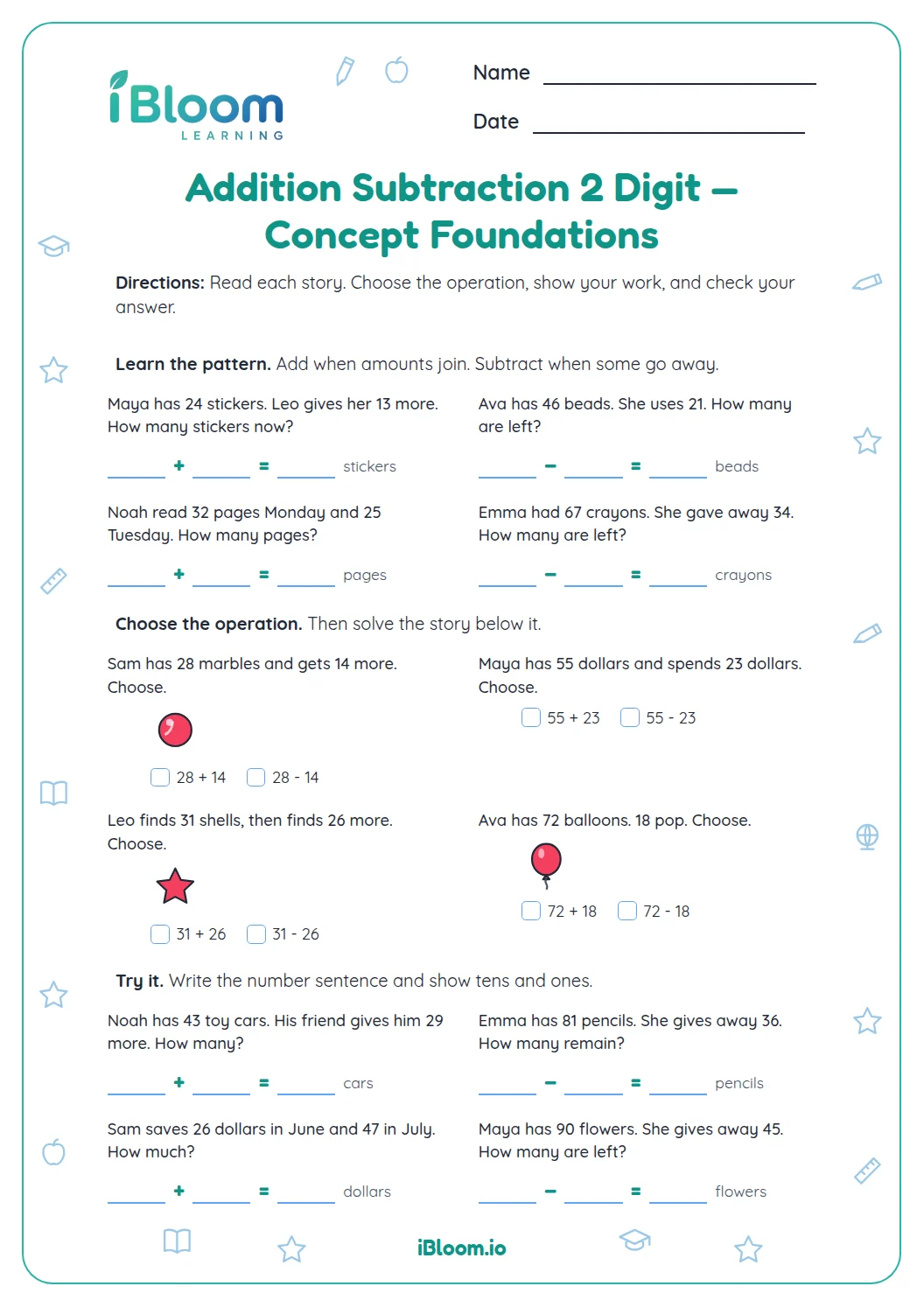
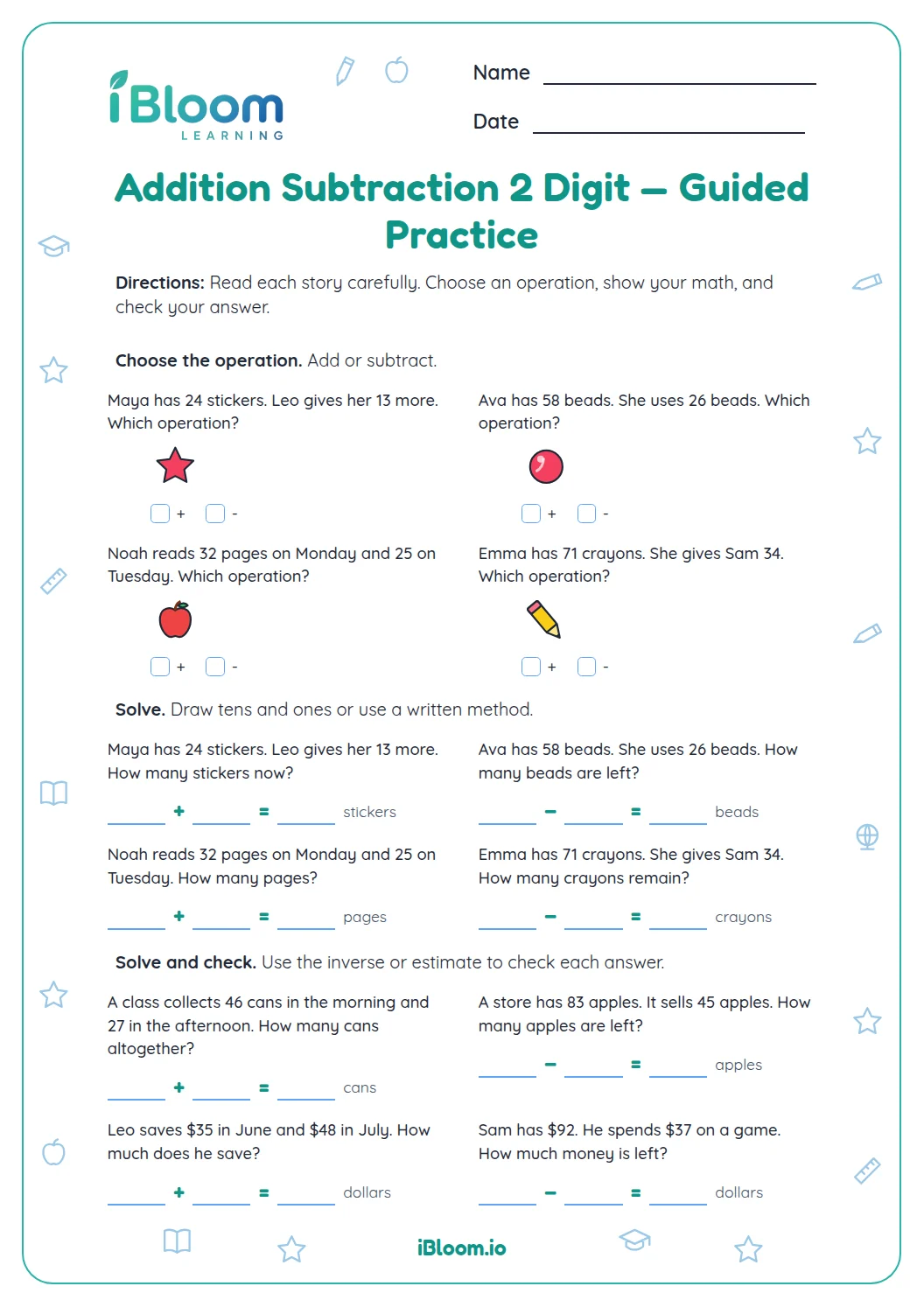
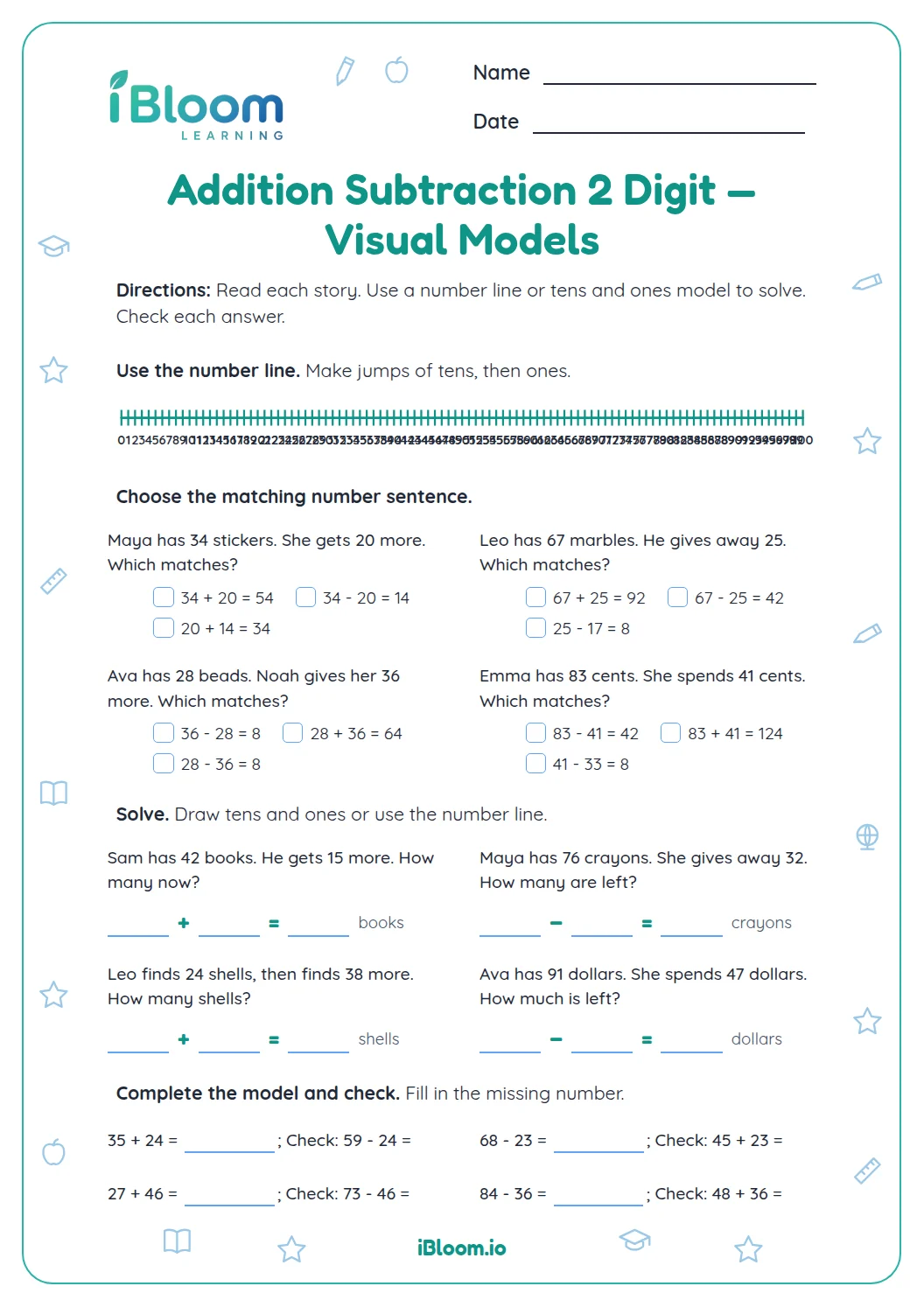
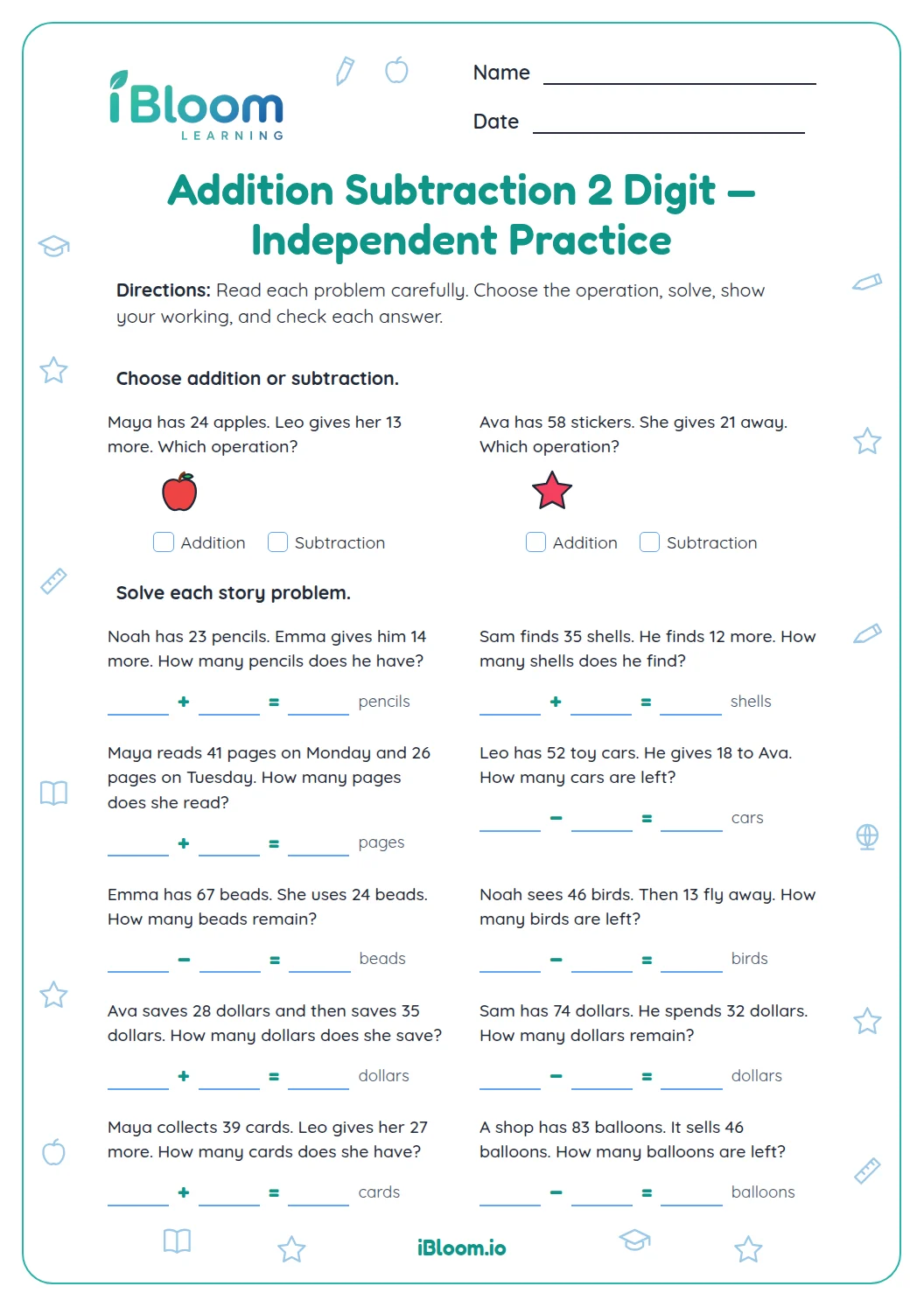
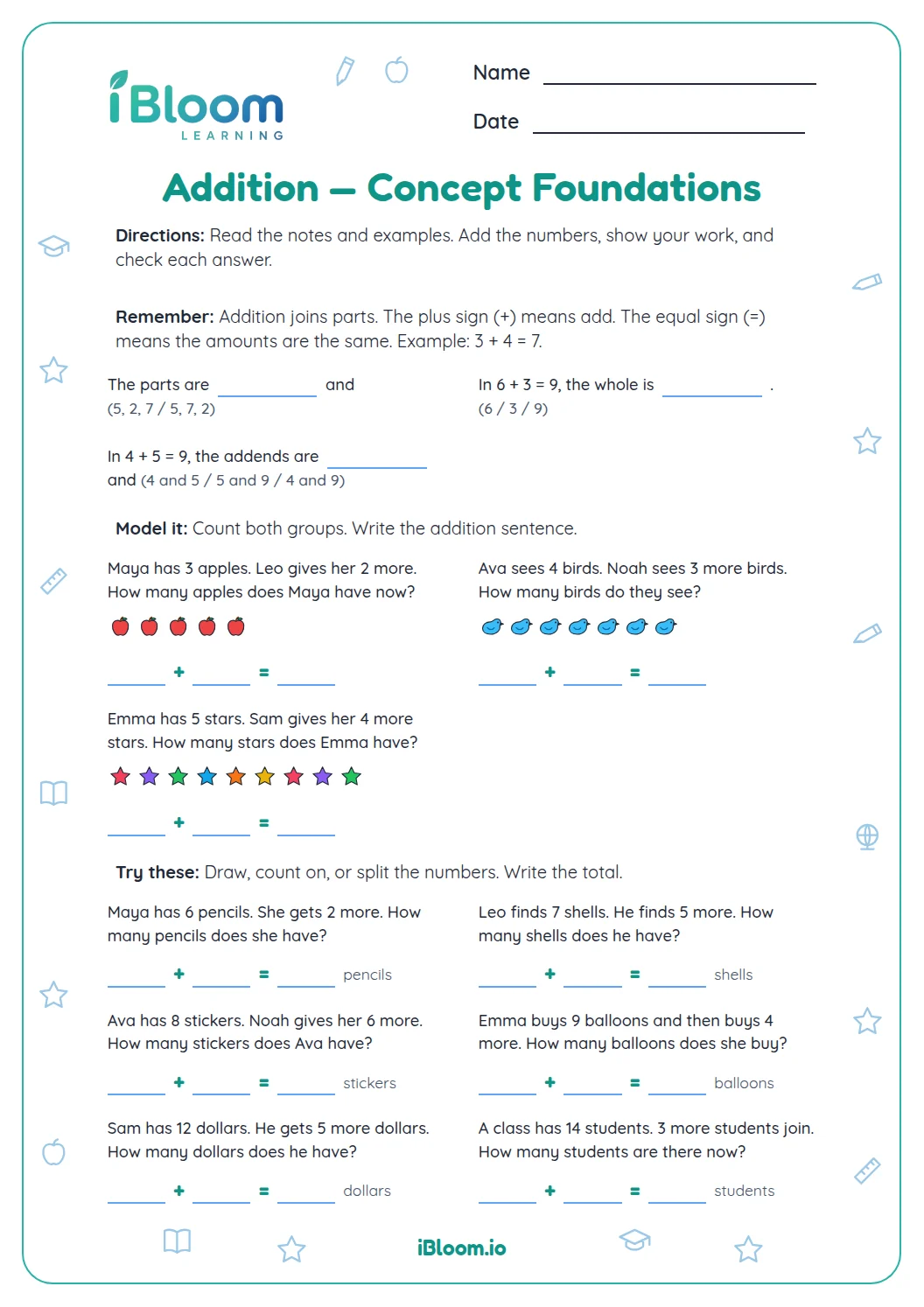
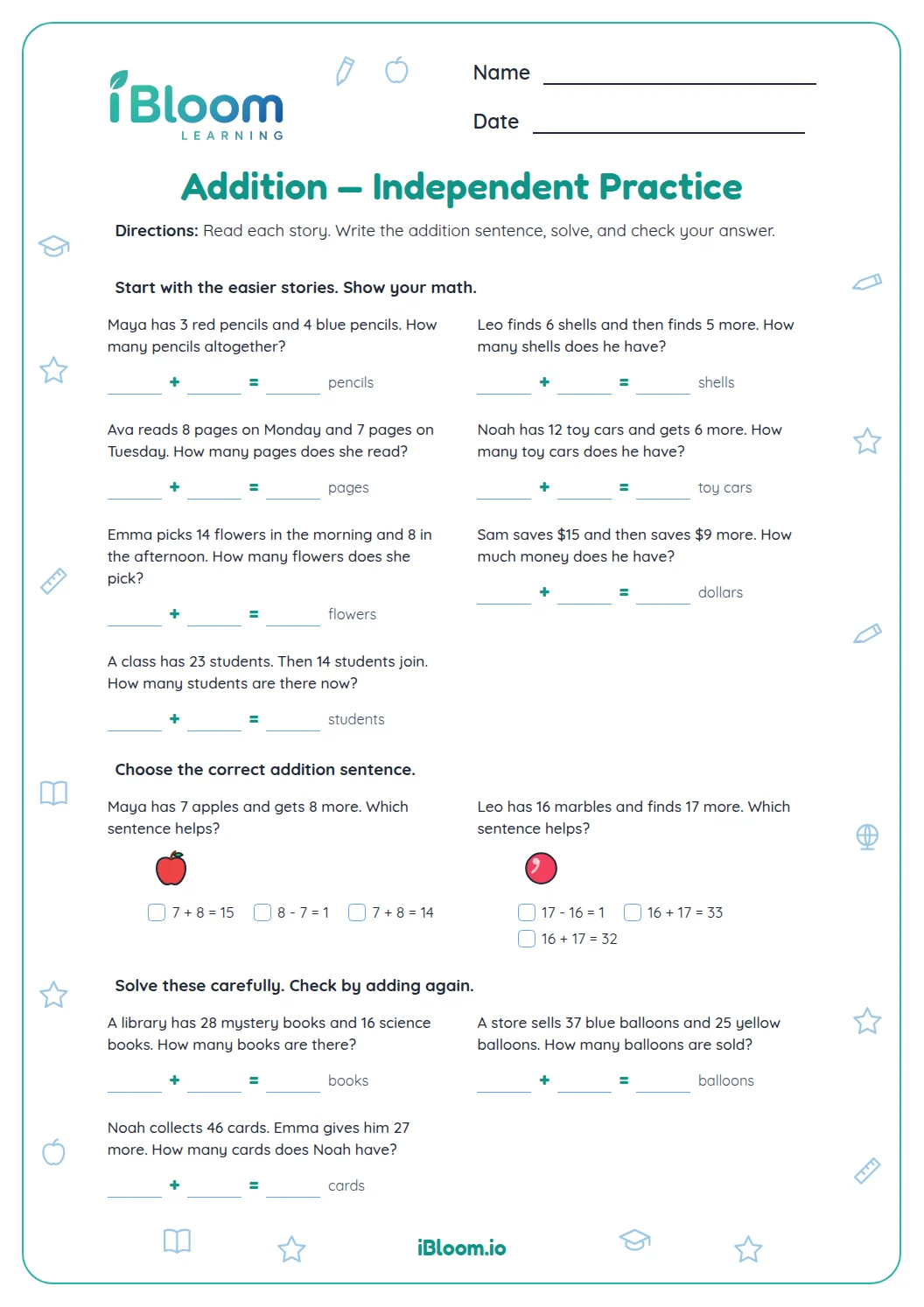
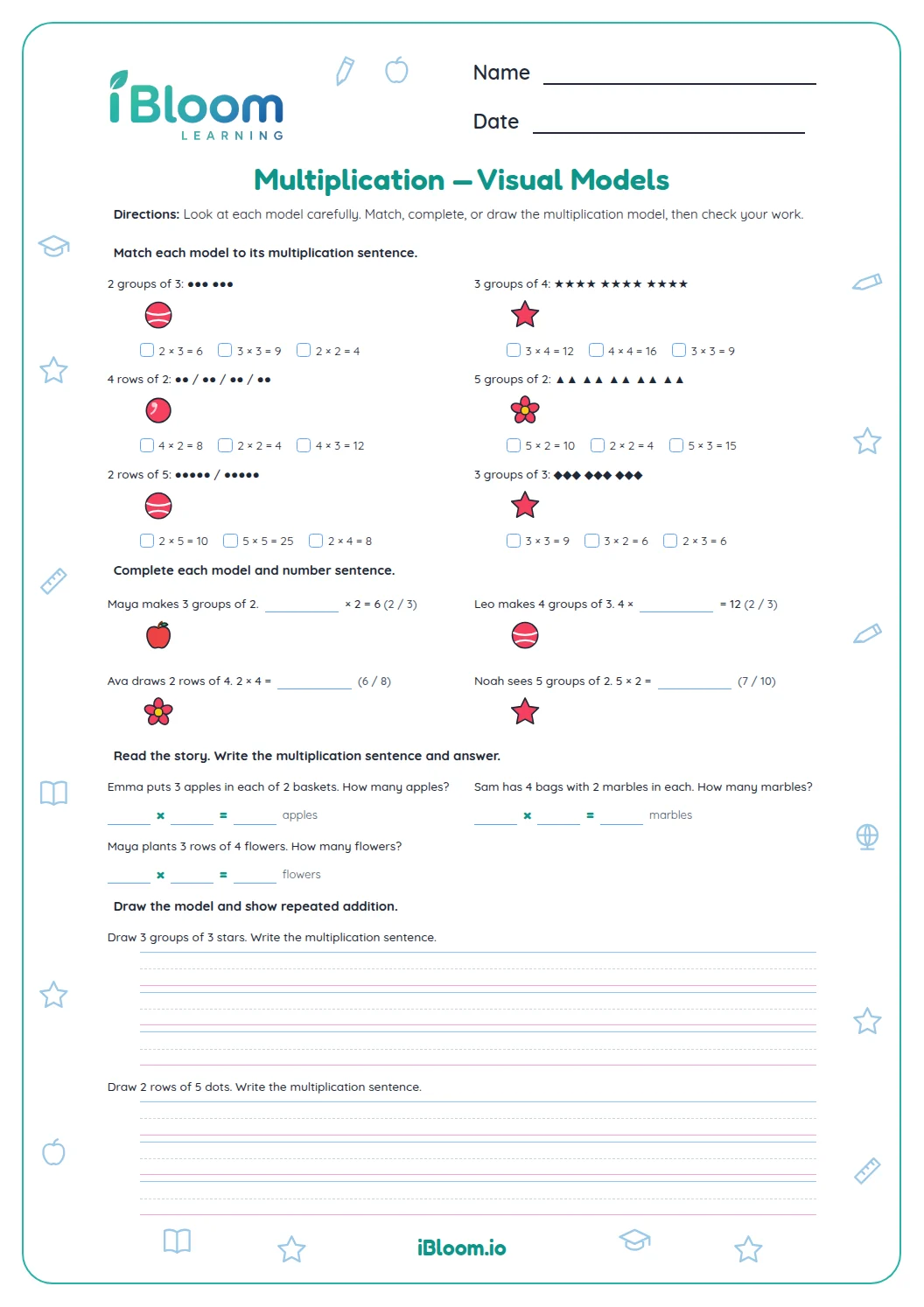
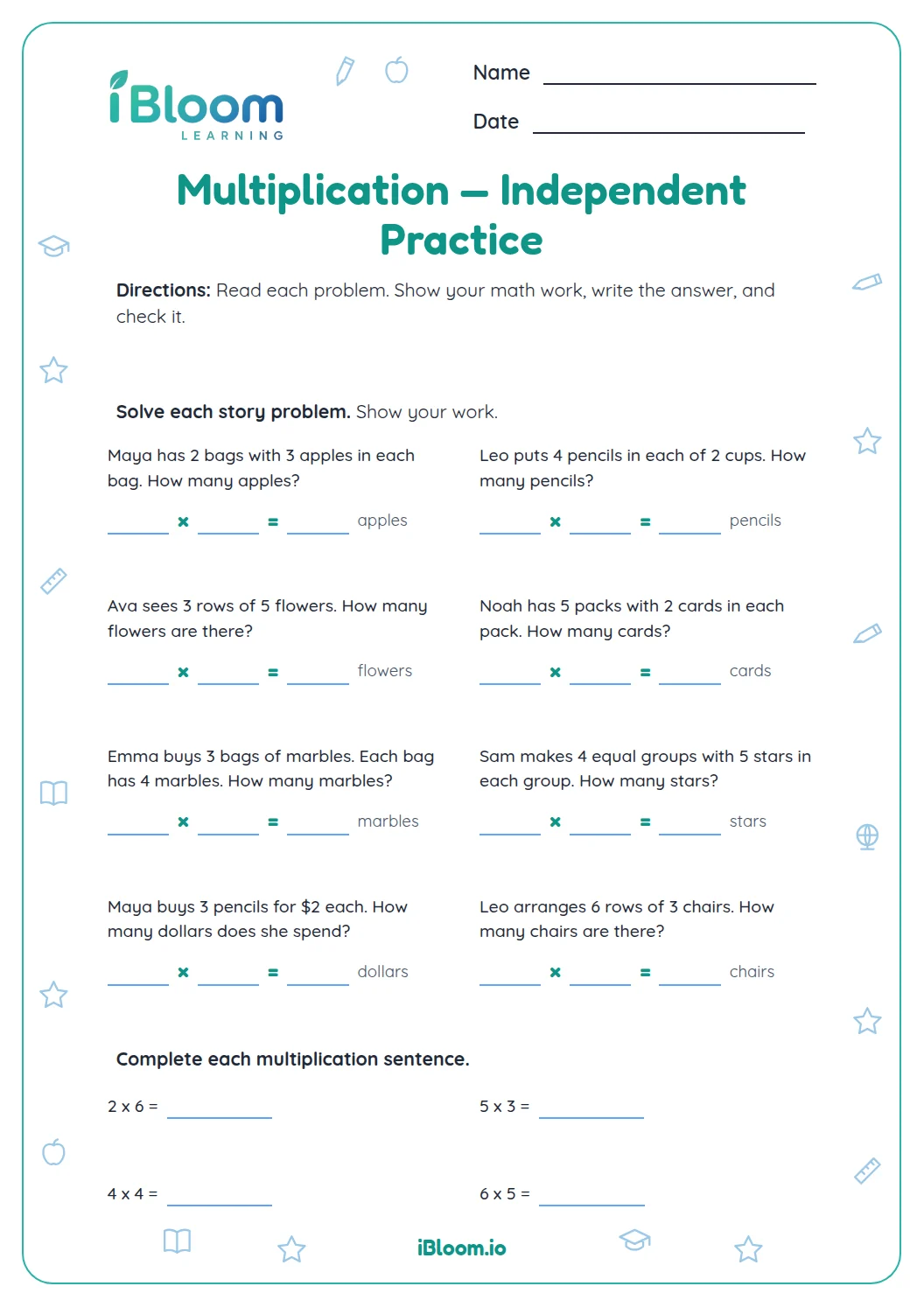
This free Grade 2 printable has 14 story problems using addition, subtraction, and the simple equal-groups multiplication named in the title. Students choose an operation, solve within 100, and check that each answer fits the story. The addition and subtraction situations align with CCSS 2.OA.A.1; the equal-groups items practice CCSS 3.OA.A.3. A separate answer key lists each result with its unit.
Aligned to 2.OA.A.1 and 3.OA.A.3
How can students choose an operation?
Look for the action in the story. Joining amounts suggests addition, removing or finding what remains suggests subtraction, and equal groups suggest multiplication. Read the whole question before calculating so the operation answers what it asks.
- 1Six bags hold 4 apples each.
- 2Use 6 equal groups of 4: 6 × 4 = 24.
- 3There are 24 apples.
How do students solve a two-step story?
Write or say the first calculation, then use its result in the next step. Question 4 starts with 35 stickers, adds 18, and then removes 12: 35 + 18 = 53, and 53 − 12 = 41 stickers. Keep the unit with the final answer.
What is included in the worksheet?
The 14 stories mix addition and subtraction within 100 with single-step equal-groups problems. Students choose the operation from the story and check that the answer names the quantity asked for.
How to use the word-problem worksheet
- 1Read the story and the final question before calculating.
- 2Underline the action or equal groups.
- 3Write the operation that matches that action.
- 4For a two-step story, solve the first change before the next one.
- 5Include the unit in the answer.
- 6Use the key to check both calculation and meaning.
Word-problem slips to check
The mistake
Choosing an operation from one familiar word alone.
The fix
Read what happens to the amounts and what the question asks.
The mistake
Stopping after the first step of a two-step story.
The fix
Reread the story after the first calculation and apply the next change.
The mistake
Writing a number without its unit.
The fix
Name what the number counts, such as 41 stickers or 15 pages.
Common Core alignment
This worksheet practices addition and subtraction stories and simple equal-groups multiplication.
Solve addition and subtraction word problems within 100.
On this sheet: The addition and subtraction stories ask students to choose and solve these situations.
Show the official wordingHide the official wording
Use addition and subtraction within 100 to solve one- and two-step word problems involving situations of adding to, taking from, putting together, taking apart, and comparing, with unknowns in all positions.
Represent and solve equal-groups multiplication situations.
On this sheet: The single-step equal-groups stories ask students to find the total number in the groups.
Show the official wordingHide the official wording
Use multiplication and division within 100 to solve word problems in situations involving equal groups, arrays, and measurement quantities, e.g., by using drawings and equations with a symbol for the unknown number to represent the problem.
What to practice next
Make more practice
Further reading
Questions parents and teachers ask
How can a child tell whether to add, subtract, or multiply?
Notice how the quantities relate. Add when amounts are joined, subtract when an amount is removed or a difference is needed, and multiply when equal groups are counted. Question 3 has six bags with four apples each, so 6 × 4 finds the total.
How many problems are included?
There are 14 short story problems. They include addition, subtraction, equal groups, and two-step stories that combine operations. Students should write the unit with each result, such as books, pages, or chairs. The separate answer key lists the results.
Does the worksheet include two-step questions?
Yes. Several stories include two changes or actions. In question 4, Mia gains 18 stickers and then gives away 12, so the solver first adds 35 + 18 and then subtracts 12 to find 41 stickers. The unit names what is counted.
Is an answer key included?
Yes. The answer key is separate from the student pages and gives a result for every story. Students can use it after trying the questions, then review whether the chosen operation and the unit both match the situation described.
Why should students write the unit?
The unit names what the answer counts. A result of 45 is clearer as 45 beads, and 15 is clearer as 15 pages remaining. Adding the unit is a quick way to check that the number answers the story question.