






About this worksheet
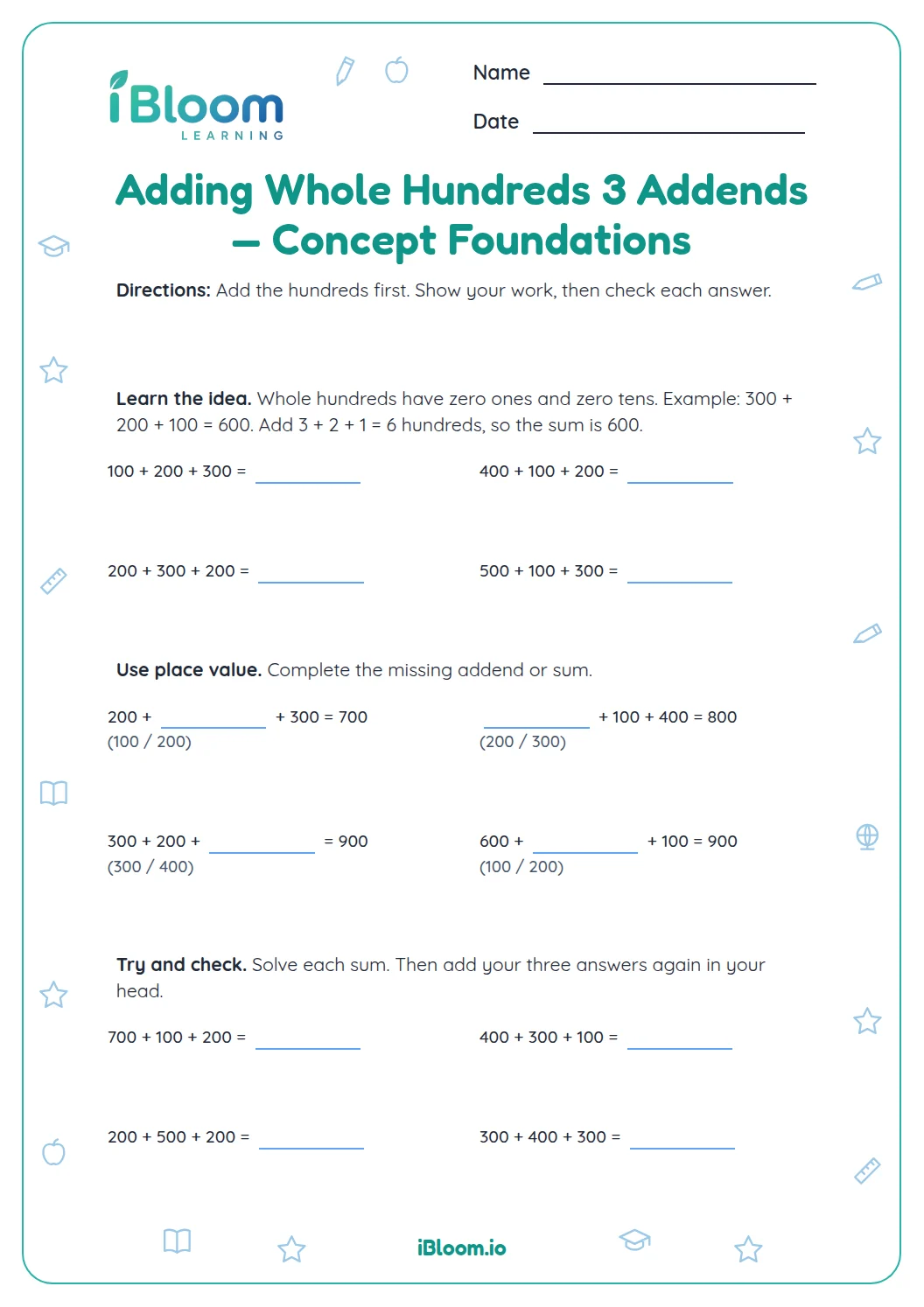
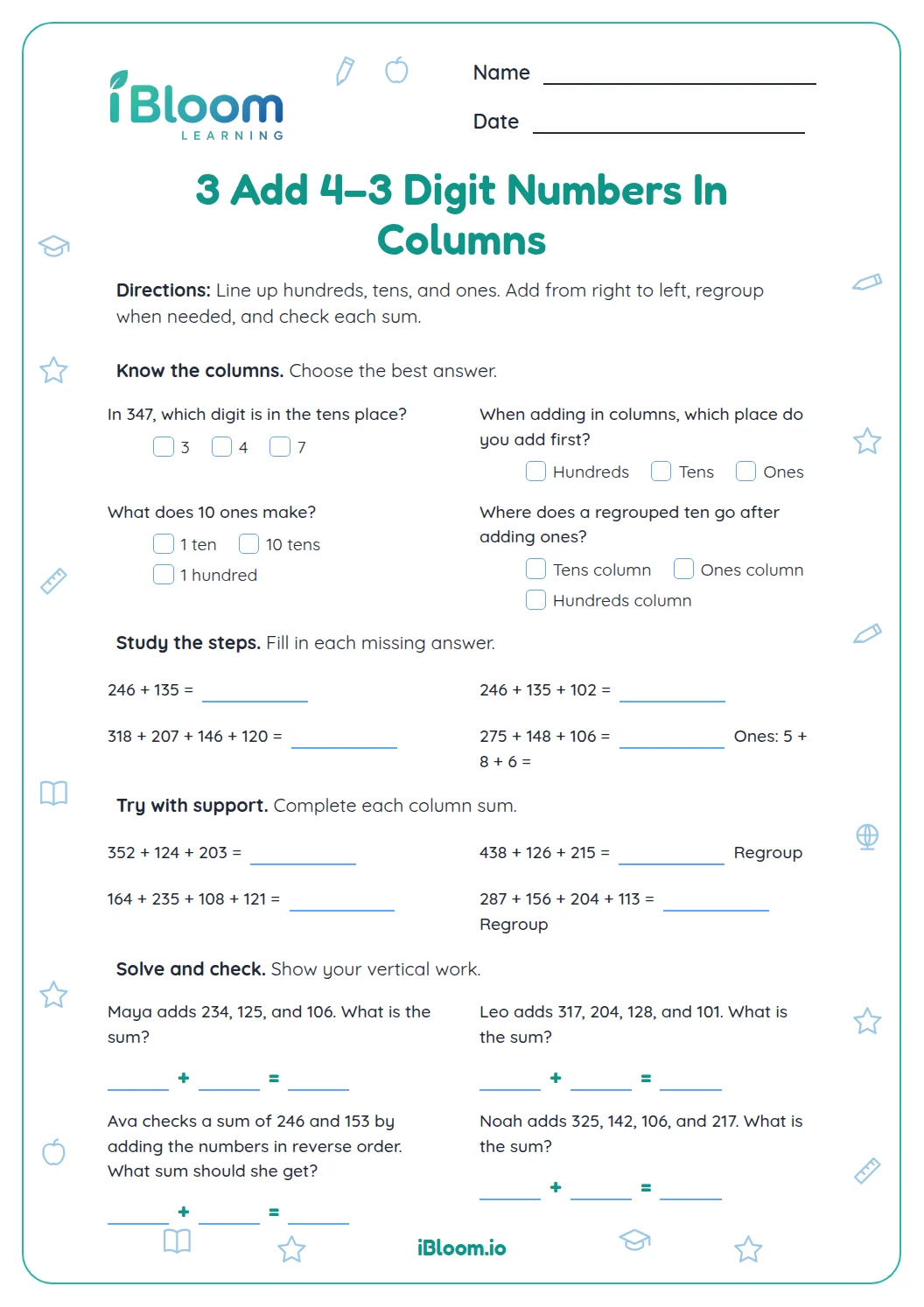
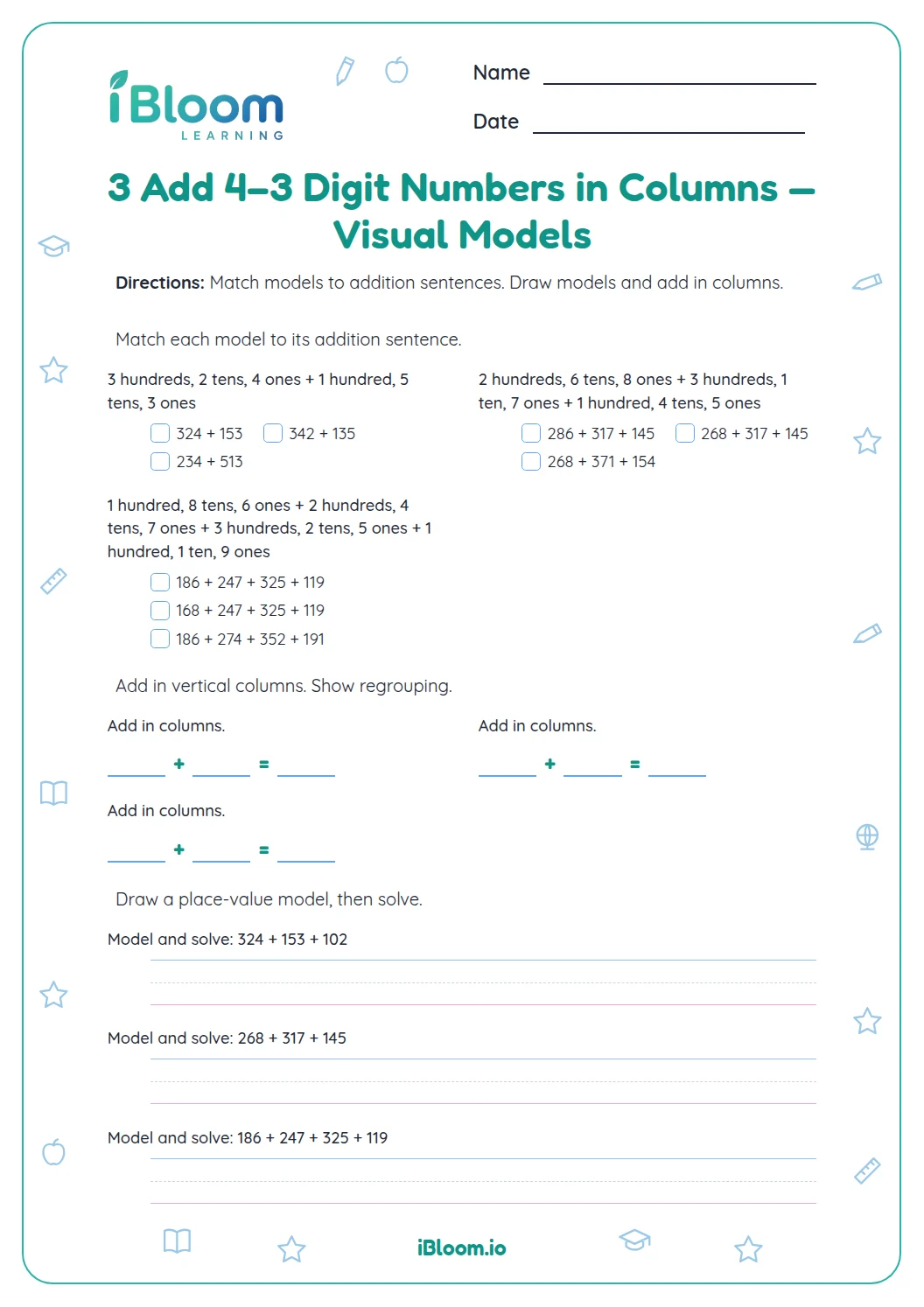
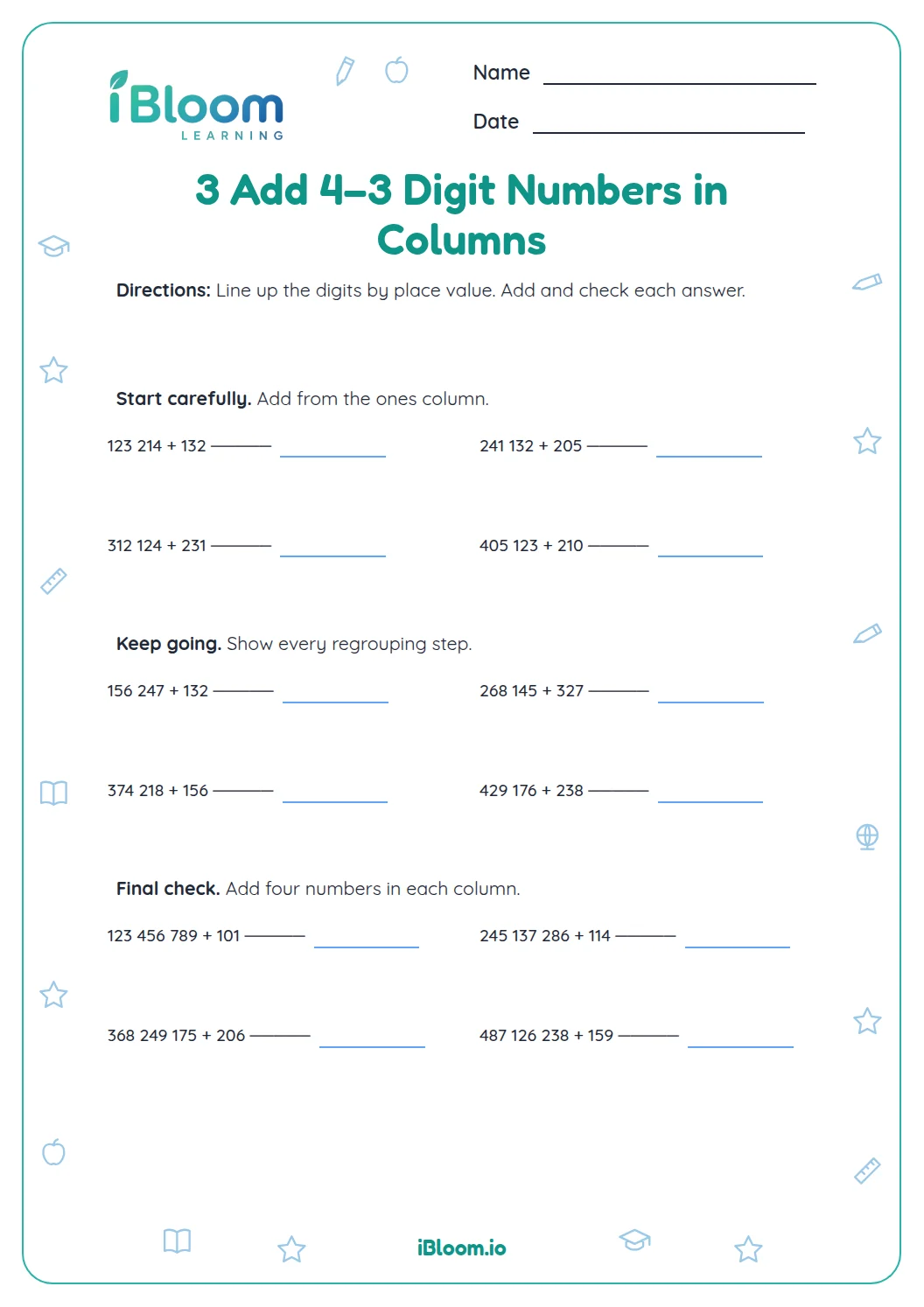
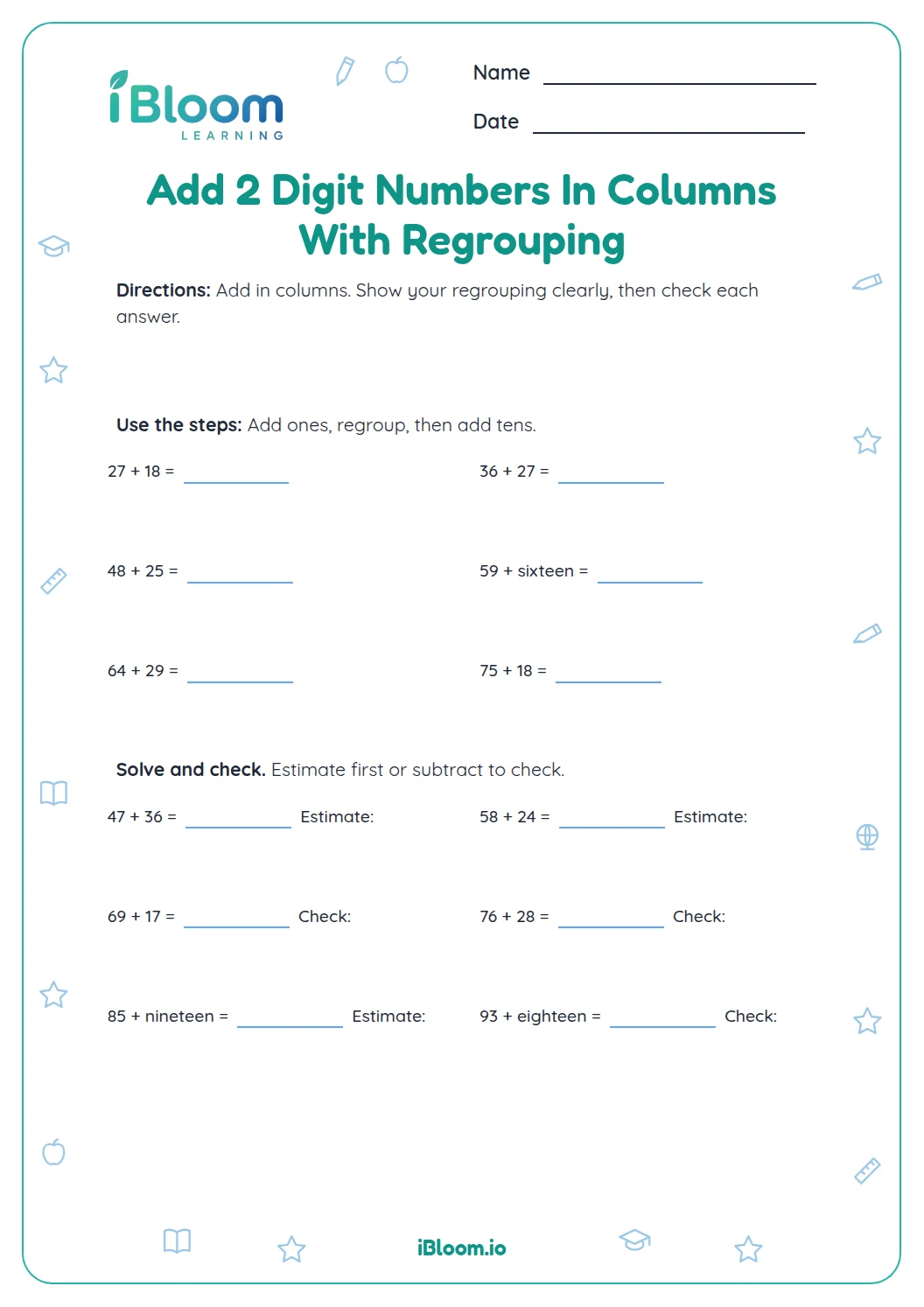
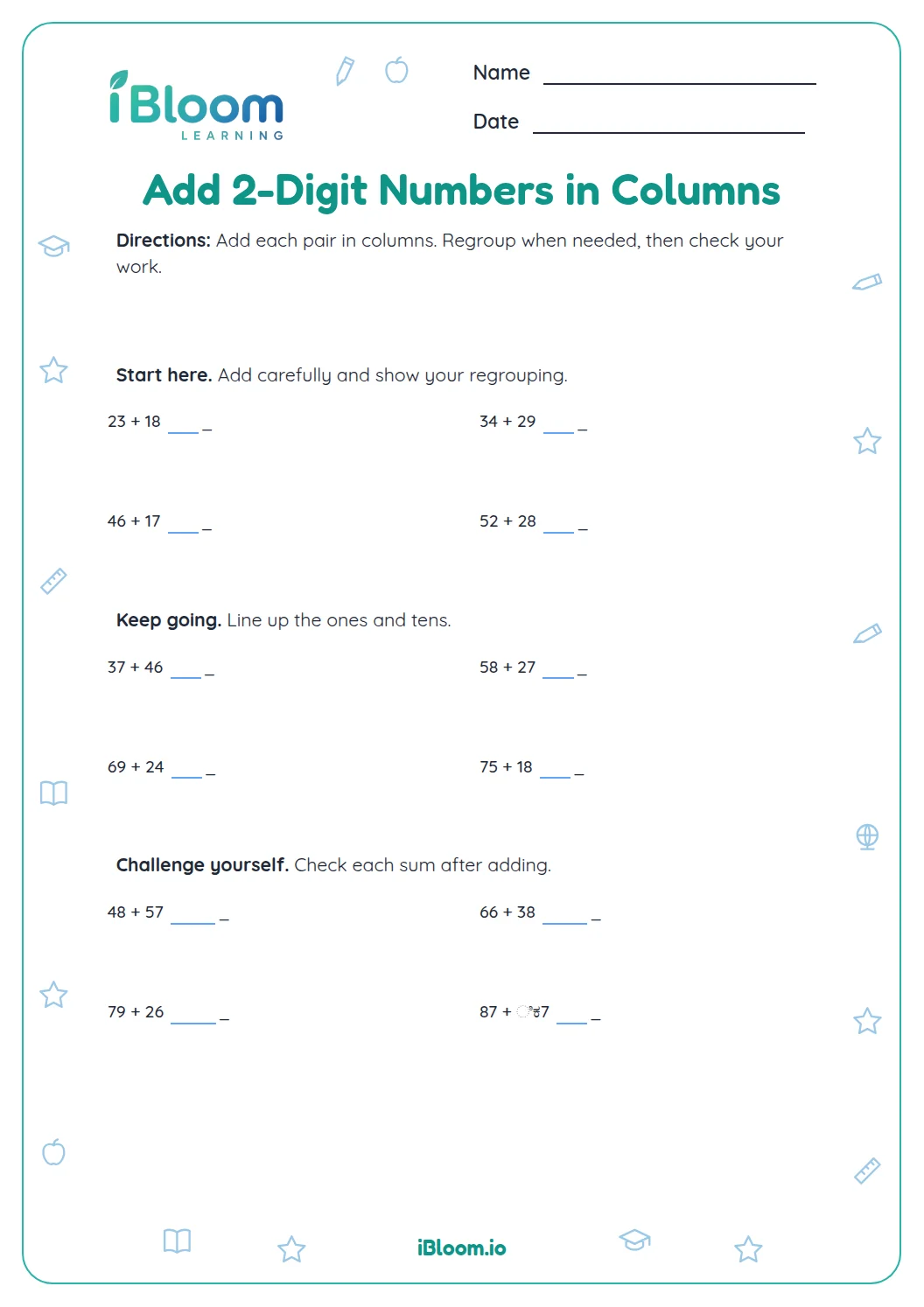
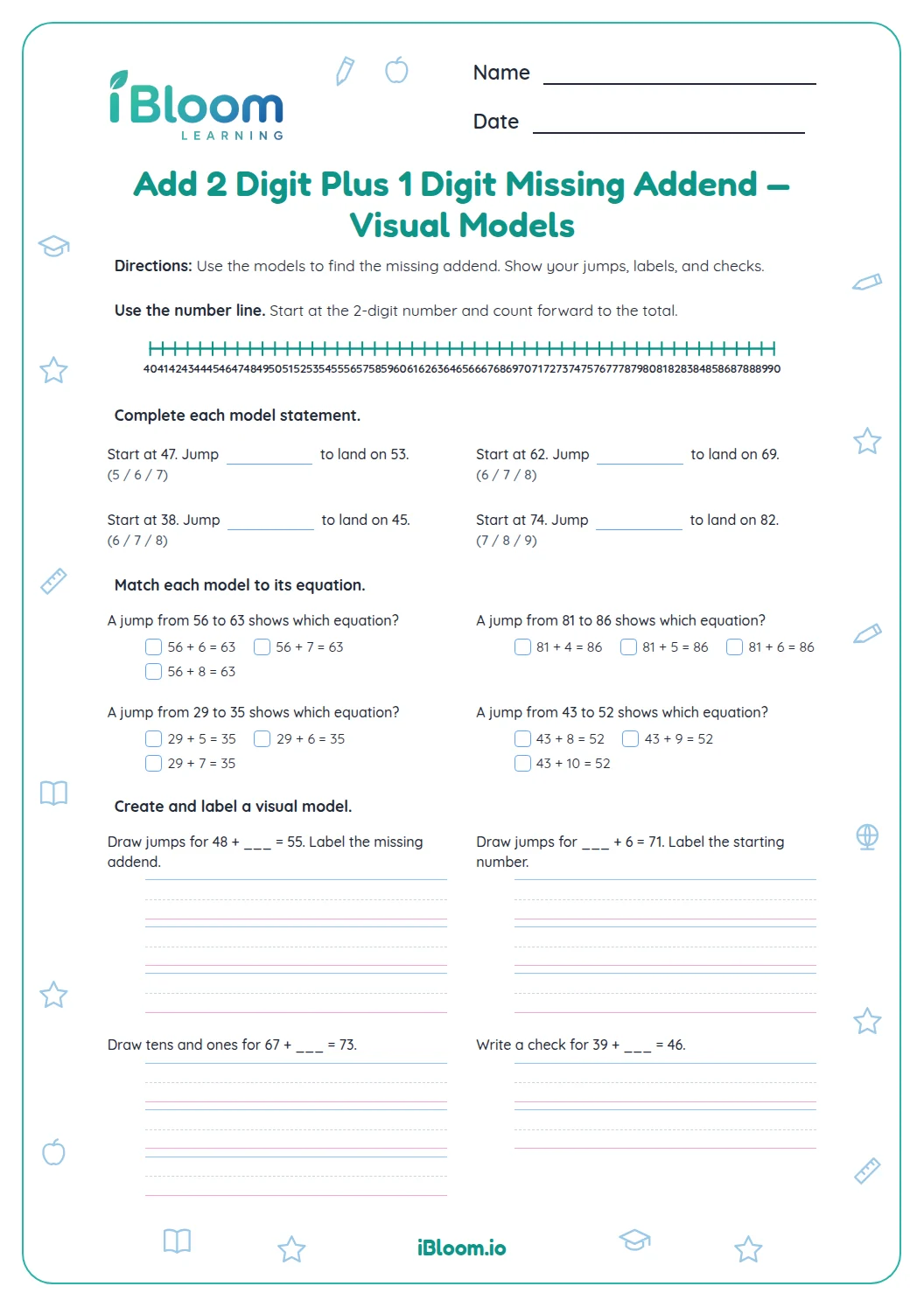
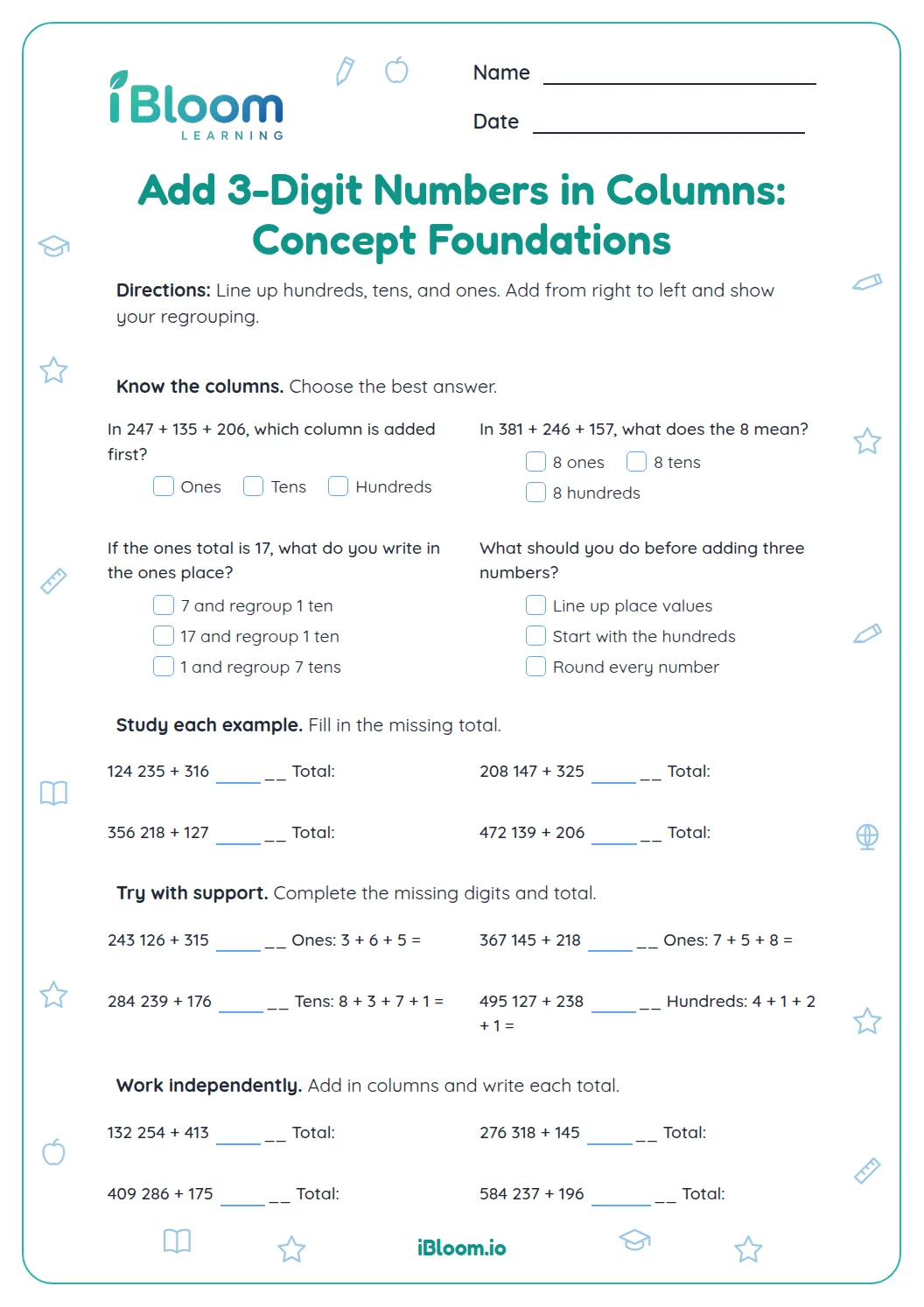
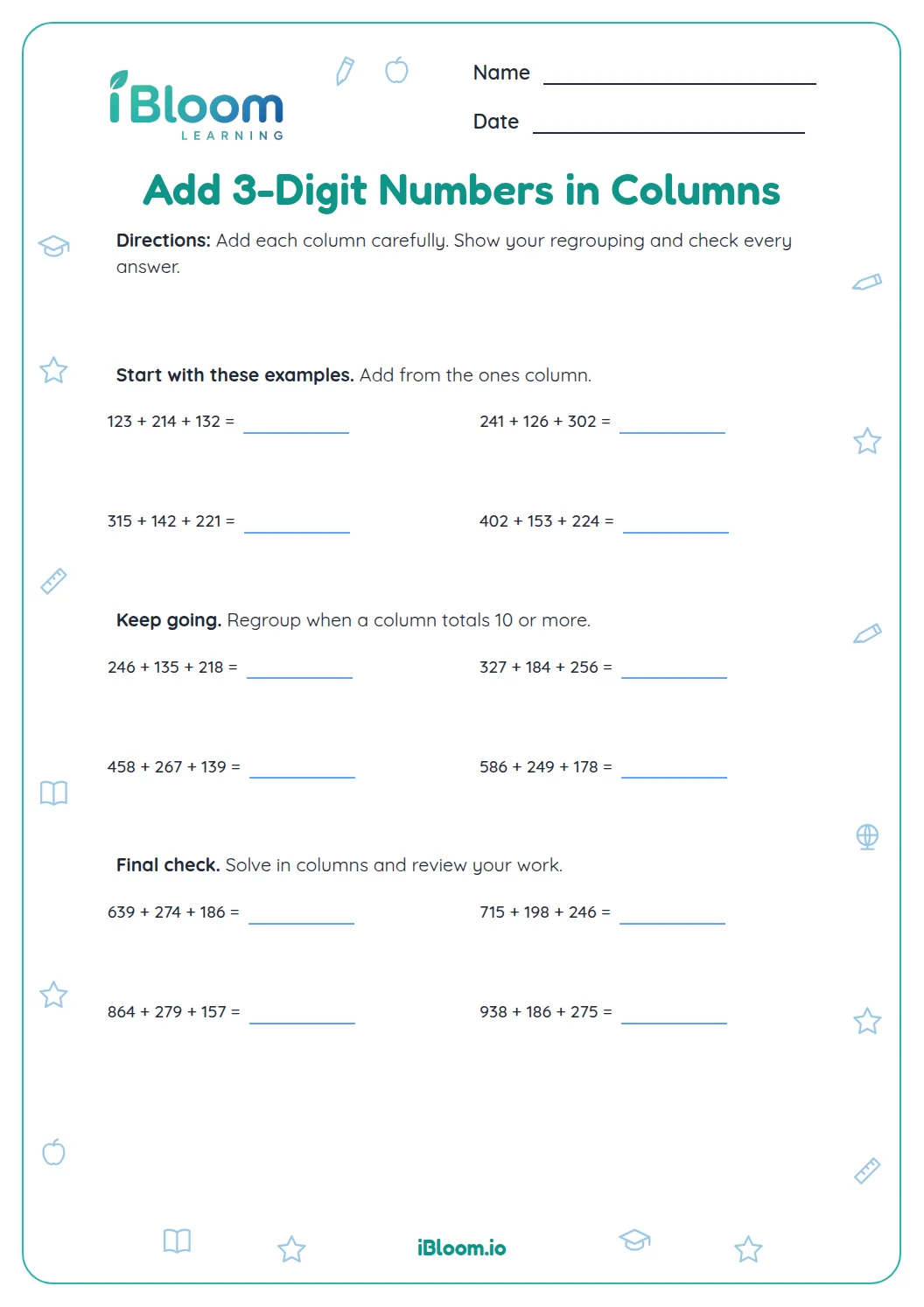
This Grade 3 worksheet gives students 14 chances to add three whole-hundred addends and explain how grouping can make a sum easier. The four parts include computation, reasoning choices, missing addends, and short stories. A separate answer key includes totals and a sample grouping strategy. The sums stay within 1,000, matching CCSS 3.NBT.A.2.
Aligned to 3.NBT.A.2
How can you choose an efficient addition order?
This Grade 3 worksheet gives students 14 chances to add three whole-hundred addends and explain how grouping can make a sum easier. The four parts include computation, reasoning choices, missing addends, and short stories. A separate answer key includes totals and a sample grouping strategy. The sums stay within 1,000, matching CCSS 3.NBT.A.2.
For example, 450 + 250 + 300 can be grouped as (450 + 250) + 300. That makes 700 + 300, or 1,000.
What will students do in each part?
Part A practices three-addend sums. Part B checks whether a total or strategy is reasonable. Part C applies addition in short contexts, and Part D explains a useful grouping. For example, group 450 + 250 first to make 700, then add 300 to reach 1,000.
How can an adult support practice?
When a total seems off, add two addends and record the subtotal before adding the third. For whole hundreds, keep track of the hundreds: 400 + 300 is 700, and 700 + 200 is 900. Reversing the order can make a friendly pair, but the sum stays the same.
How to use this worksheet
- 1Read the directions and scan the first model or example.
- 2Work through each part in order, writing clearly in the answer spaces.
- 3Pause to explain one strategy or shape clue aloud.
- 4Check every response with the separate answer key.
- 5Choose one missed question and solve or copy it again carefully.
Common mistakes and quick fixes
The mistake
Adding digits without keeping the hundreds place aligned.
The fix
Say each addend in hundreds and write the subtotal before adding the third number.
The mistake
Choosing an answer without checking the amount or clue.
The fix
Use the visual model, place value, or stated attribute to verify the choice.
The mistake
Skipping the check after finishing.
The fix
Compare each response with the key and correct one item in a different color.
Common Core alignment
This worksheet practices the following Common Core skill.
Add within 1,000 using place value, operation properties, and related strategies.
On this sheet: Add within 1,000 using place value, operation properties, and related strategies.
Show the official wordingHide the official wording
Fluently add and subtract within 1000 using strategies and algorithms based on place value, properties of operations, and/or the relationship between addition and subtraction.
What to practice next
Make more practice
Further reading
Questions parents and teachers ask
What does the worksheet focus on?
The 14 questions focus on adding three whole-hundred amounts and reasoning about the sums. Students calculate, choose correct statements, find missing addends, solve three short stories, and explain one helpful grouping. Each total is 1,000 or less, and a separate answer key is included.
How can grouping make addition easier?
Look for two addends that make a friendly subtotal, then add the remaining number. In the final explanation prompt, 450 + 250 makes 700; adding 300 then reaches 1,000. Other questions use whole hundreds that can be grouped in a similar way.
Does every problem use only whole hundreds?
Yes. The computation and story questions use whole-hundred addends. The final reasoning prompt uses 450, 250, and 300, which are not all whole hundreds; it asks students to apply the same grouping idea to a related sum that still totals 1,000.
Is an answer key included?
Yes. The separate key lists the totals, missing addends, correct reasoning choices, story answers, and a sample response for the explanation. When students group addends in another valid order, accept it if the computation is correct and the explanation is clear.
How can I help if a child gets a total wrong?
Have the child add two addends at a time and say the subtotal aloud before adding the last number. Then estimate in hundreds to check the result. For example, 300 + 200 + 100 should be 600, not 60 or 6,000.