


About this worksheet
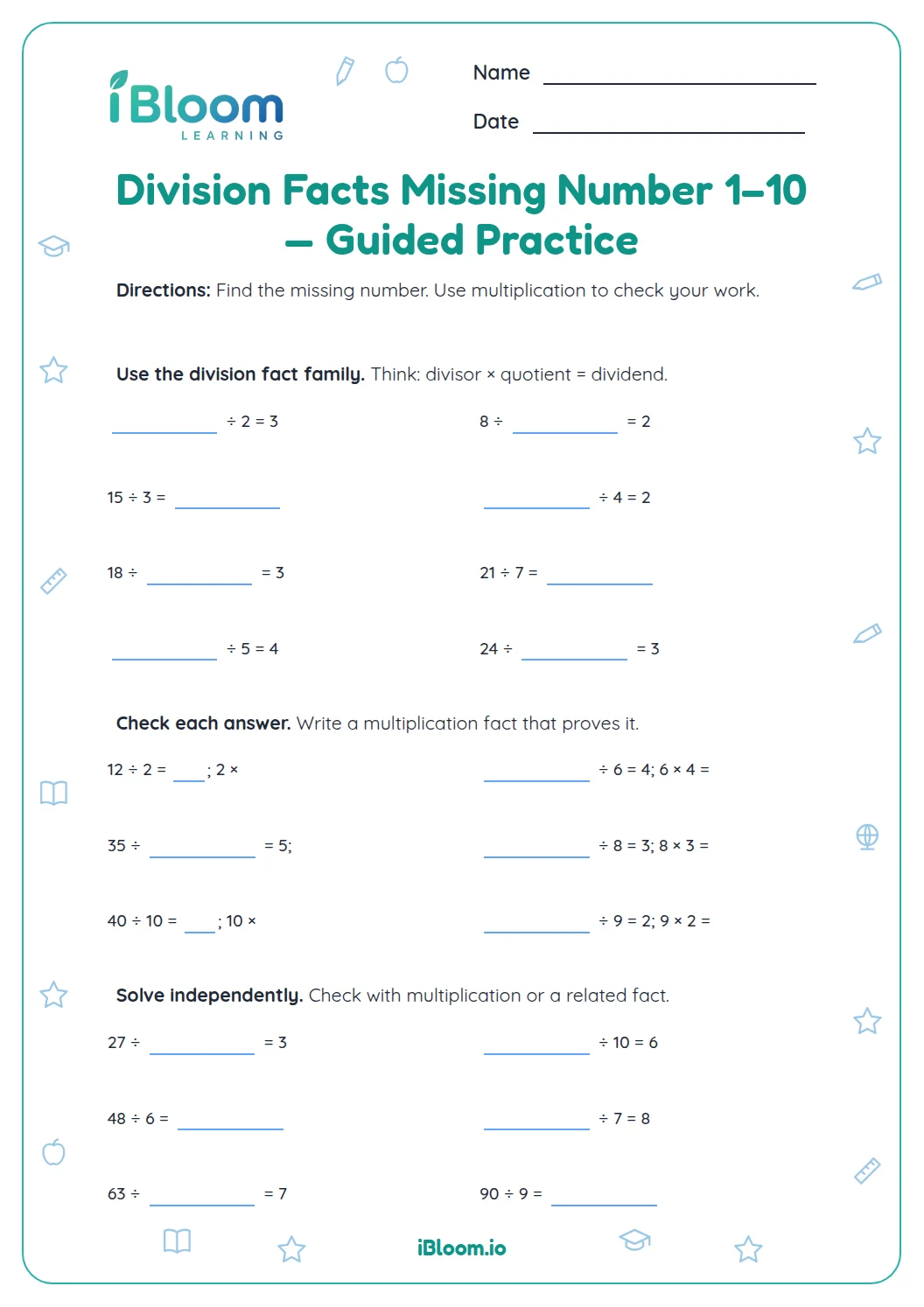
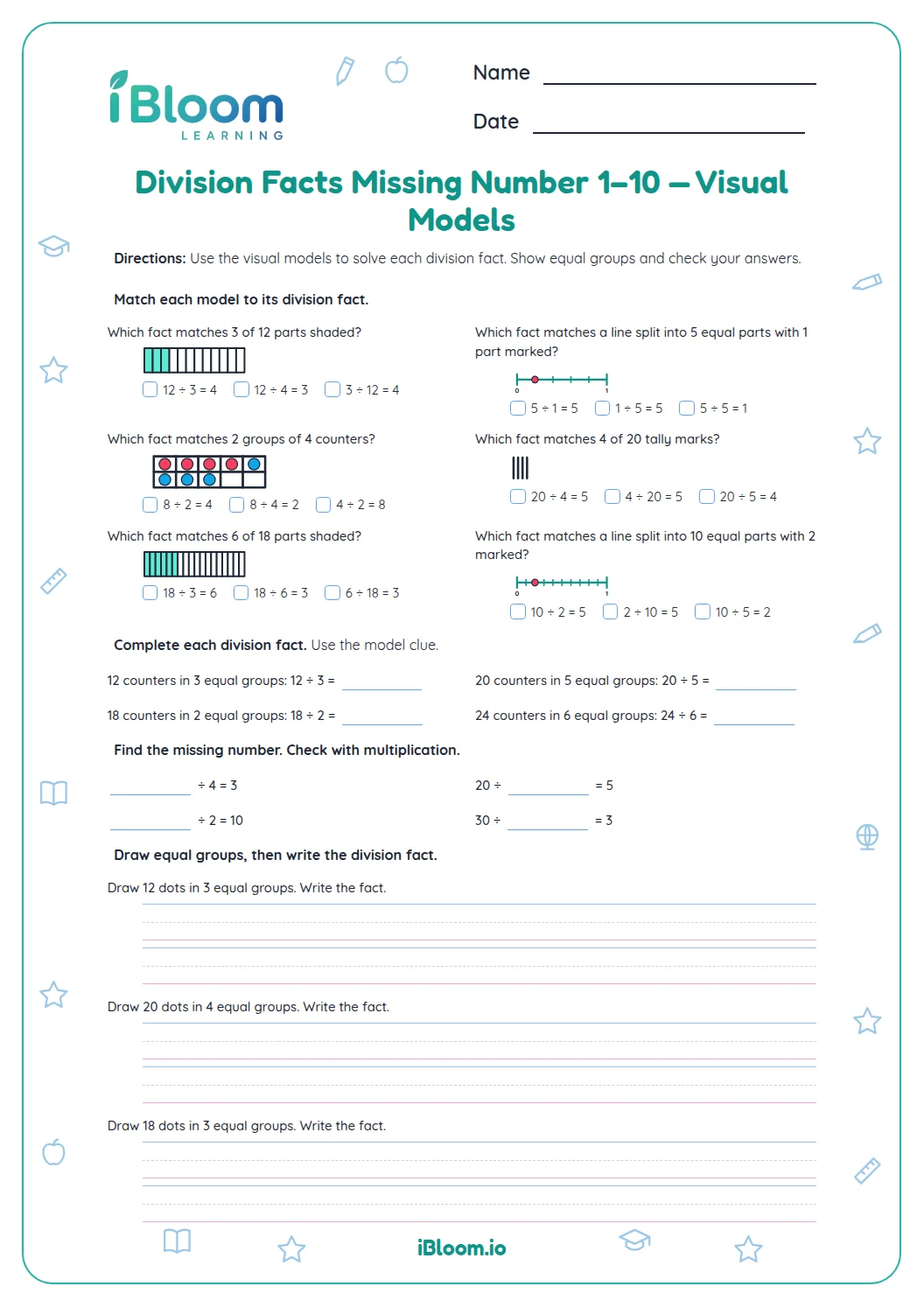
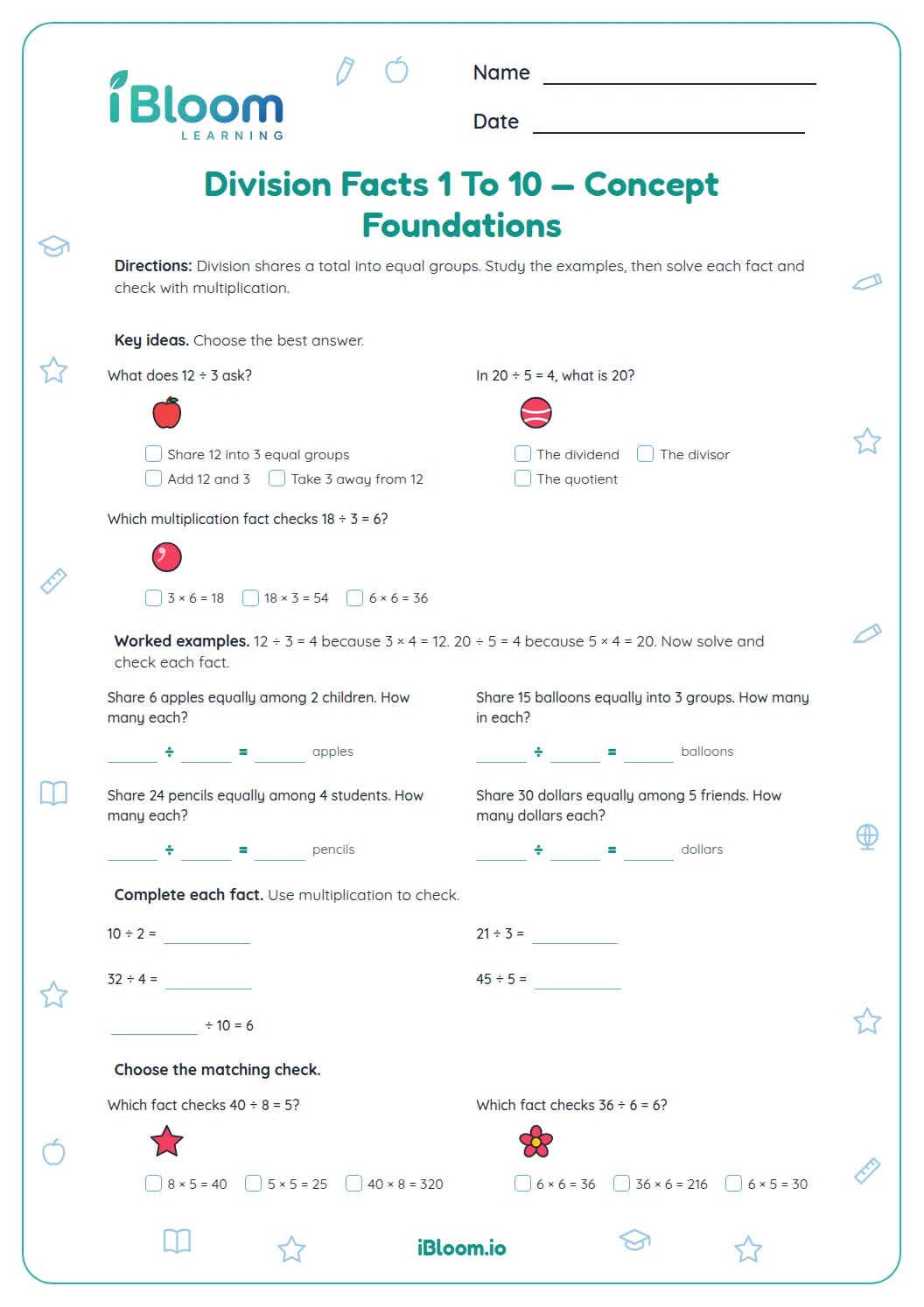
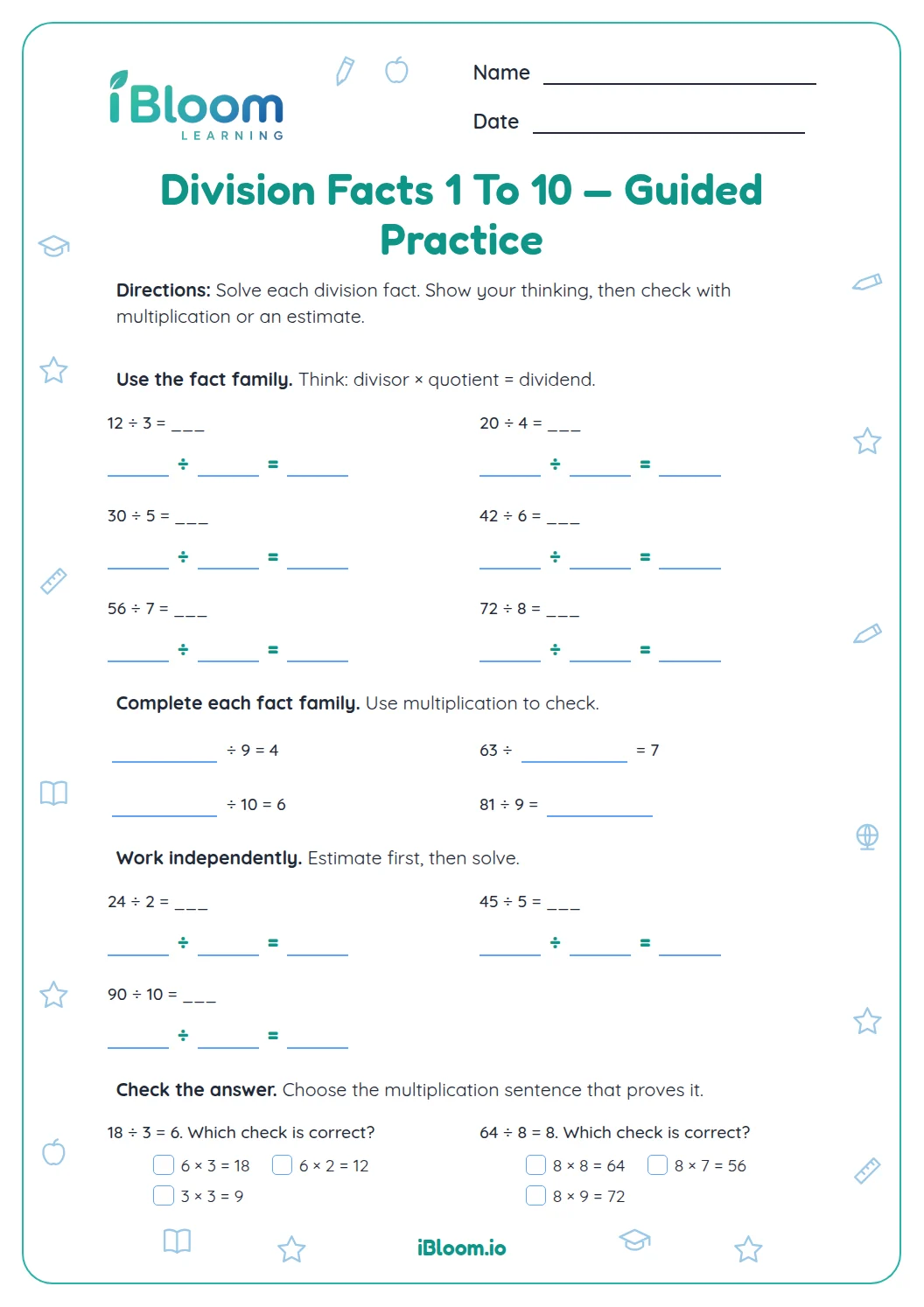
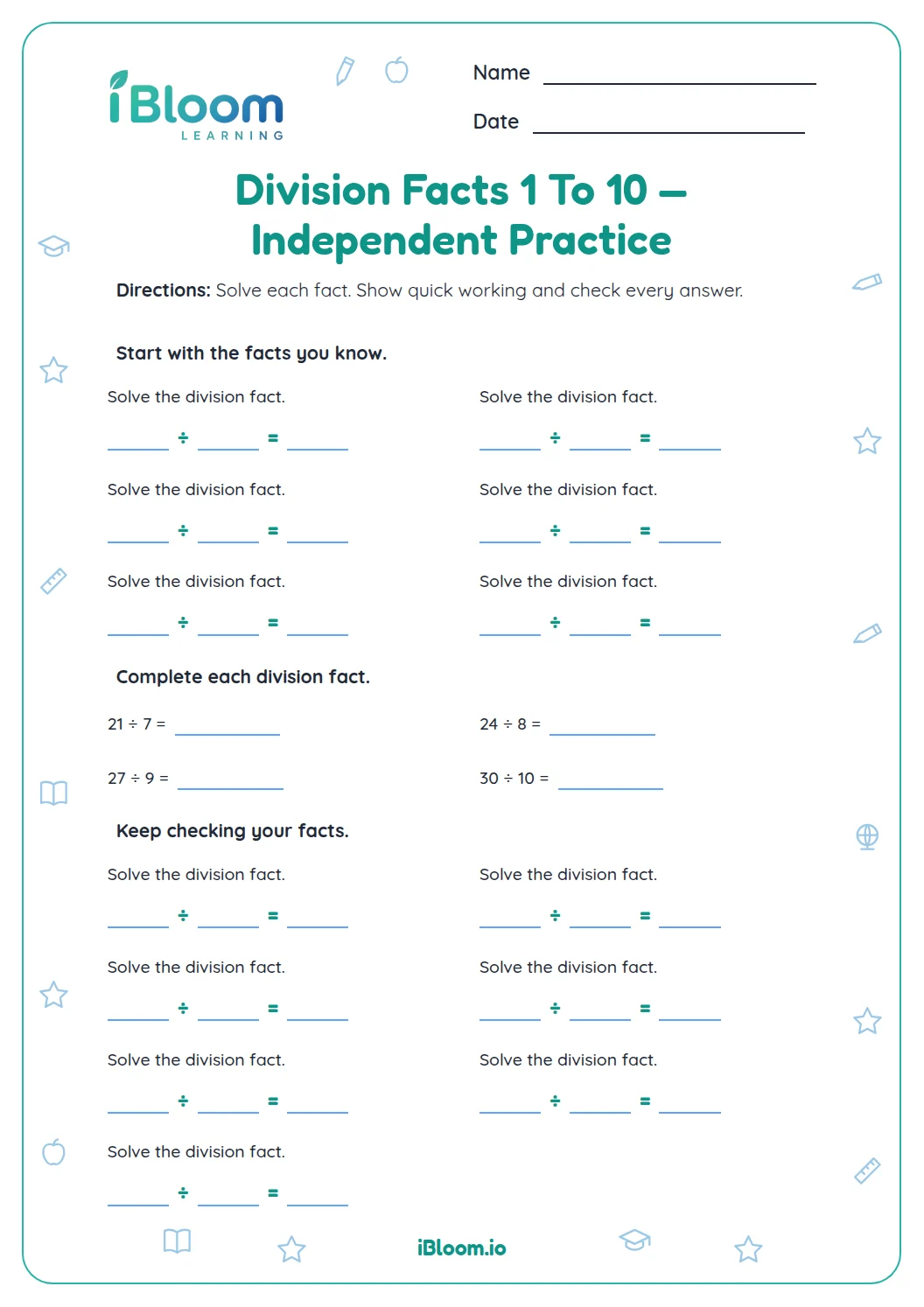
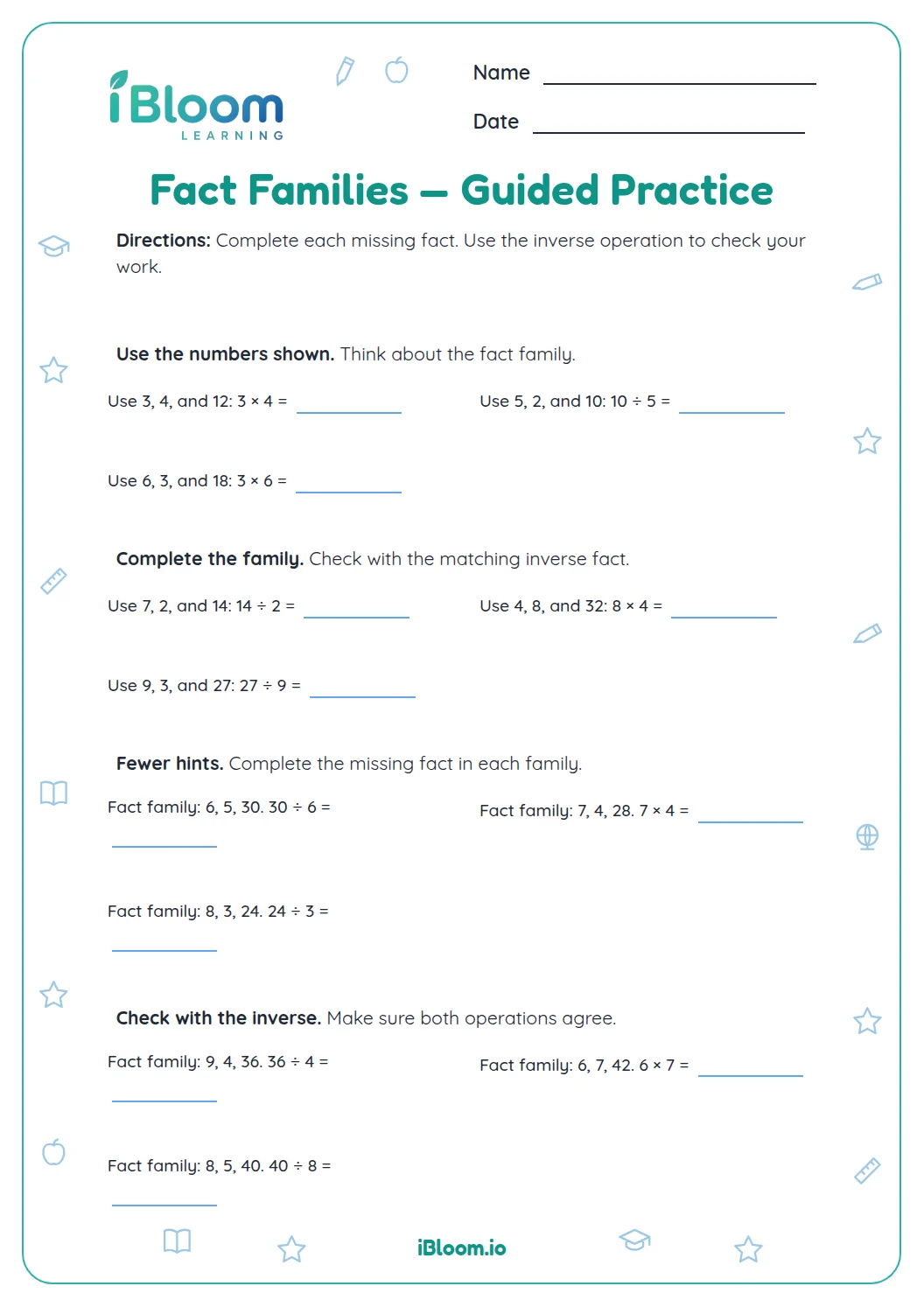
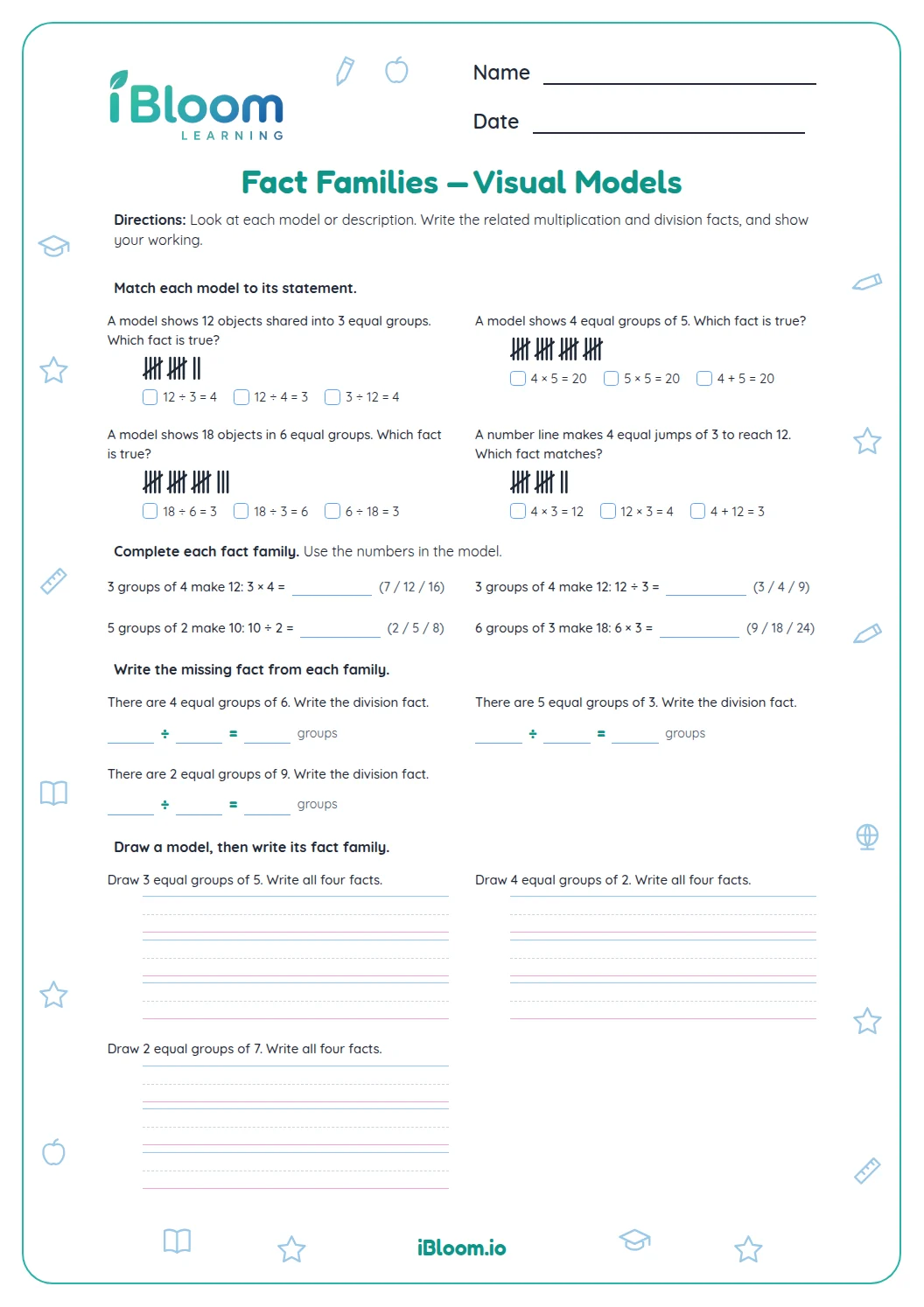
This printable focuses on missing numbers in multiplication and division facts using factors 1–10. Part A asks students to find a missing factor or divisor, Part B adds selected reasoning choices, and Part C connects facts to short situations. Every quotient and product stays within 100.
Aligned to 3.OA.A.4
How can multiplication find a missing number?
Use a related multiplication fact and check that it makes the equation true.
- 1___ × 10 = 10
- 21 × 10 = 10
- 3The missing number is 1.
How do multiplication and division connect?
A multiplication fact can check a division fact: if 7 × 8 = 56, then 56 ÷ 8 = 7.
How can a fact solve a story problem?
Match the groups in the story to a multiplication or division equation, then solve and label the answer.
How to use this worksheet
- 1Read the whole equation and locate the unknown.
- 2Turn a division equation into a related multiplication fact.
- 3Check by putting the answer back in the original equation.
Common mistakes and quick fixes
The mistake
Using the divisor as the quotient without checking.
The fix
Multiply the proposed quotient by the divisor and see whether it makes the dividend.
The mistake
Changing which number is divided.
The fix
Keep the dividend first and the divisor after the division sign.
Curriculum alignment
This page aligns with Grade 3 work on multiplication and division equations with unknown whole numbers.
Find an unknown whole number in a multiplication or division equation.
On this sheet: Students solve multiplication and division equations with one missing number.
Show the official wordingHide the official wording
Determine the unknown whole number in a multiplication or division equation relating three whole numbers.
What to practice next
Make more practice
Further reading
Questions parents and teachers ask
How can multiplication help solve a division fact?
Use a related multiplication fact. To solve 56 ÷ 8, think of what number times 8 equals 56. Since 7 × 8 = 56, the quotient is 7. This fact-family connection works for other missing factors and divisors on the sheet.
What does the blank stand for in a division equation?
The blank is an unknown number that makes the whole equation true. Read the known numbers and think of the matching multiplication fact. Then substitute the missing value and check that the product equals the dividend. For example, 42 ÷ 6 = ___ matches 6 × 7 = 42.
What grade is this worksheet for?
This page is for Grade 3 students practicing multiplication and division facts. The missing values in the equation practice include every whole number from 1 through 10. Products and dividends stay within 100, and the final items connect facts to short situations and explanations.
How should a child check a missing-number answer?
Put the answer back into the original equation and use the inverse operation. For example, for ___ × 8 = 56, test whether 7 × 8 equals 56. For division, multiply the quotient by the divisor and confirm that the product equals the dividend.