



About this worksheet
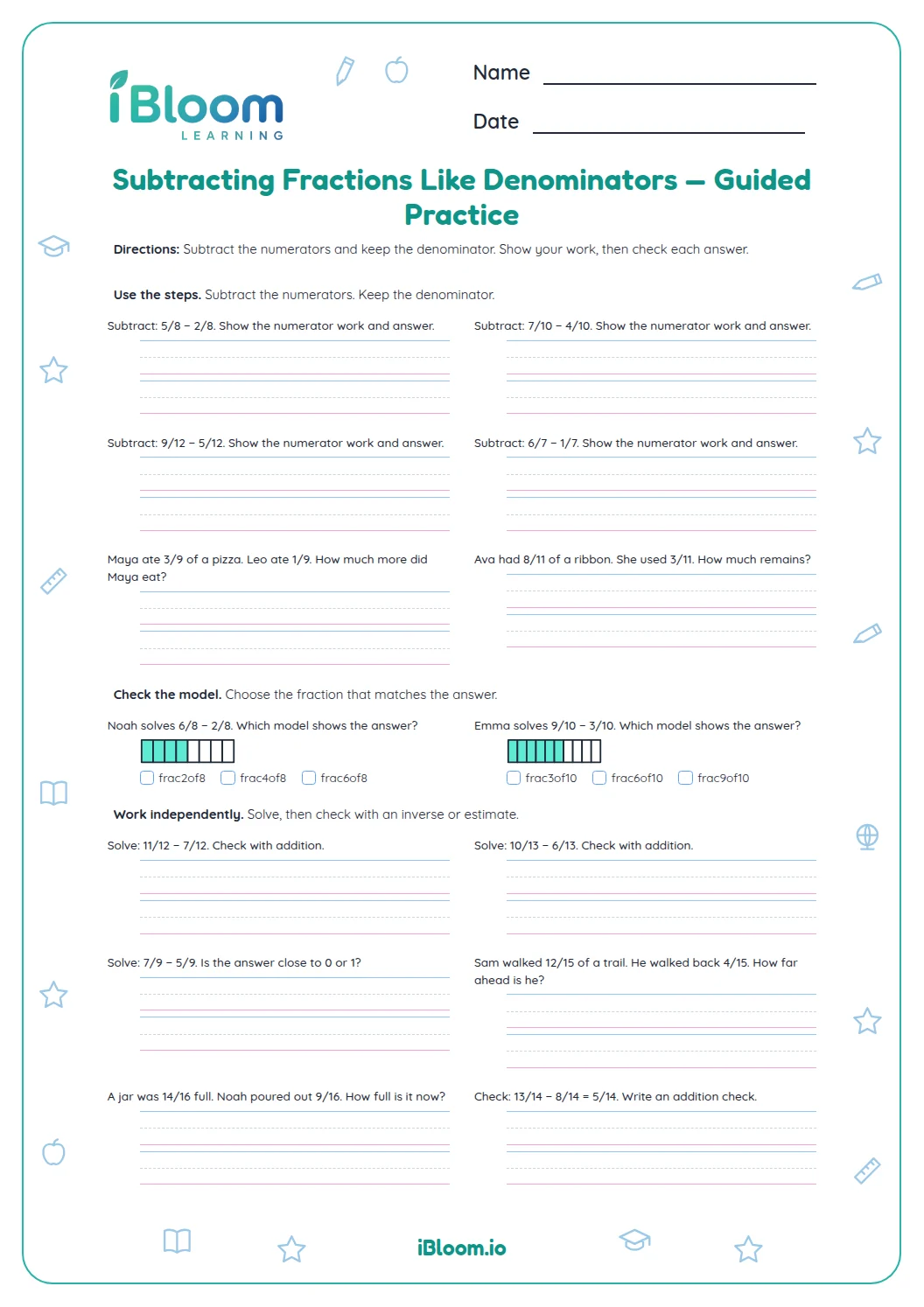
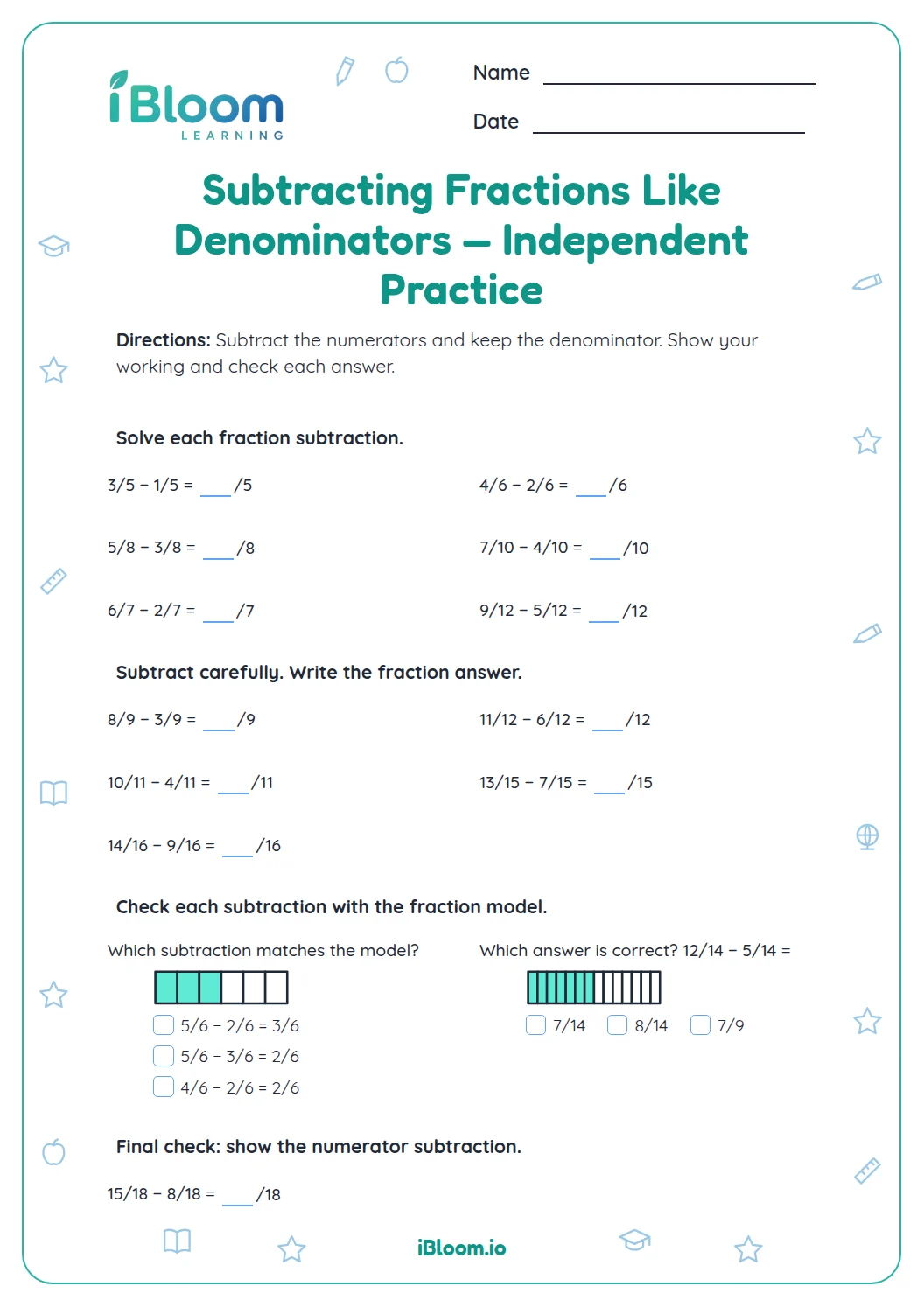
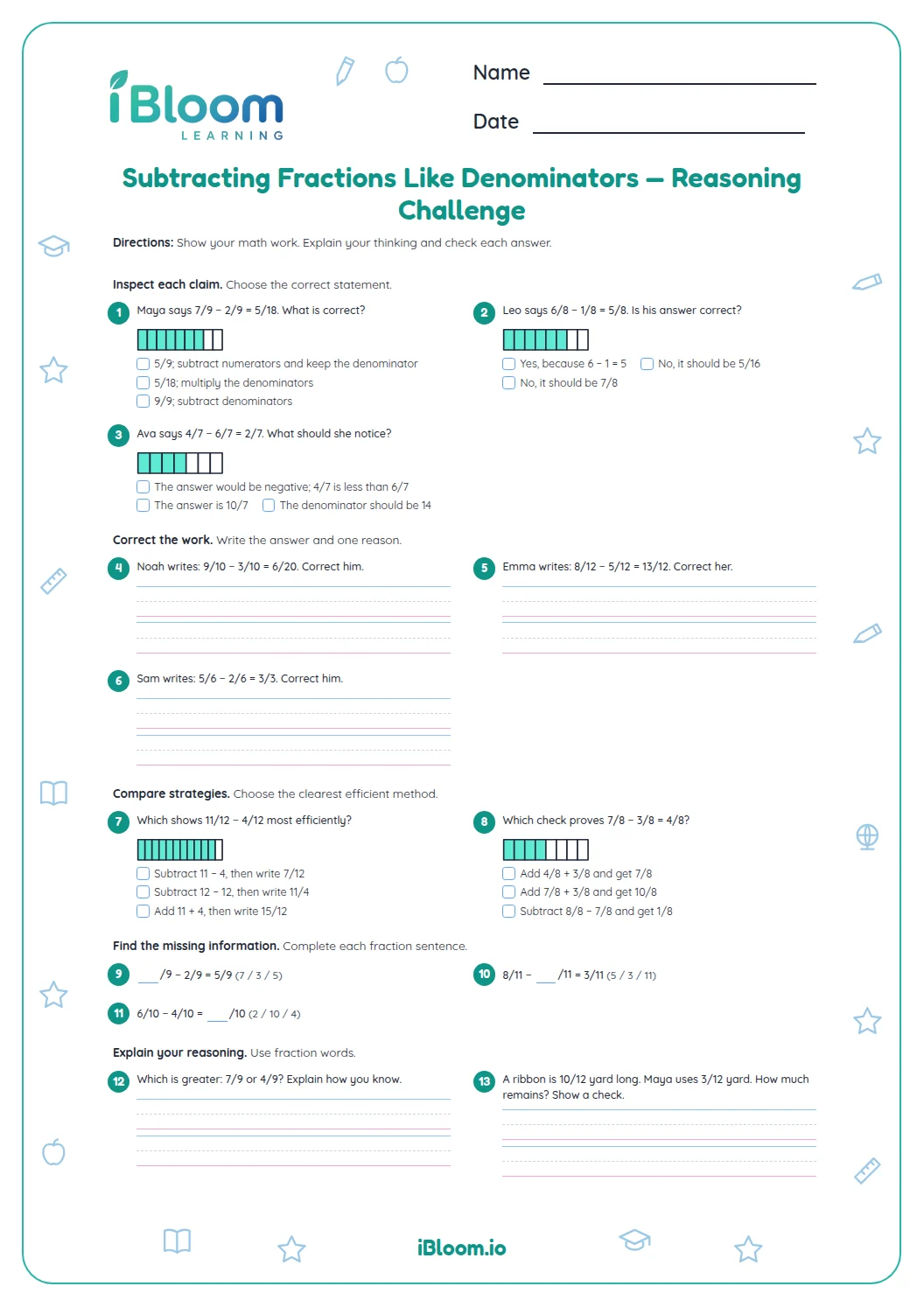
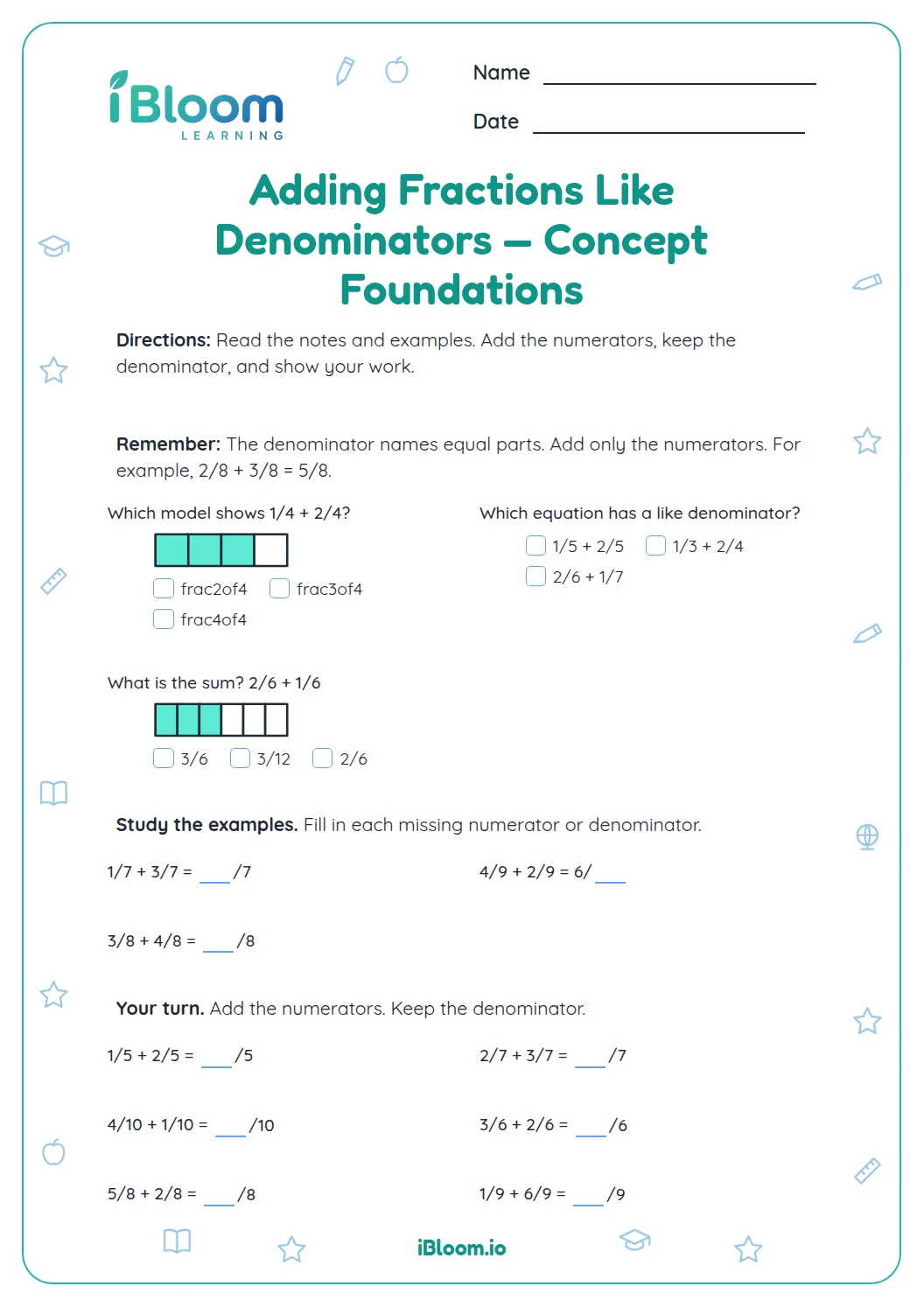
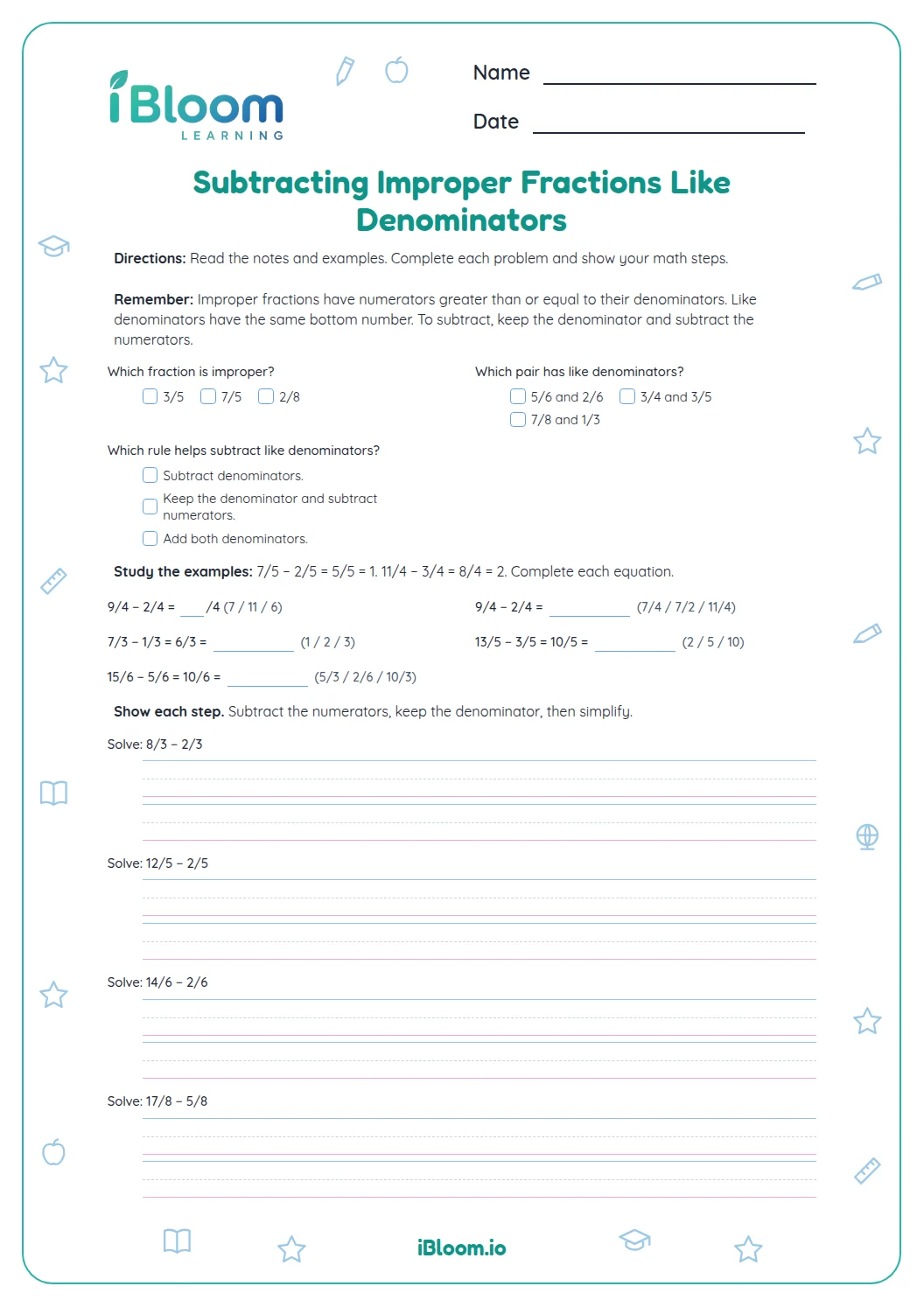
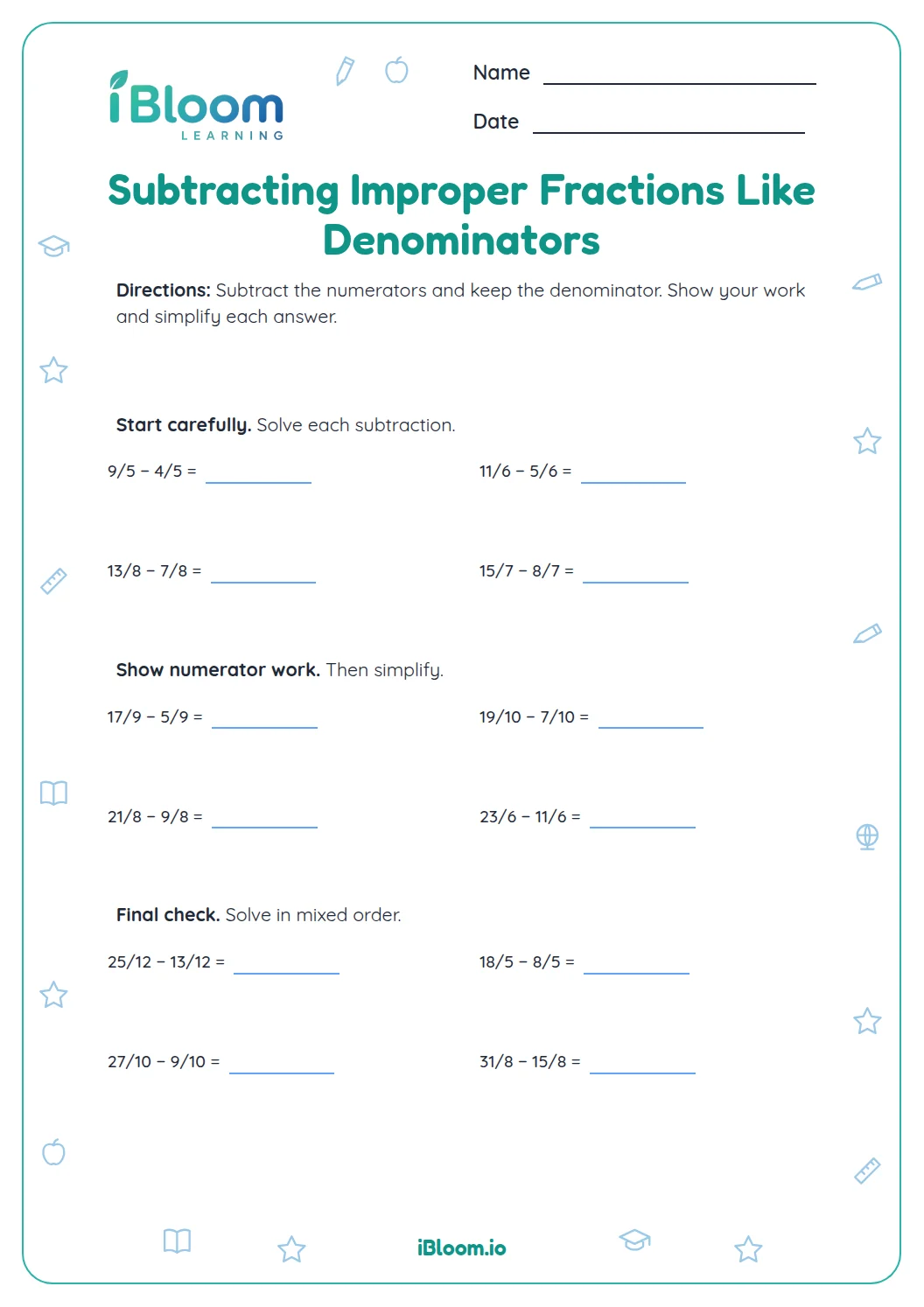
This free Grade 3 worksheet makes each subtraction visible with a fraction bar. Every question shows a starting fraction and asks children to remove equal-sized pieces, keeping the denominator the same. The fourteen problems use fourths, sixths, and eighths, with a mix of multiple-choice and written answers. The sheet practices the Common Core idea of treating fraction subtraction as separating parts of the same whole, CCSS 4.NF.B.3.a. A separate key shows each modeled difference.
Aligned to 4.NF.B.3.a
How does a fraction bar show subtraction?
The bar is split into equal pieces. Its shaded pieces show the starting fraction; the second fraction tells how many pieces to take away. In question 1, two of the three shaded fourths are removed, leaving 1/4.
Count the pieces that remain, then write that count over the number of equal parts in the full bar.
Why does the denominator stay the same?
The pieces do not change size when some are taken away. If a bar is divided into sixths, the answer is still measured in sixths. For example, 5/6 − 2/6 leaves 3/6.
The later questions ask children to state the subtraction and read the model together. Check that the numerator difference matches the number of shaded parts left.
What is included on the worksheet?
Fourteen bar models give practice with fourths, sixths, and eighths. Children choose the difference on the first seven items, then write the difference for seven more.
- Part A: seven modeled multiple-choice items
- Part B: seven modeled subtraction items
- Each item has a fraction-bar model
- Four worksheet pages and a separate four-page key
How to use this worksheet
- 1Name the denominator by counting the equal parts in the bar.
- 2Read the starting fraction shown by the shaded parts.
- 3Subtract the number of parts named in the prompt.
- 4Count the shaded parts that remain and keep the denominator.
- 5Compare each answer with the answer key and explain one model aloud.
Common fraction subtraction slips
The mistake
Subtracting the denominators as well as the numerators.
The fix
The pieces stay the same size, so only subtract the number of pieces.
The mistake
Counting all parts in the bar as the answer.
The fix
Count only the shaded parts left after taking away the specified amount.
The mistake
Reading the shaded count as the denominator.
The fix
The denominator is the total number of equal pieces in one whole bar.
Common Core alignment
The fraction bars help make subtraction of equal-sized parts visible.
Use a bar to see subtraction as separating parts of one whole.
On this sheet: Each item uses a bar divided into equal parts and removes some of its shaded fraction.
Show the official wordingHide the official wording
Understand addition and subtraction of fractions as joining and separating parts referring to the same whole.
What to practice next
Make more practice
Further reading
Questions parents and teachers ask
How do you subtract fractions with like denominators?
When the denominators match, subtract the numerators and keep the same denominator. For example, 5/6 − 2/6 leaves 3/6. The bar models show the remaining pieces so children can connect the subtraction to the fraction answer. Count the remaining shaded pieces to check the subtraction.
What do the shaded bars represent?
The full bar is divided into equal parts, and the shaded pieces represent the amount left after subtraction. In question 1, one of four equal parts remains, so the difference is 1/4. Each drawing matches the subtraction in its prompt.
Why does the denominator stay the same?
The size of each piece stays fixed when pieces are taken away. A bar divided into sixths is still measured in sixths after subtraction; only the number of shaded pieces changes. The numerator records how many equal parts remain.
Should children simplify the answer?
The answers can stay in the same-denominator form practiced on this page. For example, 2/4 is a correct difference even though it is equivalent to 1/2. Children should first show that the counted pieces and denominator match the model.
Is there an answer key?
Yes. The separate answer key lists all fourteen differences beside their fraction bars. It accepts the same-denominator answers shown by the models, so a child can check both the number of remaining pieces and the denominator. The answer key follows the models in worksheet order.