


About this worksheet
This Grade 3 printable starts with shape comparisons and moves to practical problems about matching signs, tiles, and cutouts. Twelve questions ask learners to recognize equal size and form, calculate perimeters or area, and explain how turning a shape affects congruence. A separate answer key supports checking.
How can you tell if two shapes are congruent?
Congruent shapes have the same size and the same shape. Turning or flipping one does not change that match.
- 1A 6-inch square sign has four equal sides.
- 2Perimeter: 6 + 6 + 6 + 6 = 24 inches
How do the story problems use congruence?
The later questions use matching signs, tiles, cards, and flags. Read the measurements carefully: congruence concerns equal size and form, while perimeter and area require their own calculations.
- For a square perimeter, add its four equal sides.
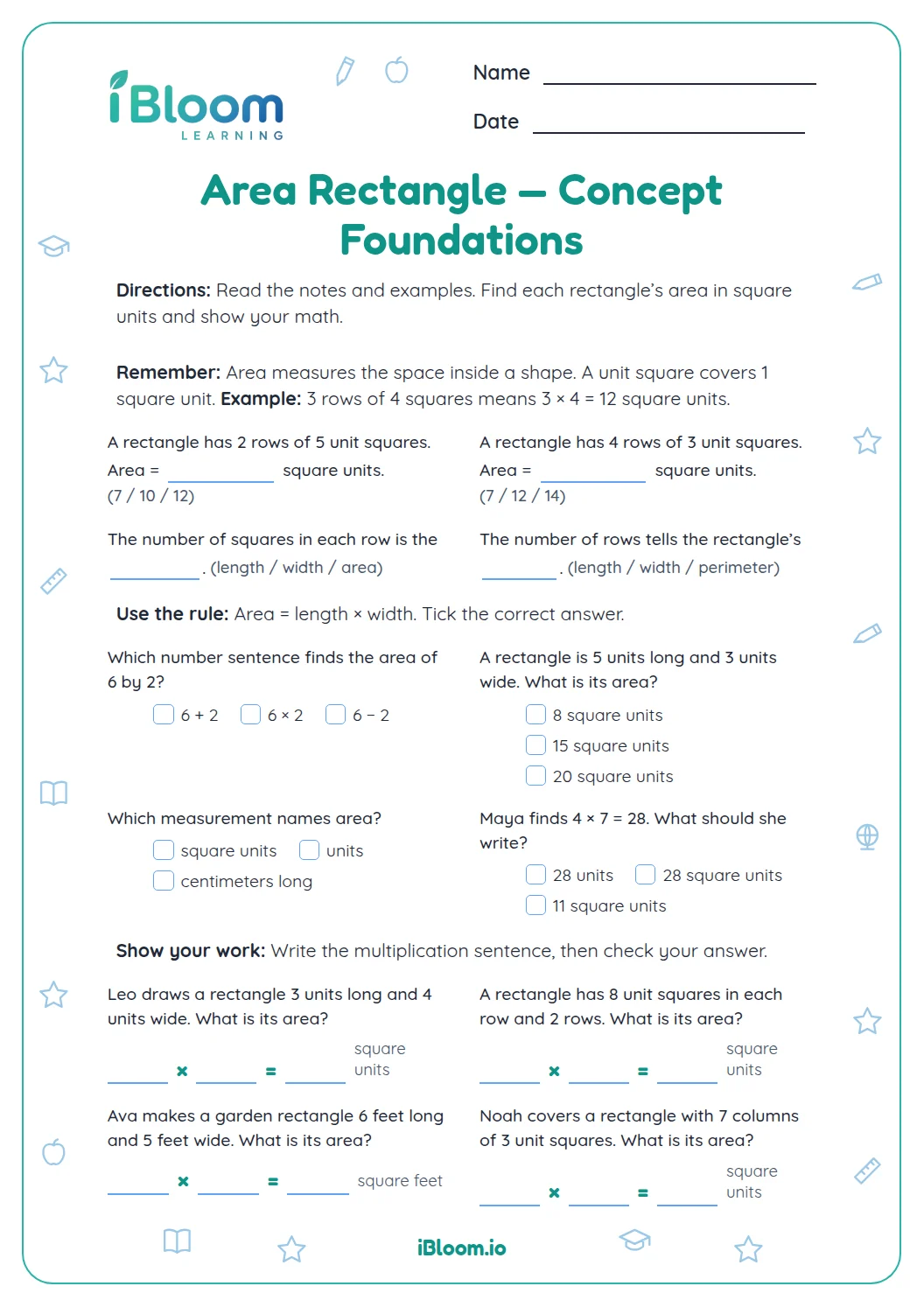
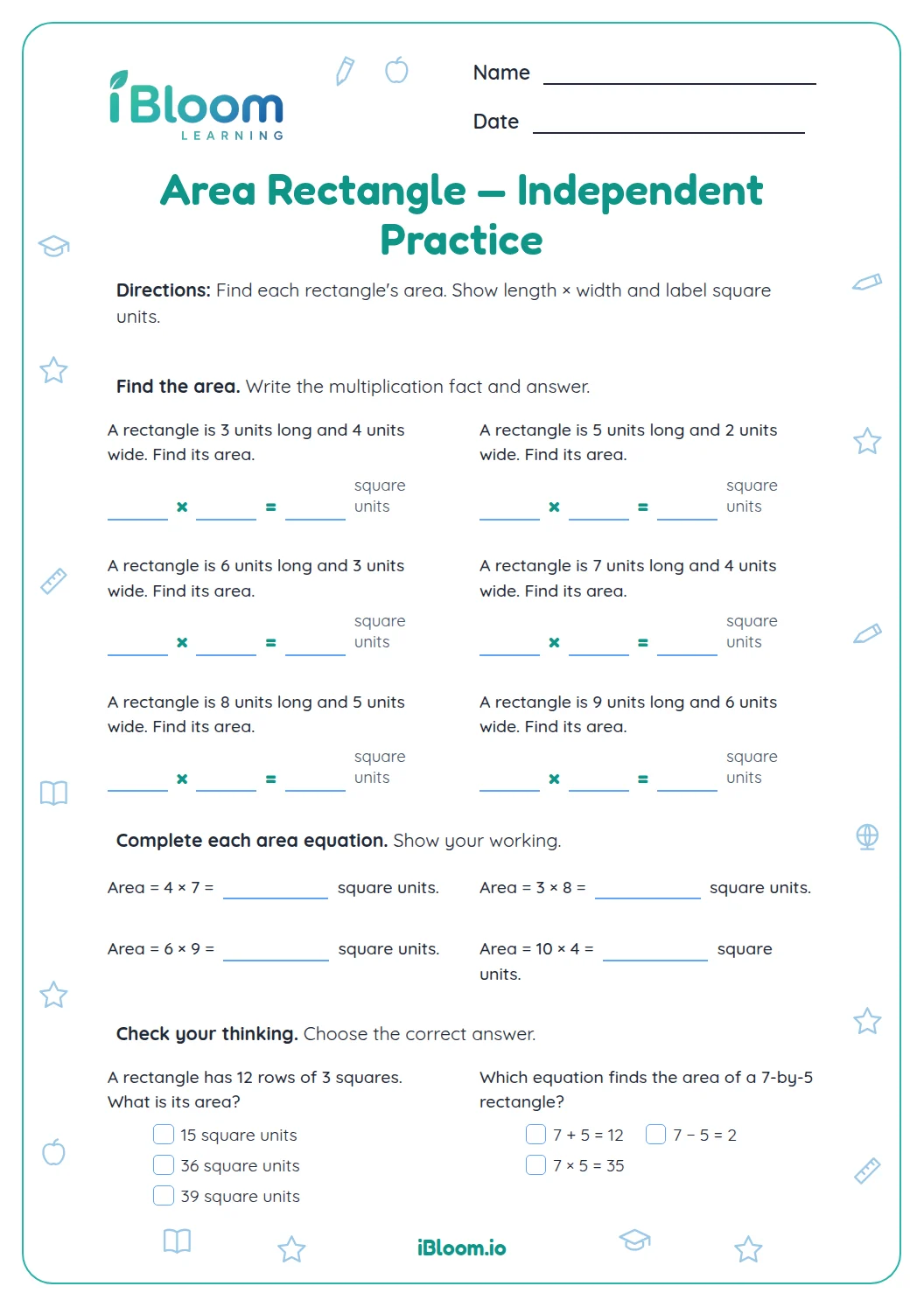
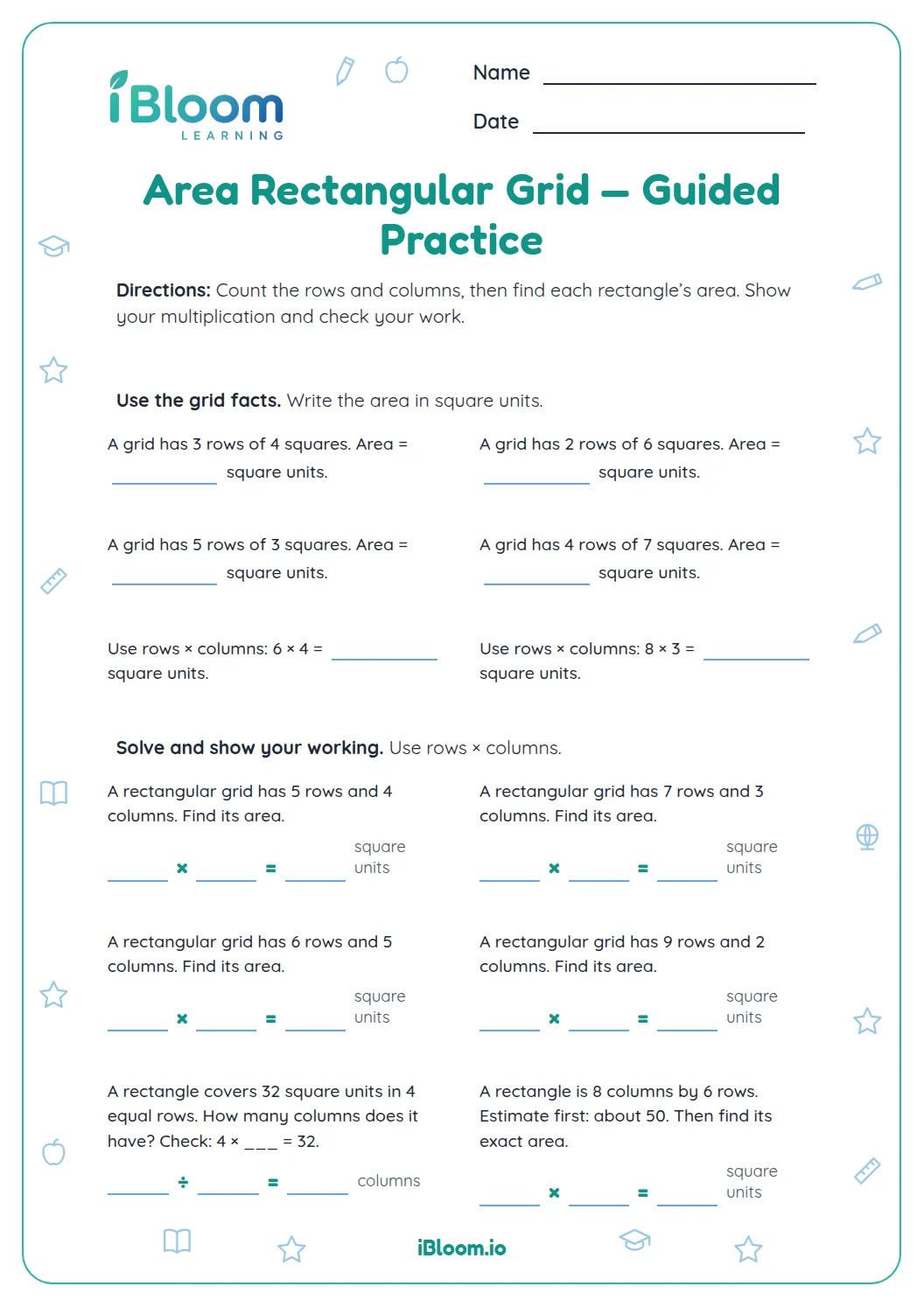
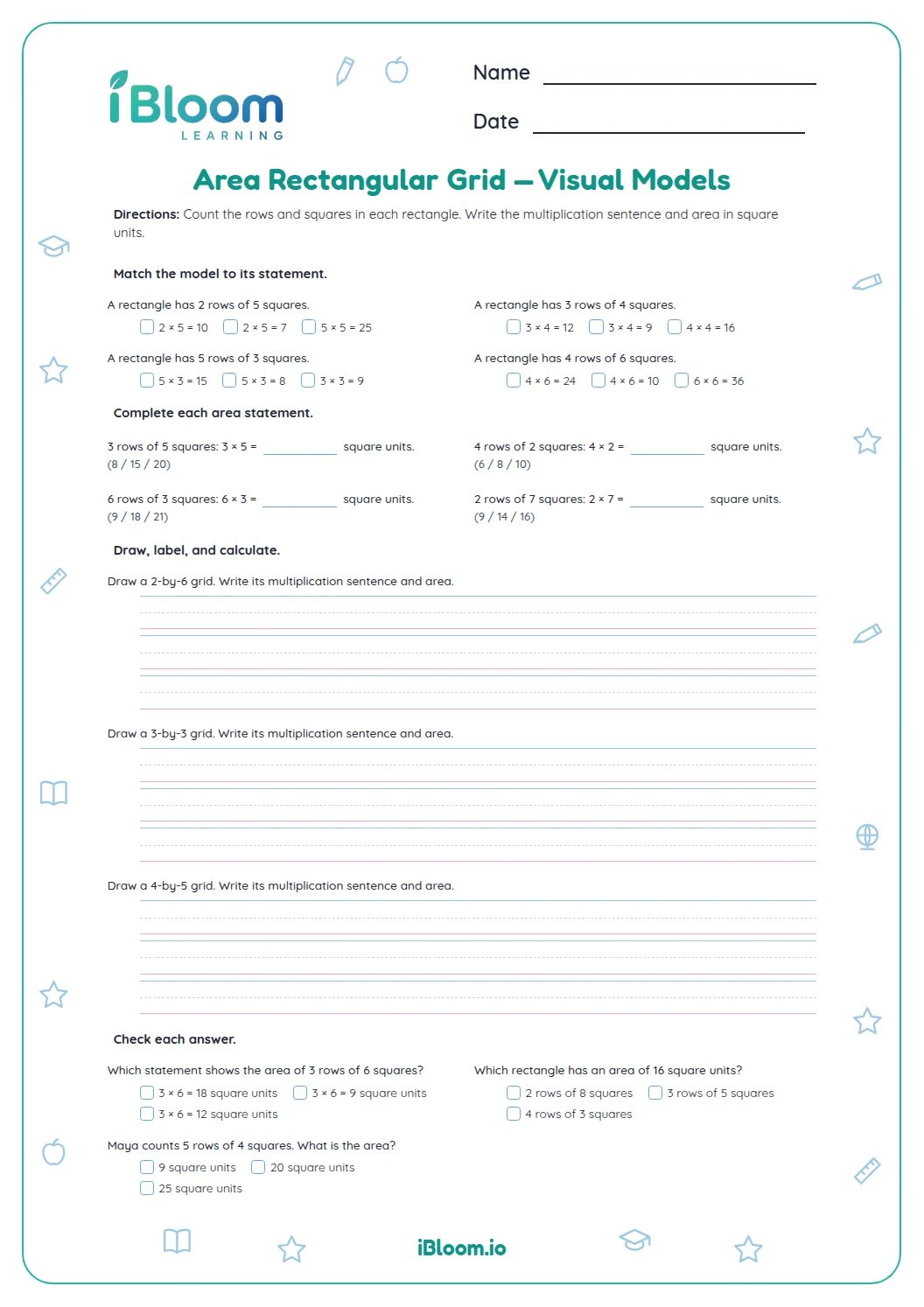
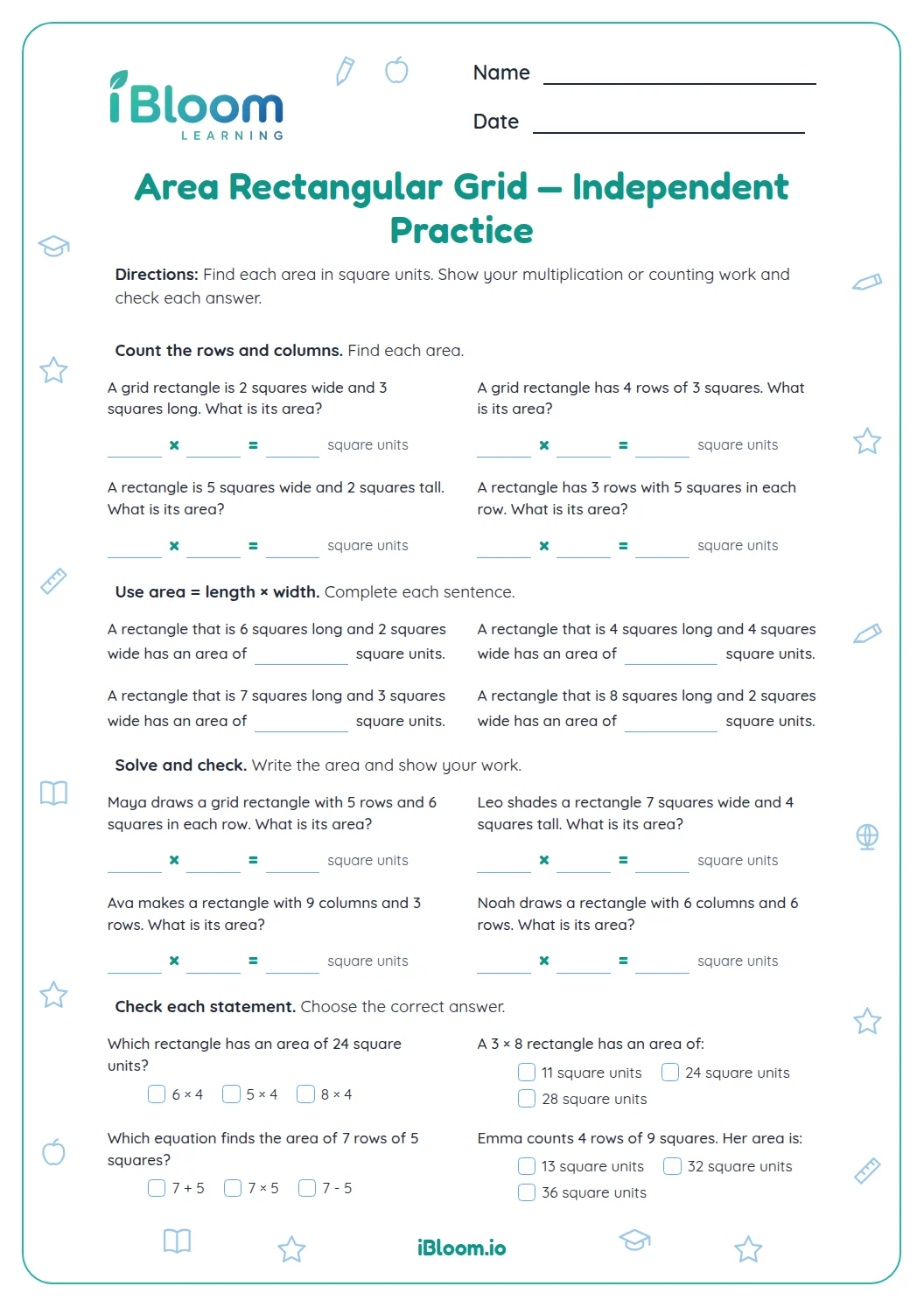
- For a rectangle area, multiply length by width.
- When comparing rectangles, check both dimensions.
How can an adult support the practice?
Ask the learner to explain what stays the same when a shape turns, then have them point to the measurements used in a perimeter or area calculation.
How can children work through the sheet?
- 1Compare both shape and size in each pair.
- 2For perimeter, add the lengths around the shape.
- 3For rectangular area, multiply length by width.
- 4Use the story facts to decide what is being asked.
- 5Check each calculation with the answer key.
What should children check?
The mistake
Calling two shapes congruent because they have the same name.
The fix
Check both their shape and their size.
The mistake
Treating a turned shape as a different size.
The fix
Imagine rotating it until its sides line up.
The mistake
Using area multiplication to find perimeter.
The fix
Perimeter adds side lengths; area counts square units.
What to practice next
Make more practice
Questions parents and teachers ask
How many questions and pages are included?
There are 12 questions in three parts. The file renders three pages total, including practice and answer-key pages. Children compare shapes by their named dimensions and form, solve measurement stories, and explain what congruence means. Use the key to review calculations and short explanations after the work is complete.
What does congruent mean?
Congruent shapes have the same size and shape, even when one is turned or flipped. The first questions ask learners to compare pairs, then later items apply the same idea to signs, tiles, and cutouts. Matching only the shape name is not enough; size must match too.
Does this worksheet include area and perimeter?
Yes. Several story problems ask for square perimeters or the area of a rectangular tile. Children should identify which measurement is requested before calculating: perimeter adds side lengths, while rectangular area multiplies length by width. All examples use whole-number side lengths.
What grade is this worksheet for?
It is labeled for Grade 3 and uses simple shape comparisons and whole-number measurements. Adults can help by reading a story aloud and asking the learner to name the measurements before solving. The goal is to connect congruence with familiar objects and basic measurement reasoning.
How should children use the answer key?
Have the learner finish the practice first, then compare each response with the separate key. If a result differs, return to the prompt and check whether the mistake was in choosing the operation, adding the sides, or comparing the two dimensions.