

About this worksheet
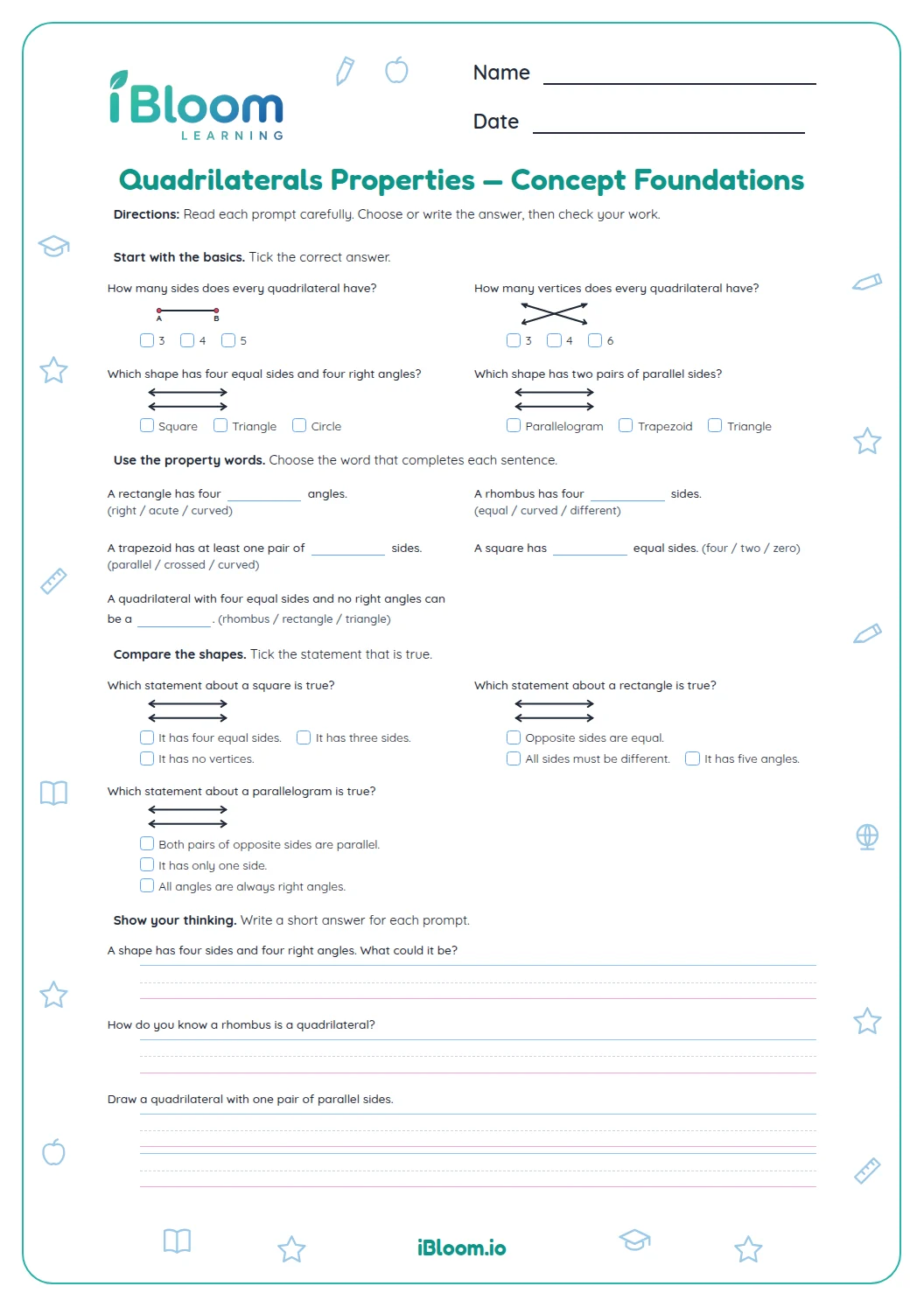
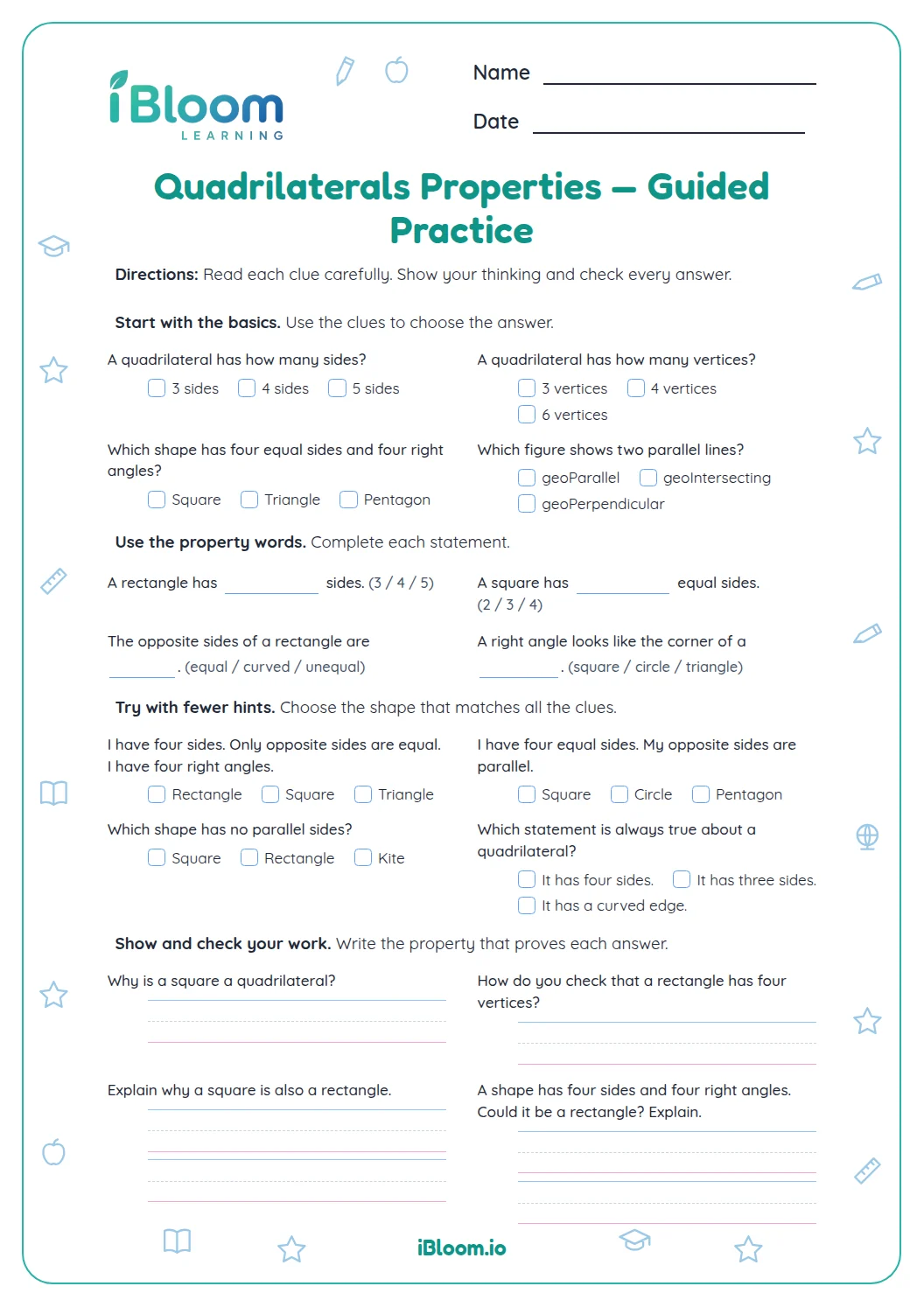
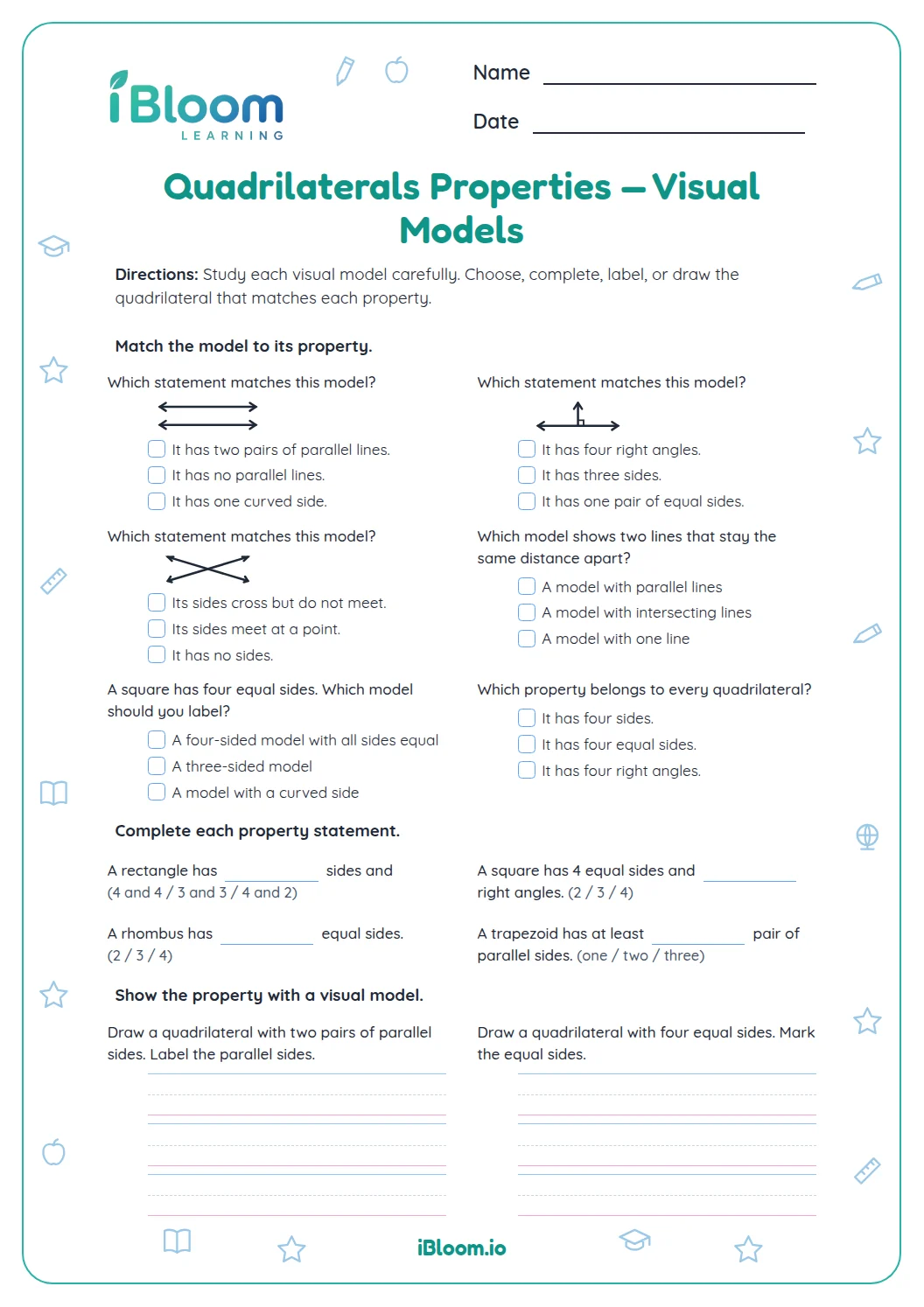
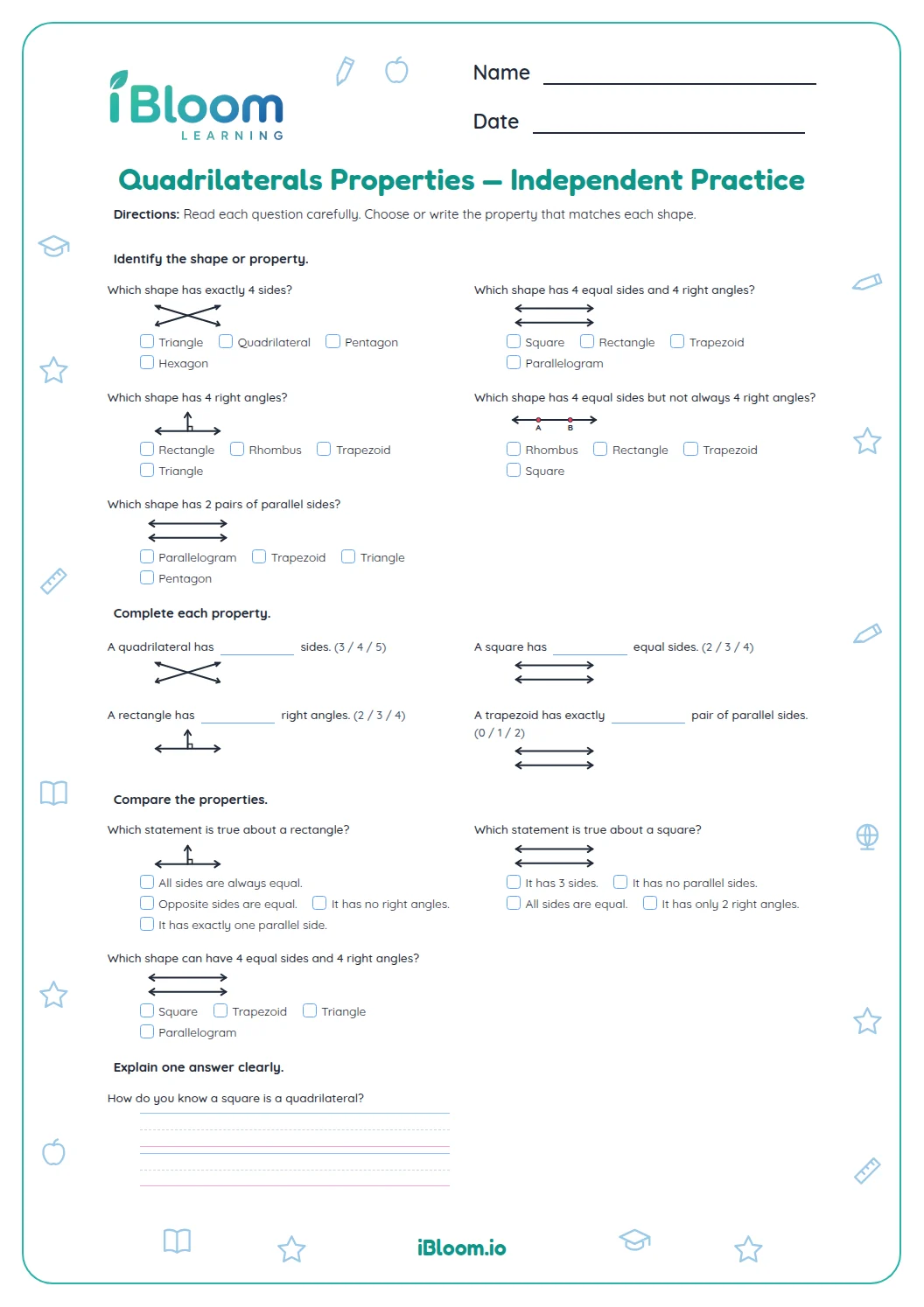
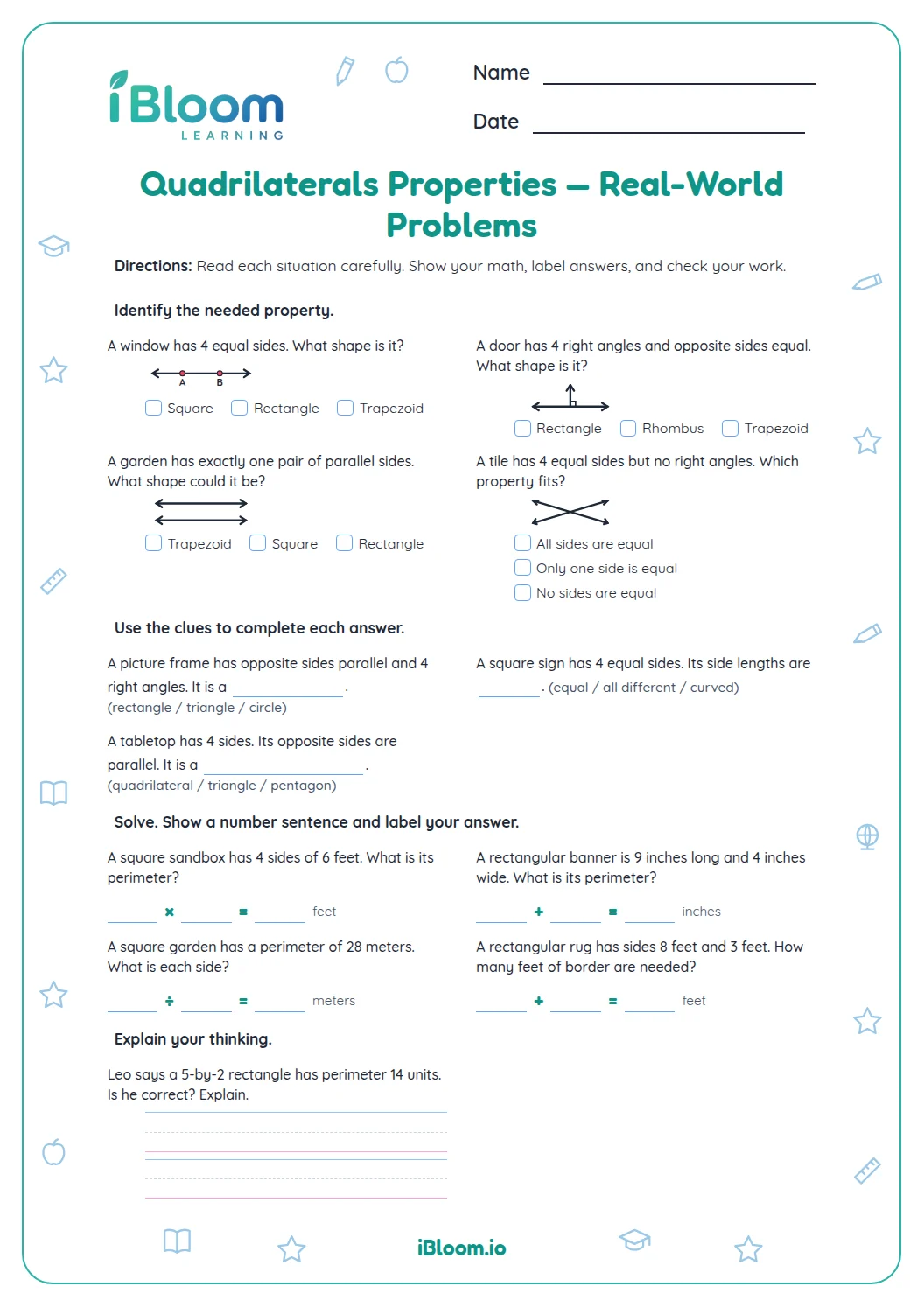
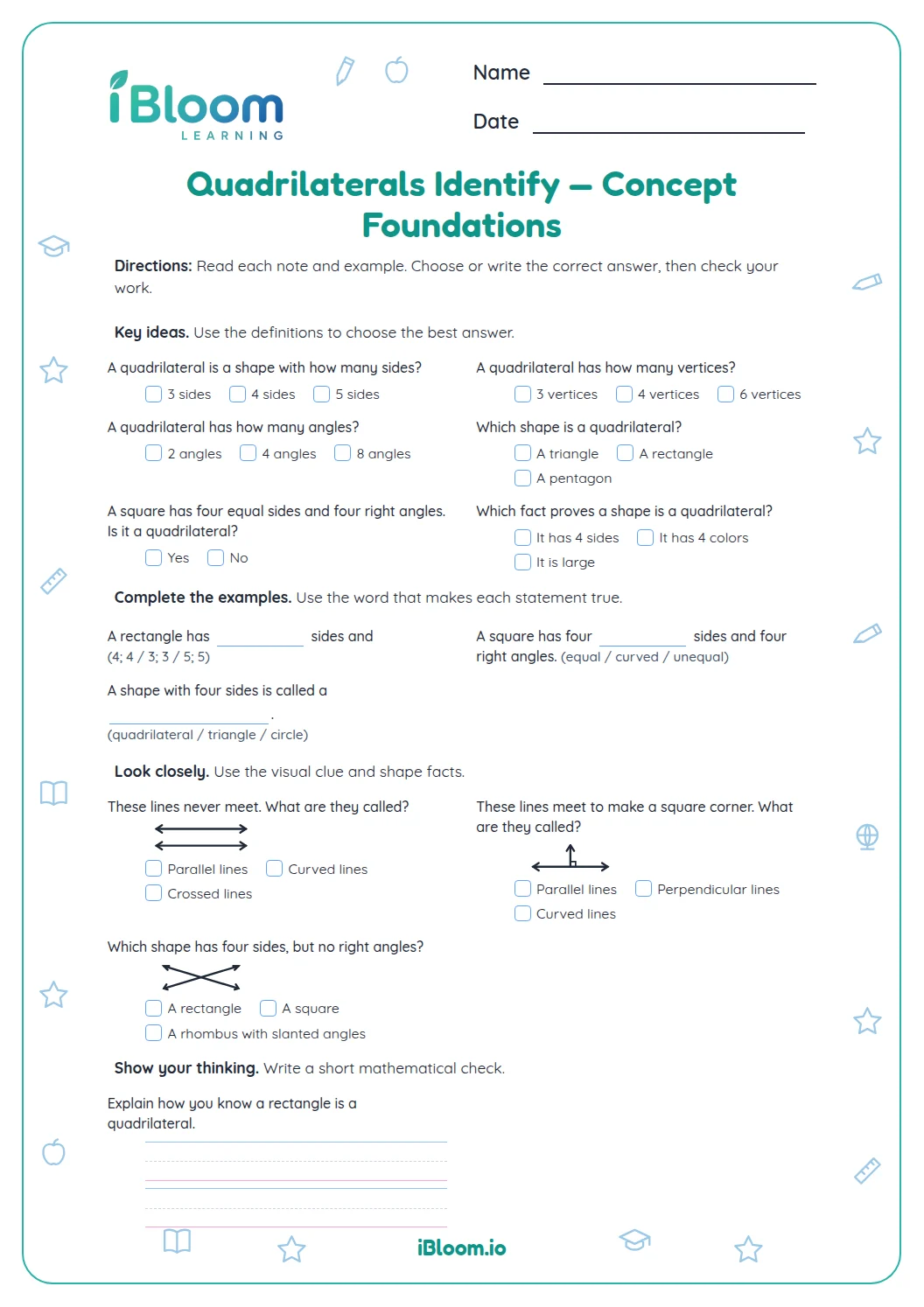
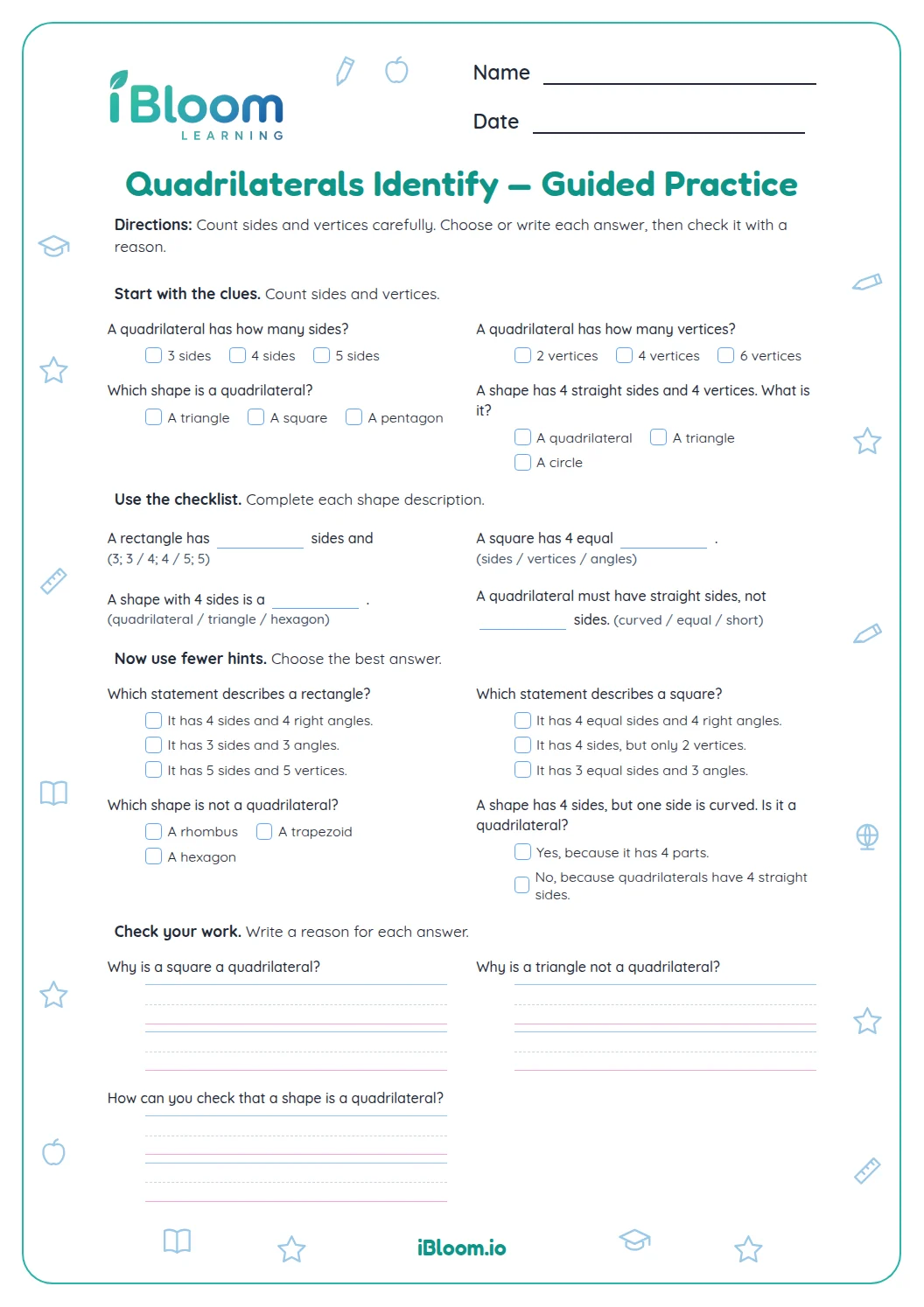
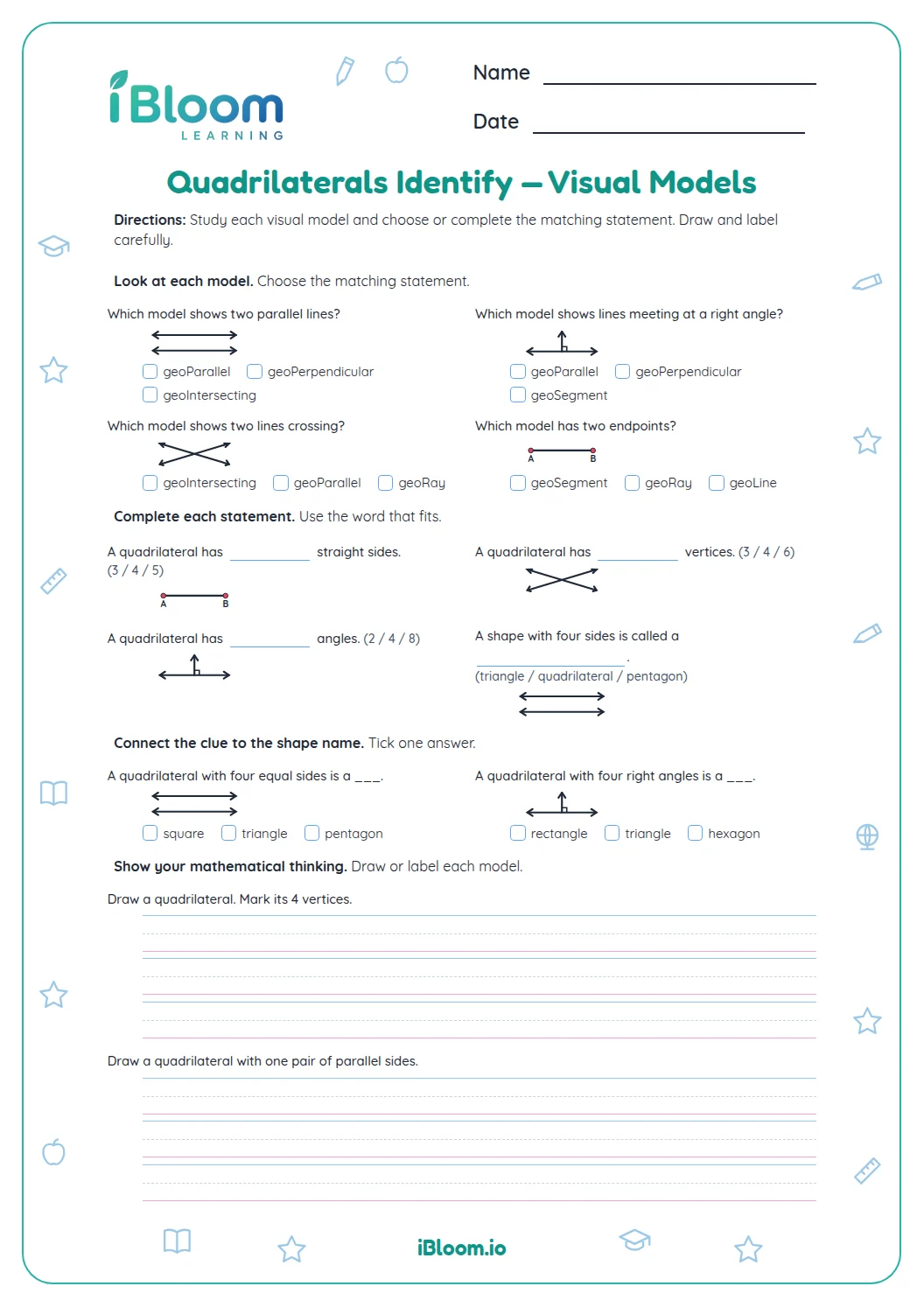
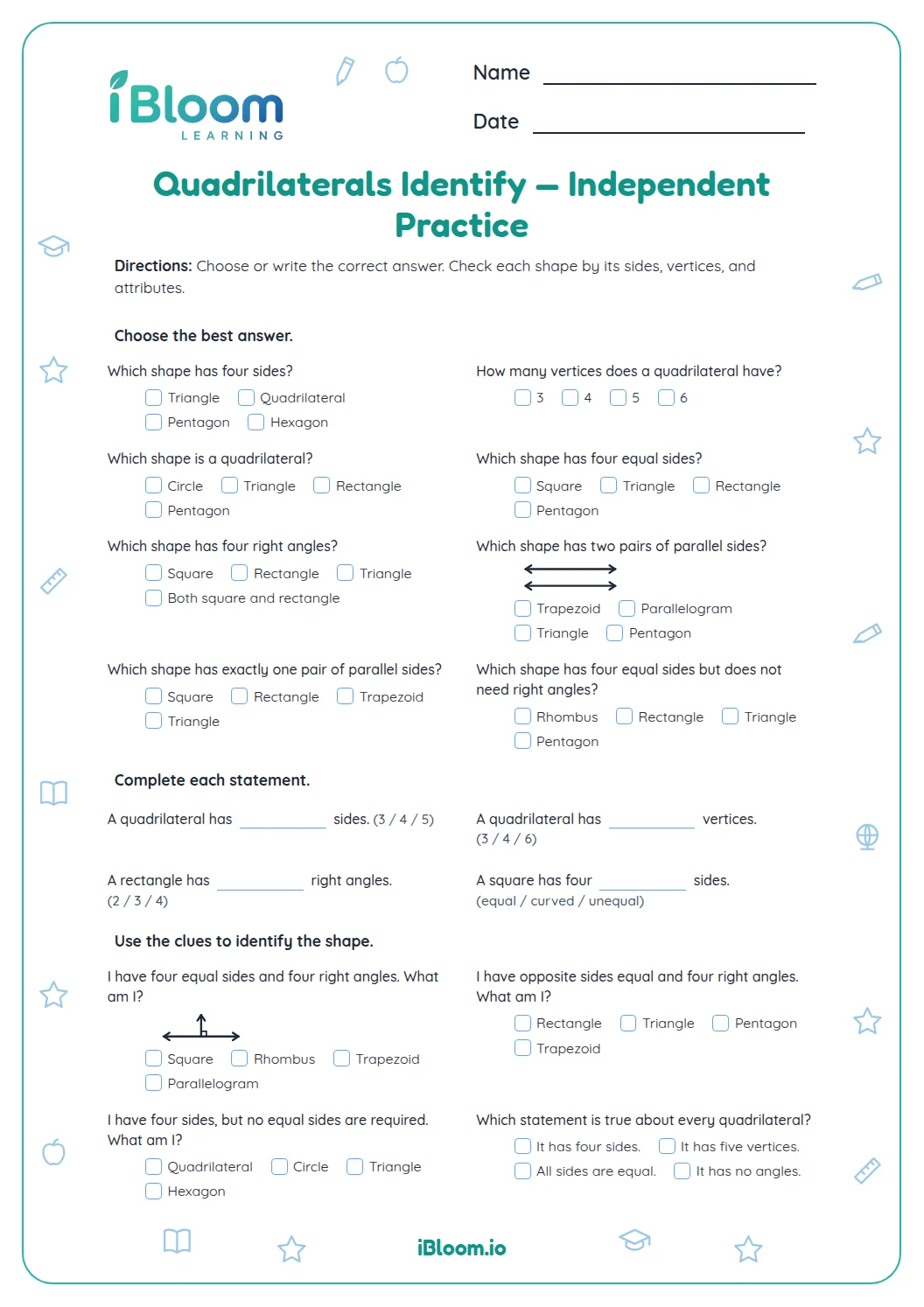
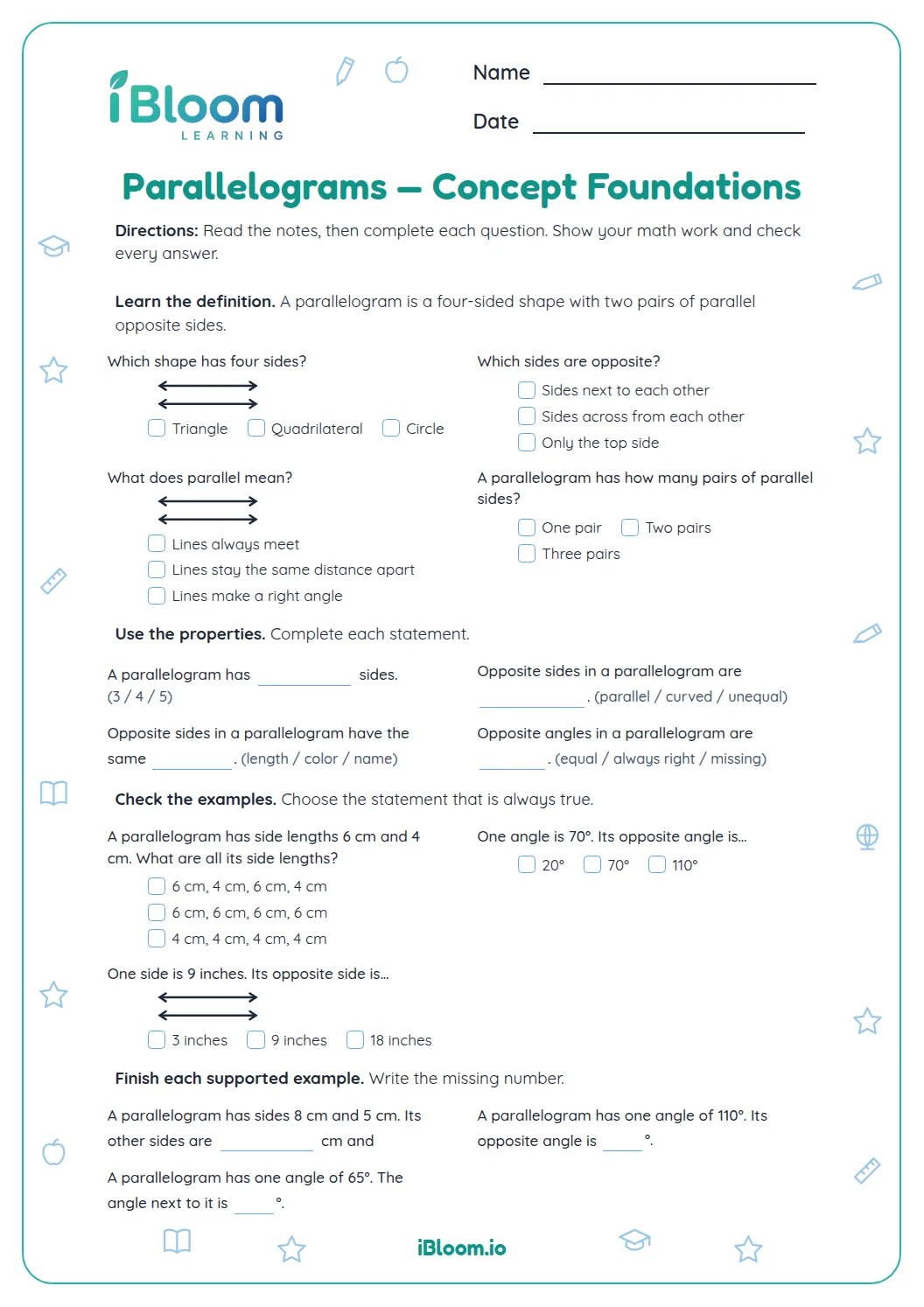
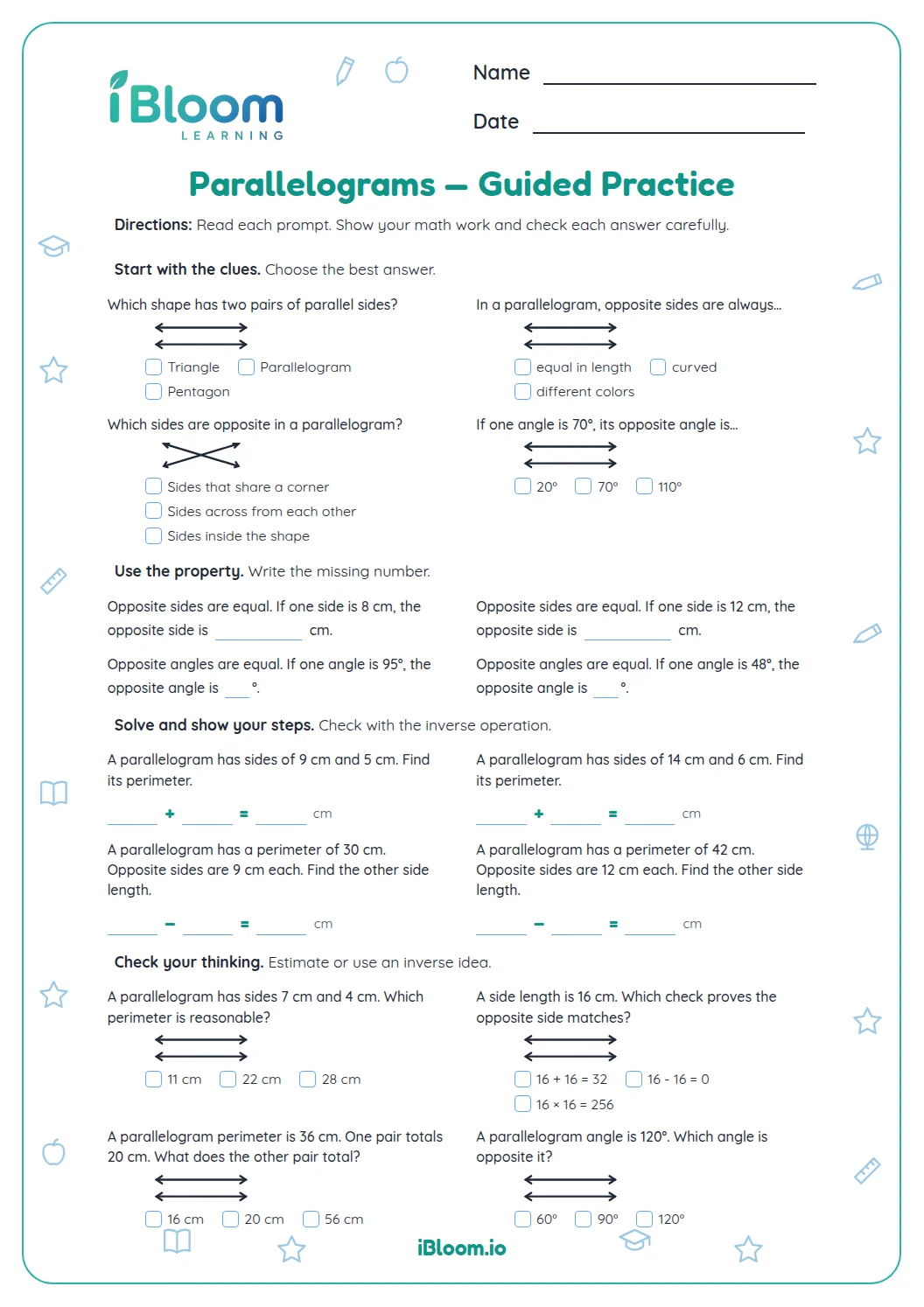
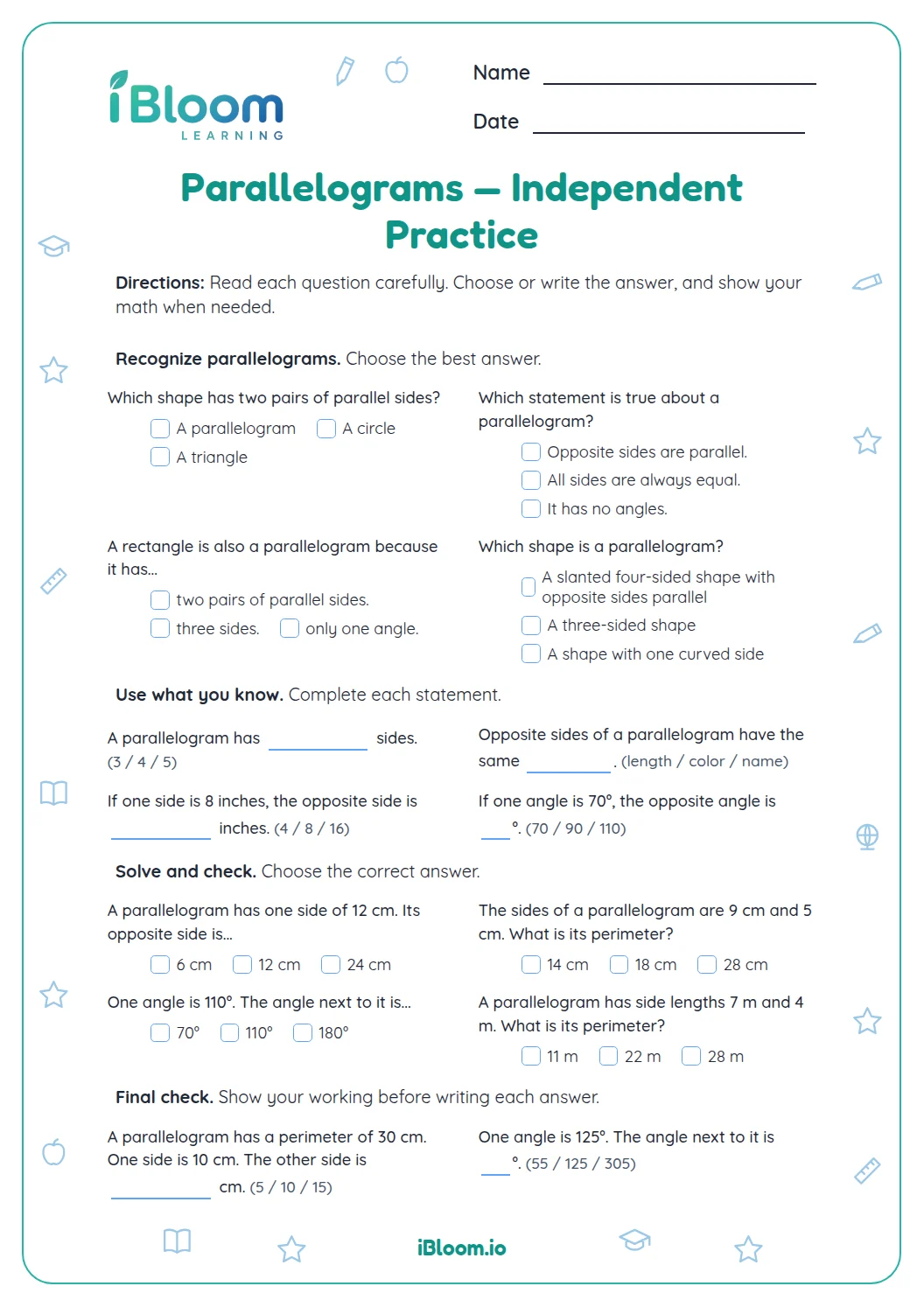
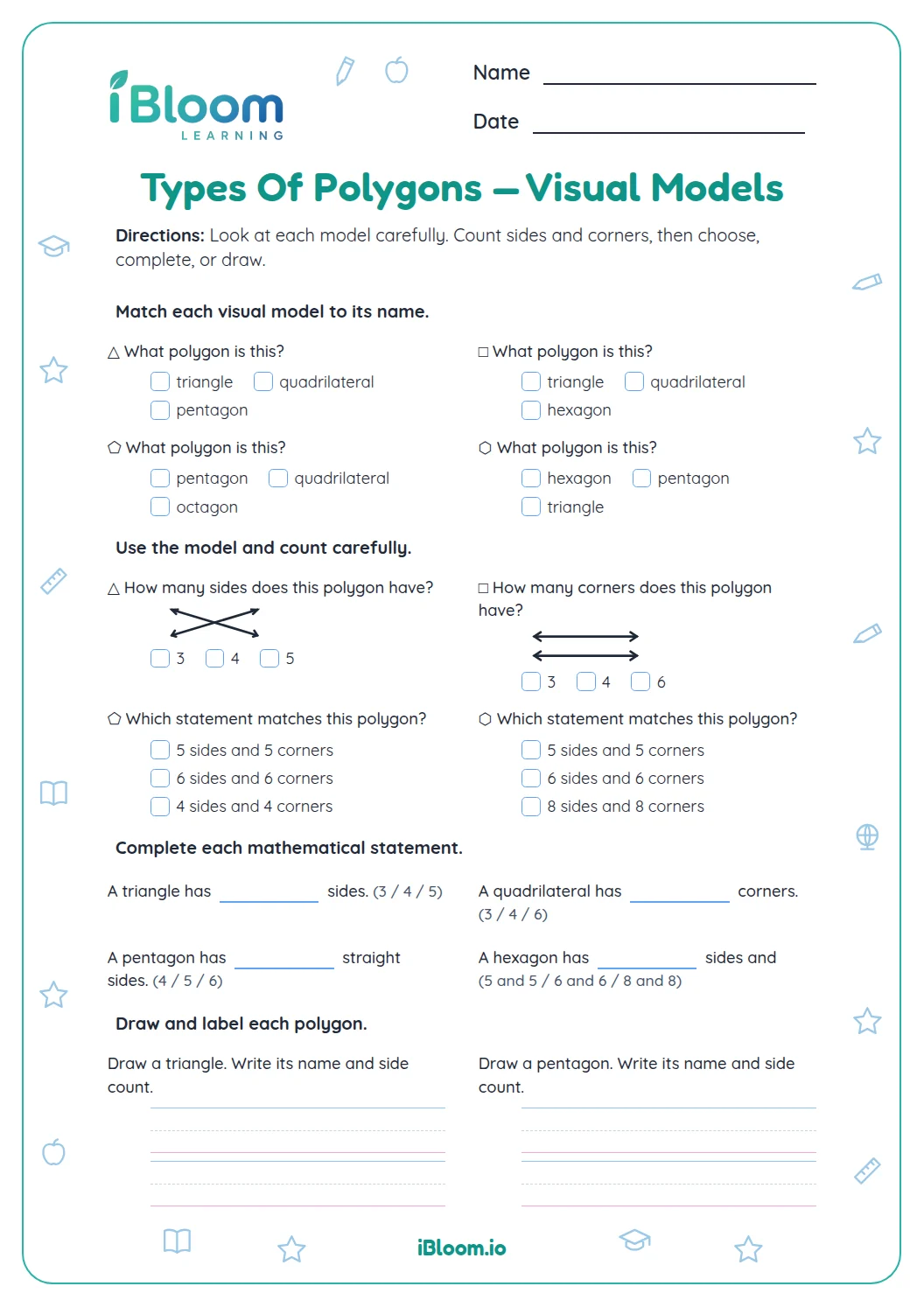
This Grade 3 printable challenges children to classify quadrilaterals by side lengths, right angles, and parallel pairs. A small labeled drawing anchors the first question, then concise choices ask children to apply the same properties to new clues. Fourteen questions and a separate answer key support careful reasoning.
Aligned to 3.G.A.1
How do children work with quadrilateral properties?
Read the clue and identify the property that matters. Question 1 uses two labeled shapes; the other questions apply the same ideas to concise descriptions.
- 1A square has four equal sides and four right angles.
- 2Find the labeled shape with both properties.
- 3Choose its letter.
What does the practice include?
The questions are grouped by task so children can build confidence before explaining their thinking. The answer key supports a quick review after the printable is complete.
How can families check the answers?
Try each item before opening the key. For a written response, look for the main idea in the sample and accept another clear answer that uses the prompt’s evidence.
How to use this worksheet
- 1{'title': 'Read', 'text': 'Read the whole prompt before choosing or writing an answer.'}
- 2{'title': 'Notice', 'text': 'Find the word, number, shape, or event that gives a useful clue.'}
- 3{'title': 'Answer', 'text': 'Complete one item at a time and reread your response.'}
- 4{'title': 'Check', 'text': 'Use the key to check answers and discuss any response that needs more detail.'}
Common mistakes and quick fixes
The mistake
Answering before reading the full prompt.
The fix
Read the complete sentence and look for a clue that narrows the answer.
The mistake
Choosing an answer that only partly fits.
The fix
Check that the choice matches every detail in the question.
The mistake
Leaving an explanation too general.
The fix
Name the specific clue or property that supports the answer.
Common Core alignment
This page practices quadrilateral properties through the questions and examples on the printable.
Reason about how attributes define categories of shapes.
On this sheet: Questions classify quadrilaterals by their sides, angles, and parallel pairs.
Show the official wordingHide the official wording
Understand that shapes in different categories (e.g., rhombuses, rectangles, and others) may share attributes (e.g., having four sides), and that the shared attributes can define a larger category (e.g., quadrilaterals). Recognize rhombuses, rectangles, and squares as examples of quadrilaterals, and draw examples of quadrilaterals that do not belong to any of these subcategories.
What to practice next
Further reading
Questions parents and teachers ask
What does this Quadrilateral Properties worksheet practice?
This sheet gives children focused practice with Quadrilateral Properties. Questions move from recognizing the idea to applying it in short examples, and the separate answer key supports checking. Ask the child to name a clue aloud and point to the example that supports the response.
How many questions are on the printable?
There are 14 questions, grouped into short activities that build from recognition to application. The answer key is separate, so children can try each item before checking. Read a prompt aloud if that helps a learner focus on its important clue.
Is an answer key included?
Yes. Print the answer key after the practice pages. It gives the answer for each fixed-response item and a sample for questions where children explain an idea in their own words. Ask the child to name a clue aloud and point to the example that supports the response.
How should an adult use this page?
Invite the child to read each direction and try the question before looking at the key. Ask them to point to a clue or explain a choice, especially when two examples need to be compared. Ask the child to name a clue aloud and point to the example that supports the response.
Can this be used for independent practice?
Most items have a clear answer or a short response, so children can work through the page independently after reading the directions. A quick review together can clarify any vocabulary that is new. Ask the child to name a clue aloud and point to the example that supports the response.
What should children do when they miss one?
Have the child revisit the related example and explain the clue that supports a corrected answer. The goal is to connect the answer to the skill, then check the remaining items with the key. Ask the child to name a clue aloud and point to the example that supports the response.