





About this worksheet
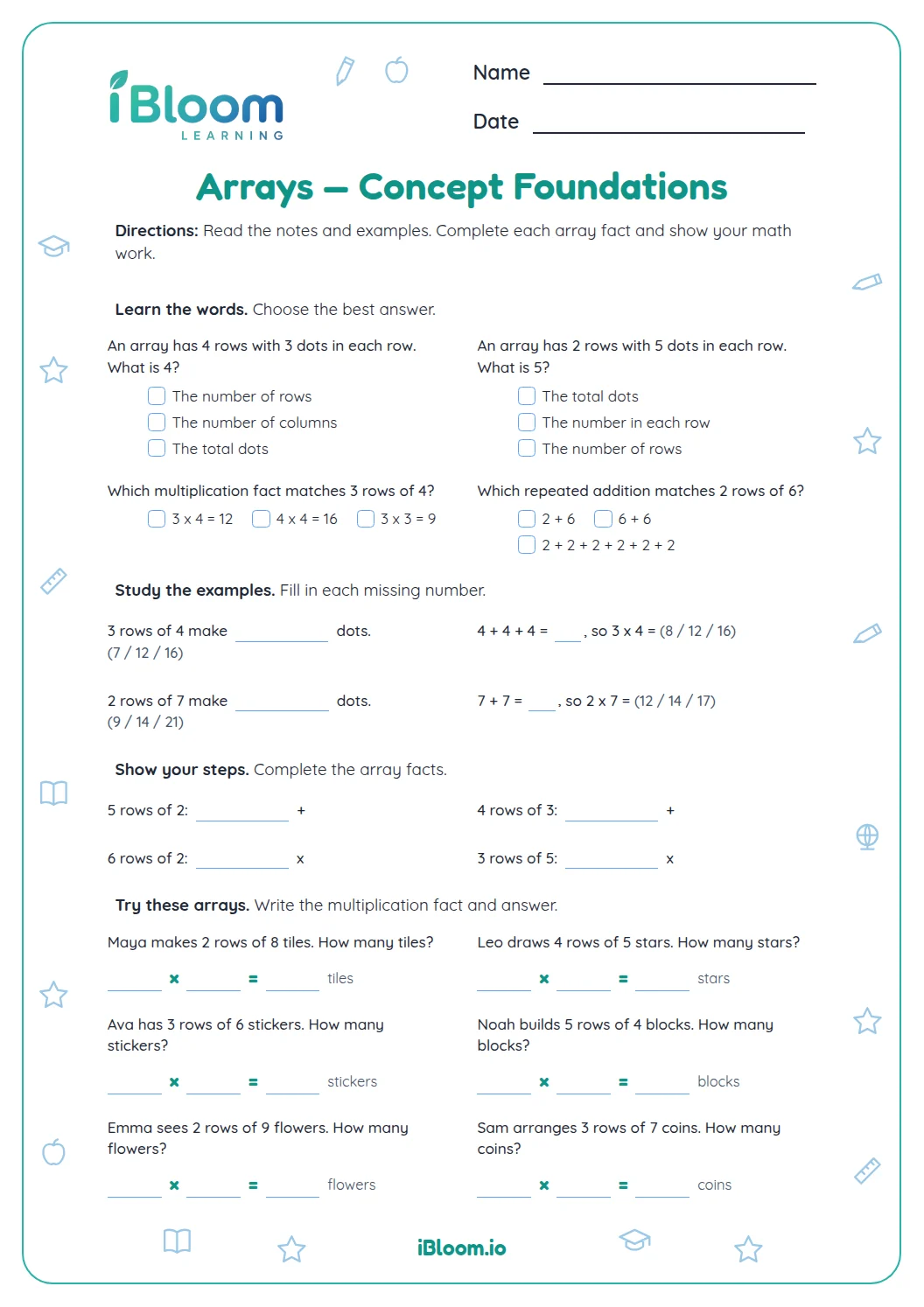
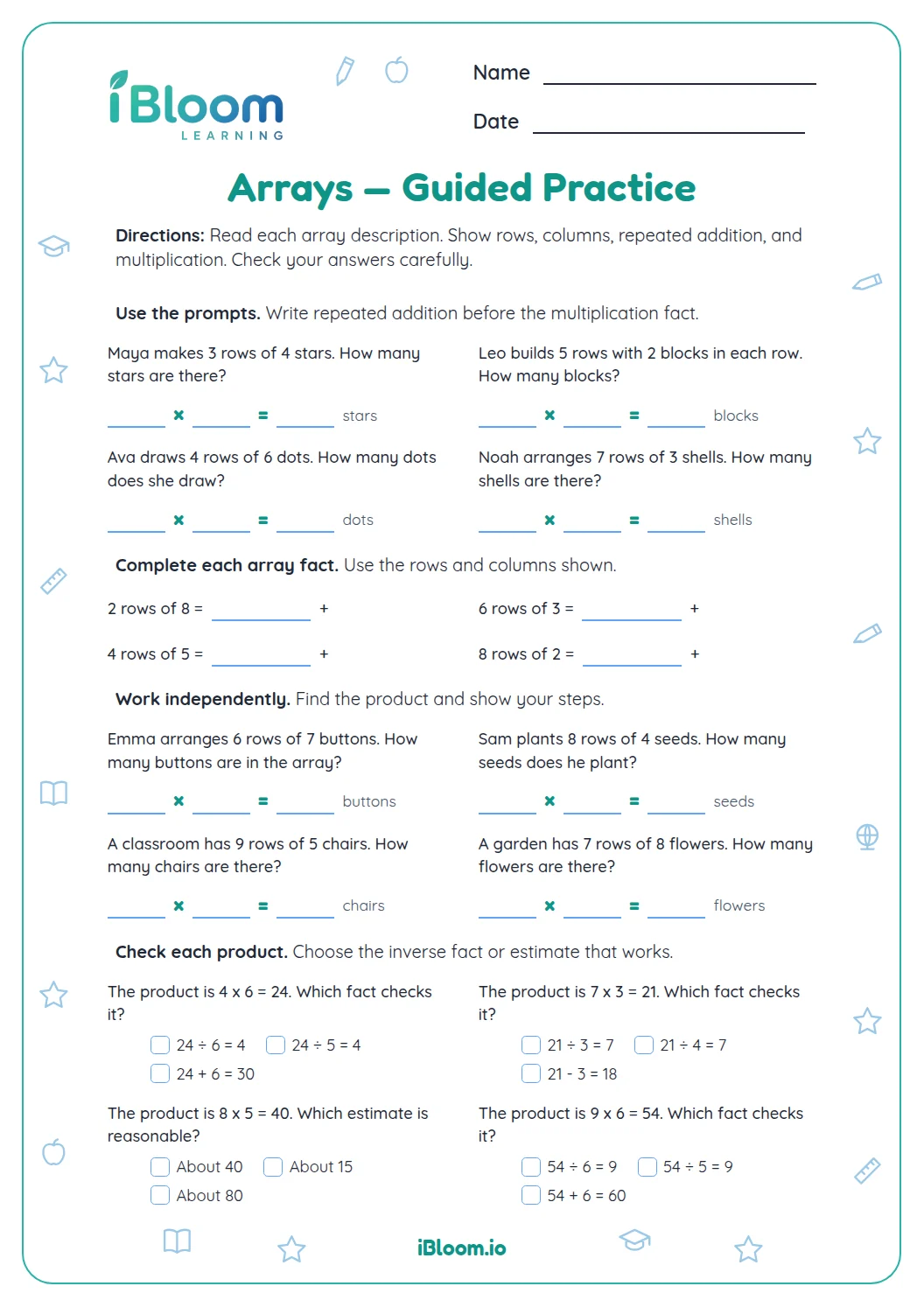
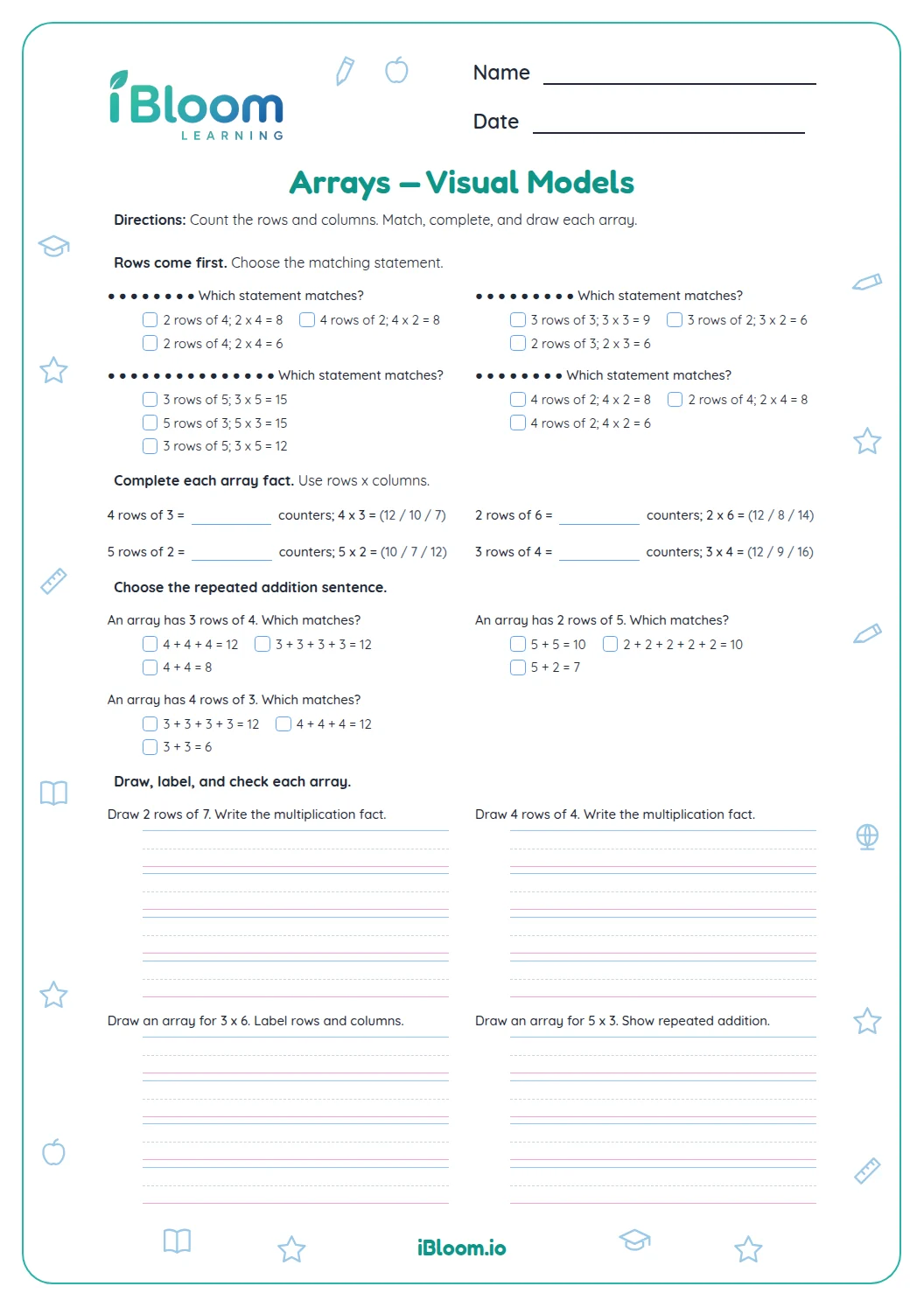
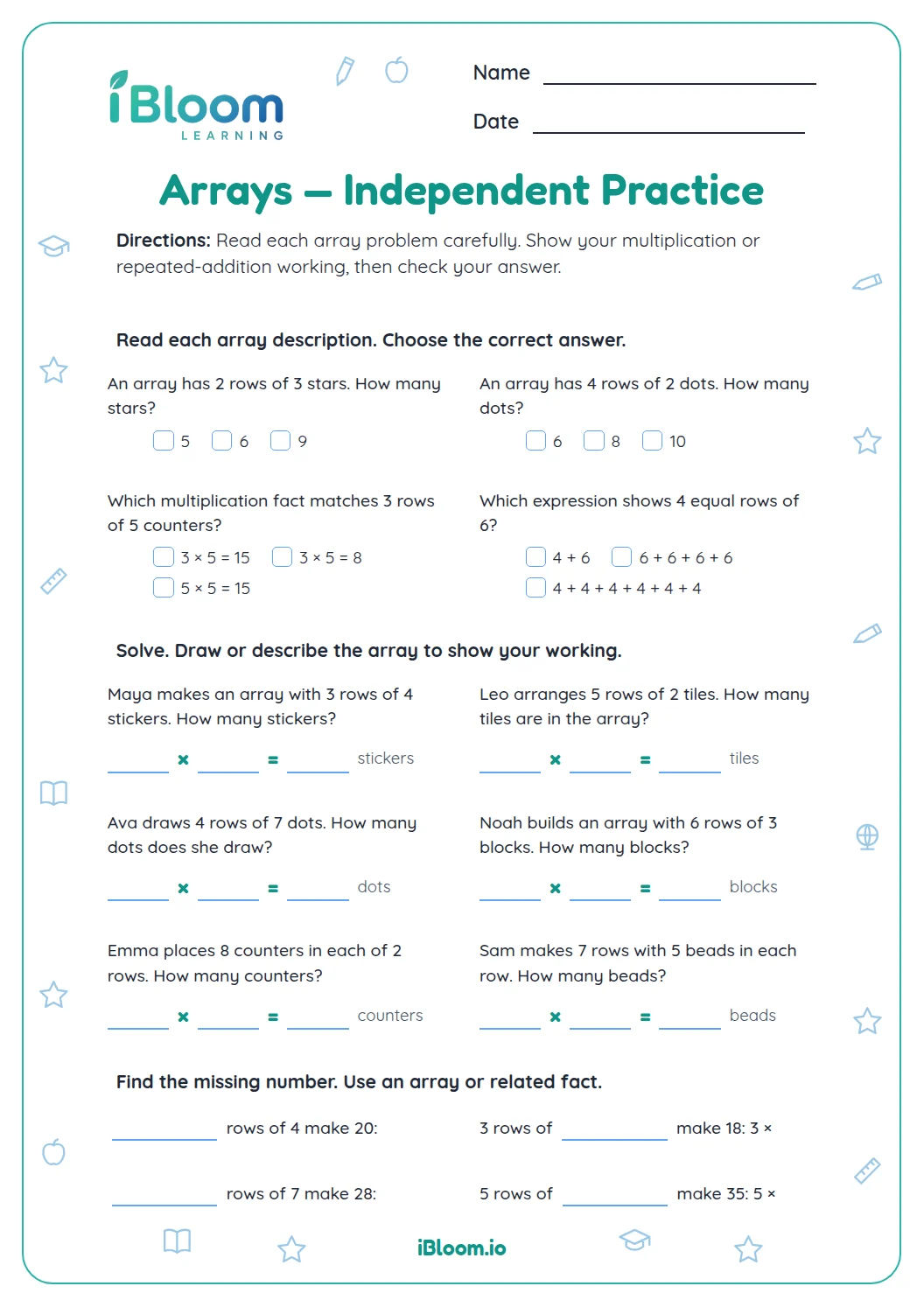
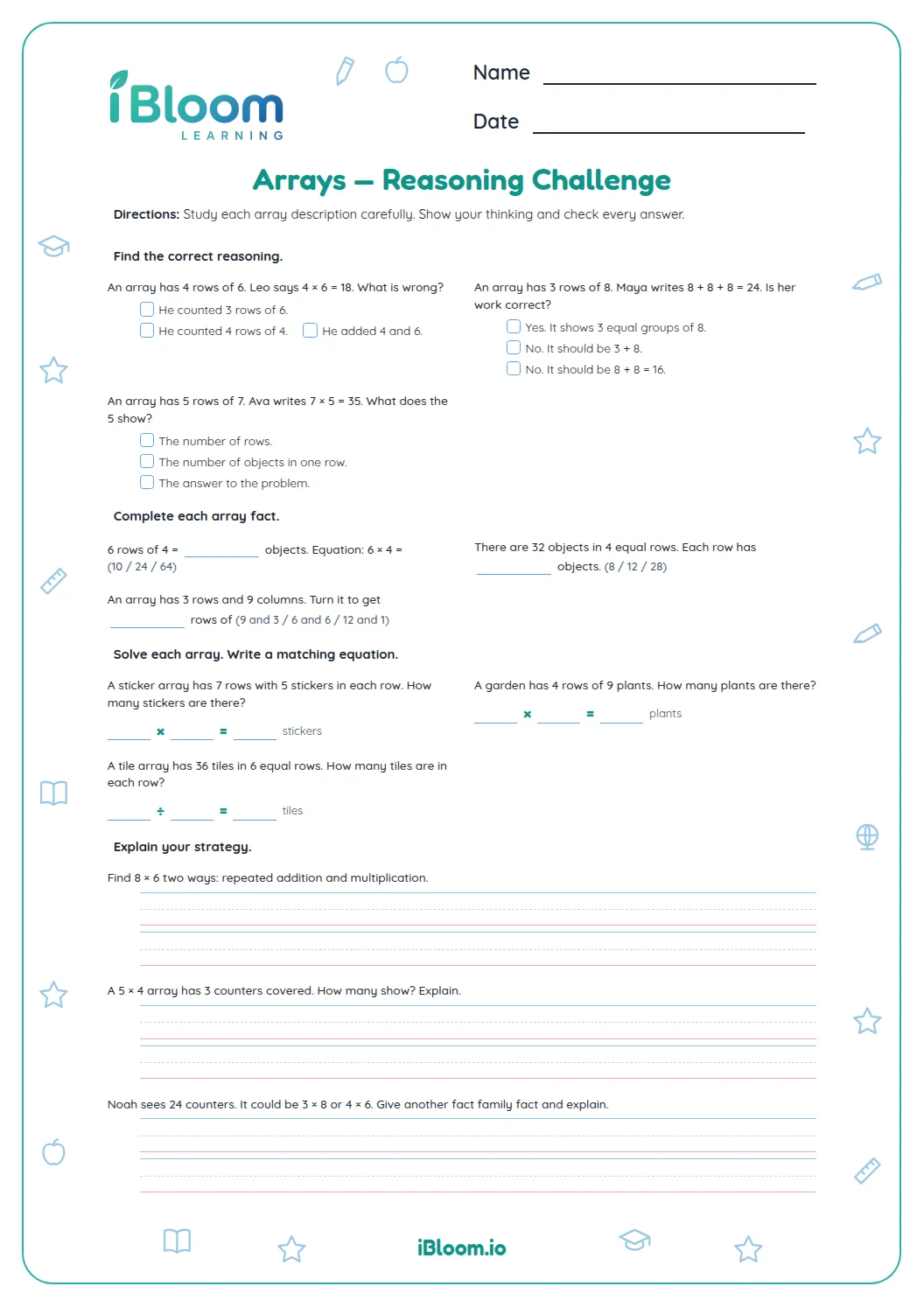
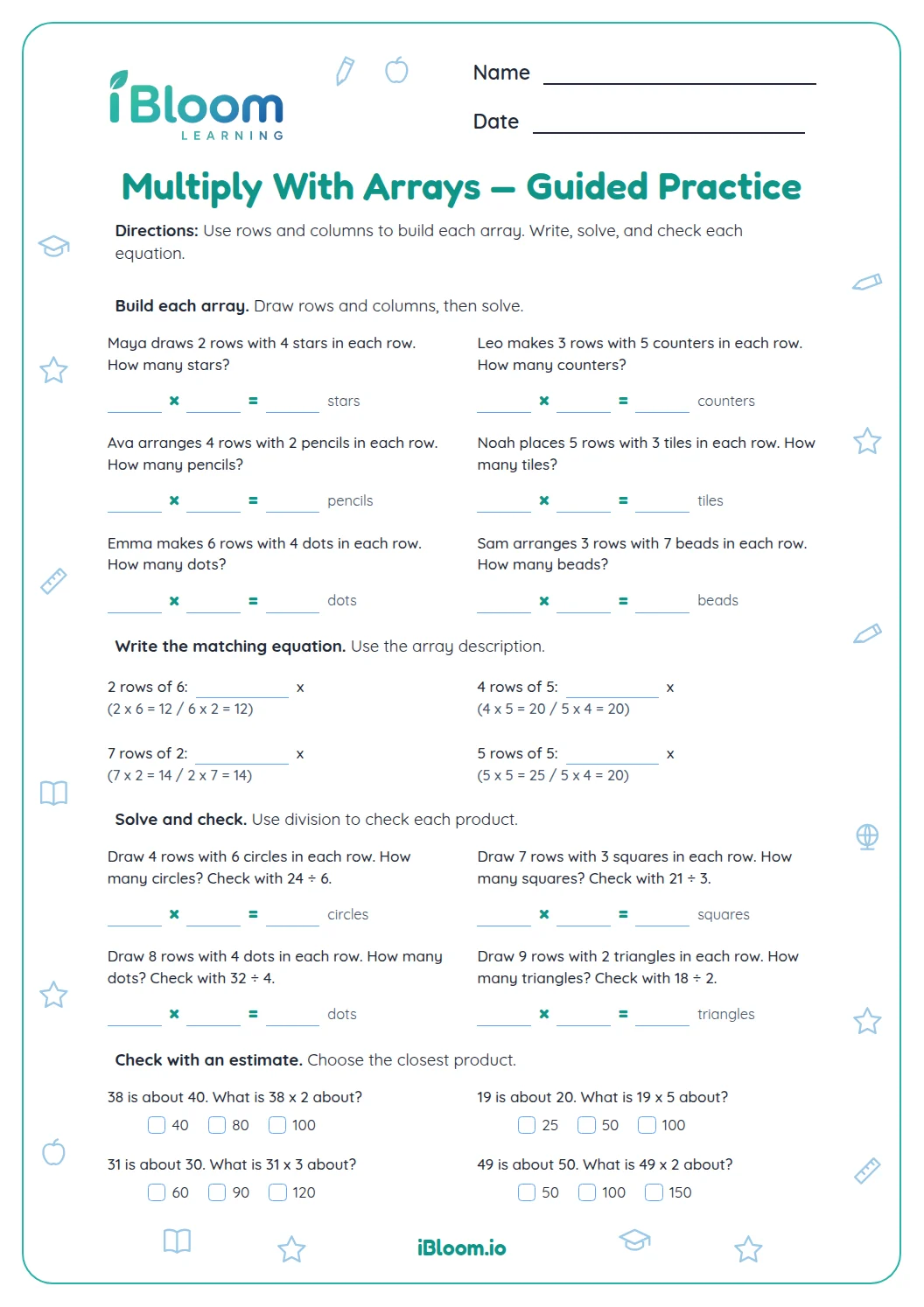
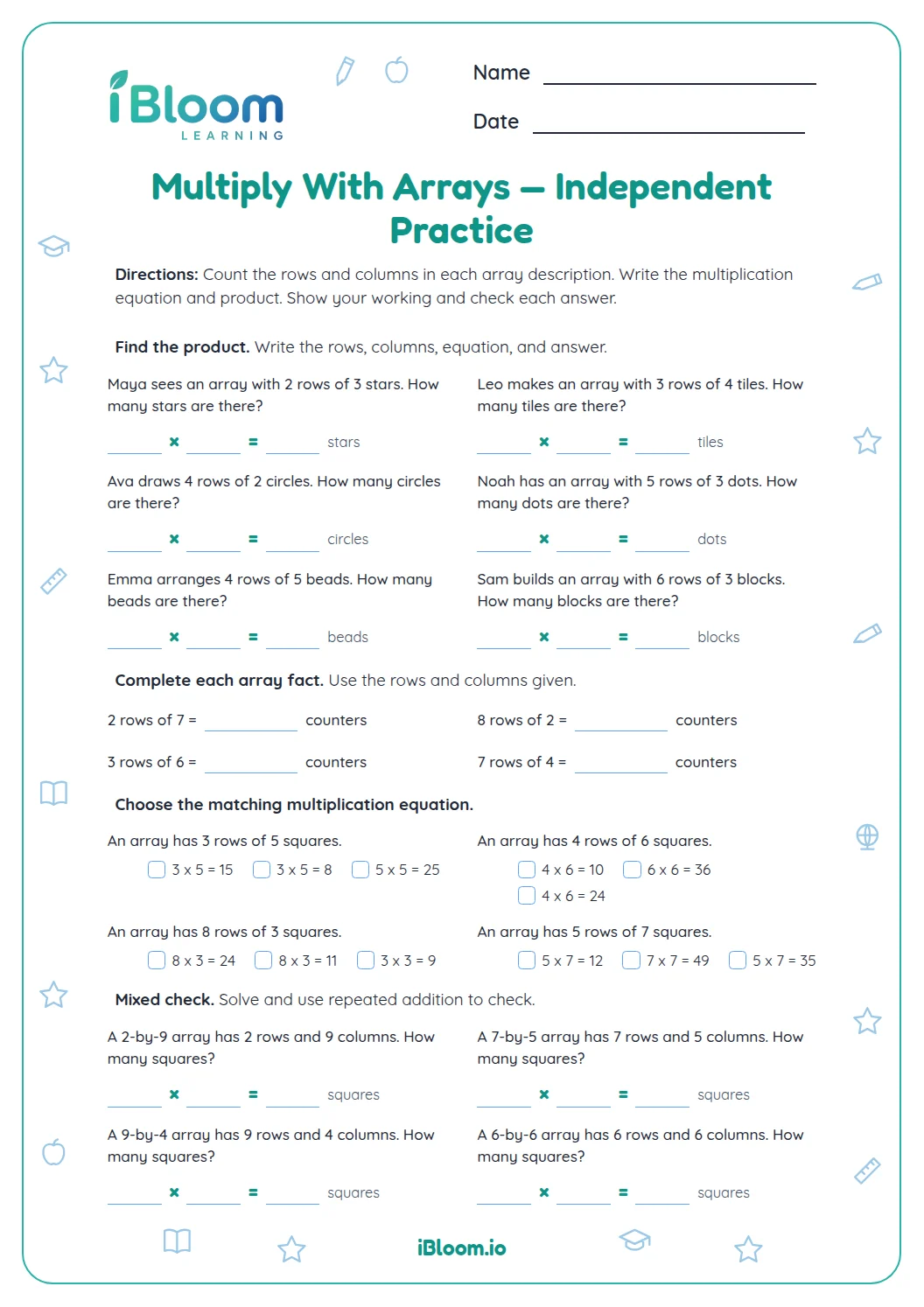
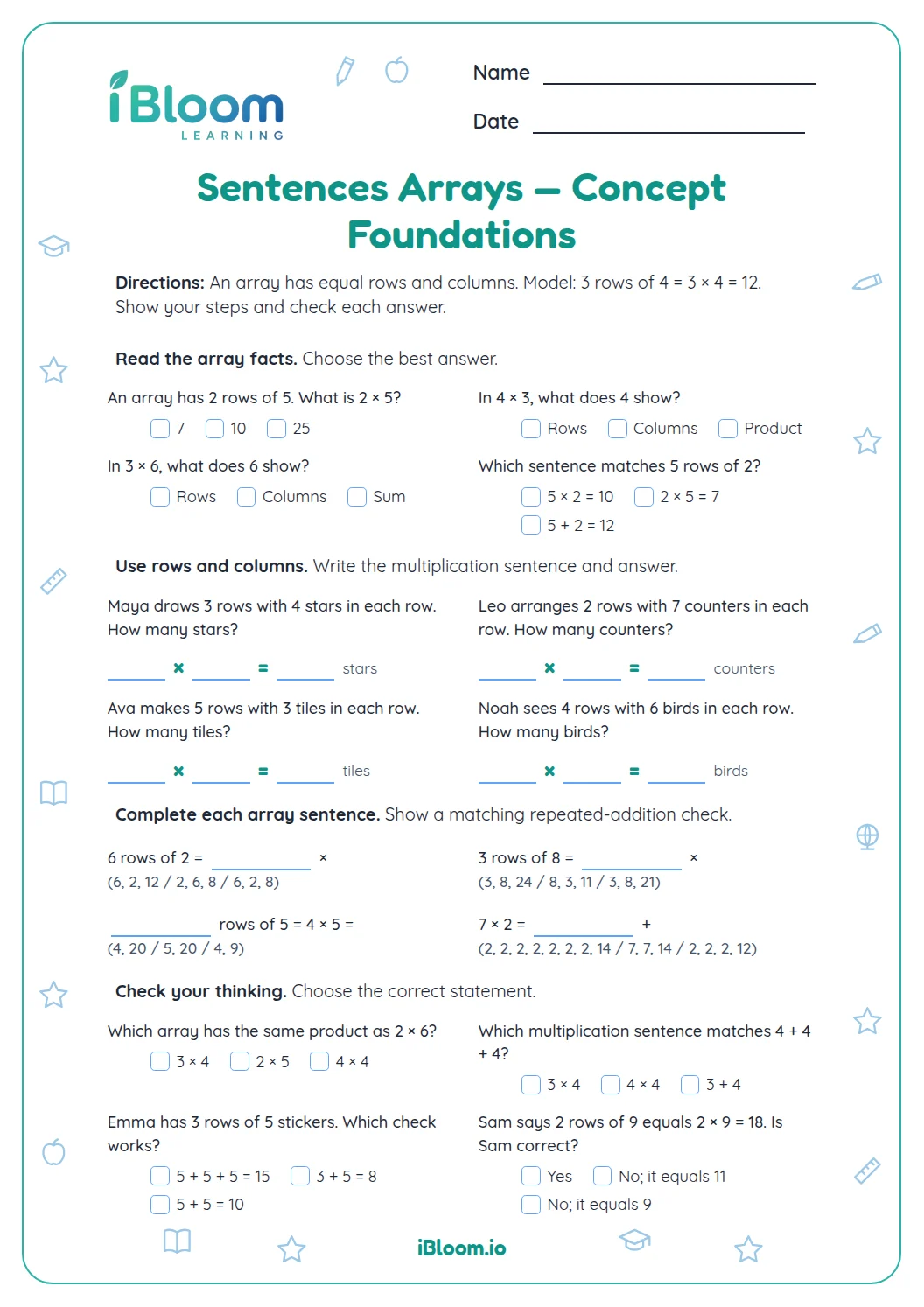
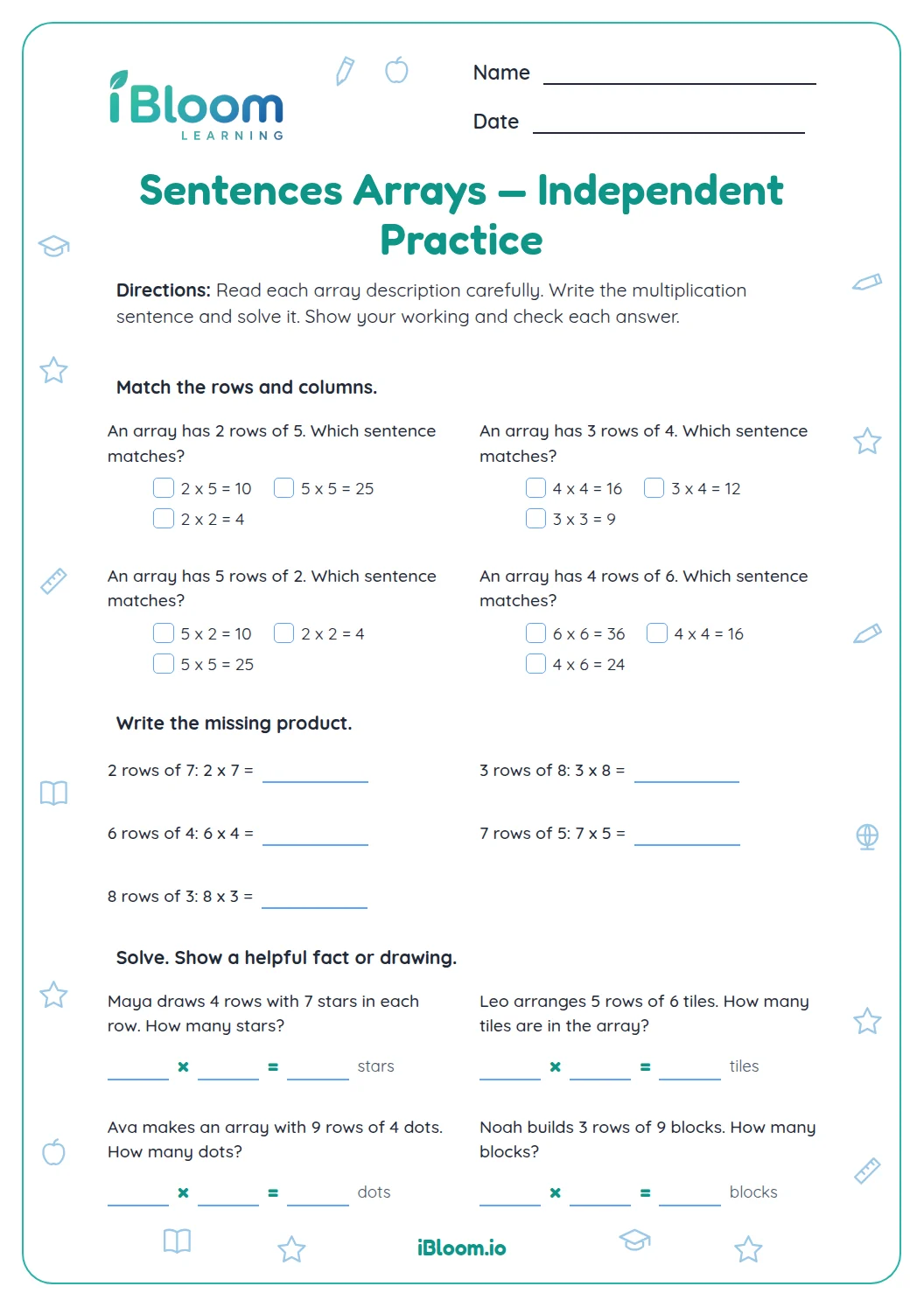
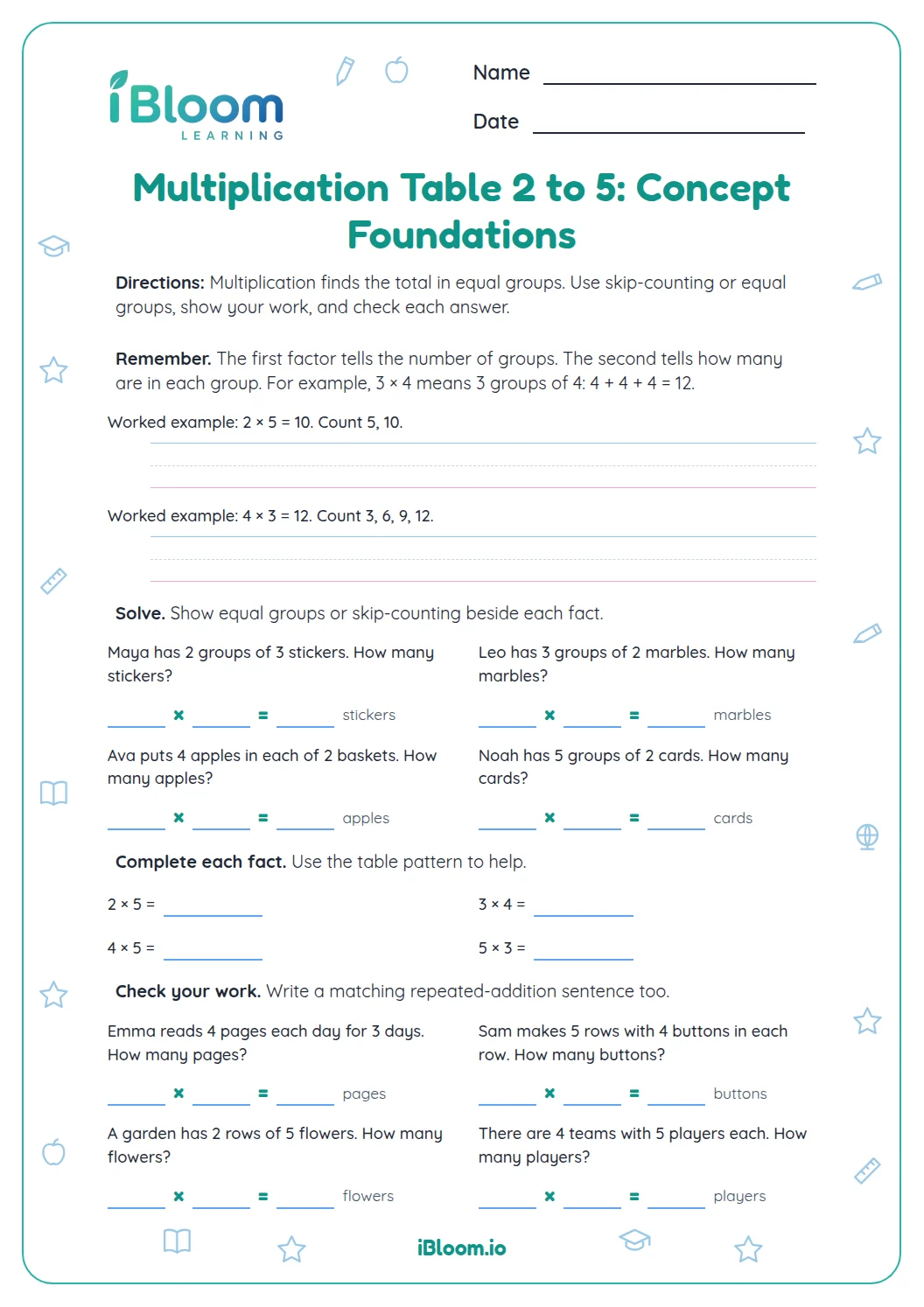
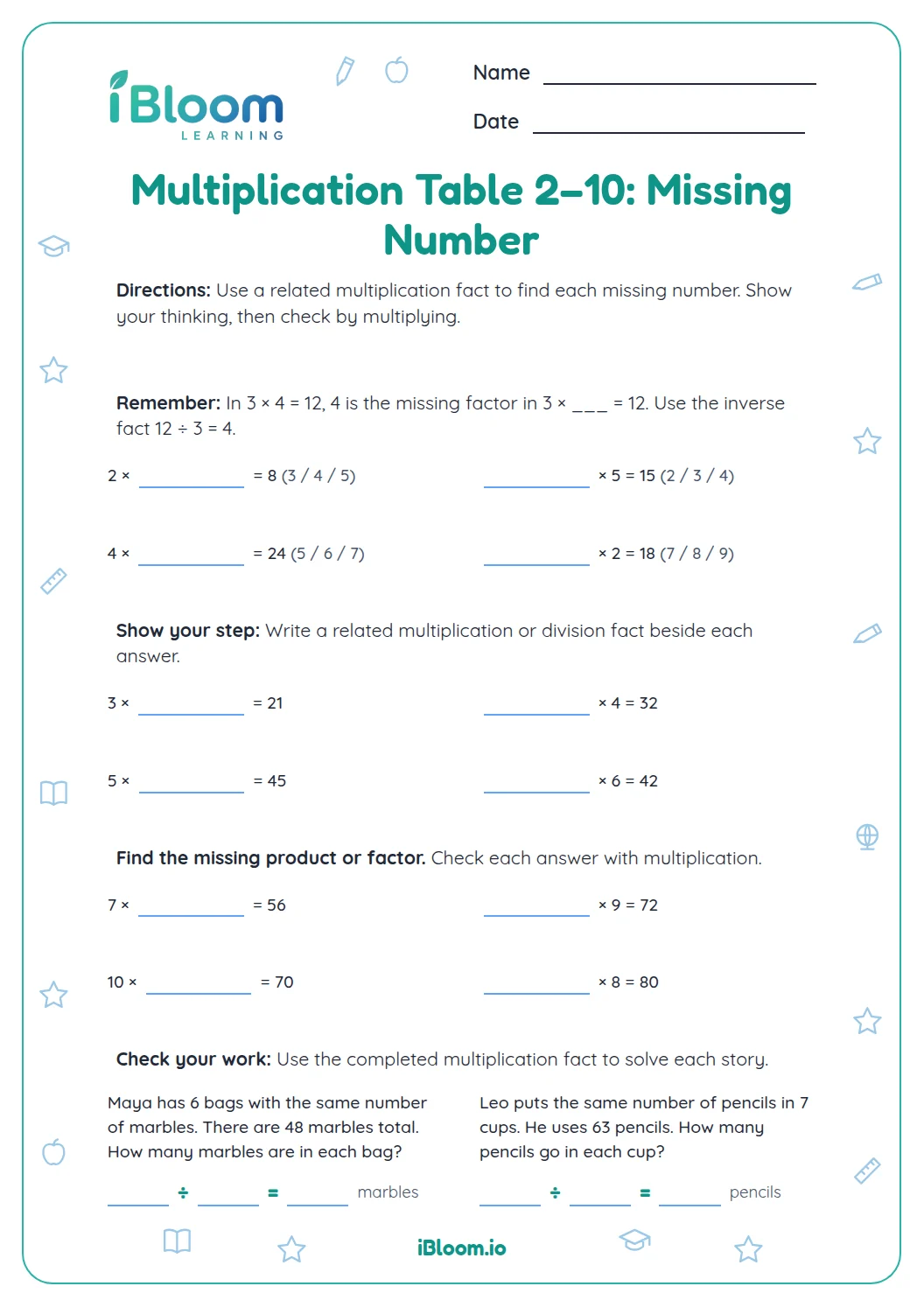
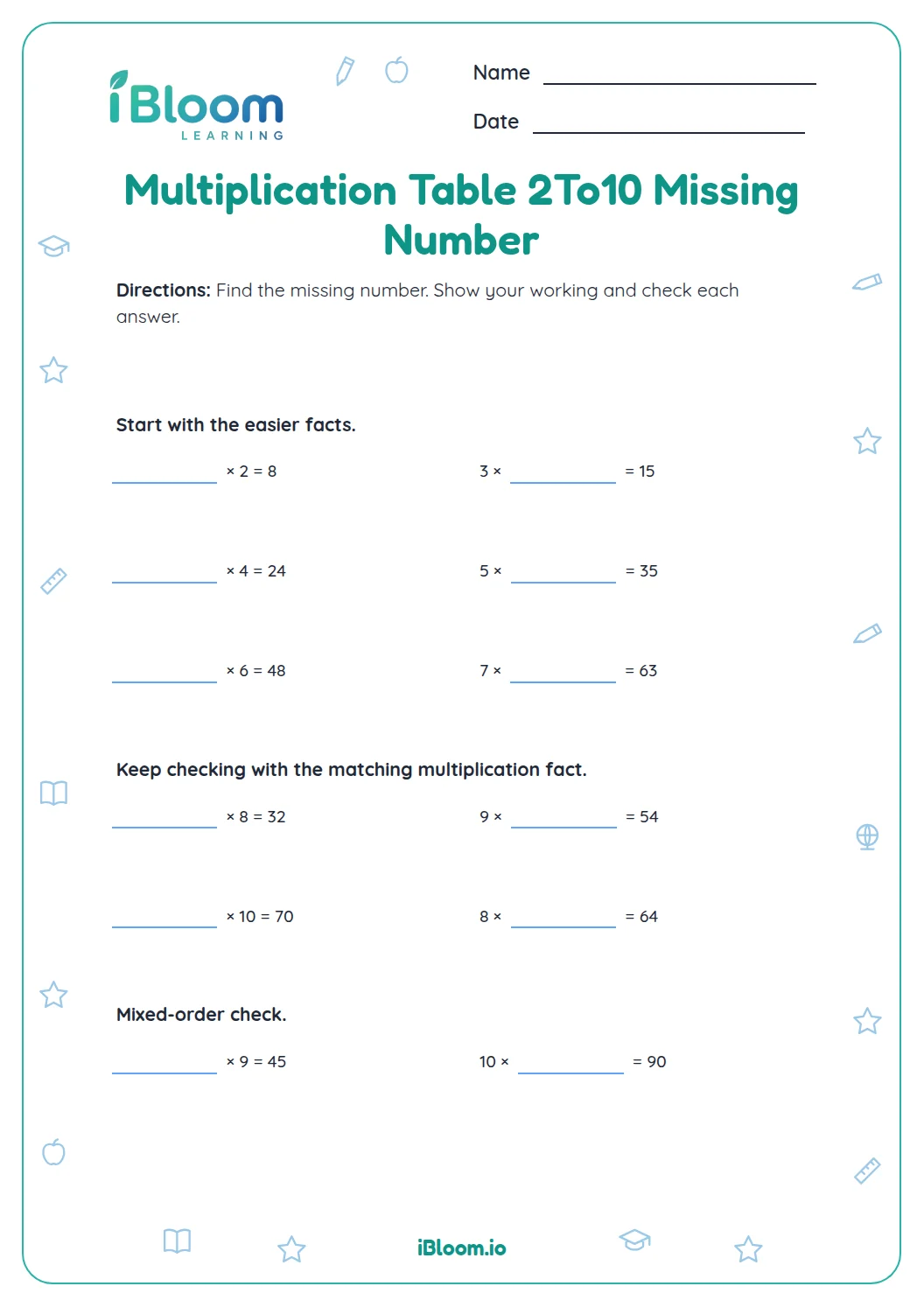
This free Grade 3 worksheet uses equal rows to solve 12 real-world multiplication problems. Part A includes four array drawings representing apples, cookies, chairs, and plants. Part B describes four more arrangements in words, and Part C gives a total while leaving the number of rows or the number in each row unknown. Children read the drawings, then write equations for the eight problems with working space. All products are within 100, practicing Common Core 3.OA.A.3. A separate answer key supplies the totals and missing factors for checking each response.
Aligned to 3.OA.A.3
How do children read the four array drawings?
A row runs across the page. In Part A, children count how many rows there are and how many objects or dots are in each row. A dot stands for one item in the story when the drawing uses dots.
The four drawings give totals of 12 apples, 10 cookies, 18 chairs, and 20 plants. Ask children to say an equation as well as write the total, connecting each arrangement to multiplication.
- 13 rows of apples
- 24 apples in each row
- 33 × 4 = 12
- 4Answer: 12 apples
How do the stories connect to arrays without a picture?
Part B gives the row count and the amount in each row in words. The toy cars, stickers, muffins, and seats can each be arranged as a rectangle of equal rows. Children can use the same multiplication structure they used with the drawings.
Question 8 has 8 rows of 5 seats. Think of eight groups of five: 8 × 5 = 40 seats. The first factor names the rows and the second names the seats in one row when describing this arrangement.
What changes when a row count is missing?
Part C starts with the total and one known factor. In question 9, 24 chairs arranged in rows of 6 can be written as ___ × 6 = 24. Four rows complete the array.
The next question gives 5 rows and a total of 35 plants, so the unknown is plants in each row. Naming the unknown before calculating prevents a correct number from being paired with the wrong unit.
Turn each arrangement into an equation
- 1For question 1, point across one row, then count all the rows.
- 2Say rows × items in each row = total for each Part A drawing; write the total.
- 3Underline the two useful quantities in each Part B story.
- 4For Part C, decide whether the answer counts rows or items in each row.
- 5Check a missing factor by multiplying it by the known factor to recover the total.
Mistakes to catch and correct
The mistake
Adding 3 and 4 to find the apple total.
The fix
There are three groups of four, so use 4 + 4 + 4 or 3 × 4 to get 12.
The mistake
Counting a dot as a whole row in the chair drawing.
The fix
Each dot is one chair; count the dots across a row, then count rows.
The mistake
Answering 7 rows for the 35 plants in question 10.
The fix
The problem already gives 5 rows. The unknown is plants in each row, so the answer is 7 plants per row.
Common Core alignment
Solve equal-row word problems using multiplication and division within 100.
On this sheet: Children use pictured and described arrays to find totals, row counts, and objects in each row.
Show the official wordingHide the official wording
Use multiplication and division within 100 to solve word problems in situations involving equal groups, arrays, and measurement quantities, e.g., by using drawings and equations with a symbol for the unknown number to represent the problem.
What to practice next
Make more practice
Further reading
Questions parents and teachers ask
Do all twelve questions have array pictures?
Four questions have array pictures, and the remaining eight describe equal-row arrangements in words. The first four help children connect visible rows to multiplication. The next four ask for totals from stories, and the final four ask for a missing row count or number of objects in each row.
What do the dots in some drawings mean?
Each dot represents one item named in that question. For example, each dot in the chair arrangement stands for one chair. Children can count the rows and dots per row exactly as they count the apple pictures, then multiply those two counts to find the number of items.
Can my child use repeated addition?
Yes, repeated addition is a useful way to check an array total. For the first question, adding 4 three times gives 12 apples. Ask the child to write 3 × 4 = 12 as well, so the repeated groups become connected to a multiplication equation.
How should children solve the missing-row questions?
Use the known total and the number in each row to find how many equal rows fit. Question 9 has 24 chairs and 6 chairs per row, so four rows are needed. Children can use division, a known multiplication fact, or repeated groups of six to reach 24.
Are reversed multiplication equations acceptable?
Yes, reversing the factors gives the same total, so 4 × 3 and 3 × 4 both equal 12. When discussing the actual apple drawing, still ask the child to identify its three rows and four apples per row. This checks the meaning of the arrangement as well as the product.