



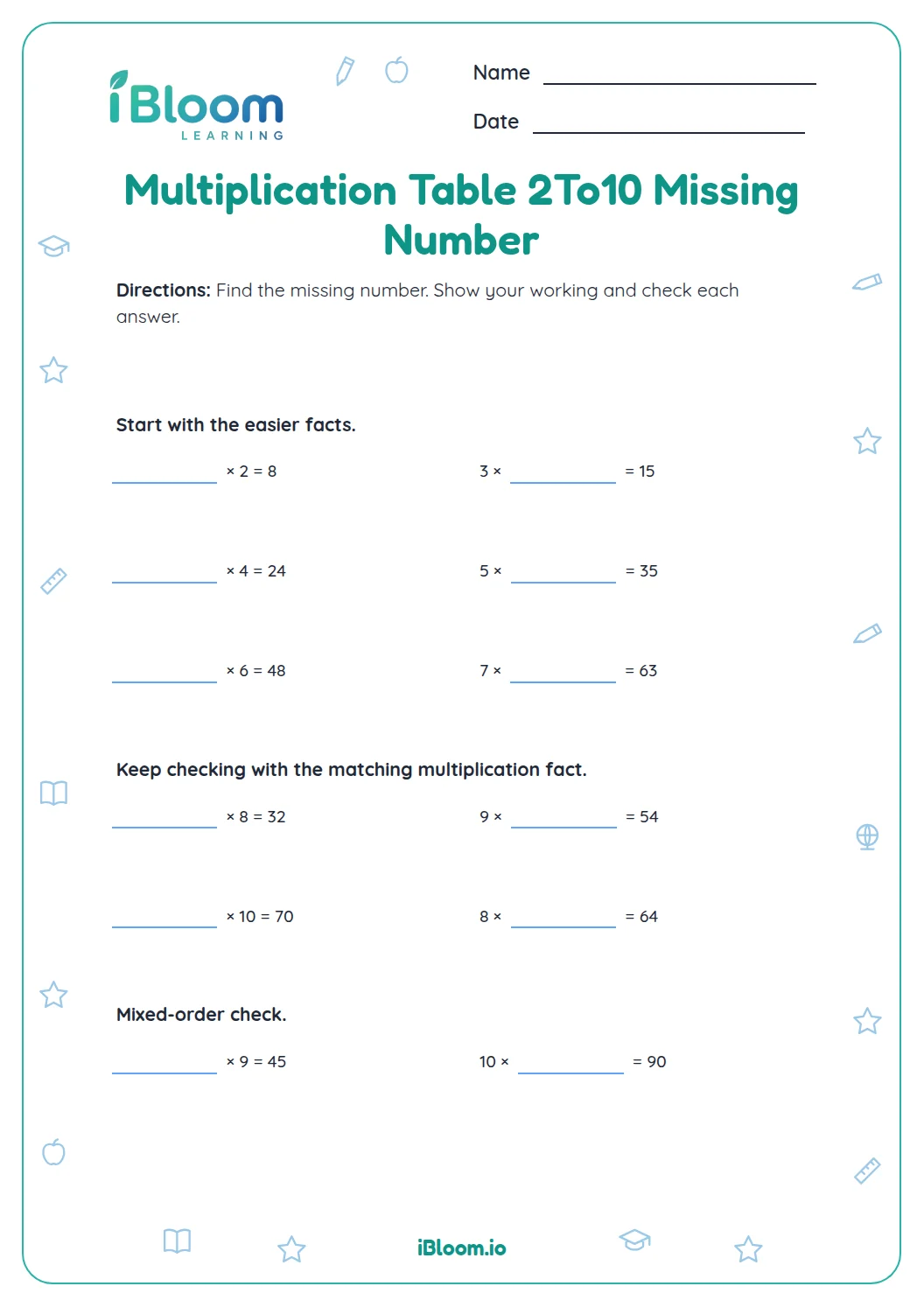
About this worksheet
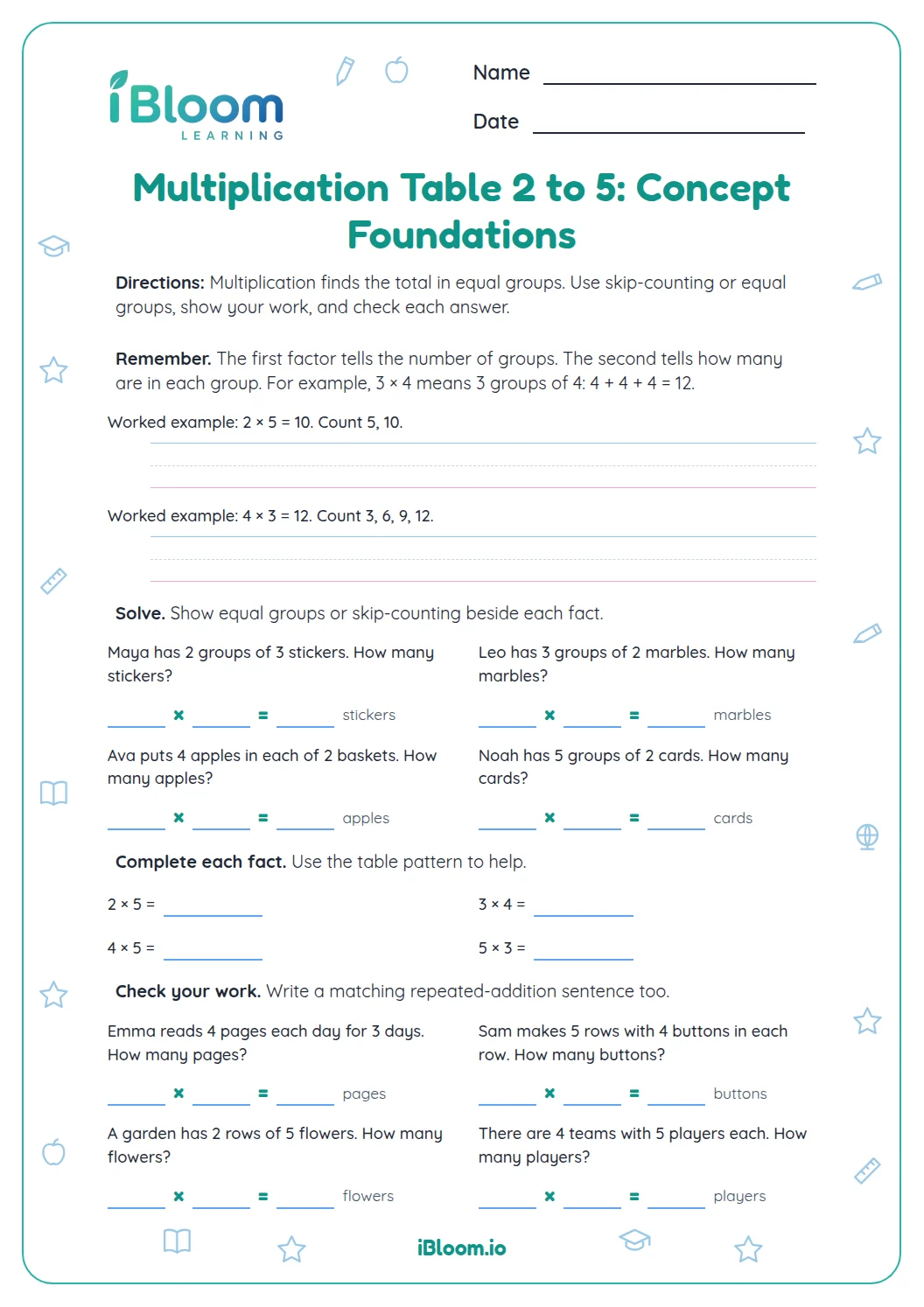
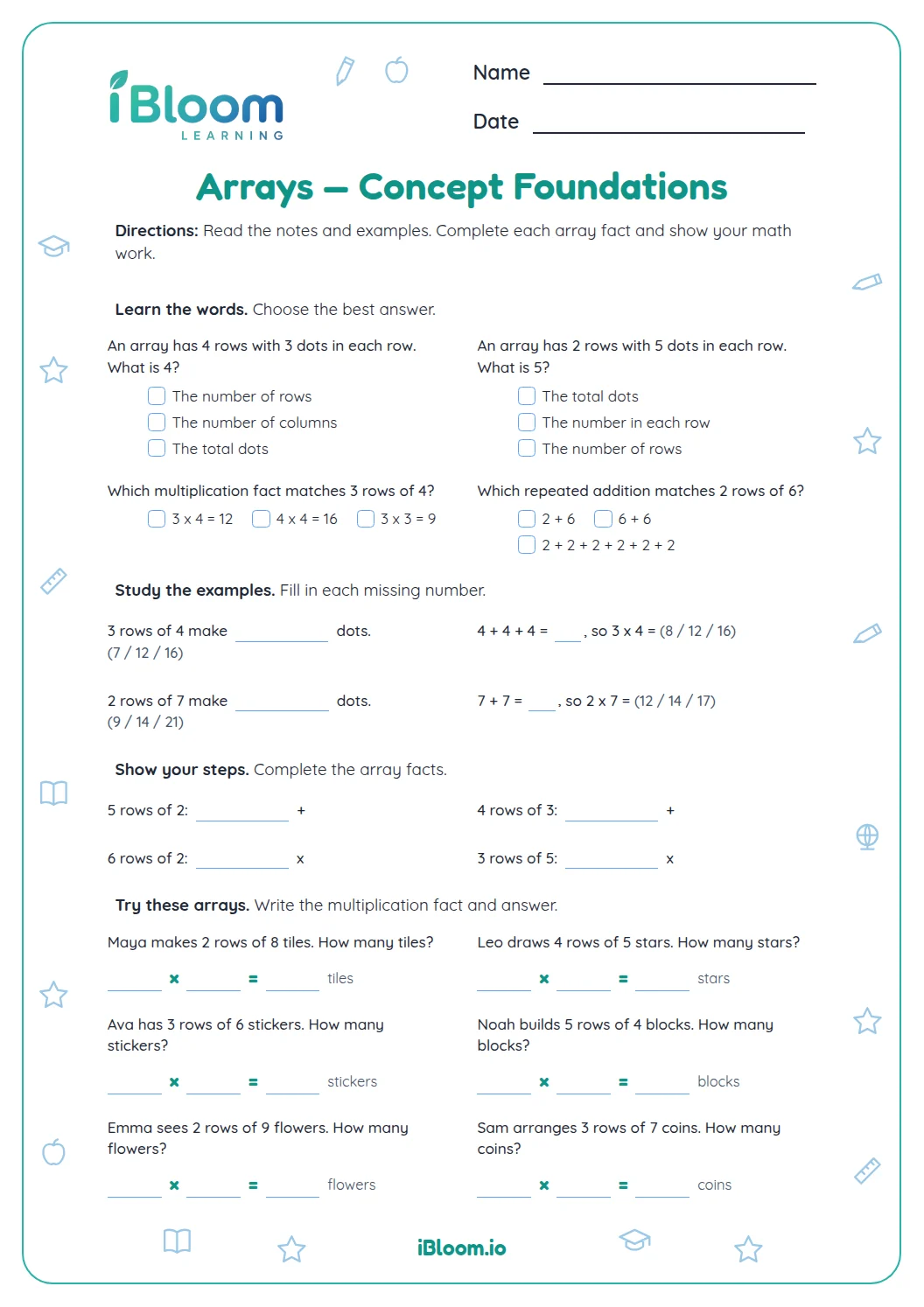
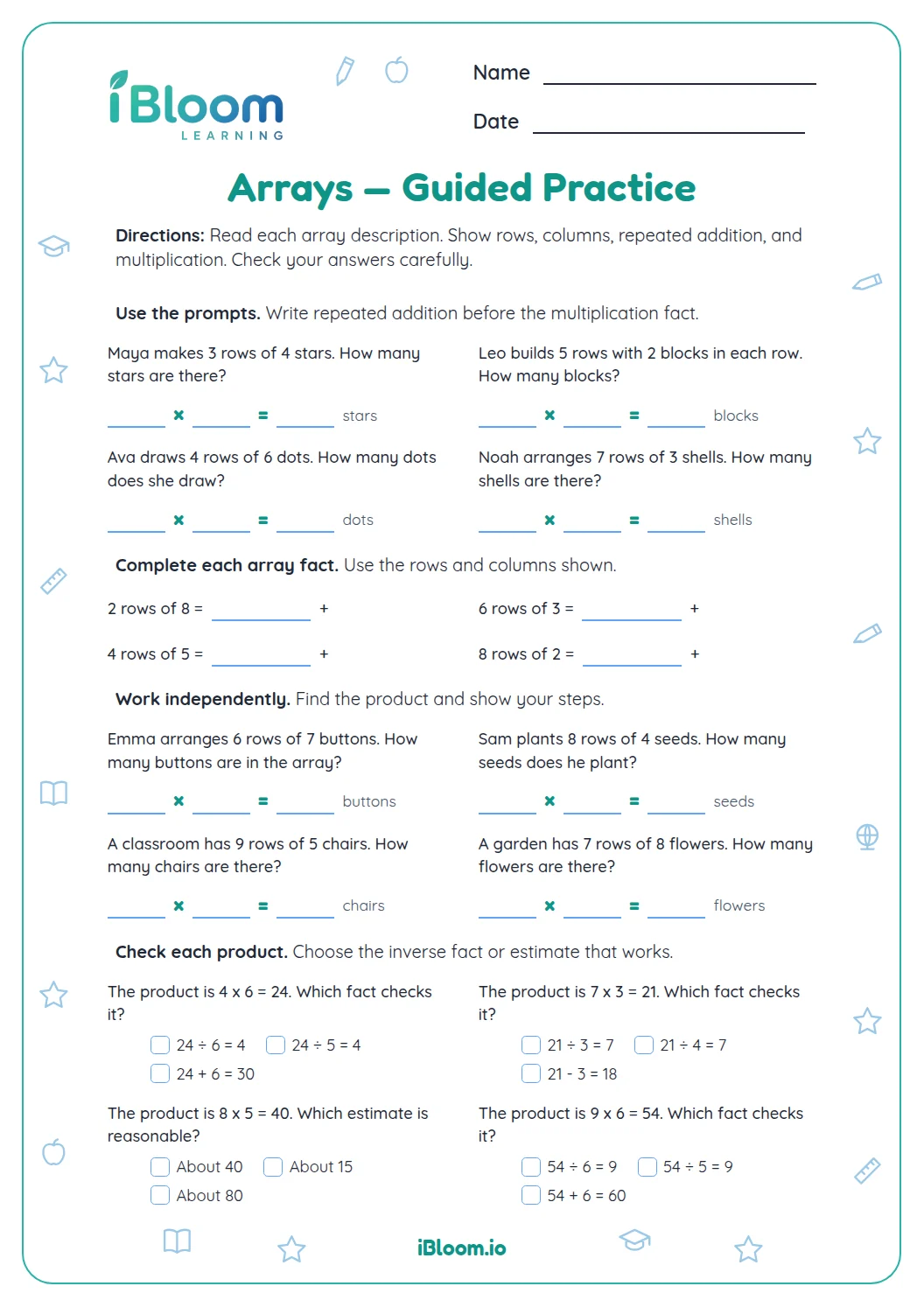
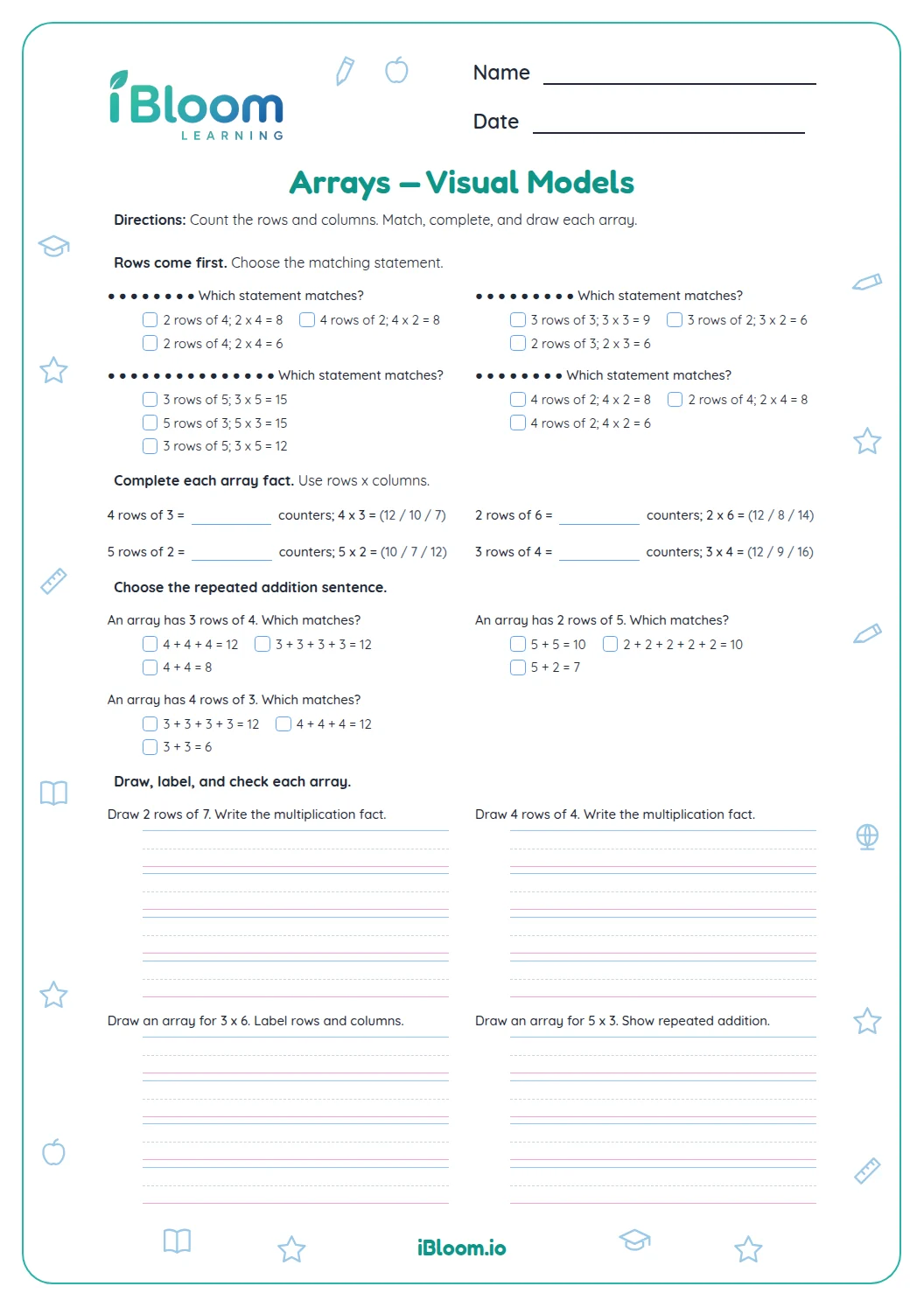
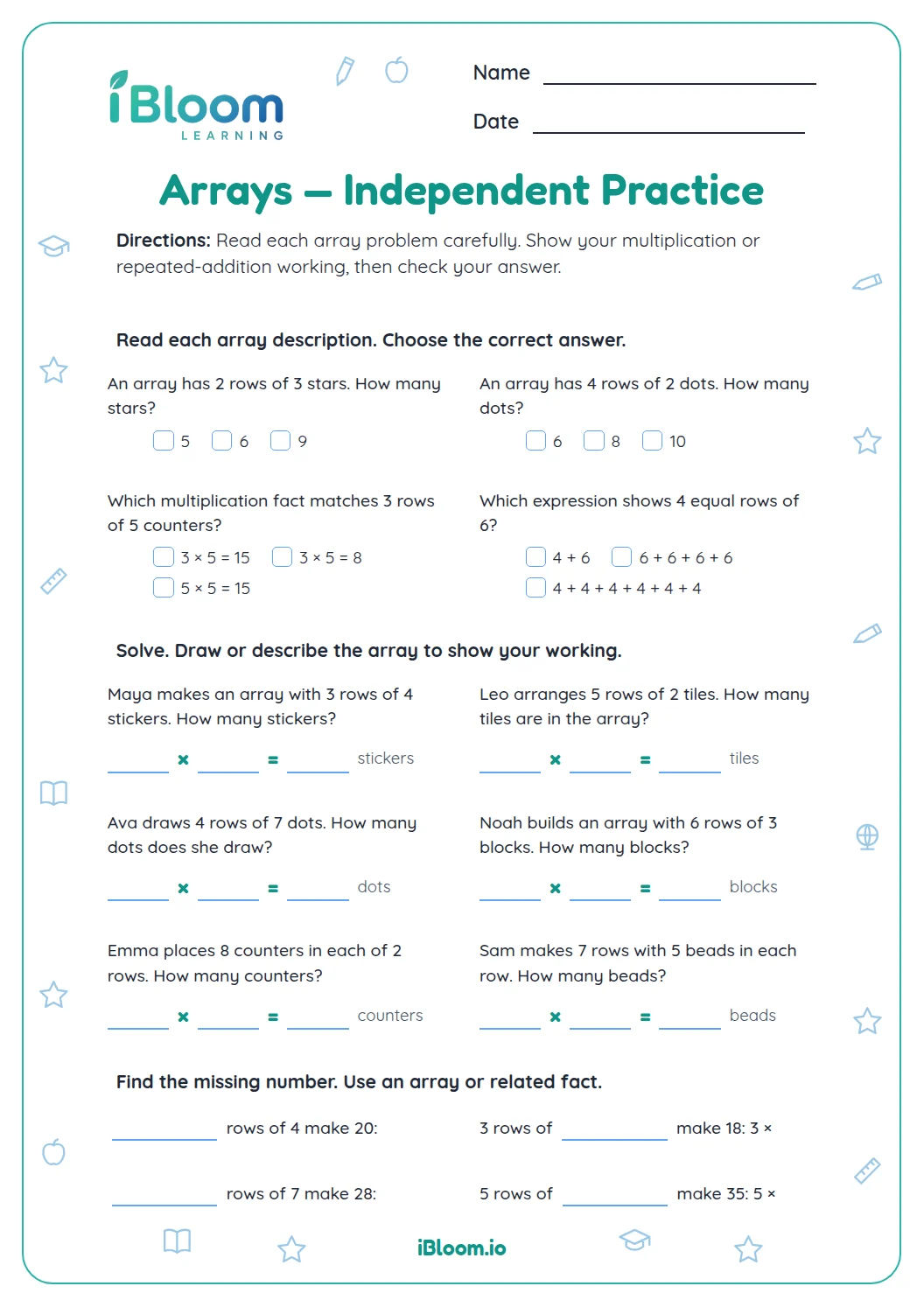
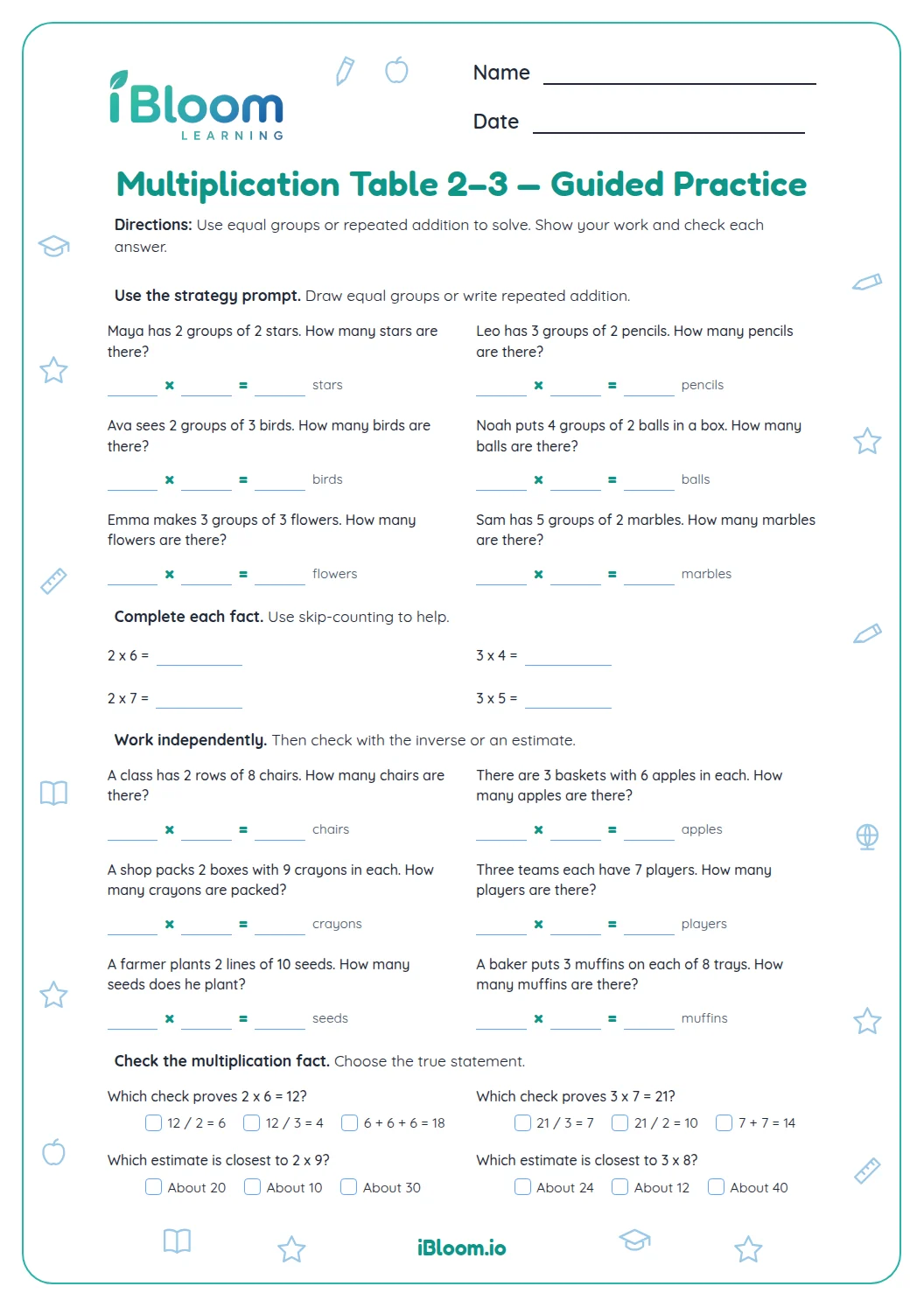
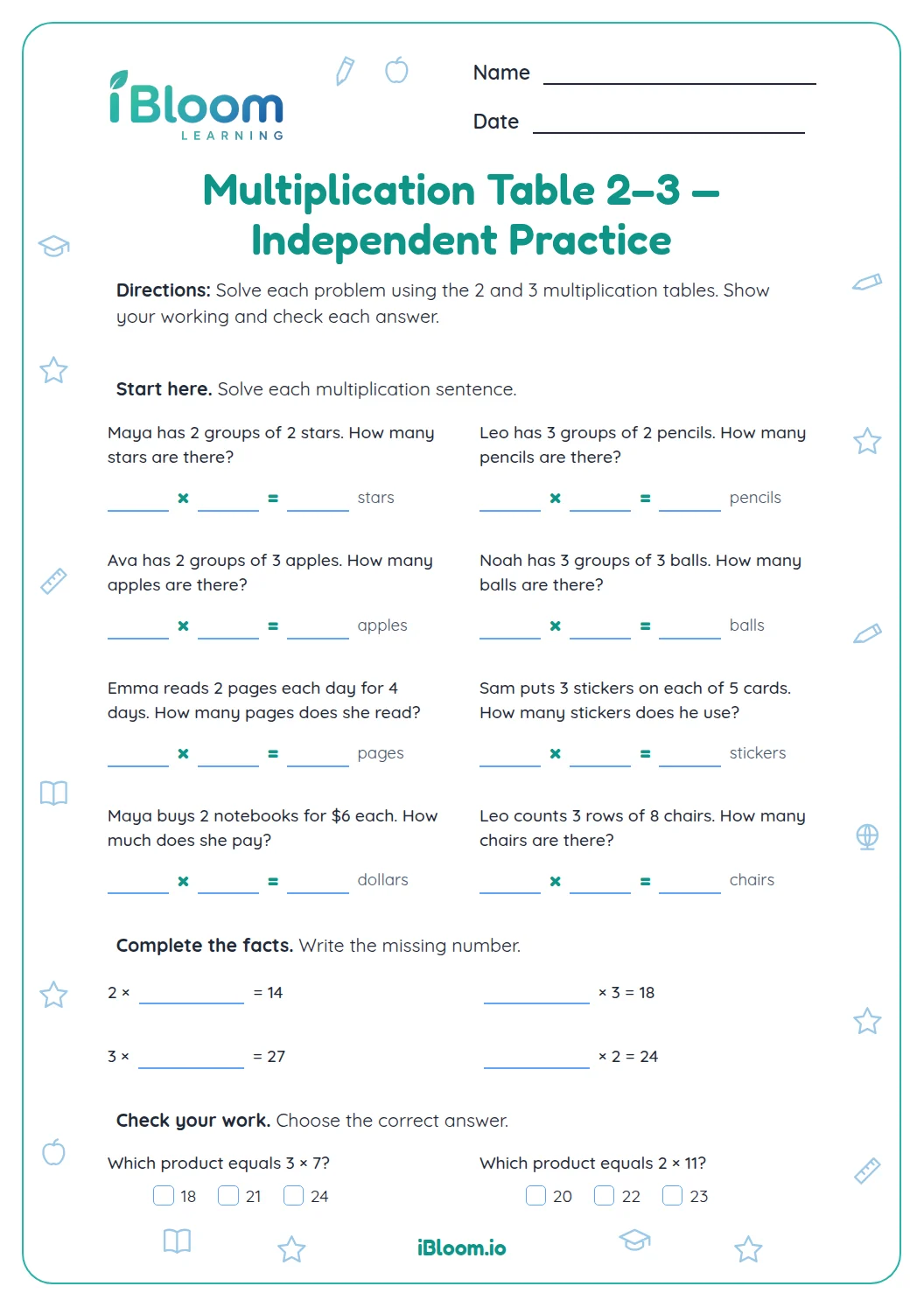
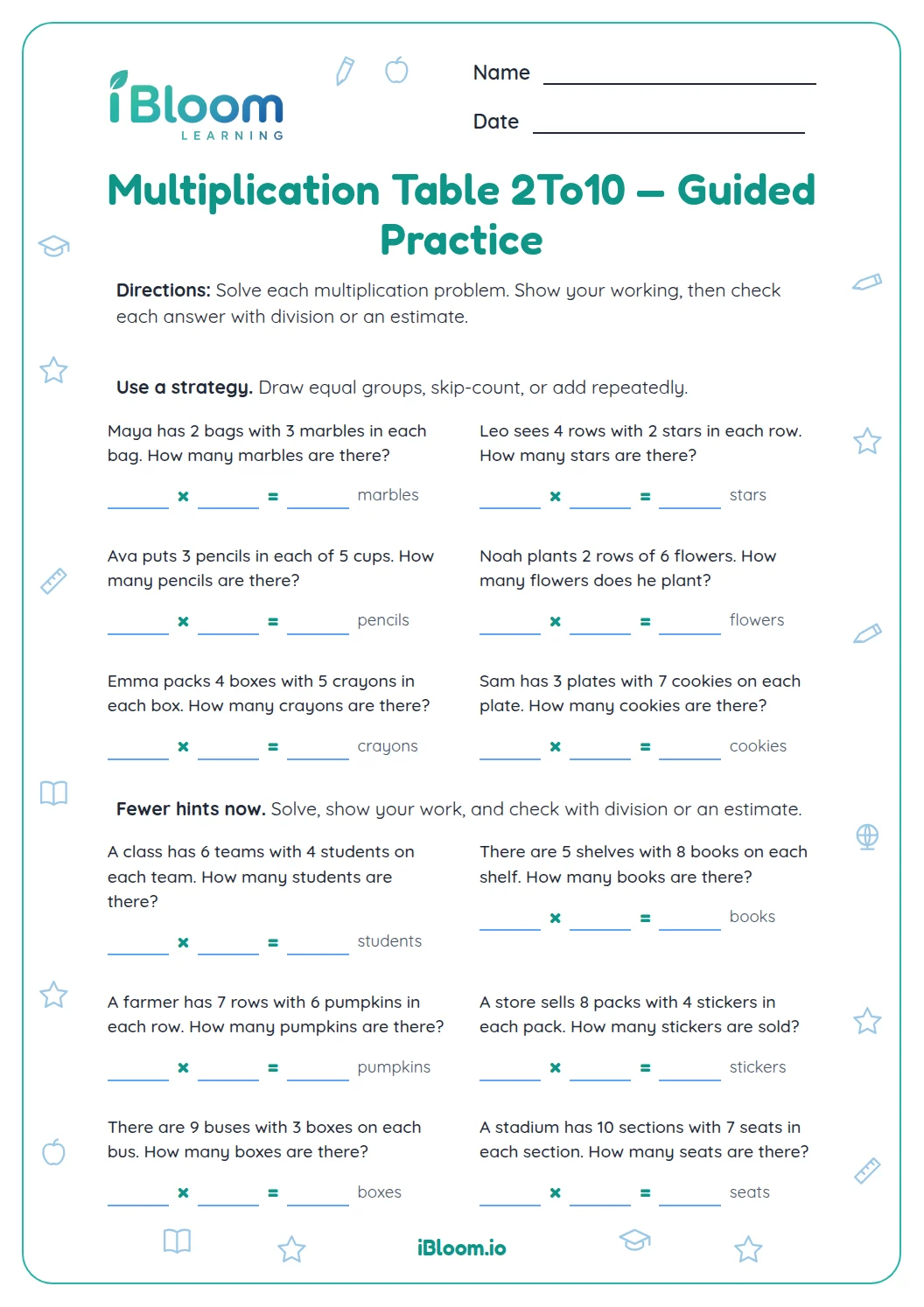
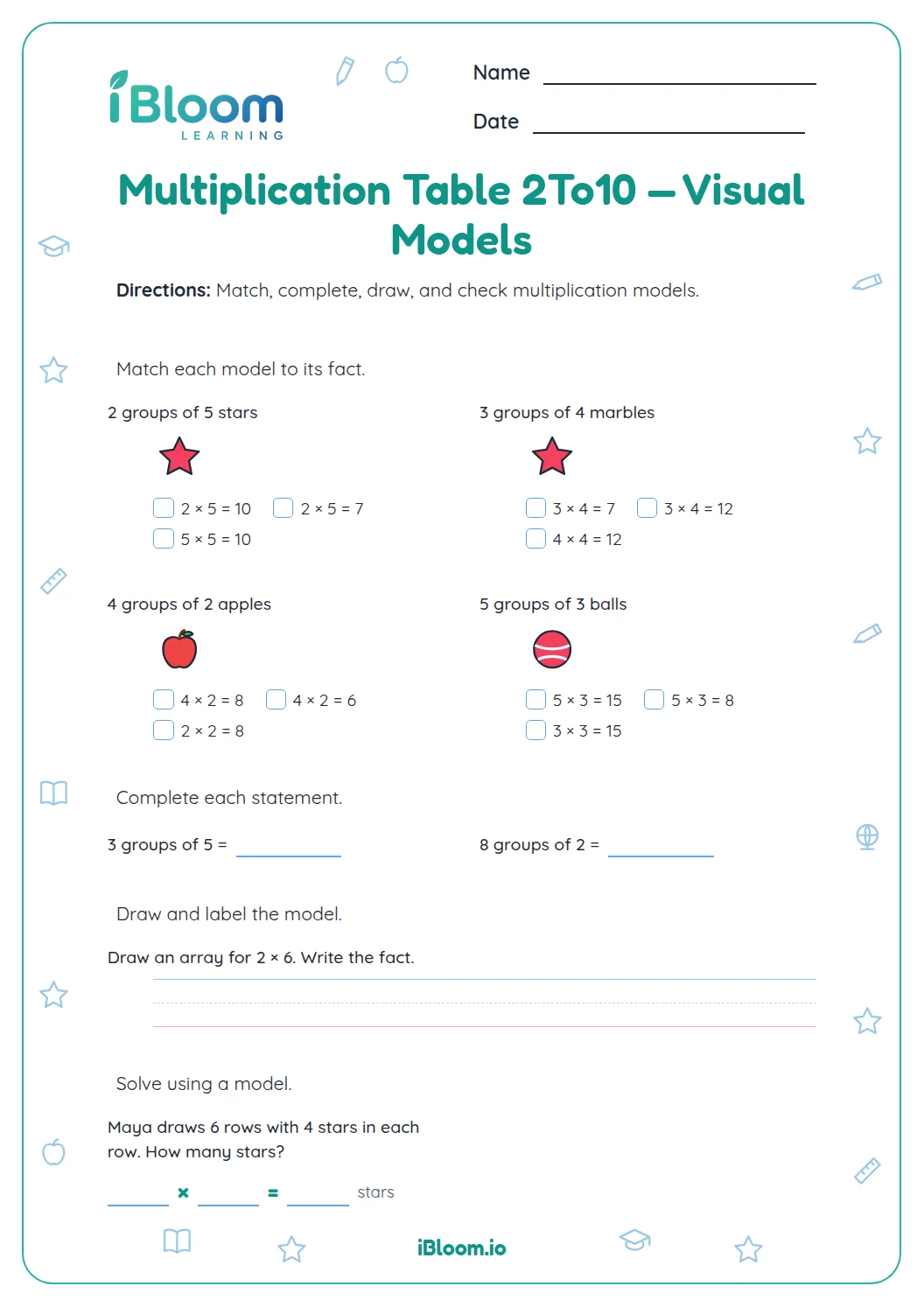
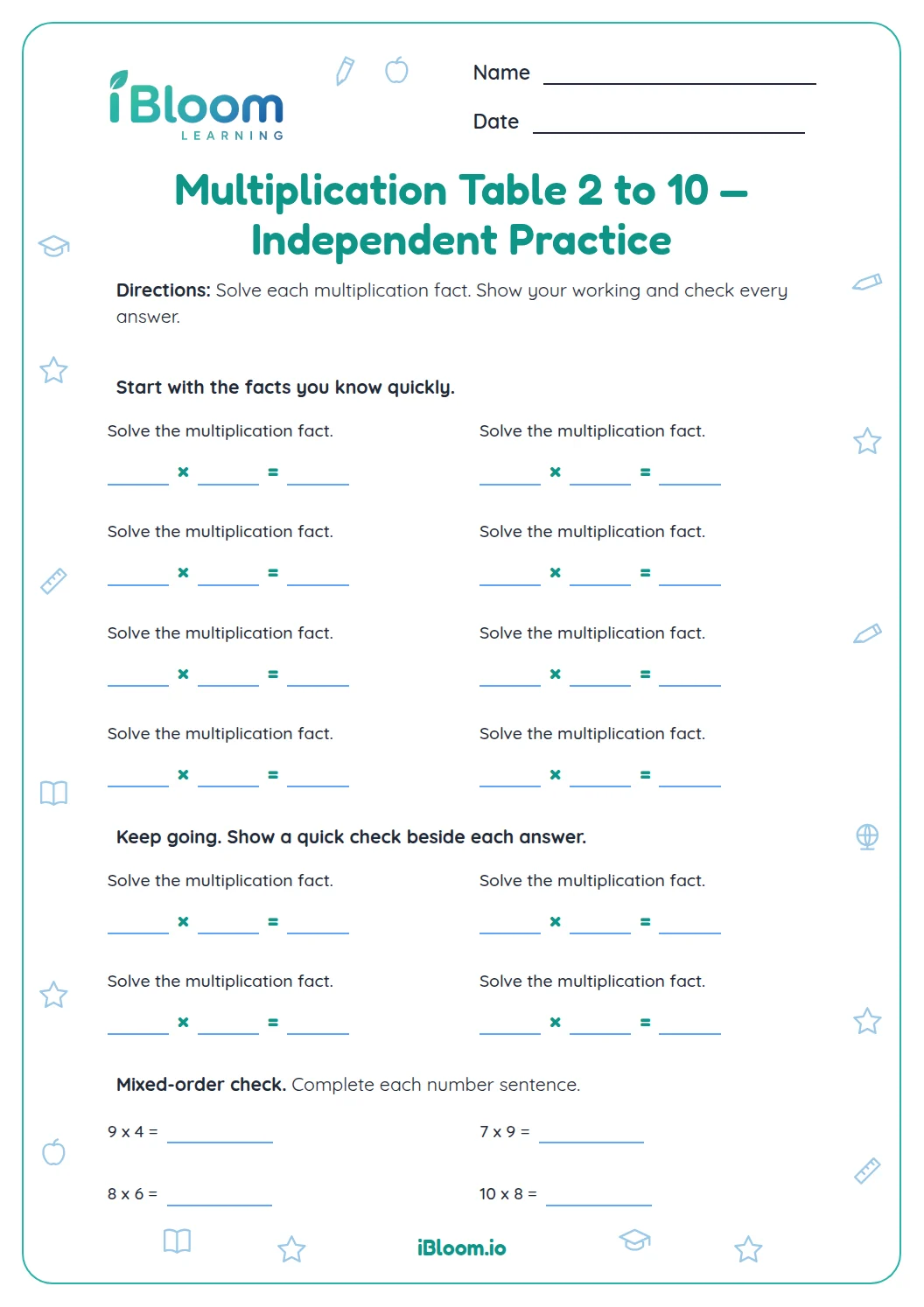
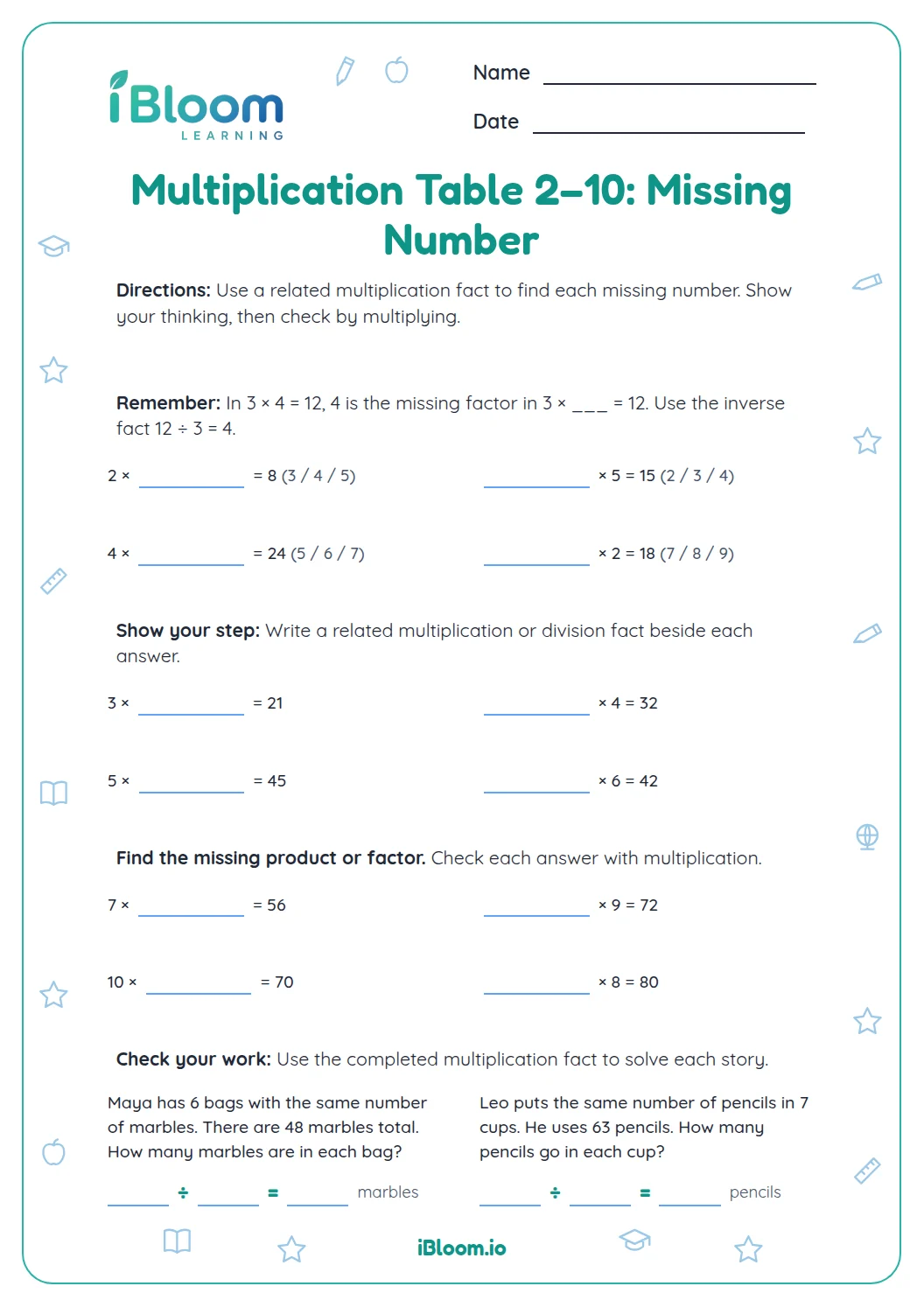
This Grade 3 worksheet gives students 14 short stories about equal groups. Each item offers three products to choose from, using multiplication facts with factors from 2 through 5. The varied situations include classroom supplies, food, books, and teams. A separate answer key lists every result. This work connects story situations to multiplication, as described in CCSS 3.OA.A.3.
Aligned to 3.OA.A.3
How do you turn a story into multiplication?
All 14 questions offer three products for an equal-group story. Each item uses a different multiplication fact with factors from 2 through 5.
How can students find the product in a story?
Name the number of groups and how many are in each group. For the story about 3 trays with 4 muffins on each tray, compute 3 × 4 = 12 and choose 12 muffins.
- 1There are 3 trays with 4 muffins on each tray.
- 2Multiply the trays by muffins per tray: 3 × 4 = 12.
- 3Choose 12 muffins.
How can an adult support the practice?
The answer key lists all 14 products. For a story with 3 trays and 4 muffins on each tray, the equation is 3 × 4 = 12, so there are 12 muffins.
- 1There are 3 trays with 4 muffins on each tray.
- 2Multiply the number of trays by muffins per tray: 3 × 4 = 12.
- 3There are 12 muffins.
How to use this worksheet
- 1Read the story and mark the equal groups.
- 2Write groups × objects in each group.
- 3Use a known fact or skip-count to find the product.
- 4Add a unit to the answer when the story names one.
- 5Check the key and explain one answer aloud.
Common mistakes and quick fixes
The mistake
Multiply the group count by adding instead.
The fix
Make equal jumps or use a known multiplication fact.
The mistake
Reverse the group count and group size.
The fix
Both orders give the same product, but label factors from the story.
The mistake
Give the number in one group instead of the total.
The fix
Ask whether the question wants one group or every group together.
Common Core alignment
This page gives students focused practice with the named Common Core skill.
Solve equal-group multiplication problems with factors from 2 to 5.
On this sheet: Each story represents equal groups and asks for the total.
Show the official wordingHide the official wording
Use multiplication and division within 100 to solve word problems in situations involving equal groups, arrays, and measurement quantities, e.g., by using drawings and equations with a symbol for the unknown number to represent the problem.
What to practice next
Make more practice
Further reading
Questions parents and teachers ask
What does this multiplication worksheet practice?
Students identify the number of equal groups and the amount in each group, then choose the matching product from three options. This sheet has 14 stories using factors 2–5, with a separate answer key for checking every result.
Which grade is this page for?
The worksheet is labeled Grade 3 and focuses on multiplication facts from 2 through 5. An adult can read a story aloud and ask the student to name the groups and the amount in each group before solving. The grade label appears above the worksheet, and the questions use only these facts.
How should we use the answer key?
Have the student solve the story first, then compare the product with the key. If it differs, identify the two factors in the story and check the multiplication fact. For equation questions, also check that the factors match the group count and group size.
How long will the worksheet take?
Plan for about 20 minutes for the 14 questions. Students can complete the equation problems first, then work through the product choices. Pause after each part to check that the story describes equal groups. The parts progress from written equations to product choices using the same fact range.
What is one example from the sheet?
One story describes 3 trays with 4 muffins on each tray. The equation is 3 × 4 = 12, so there are 12 muffins. The units matter: the answer counts muffins, not trays. This is the first worked example printed on the worksheet and key.