


About this worksheet
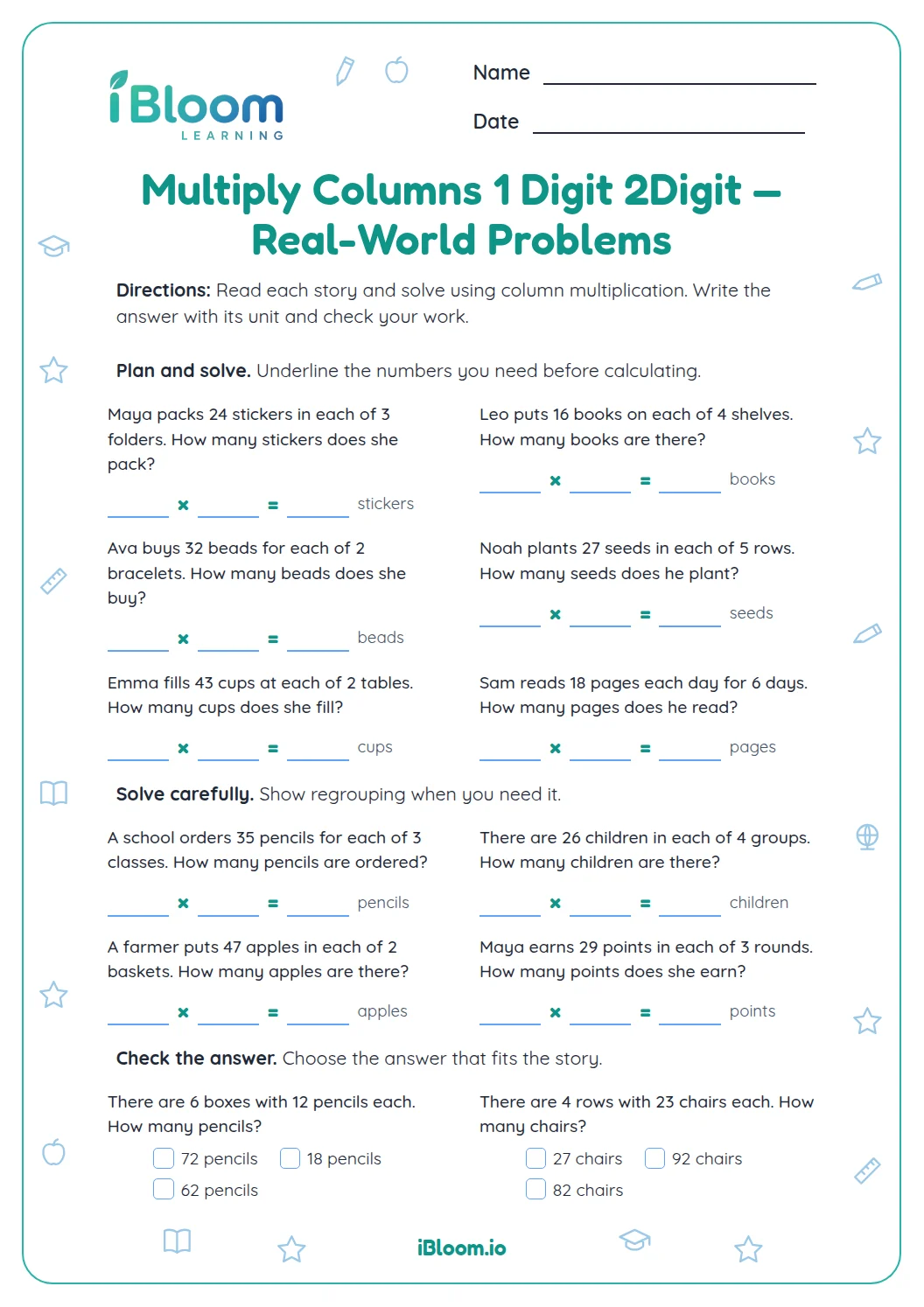
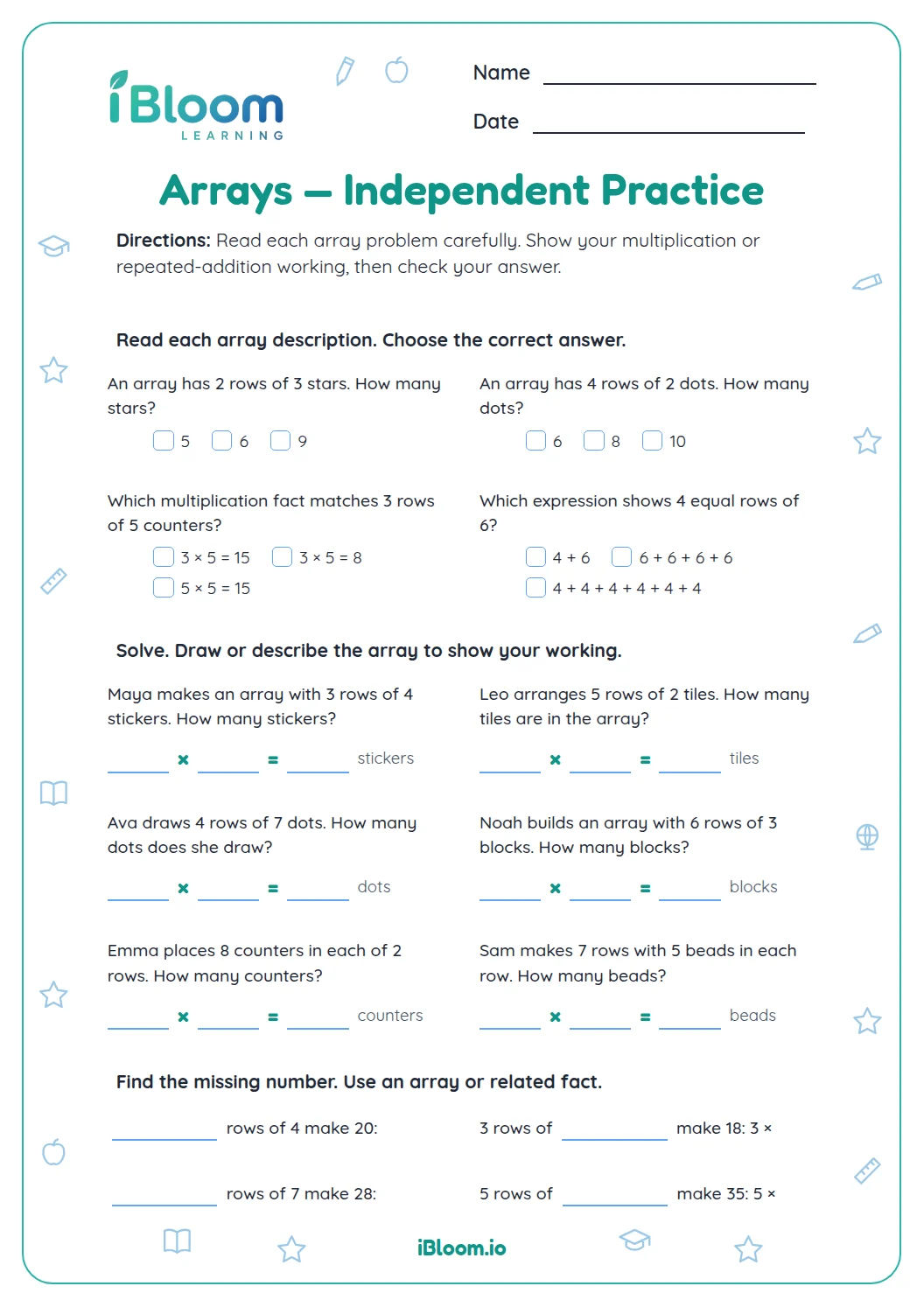
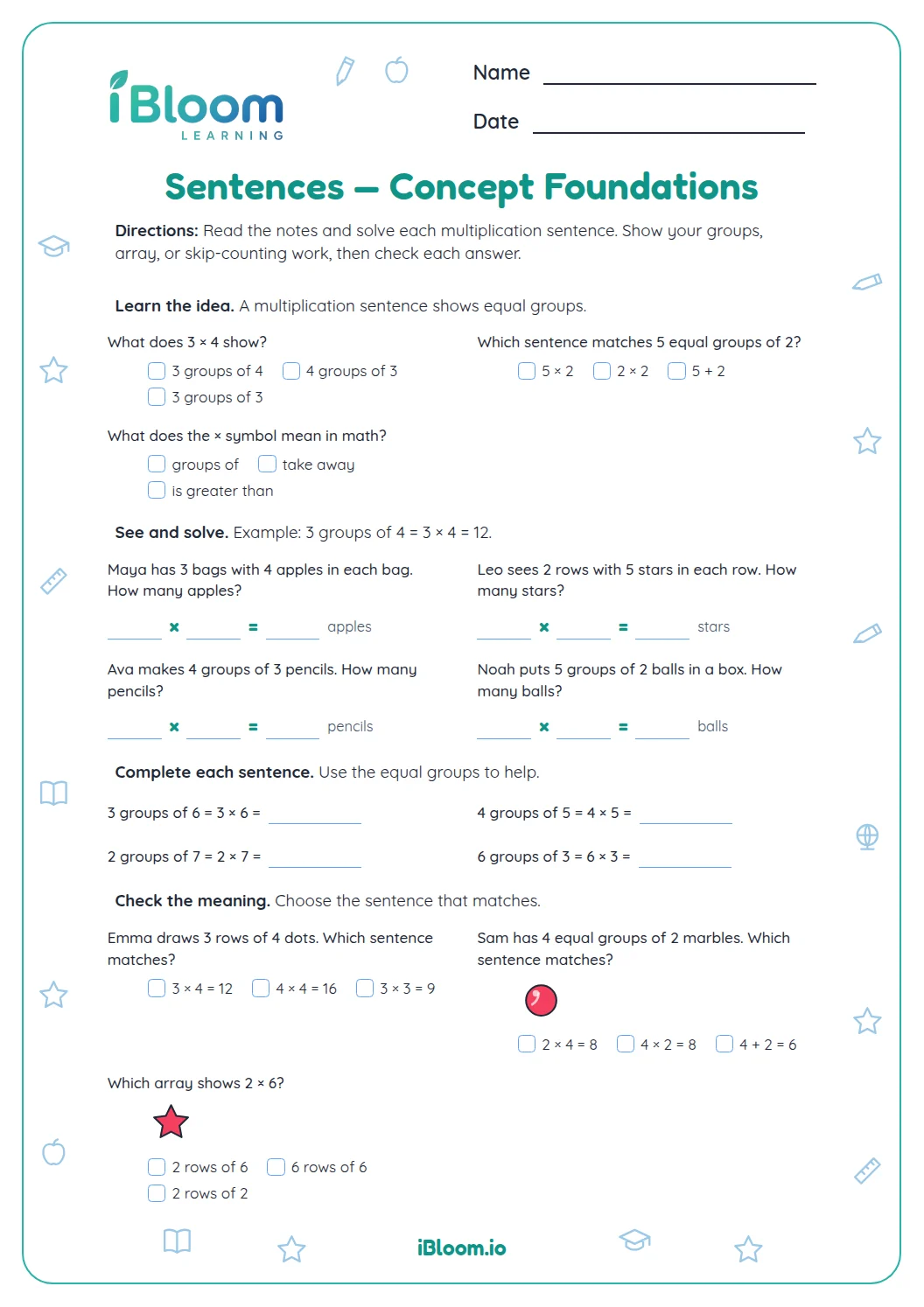
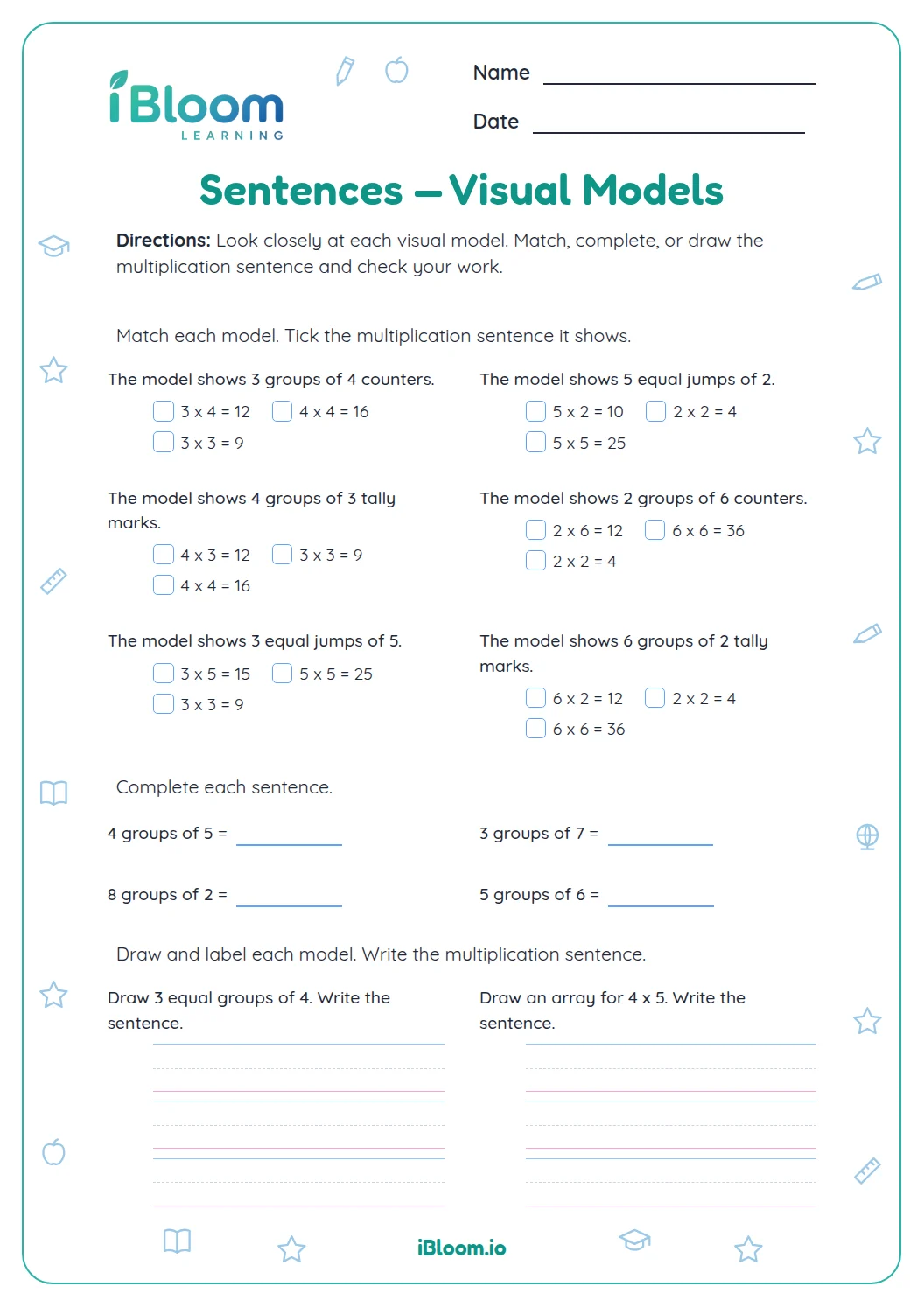
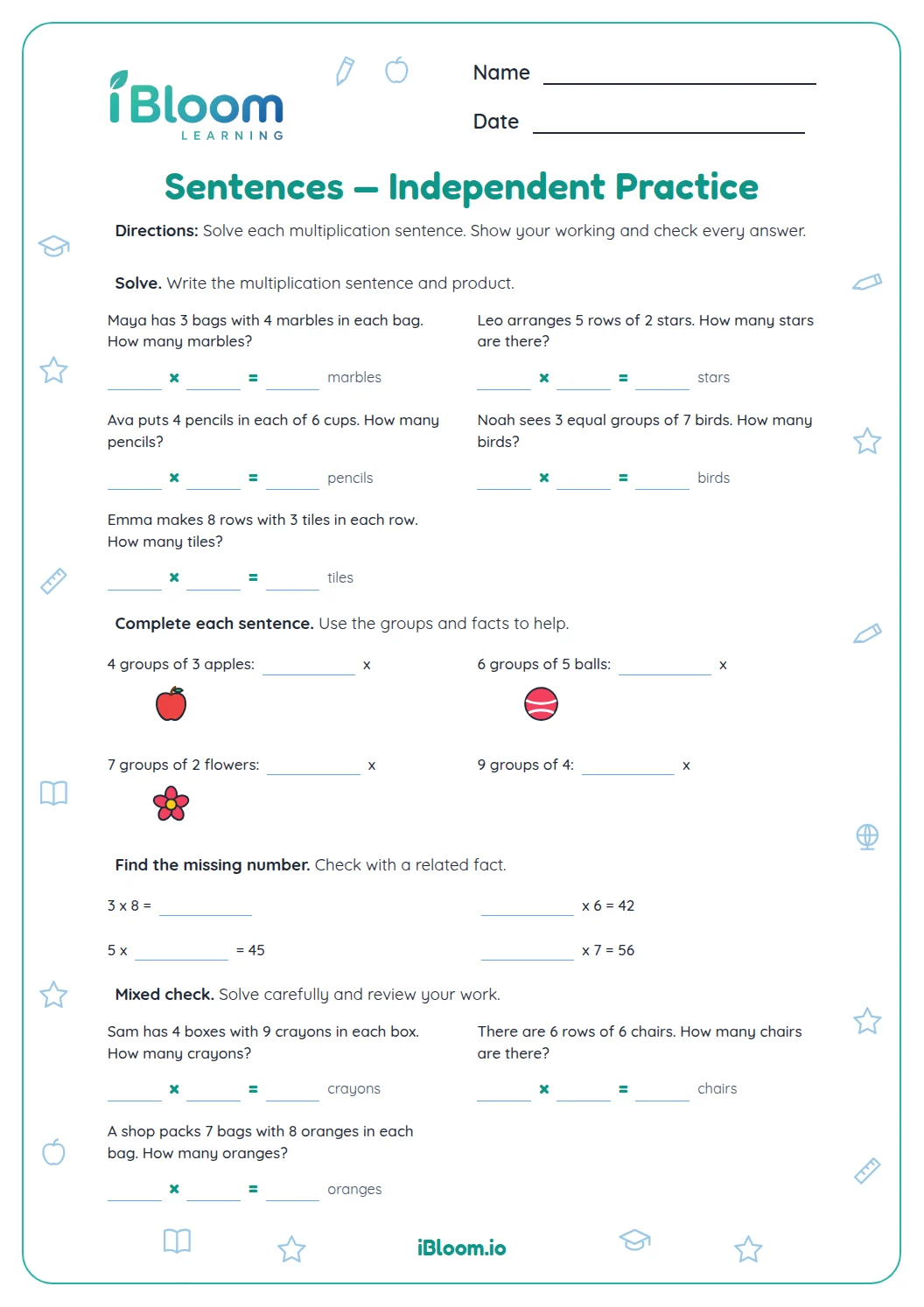
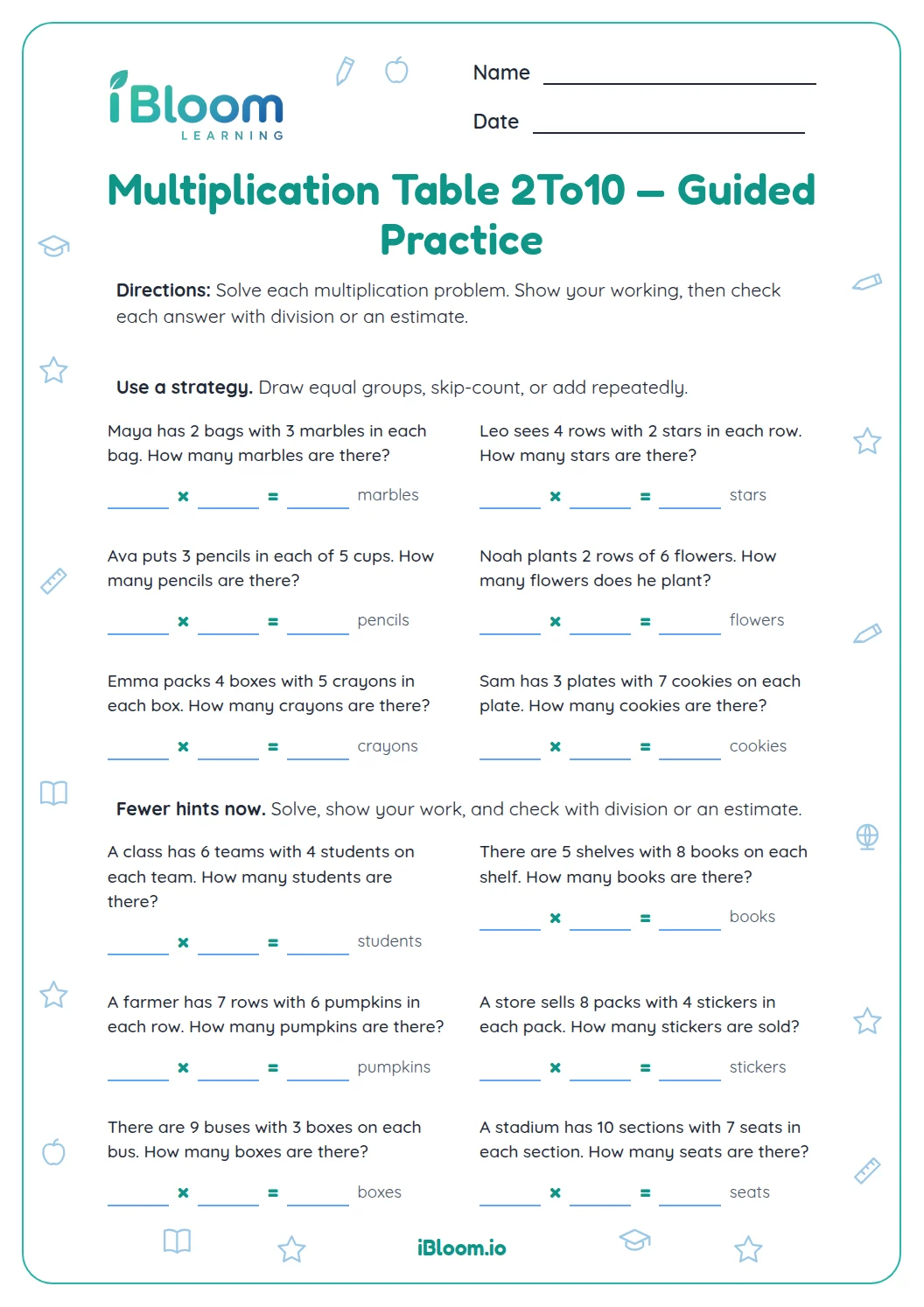
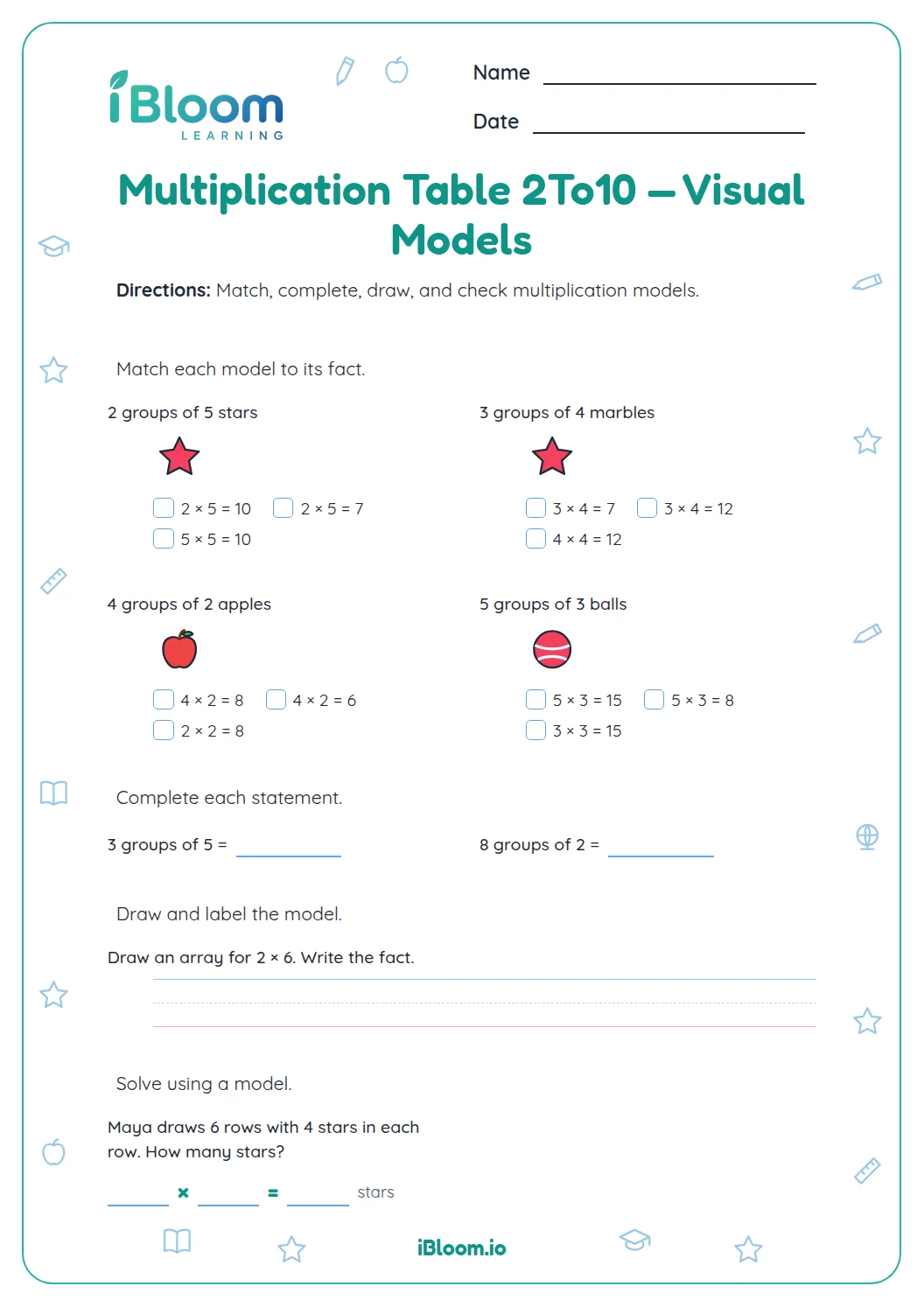
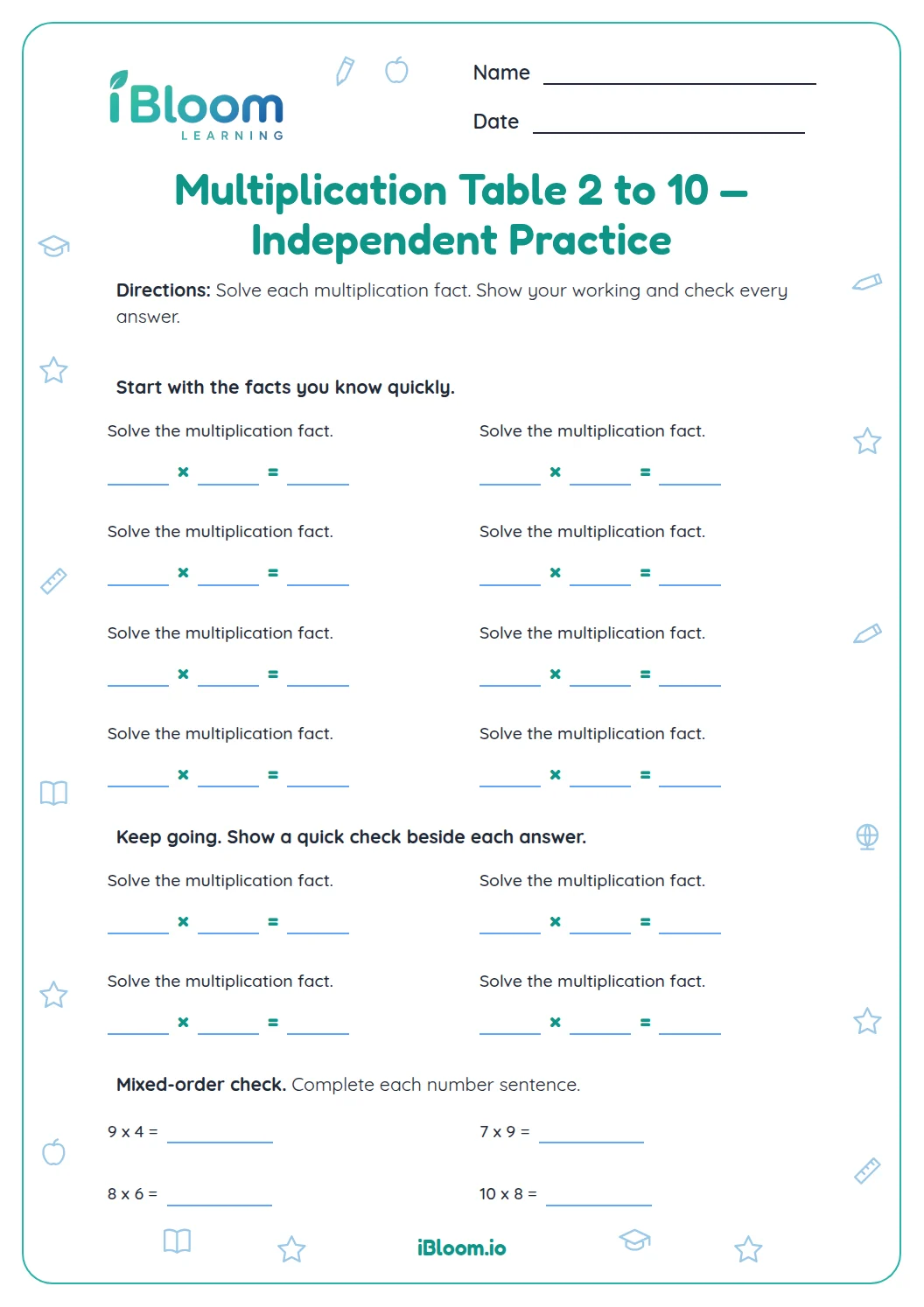
This printable Grade 3 worksheet practices multiplication of a two-digit number by a one-digit number. Children find products, use a place-value split such as 20 × 3 plus 7 × 3, and connect a small array to equal groups. A separate answer key is included.
Aligned to 3.OA.A.3
How does place value help with multiplication?
Split a two-digit factor into tens and ones, multiply each part, then combine the partial products. The sheet also includes a small array model and products within 100.
What will students solve?
There are 16 questions in three parts. For example, 23 × 3 can be split into (20 × 3) + (3 × 3), or 60 + 9, for a product of 69.
- Find two-digit by one-digit products
- Use a split expression
- Connect equal groups to an array
How to use this worksheet
- 1Multiply the tens digit by the one-digit factor.
- 2Multiply the ones digit by the factor.
- 3Add the partial products and check the result.
- 4For the array, count equal rows or multiply rows by columns.
- 5Review the worked products with the separate answer key.
Common mistakes and quick fixes
The mistake
Multiplying only the ones digit
The fix
Include the tens value too.
The mistake
Treating 2 tens as 2 ones
The fix
Use 20, not 2, in the partial product.
The mistake
Forgetting to combine partial products
The fix
Add them after both multiplications.
Common Core alignment
CCSS 3.OA.A.3: solve multiplication word problems within 100 using equal groups, arrays, or equations.
Solve multiplication problems within 100.
On this sheet: Students use equal groups and an array to represent multiplication within 100.
Show the official wordingHide the official wording
Use multiplication and division within 100 to solve word problems in situations involving equal groups, arrays, and measurement quantities, e.g., by using drawings and equations with a symbol for the unknown number to represent the problem.
What to practice next
Make more practice
Further reading
Questions parents and teachers ask
How can I multiply a two-digit number by one digit?
Break the two-digit number into tens and ones, multiply each part, then add. For 23 × 3, calculate 20 × 3 = 60 and 3 × 3 = 9; the total is 69. Try one example together, then invite the child to solve the next one independently.
What does regrouping mean in multiplication?
When a partial product has ten or more ones, trade groups of ten ones for a ten. Keep that place value in mind as you combine the tens and ones products. Try one example together, then invite the child to solve the next one independently.
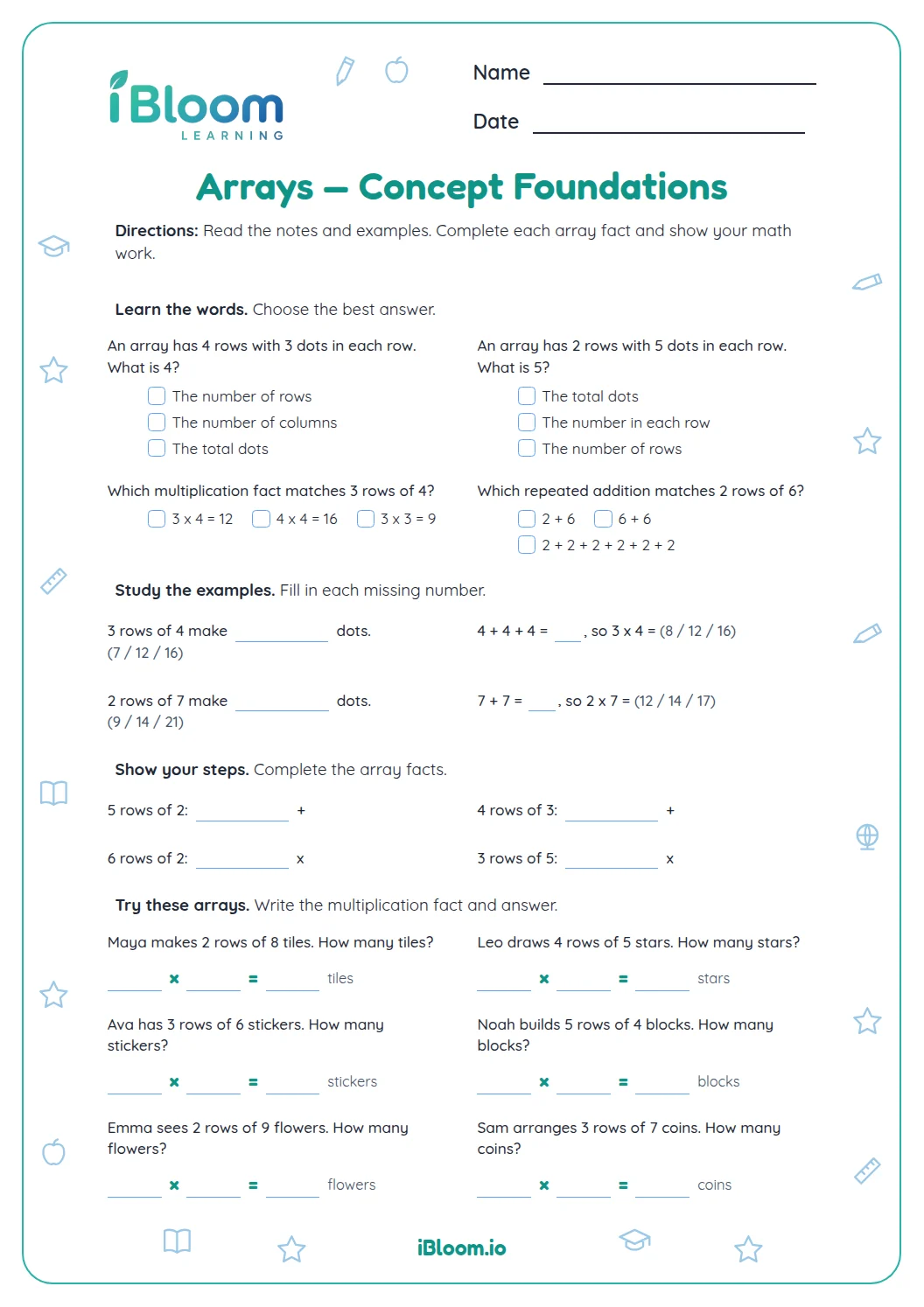
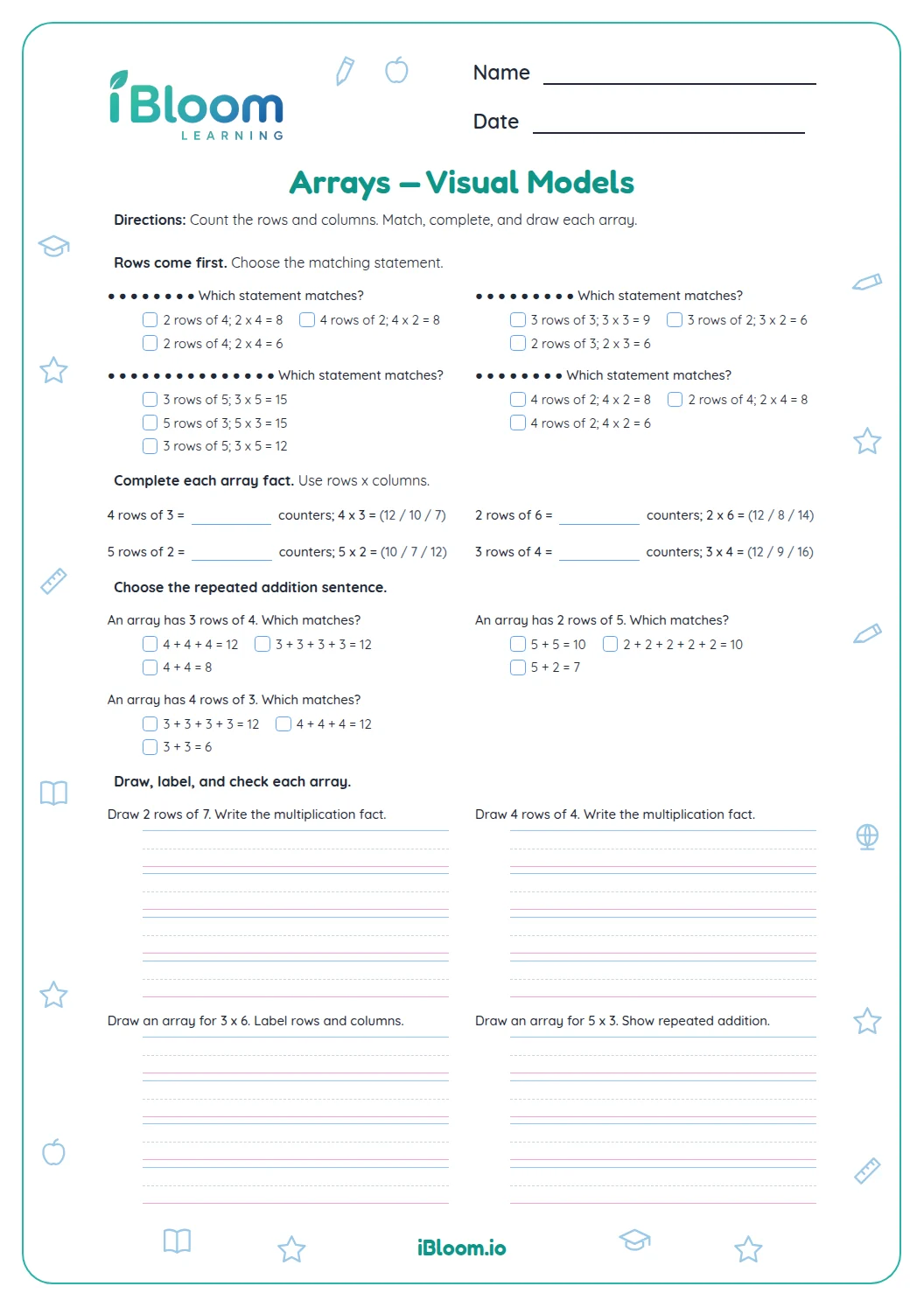
How does an array show multiplication?
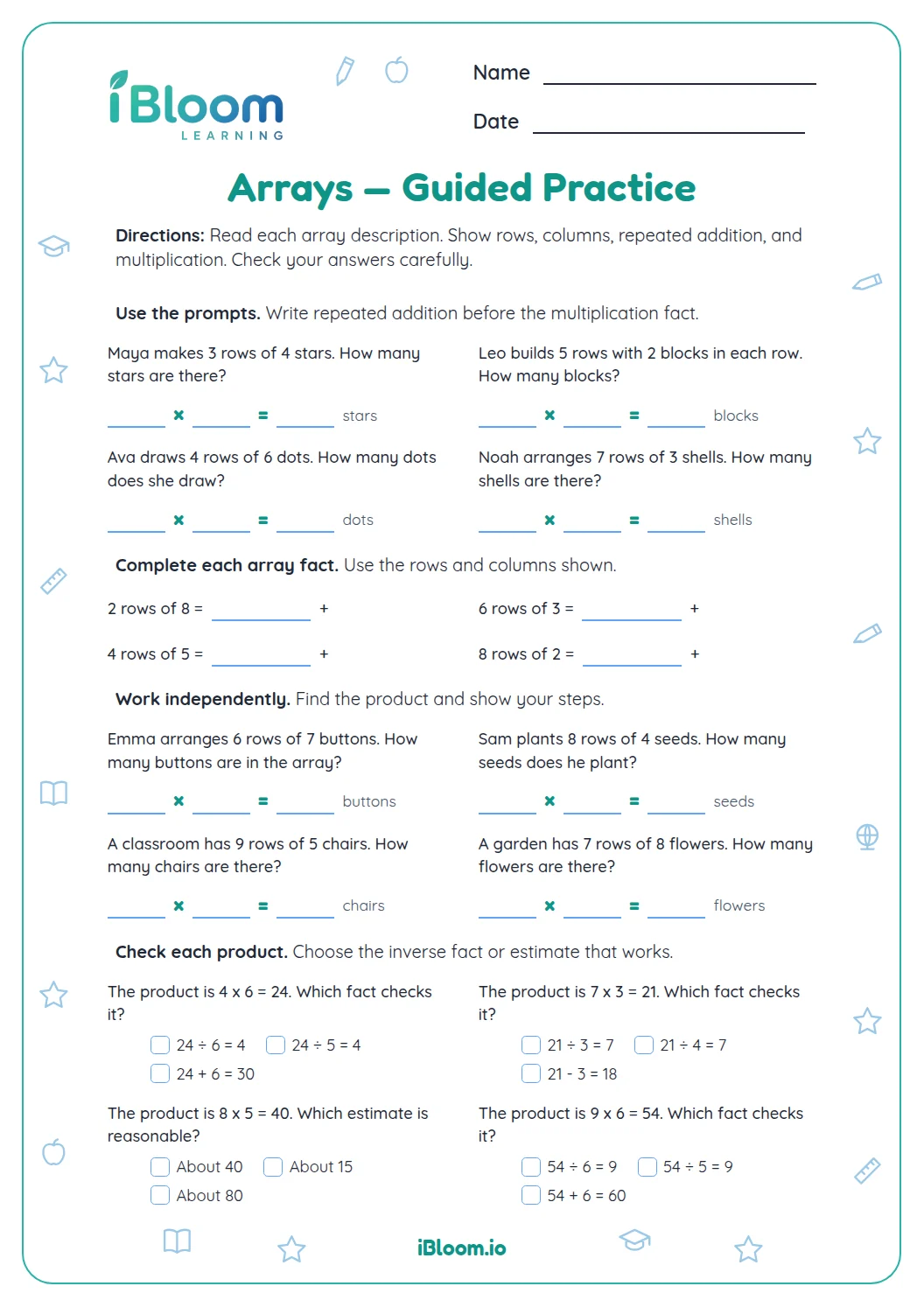
An array organizes equal groups into rows and columns. The array on this sheet has 3 rows of 4 counters, so it represents 3 × 4 and contains 12 counters. Try one example together, then invite the child to solve the next one independently.
How many questions are included?
The worksheet has 16 questions across three parts: products, reasoning with expressions, and a model connection. The two worksheet pages are followed by a separate answer key. Try one example together, then invite the child to solve the next one independently.
How can I check a product?
Use the split strategy or a related fact. For example, check 4 × 16 by calculating 4 × 10 and 4 × 6, then adding 40 and 24 to get 64. Try one example together, then invite the child to solve the next one independently.