



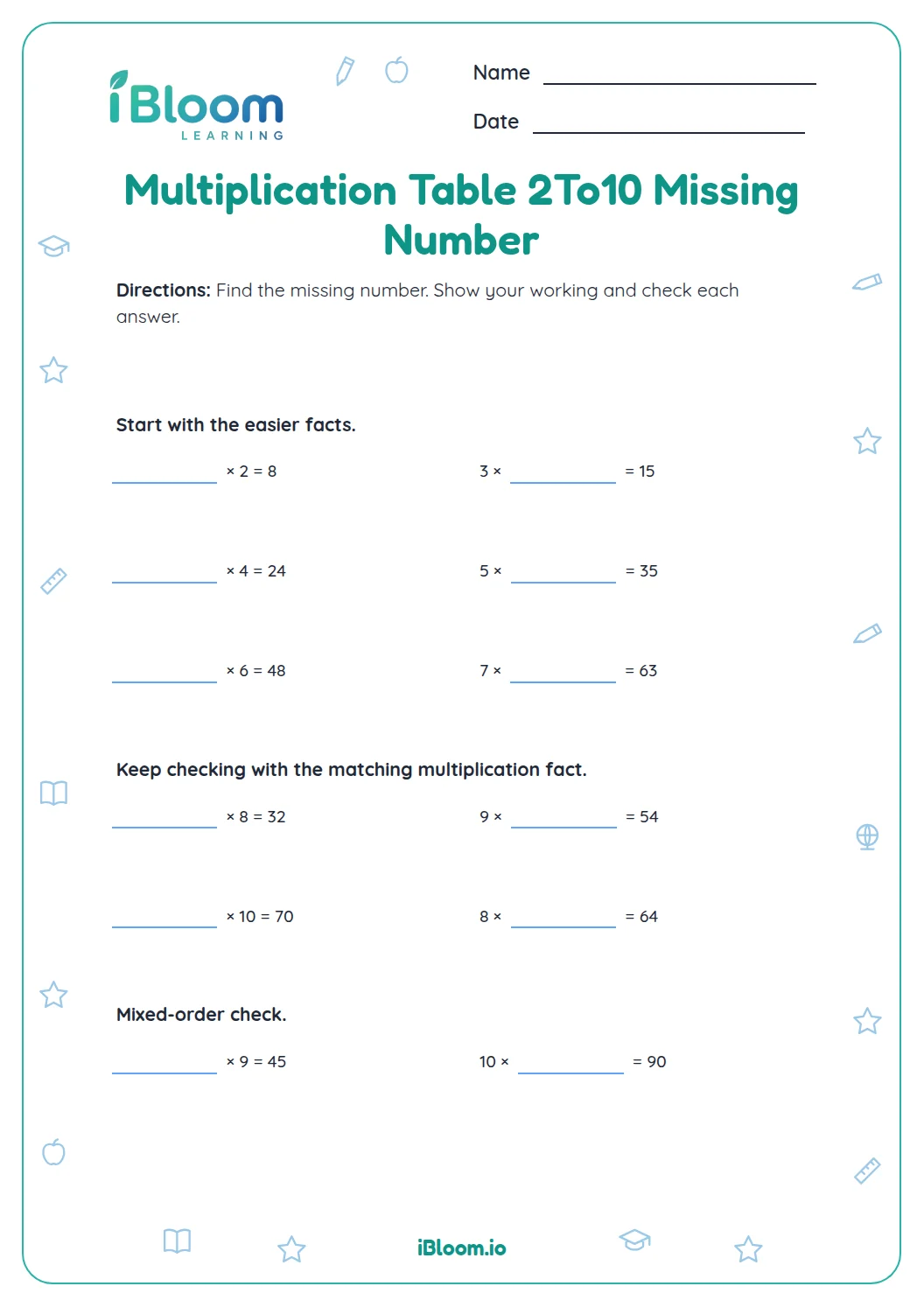
About this worksheet
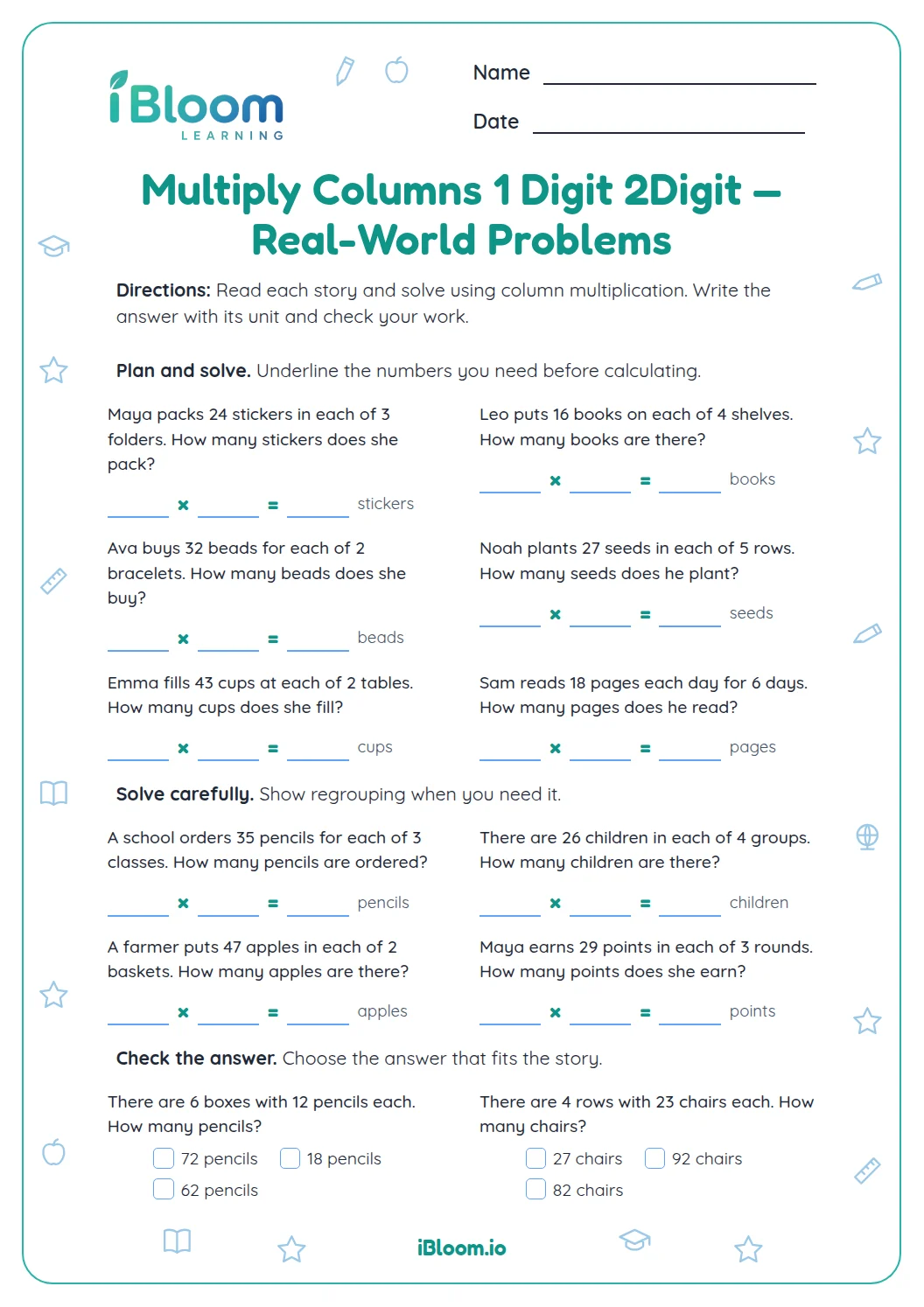
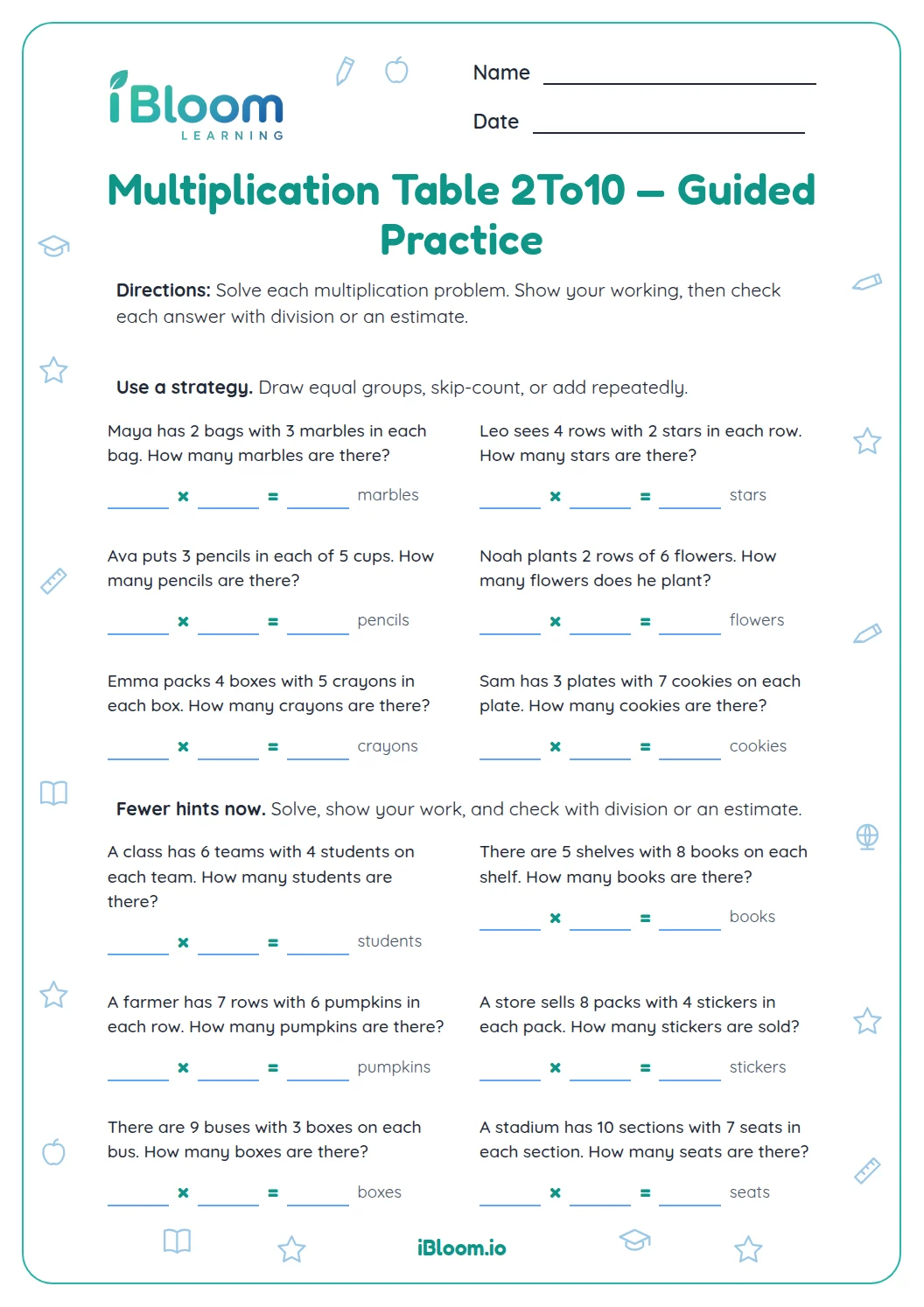
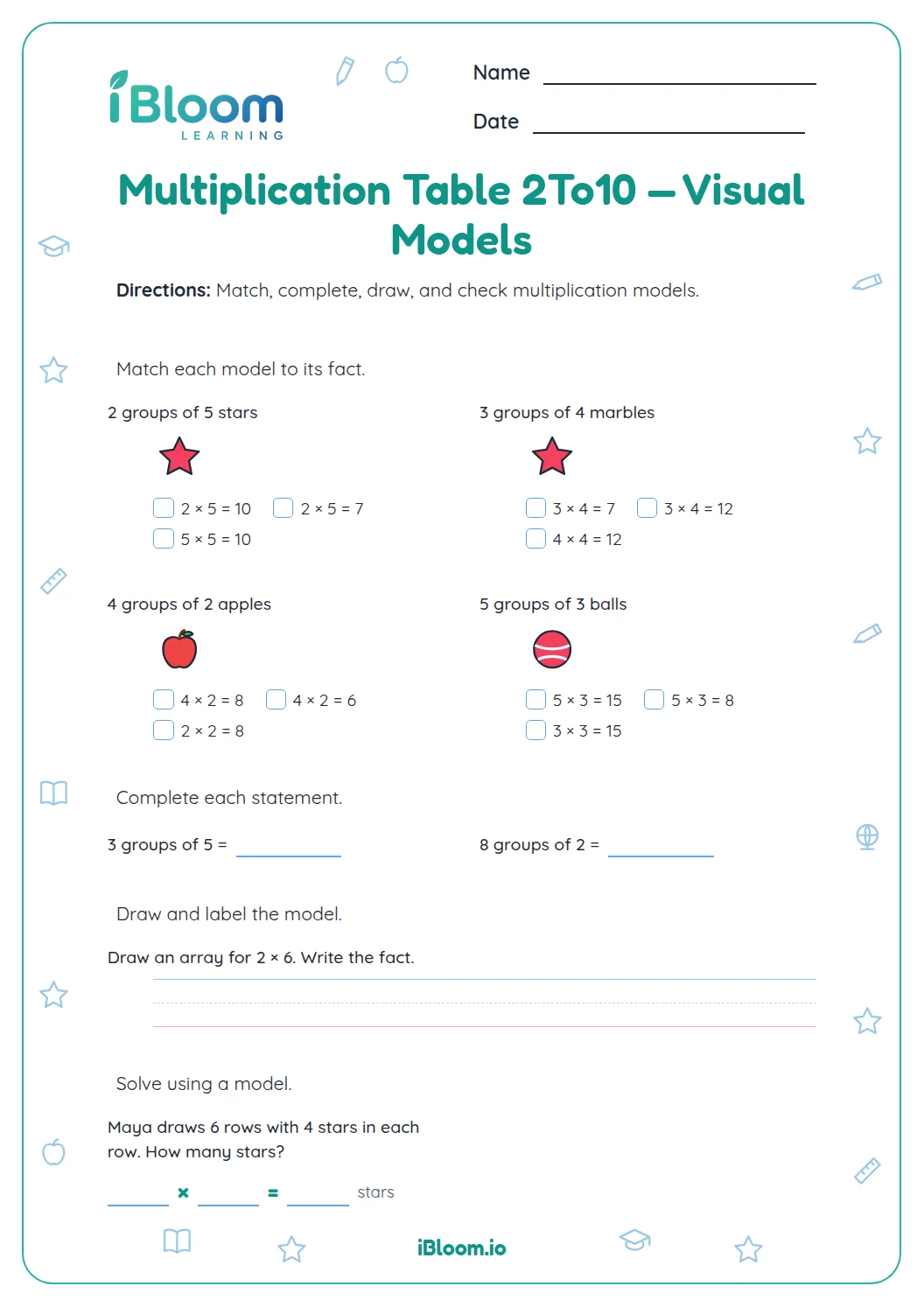
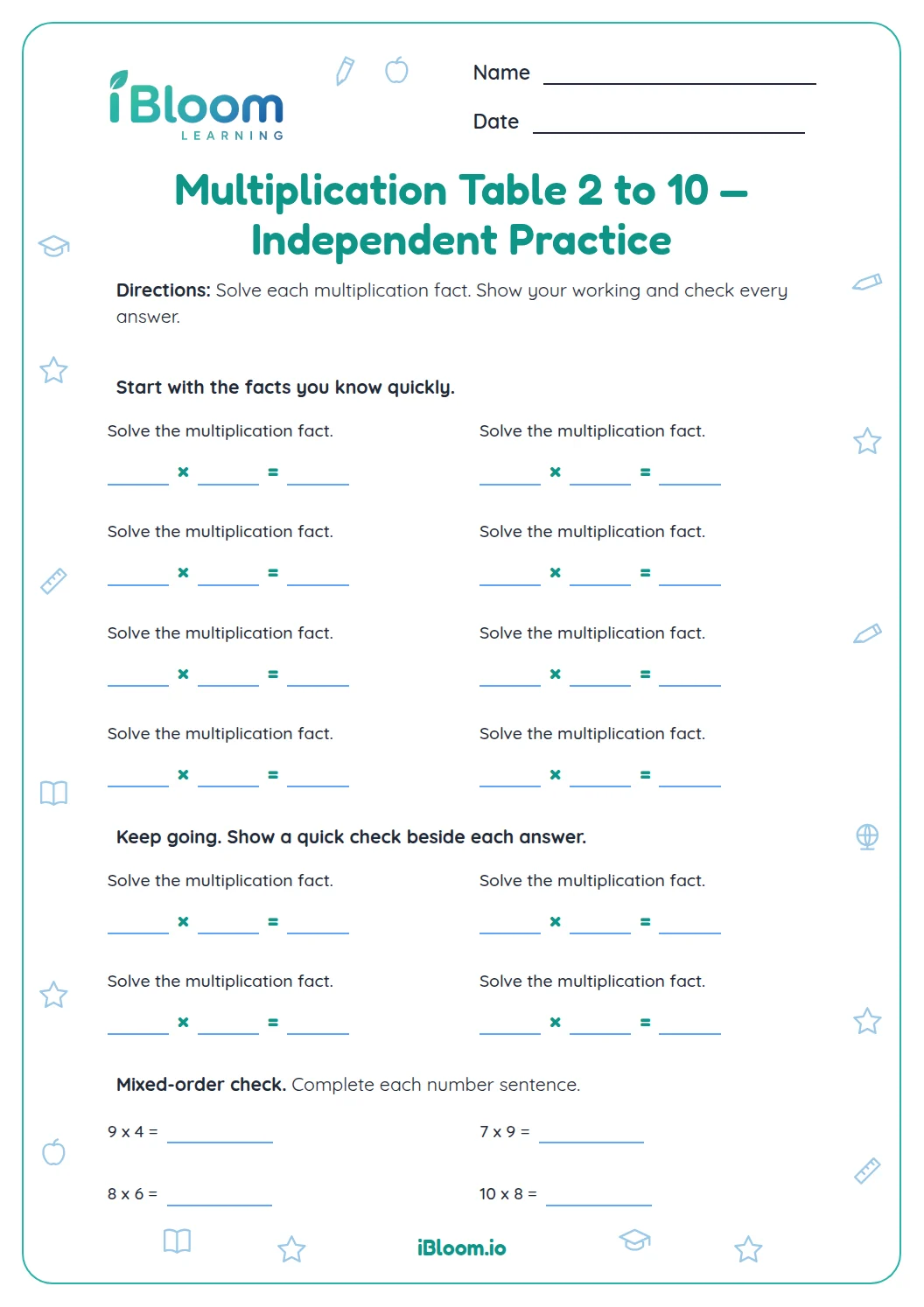
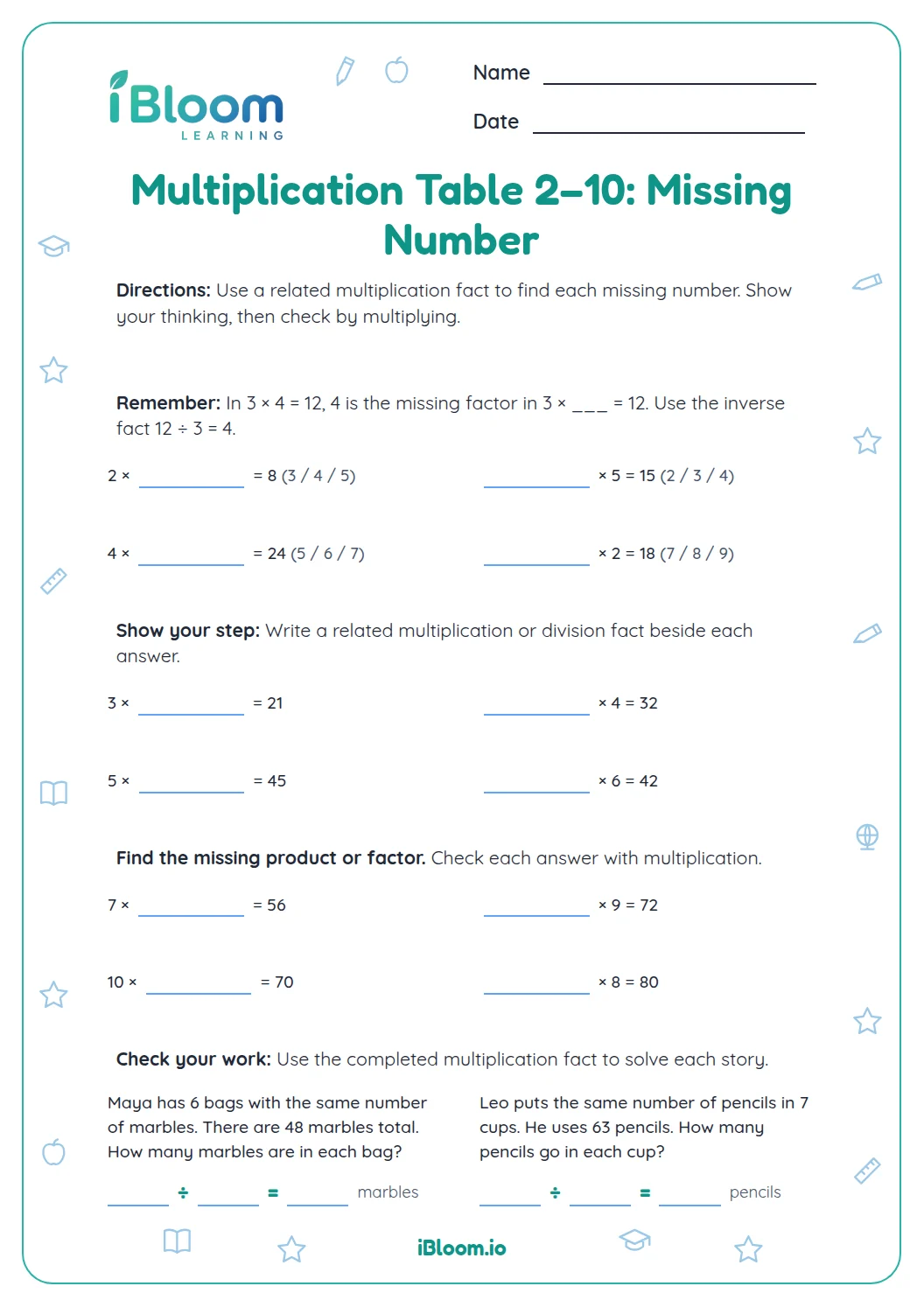
This Grade 3 worksheet provides 16 two-digit by one-digit multiplication problems, with every product within 100. Students can use the work space to multiply the ones, regroup when needed and combine place-value products. A separate answer key lists each product.
Aligned to 3.OA.C.7
How do you multiply by place value?
Multiply the ones digit first. If that product has tens, regroup them before multiplying the tens digit. Combine the place-value products. For 23 × 3, 3 × 3 = 9 ones and 3 × 20 = 60, so the product is 69.
- 123 × 3 = 60 + 9 = 69
How can you check a product?
Estimate with a nearby number or use division to see whether the product is reasonable. For example, 24 × 3 is close to 25 × 3, or 75.
When do you need to regroup?
Regroup when multiplying the ones produces ten or more ones. For 16 × 3, 6 × 3 makes 18 ones: write 8 ones and regroup 1 ten, then combine it with 3 × 10.
How to use this worksheet at home or in class
- 1Read the direction for each part before beginning.
- 2Work through the first example together and name the strategy.
- 3Complete the remaining questions, showing steps where space is provided.
- 4Use the answer key to check each response.
- 5For any missed item, solve it again and explain what changed.
Common mistakes and quick fixes
The mistake
Multiplying only the ones digit and stopping.
The fix
Multiply the tens as well, then combine both place-value products.
The mistake
Forgetting to regroup a two-digit ones product.
The fix
Trade each group of ten ones for one ten before continuing.
The mistake
Writing the ones product in the tens place.
The fix
Keep the place values aligned when combining the partial products.
Common Core alignment
This practice connects to the following Common Core skill.
Use multiplication strategies to find products within 100.
On this sheet: The products stay within 100, and students use place-value steps to multiply two-digit numbers by one digit.
Show the official wordingHide the official wording
Fluently multiply and divide within 100, using strategies such as the relationship between multiplication and division (e.g., knowing that 8 × 5 = 40, one knows 40 ÷ 5 = 8) or properties of operations. By the end of Grade 3, know from memory all products of two one-digit numbers.
What to practice next
Make more practice
Further reading
Questions parents and teachers ask
What will students practice on this Grade 3 worksheet?
Students solve 16 two-digit by one-digit multiplication problems, and every product is at most 100. The set includes ones products that require regrouping and others that do not. The separate key lists the correct product for each item.
How should students use the answer key?
Try each multiplication problem before checking the key. If a product differs, multiply the ones first and regroup any tens, then multiply the tens digit and combine the results. An estimate or division check can help locate an error.
Can this worksheet be used for independent practice?
Yes. The first group cues the place-value steps, and students can use the worksheet space to record their work. After those problems, they can complete the second group independently and compare each result with the answer key. This makes the progression easy to follow.
What materials are needed?
A printed copy and pencil are enough. Students can use the open working space to record partial products. Extra scrap paper may help if they want to expand a problem into separate tens and ones calculations. Students can check the result by multiplying the partial products and combining them.
How long does the worksheet take?
Plan for about 25 minutes to solve the problems and check the work. Students who write each partial product may need more time, especially when the ones product requires regrouping. Work can be split between the two parts.