
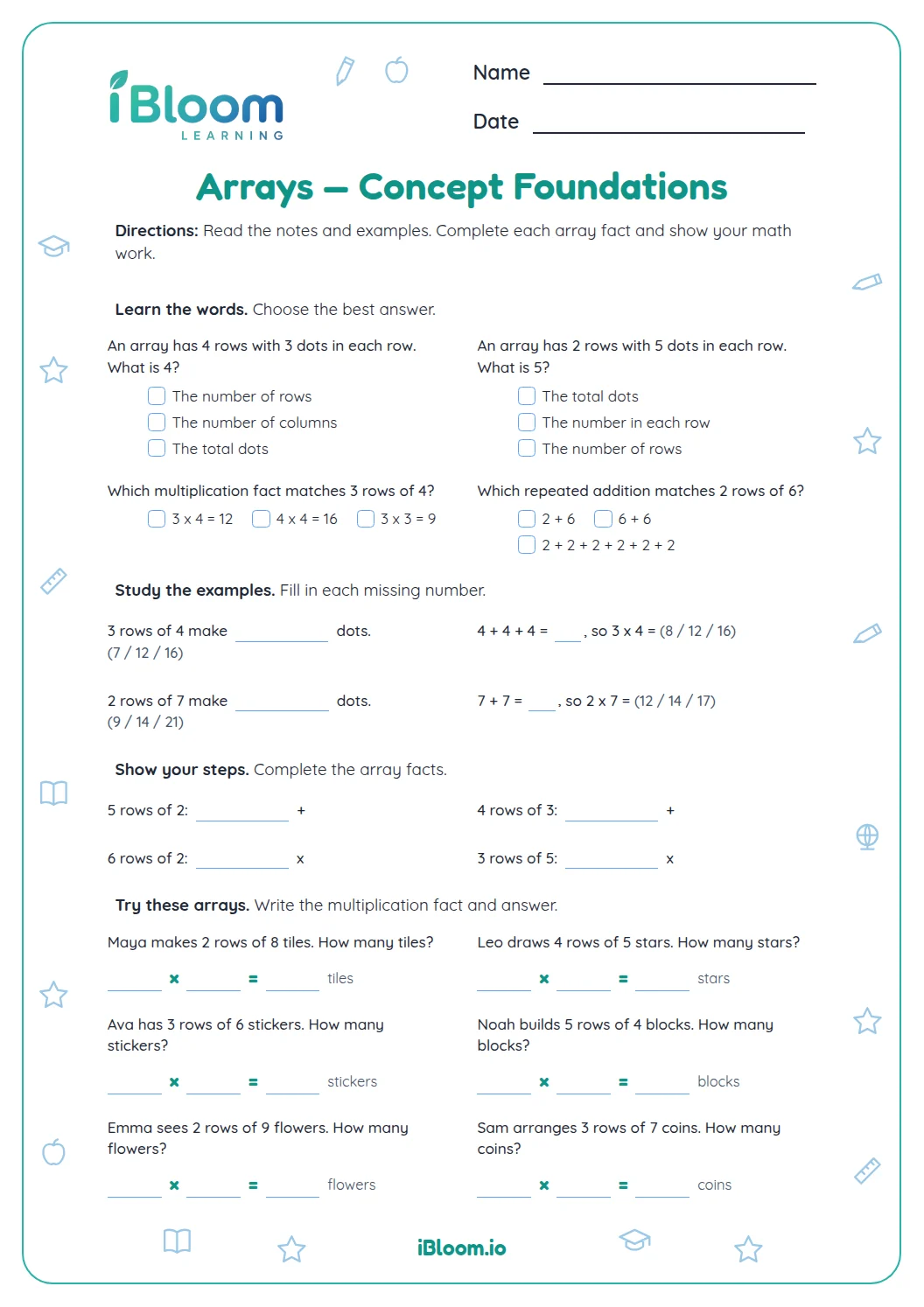
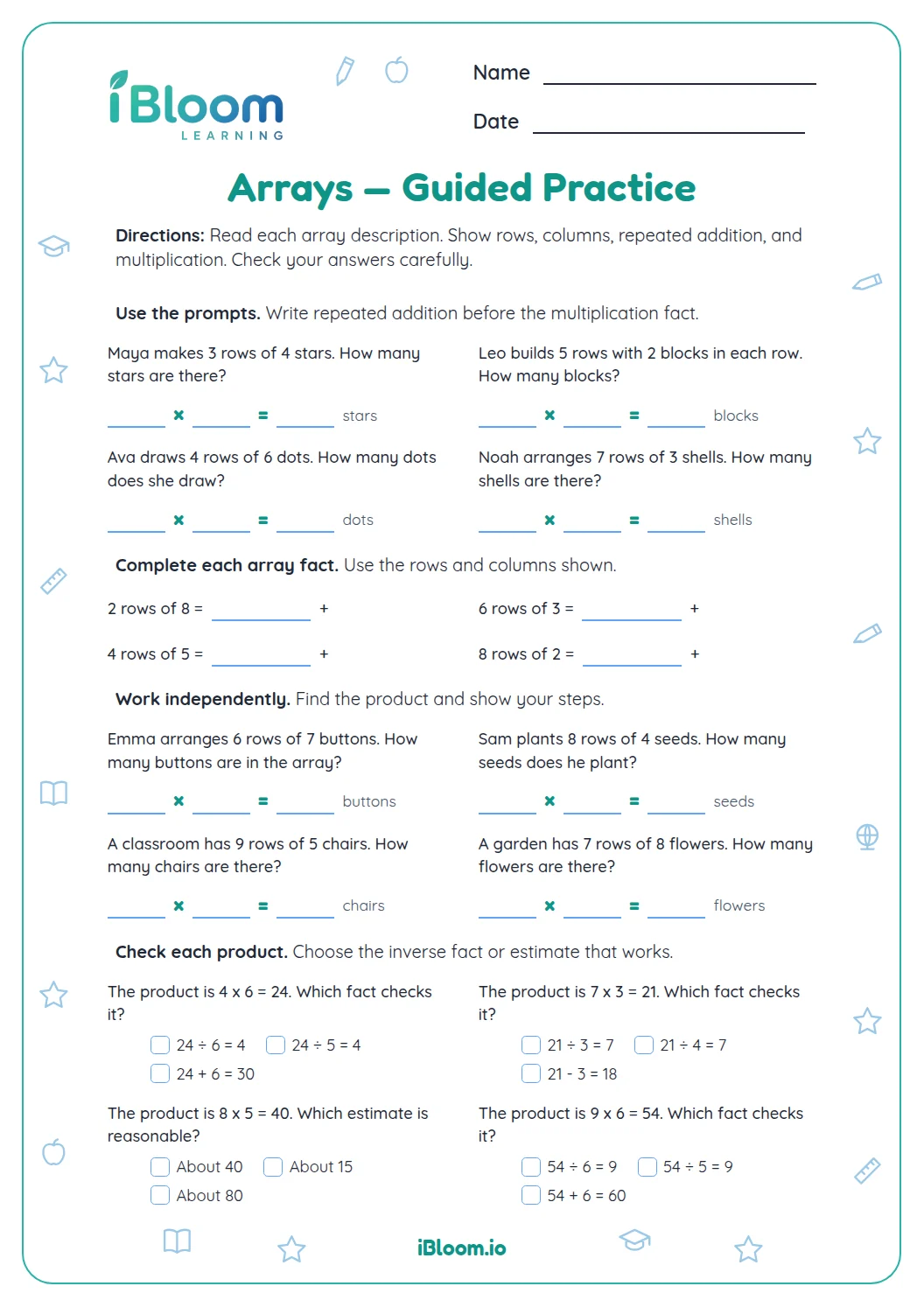
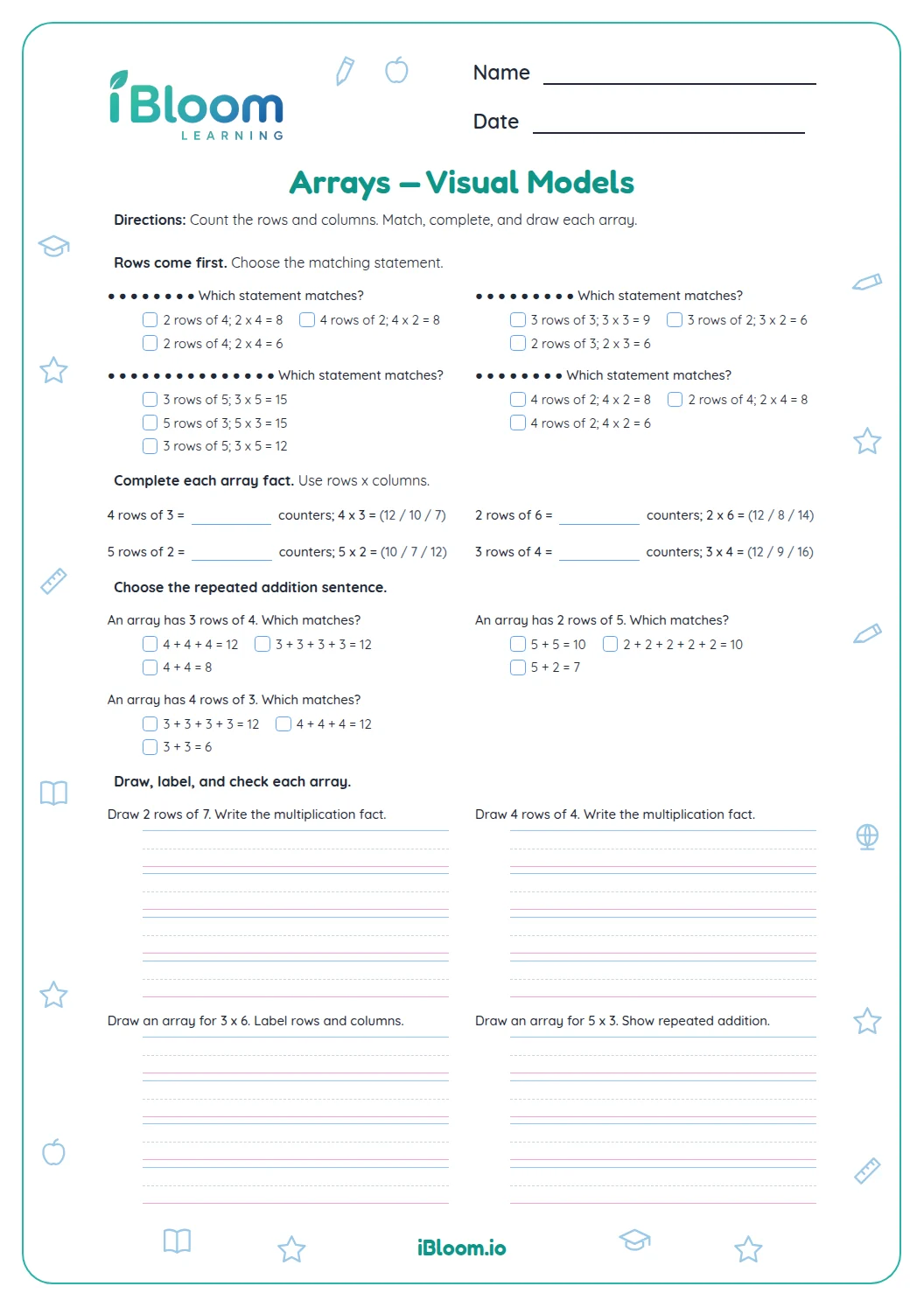
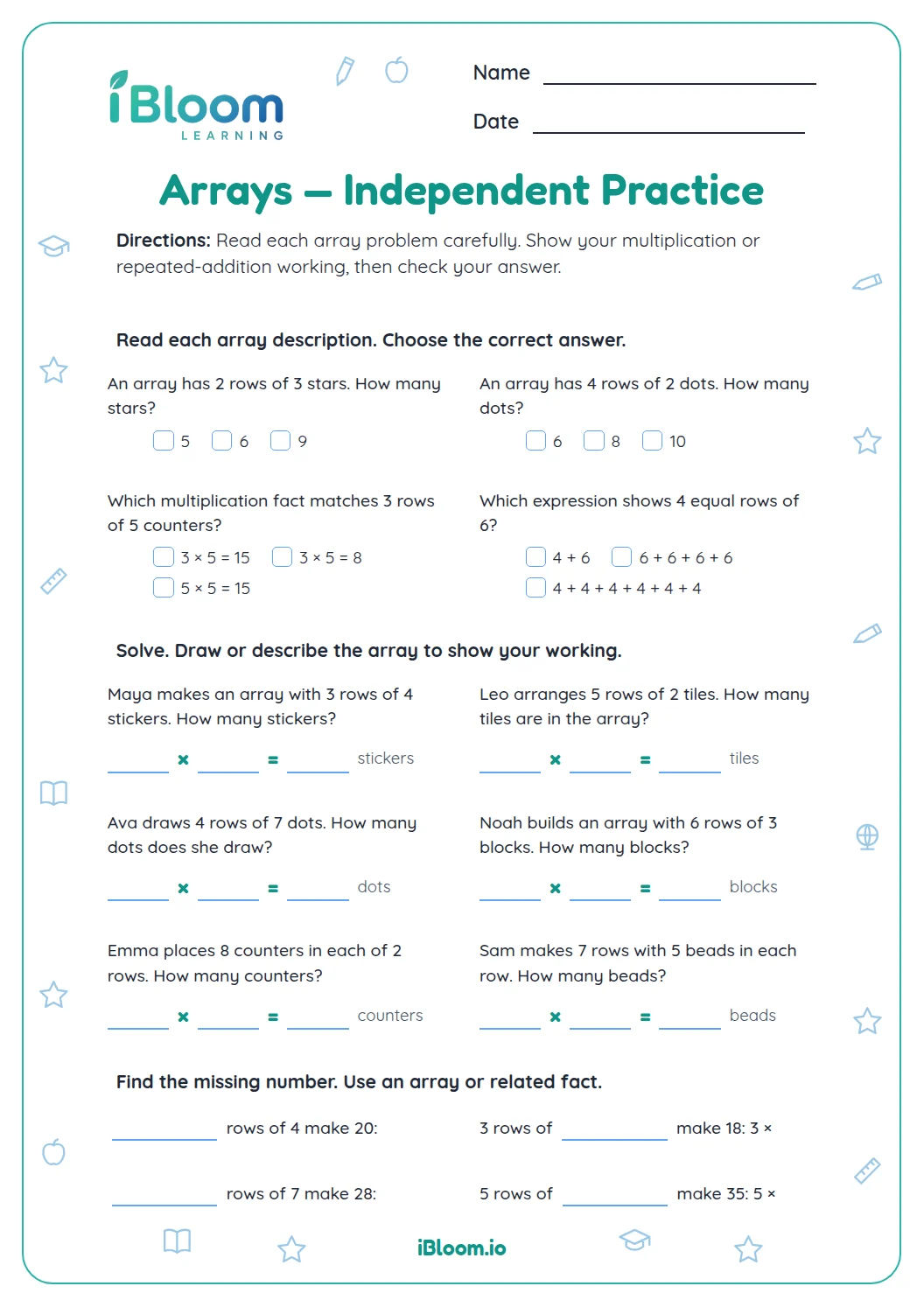
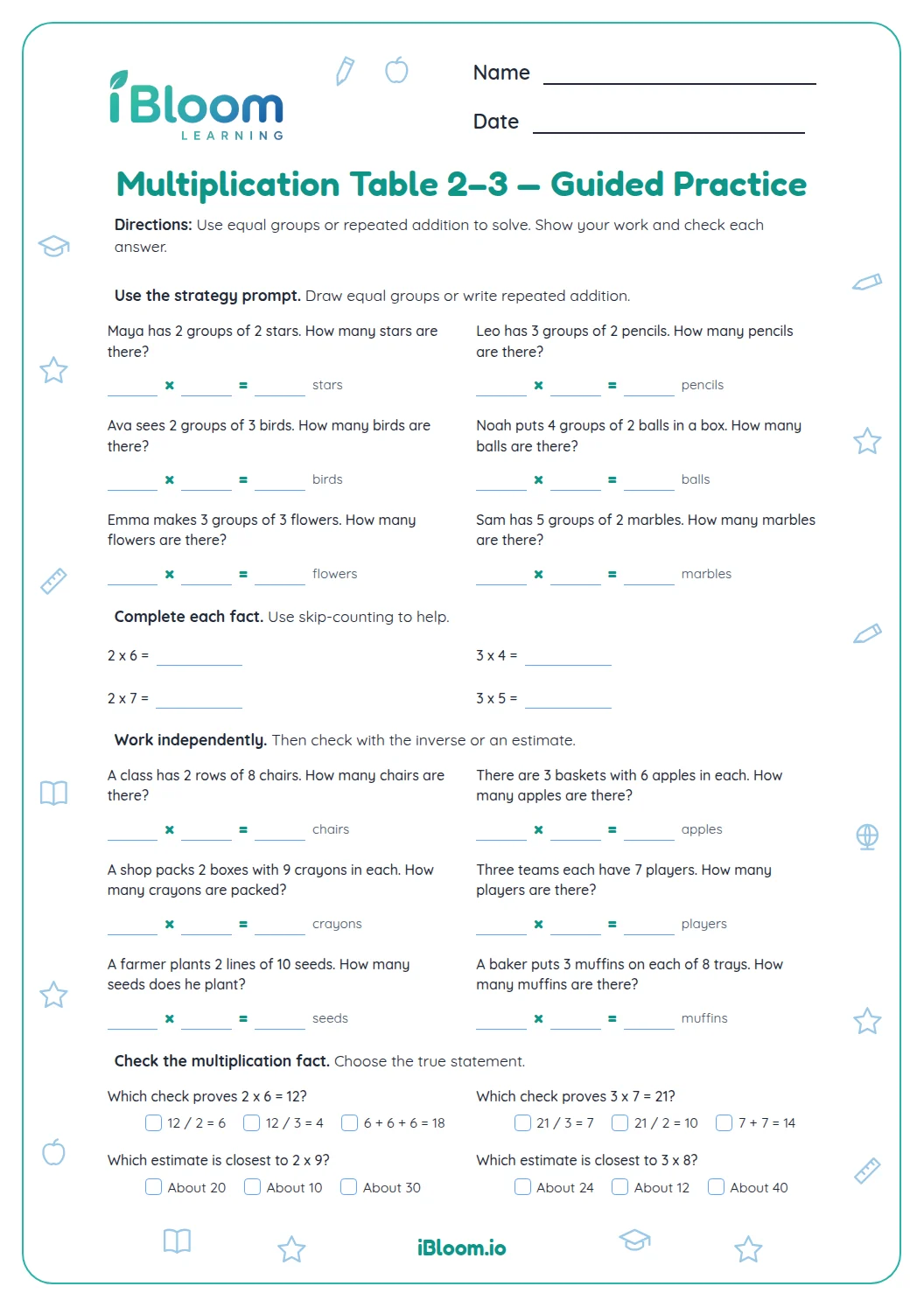
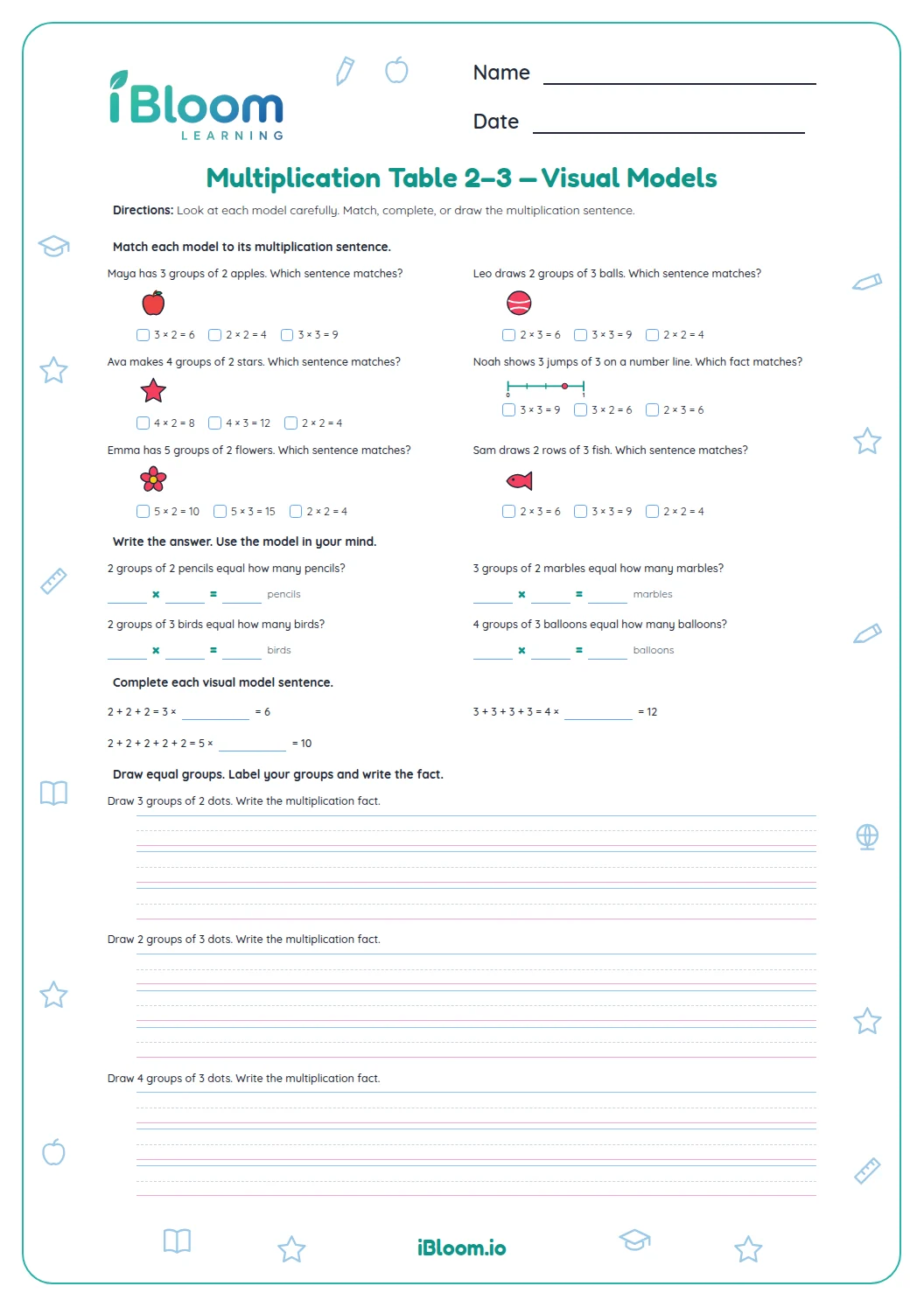
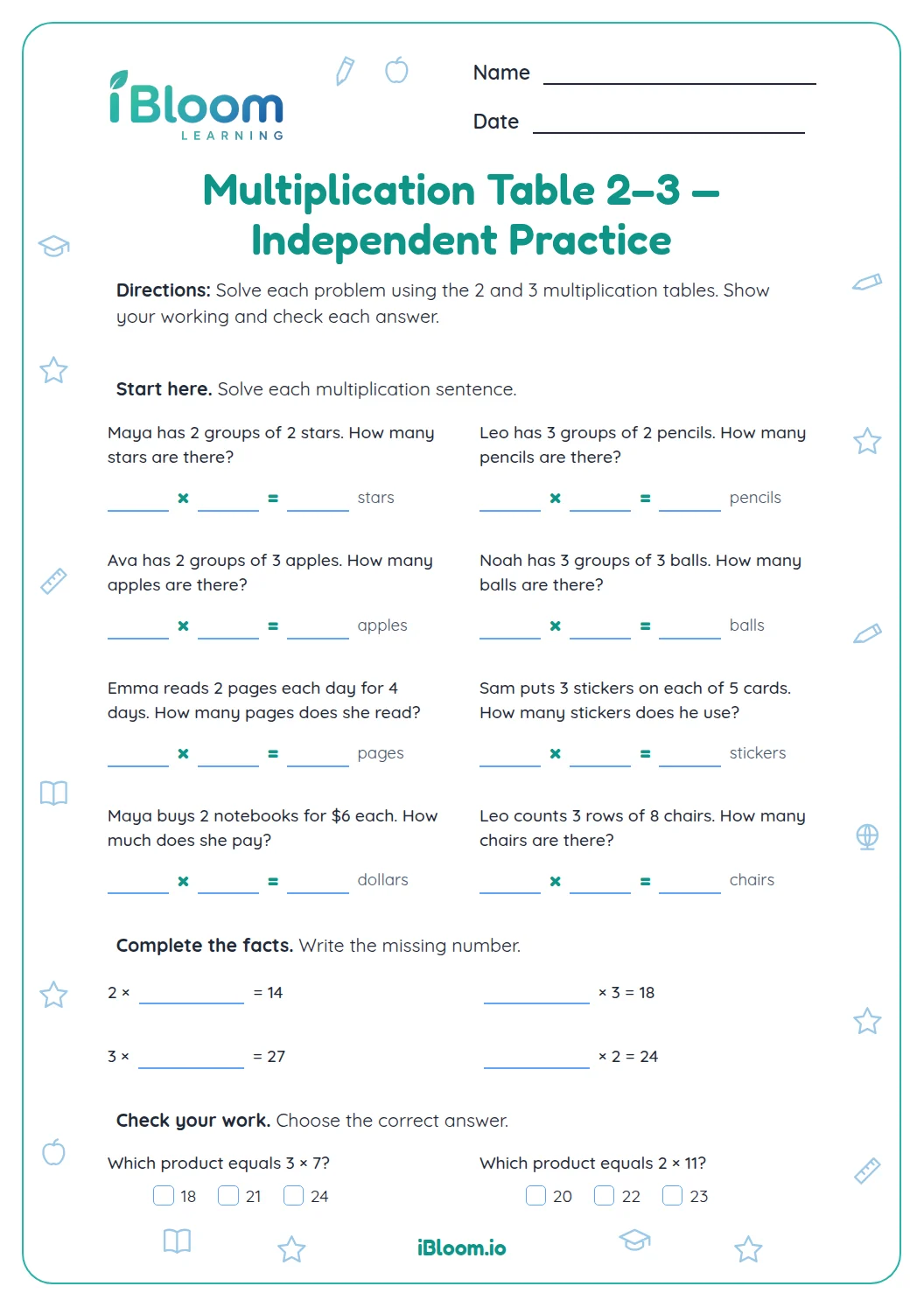
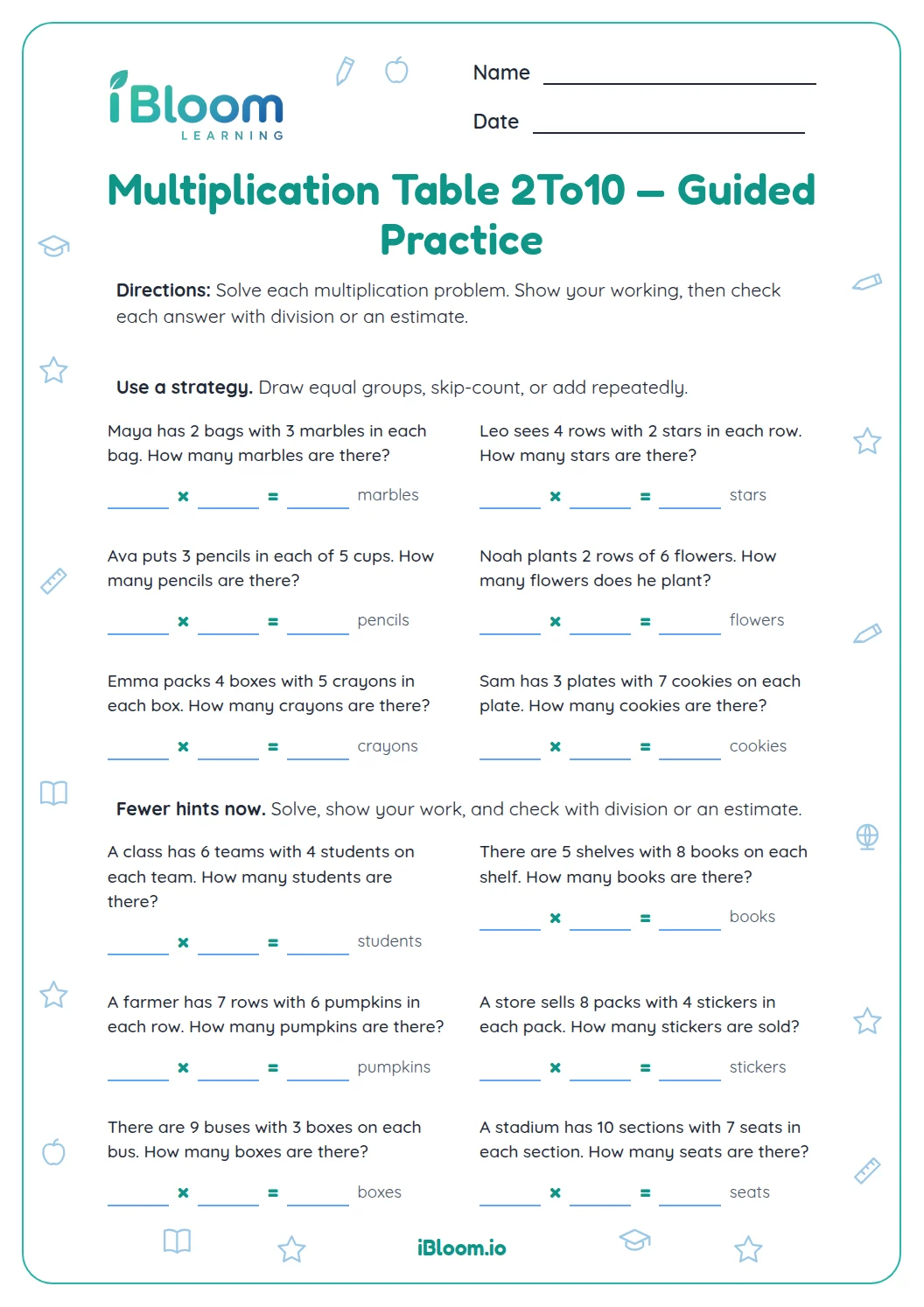
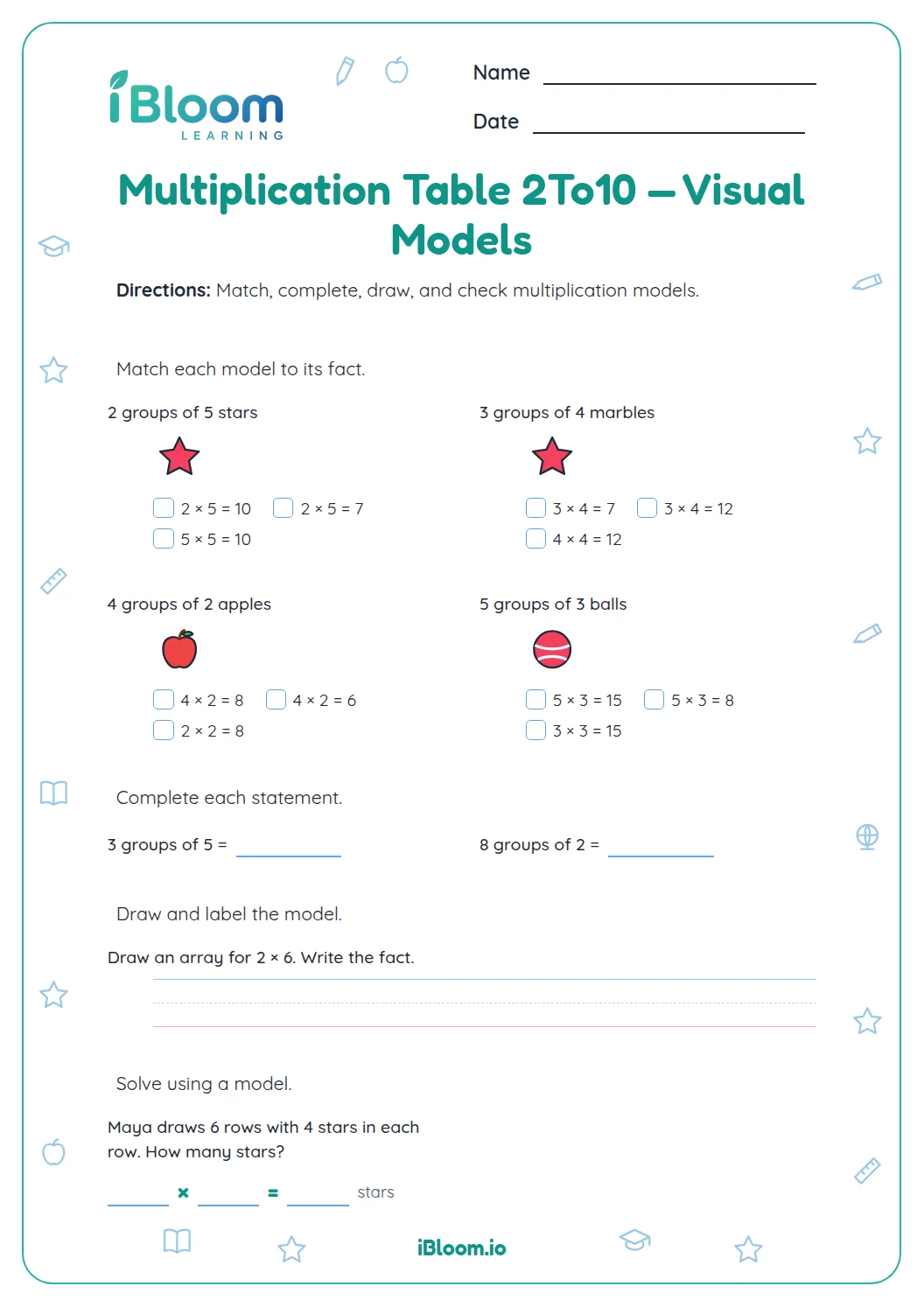
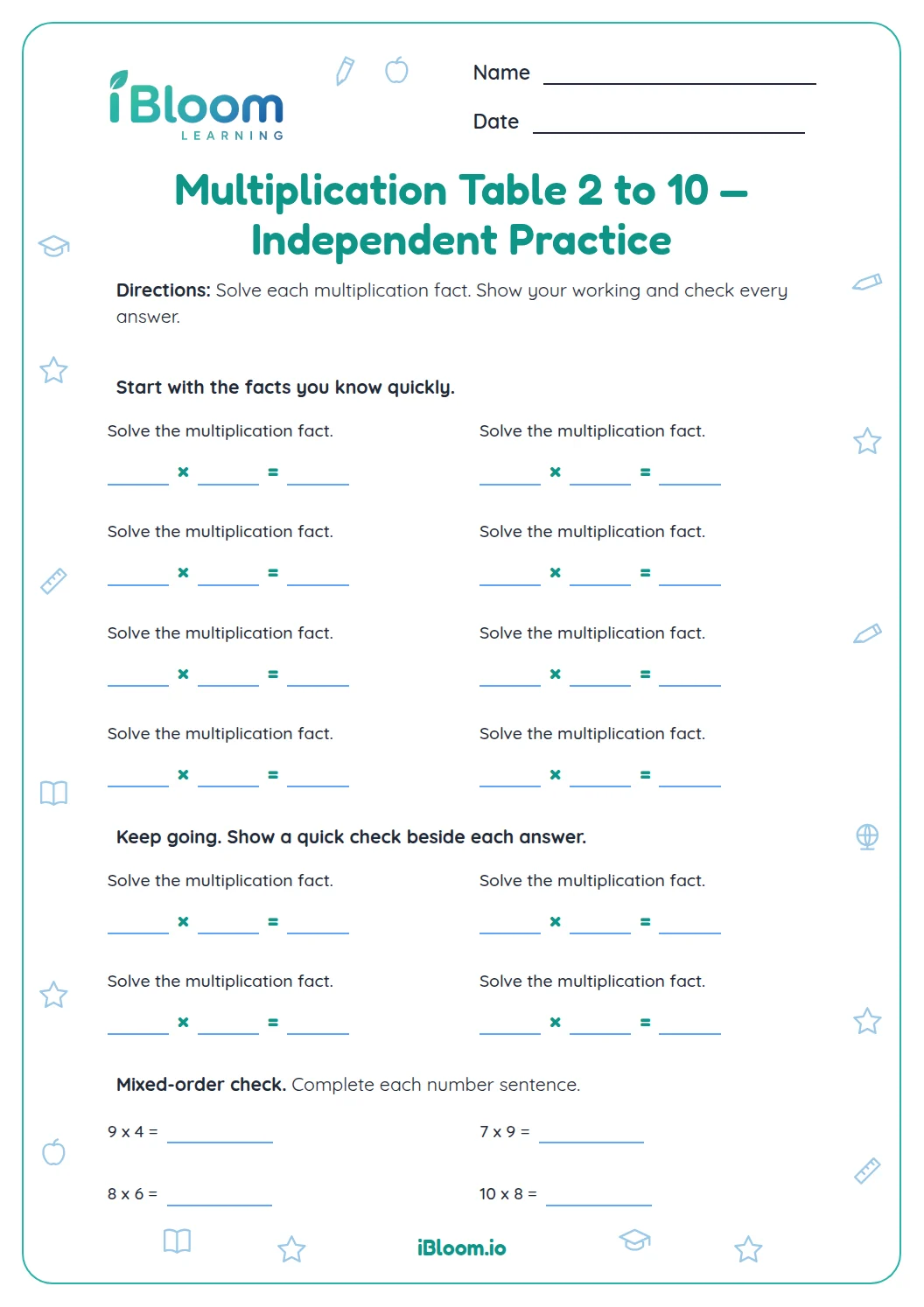
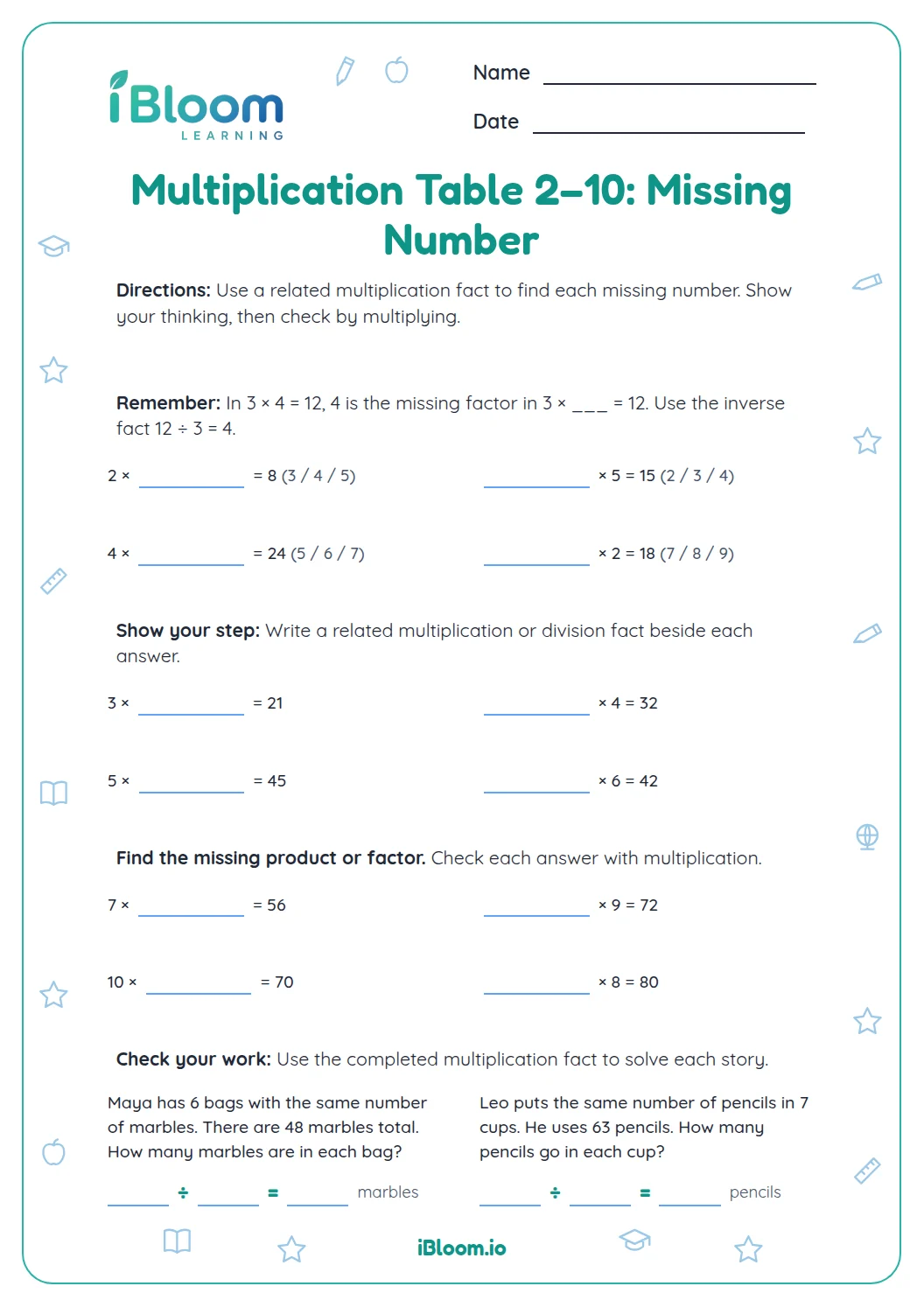

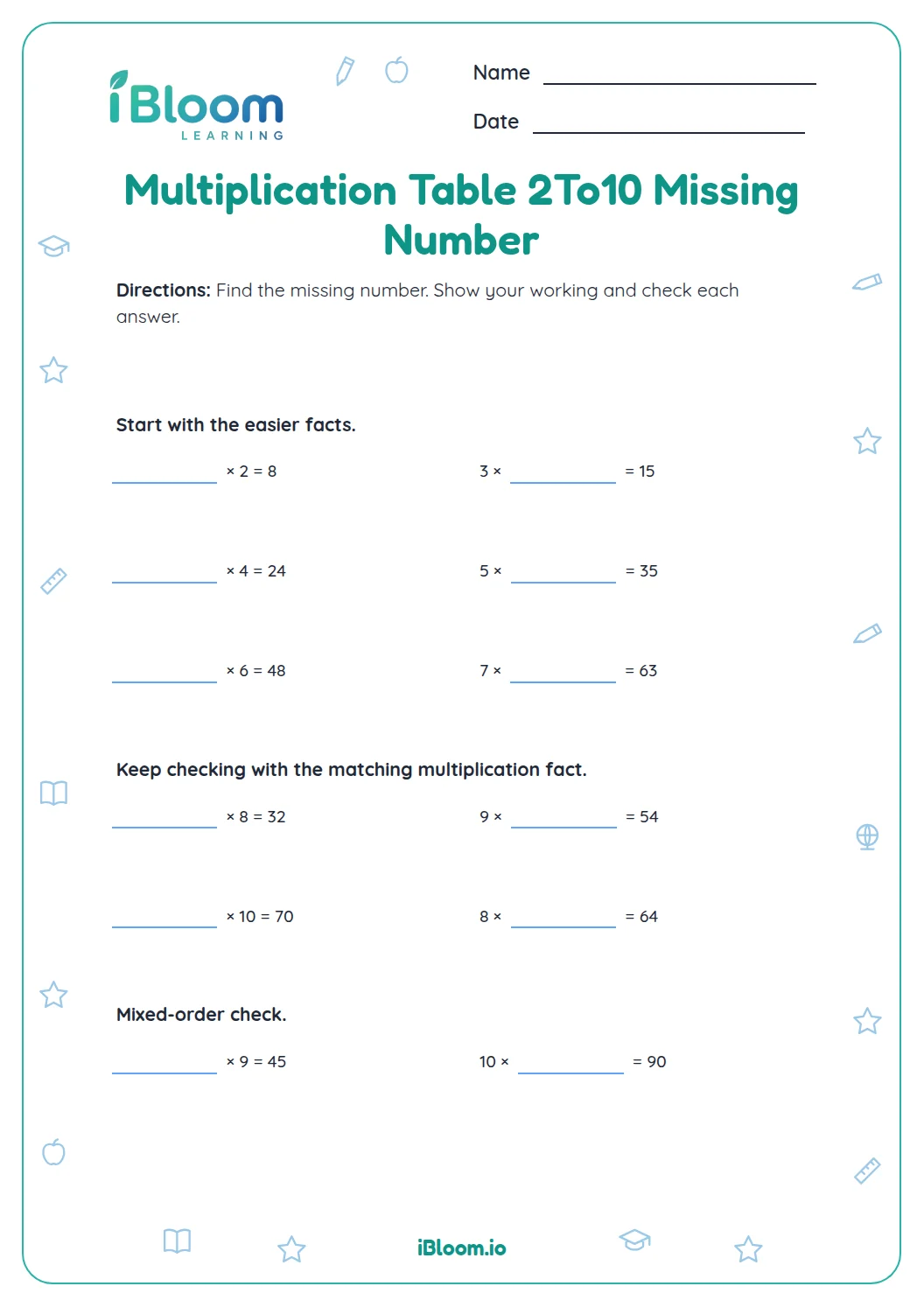
About this worksheet
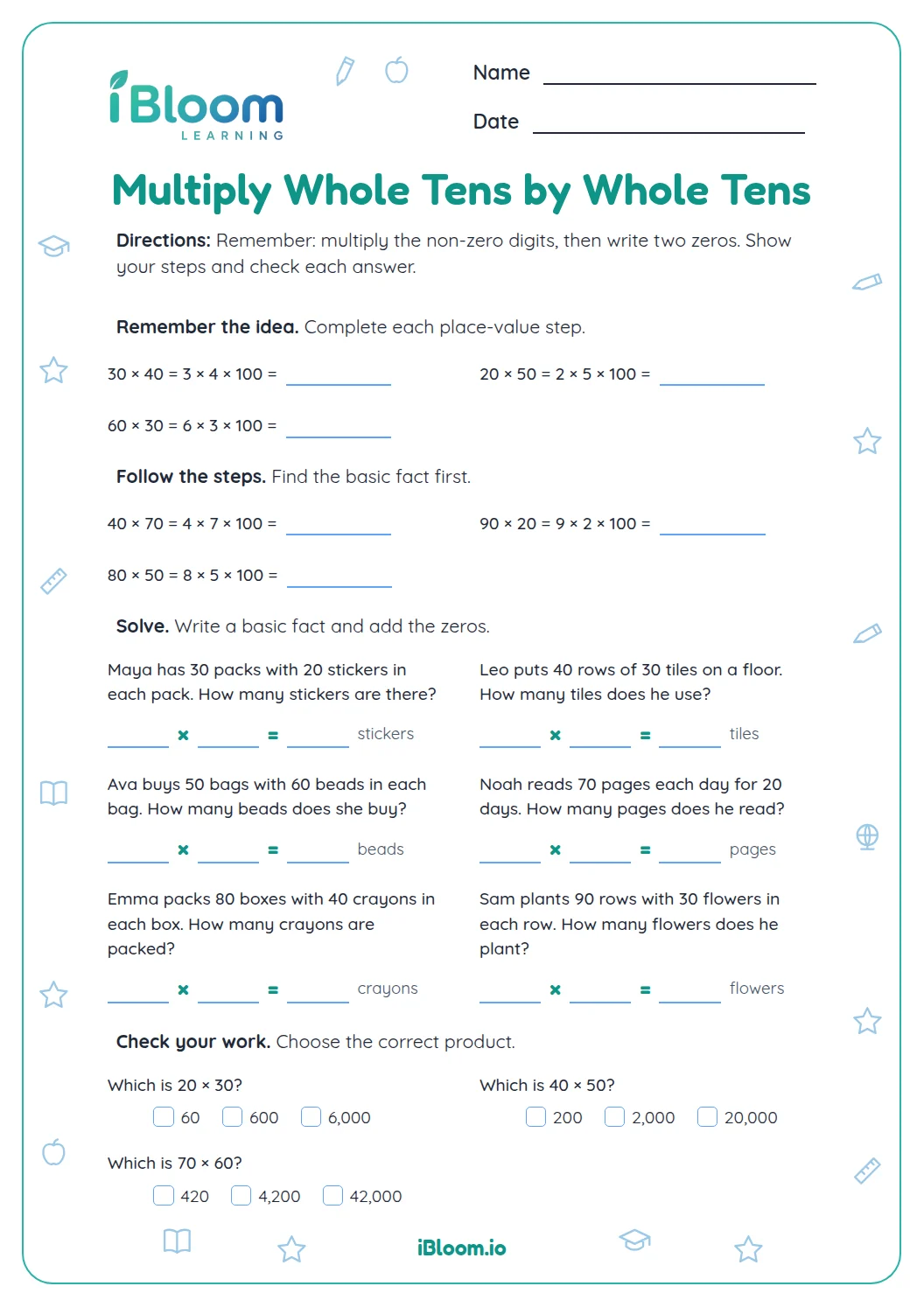
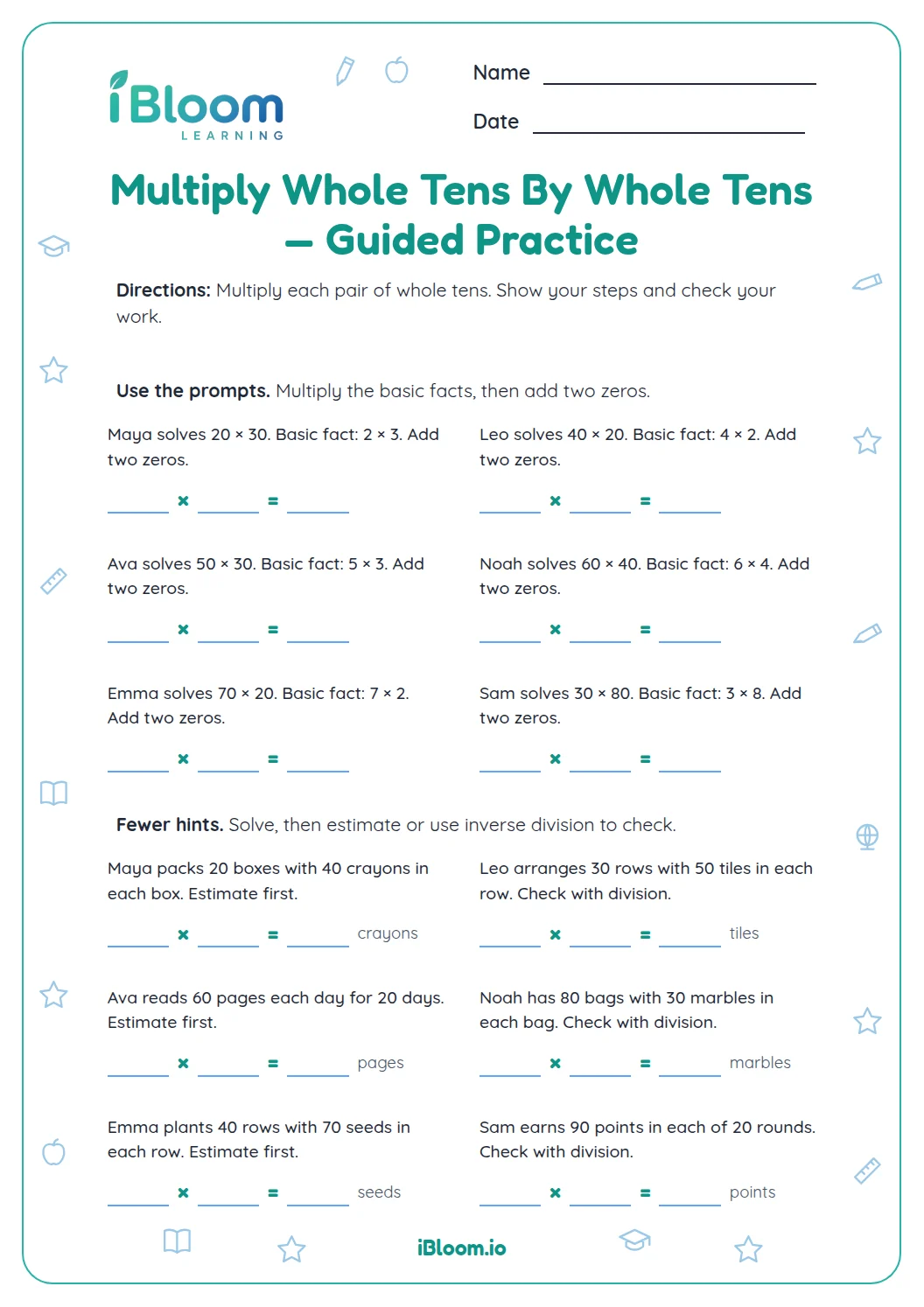
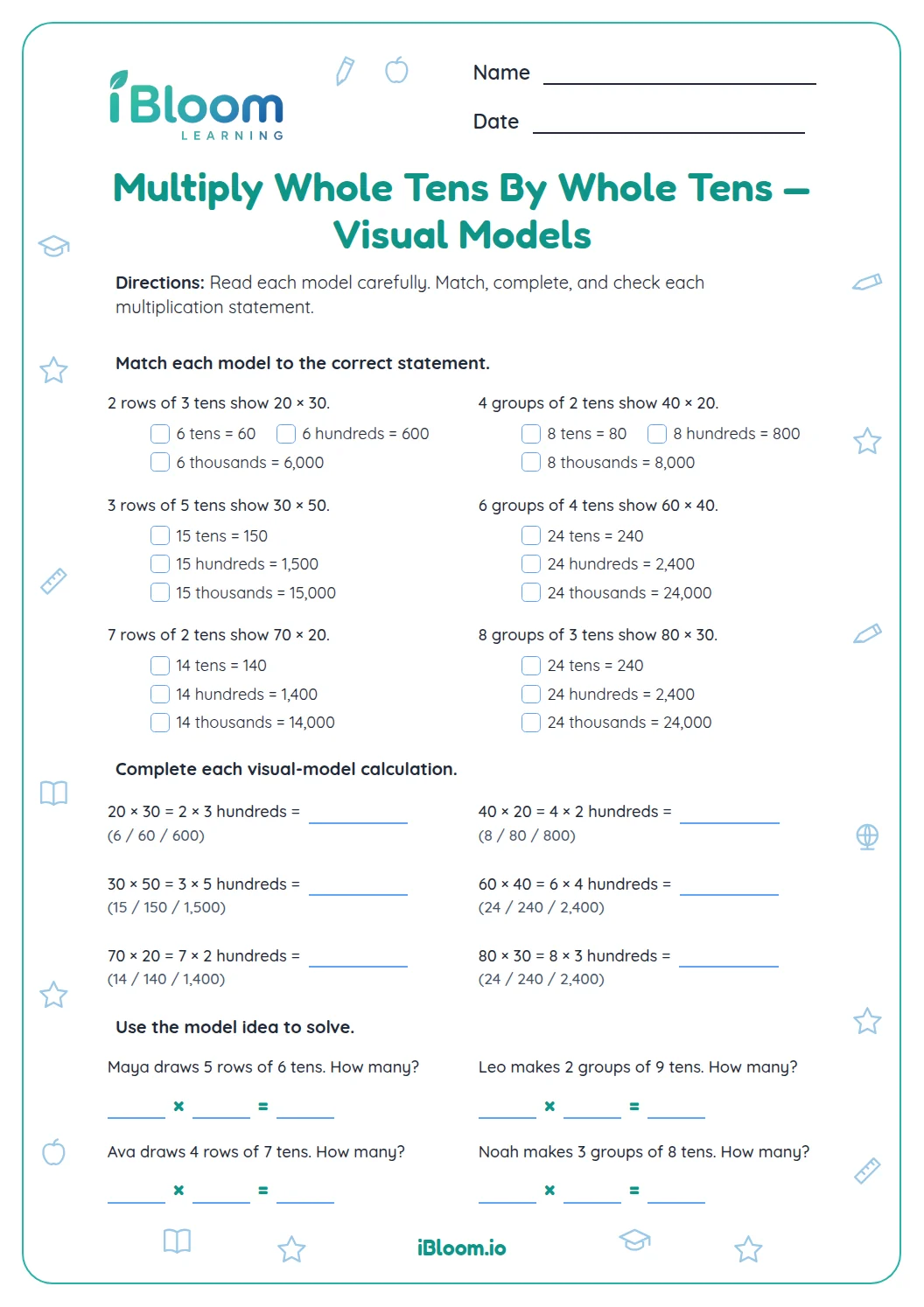
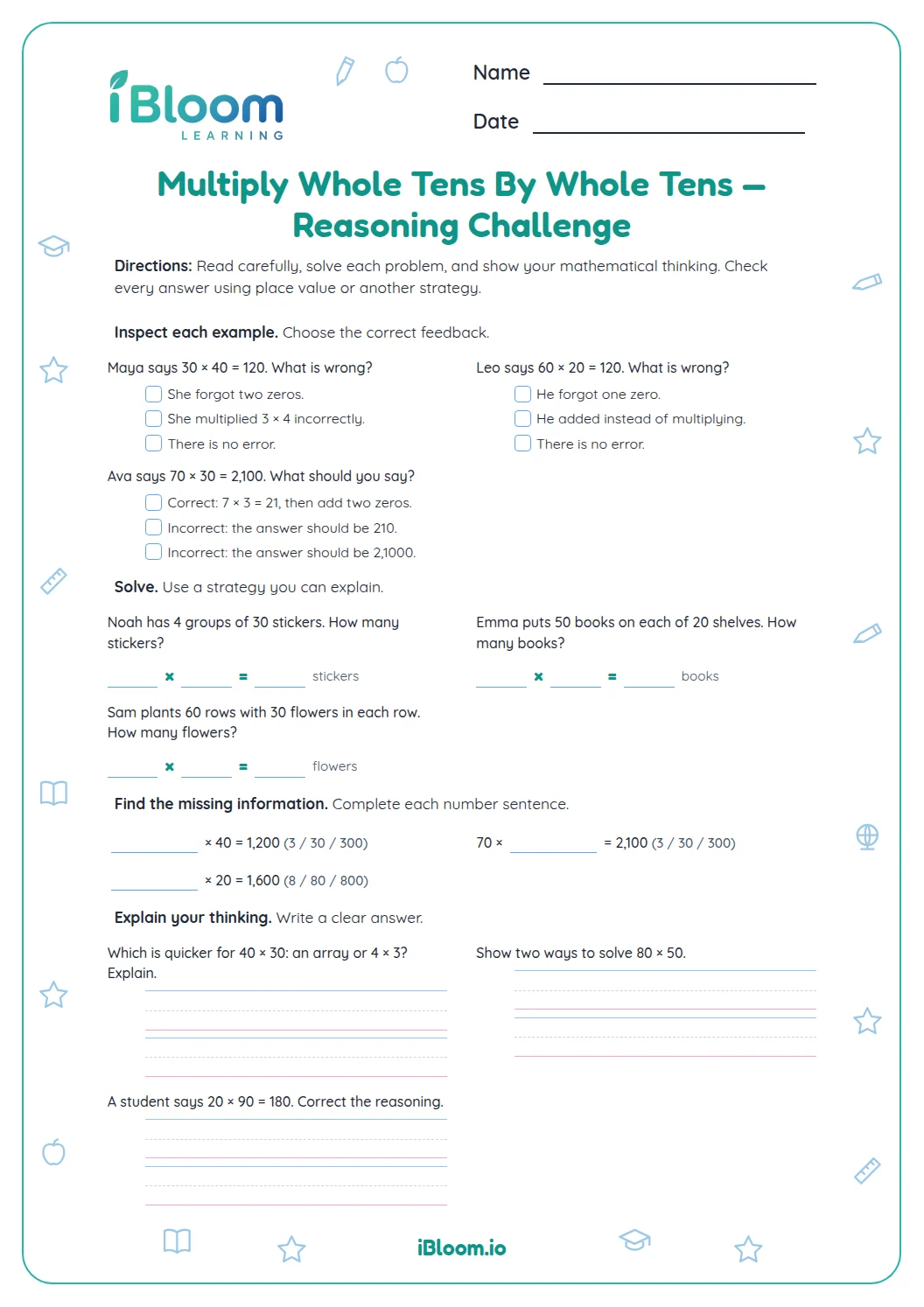
This worksheet practices multiplying one two-digit multiple of ten by another. Seven varied equal-group stories connect the calculations to quantities; seven equations provide direct practice. Students can multiply the nonzero digits, then account for the tens in both factors. The work aligns with Common Core 4.NBT.B.5.
Aligned to 4.NBT.B.5
What will learners practice?
Part A connects whole-tens multiplication to different equal-group settings. Part B uses direct equations with distinct factor pairs.
- 110 × 20 = ___
- 2Multiply 1 × 2, then account for the two tens factors.
- 310 × 20 = 200.
How does the practice progress?
A whole-ten factor has a tens digit and a zero. Multiply the nonzero digits first, then use place value to determine the product.
How can learners check their work?
Complete the full worksheet before opening the key. Check both the answer and the detail this skill depends on, such as units, punctuation, or the clock hands.
How to use this worksheet
- 1Read each prompt and name the skill it asks you to use.
- 2Work through the questions in order, showing a calculation or rereading the sentence when helpful.
- 3Check your answers with the separate key and correct any missed item.
Common mistakes and quick fixes
The mistake
Writing 6 for 20 × 30
The fix
Multiply 2 × 3, then include both factors of ten: 600.
The mistake
Adding zeros inconsistently
The fix
Check the value of each factor; two multiples of ten contribute two factors of ten.
The mistake
Multiplying the nonzero digits incorrectly
The fix
Solve that basic fact first, then attach the place-value value.
Common Core alignment
This worksheet practices multiplication of two-digit multiples of ten using place-value reasoning.
Use place value and operation properties to multiply two two-digit numbers.
On this sheet: The equations practice multiplying two-digit multiples of ten using place-value reasoning.
Show the official wordingHide the official wording
Multiply a whole number of up to four digits by a one-digit whole number, and multiply two two-digit numbers, using strategies based on place value and the properties of operations. Illustrate and explain the calculation by using equations, rectangular arrays, and/or area models.
What to practice next
Make more practice
Further reading
Questions parents and teachers ask
How do you multiply two multiples of ten?
Multiply the nonzero digits, then account for the tens in both factors. For example, 10 × 20 is 1 × 2 with two factors of ten, so the product is 200. Estimation can help check the size and catch a missing zero.
What do the story problems represent?
Each of the seven stories describes equal groups in a different setting, such as trays of counters, cartons of pencils, or rows of seeds. Learners multiply the group count by the amount in each group, then check the product.
Why are there number sentences after the stories?
The first seven questions connect multiplication to equal groups. The last seven use equations, giving students a direct way to apply place-value reasoning to varied whole-tens factor pairs. Each problem uses a different fact, including reversed factors only when the pair is new.
What is a common place-value error?
A learner may multiply the nonzero digits correctly but forget that both factors represent tens. Check the place value in each factor: 10 × 20 is 1 × 2 and two tens factors, so the product is 200.
Is an answer key included?
Yes. The separate answer key lists all 14 products. Students can compare each result with the key and revisit the nonzero-digit multiplication and place-value step if an answer differs. The page offers seven story settings and seven equations.