


About this worksheet
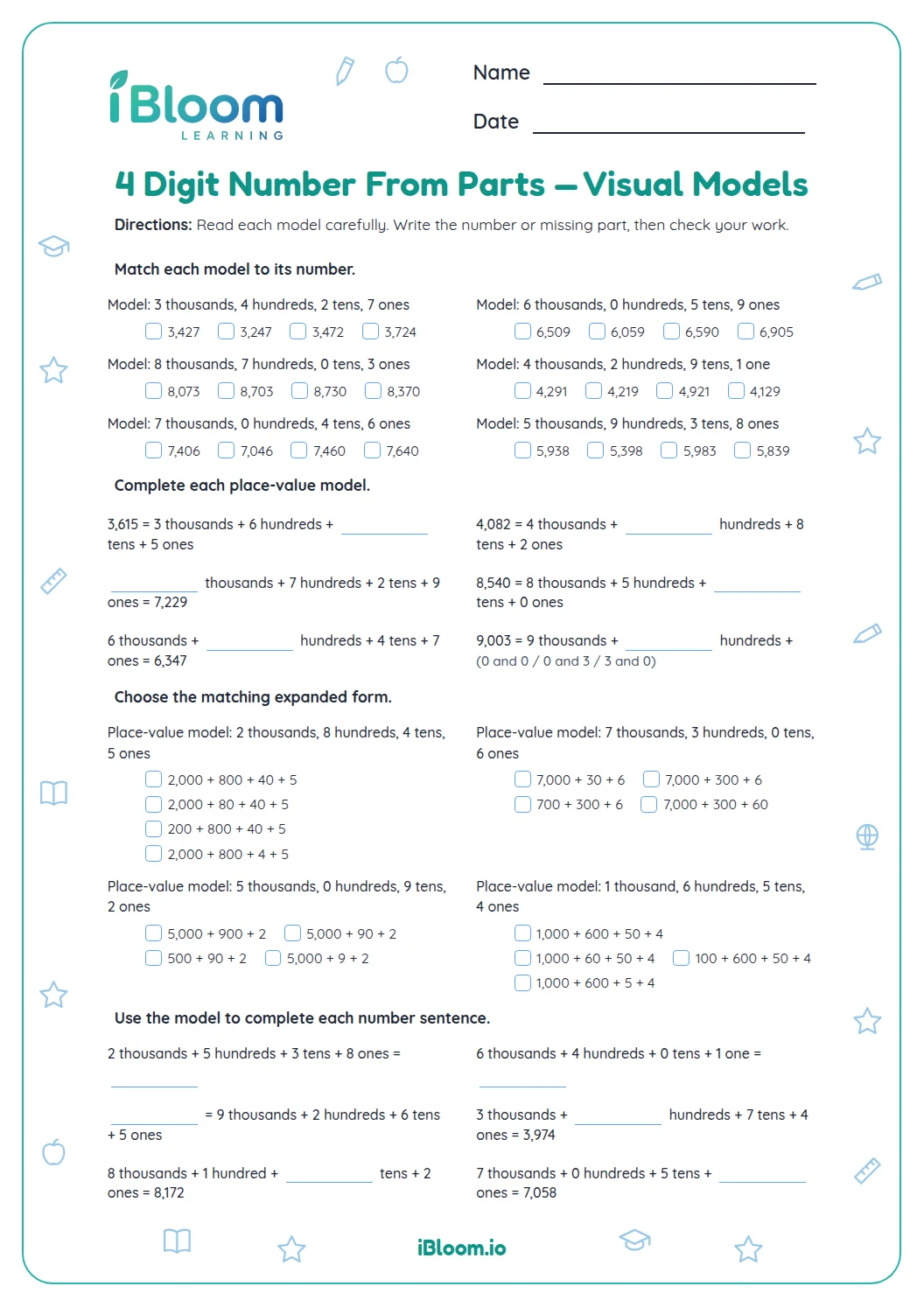
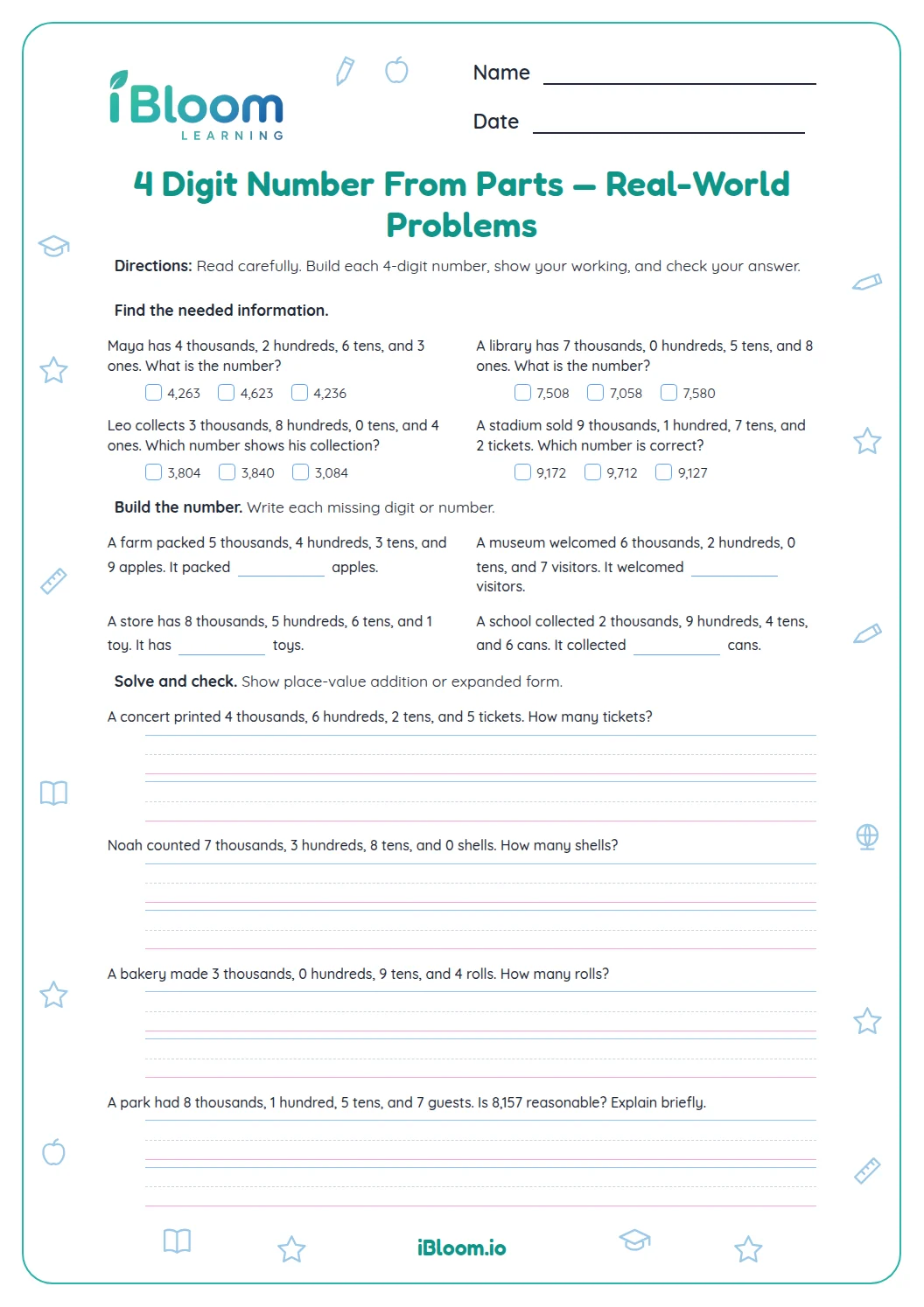
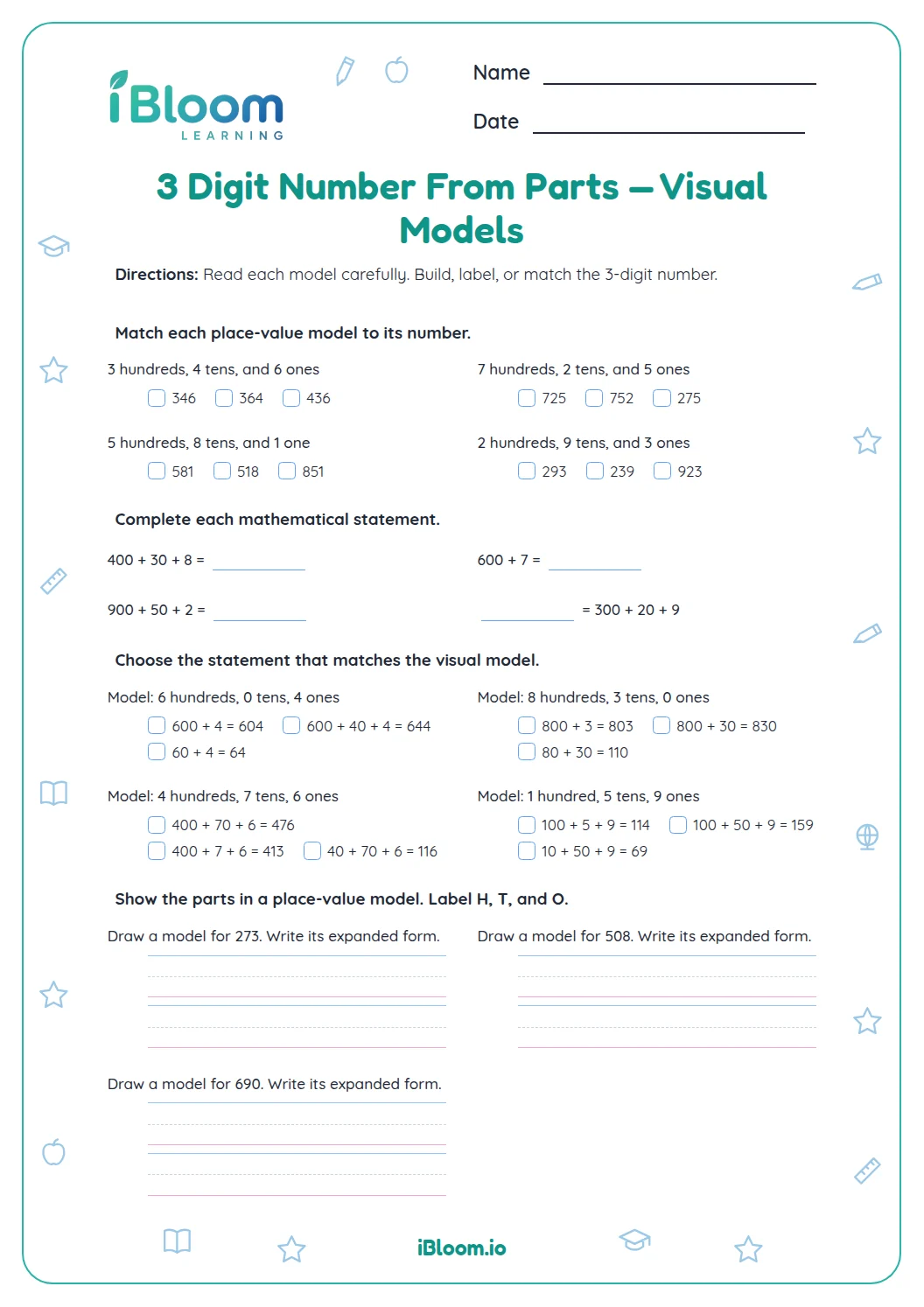
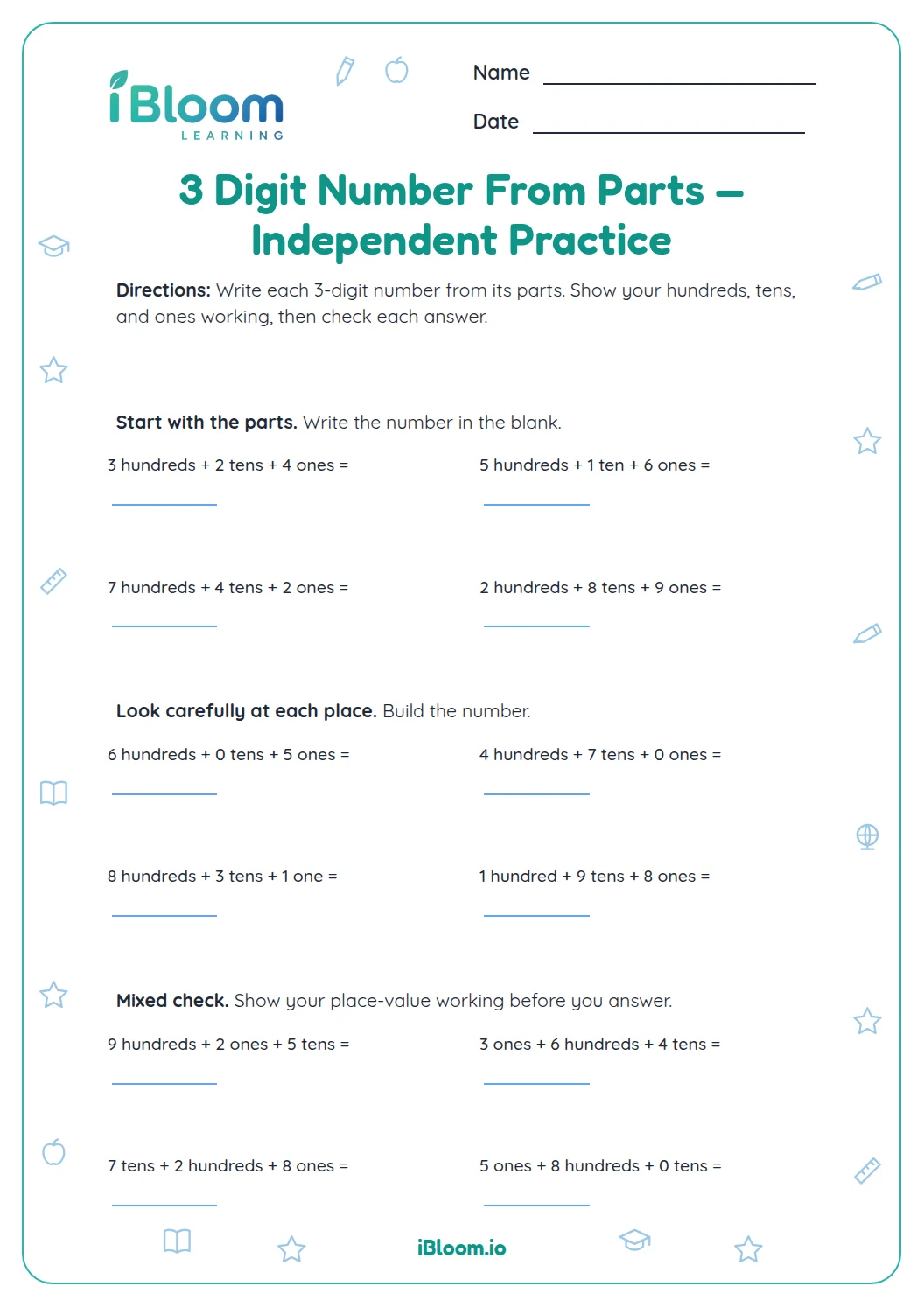
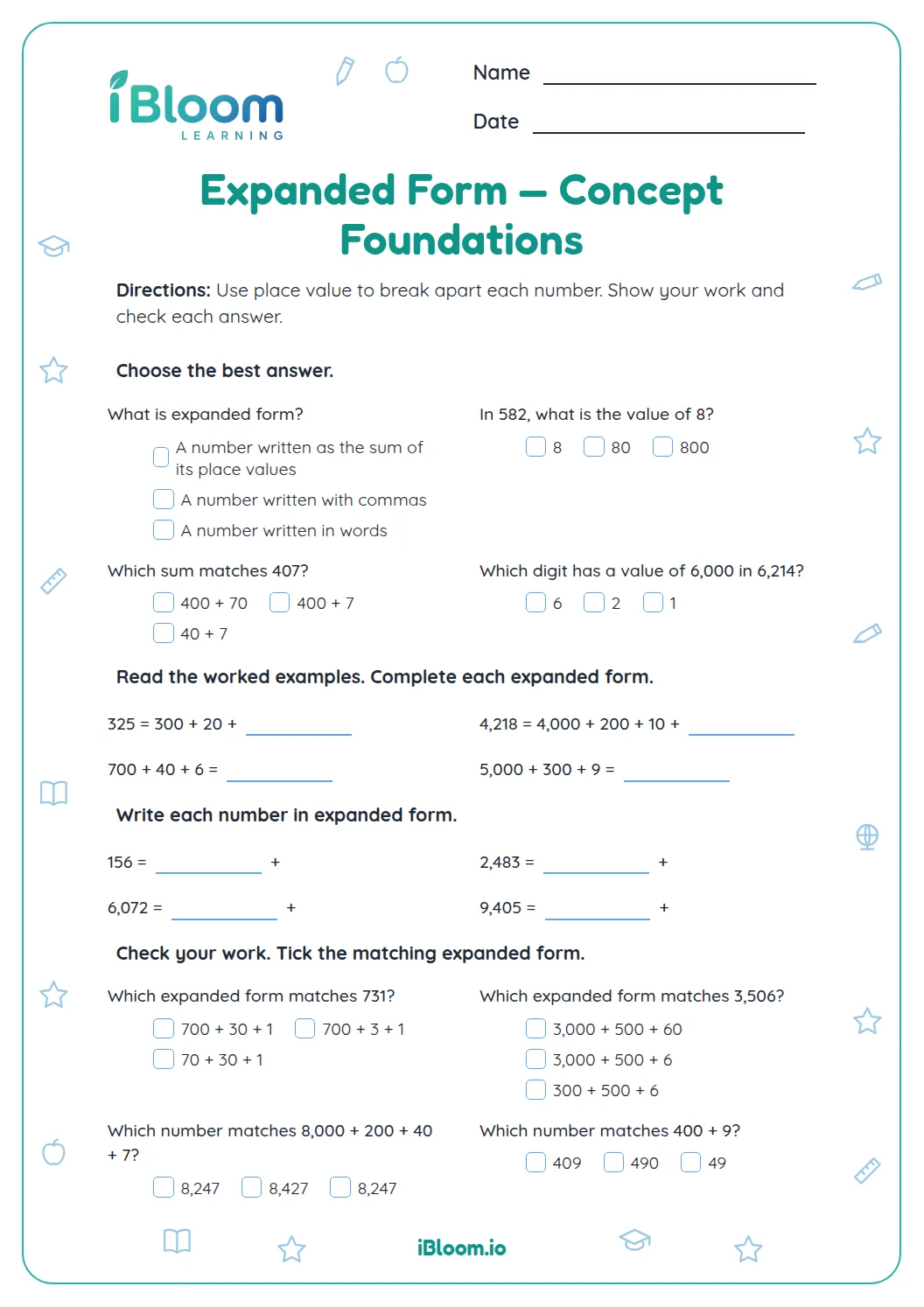
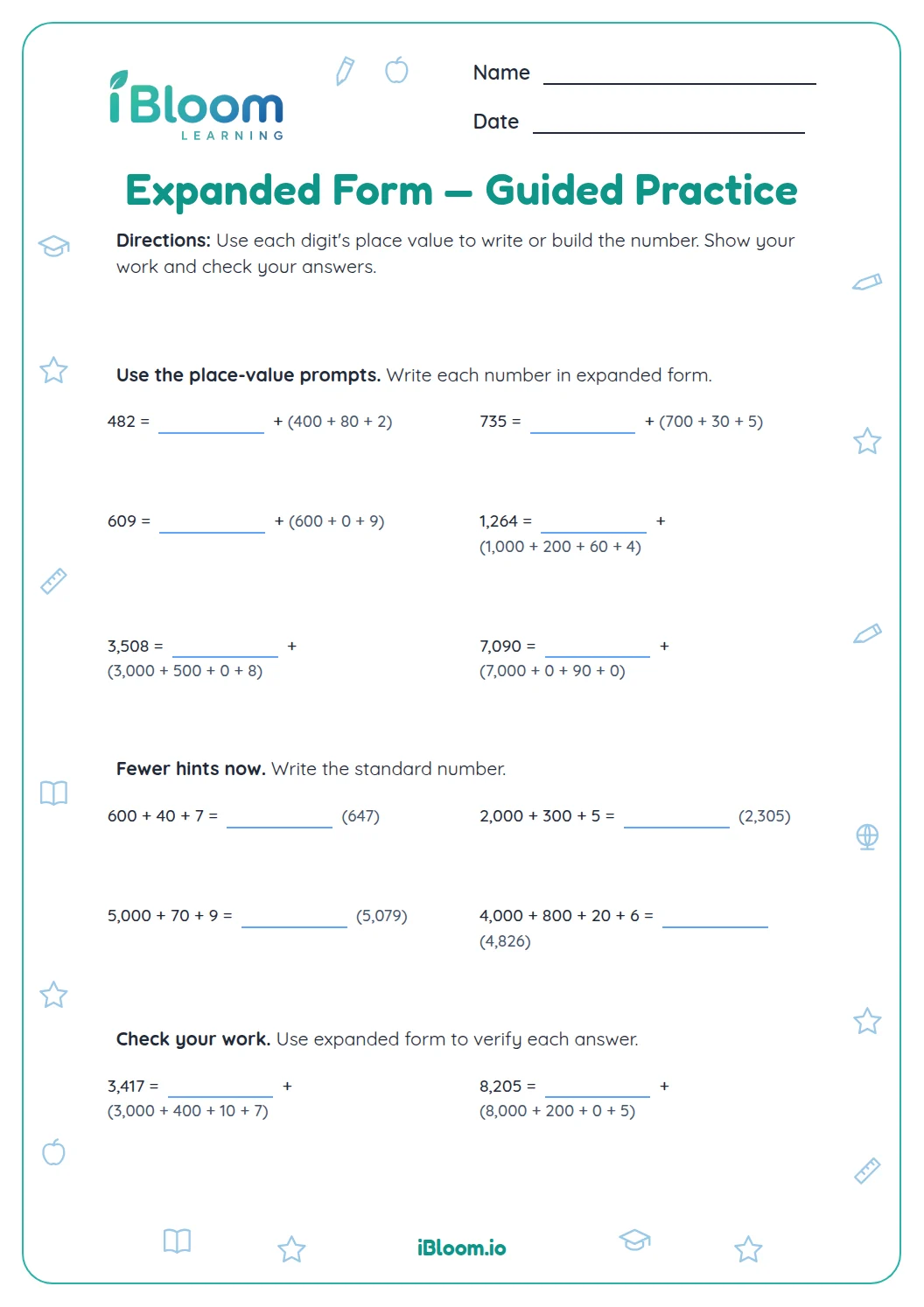
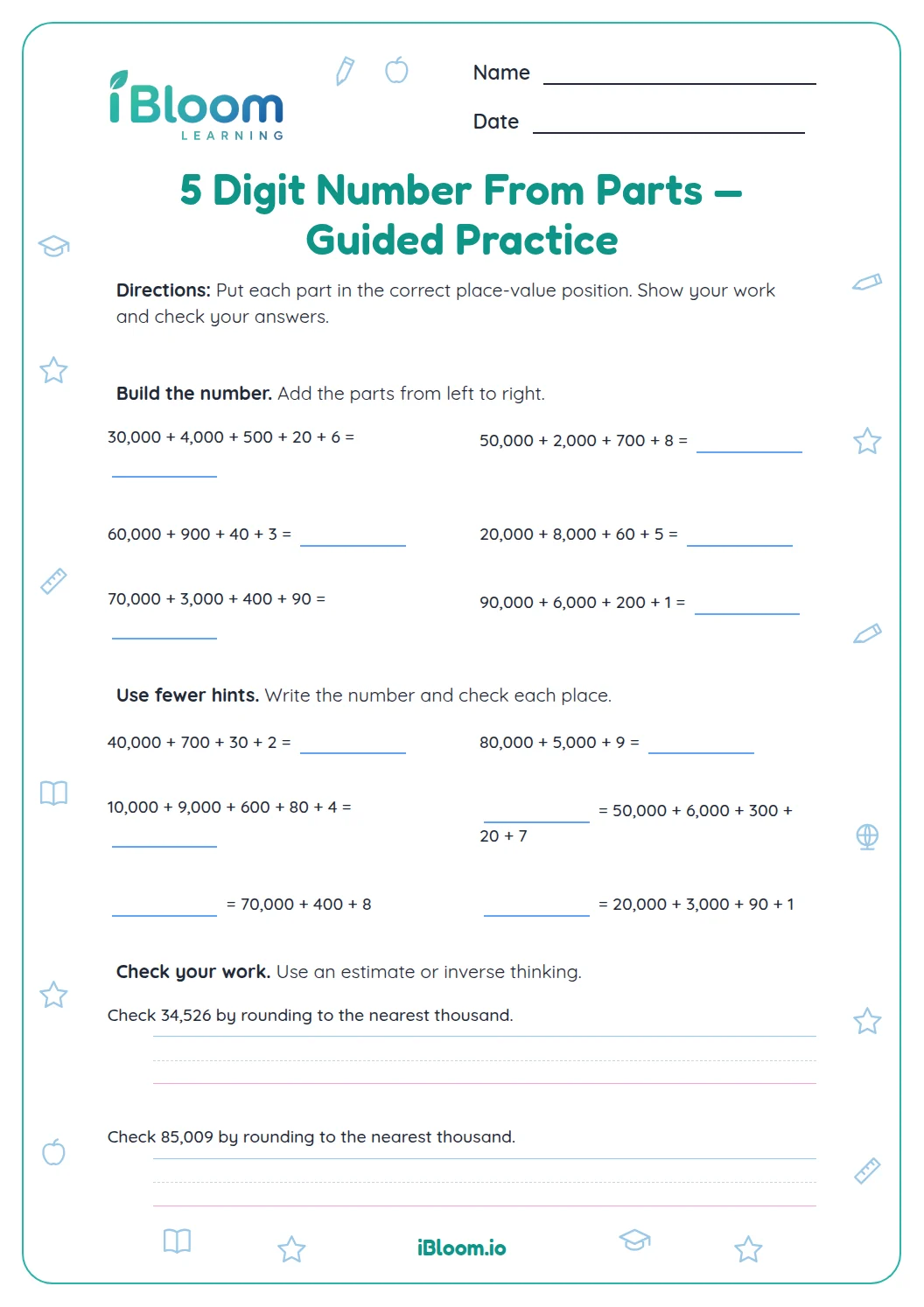
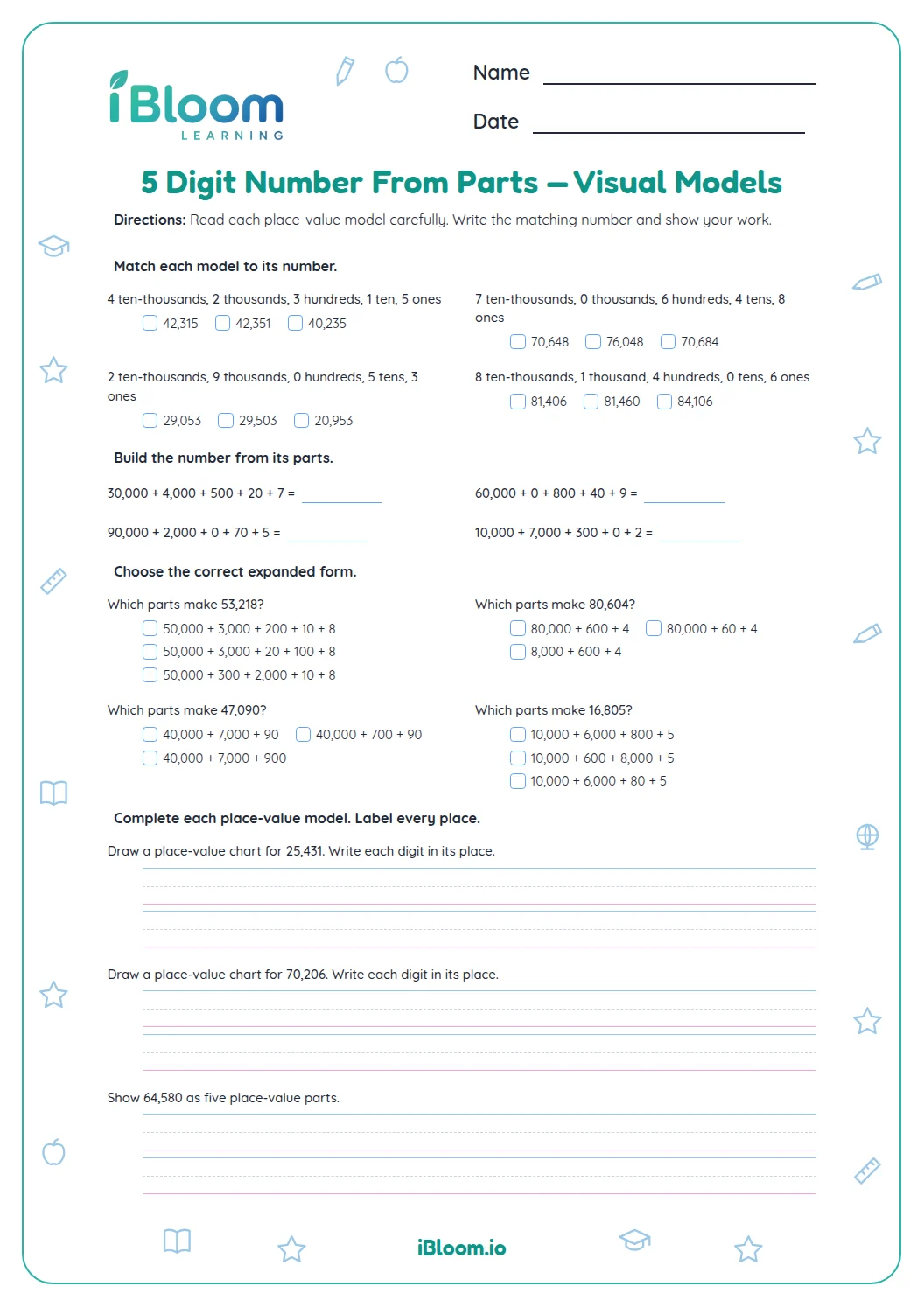
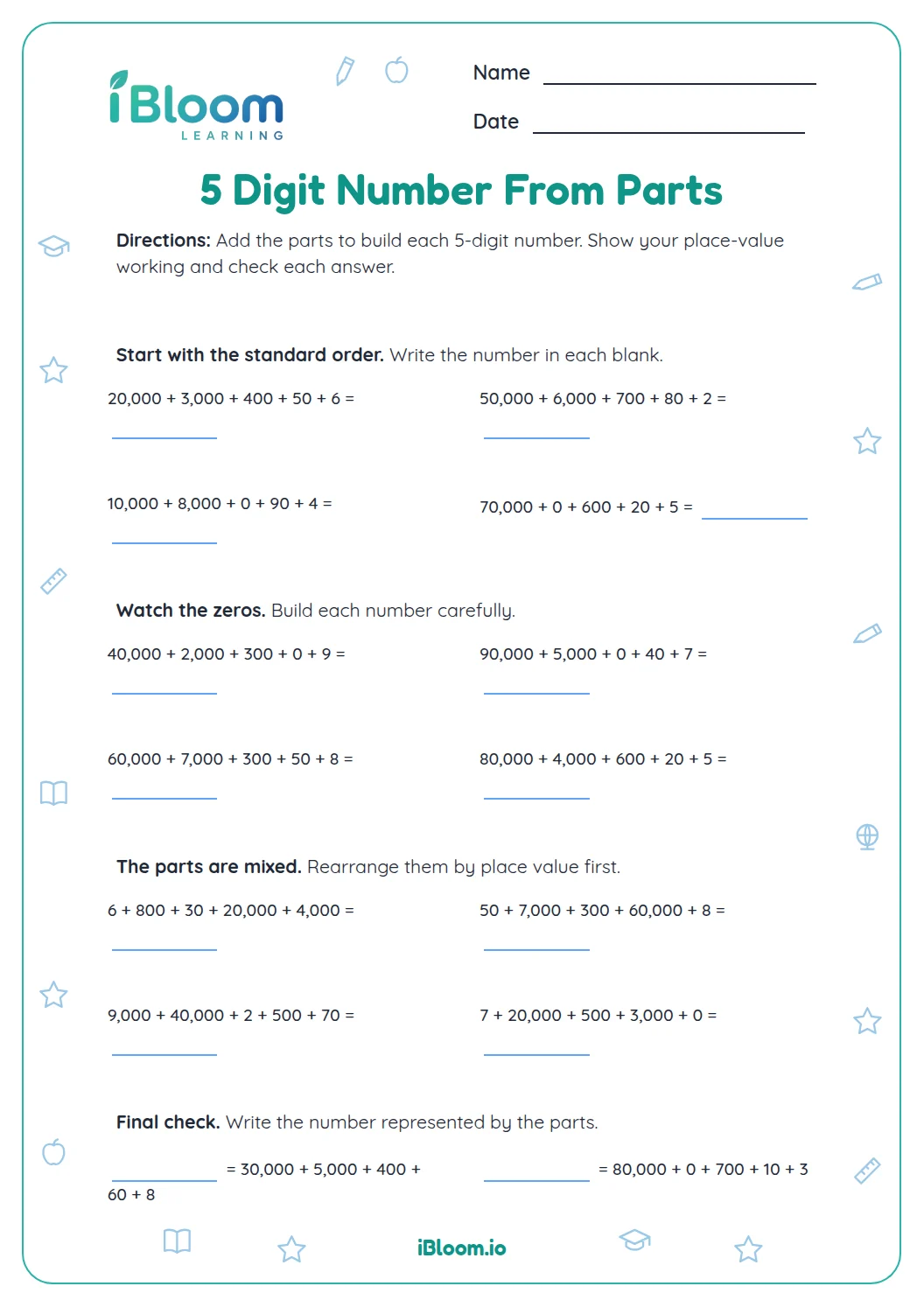
This free Grade 3 math worksheet practices composing and reading four-digit numbers from place-value parts. Students build numbers, identify a digit’s value, write expanded form, compare numbers, complete a missing place value, and explain regrouping. The questions keep the focus on how thousands, hundreds, tens, and ones combine, with a separate answer key.
Aligned to 4.NBT.A.2
How do place-value parts make a number?
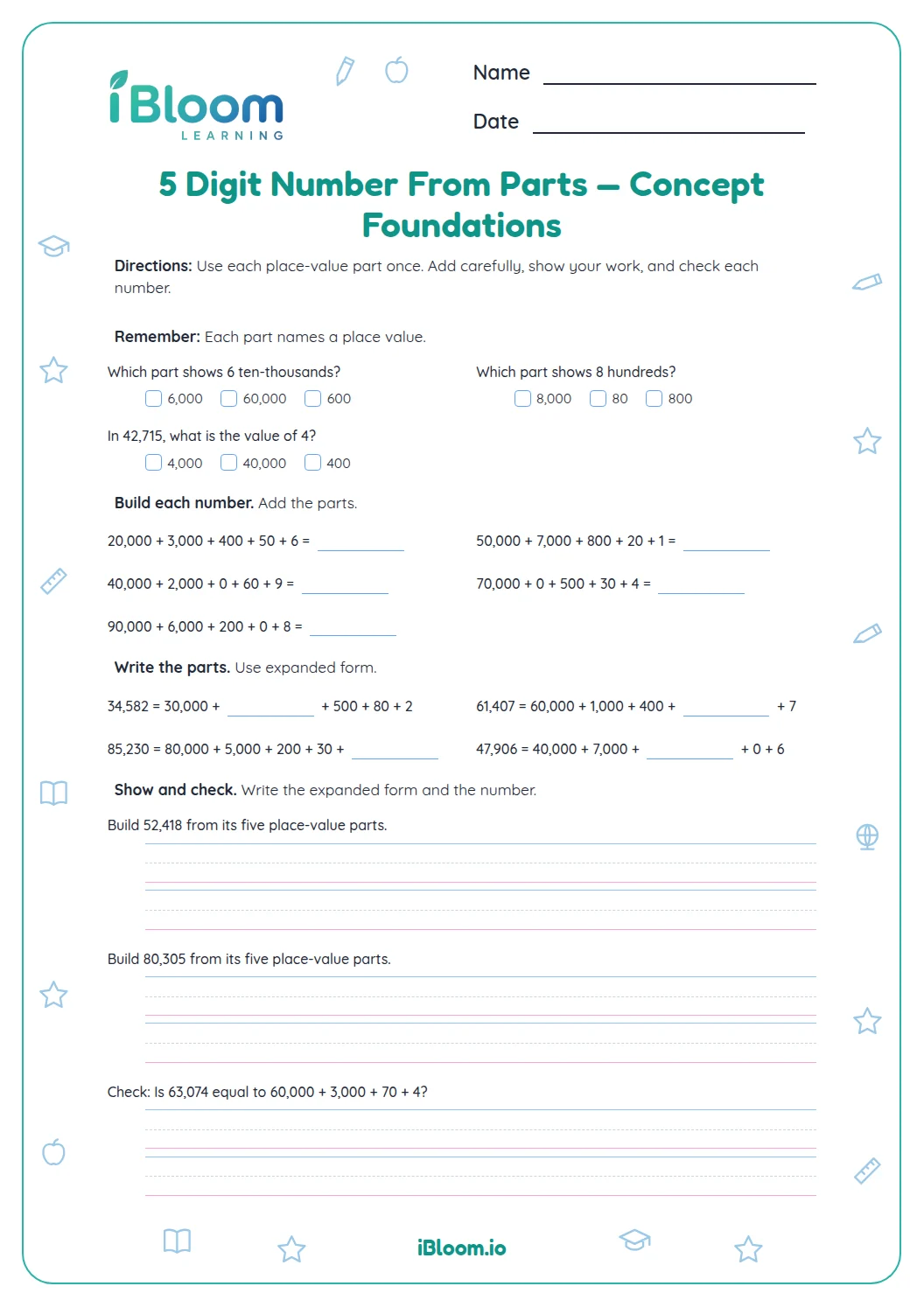
A four-digit number combines thousands, hundreds, tens, and ones. In question 1, 3 thousands, 4 hundreds, 2 tens, and 6 ones make 3,426. The digit positions keep the parts in the correct order.
The first part asks students to build numbers from names or expanded sums and identify the value of a digit.
- 13 thousands = 3,000
- 24 hundreds = 400; 2 tens = 20; 6 ones = 6
- 33,000 + 400 + 20 + 6 = 3,426
How can students compare four-digit numbers?
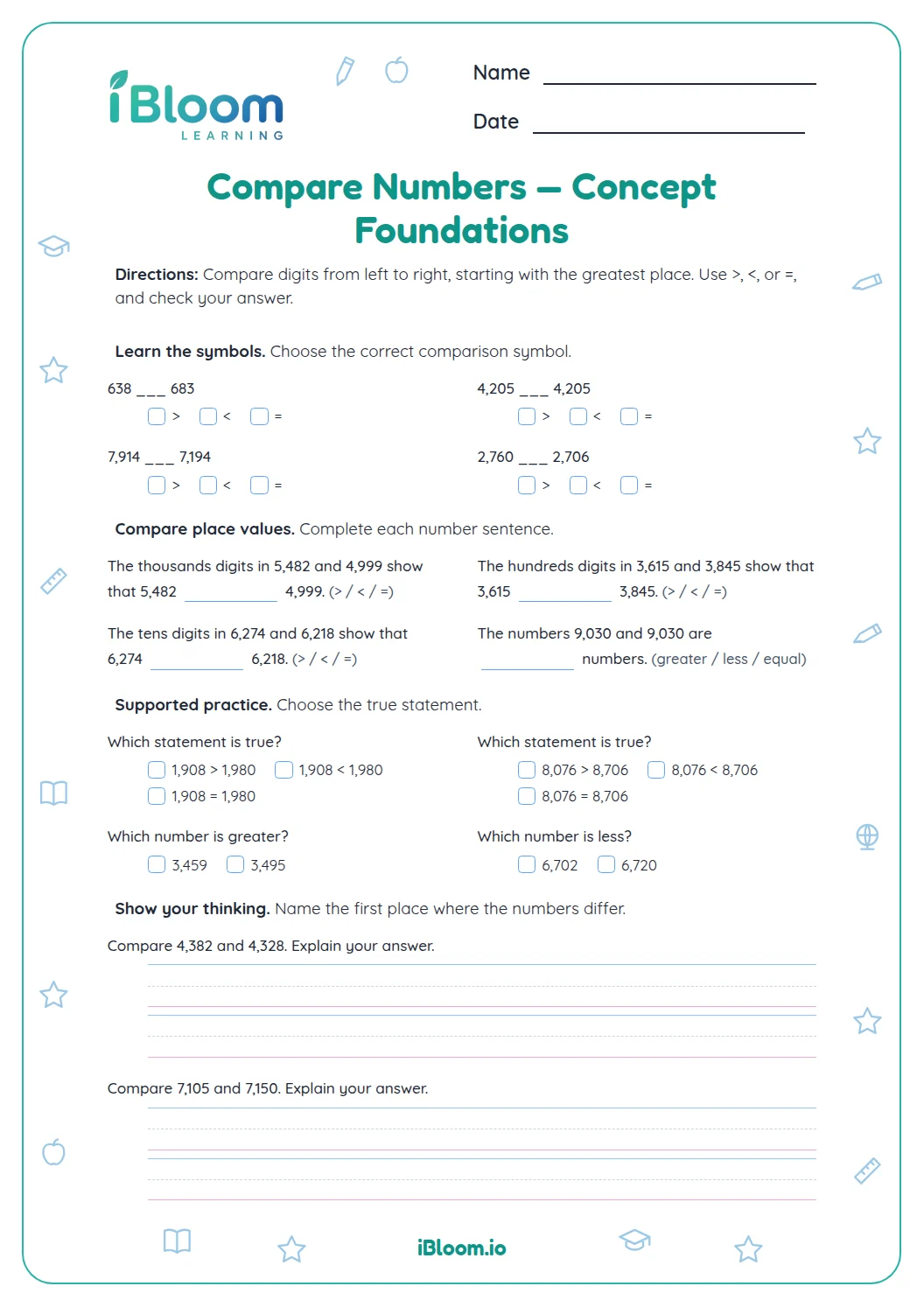
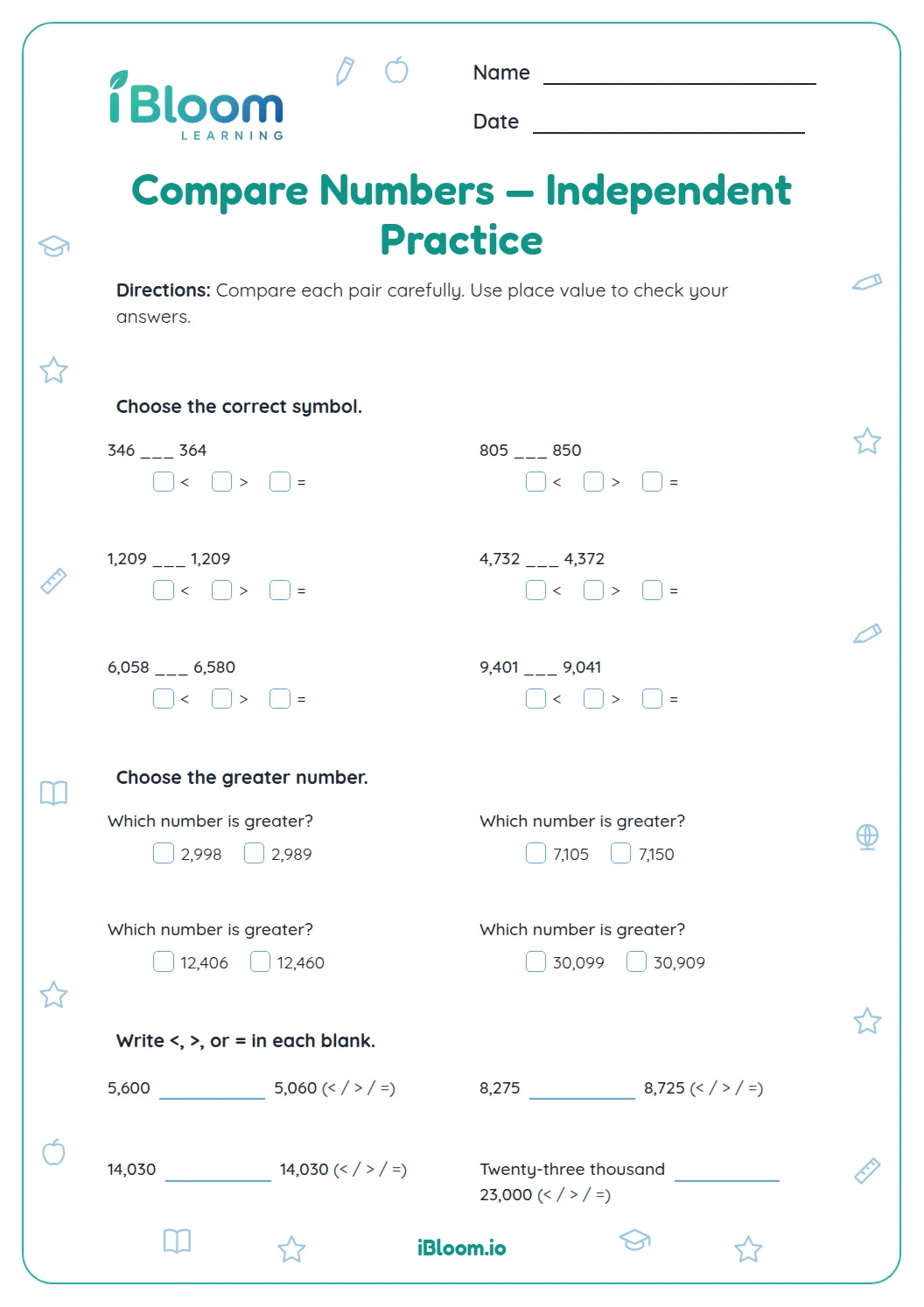
Compare digits from left to right, starting in the thousands place. If the thousands digits match, compare the hundreds, then tens, then ones. For example, 6,492 is greater than 6,429 because the thousands and hundreds match, but 9 tens is greater than 2 tens.
The choice questions ask students to select a matching set of parts, compare two numerals, and identify the clearest strategy.
How does expanded form show a missing place?
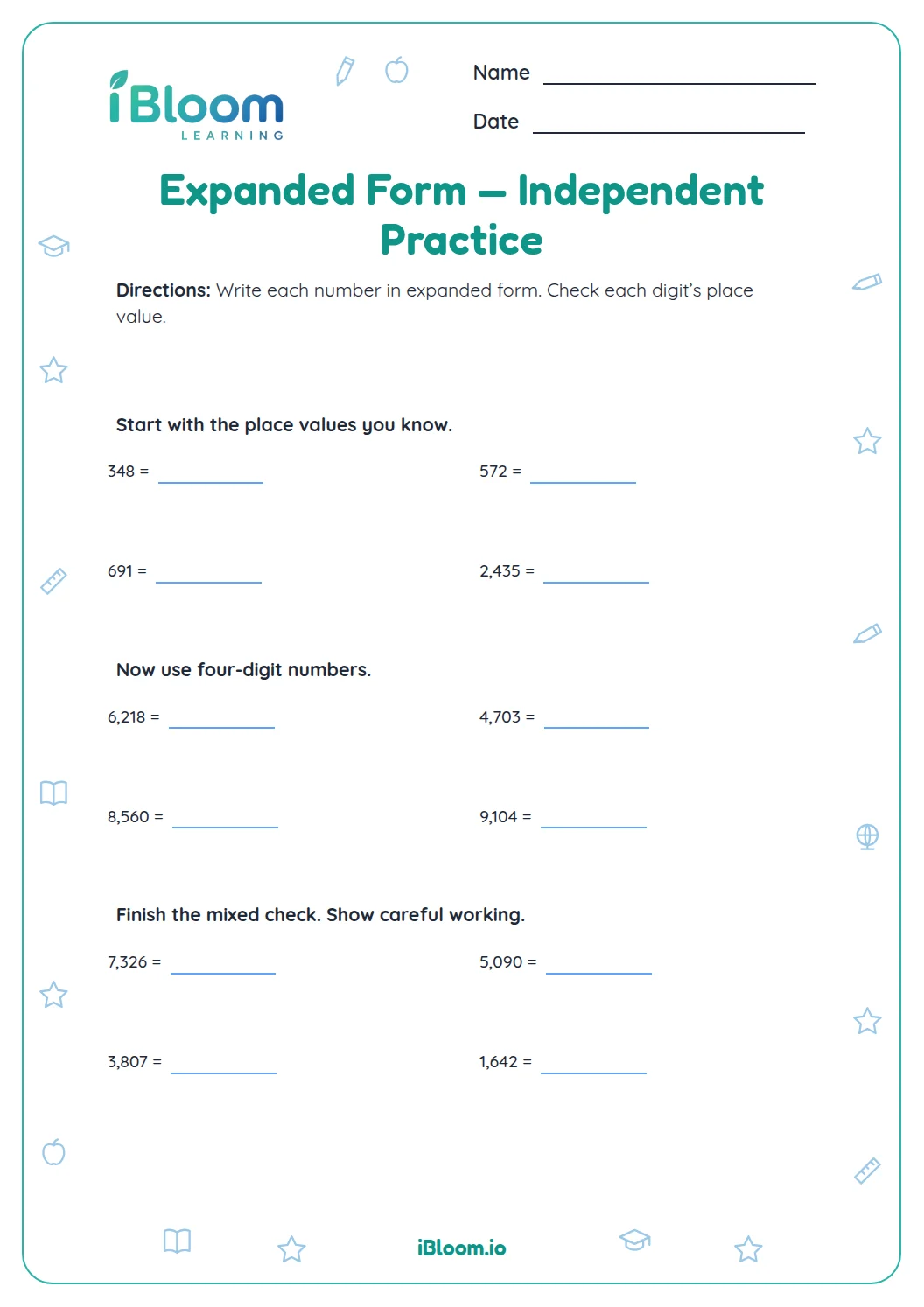
Expanded form separates a number into the value of each nonzero digit. For 6,035, that is 6,000 + 30 + 5; there are no hundreds, so the hundreds digit is zero. The blank questions practice keeping that zero in the numeral when needed.
What happens when a place-value part is regrouped?
Ten hundreds make one thousand, so 12 hundreds can be regrouped as 1 thousand and 2 hundreds. This explains why 3 thousands plus 12 hundreds equals 4,200. The answer key includes a sample explanation for this final reasoning question.
How to build and check each number
- 1Write the thousands digit first, then hundreds, tens, and ones.
- 2Translate each named part into its value before adding.
- 3Keep a zero when a place has no value, as in 5,307.
- 4Compare numbers from the leftmost place and move right only when digits match.
- 5For expanded form, include the value of each nonzero digit and check the sum.
Common place-value mistakes
The mistake
Leaving out a zero tens or hundreds place.
The fix
Write all four digit positions, even when one position has a value of zero.
The mistake
Reading 14 hundreds as 14 tens.
The fix
Convert 14 hundreds to 1,400, then combine it with the other parts.
The mistake
Comparing only the final digits.
The fix
Compare from the thousands place to the right, stopping at the first different digit.
Common Core alignment
This worksheet gives students focused practice with the standard below.
Read, write, expand, and compare multi-digit numbers using digit values.
On this sheet: The sheet builds four-digit numerals from place values, writes expanded form, and compares numbers by digit value.
Show the official wordingHide the official wording
Read and write multi-digit whole numbers using base-ten numerals, number names, and expanded form. Compare two multi-digit numbers based on meanings of the digits in each place, using >, =, and < symbols to record the results of comparisons.
What to practice next
Make more practice
Further reading
Questions parents and teachers ask
How many questions are included?
There are 14 questions in four parts: six short-answer number and value items, three multiple-choice reasoning items, four fill-in items, and one written explanation. The worksheet renders as three pages with a separate three-page answer key. It includes both straightforward number building and regrouping.
Does the worksheet include expanded form?
Yes. Students write 6,035 as 6,000 + 30 + 5 and complete other expanded-form expressions. These items show how each nonzero digit contributes to the total, while a zero keeps the hundreds or tens place visible in the numeral. Students can check the totals together.
How should a child compare two four-digit numbers?
Start at the thousands place and compare digits from left to right. If those digits match, compare the hundreds, then the tens, then the ones. One worksheet item compares 6,492 and 6,429; the tens digits decide which number is greater.
Why does the worksheet use a number with 14 hundreds?
It gives students practice regrouping a place-value part larger than nine. Fourteen hundreds equal 1,400, or one thousand and four hundreds. Combining that amount with the other parts shows why it is important to convert each part to its value before writing the numeral.
Is an answer key included?
Yes. A separate answer key accompanies the worksheet pages and lists the number, digit-value, comparison, and expanded-form answers. The final item includes a sample regrouping explanation. A child can check a result by expanding the number and adding the parts again.