

About this worksheet
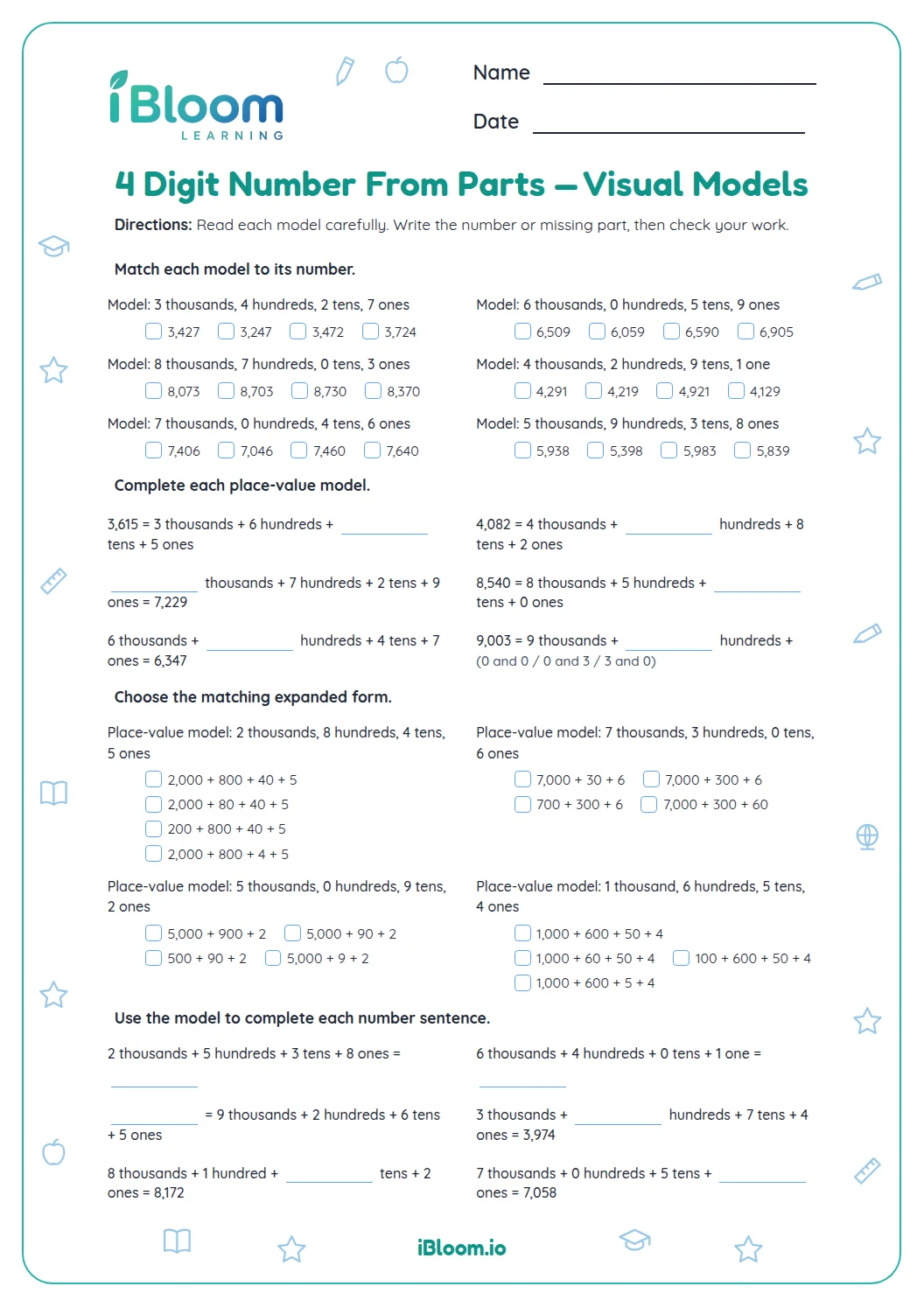
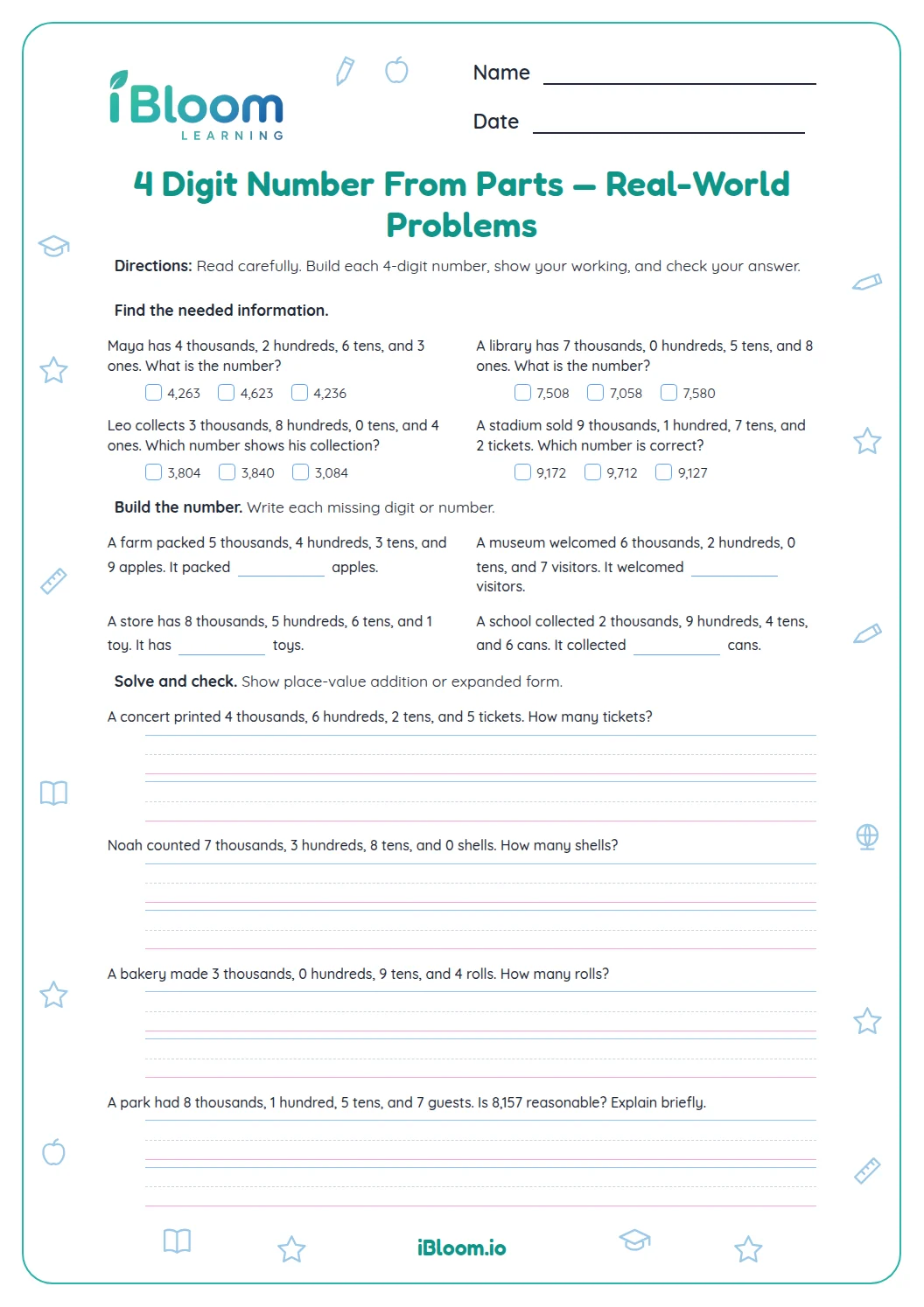
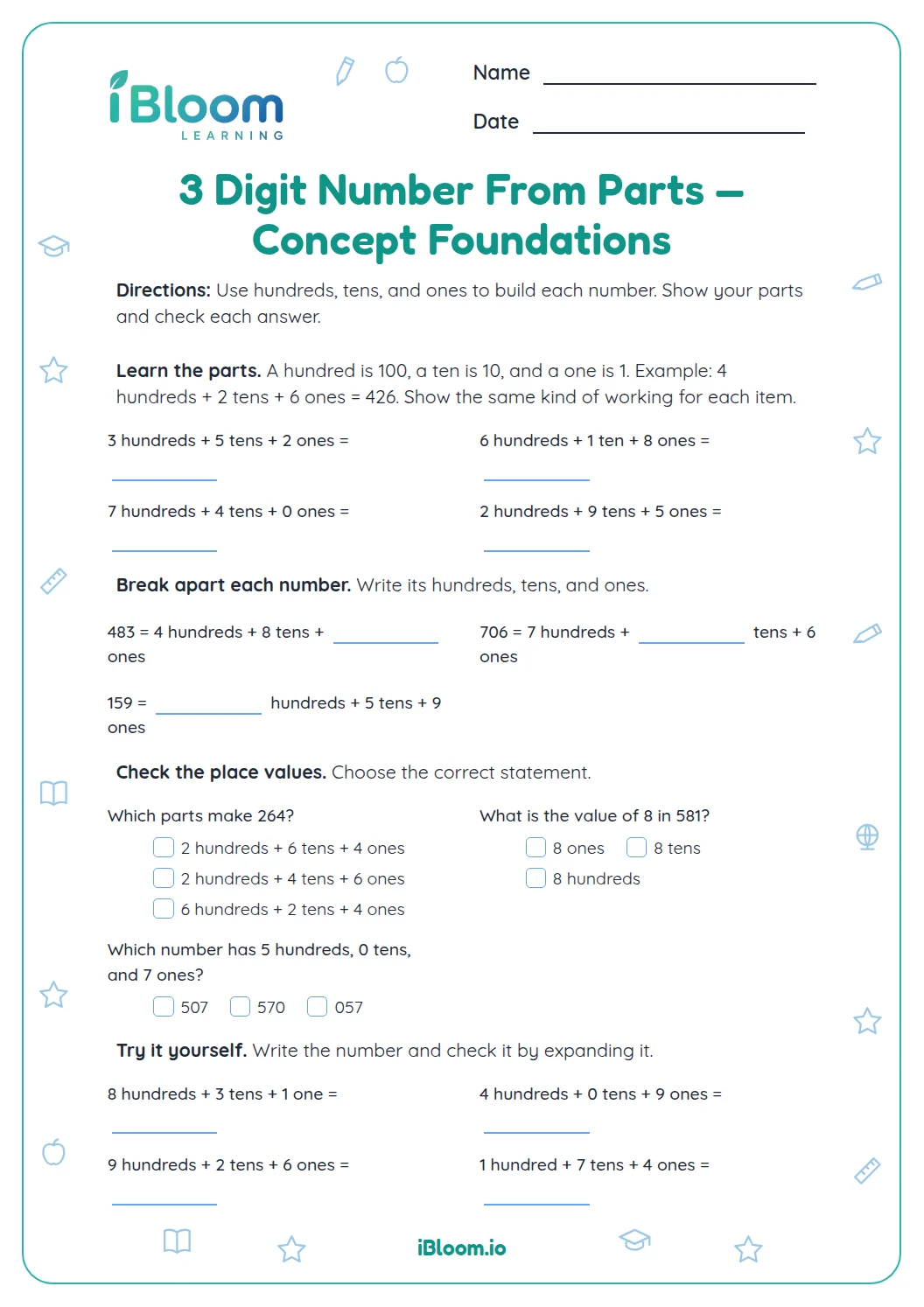
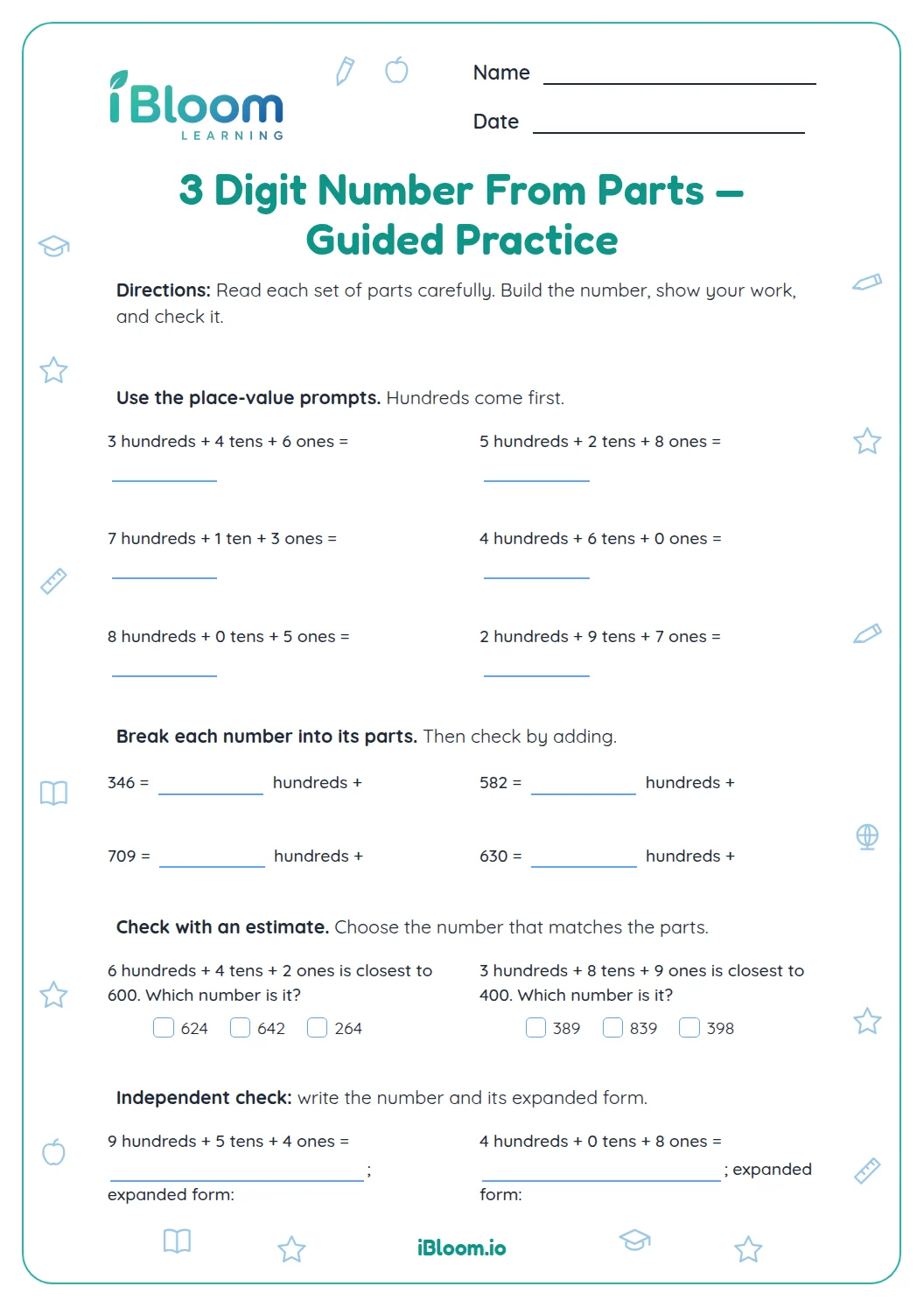
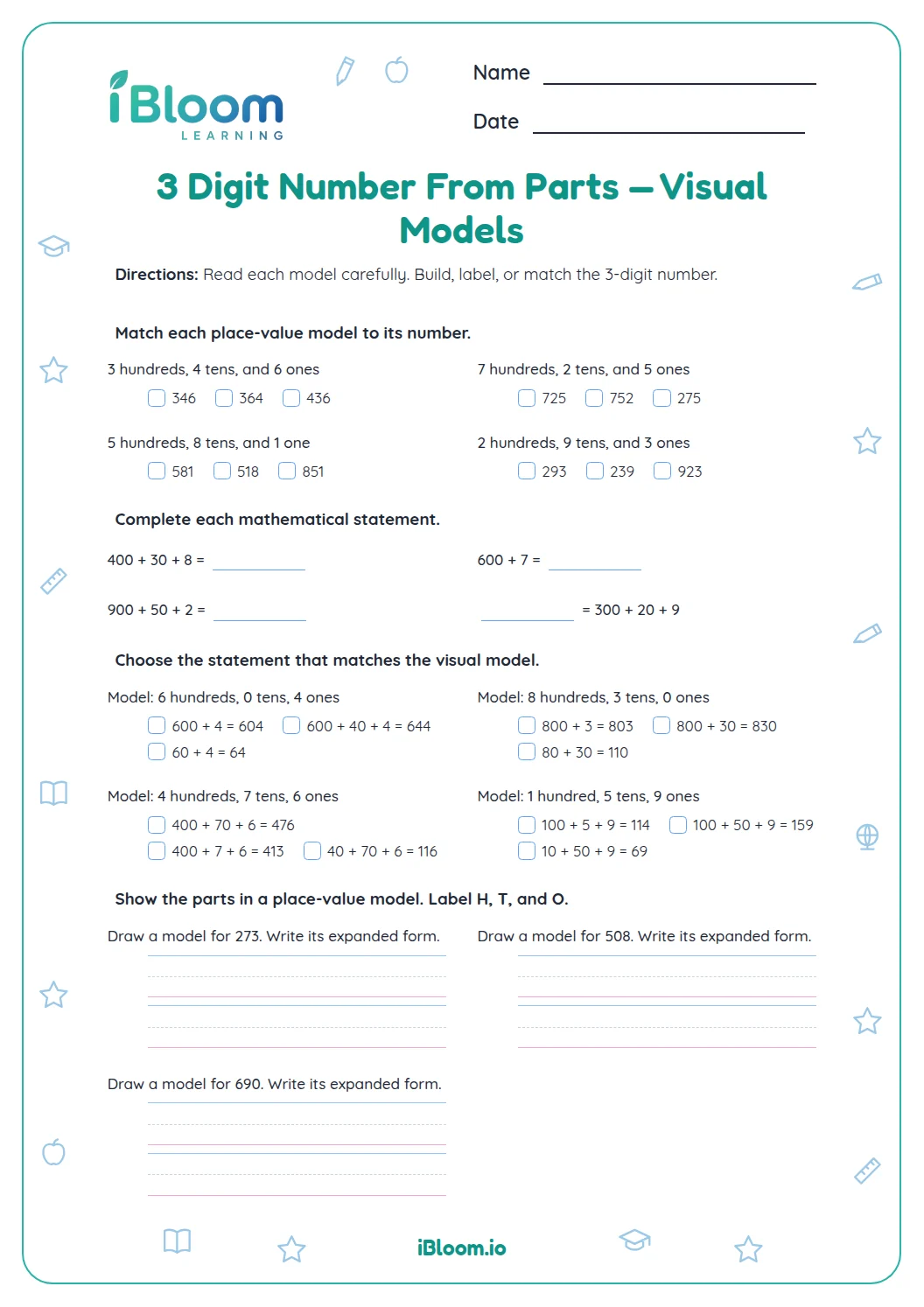
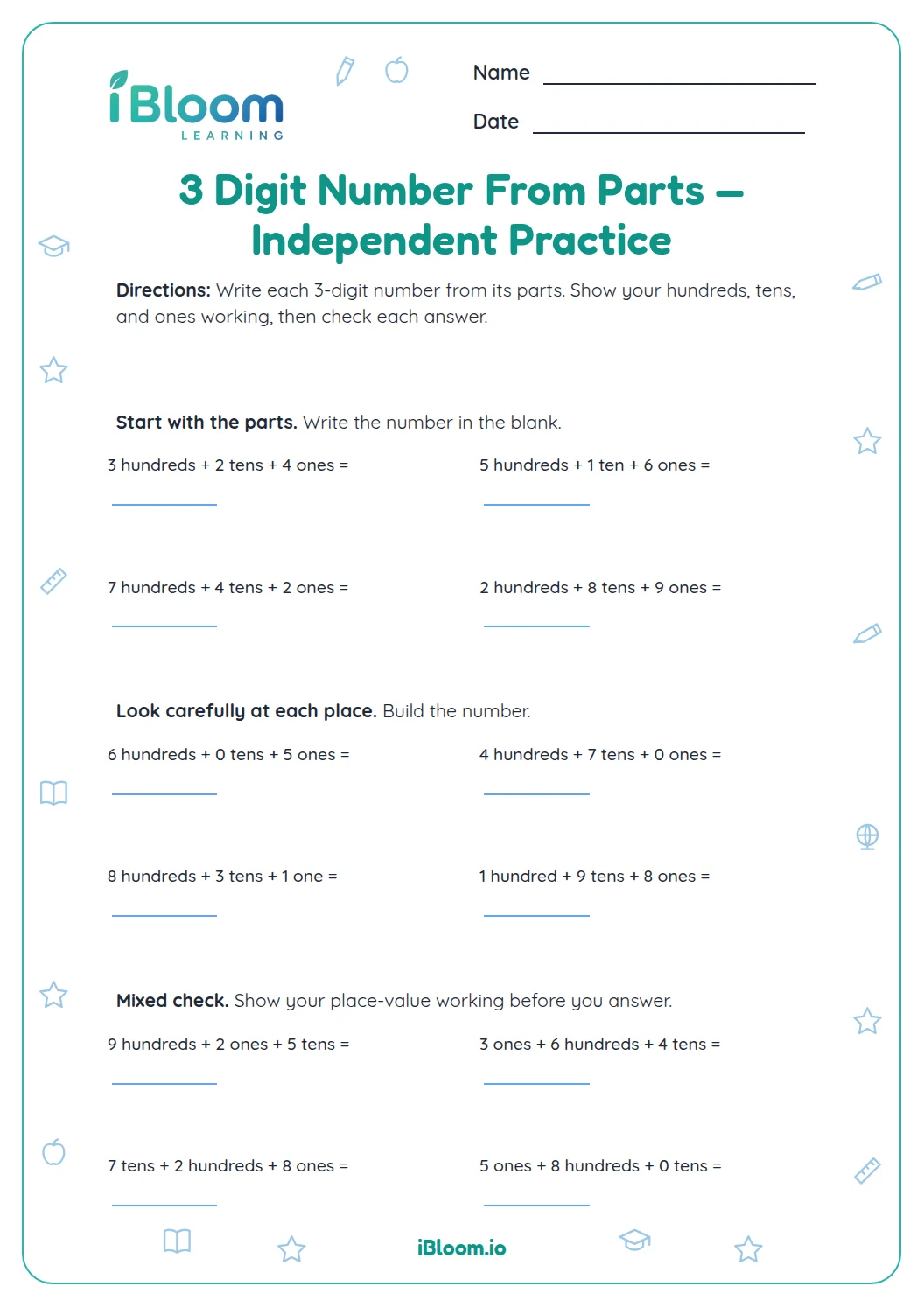
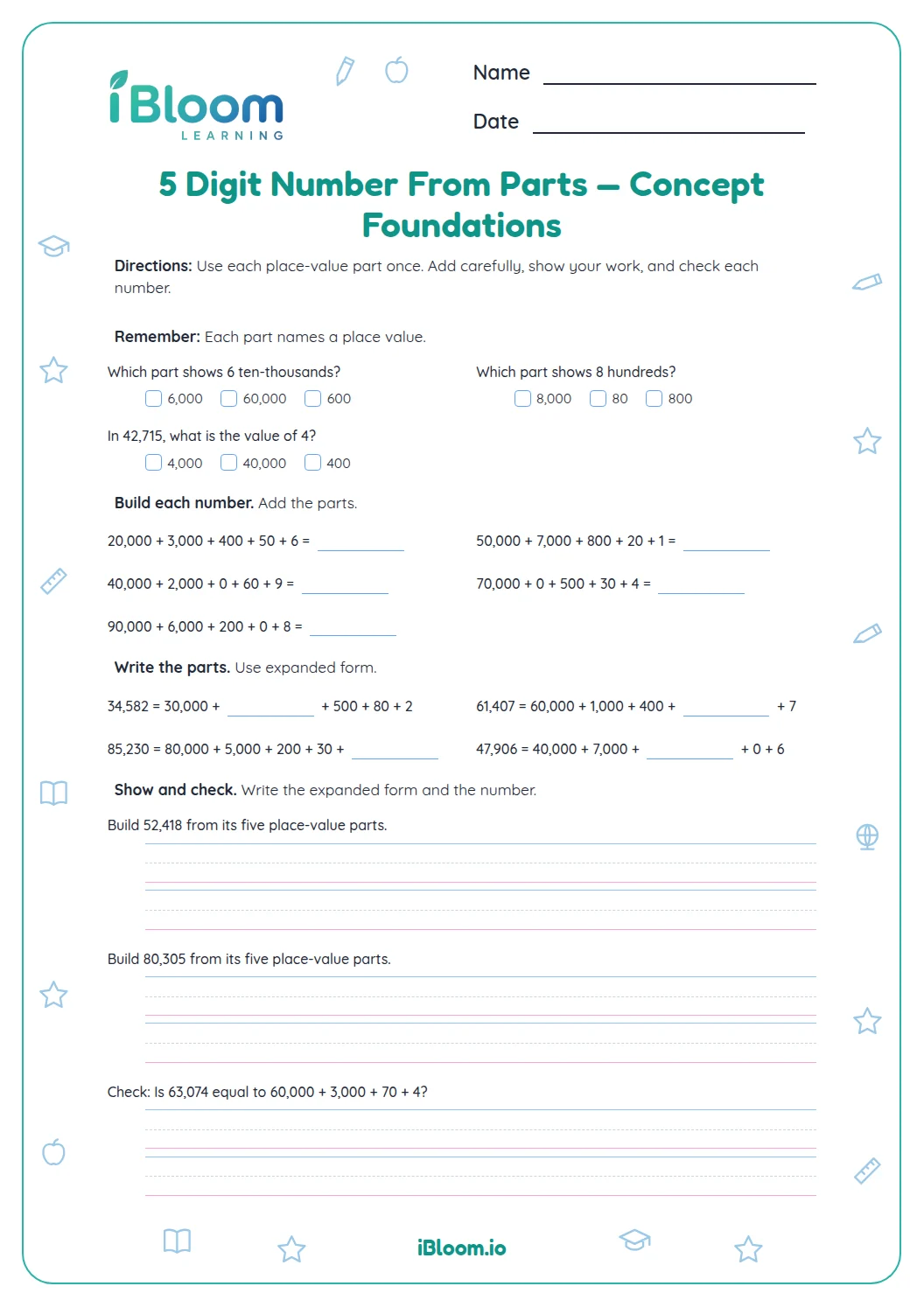
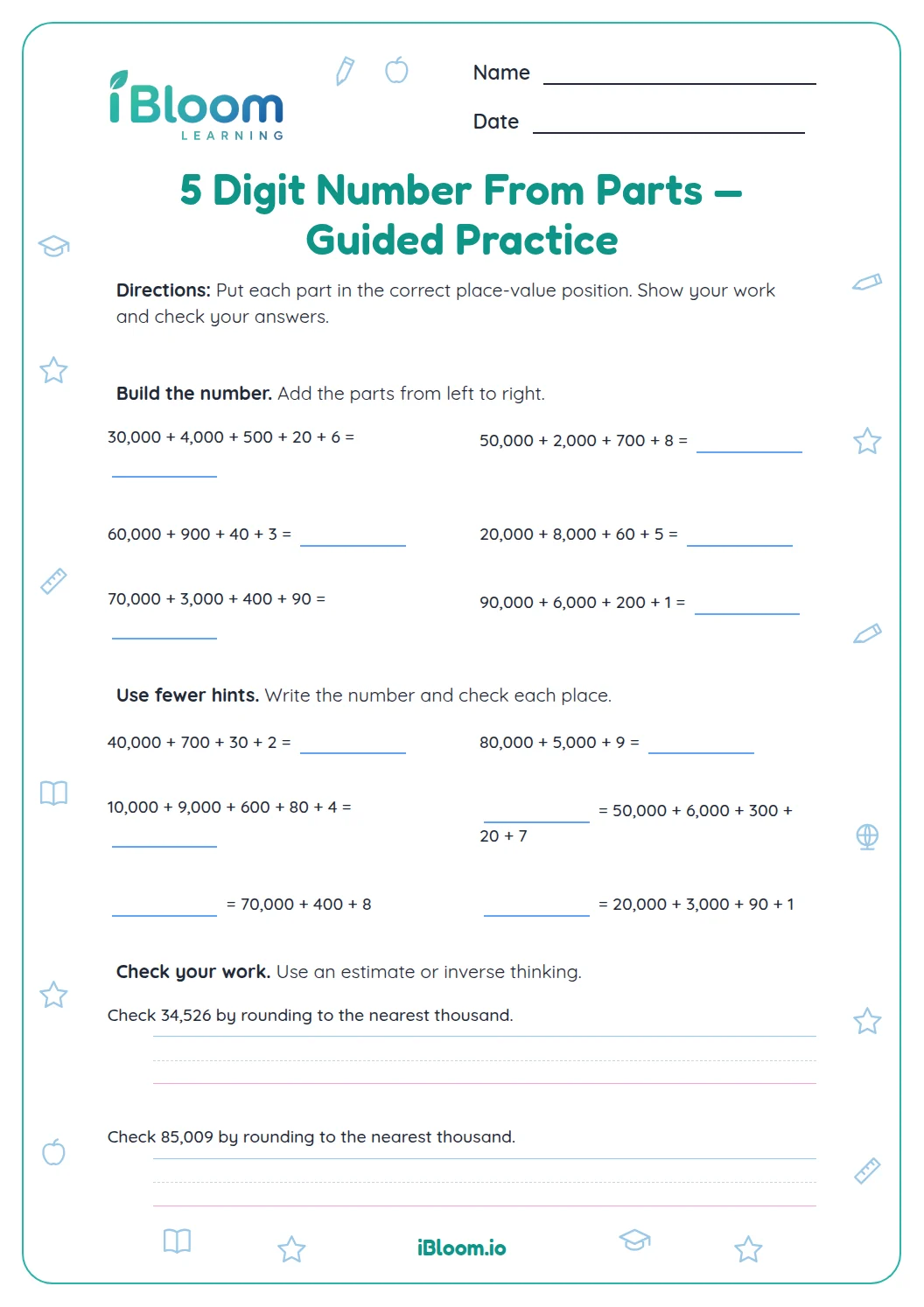
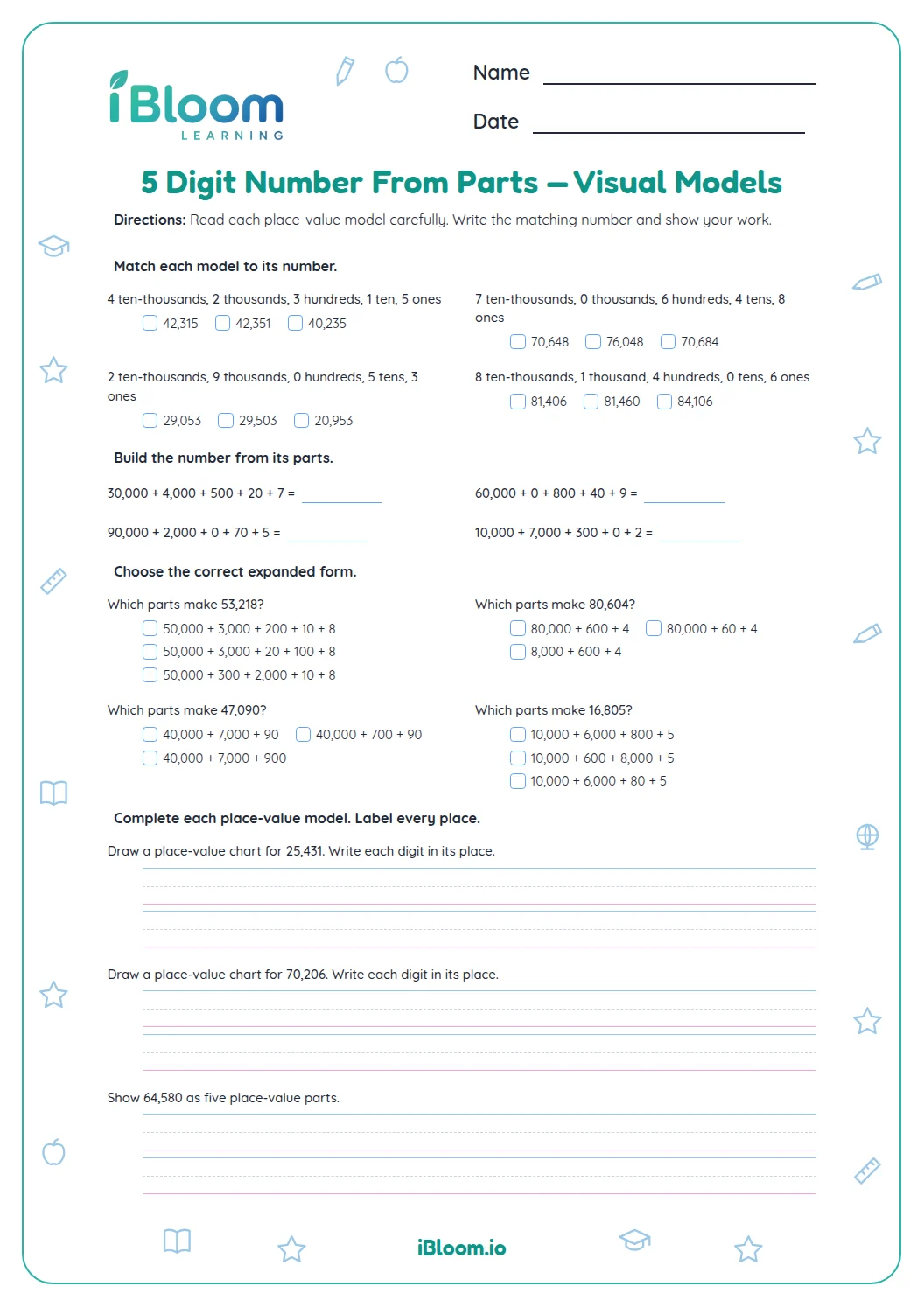
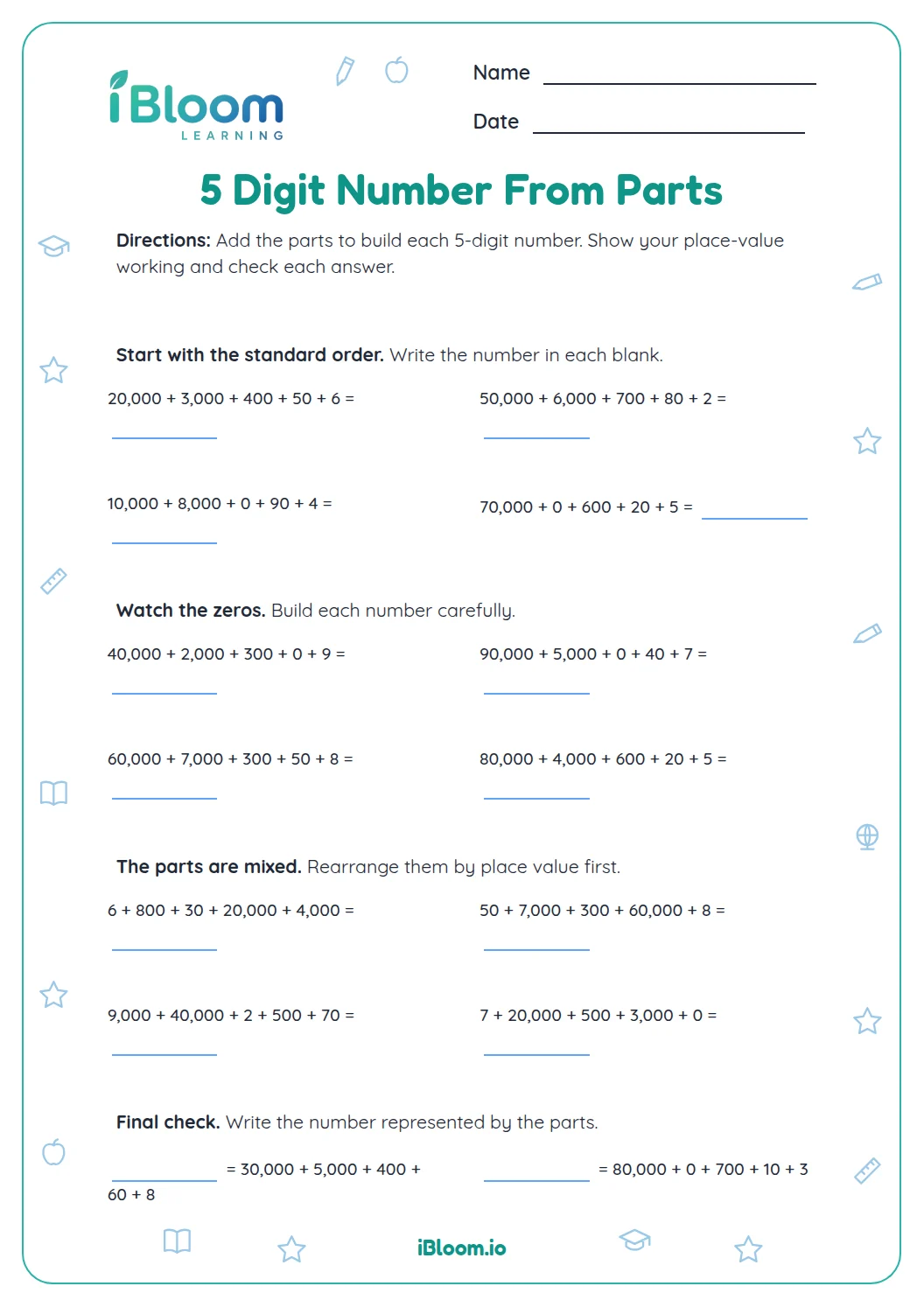
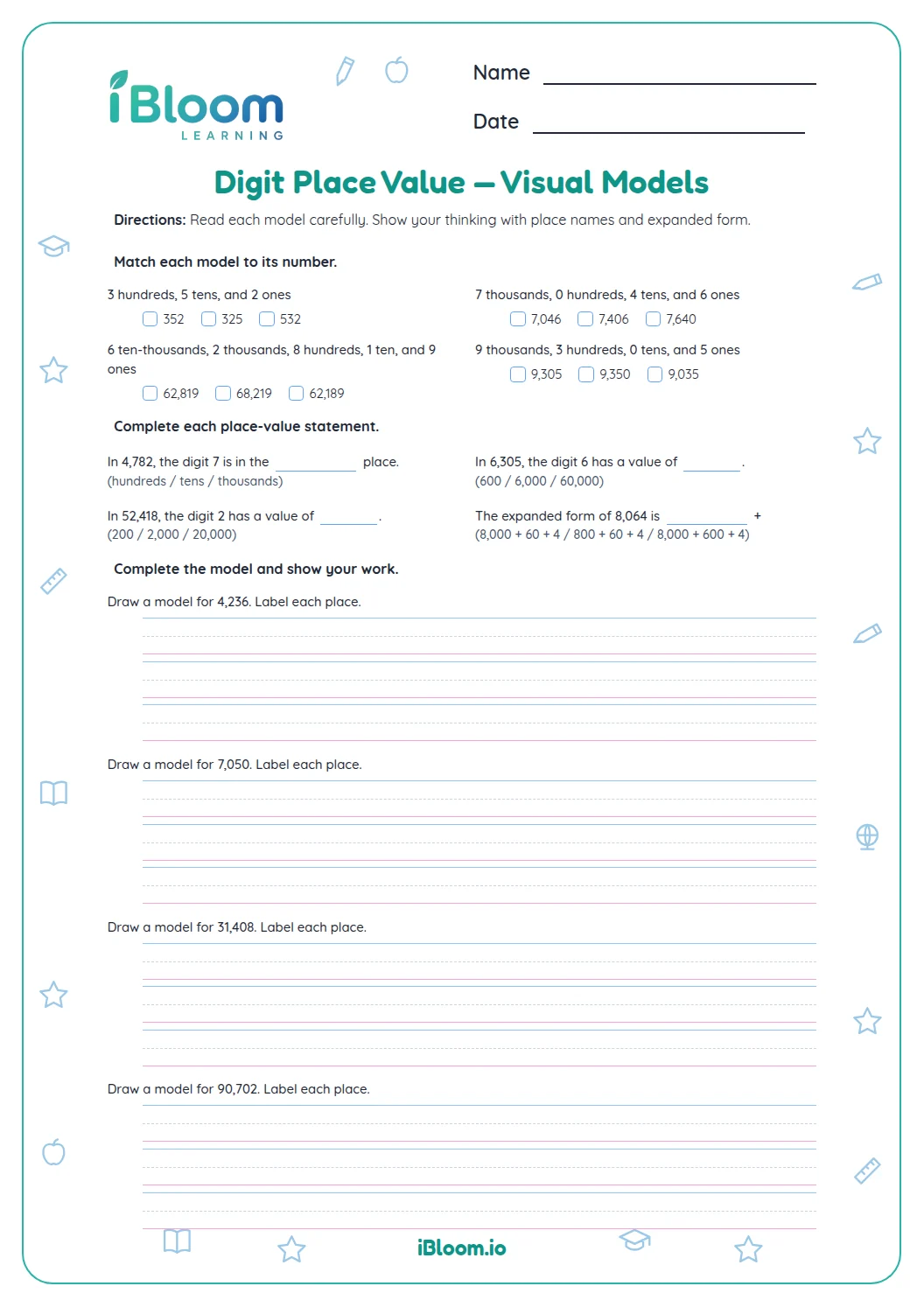
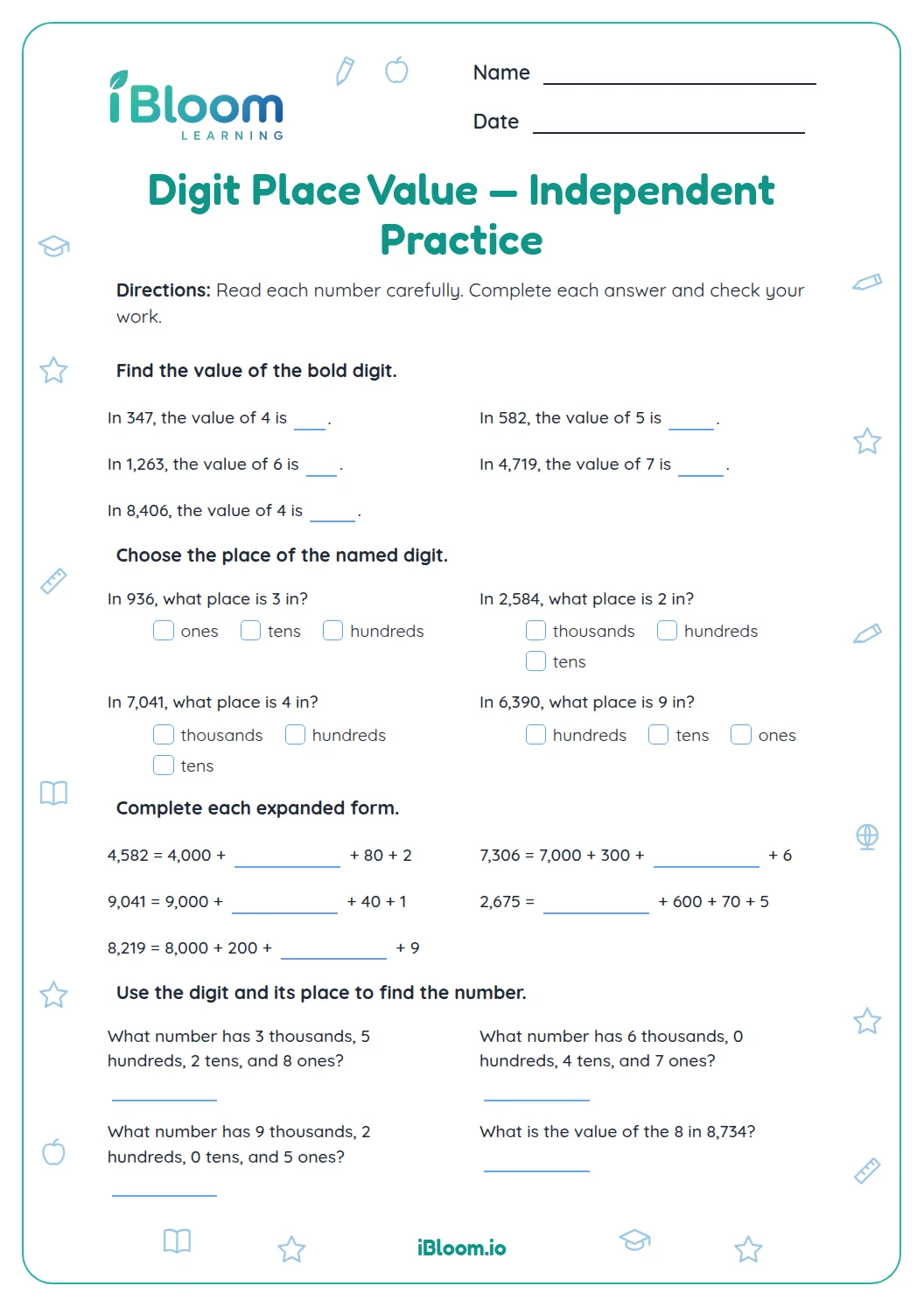
This Grade 3 printable practices composing four-digit numbers from thousands, hundreds, tens, and ones, then reading the value of a digit in a number. Students answer 14 questions in two parts. The answer key supports checking each choice.
What does this worksheet practice?
Part A asks students to add the thousands, hundreds, tens, and ones to compose each four-digit number, including zero places. Part B asks them to identify digits and values. For example, 3,000 + 500 + 20 + 8 makes 3,528.
The answer choices vary the position of the correct response.
- Part A: compose four-digit numbers by adding place values
- Part B: identify place-value digits and values
- 14 questions with a separate answer key
How should students approach each question?
Write each place in order: thousands, hundreds, tens, ones. In 3,528, the 3 is worth 3,000, the 5 is worth 500, the 2 is worth 20, and the 8 is worth 8. A zero holds an empty place.
How can families use the page?
Complete one part at a time and pause to review any answer that needs another look.
How to use this worksheet
- 1Read the place names from left to right.
- 2Add the thousands, hundreds, tens, and ones to compose the number.
- 3For digit-value questions, multiply the digit by its place value.
- 4Check each answer with the key.
Common mistakes and quick fixes
The mistake
Leaving out a zero place when composing a number.
The fix
Keep the thousands, hundreds, tens, and ones positions in order.
The mistake
Confusing a digit with its value.
The fix
Name the place first; a 4 in the thousands place is 4,000.
The mistake
Reading the hundreds digit as the tens digit.
The fix
Count positions from the right: ones, tens, hundreds, thousands.
What to practice next
Make more practice
Questions parents and teachers ask
What skill does this page practice?
Students practice composing four-digit numbers from thousands, hundreds, tens, and ones, then identifying digits and values in four-digit numbers. Several questions include a zero in one place, so students must preserve that position when composing or reading a number.
How many questions are included?
There are 14 questions in two parts. The first part composes four-digit numbers from place-value parts; the second identifies digits and their values. A separate answer key lists the correct answer for every question and supports review of place-value reasoning.
Is an answer key included?
Yes. A separate answer key lists a response for every question on the worksheet. Students can finish a part before checking it, or an adult can use the key to review the completed page together and discuss any tricky items.
How long should students spend on it?
Plan for about 20 minutes for the 14 questions. Students may need extra time to check which position each digit occupies, especially when a number has a zero in one place. Encourage them to read place names from right to left before choosing.
Can a student complete it independently?
The directions are written so students can follow each part one step at a time. A family member or teacher may introduce the skill first, then let the student work. The answer key helps an adult review responses afterward.