


About this worksheet
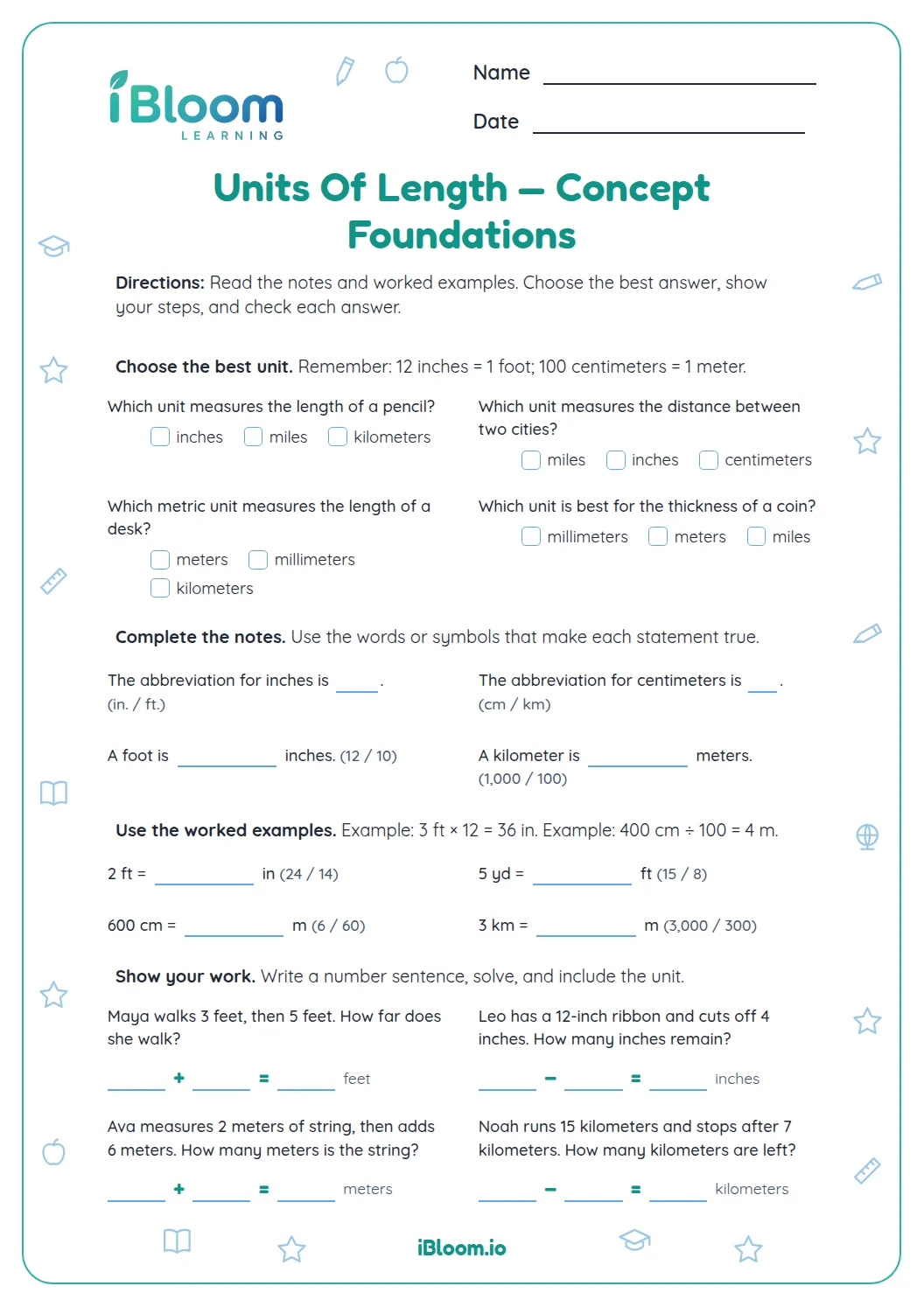
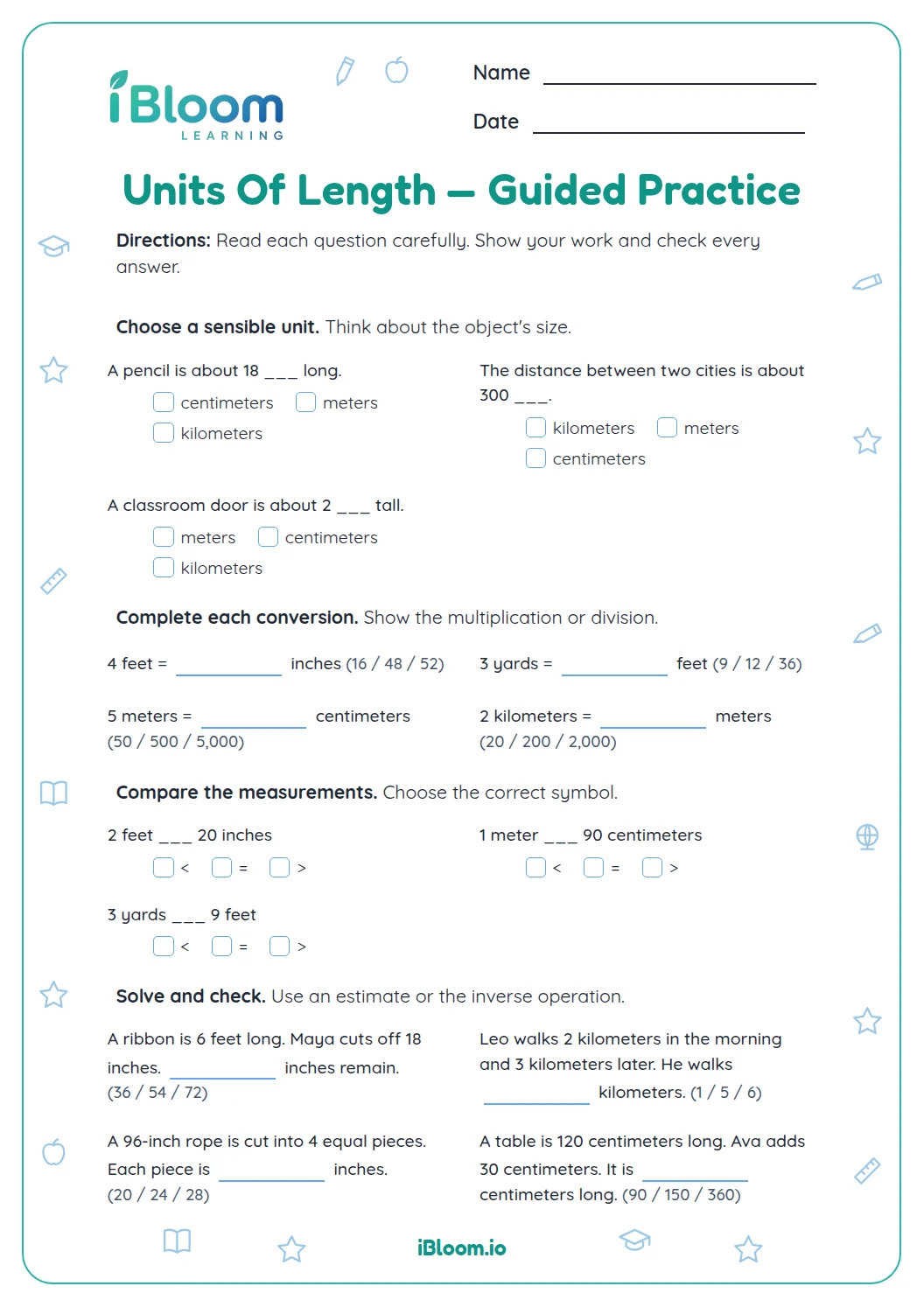
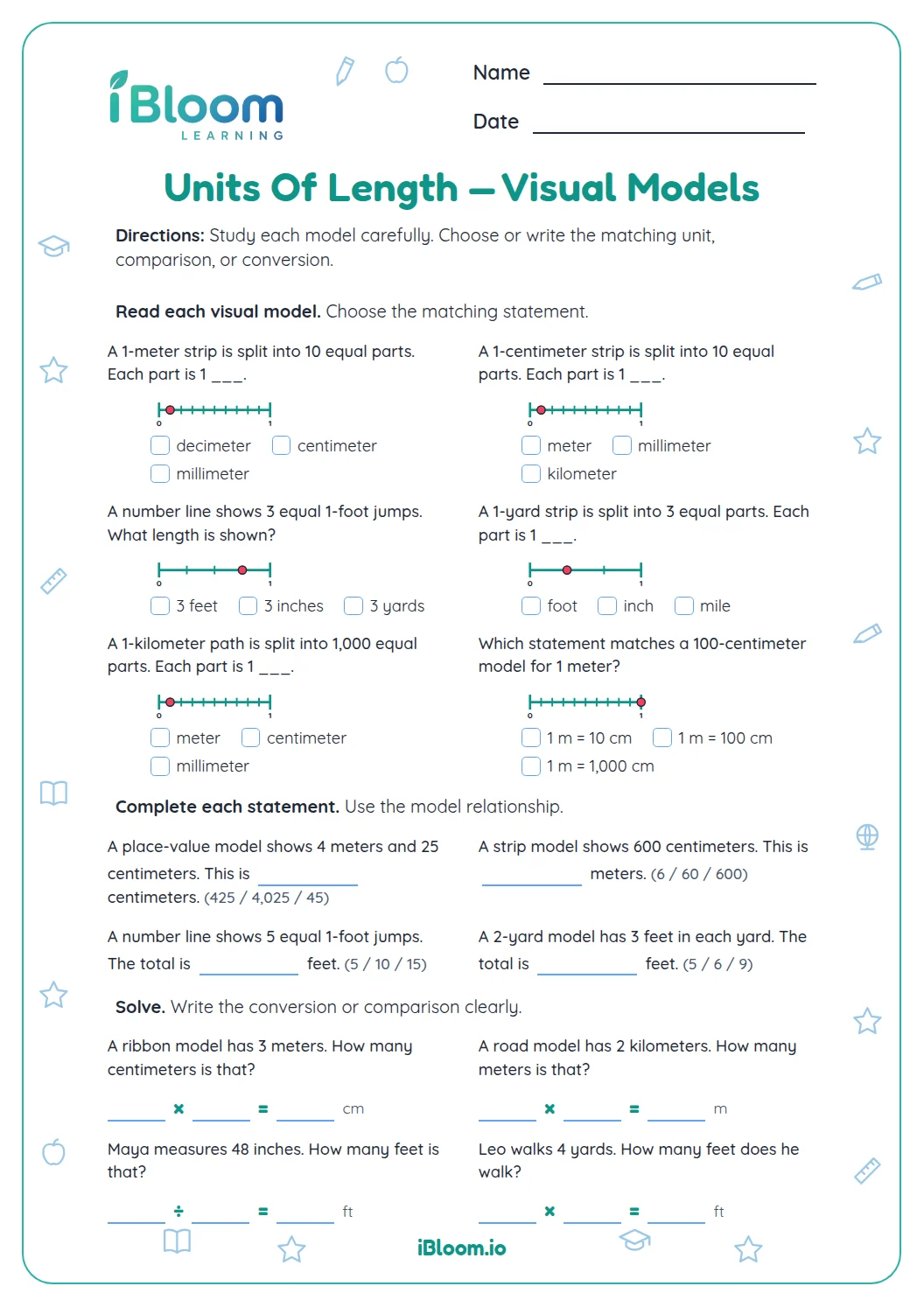
This Grade 4 visual-model worksheet uses two number-line drawings for direct comparisons. Twelve contextual questions use feet, inches, and yards and require students to convert before choosing the longer length.
Aligned to 4.MD.A.1
How can a ruler model help?
Two questions use number-line drawings with labeled points to compare lengths visually.
How do you compare different units?
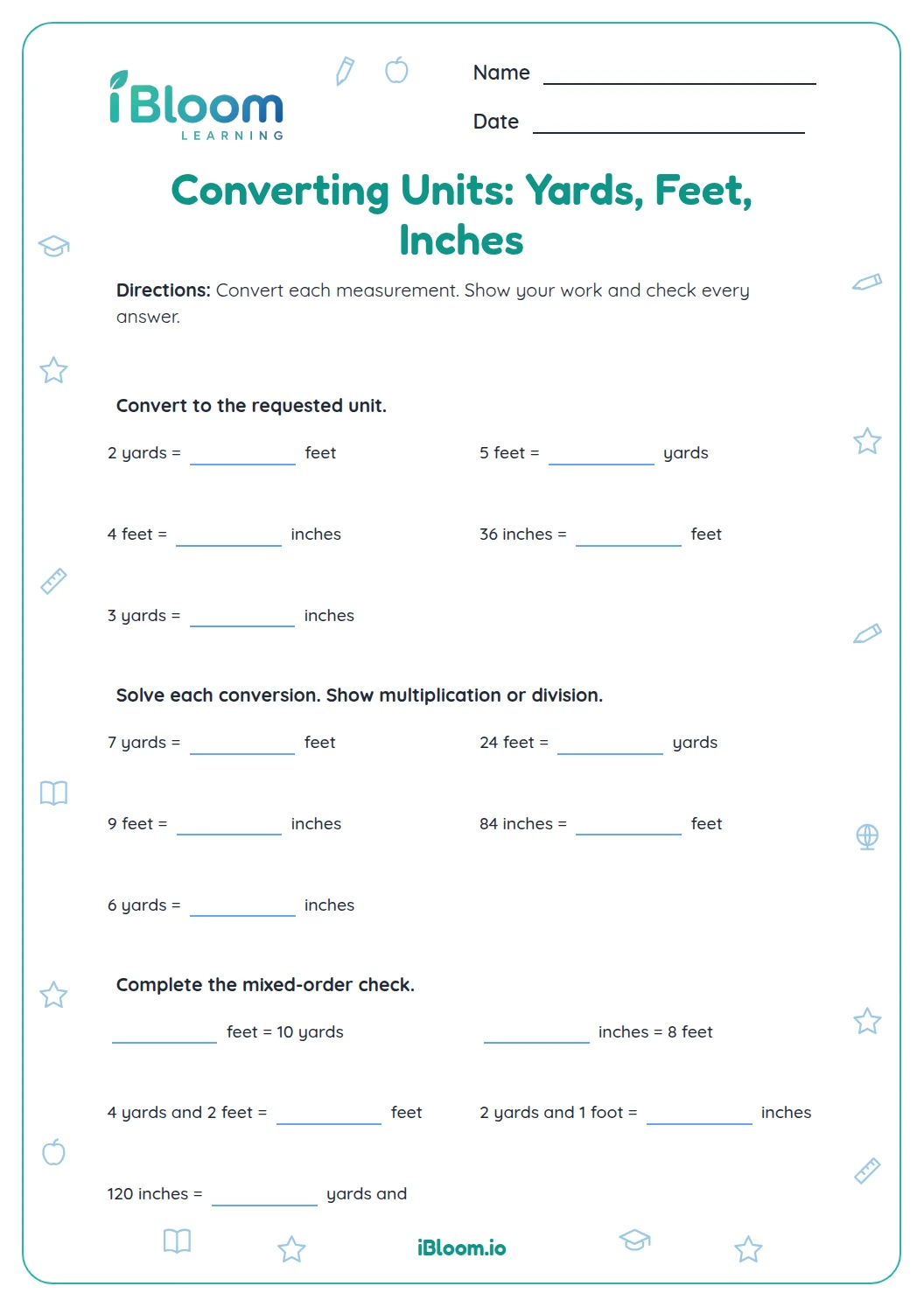
Convert each measurement to inches using 12 inches per foot and 36 inches per yard, then compare.
What is on the worksheet?
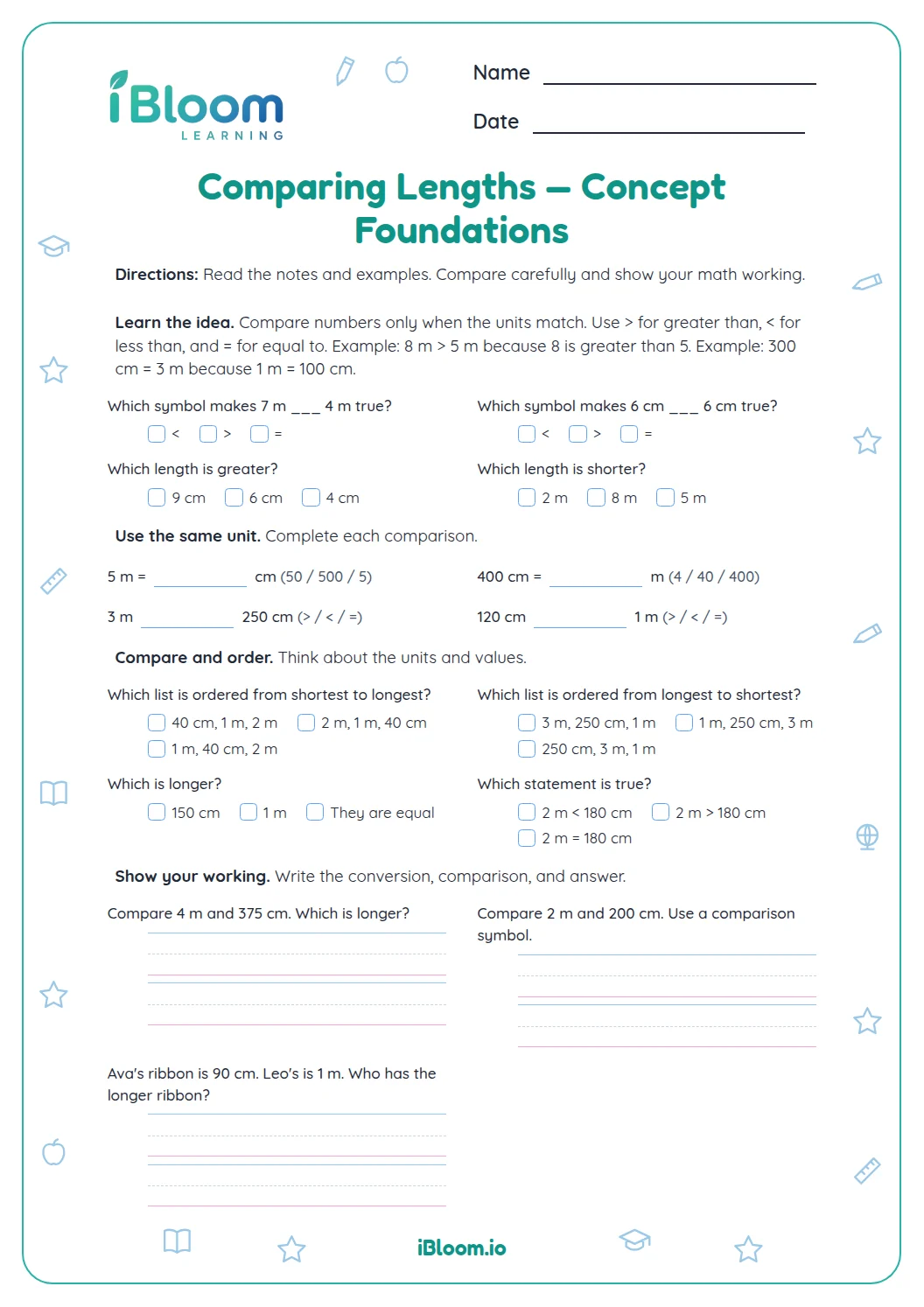
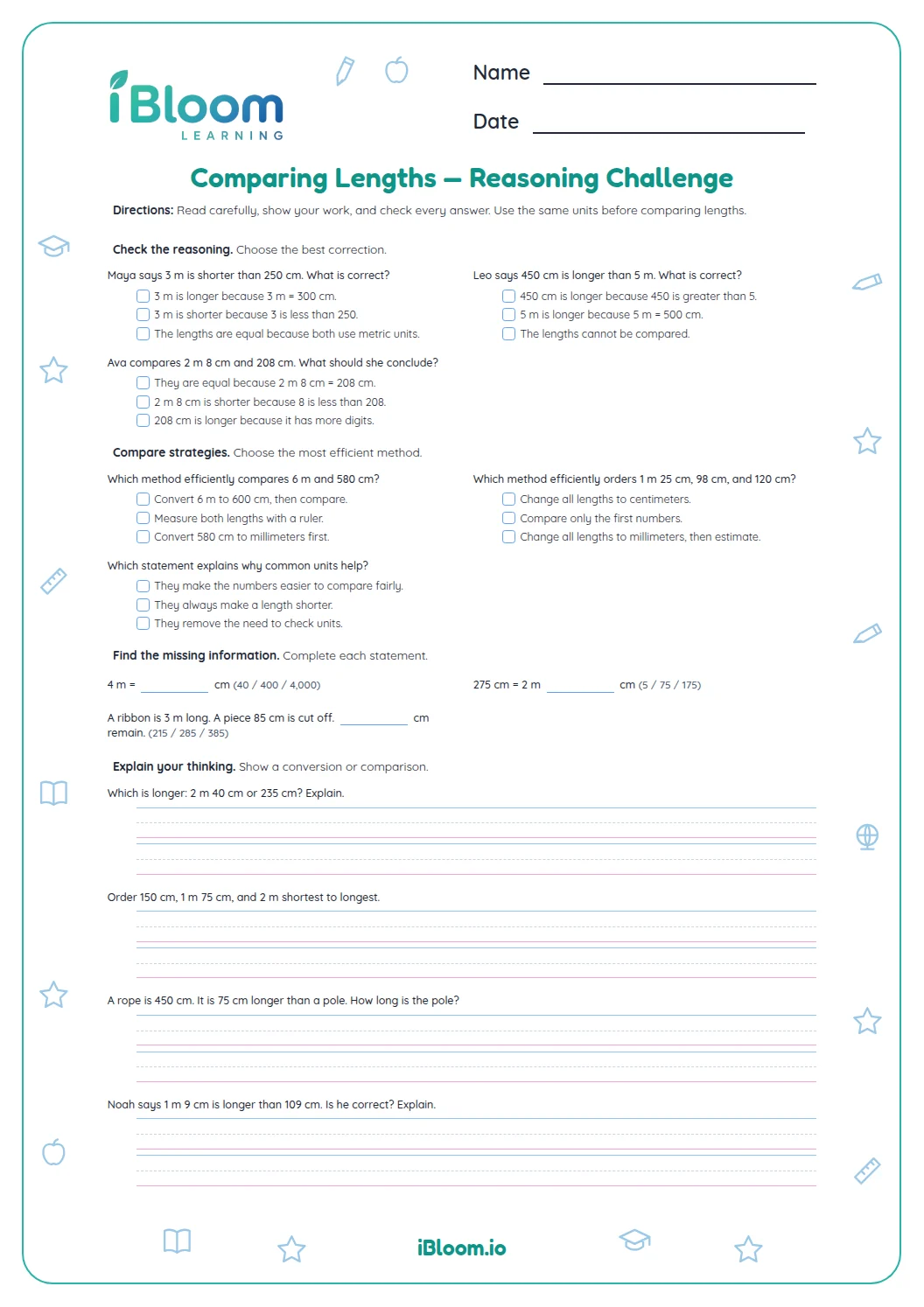
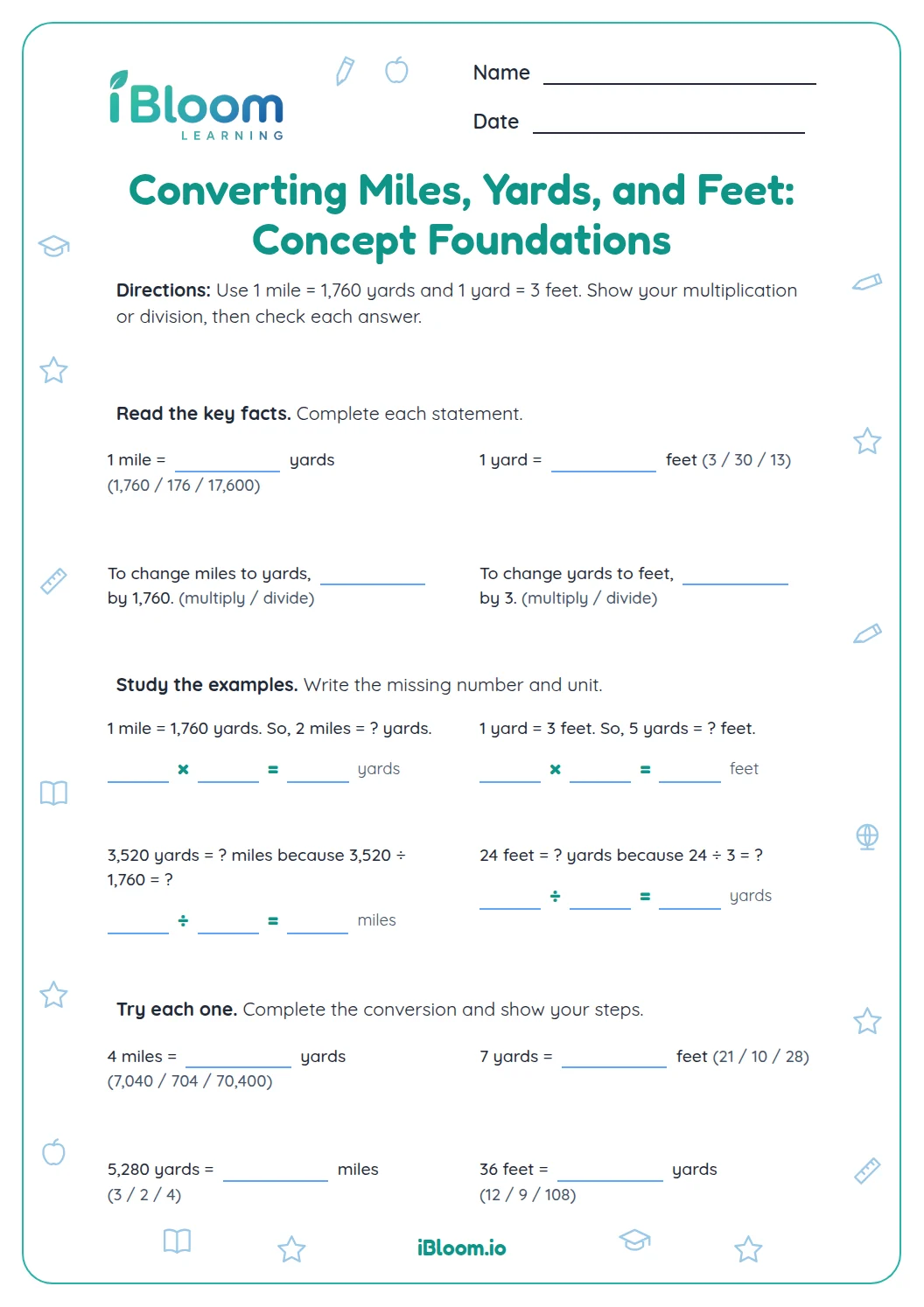
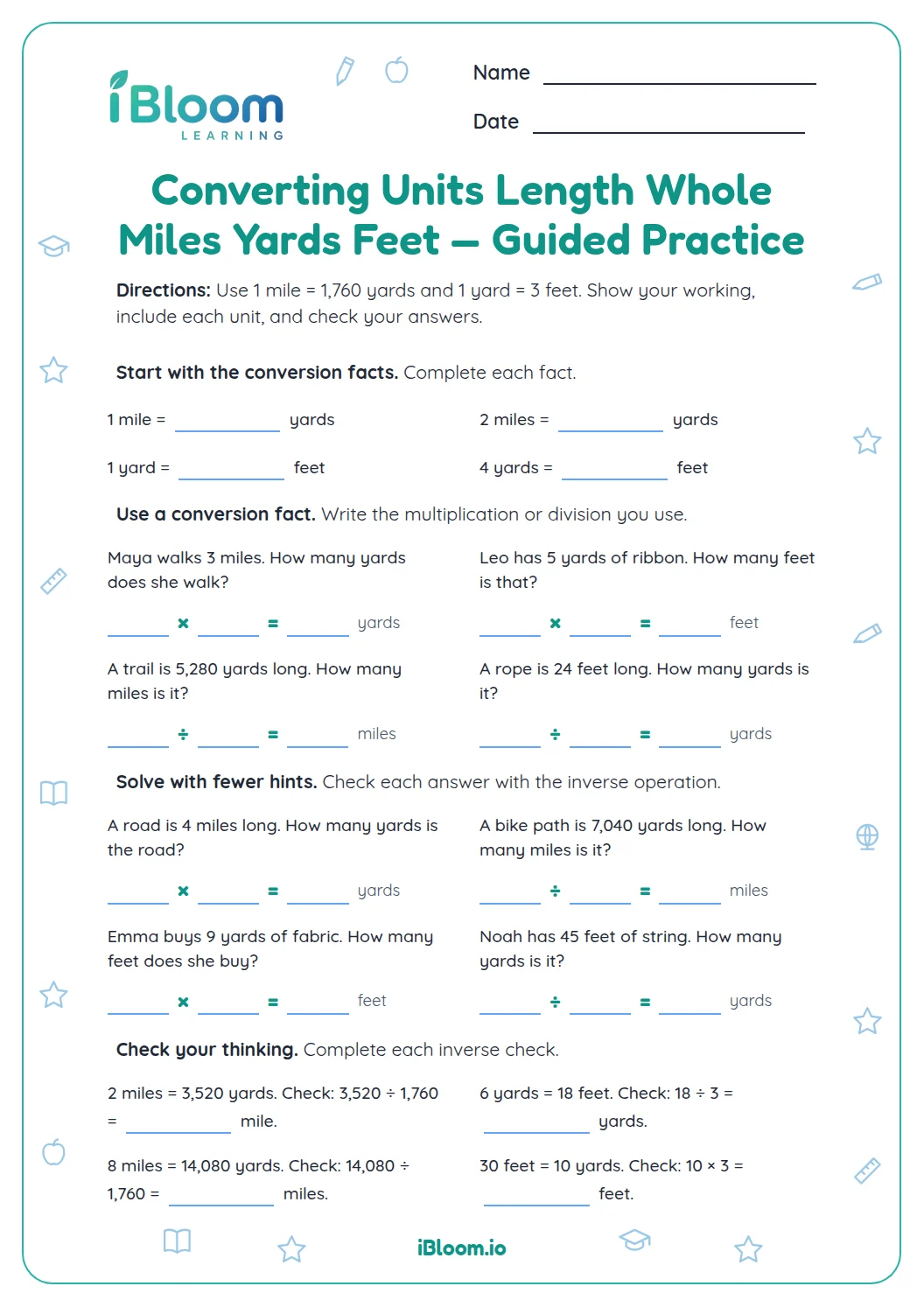
Two model comparisons lead into twelve short real-world comparisons involving customary unit conversions.
How to use this worksheet
- 1Circle or underline the units in each pair.
- 2Choose one unit to use for both lengths.
- 3Use 12 inches per foot and 3 feet per yard.
- 4Convert mixed lengths by multiplying and adding.
- 5Write the comparison symbol only after checking both values.
- 6Use the answer key to locate any conversion step to revisit.
Common mistakes and quick fixes
The mistake
Comparing the numerals before the units.
The fix
Rename both measures in the same unit first.
The mistake
Using 3 inches for a foot.
The fix
Recall that 1 foot equals 12 inches.
The mistake
Forgetting to add leftover inches.
The fix
After converting feet, add the remaining inches to the total.
Common Core alignment
Convert customary length units to compare measurements.
On this sheet: The problems rename feet and yards as inches or feet before comparing lengths.
Show the official wordingHide the official wording
Know relative sizes of measurement units within one system of units including km, m, cm; kg, g; lb, oz.; l, ml; hr, min, sec. Within a single system of measurement, express measurements in a larger unit in terms of a smaller unit. Record measurement equivalents in a two-column table. For example, know that 1 ft is 12 times as long as 1 in. Express the length of a 4 ft snake as 48 in. Generate a conversion table for feet and inches listing the number pairs (1, 12), (2, 24), (3, 36), ...
What to practice next
Make more practice
Further reading
Questions parents and teachers ask
What models are included on this worksheet?
The first two questions include drawings of ribbon lengths along inch rulers. Students compare the marked lengths visually, then move to real-world comparisons that require converting customary units. The drawings include labeled points on the same scale, so the farther-right point names the greater length.
How do you solve the later length comparisons?
Convert both measurements to inches using 12 inches per foot and 36 inches per yard. Add any extra inches in a mixed length, then compare the totals to decide which is longer. Convert yards and feet before comparing; add any leftover inches to the converted total.
How many questions are included?
There are 14 questions across two worksheet pages, followed by a separate answer key. The first two use ruler drawings, and the rest apply customary-unit conversions to contextual lengths. Students first read the two model questions, then use the same comparison idea with mixed units and real-world examples.
Why are the units converted to inches?
The numerals alone do not tell which measurement is longer when units differ. Converting each length to inches gives both amounts the same unit, so the comparison is clear and can be checked with multiplication and addition. Multiplication converts the larger units, and addition includes any extra inches in a mixed measurement.