

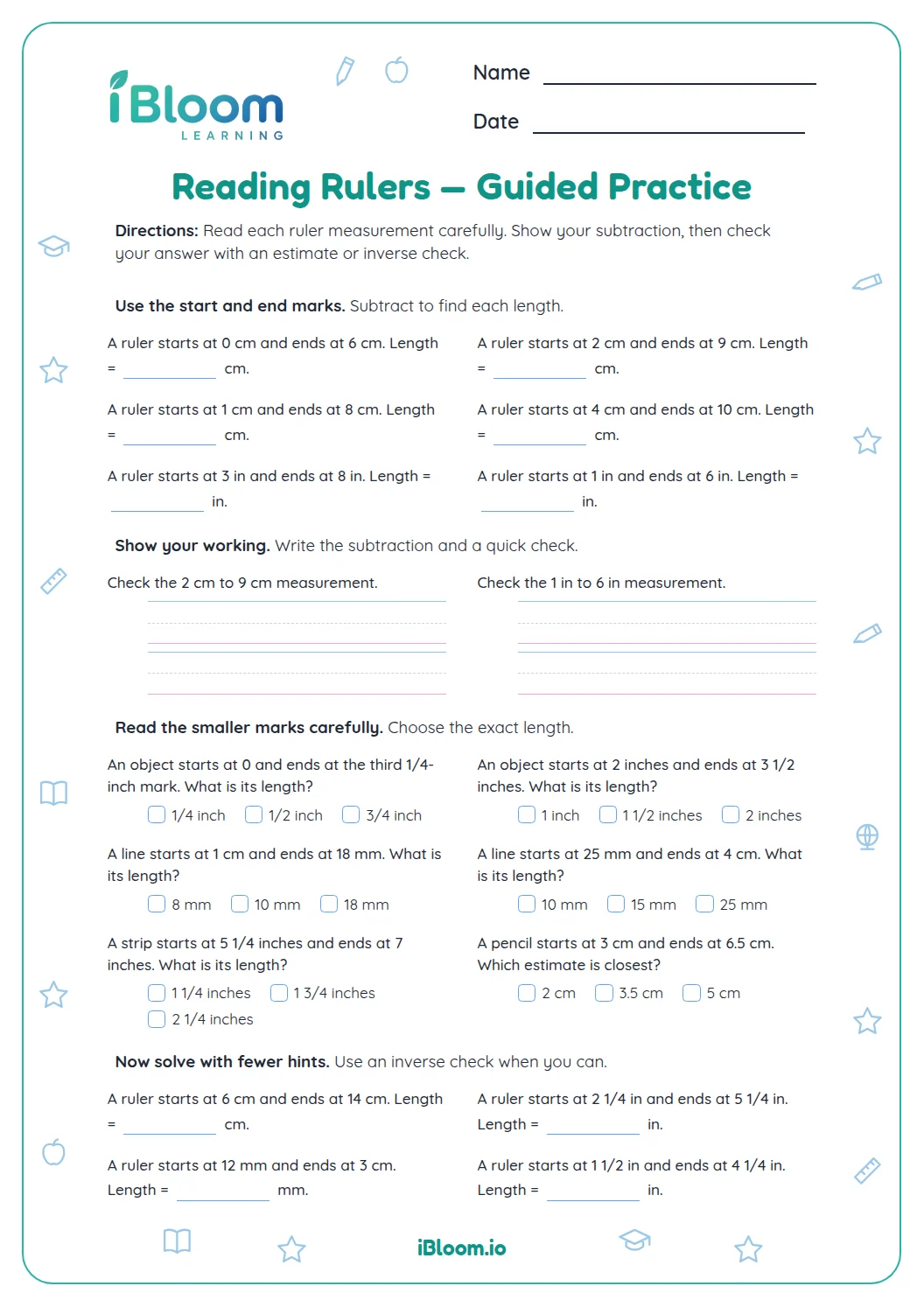

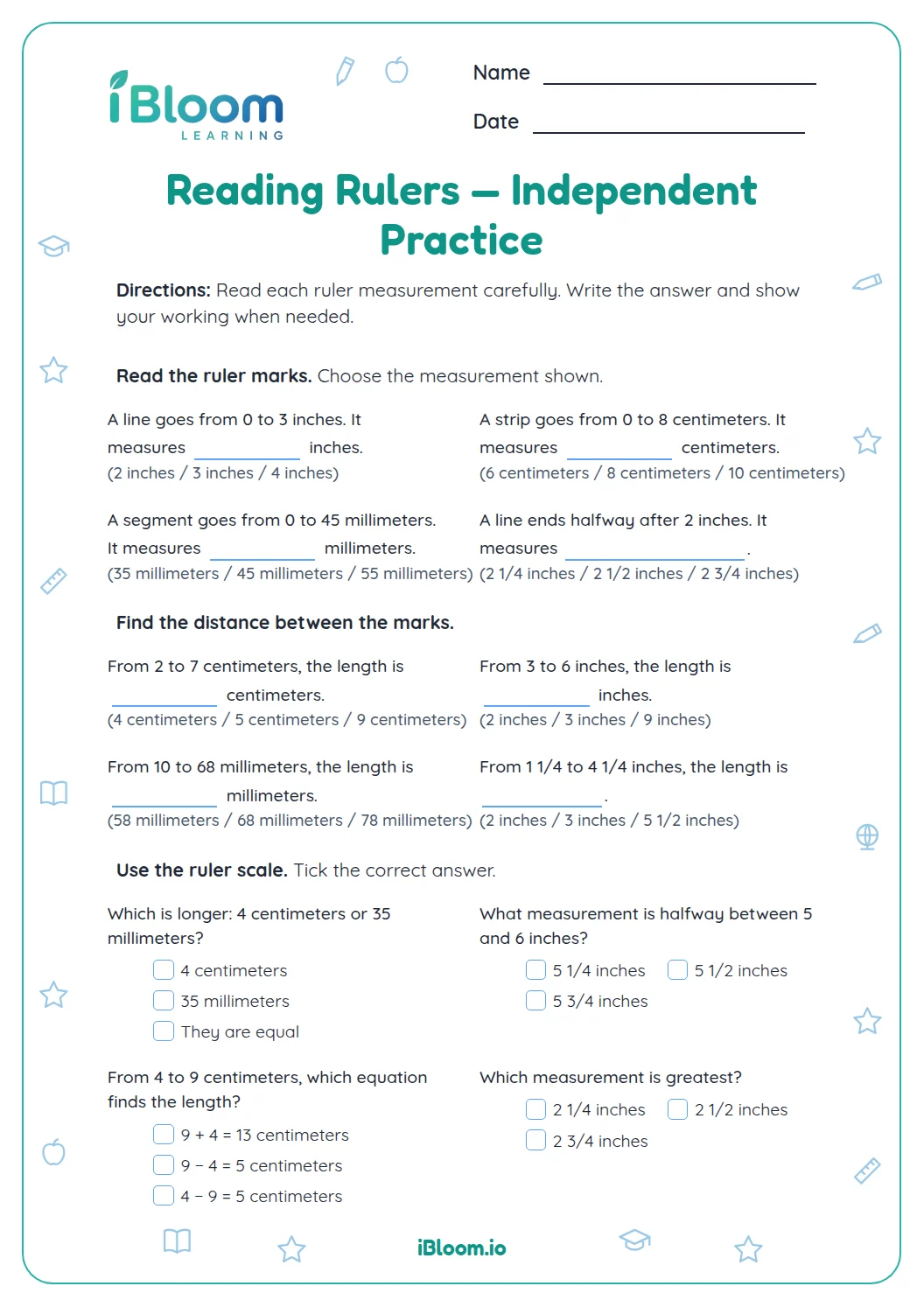
About this worksheet
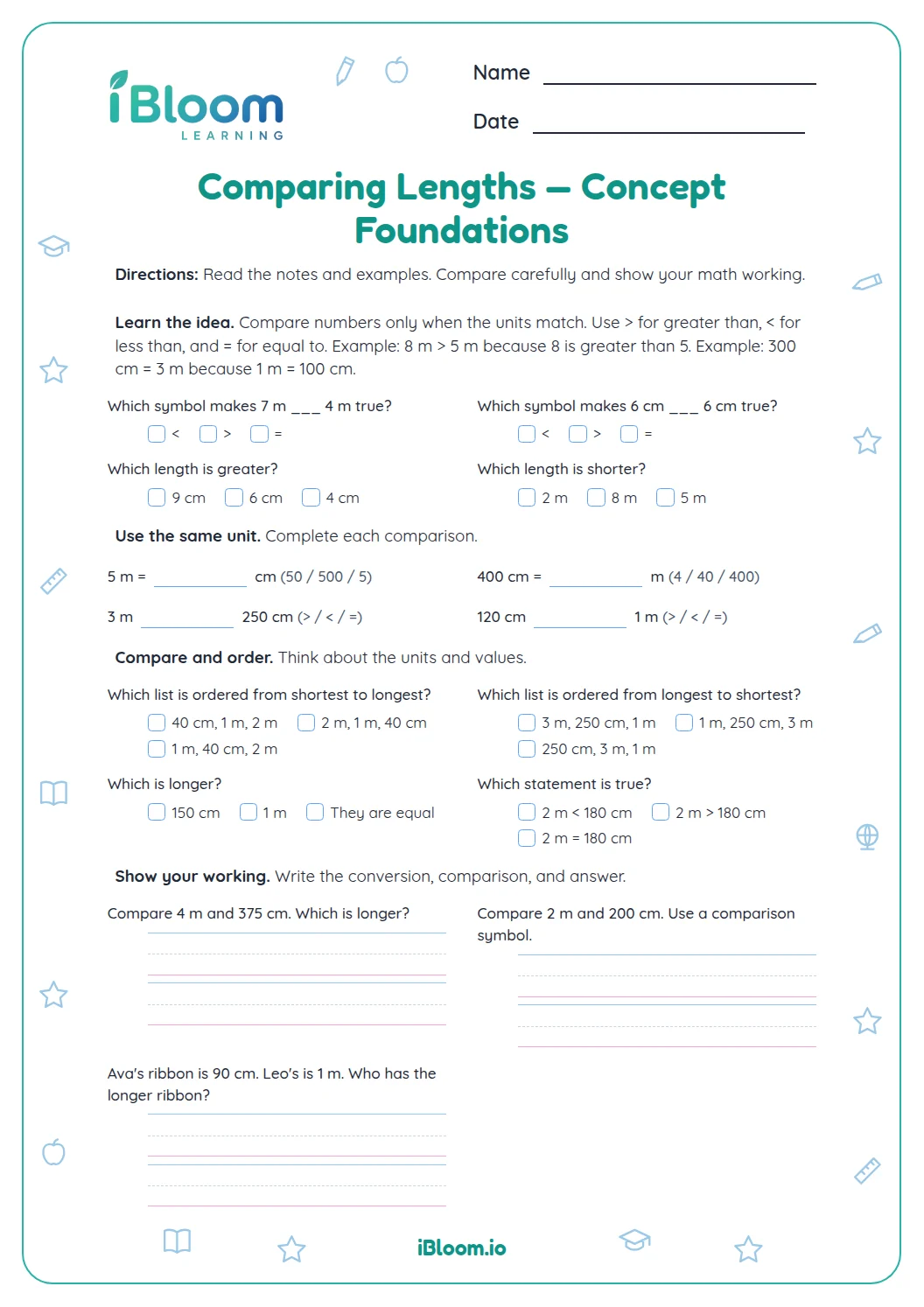
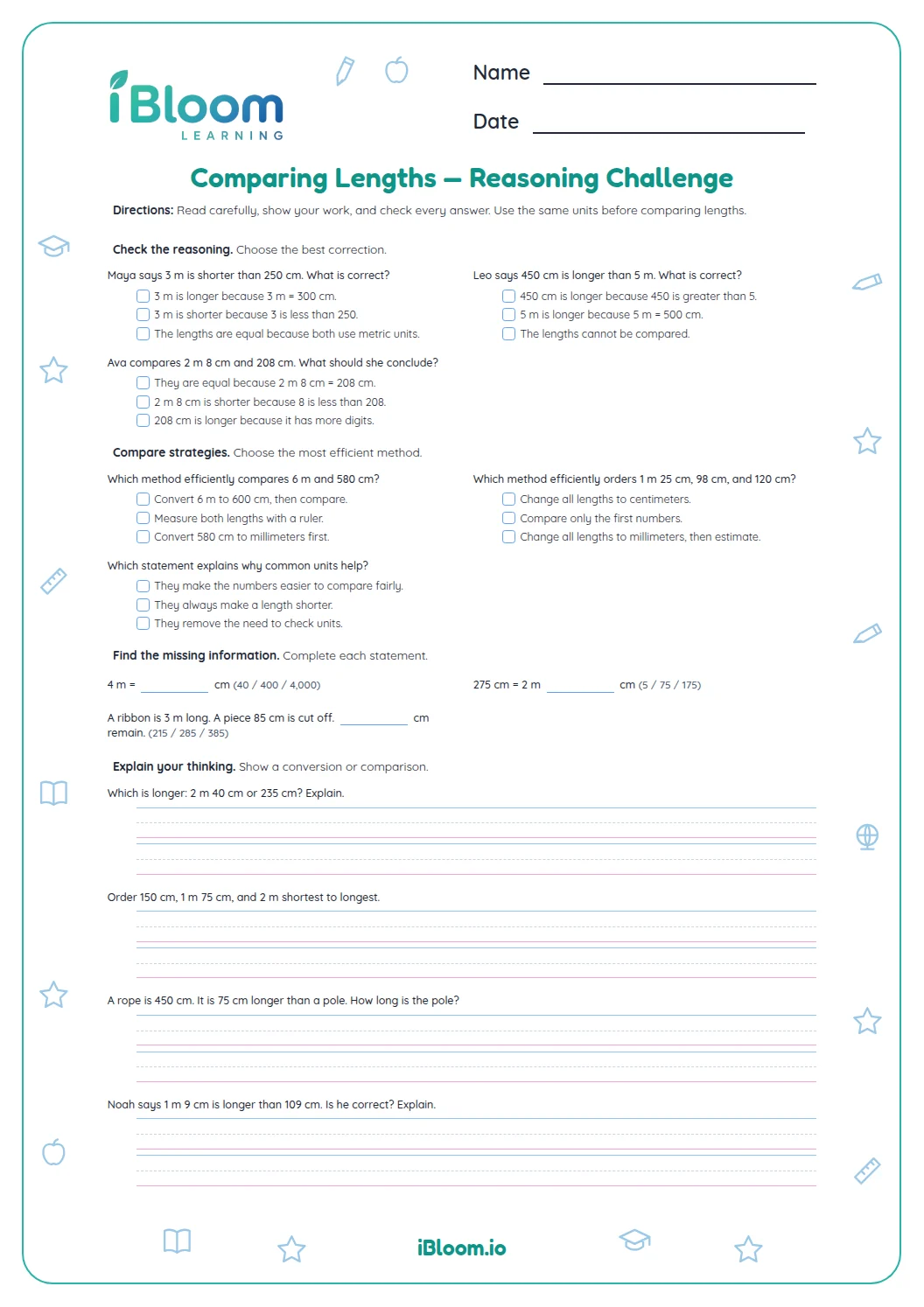
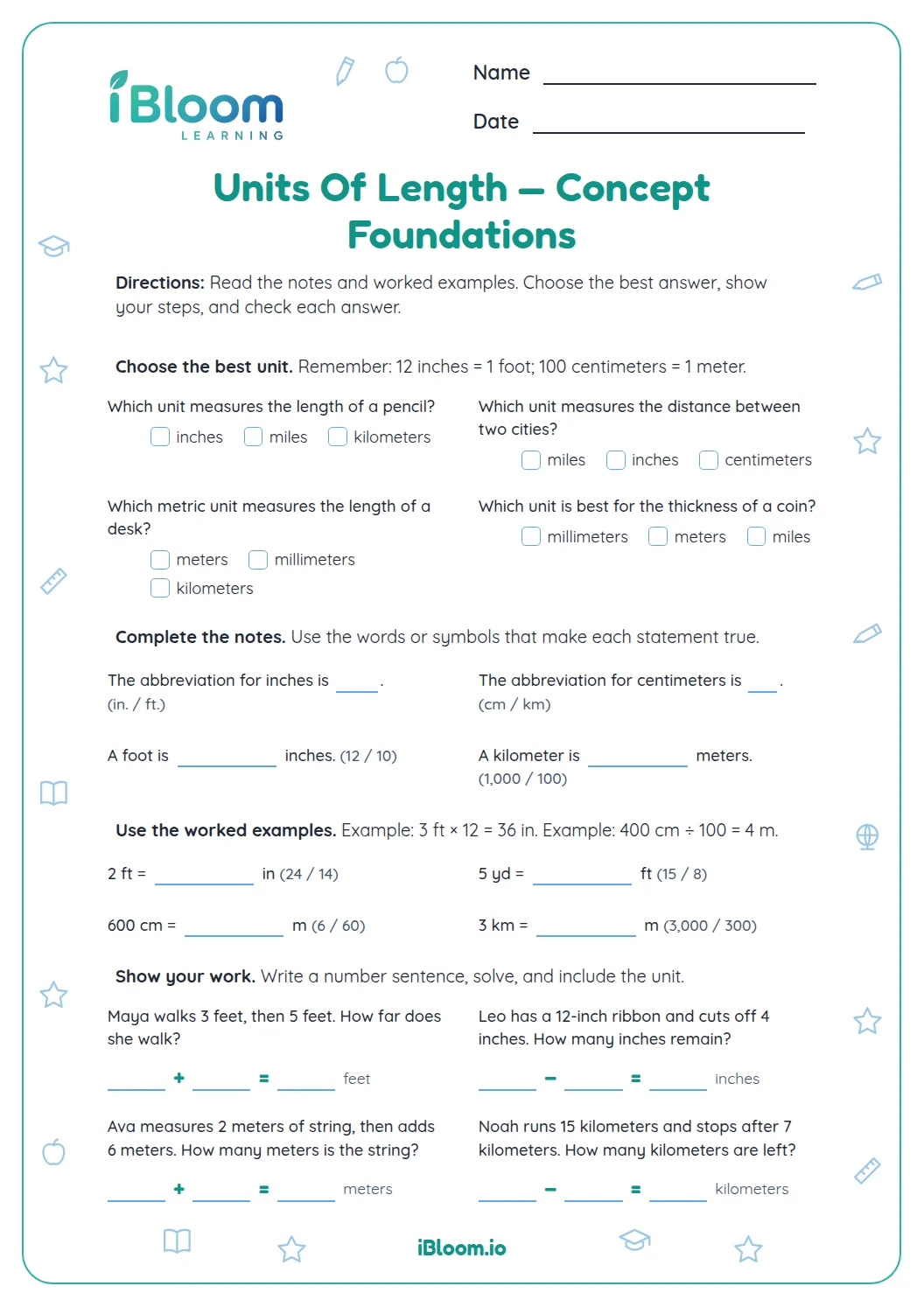
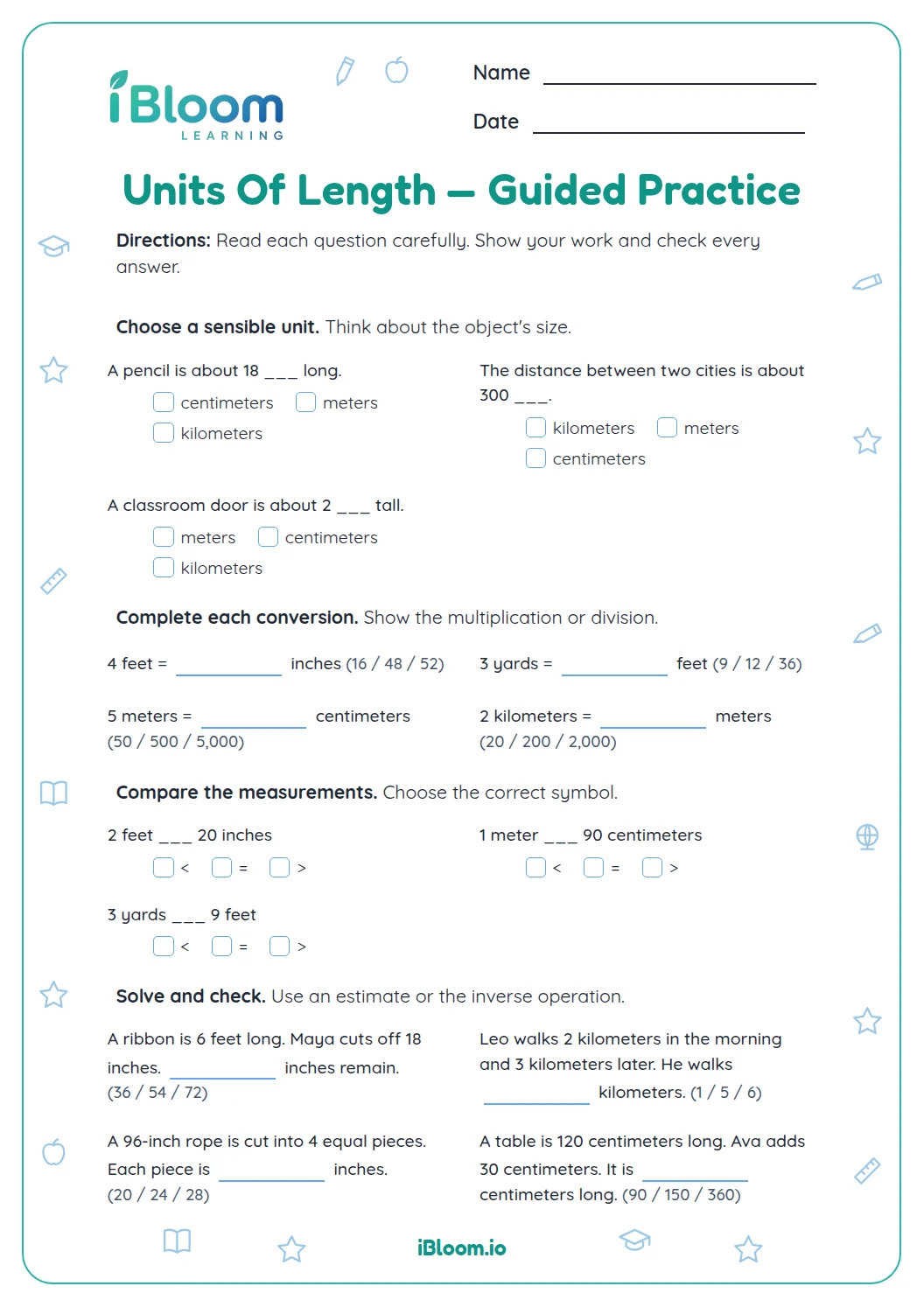
This free printable Grade 4 measurement worksheet helps students compare lengths by expressing them in a shared unit. It includes five compare-and-order choices, five conversion blanks, and five word problems that ask for a difference in length. The questions use metric units and feet/inches, with mixed-unit measurements that reward careful place-value work. It practices CCSS 4.MD.A.1 and includes a separate answer key.
Aligned to 4.MD.A.1
What is on this comparing lengths worksheet?
Part A compares and orders lengths, including equivalent mixed-unit forms. Part B converts lengths within metric or customary units. Part C uses subtraction to solve length-difference problems.
The numbers are chosen so the comparison or difference can be checked with a whole-number conversion. Show the conversion before subtracting whenever the units differ.
- Part A: compare or order five lengths.
- Part B: complete five unit conversions.
- Part C: solve five length-difference problems with units.
Why convert lengths before comparing?
Centimeters and meters name different unit sizes, so compare after converting both measurements into one unit. For example, 3 m 20 cm is 320 cm. Since 320 is greater than 305, 3 m 20 cm is longer.
How do you find how much longer one length is?
Write both lengths in the same unit, then subtract the shorter from the longer. Keep the unit with the result. If the measurement is mixed, convert it before subtracting to avoid subtracting centimeters from meters.
- 1A ribbon is 86 cm long. A string is 59 cm long.
- 2Subtract: 86 − 59 = 27.
- 3The ribbon is 27 cm longer.
How can you check a comparison?
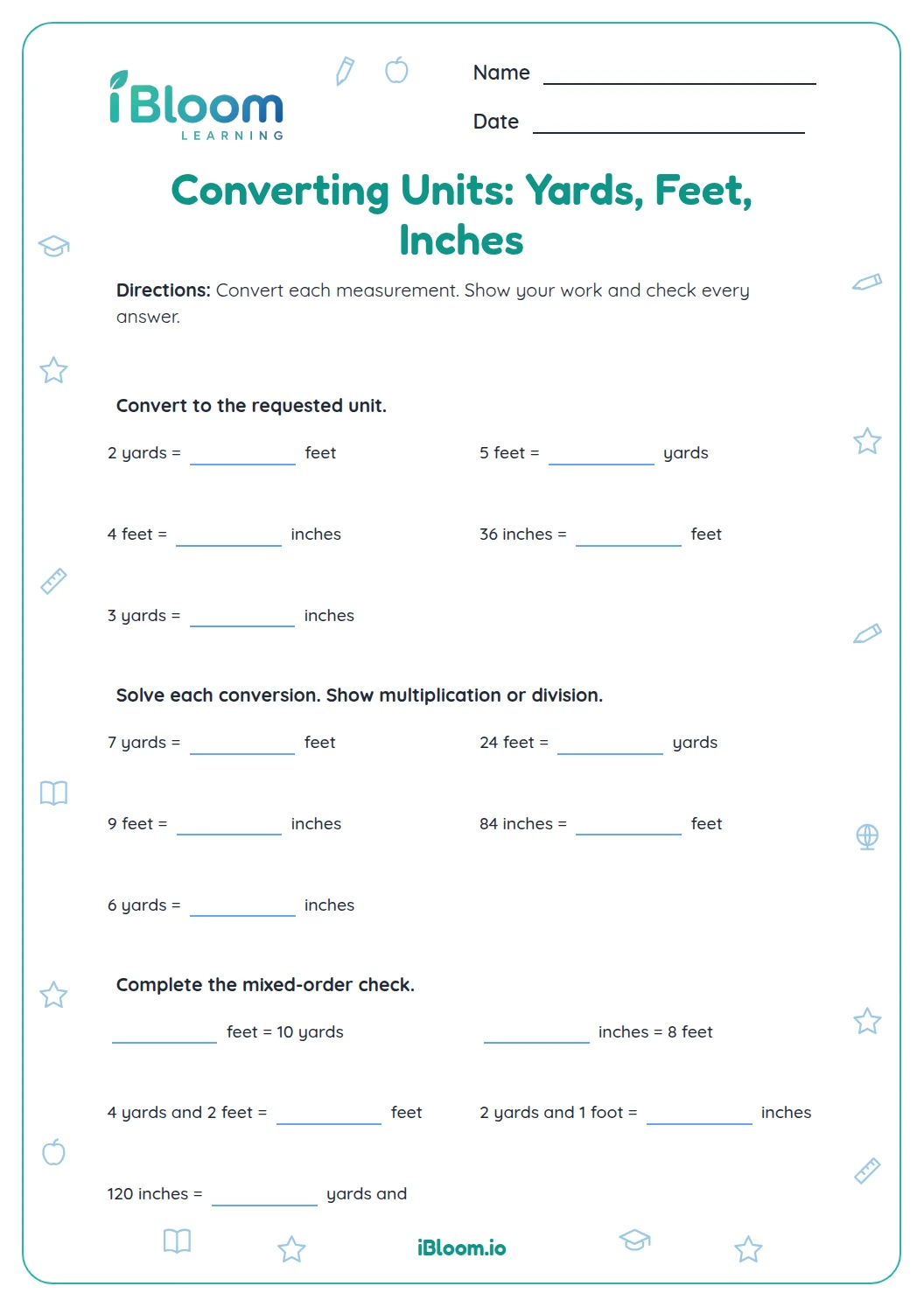
Convert back or use an equivalent measurement to check. For customary lengths, 1 foot equals 12 inches, so 5 ft is 60 in. Compare 60 in and 58 in only after converting both to inches.
How to use this worksheet
- 1Circle or underline the units in each measurement.
- 2Convert both lengths to one unit when a comparison mixes units.
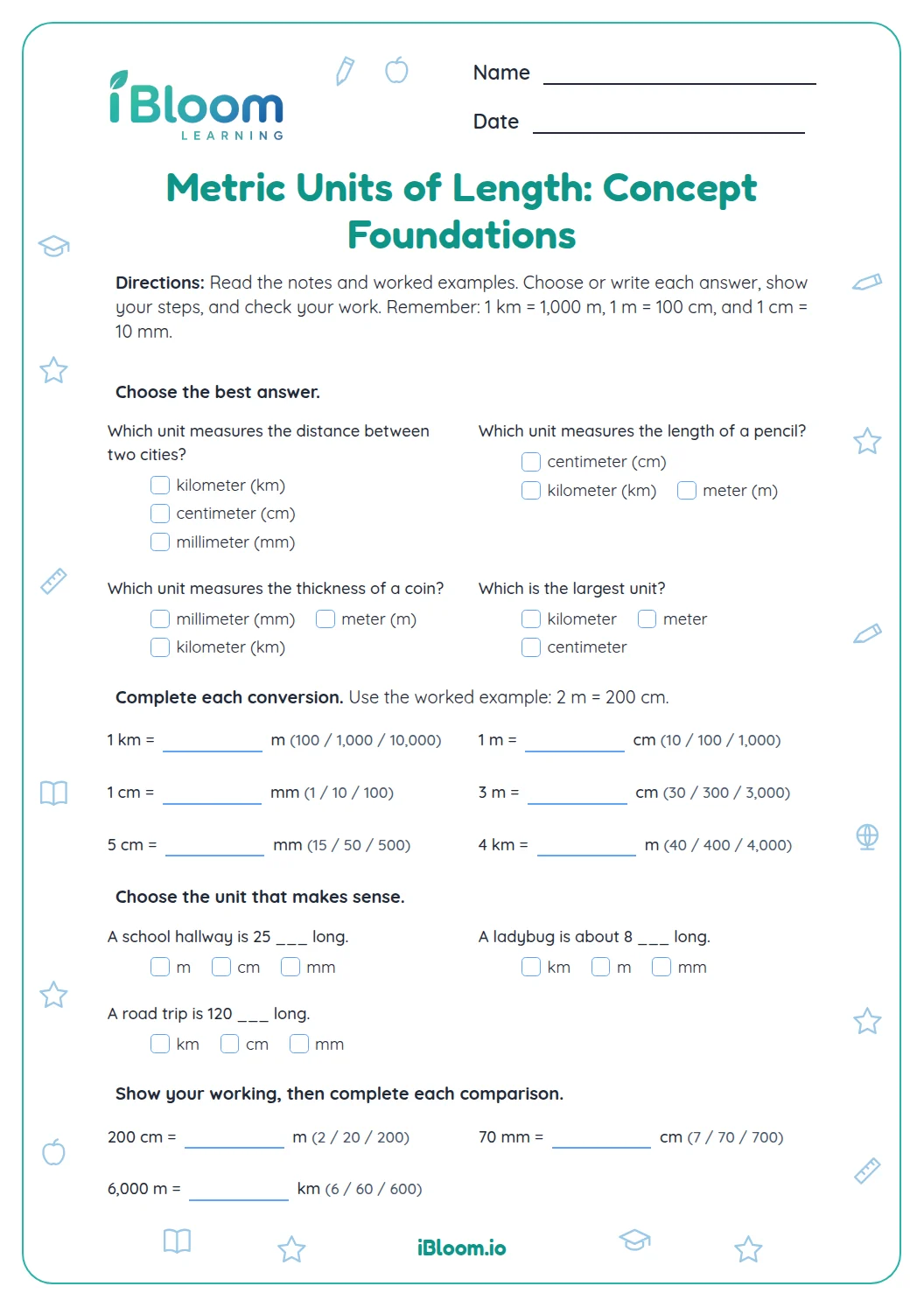
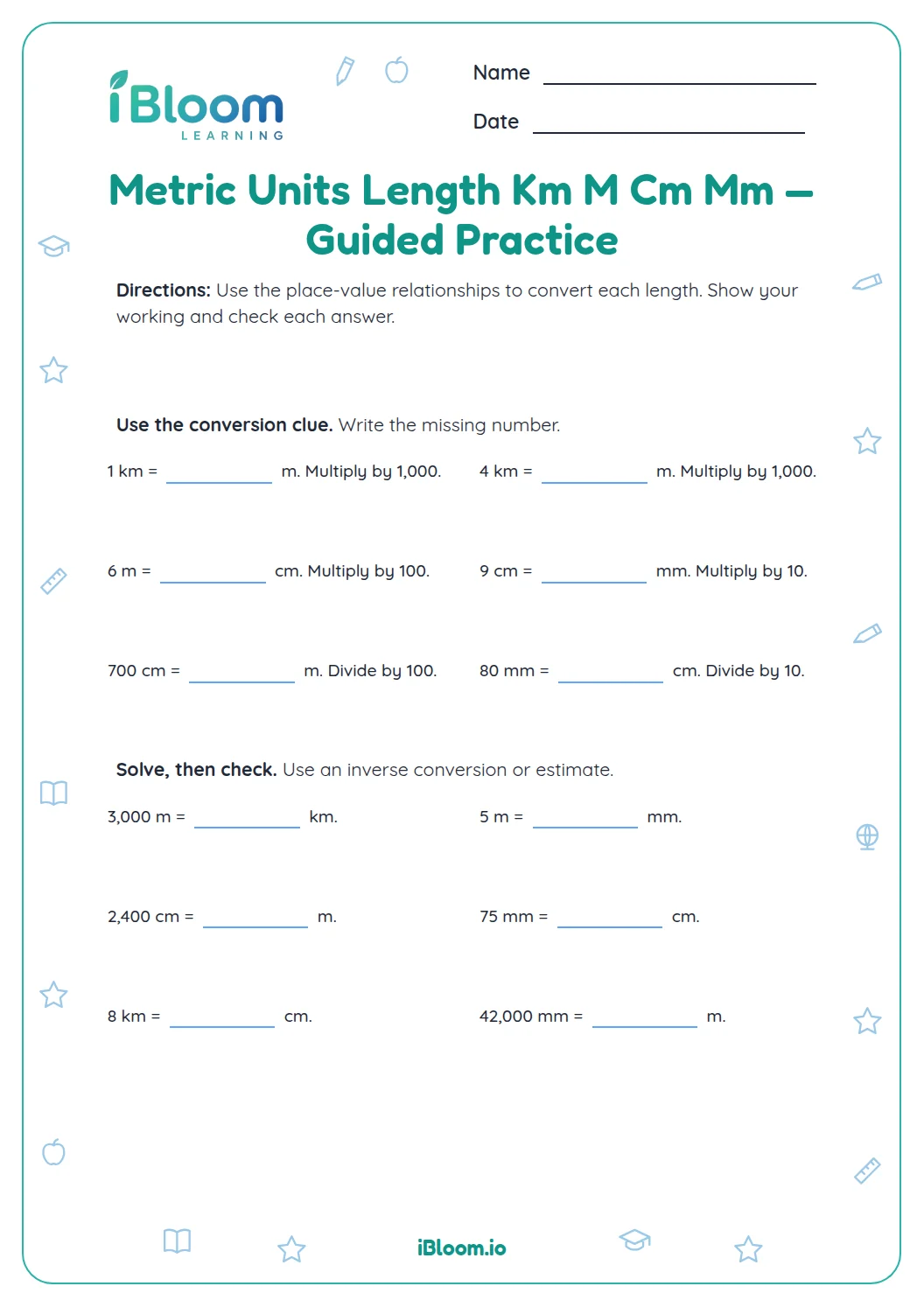
- 3In Part B, use the correct relationship, such as 1 m = 100 cm or 1 ft = 12 in.
- 4In Part C, convert first, subtract, and label the answer.
- 5Check the answer key and verify each computation with the same unit.
Common slips and fixes
The mistake
Comparing the written numbers before converting.
The fix
Rewrite both lengths in the same unit before deciding which is greater.
The mistake
Mixing meters and centimeters during subtraction.
The fix
Convert the full measurement to centimeters first, then subtract.
The mistake
Giving a number without a unit.
The fix
Include cm, m, ft, or in to show what the difference measures.
Common Core alignment
This worksheet practices Grade 4 measurement conversions and comparisons within unit systems.
Convert lengths within one system and compare after expressing them in a common unit.
On this sheet: Questions compare metric lengths and customary feet/inches after conversion; multi-step items ask for length differences.
Show the official wordingHide the official wording
Know relative sizes of measurement units within one system of units including km, m, cm; kg, g; lb, oz.; l, ml; hr, min, sec. Within a single system of measurement, express measurements in a larger unit in terms of a smaller unit. Record measurement equivalents in a two-column table. For example, know that 1 ft is 12 times as long as 1 in. Express the length of a 4 ft snake as 48 in. Generate a conversion table for feet and inches listing the number pairs (1, 12), (2, 24), (3, 36), …
What to practice next
Make more practice
Further reading
Questions parents and teachers ask
How do you compare centimeters and meters?
Convert the meters to centimeters or the centimeters to meters so both lengths use the same unit. For instance, 3 m 20 cm equals 320 cm. Then compare 320 cm with the other length. Part A includes this kind of mixed-unit comparison.
How many questions are on this worksheet?
There are 15 questions in three parts: five compare-and-order choices, five conversion blanks, and five word problems. The answer key is separate and includes the converted length differences. Allow about 25 minutes so students can show their conversions and check their units.
What conversion facts are used?
The worksheet uses metric relationships such as 1 m = 100 cm and customary relationships such as 1 ft = 12 in. Each problem stays within one measurement system. Converting both lengths into one unit makes comparisons and subtraction clearer.
Why does the answer need a unit?
A number alone does not show what the difference measures. If the difference between two ribbons is 27 centimeters, write 27 cm. The unit label also helps check that the subtraction used matching measurements. It tells the reader whether the result is centimeters, meters, feet, or inches.
How can a student check a length difference?
Add the difference to the shorter length and see whether it equals the longer length, after converting them into one unit. For 86 cm and 59 cm, 59 + 27 = 86. This check can catch subtraction errors and missing unit conversions.