


About this worksheet
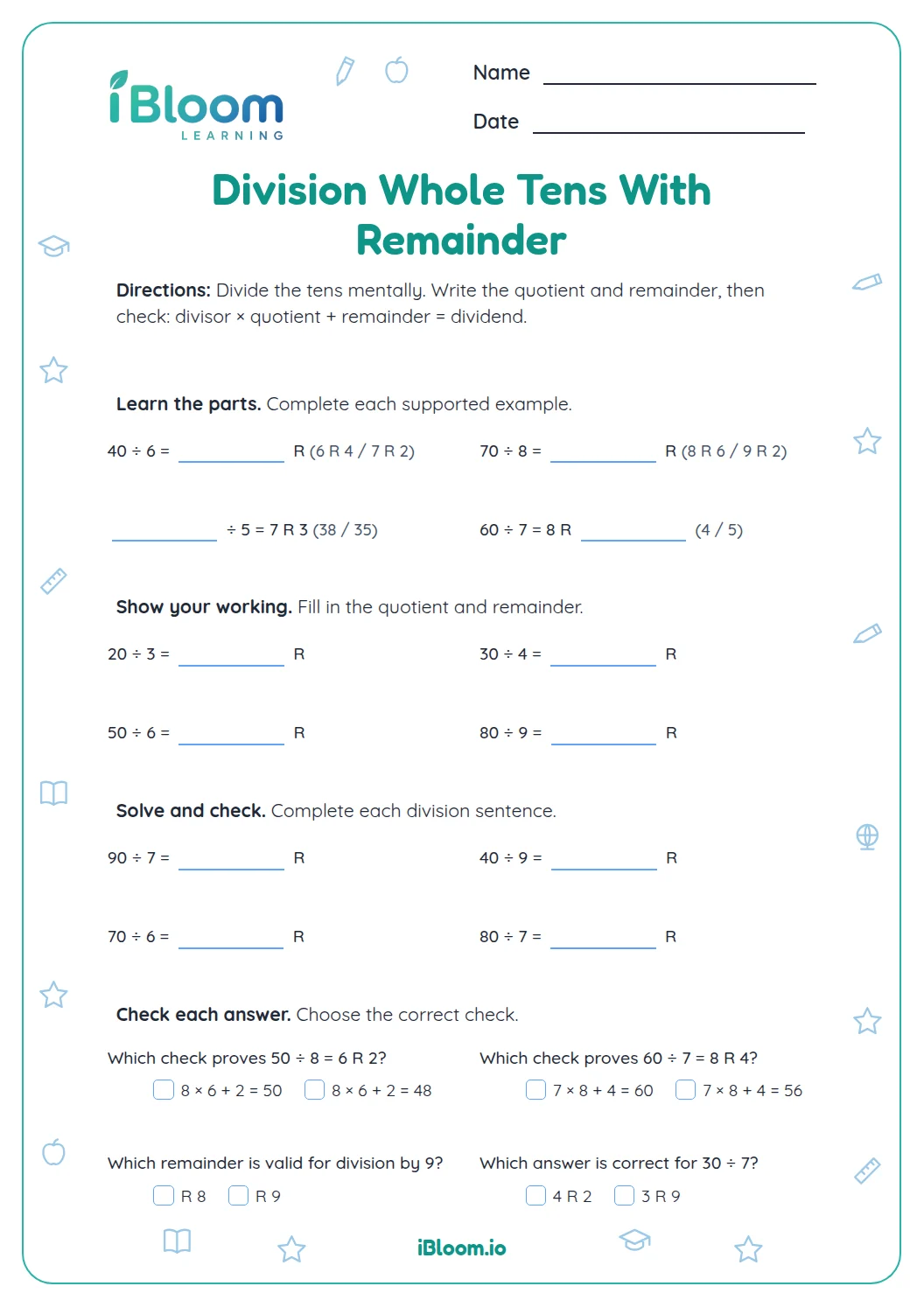
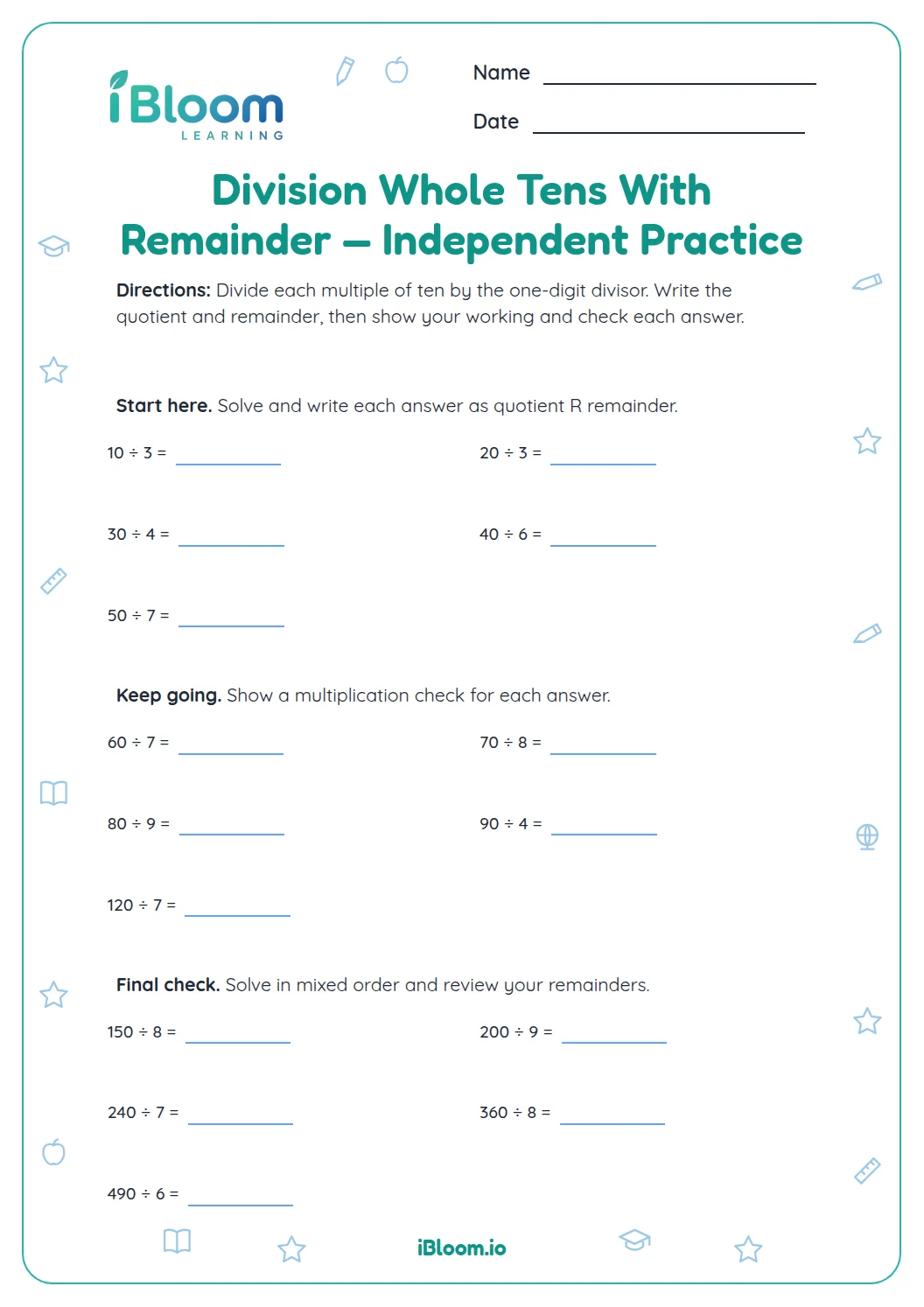
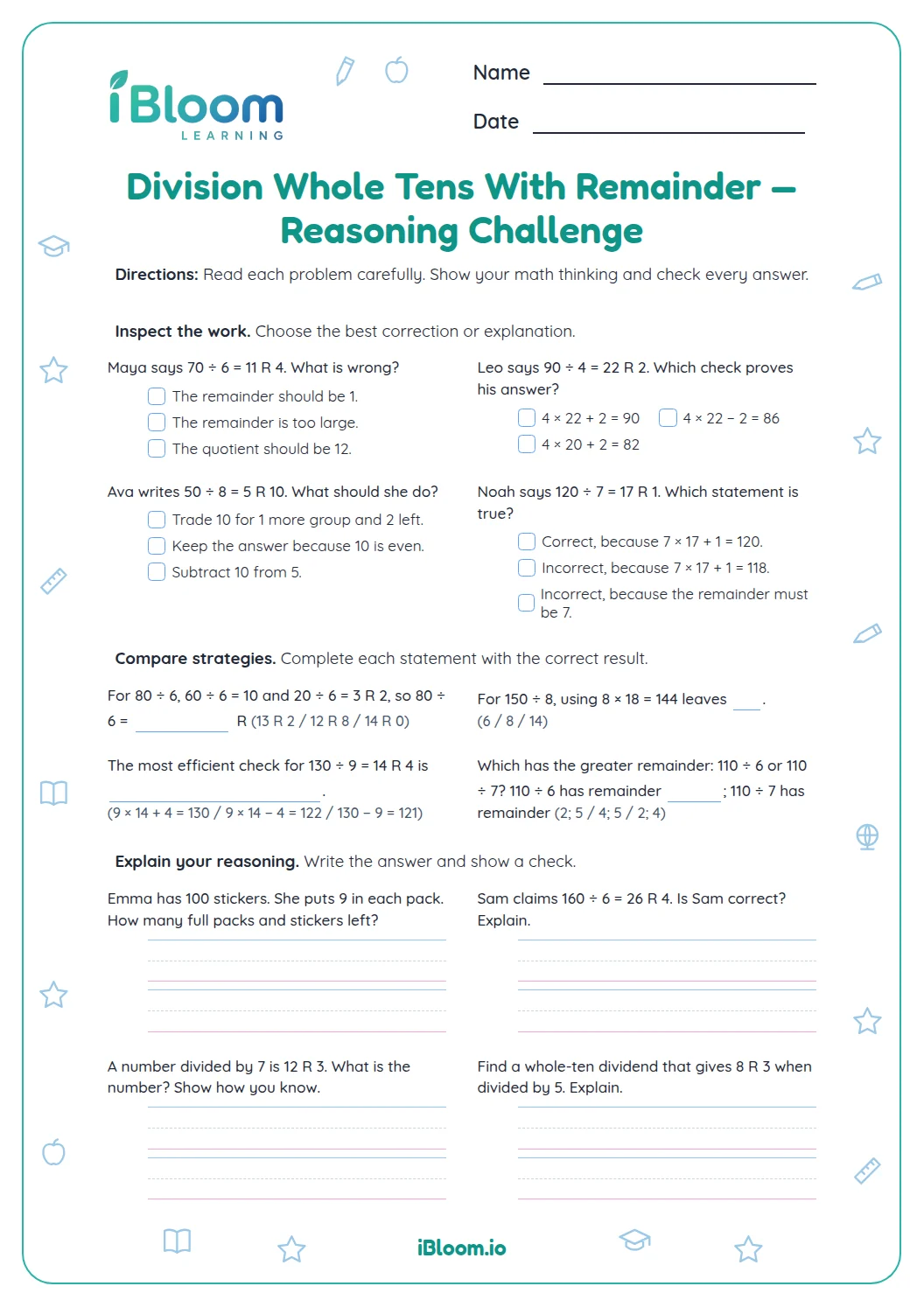
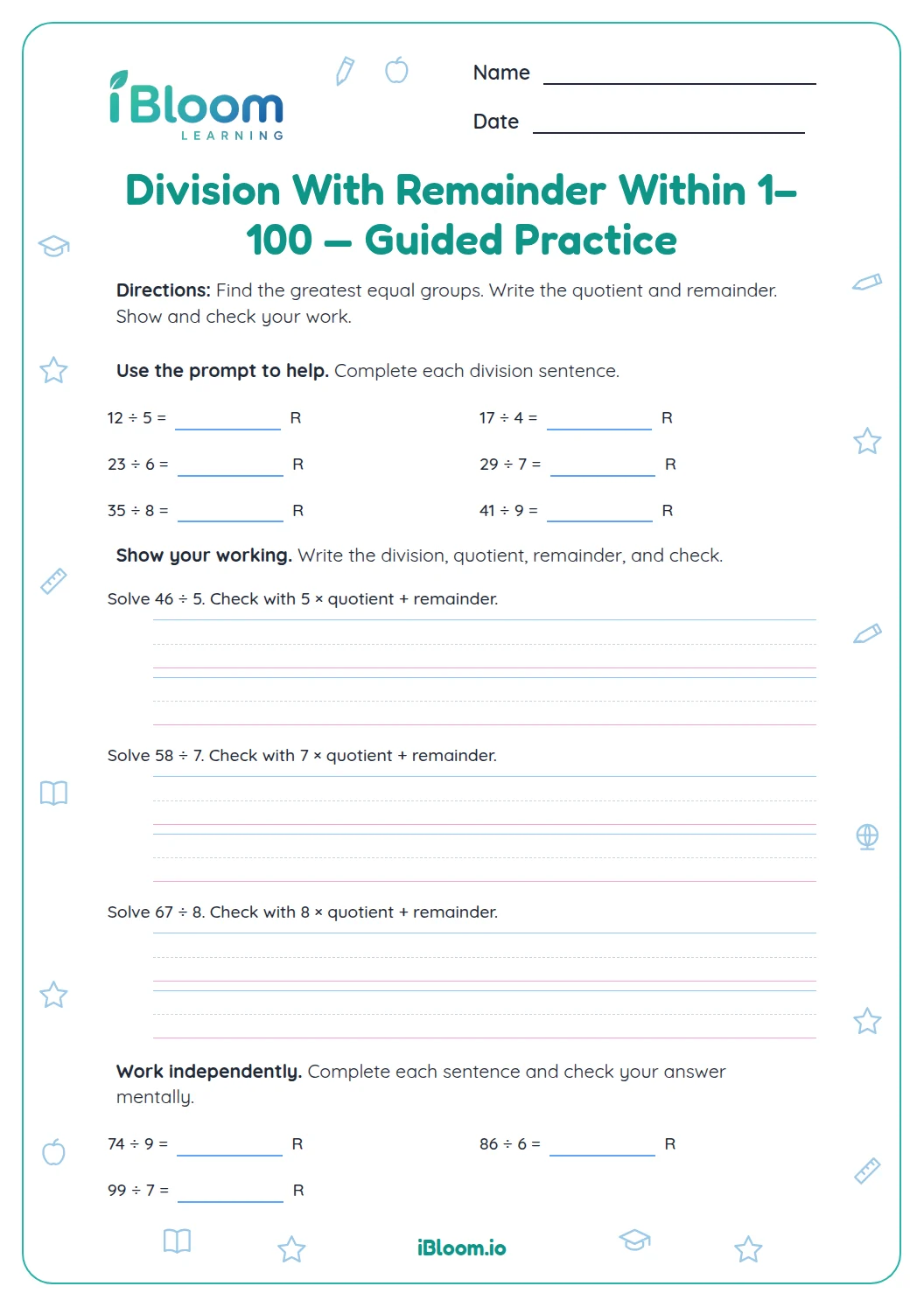
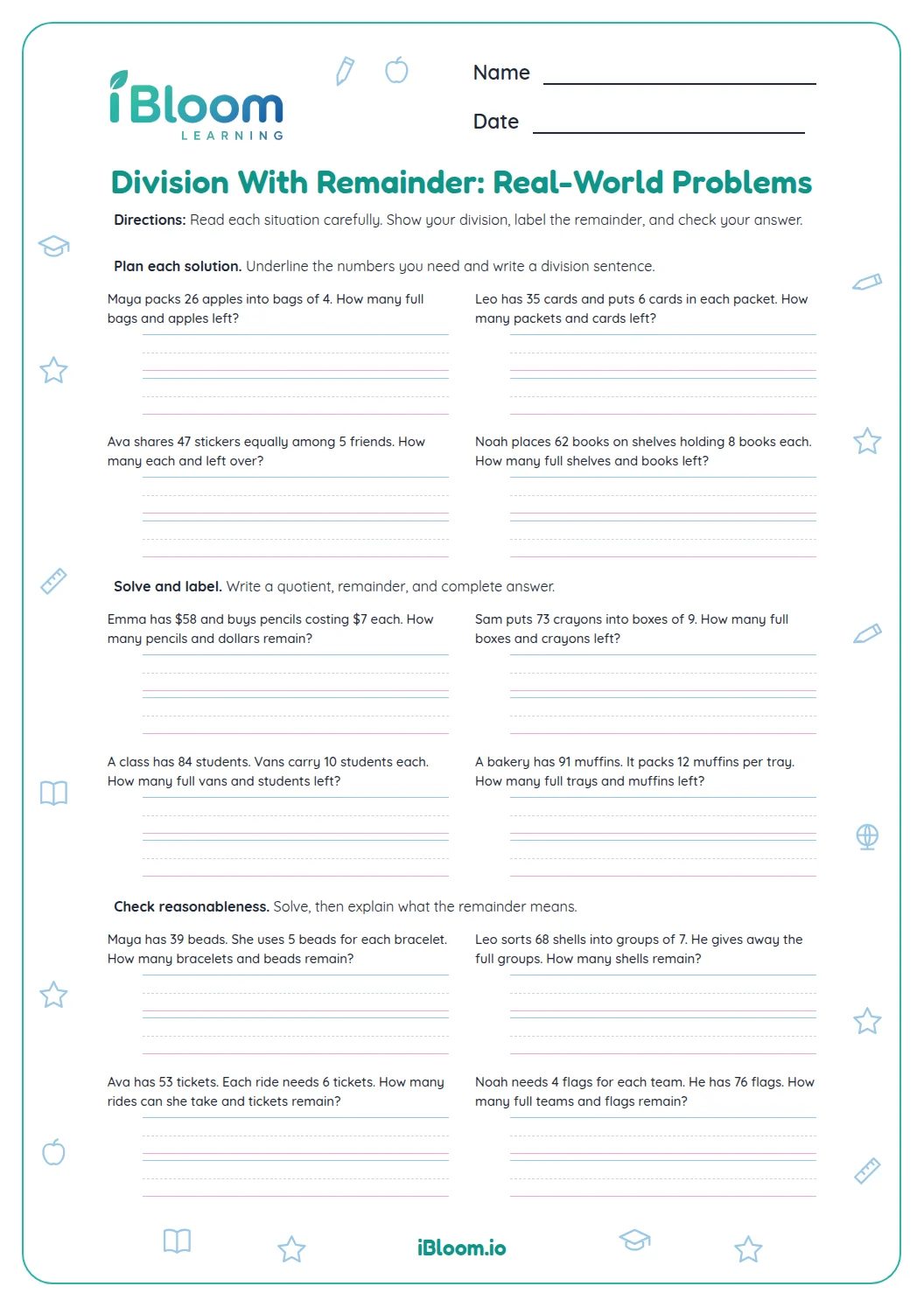
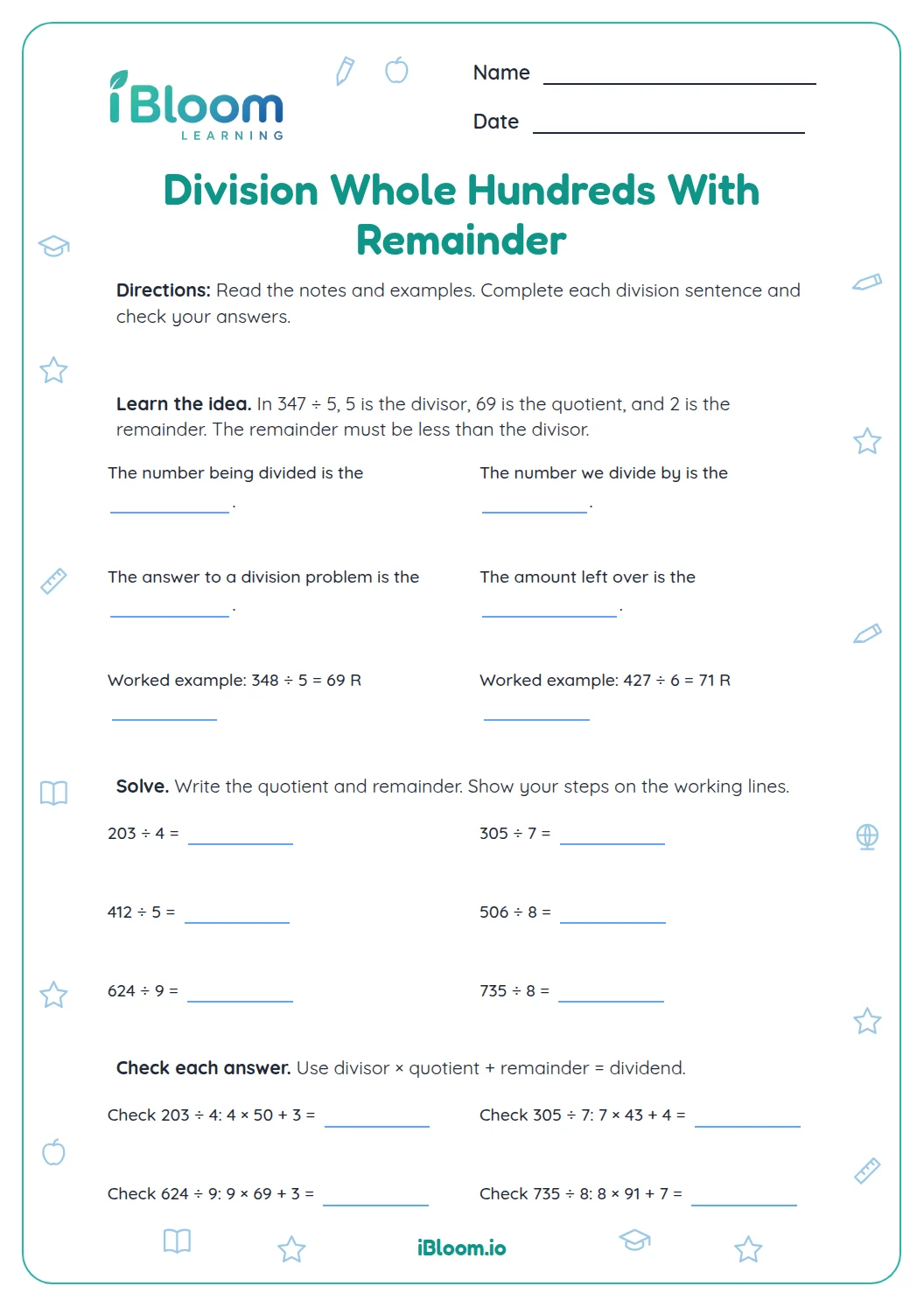
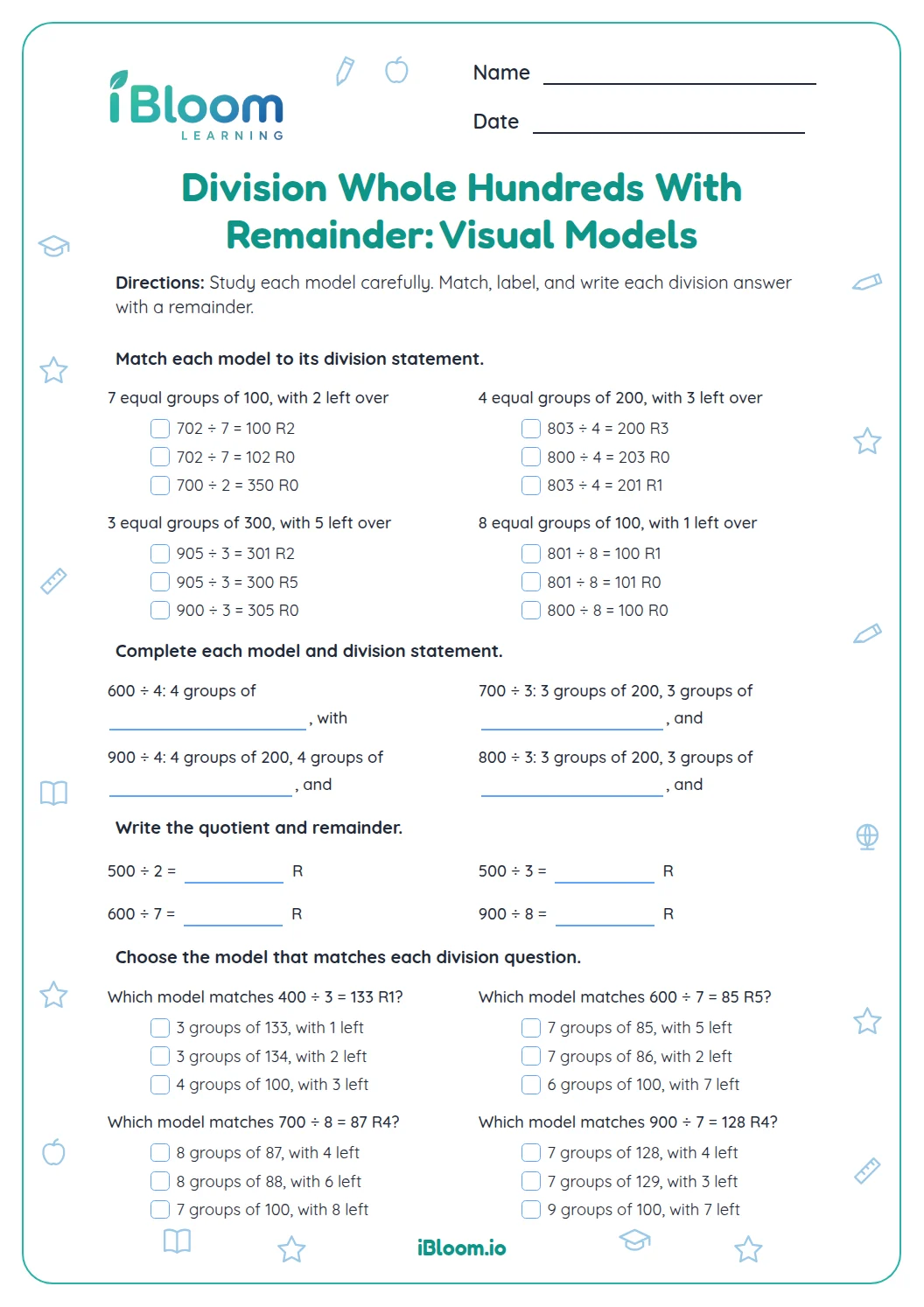
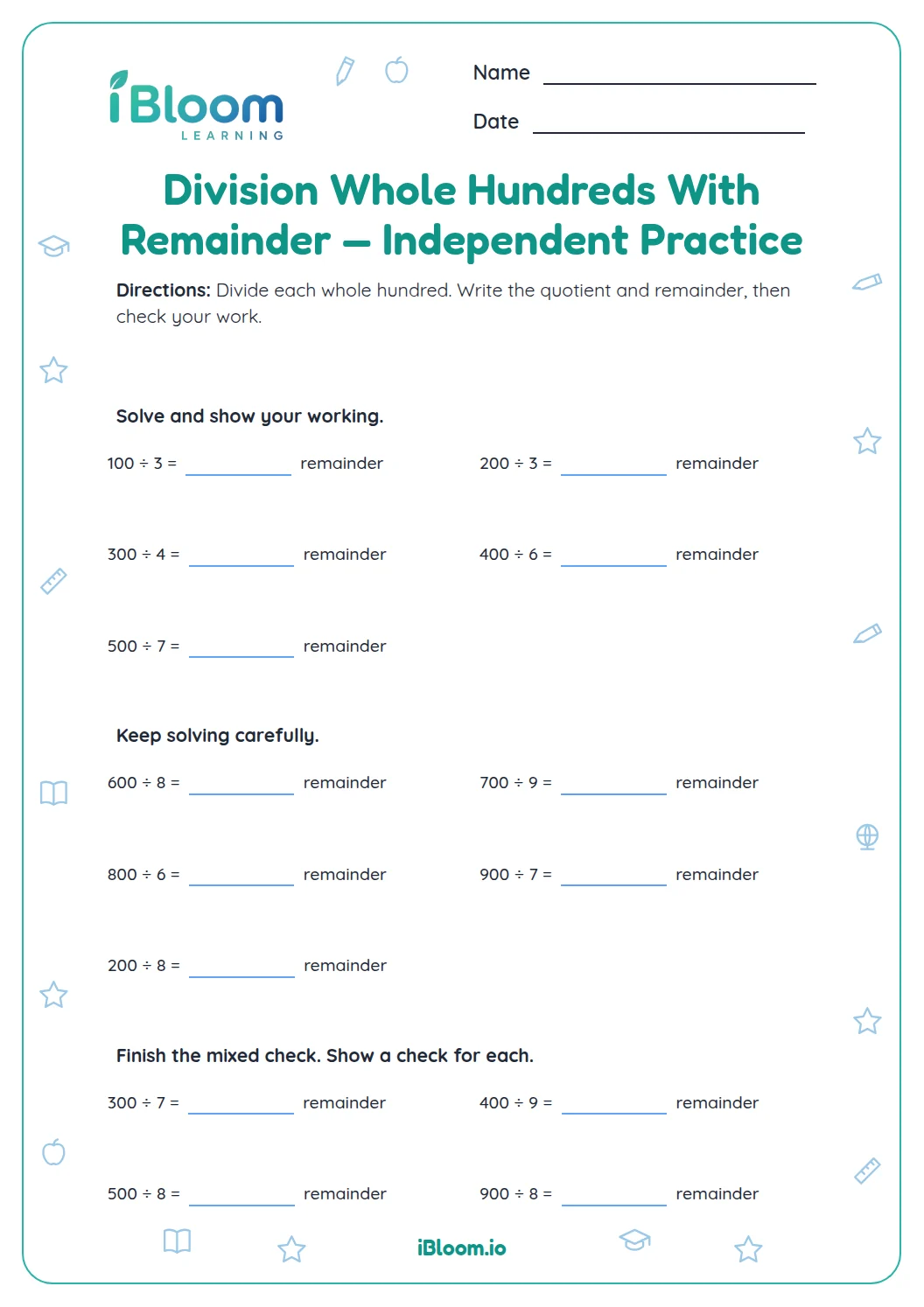
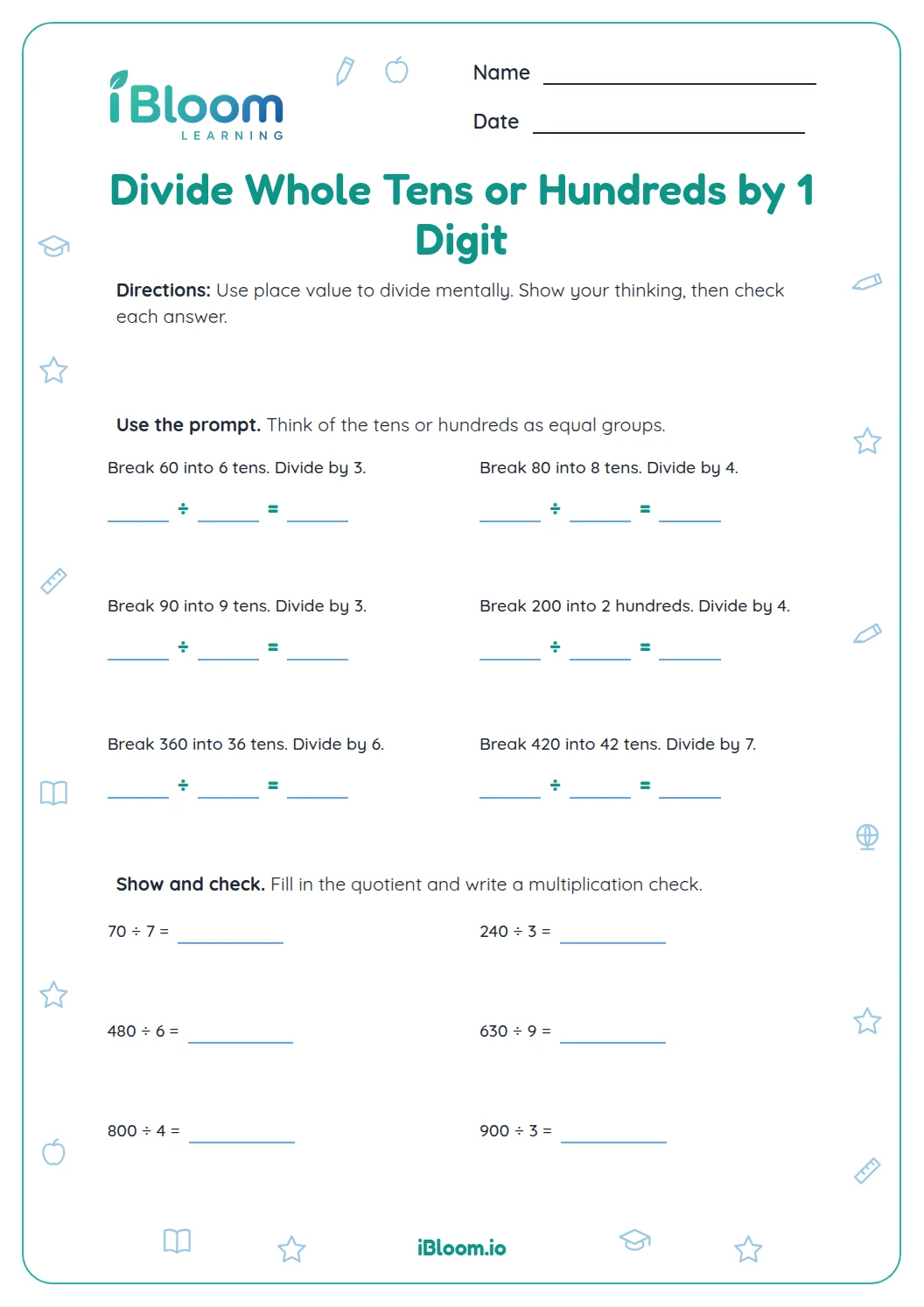
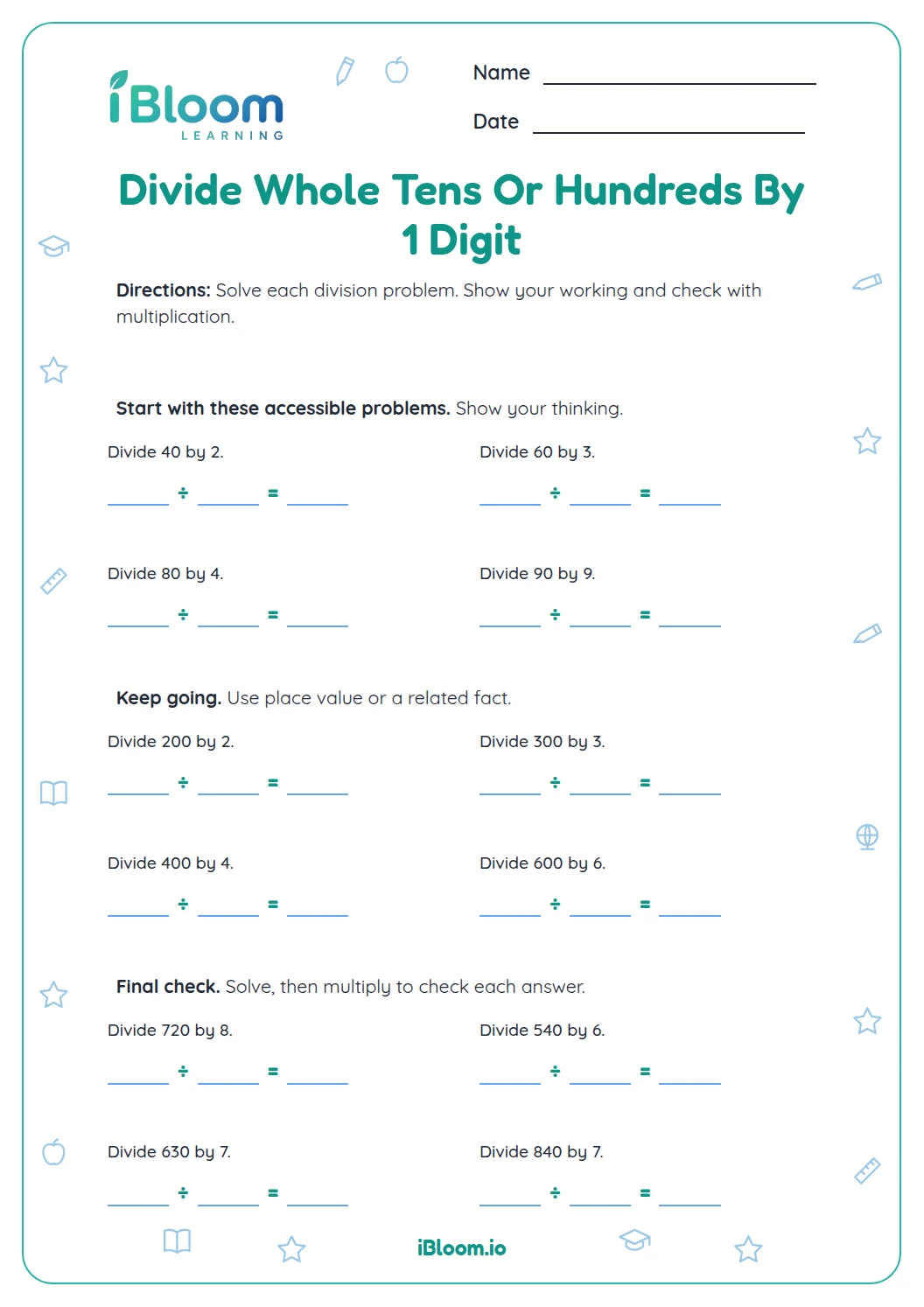
This Grade 4 worksheet practices division situations with whole-number remainders. Learners choose a fitting equation, divide totals such as 70 or 230 by a one-digit group size, and decide whether the remainder is left over or means another van is needed. It has 14 questions in three parts and a separate answer key. It aligns with CCSS 4.OA.A.3.
Aligned to 4.OA.A.3
How do you choose the division equation?
A sharing story gives the total and number of groups; divide the total by the groups. In question 1, 70 pencils are split among 6 boxes, so the equation is 70 ÷ 6.
70 ÷ 6 = 11 R4. That means each box gets 11 pencils, with 4 left after filling the boxes equally.
- 170 ÷ 6 = 11 R4
- 211 pencils in each box
- 34 pencils left over
When should you round up?
If the question asks for full groups and leftovers, report both. If every person or item must fit, as in vans, a partial final group still needs a whole van, so round the quotient up.
What kinds of problems are included?
Part A asks children to select the matching division sentence. Part B asks for equal shares and leftovers. Part C mixes leftover counts with situations that require an additional group.
How to use this worksheet
- 1Underline the total and the group size in each story.
- 2Write total ÷ group size.
- 3Find the largest multiple that does not pass the total.
- 4Record the remainder after subtracting that multiple.
- 5Reread the question and name what the remainder represents.
Common mistakes and quick fixes
The mistake
Treating the remainder as another full share
The fix
Check that each group gets the same whole-number amount.
The mistake
Dropping leftover objects from the answer
The fix
State both the quotient and remainder when objects remain.
The mistake
Using the remainder as a reason to round up every time
The fix
Round up only when the context requires every item or person to fit.
Common Core alignment
The word problems ask children to solve division situations and make sense of remainders.
Solve division word problems and interpret remainders in context.
On this sheet: Children model whole-tens division situations and decide whether remainders stay, are shared, or require another group.
Show the official wordingHide the official wording
Solve multistep word problems posed with whole numbers and having whole-number answers using the four operations, including problems in which remainders must be interpreted. Represent these problems using equations with a letter standing for the unknown quantity. Assess the reasonableness of answers using mental computation and estimation strategies including rounding.
What to practice next
Make more practice
Further reading
Questions parents and teachers ask
Why do these division answers have remainders?
The totals do not always split evenly into the stated group sizes. For example, 70 ÷ 6 = 11 remainder 4 because 6 × 11 = 66 and 4 are left. The worksheet asks children to report what those leftover objects mean in each story.
When does a remainder mean one more group?
A remainder means one more group when everything must fit, such as campers riding in vans. If 210 campers ride in vans holding 8, 26 vans hold only 208 campers, so 27 vans are needed. The extra van is not full, but it is still required.
When should the remainder stay as leftovers?
Keep the remainder when the story asks how many items remain after making full groups, or when equal sharing leaves some items undistributed. For the sticker problem, 90 ÷ 8 gives 11 stickers per friend with 2 left, so the answer reports both amounts.
What does “whole tens division” mean here?
Each dividend is a whole number, often a multiple of ten, such as 70, 120, or 230. The divisor is a one-digit group size. Children use known multiplication facts and place value to find the quotient and then check the remainder.
Does the answer key explain the context?
Yes. It lists the quotient and remainder and says whether the objects are left over or the group count must round up. For example, it identifies the leftover pencils in boxes separately from the extra van needed for campers. Ask the learner to say how the answer connects to the question before checking the key.
How many questions are on the worksheet?
There are 14 questions: four equation choices and ten written division situations. The tasks move from identifying the operation to solving equal-group problems and deciding how the remainder affects the final answer. Ask the learner to say how the answer connects to the question before checking the key.