






About this worksheet
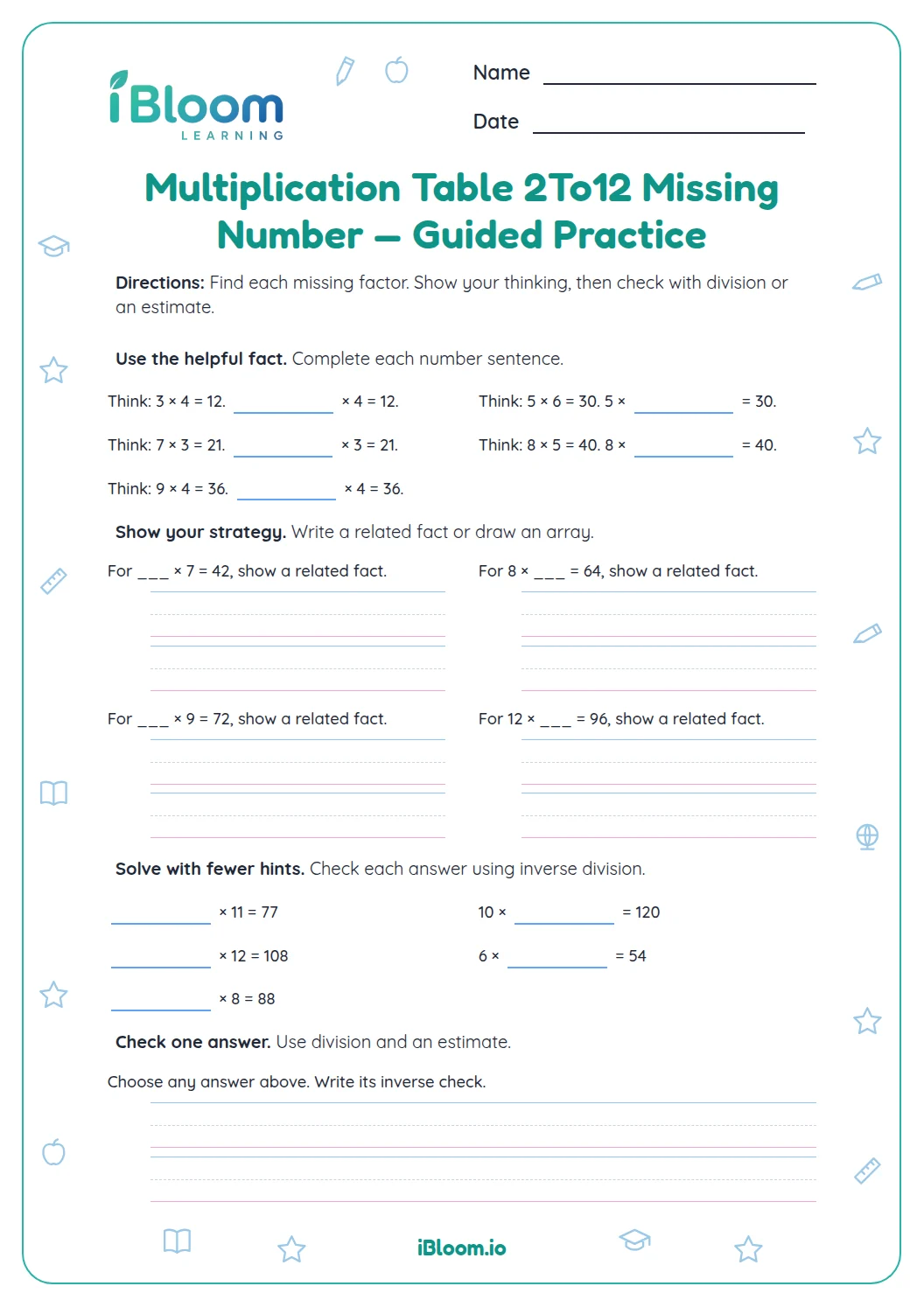
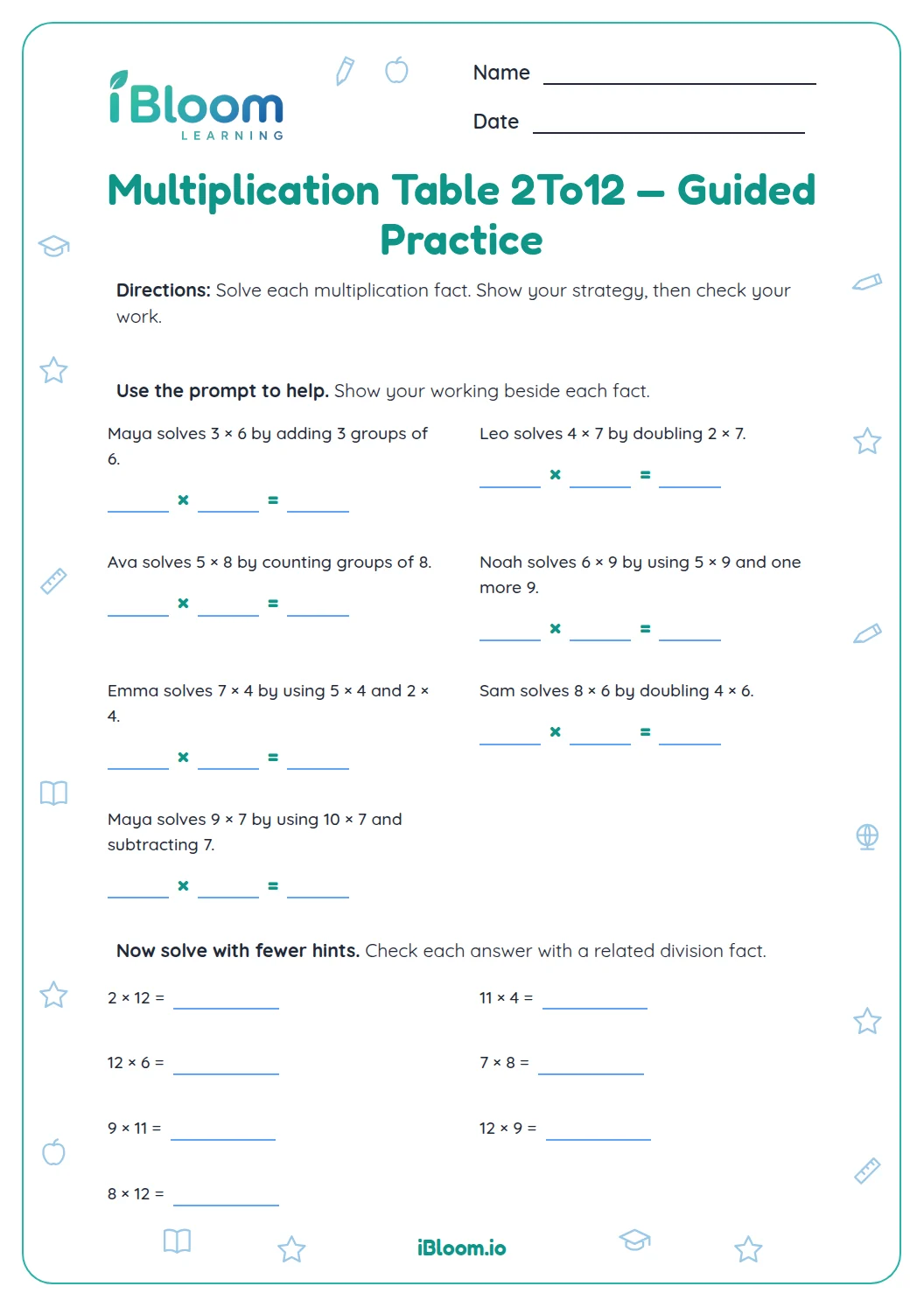
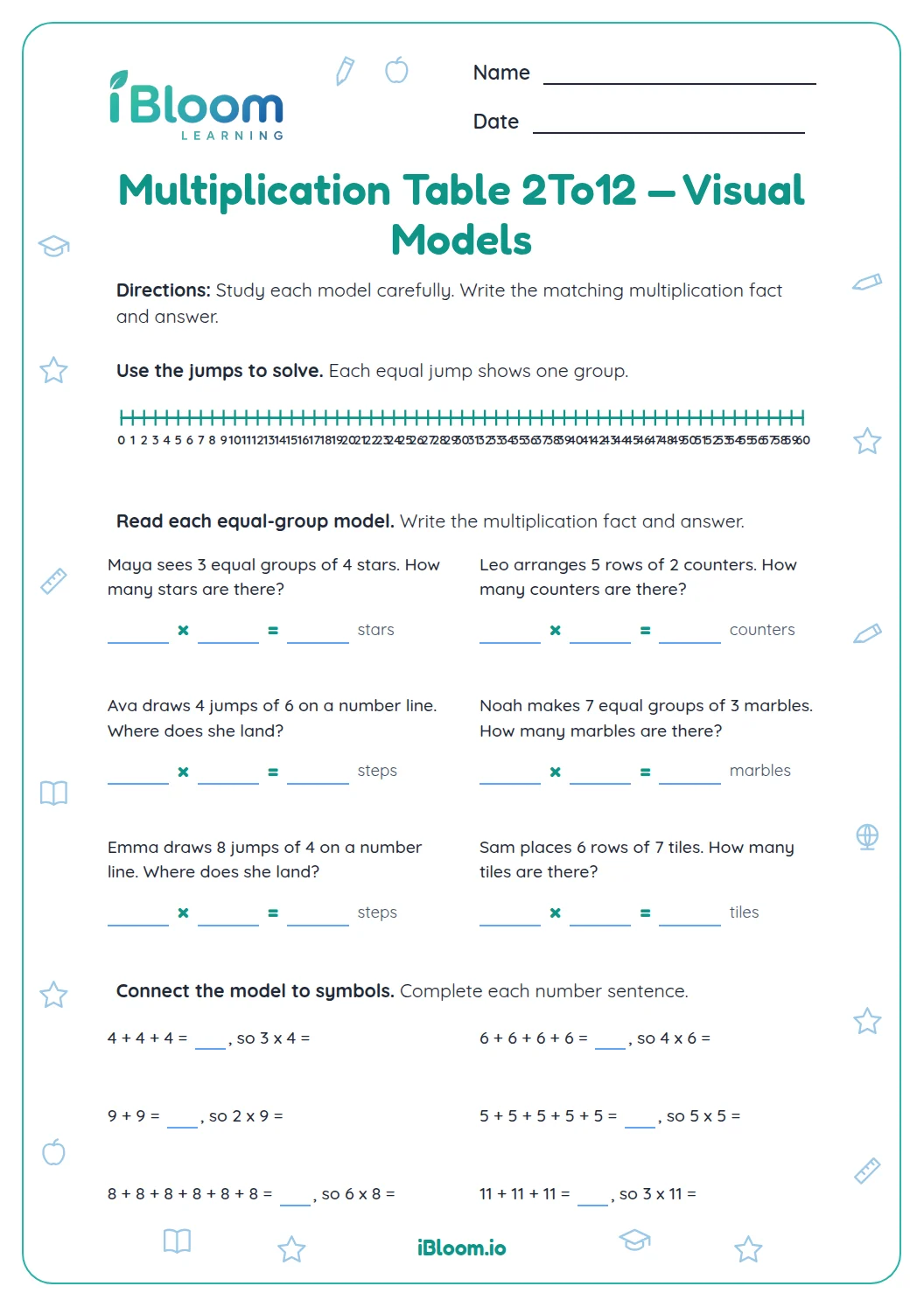
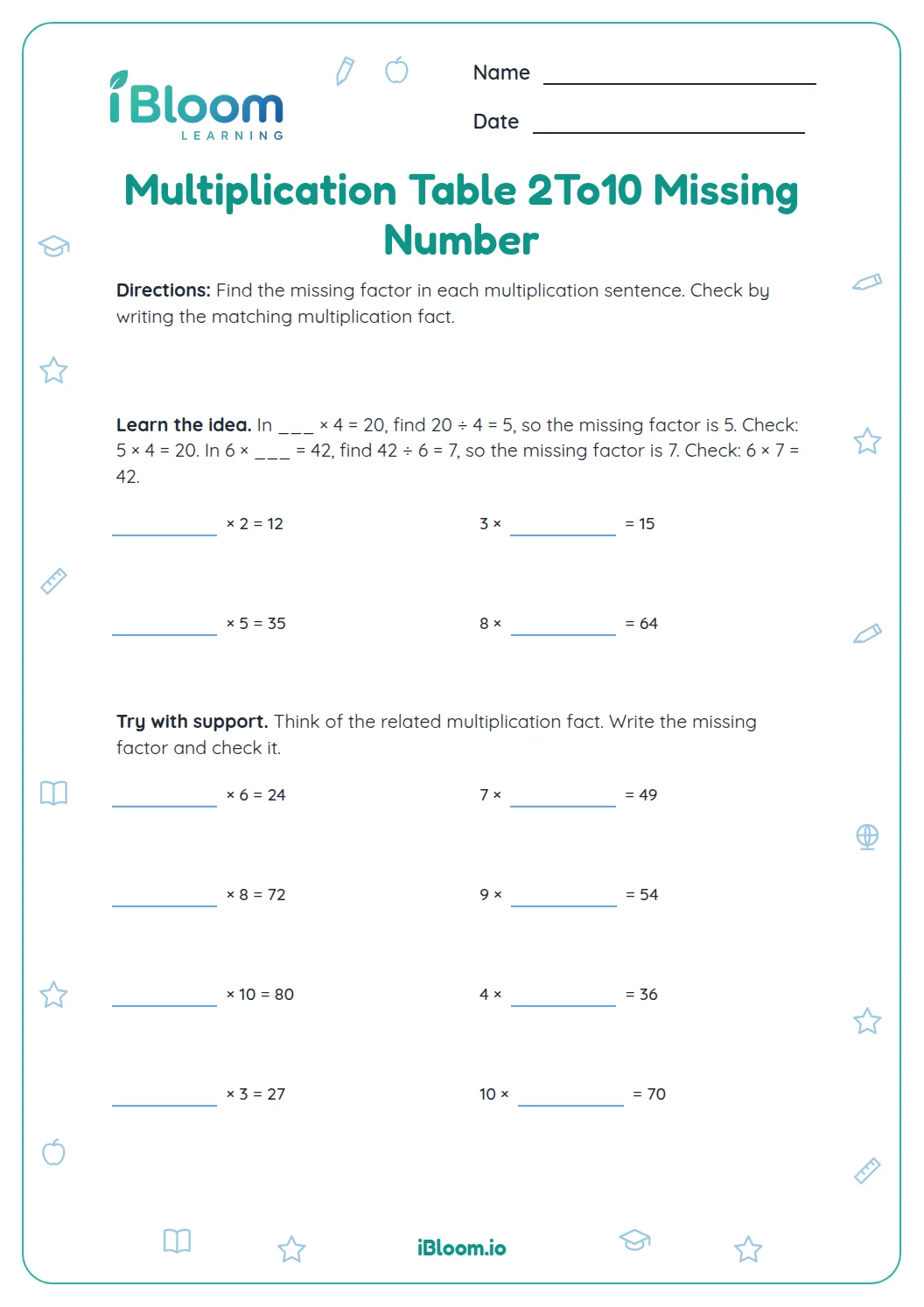
This Grade 4 printable gives meaning to a missing multiplication factor. Students solve equal-group stories by writing a multiplication or division equation, then use familiar facts from 2 through 12. A second set adds one more operation, such as adding or taking away after finding the group total. The work aligns with Common Core 4.OA.A.3, which includes representing multistep whole-number problems with an equation for the unknown. An answer key shows the result for each story.
Aligned to 4.OA.A.3
What kinds of stories are included?
Part A uses equal groups to hide one factor. Part B uses a multiplication fact inside a second step, so students have to keep track of what the story asks.
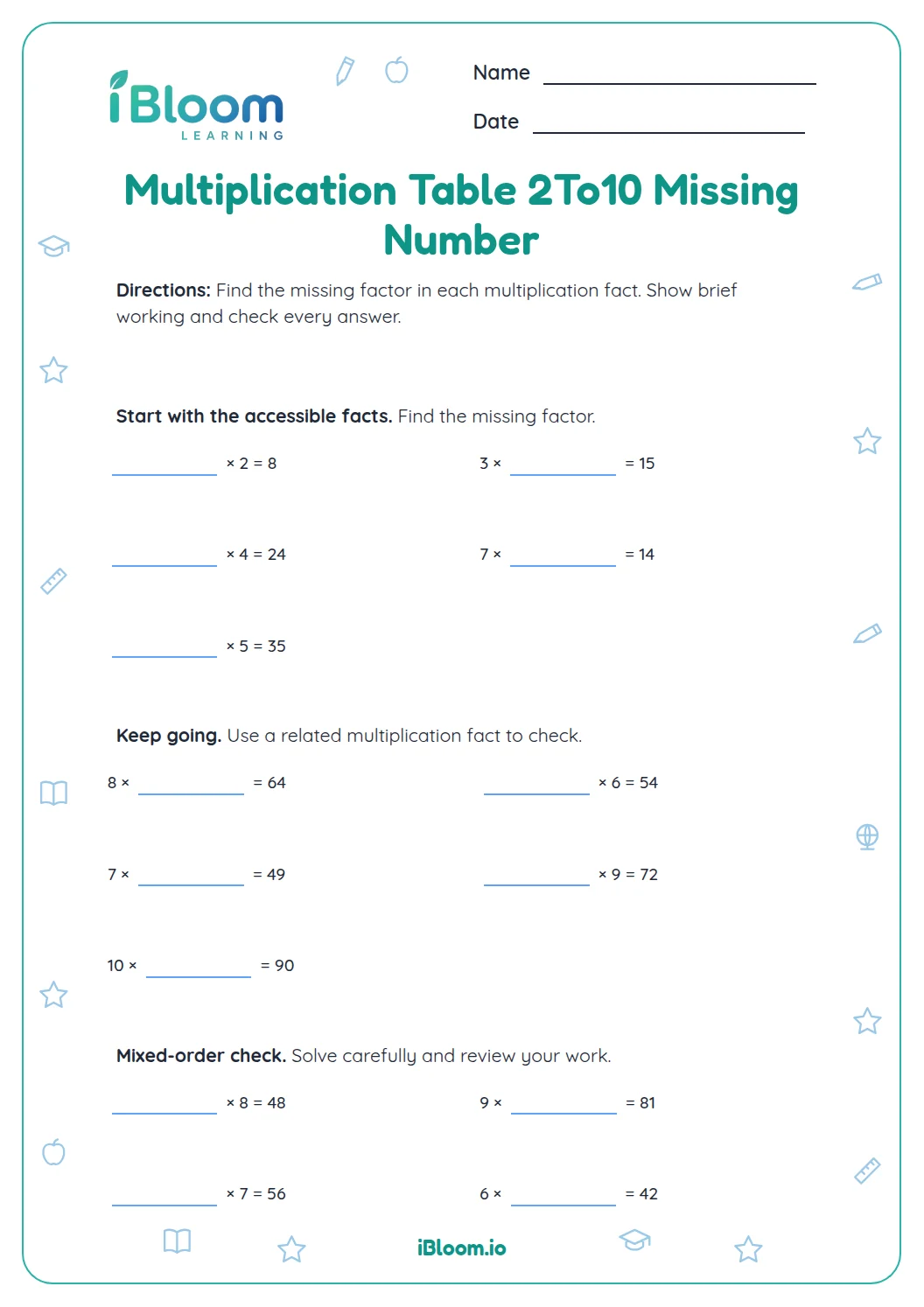
- Find a group size from a total and number of groups.
- Find how many groups from a group size and total.
- Use the product in an add-or-subtract story.
How can division reveal the missing factor?
If 48 muffins are shared across 6 equal trays, divide the total by the number of trays. The quotient is the number in each tray.
- 16 × ___ = 48
- 248 ÷ 6 = 8 muffins per tray
How do you organize a two-step story?
First find the equal-group total or missing group count. Then read the last sentence again to see whether to add or subtract.
How to use this worksheet
- 1Underline the total and the number of groups or items per group.
- 2Write a multiplication equation with a blank factor.
- 3Use the related division fact to solve the blank.
- 4For Part B, compute the equal-group amount first.
- 5Add or subtract the remaining amount and reread the question.
Common mistakes and quick fixes
The mistake
Dividing the total by the group size when the question asks for items per group.
The fix
Divide total items by number of groups to find the group size.
The mistake
Stopping after the multiplication in a two-step story.
The fix
Check the last sentence for an additional amount to add or take away.
The mistake
Adding the group count and group size.
The fix
Equal groups are represented by multiplication.
Represent equal-group stories with equations and solve the whole-number steps.
On this sheet:
Show the official wordingHide the official wording
Solve multistep word problems posed with whole numbers and having whole-number answers using the four operations, including problems in which remainders must be interpreted. Represent these problems using equations with a letter standing for the unknown quantity. Assess the reasonableness of answers using mental computation and estimation strategies including rounding.
What to practice next
Make more practice
Questions parents and teachers ask
How does division find a missing factor?
Multiplication and division undo one another. If six equal groups contain 48 items, divide 48 by 6 to find the number in each group. The quotient is the missing factor because six times that number equals 48, which checks the story total.
What should students do first in a two-step story?
Find the equal-group total first by multiplying the number of groups by the amount in each group. Then read the remaining detail and decide whether the story asks you to add or subtract another amount. Writing the two steps in order prevents stopping too soon.
How can students check a missing-factor answer?
Multiply the answer by the factor already given. If the product matches the total in the story, the missing factor is correct. For example, 6 groups of 8 make 48, so 8 is reasonable for 48 shared across 6 groups. The result should fit the context too.
Why are the stories about equal groups?
Equal groups show multiplication in familiar situations such as trays, rows, bags, and shelves. The unknown can be the number in each group or the number of groups, so students practice both sides of a multiplication fact with numbers from the 2 through 12 tables.
How many problems ask students to use two steps?
Six story problems use two steps after students form an equal-groups fact. They multiply to find a total, then add, subtract, or share that total as the story directs. The answer key gives the final quantity with its unit.