





About this worksheet
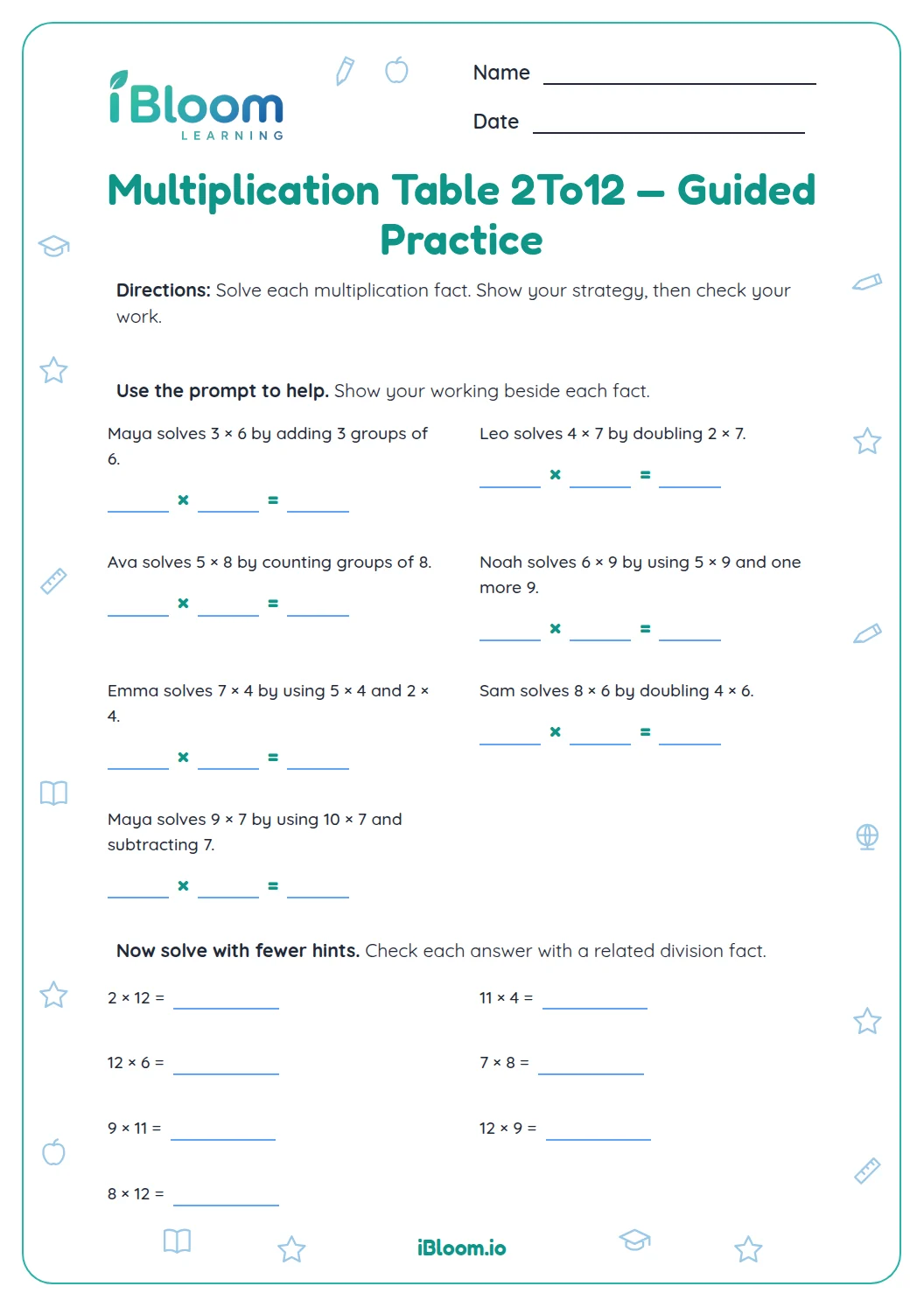
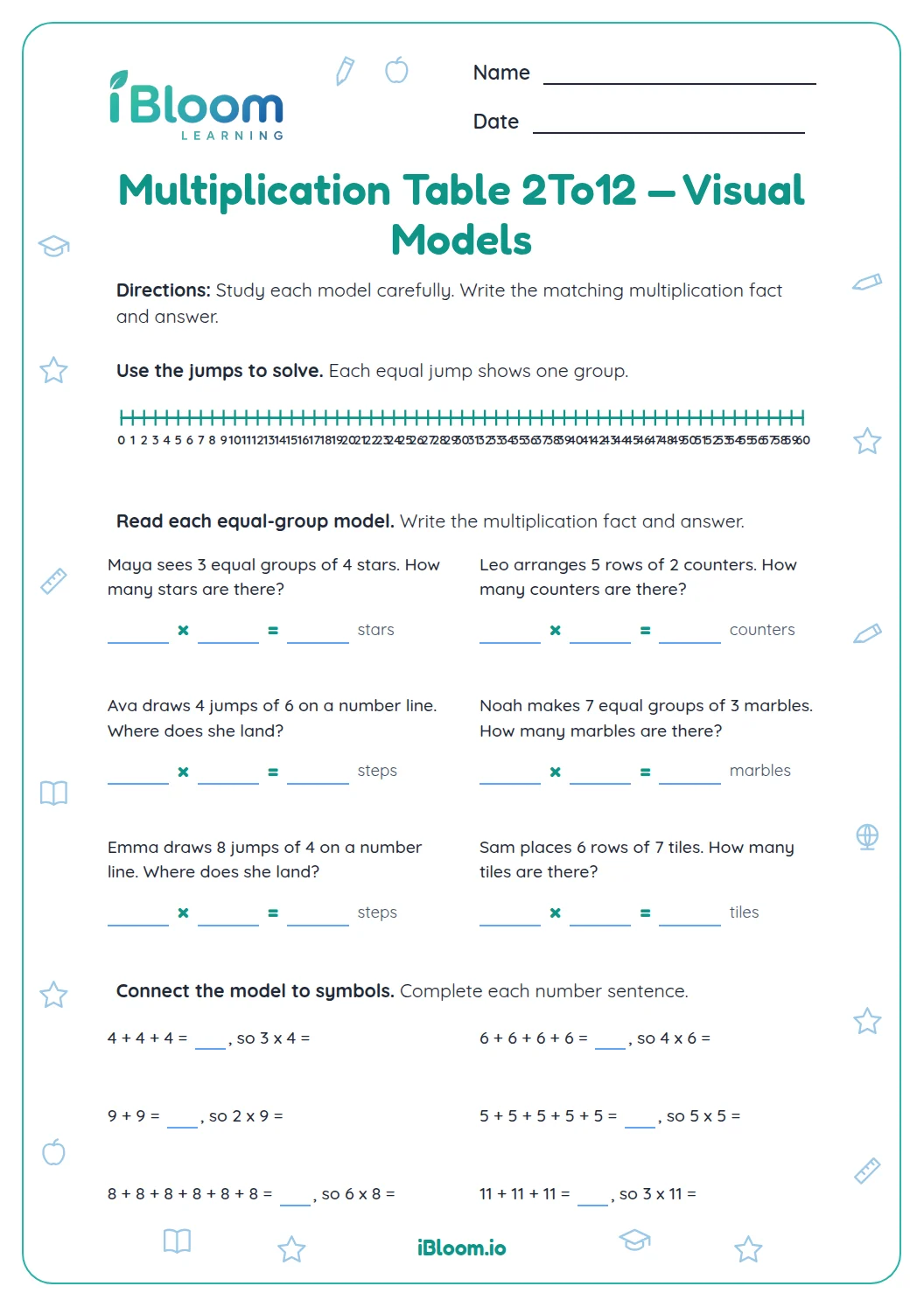
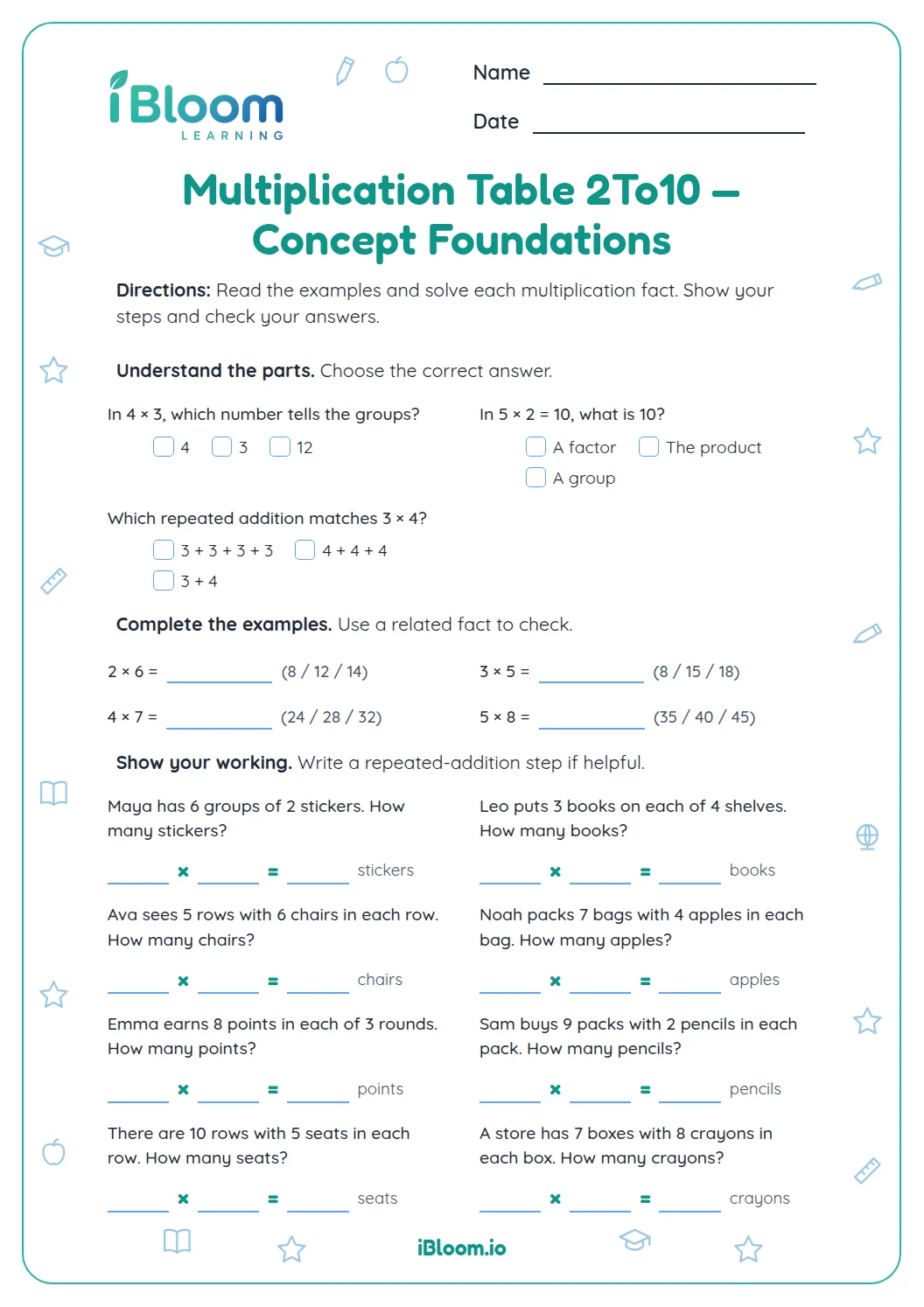
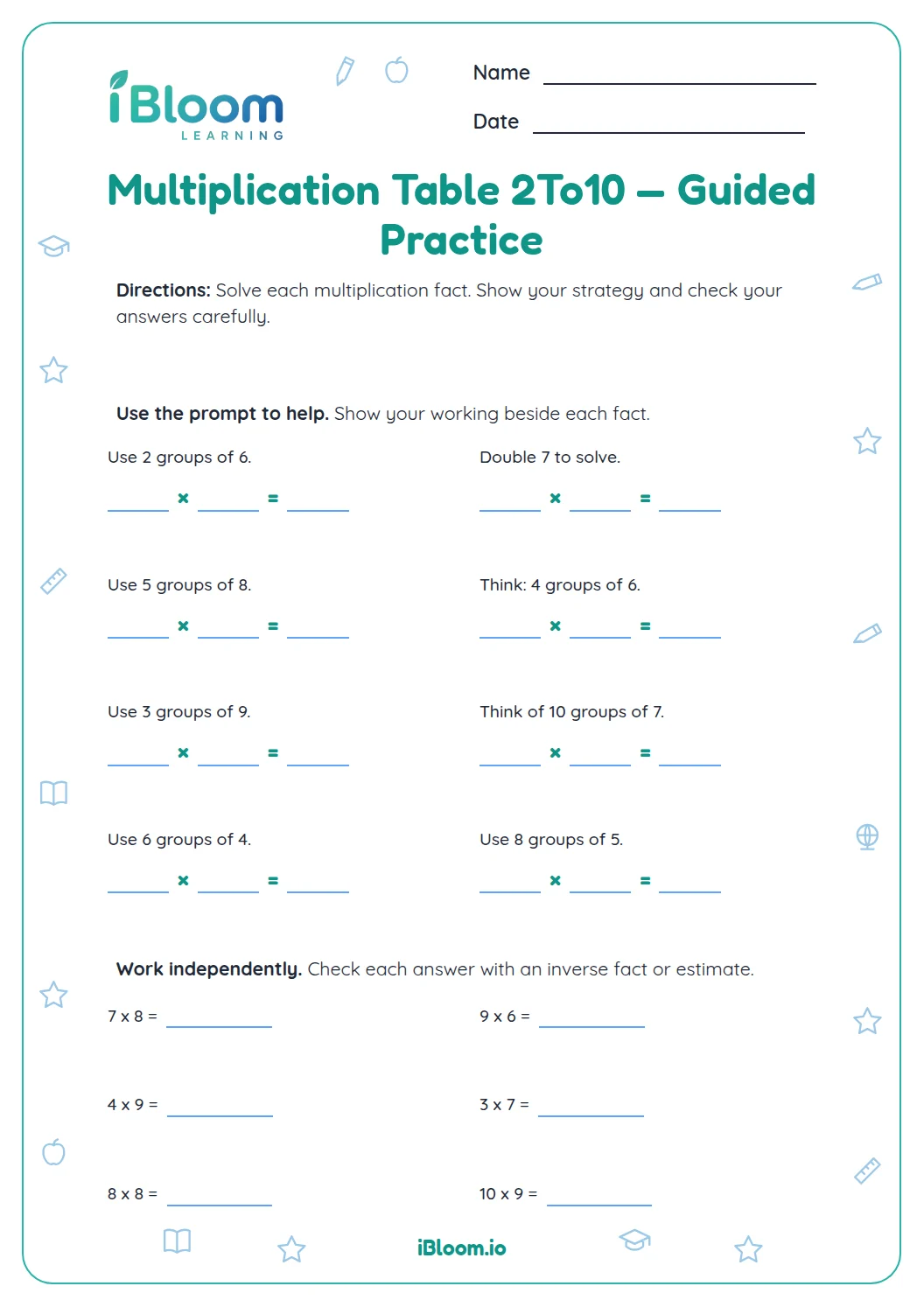
This free Grade 4 worksheet builds multiplication facts from 2 through 12 using equal rows, reversed factors, and smaller facts. Part A has four dot arrays. Part B has eight equations that turn a known fact around or split a factor into manageable parts. Part C uses four short situations to apply those ideas. The 16 questions support Common Core 3.OA.B.5, applying properties of operations as multiplication strategies. Children can explain how they found a product before checking the separate answer key, making the page useful for a careful review of the meaning behind table facts.
Aligned to 3.OA.B.5
How do arrays explain a multiplication fact?
Each array has equal rows. Multiplying the number of rows by the number of dots in each row gives the total. The first drawing has two rows of six dots, so its product is 12.
Part A uses 2 × 6, 3 × 4, 4 × 5, and 5 × 9. Ask children to count by rows before counting individual dots. The drawing then becomes a way to check a fact.
How does splitting a factor help with 11 and 12?
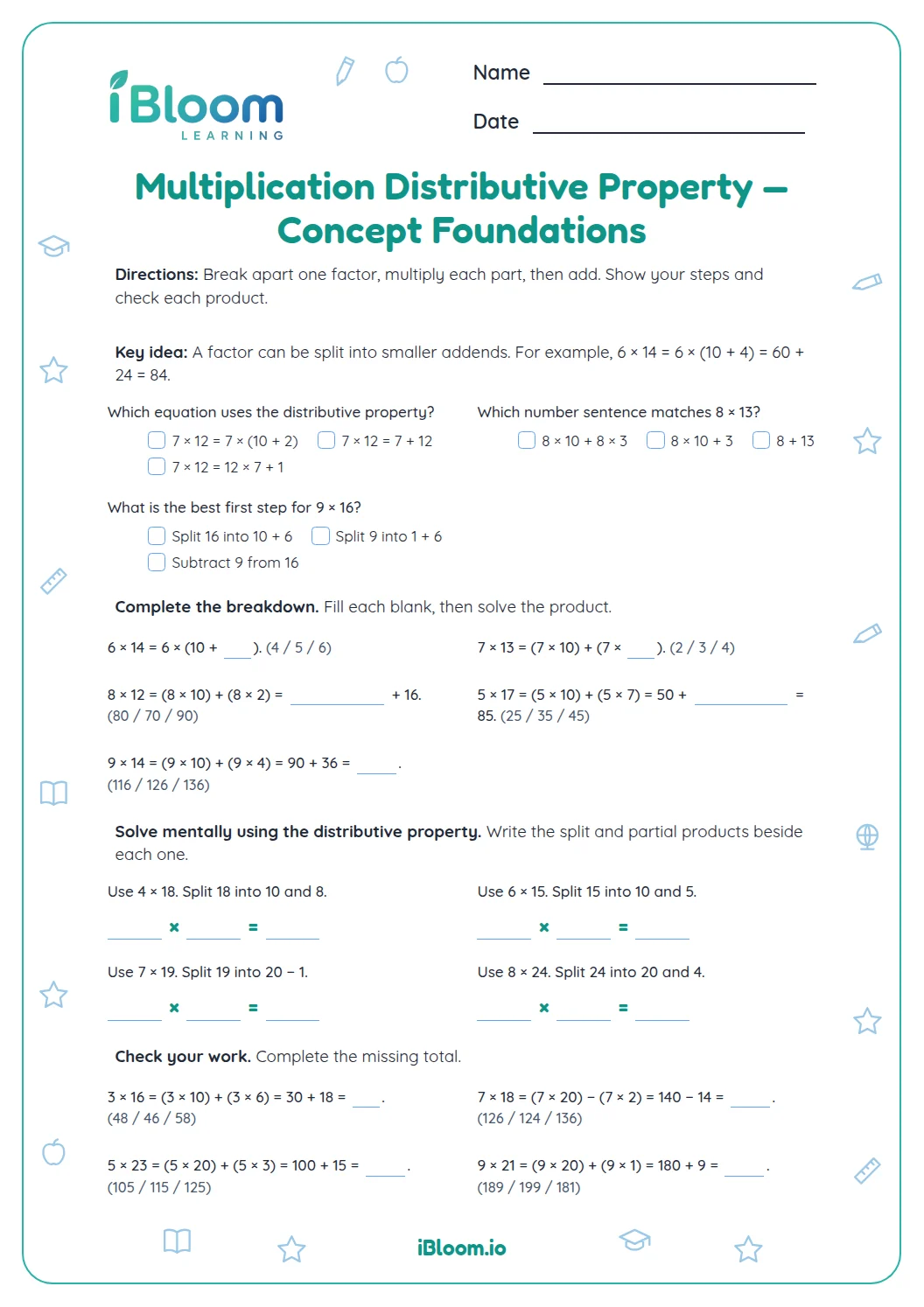
Break 11 into 10 and 1, or 12 into 10 and 2. Multiply each part by the other factor, then add the products. In Part B, the first smaller product is supplied; children work out the second one to complete the equation.
- 112 × 4 = (10 × 4) + ___
- 2Split 12 into 10 and 2: the missing part is 2 × 4 = 8.
- 3Check: 40 + 8 = 48, which is 12 × 4.
What should children explain in the word problems?
Part C uses shelves of books, boxes of pencils, pages read each day, and rows of chairs. Write a multiplication equation or split a factor into smaller facts in the work space. Label the final total with books, pencils, pages, or chairs.
A correct product is a starting point for discussion. Ask which known fact helped and how the smaller parts add back to the original groups.
How to use this worksheet
- 1Count the rows and dots per row in the first array.
- 2Finish Part A by multiplying the two factors under each drawing.
- 3Use the reversed fact in the first two Part B questions.
- 4For each split factor, find the missing smaller product and check the total.
- 5Solve all four word problems and use the answer key to check the totals and units.
Mistakes to check and how to fix them
The mistake
Adding the factors in an array, such as 2 + 6 = 8.
The fix
Count two complete rows of six to see why the total is 12.
The mistake
Writing 2 in 12 × 4 = (10 × 4) + ___.
The fix
The two remaining groups each contain 4, so write 2 × 4 = 8 in the blank.
The mistake
Changing the product when reversing the factors.
The fix
Compare 6 groups of 7 with 7 groups of 6; both contain 42 objects.
Common Core alignment
Use reversed factors and split factors to build multiplication facts.
On this sheet: Part B uses commutative and distributive reasoning to complete related facts.
Show the official wordingHide the official wording
Apply properties of operations as strategies to multiply and divide.
What to practice next
Make more practice
Further reading
Questions parents and teachers ask
Does the worksheet include every table from 2 to 12?
Yes, every whole-number factor from 2 through 12 appears in the 16 questions. The sheet combines four array questions, eight related-fact equations, and four word problems. For 11 and 12, children use the tens fact and calculate the remaining product to make both sides of an equation equal.
Should children memorize answers before using the sheet?
Children can use the arrays and smaller facts to work out the products as they go. Knowing some facts makes the split-factor questions quicker, but the equations show the structure to follow. Ask children to explain one product aloud so you can hear which familiar facts they used.
How do I check an array answer?
Count the equal rows and the number of dots in each row, then multiply those numbers. For the first array, two rows of six dots make twelve dots. If the answer is different, ask the child to count by sixes and compare that count with the written product.
Why does the sheet reverse some factors?
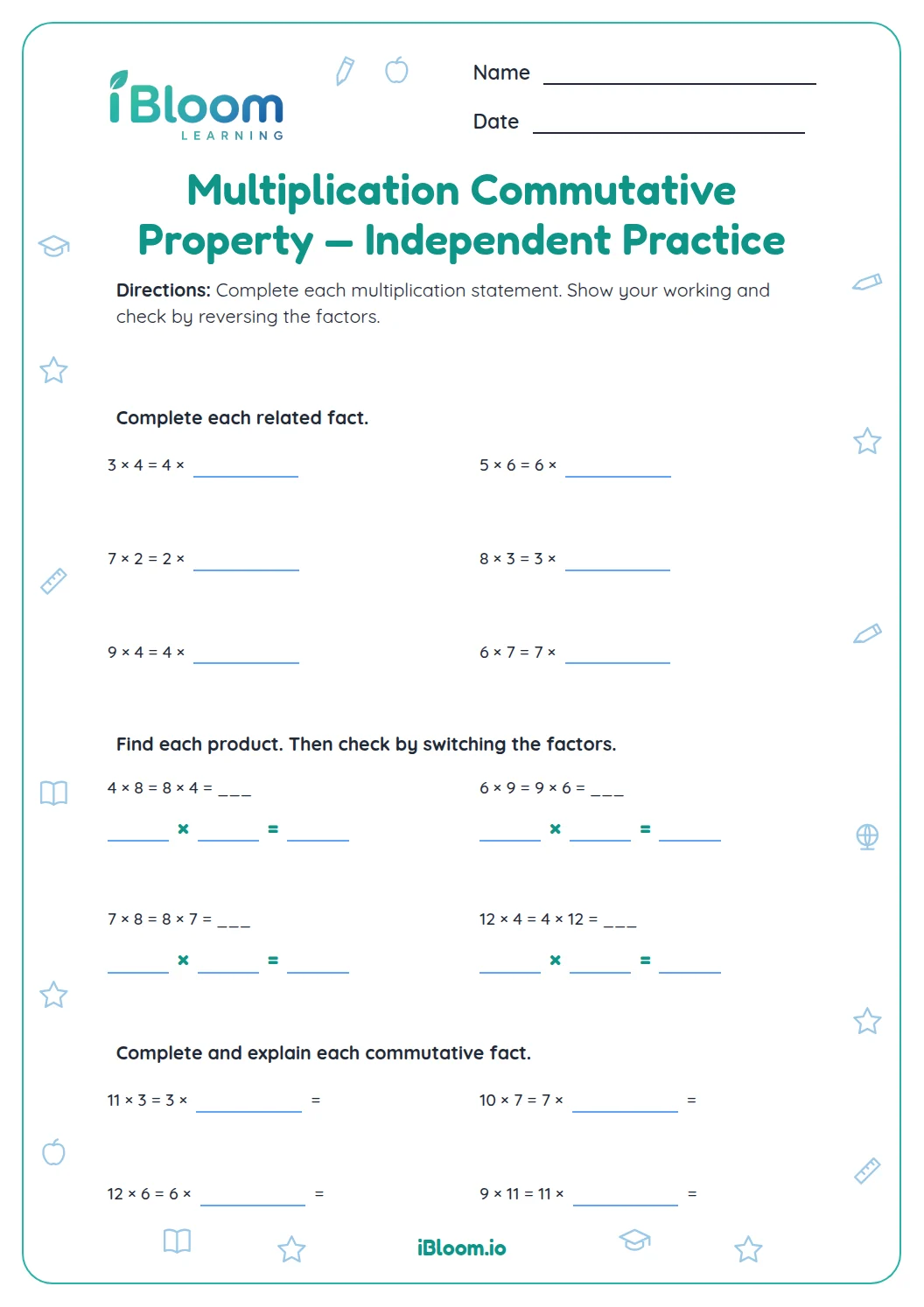
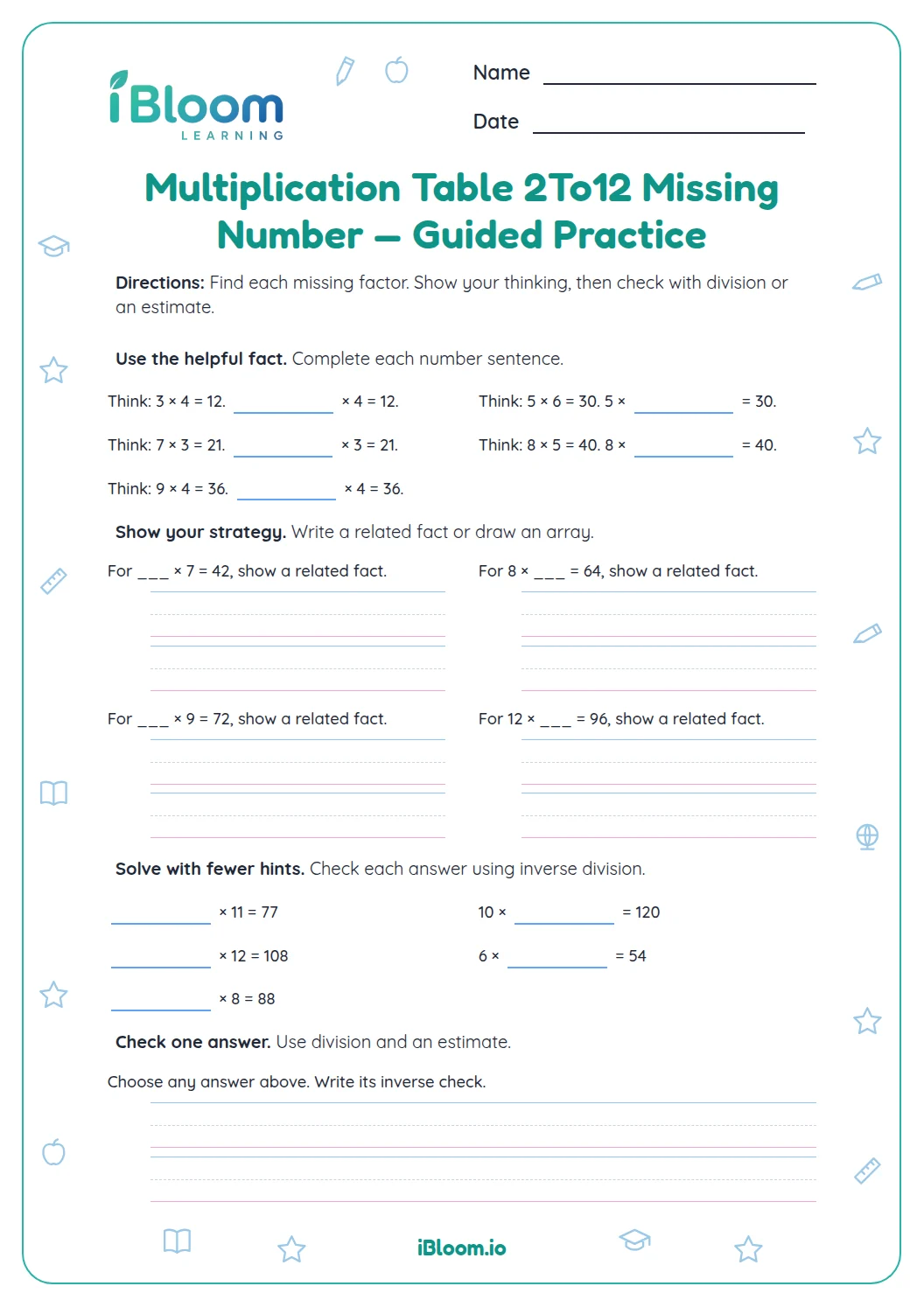
Reversing the factors gives another way to use a known product. Six groups of seven and seven groups of six have the same total, 42. Completing 6 × 7 = 7 × ___ with 6 practices this relationship and helps children connect two facts they can use together.
What should be written in the word-problem work spaces?
Children should write a multiplication equation or show a split that gives the total. For eight boxes of twelve pencils, they might write 8 × 10 = 80, 8 × 2 = 16, and 80 + 16 = 96. The final answer is 96 pencils.