




About this worksheet
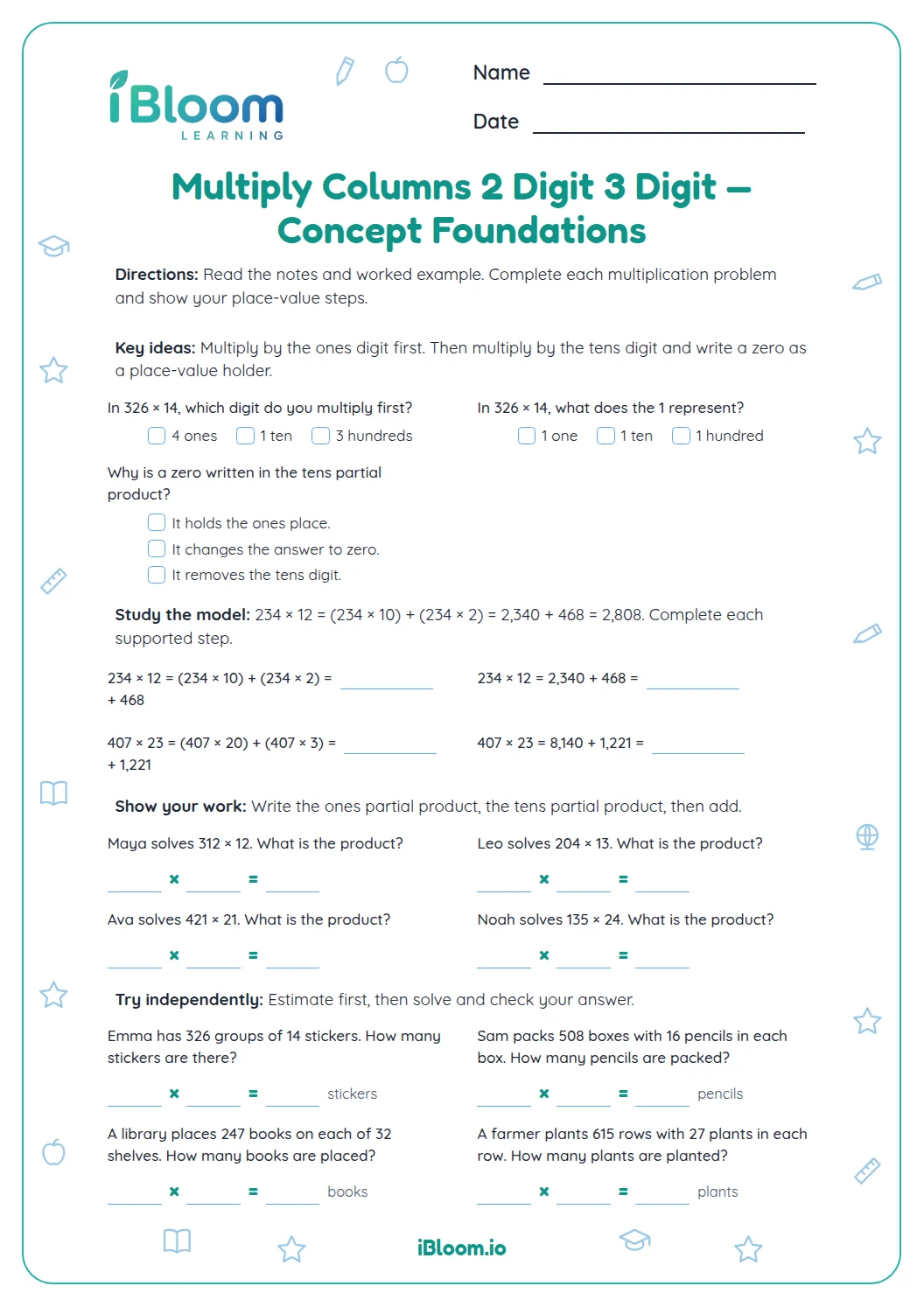
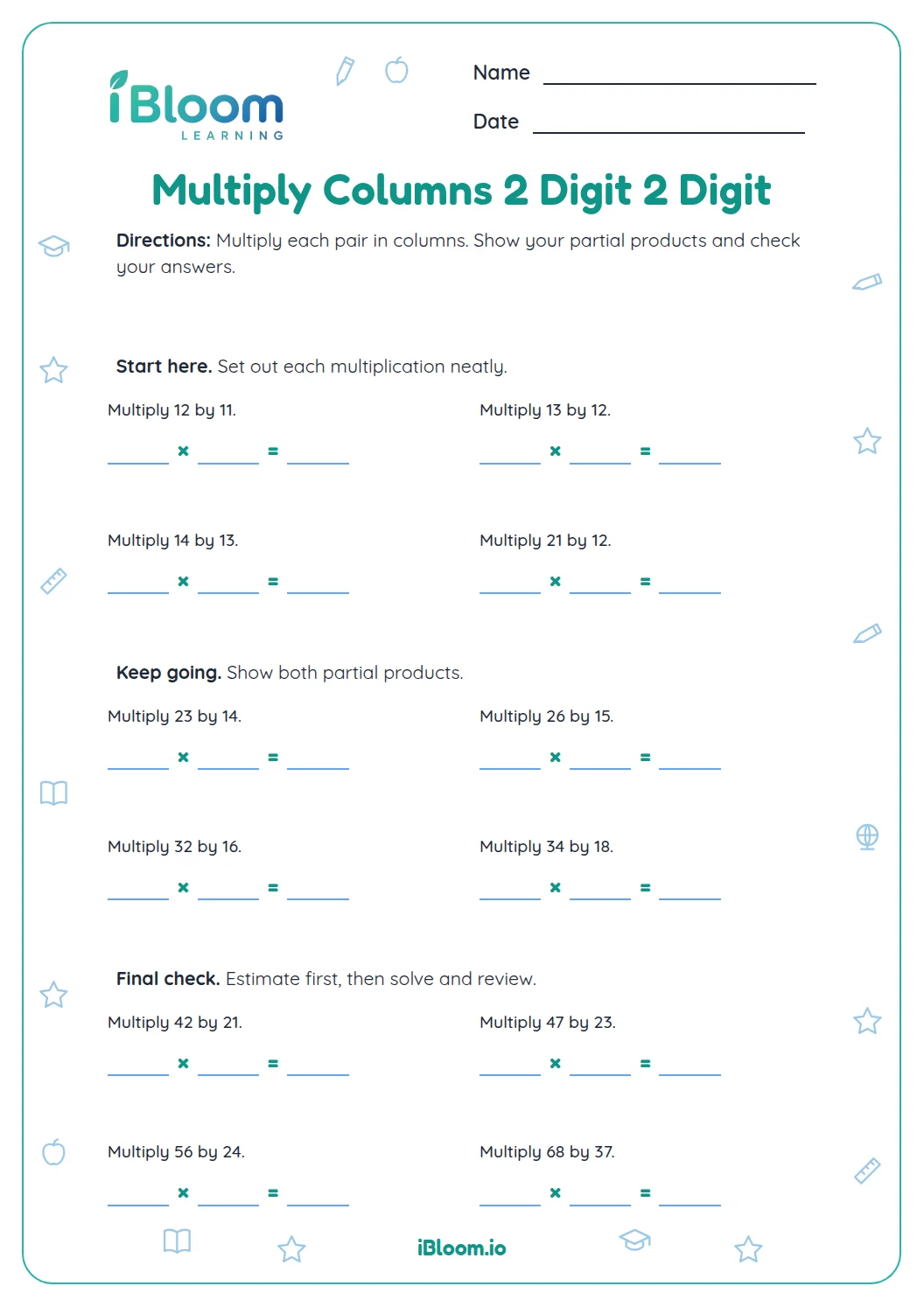
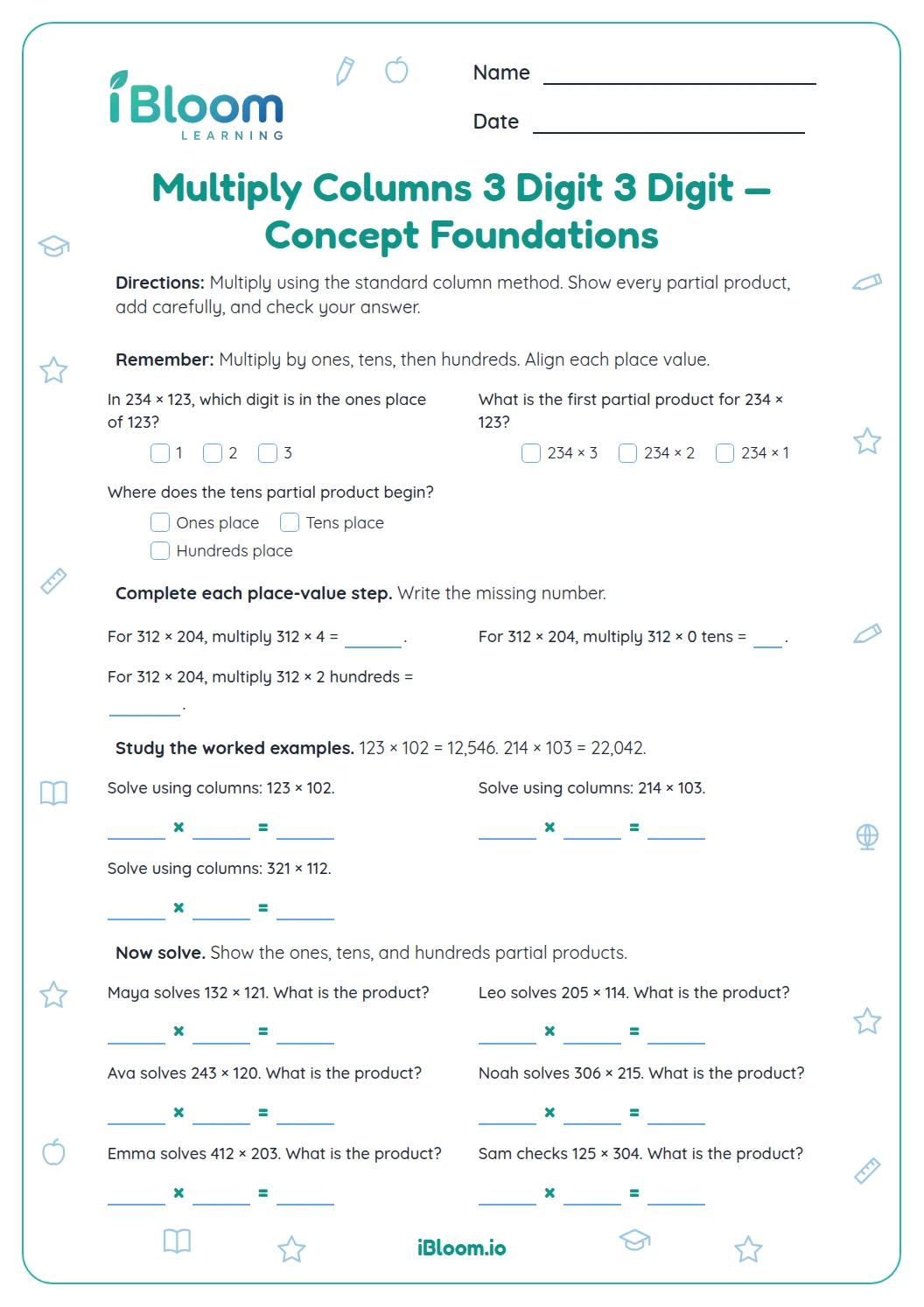
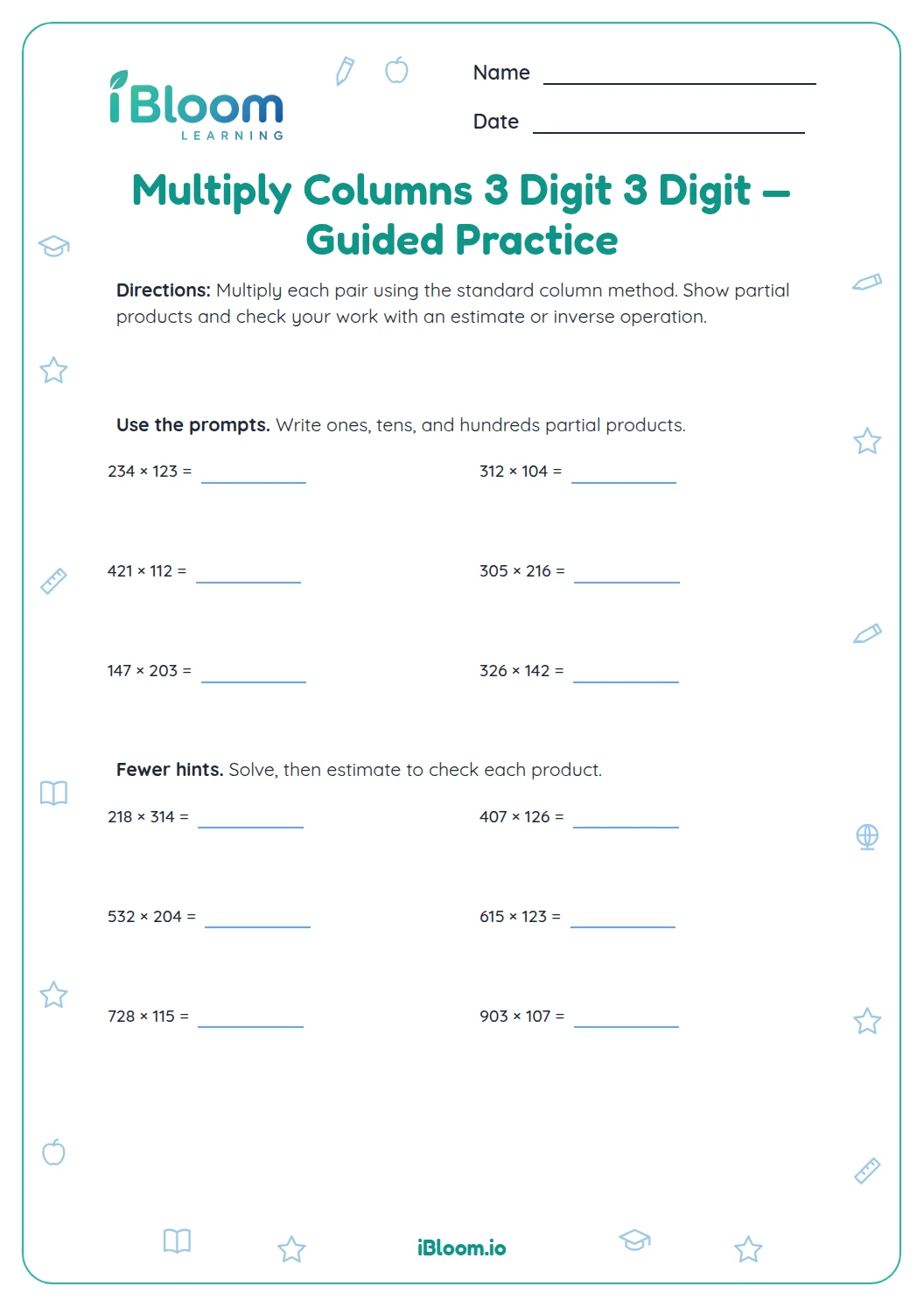
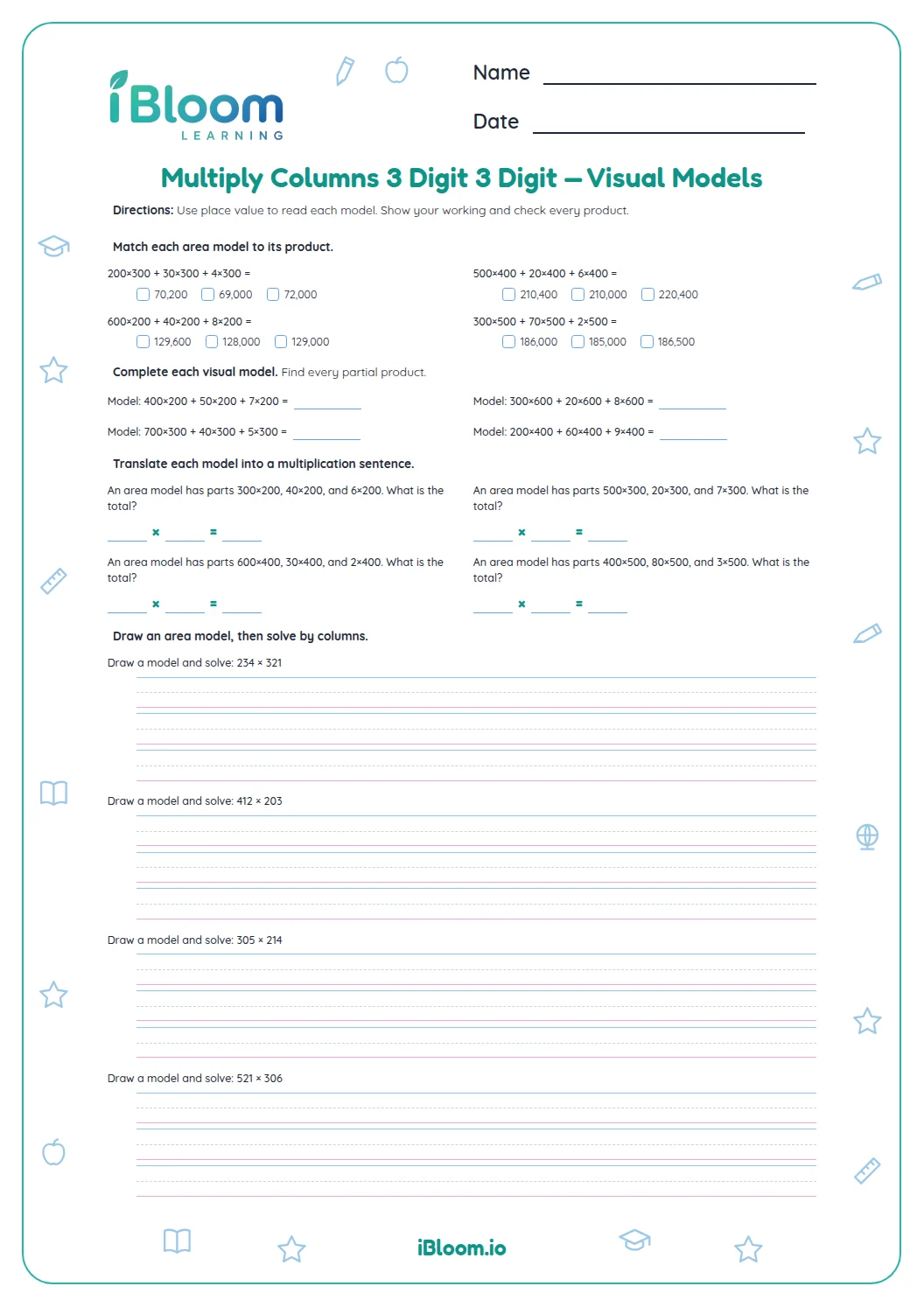
This Grade 4 worksheet guides learners through multiplying two-digit numbers by two-digit numbers and three-digit numbers by two-digit numbers. Sixteen products are grouped into two parts, and every item provides working space for the column algorithm and partial products. The separate answer key lists each product.
Aligned to 4.NBT.B.5
How do columns help keep multiplication organized?
Line up the ones digits, multiply the top number by each digit in the bottom number, and shift the next partial product one place to the left. Add the partial products at the end.
For 24 × 13, first find 24 × 3 = 72. Then find 24 × 10 = 240. Add 72 + 240 to get 312.
- 1 24
- 2× 13
- 3 72 (24 × 3)
- 4240 (24 × 10)
- 5312
How do the later products add a place value?
Part A uses two-digit factors so children can focus on regrouping and shifted partial products. Part B uses three-digit top numbers with two-digit multipliers, adding another place to track while keeping the same method.
How can families check the work?
Ask the learner to point to the clue or calculation that supports each answer. Use a missed item as a brief chance to model the step, then let the learner try it again.
How to use this worksheet
- 1Line up the factors by place value.
- 2Multiply by the ones digit and regroup when needed.
- 3Multiply by the tens digit, shifting that partial product one place.
- 4Add the partial products.
- 5Estimate or use a related multiplication fact to check.
Common mistakes and quick fixes
The mistake
Rushing past an important word or symbol.
The fix
Reread the prompt and point to the part that guides the answer.
The mistake
Stopping after an incomplete first step.
The fix
Finish the calculation or response, then check it against the prompt.
The mistake
Changing an answer without checking it.
The fix
Use a quick explanation or check step before revising.
Curriculum alignment
This worksheet practices the listed Common Core standard through its questions.
Use place value and operation properties to multiply multi-digit whole numbers.
On this sheet: The two-digit by two-digit products practice the grade-level multiplication strategy, and three-digit by two-digit examples extend the same place-value reasoning.
Show the official wordingHide the official wording
Multiply a whole number of up to four digits by a one-digit whole number, and multiply two two-digit numbers, using strategies based on place value and the properties of operations. Illustrate and explain the calculation by using equations, rectangular arrays, and/or area models.
What to practice next
Make more practice
Further reading
Questions parents and teachers ask
What does “in columns” mean?
Write the factors one above the other with ones digits lined up. Multiply by each digit in the second factor, place each partial product in the correct place-value column, then add. The problems use whole-number factors, and the second factor has two digits in every item.
How is question 1 solved?
For 24 × 13, multiply 24 by 3 to get 72, then multiply 24 by 10 to get 240. Add 72 and 240. The product is 312. A learner can check the answer with an estimate before looking at the key.
Why is the second partial product shifted?
The 1 in 13 stands for one ten, or 10. Multiplying 24 by that digit means 24 × 10 = 240, so the partial product belongs one place to the left of the ones product. Writing each partial product in its own place helps prevent a shift error.
Can learners use a different multiplication strategy?
The worksheet asks learners to show column work, but place-value reasoning can help check it. A learner might also break apart a factor to confirm the partial products before adding. The separate key lists products; working steps remain on the worksheet for review.
Is the answer key included?
Yes. A separate key lists all sixteen products. Learners should still show their work in the answer space so they can spot whether a regrouping or place-value shift caused an error. Learners can use place-value language to explain why the tens row shifts.