
About this worksheet
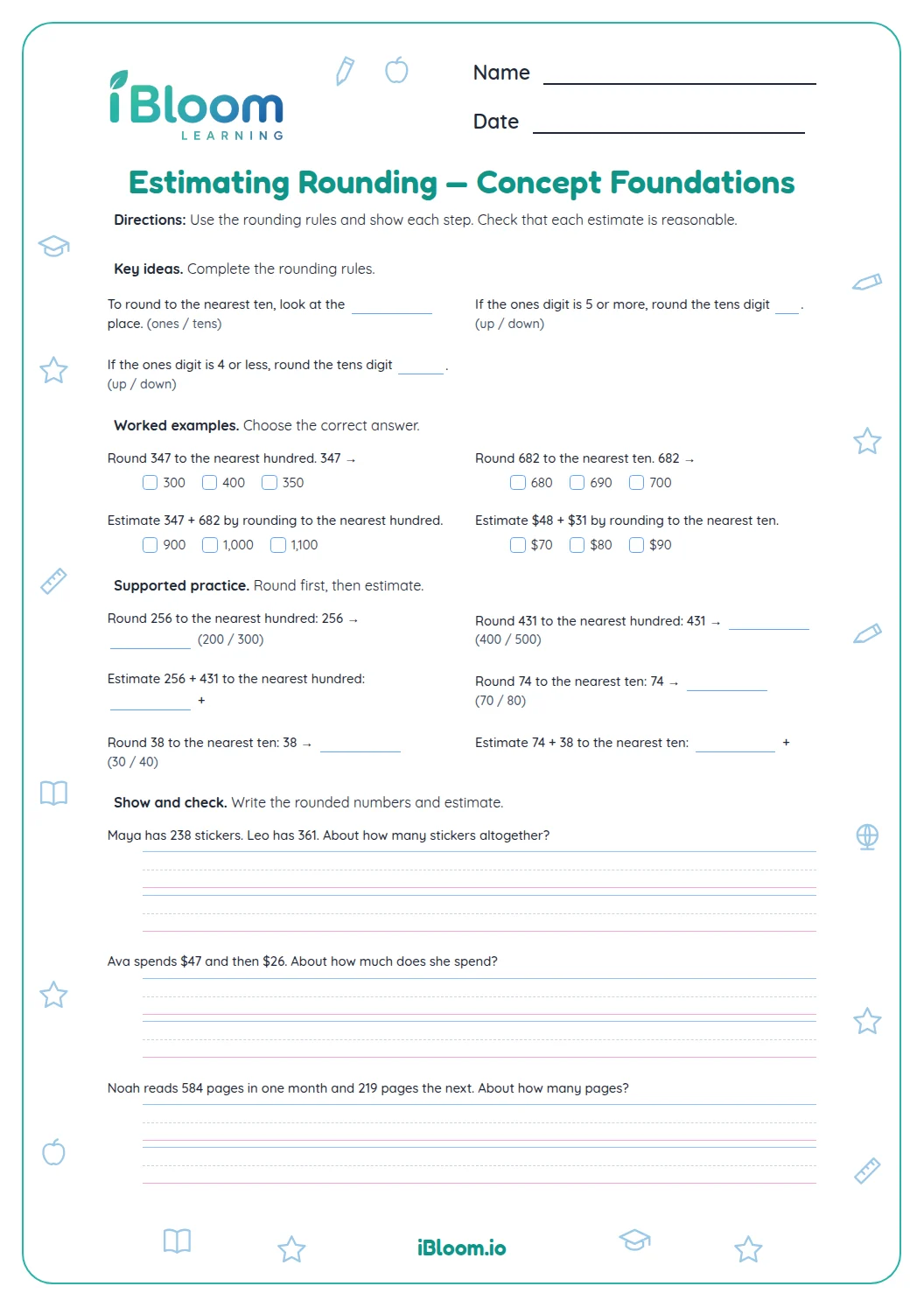
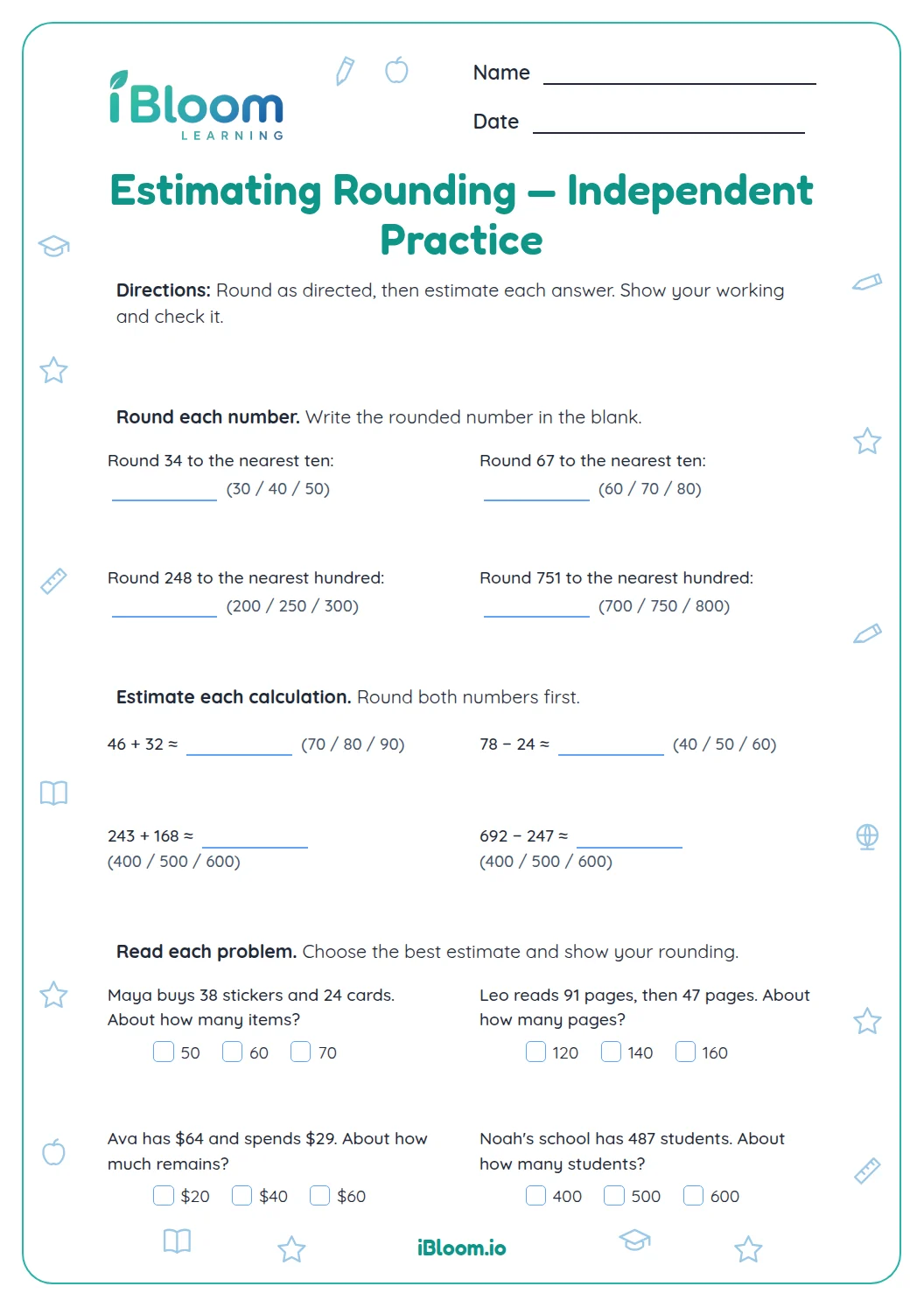
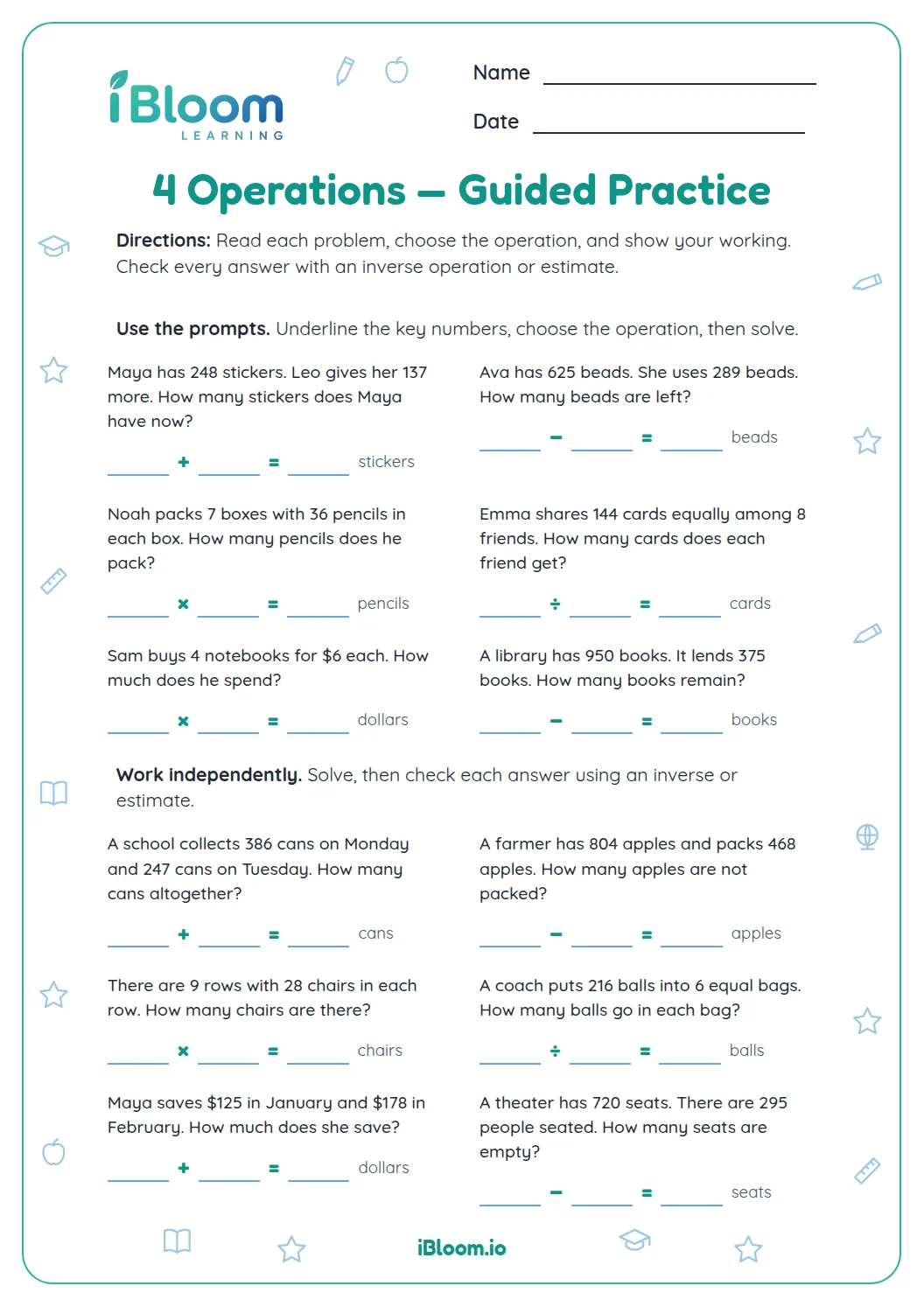
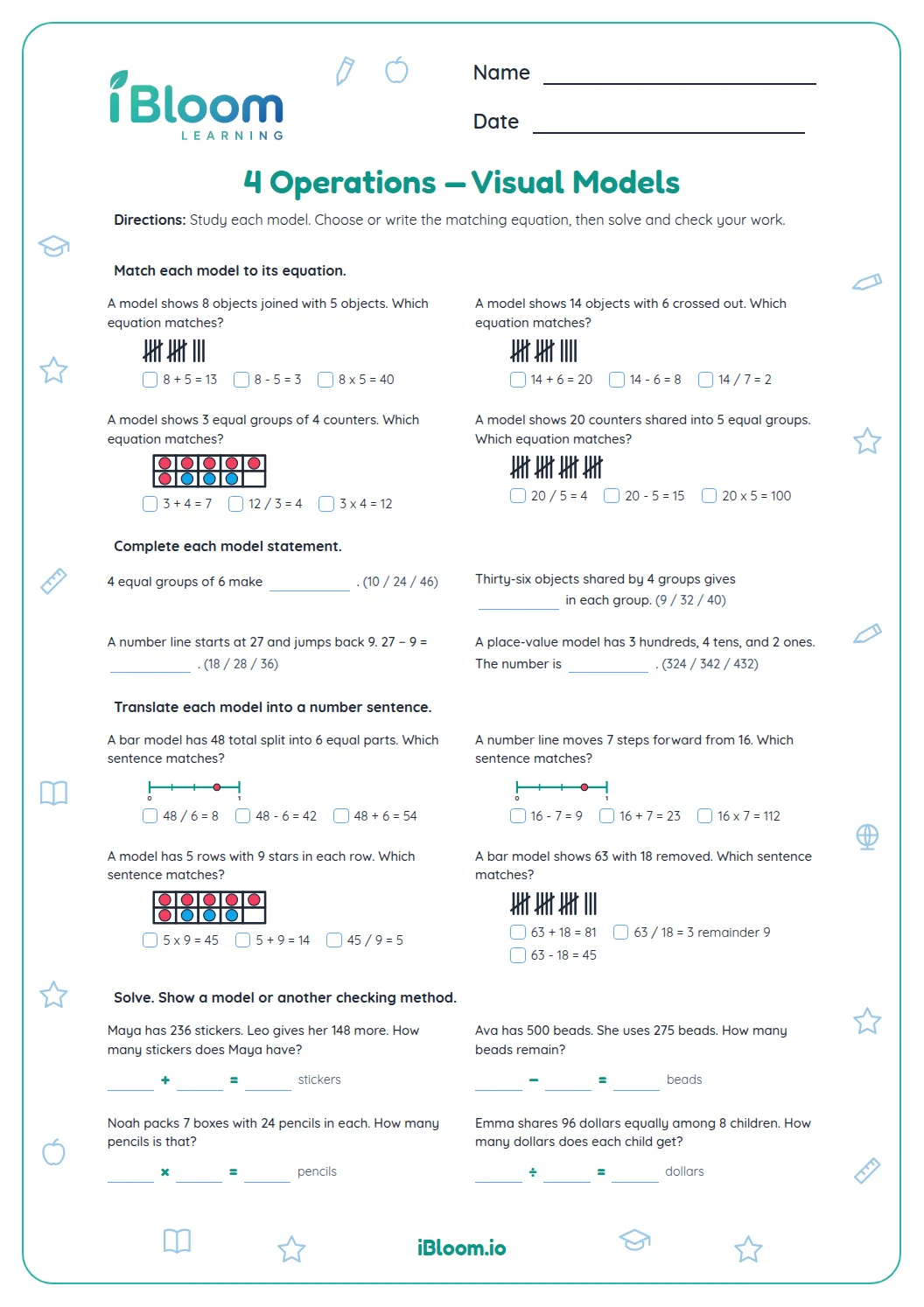
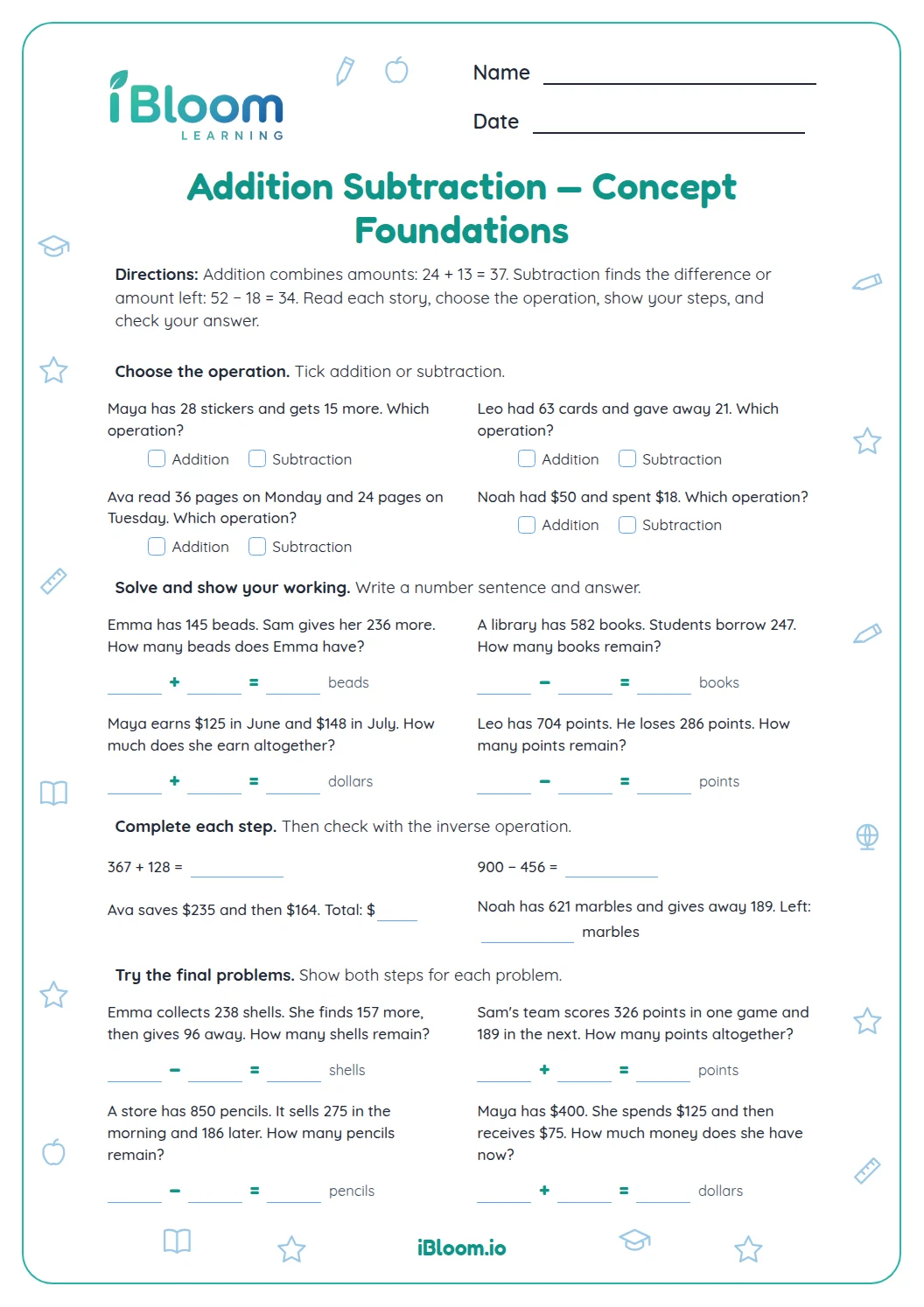
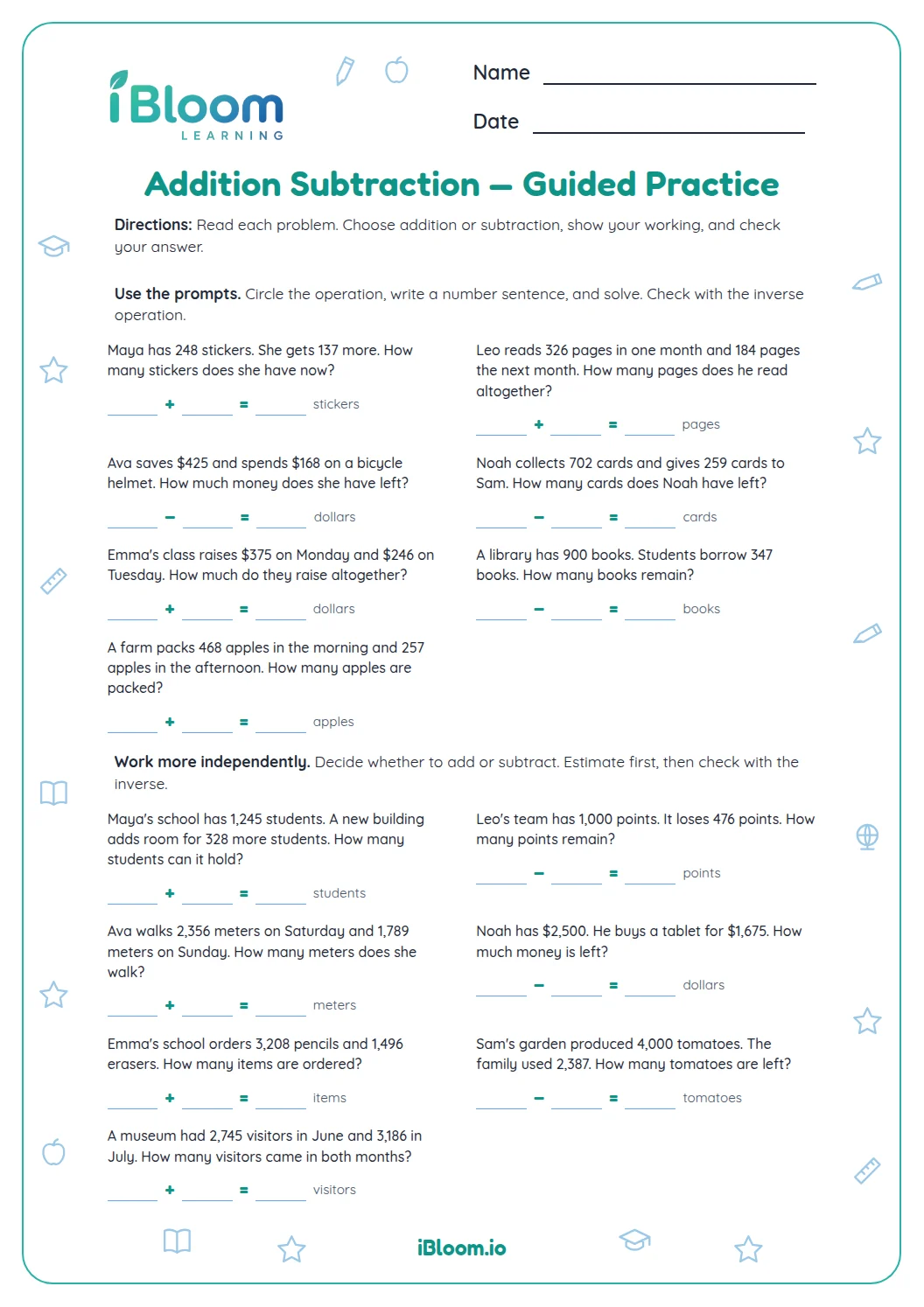
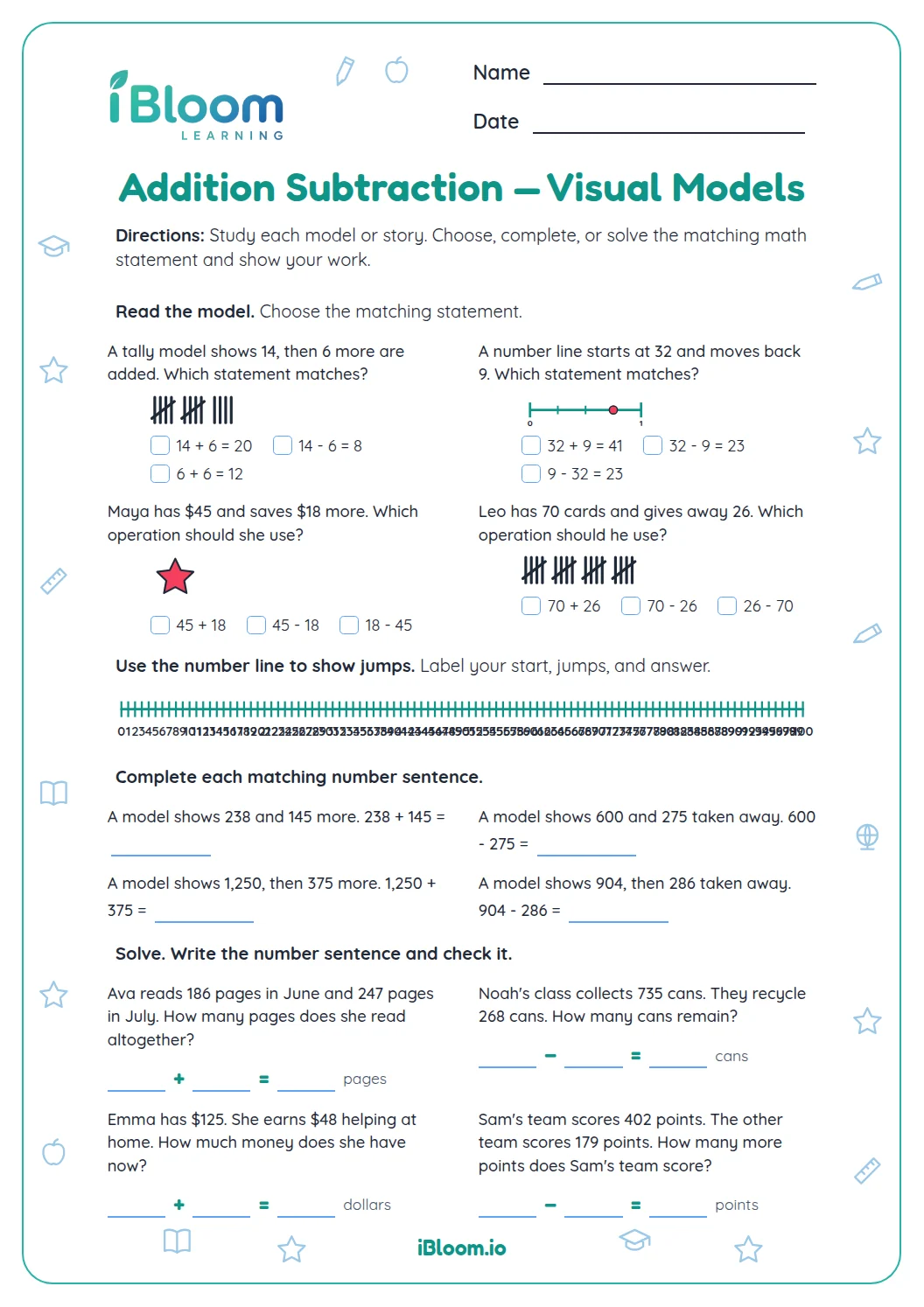
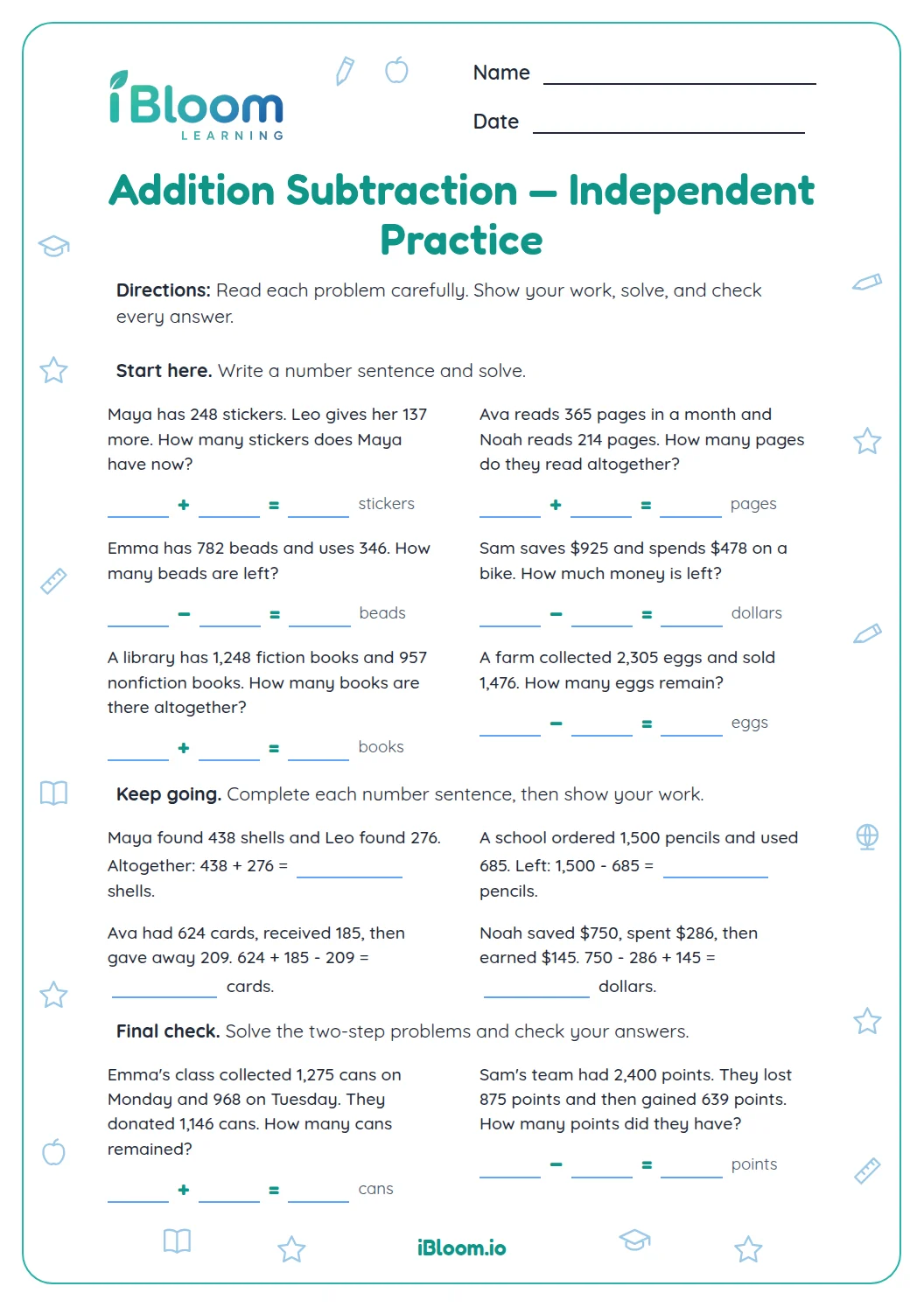
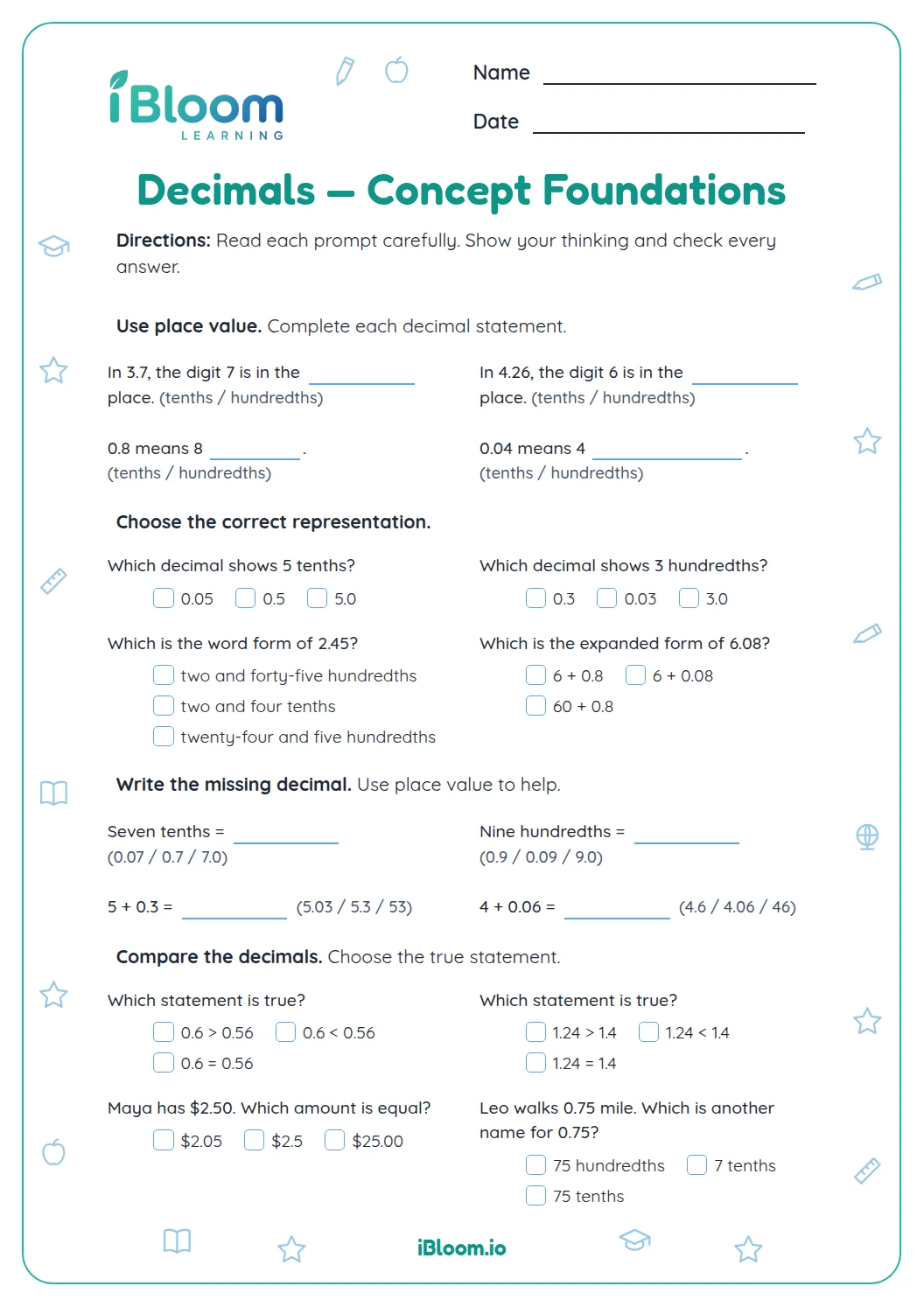
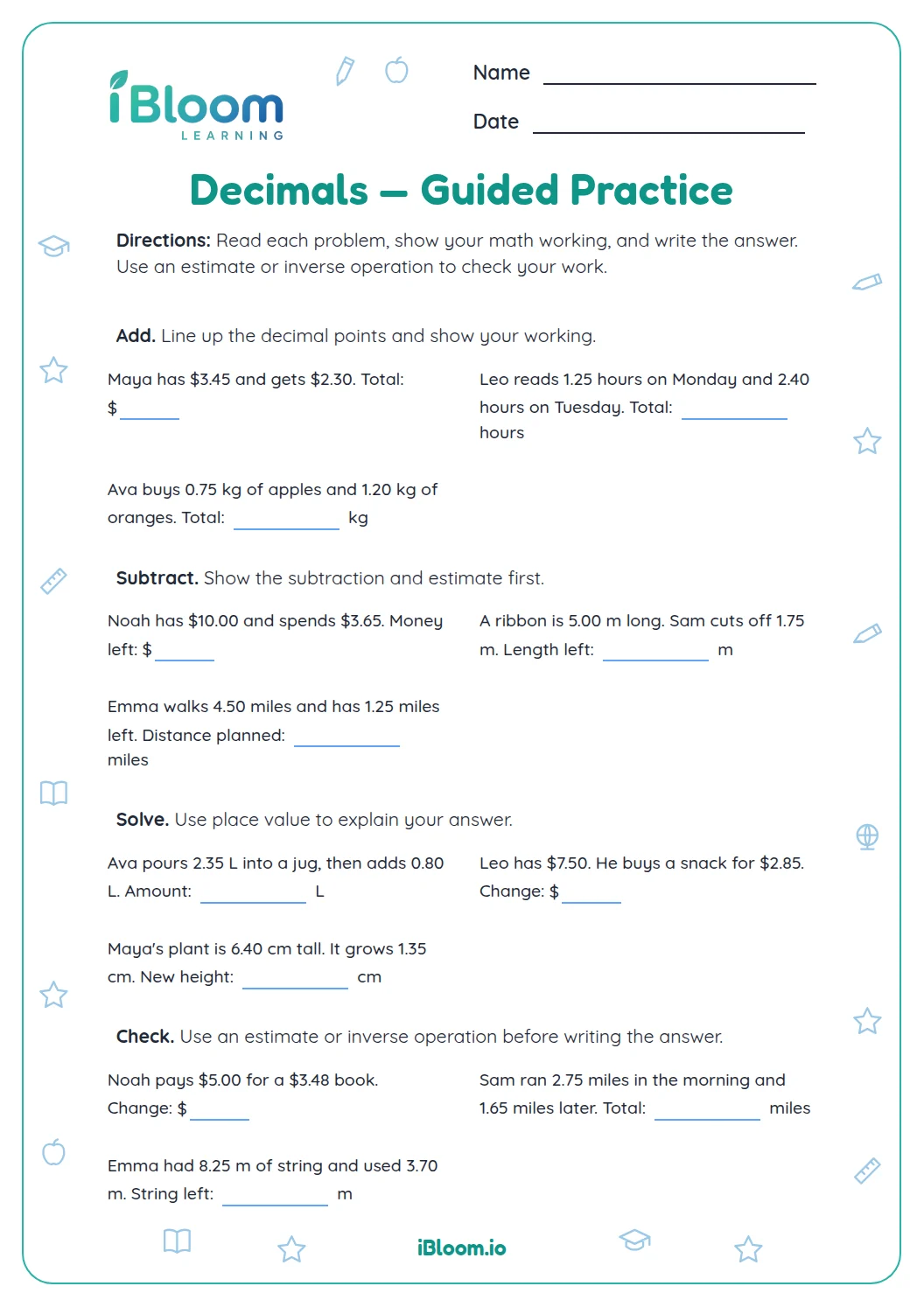
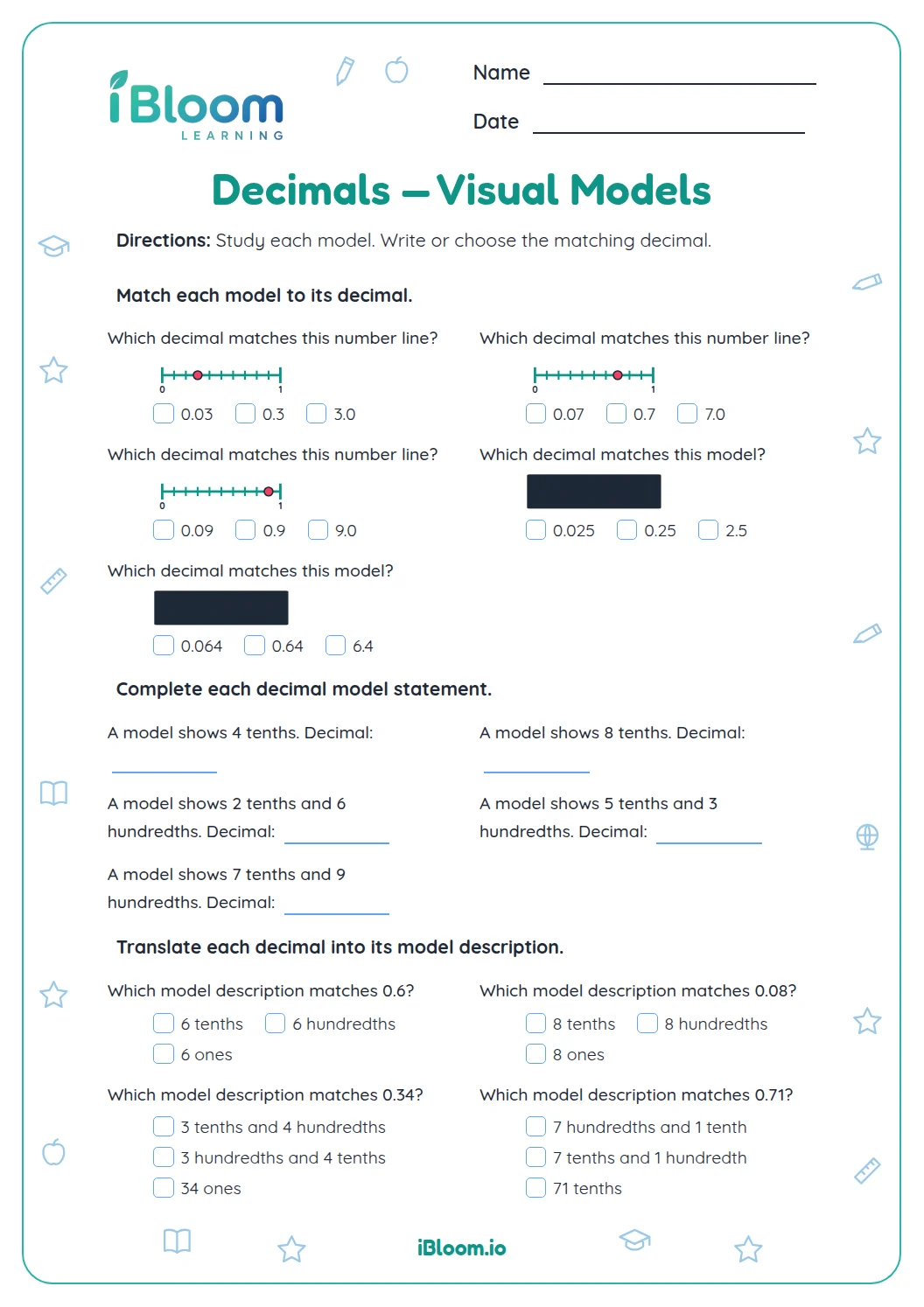
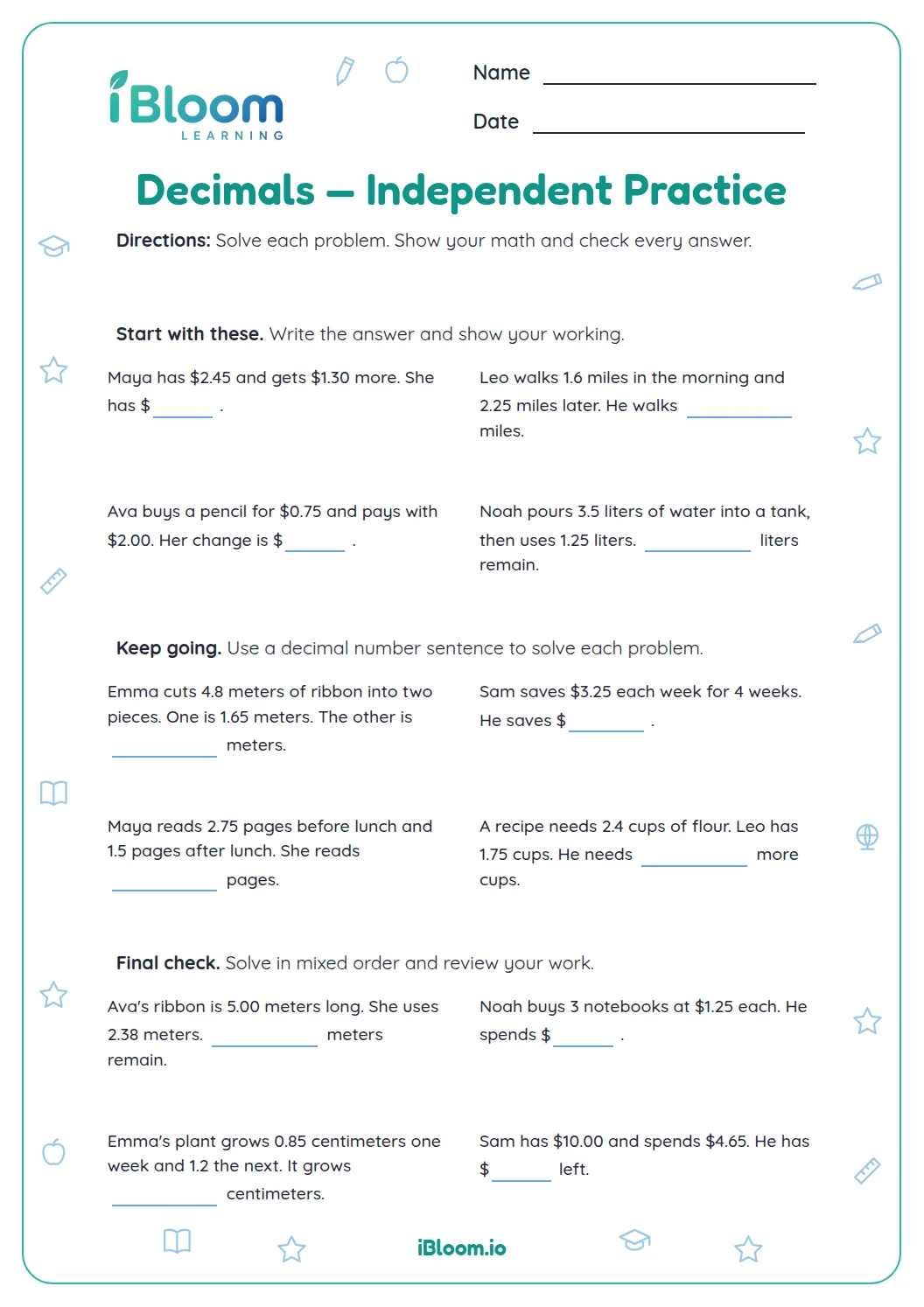
This free printable Grade 4 worksheet focuses on rounding and estimation models. Rounding and Estimation Models includes 14 questions and a separate answer key for checking answers. Each prompt is written for this sheet and gives learners a chance to use the named skill.
Aligned to CCSS 4.NBT.A.3
How can a learner work through rounding and estimation models?
Start by identifying the place named in each question. For 1,462 to the nearest hundred, the tens digit is 6, so 1,462 rounds up to 1,500. For a sum, round each amount first when the prompt asks for an estimate, then combine the rounded amounts.
- 11,462 rounds to 1,500 to the nearest hundred.
- 2The tens digit is 6, so the hundreds digit increases by one.
- 3For an estimated total, round both addends as directed, then add.
How should the answers be checked?
Complete the questions before opening the key. For any missed response, return to the exact clue, model, or sentence that supports the correct answer.
What is included in the printable?
The worksheet has 14 questions across 4 pages. Its answer key is separate so it can be used for checking after the practice is complete.
How to use the worksheet
- 1Read the directions and notice what each question asks.
- 2Work through one item at a time, showing or marking the reasoning where useful.
- 3Reread each response to make sure it answers the prompt.
- 4Use the separate answer key to check completed work.
- 5Return to missed items and correct them using the clue or method.
Common mistakes and quick fixes
The mistake
Rounding down when the next digit is 5 or more.
The fix
Check the digit immediately to the right of the place being rounded.
The mistake
Rounding each addend to a different place.
The fix
Round both amounts to the place named in the prompt.
The mistake
Estimating the total but forgetting the requested unit or money sign.
The fix
Reread the question and include the matching unit or symbol.
Common Core alignment
This worksheet practices the following Common Core standard.
Round multi-digit whole numbers to a named place before estimating totals.
On this sheet: The questions ask learners to round multi-digit whole numbers to a named place.
Show the official wordingHide the official wording
Use place value understanding to round multi-digit whole numbers to any place.
What to practice next
Make more practice
Further reading
Questions parents and teachers ask
How many questions are on this Grade 4 worksheet?
There are 14 questions across 4 printable worksheet pages. They focus on rounding and estimation models and give learners more than one chance to use the skill. The separate answer key makes it easy to check each response after the work is finished.
Does the printable include an answer key?
Yes. The answer key is printed separately from the worksheet pages. Have the learner finish the questions first, then compare each response with the key and revisit any item that needs a correction. The key includes the expected response for every question on the worksheet.
How can I support a learner who gets stuck?
Ask the learner to reread the full prompt and point to the clue, number, or detail that matters. They can explain the next step aloud before writing. Afterward, compare the reasoning with the answer key. Focus on one step at a time, and allow the learner to explain the choice in their own words.
Can learners complete the worksheet independently?
Learners who are familiar with the skill can try the questions independently and check their work afterward. An adult can read the directions or model how to approach one item, then let the learner continue at a comfortable pace.
What should learners do after checking the key?
For each missed item, return to the prompt and find the clue or method that leads to the correct response. Write in the correction and explain the step. This keeps checking connected to the skill practiced on the worksheet.