





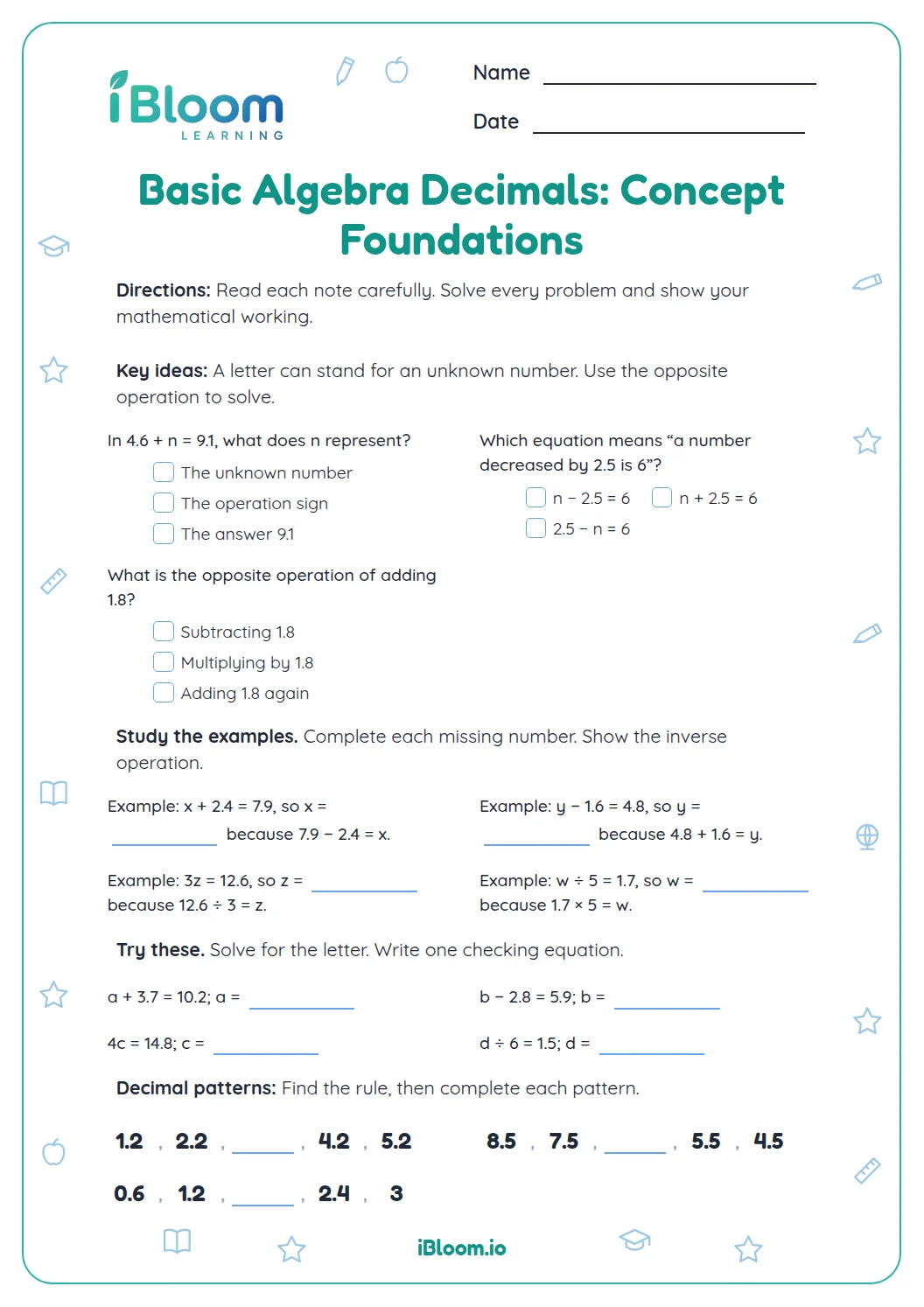
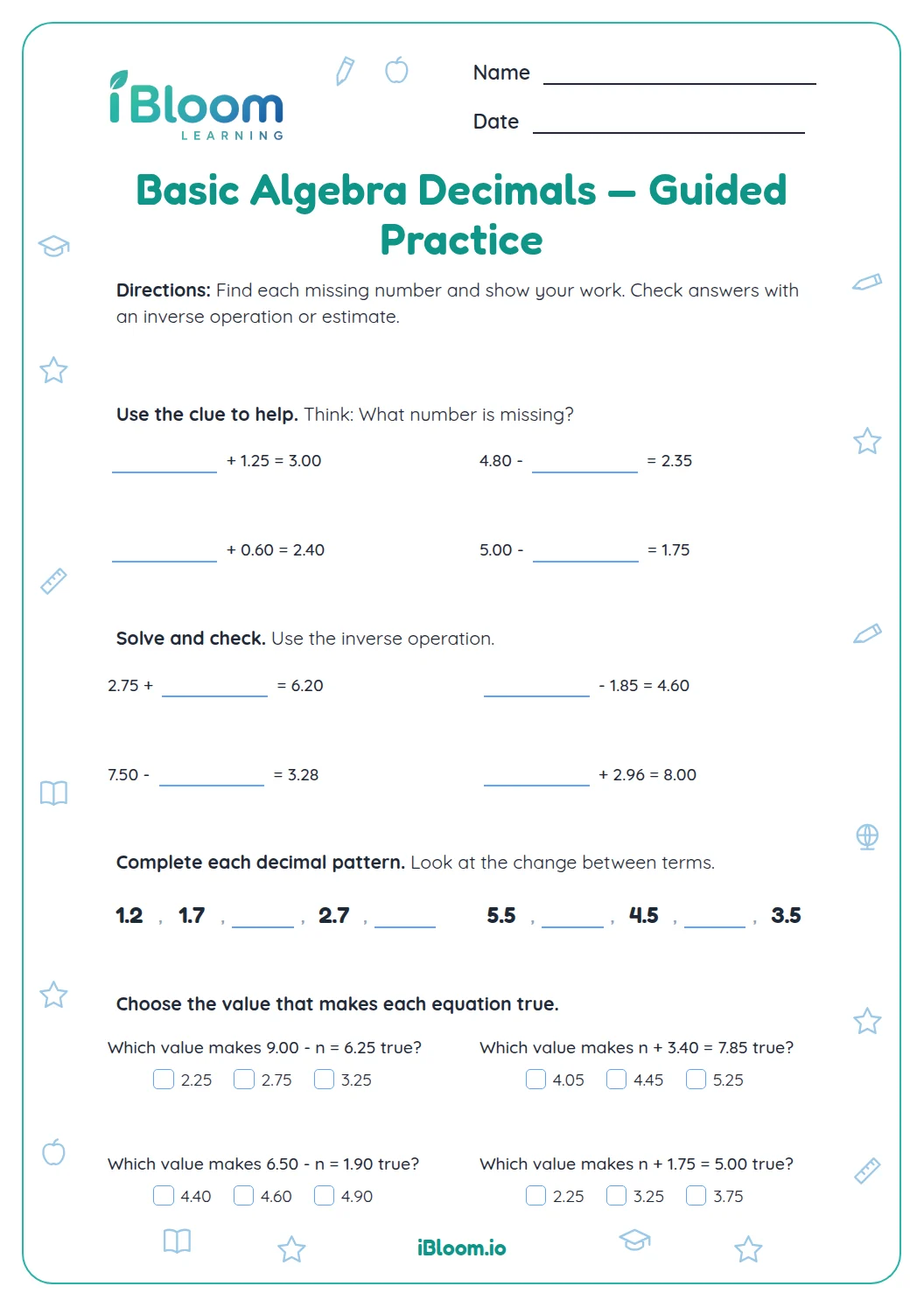
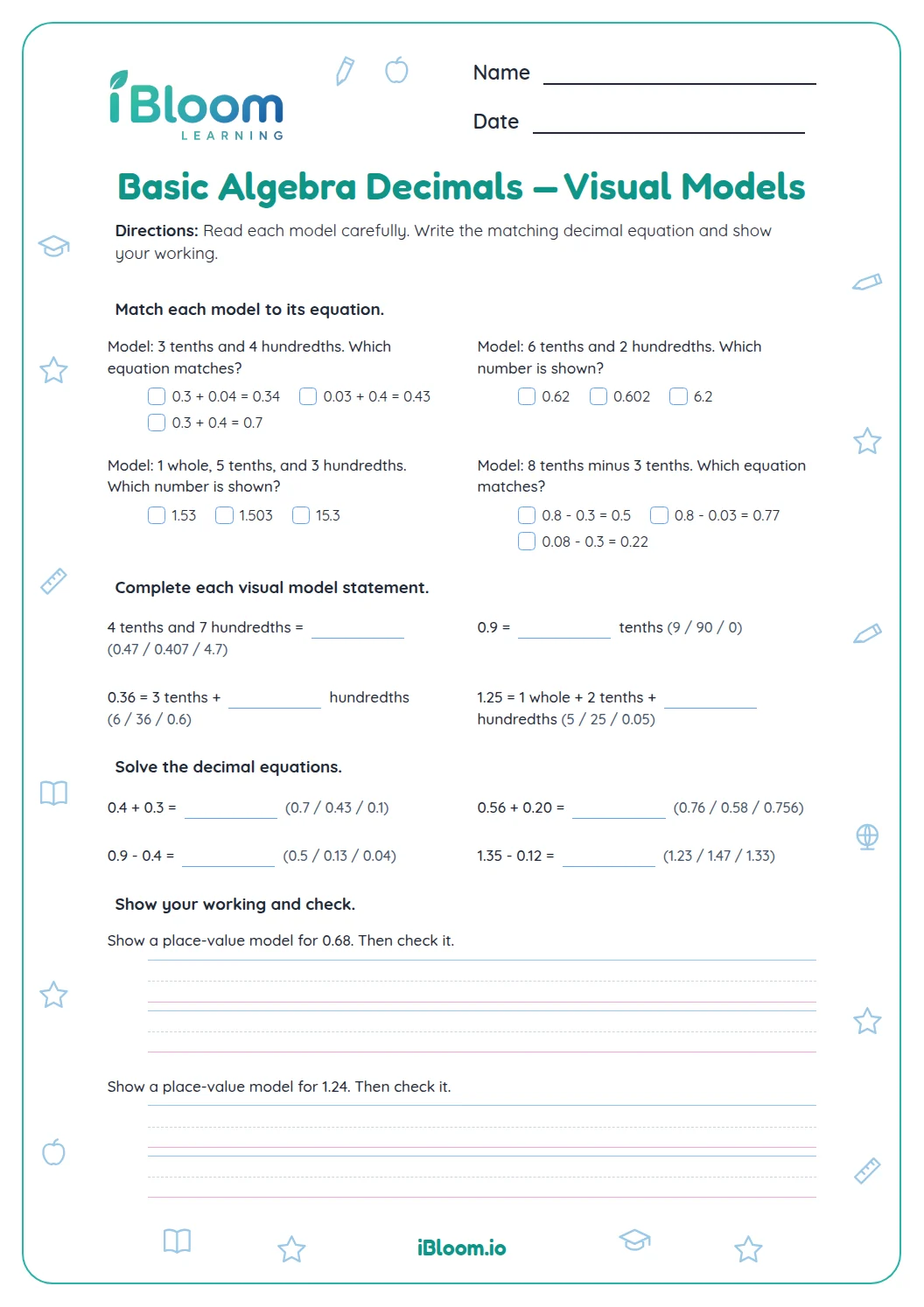
About this worksheet
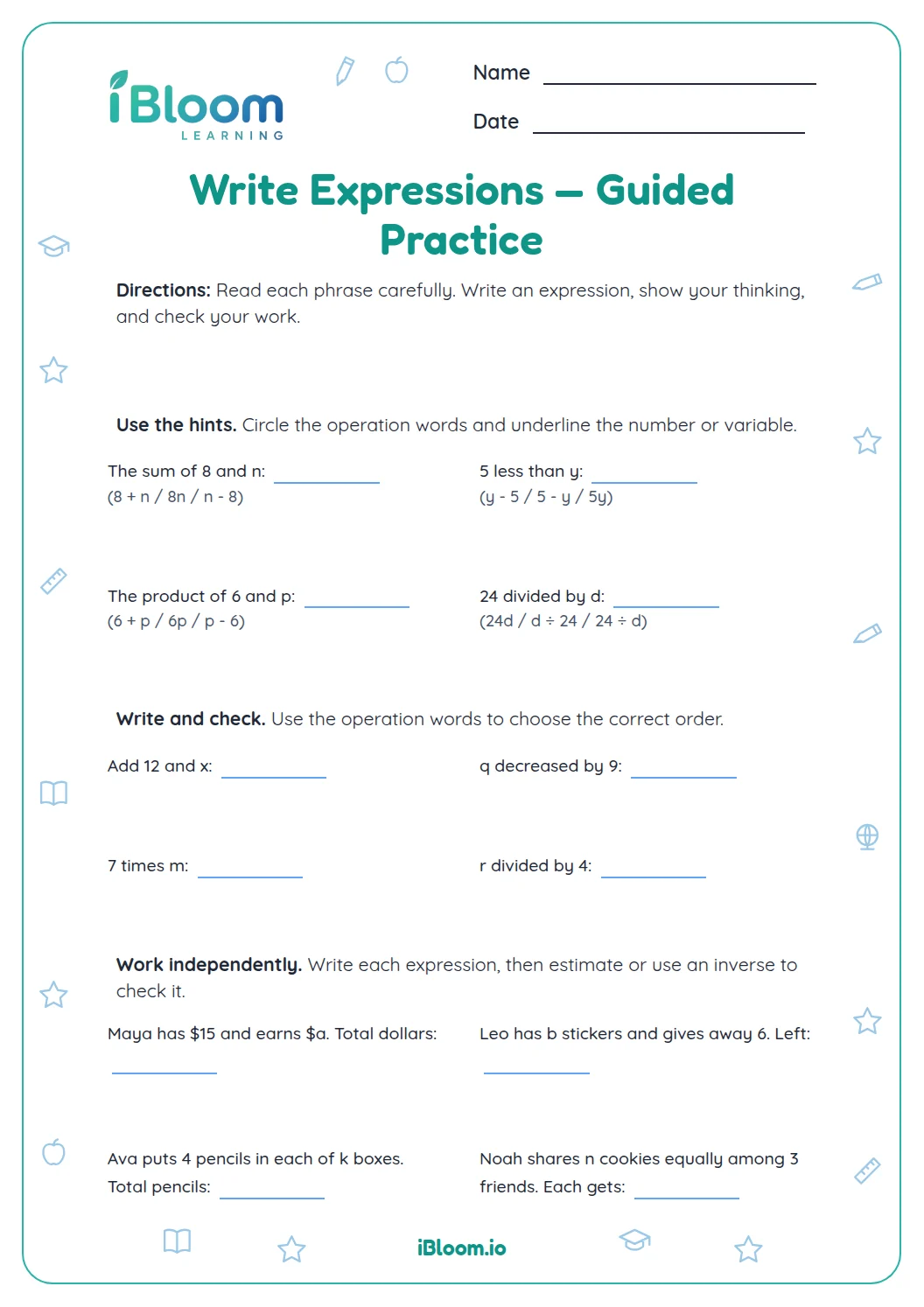
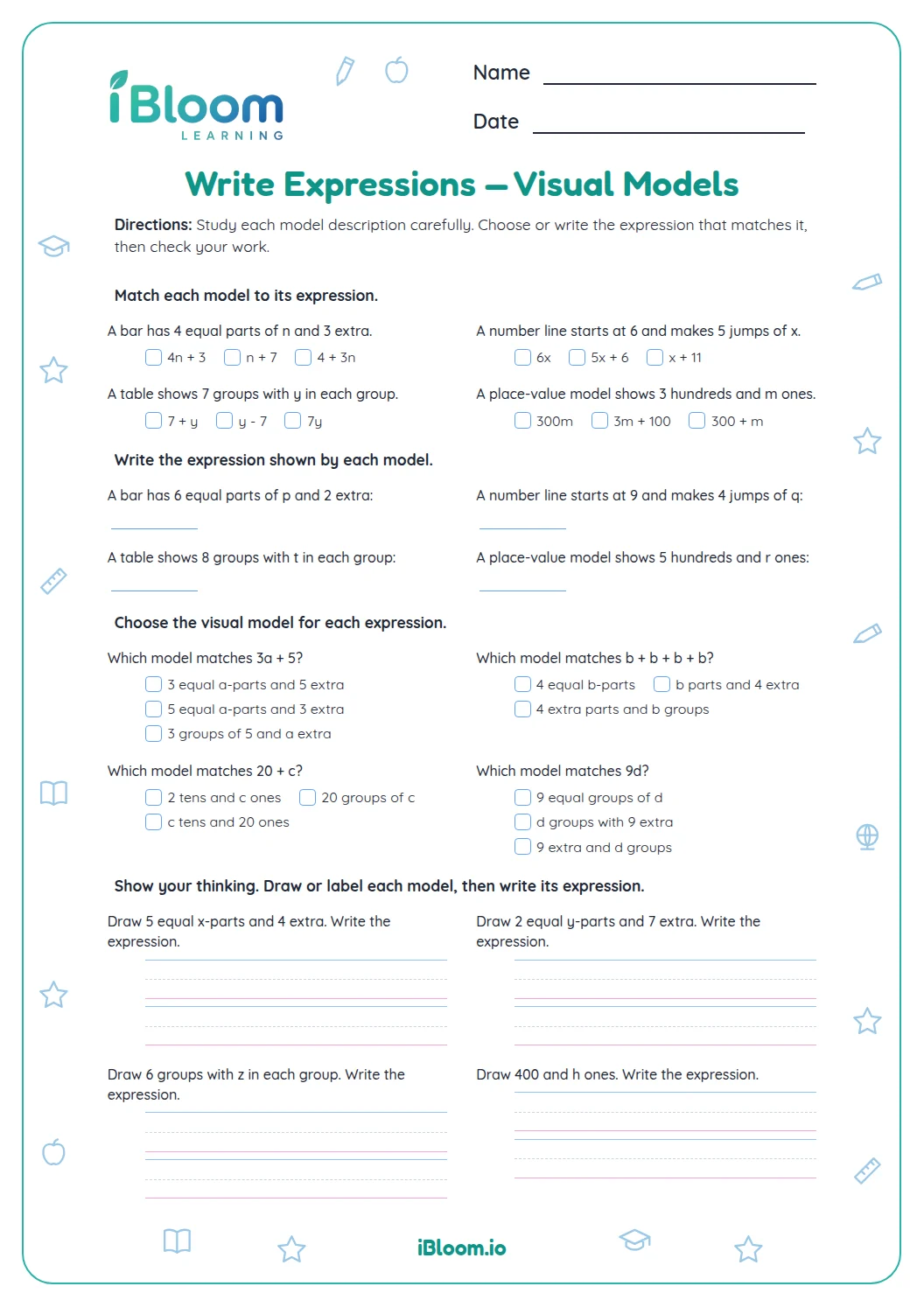
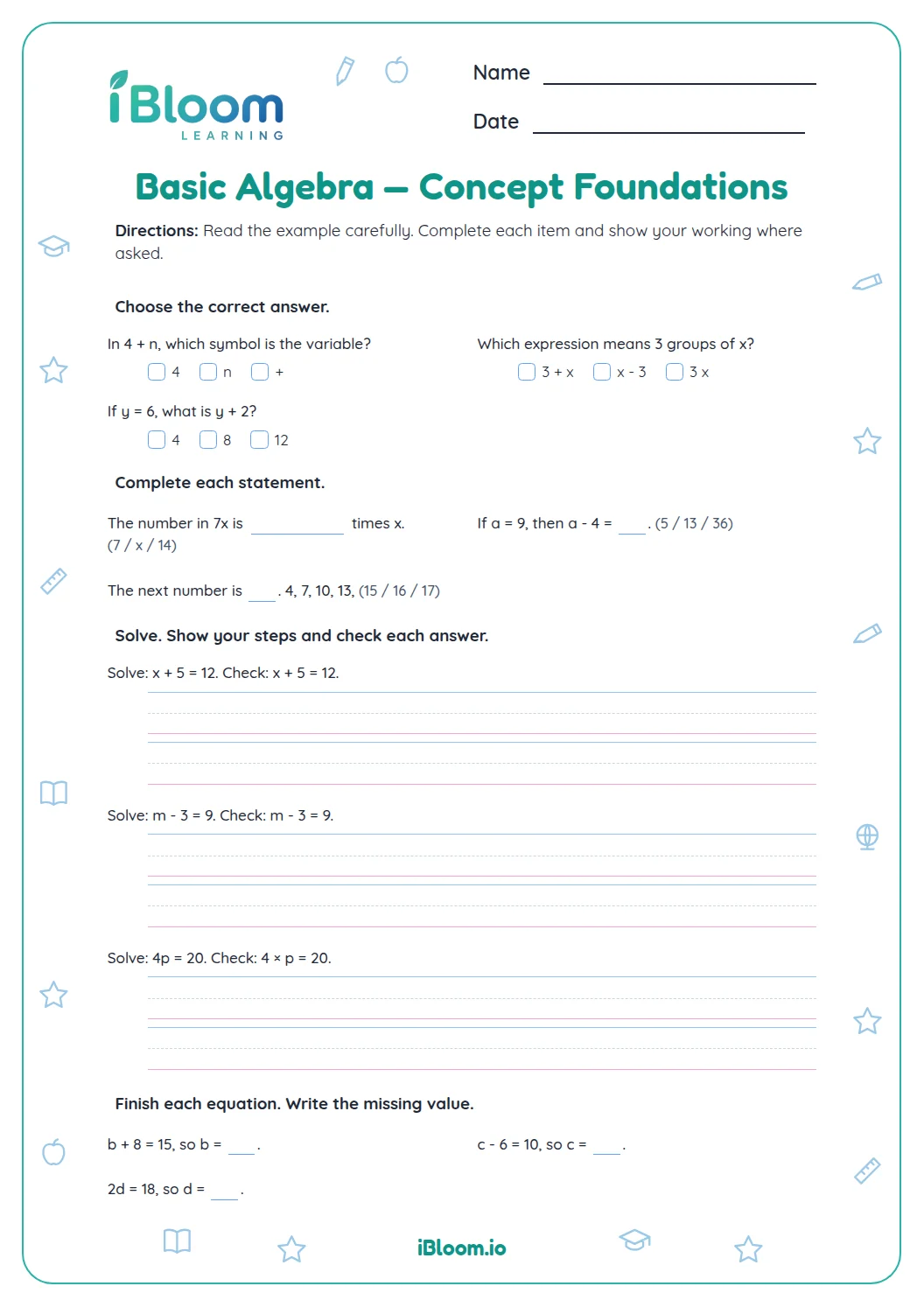
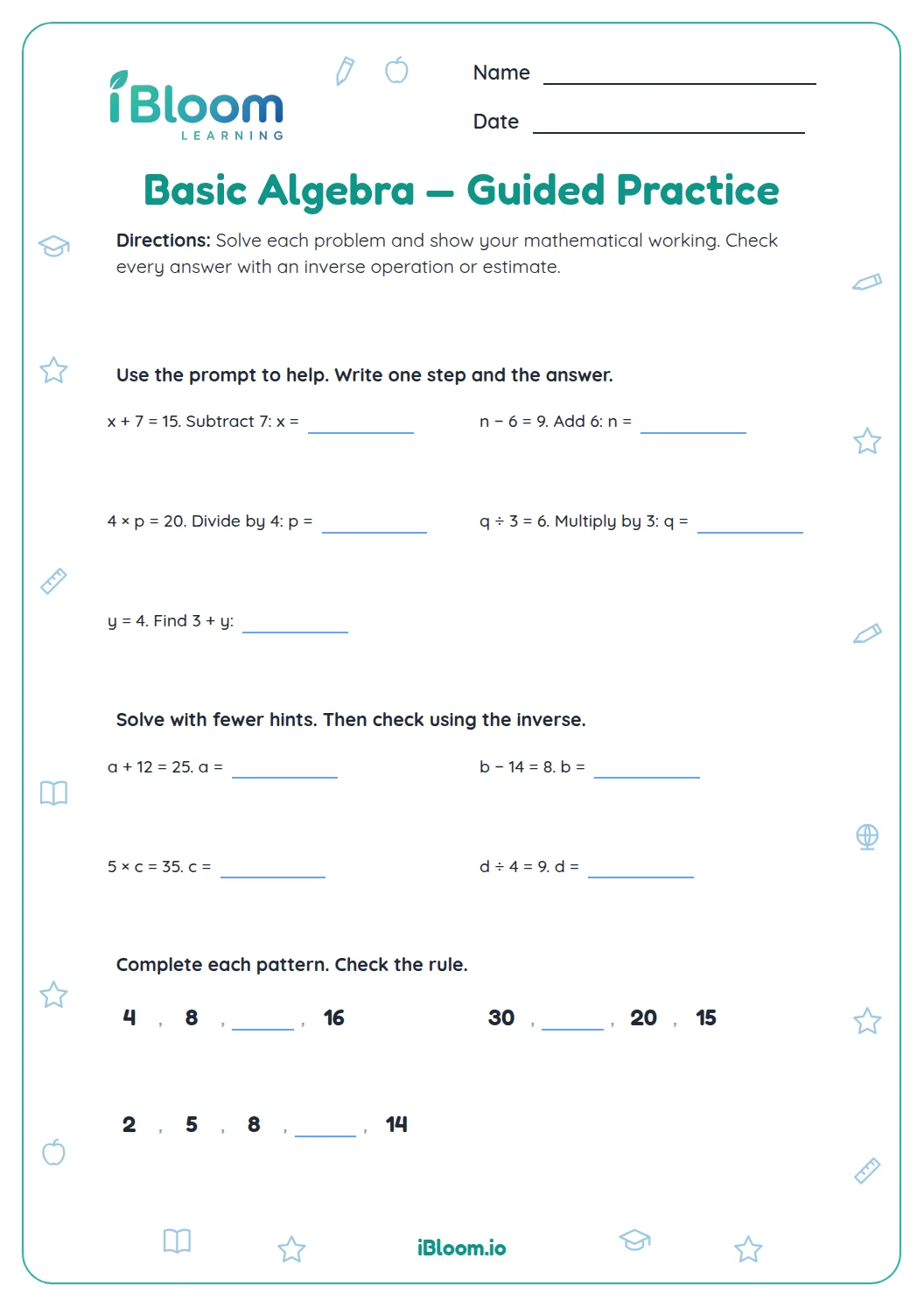
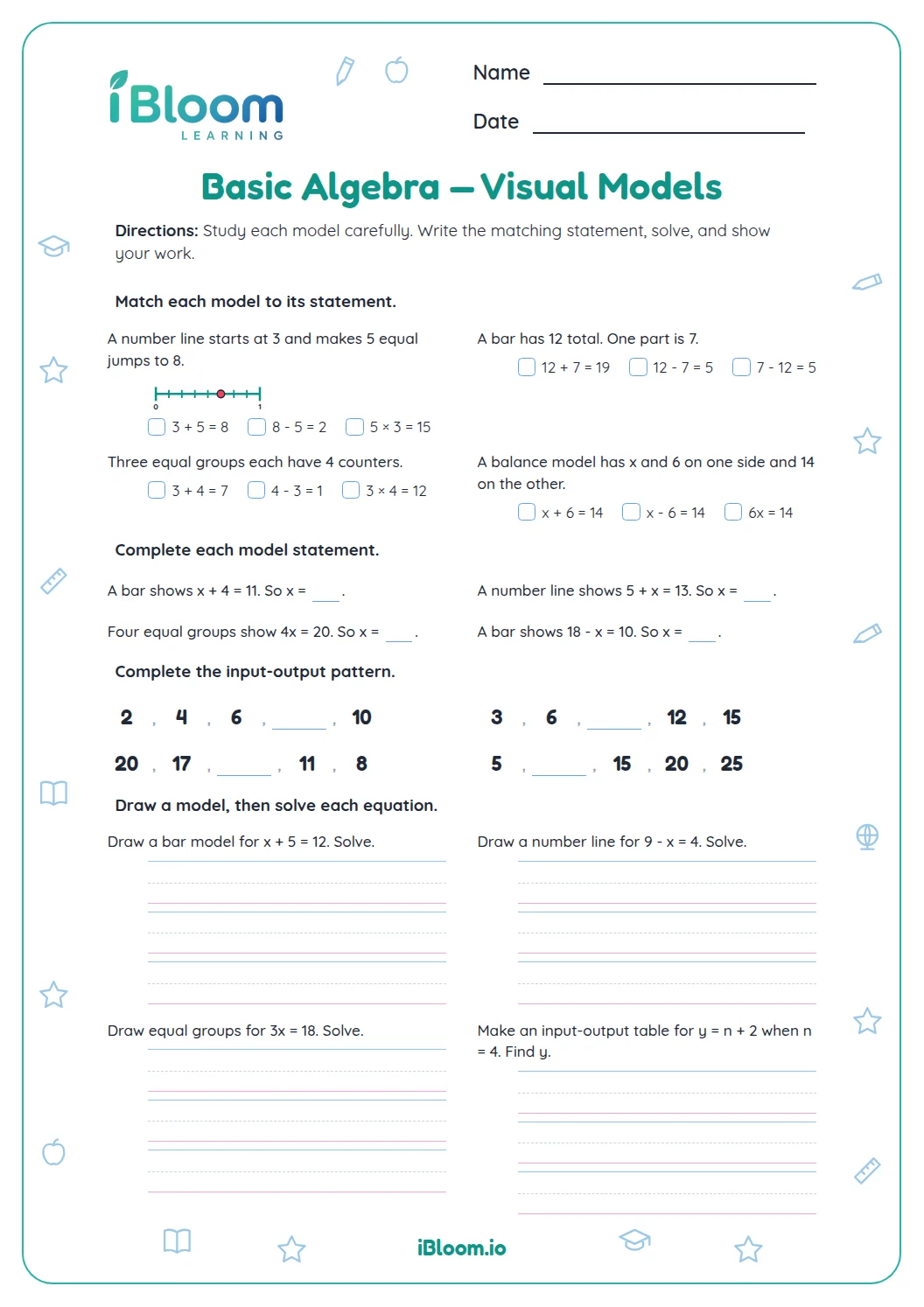
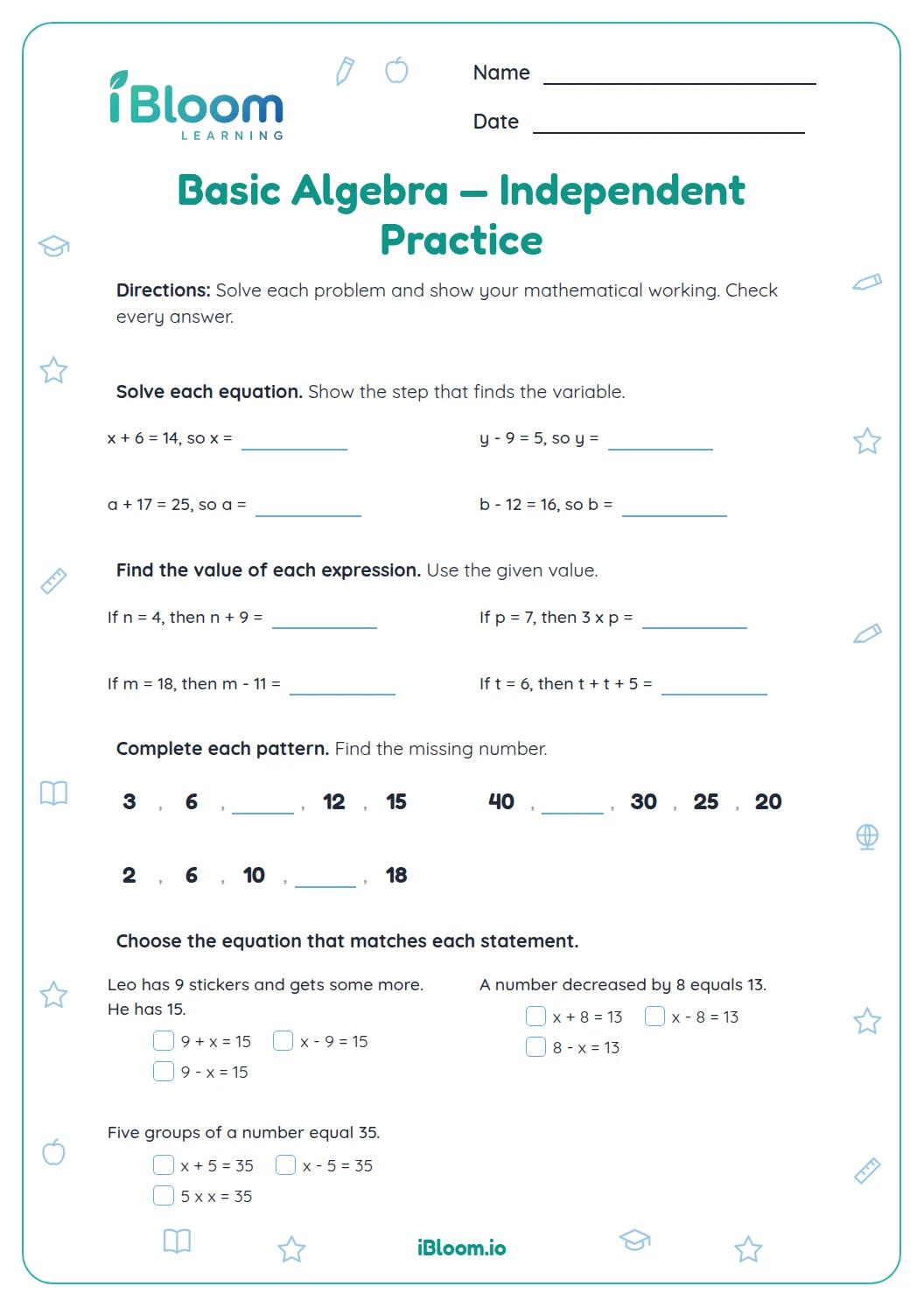
This Grade 5 worksheet gives learners 16 ways to translate phrases and situations into numerical expressions. They write expressions such as “four times the sum of x and 3,” evaluate expressions for stated values, and choose expressions that match verbal descriptions. The separate answer key supports checking after practice. These tasks align with CCSS 5.OA.A.2: writing simple expressions and interpreting them without evaluating.
Aligned to 5.OA.A.2
How do you translate a phrase?
Start with the operation named by the phrase, then preserve any grouping words. For question 3, “four times the sum of x and 3” means multiply the entire sum by four.
- 1“The sum of x and 3” is (x + 3).
- 2“Four times” means multiply that complete sum.
- 3Expression: 4 × (x + 3).
What changes from part to part?
Part A asks for expressions from phrases. Part B adds a stated value for each variable, so the expression must be evaluated. Part C asks learners to recognize the expression that matches the words.
How can the key support review?
Check the operations and grouping as well as the final values. If an answer differs, reread the phrase and match each operation word to its symbol.
How to use this worksheet
- 1Read the phrase and identify its operation words.
- 2Use parentheses when a phrase groups quantities, such as “the sum of x and 3.”
- 3Replace each variable with its stated value before calculating.
- 4Follow the order of operations when evaluating.
- 5Compare a selected expression with the wording one phrase at a time.
Mistakes to watch for
The mistake
Treating “three less than twice m” as 3 − 2 × m.
The fix
Start with twice m, then subtract 3.
The mistake
Multiplying only one term in a grouped sum.
The fix
Keep the parentheses around the full sum.
The mistake
Evaluating before substituting the given value.
The fix
Replace the variable first, then calculate.
Common Core alignment
Write and interpret numerical expressions that record calculations.
On this sheet: The questions directly practice this skill.
Show the official wordingHide the official wording
Write simple expressions that record calculations with numbers, and interpret numerical expressions without evaluating them.
What to practice next
Make more practice
Further reading
Questions parents and teachers ask
What kinds of questions are on this worksheet?
The 20 items ask learners to write expressions from phrases, evaluate expressions after a variable is given a value, and select a matching expression. The parts move from translation to applying and interpreting expressions. A separate answer key is included.
Does the worksheet include an answer key?
Yes. A separate answer key follows the three worksheet pages and lists a response for each of the 20 questions. For written expressions, equivalent forms that show the same operations may also be correct; compare the grouping and order with the phrase.
How can a child show the expression is correct?
Have the learner point to each operation word and explain the symbol used. Words such as “sum,” “product,” and “quotient” identify operations, while phrases such as “the sum of x and 3” signal grouping. For evaluation items, substitution provides a check.
How long does the worksheet take?
Plan for about 20 minutes for all 20 questions, with extra time if the learner explains each translation aloud. The answer key can be used afterward to review grouping, operation order, and calculations. The practice includes a printed key for review. Learners can pause after one part and return to the rest later.
Can learners complete it independently?
The directions and questions are designed for independent practice. A learner can write each expression, substitute values where given, and check with the key. An adult may want to review the first phrase together if operation words are new. The practice includes a printed key for review.