



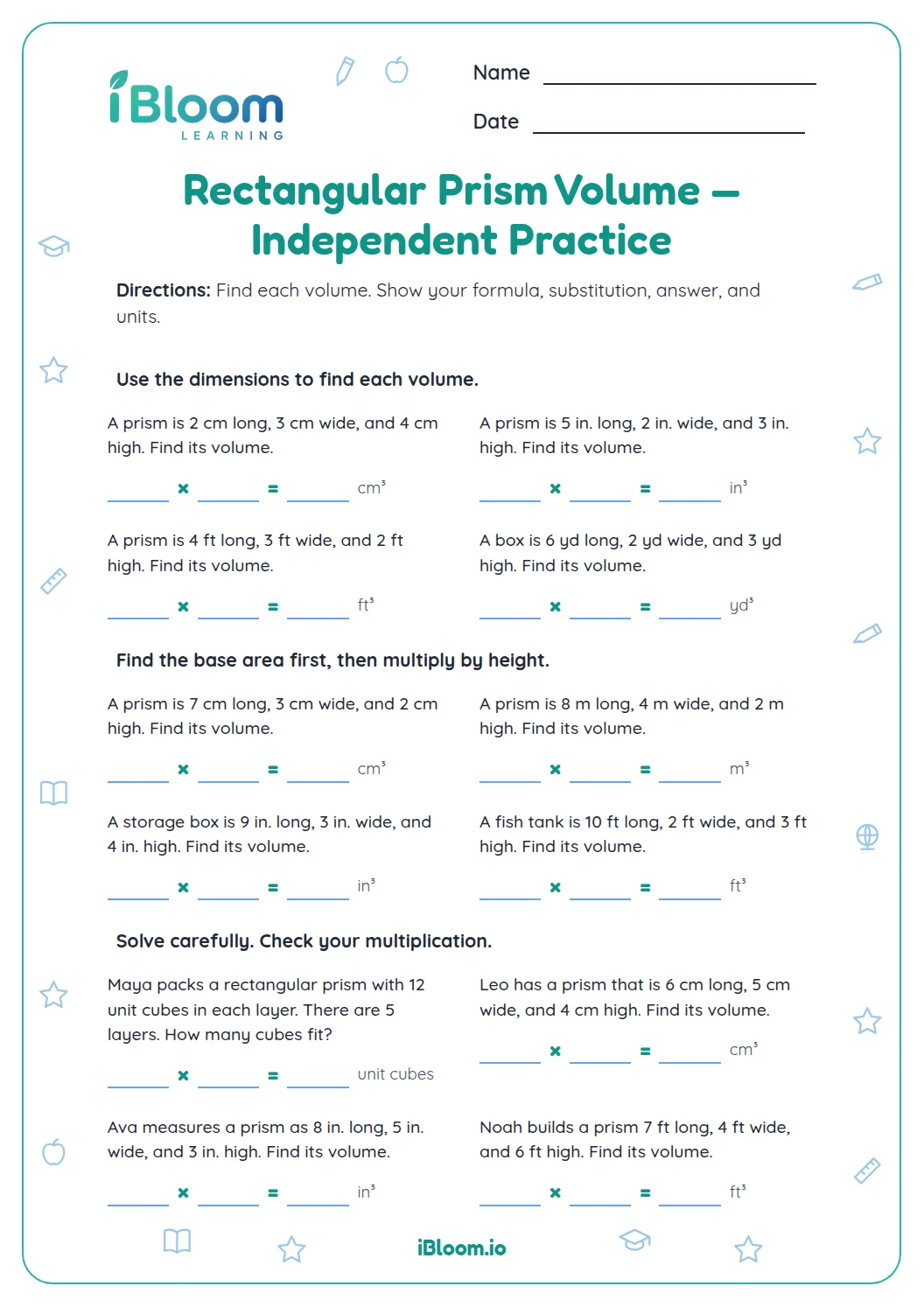
About this worksheet
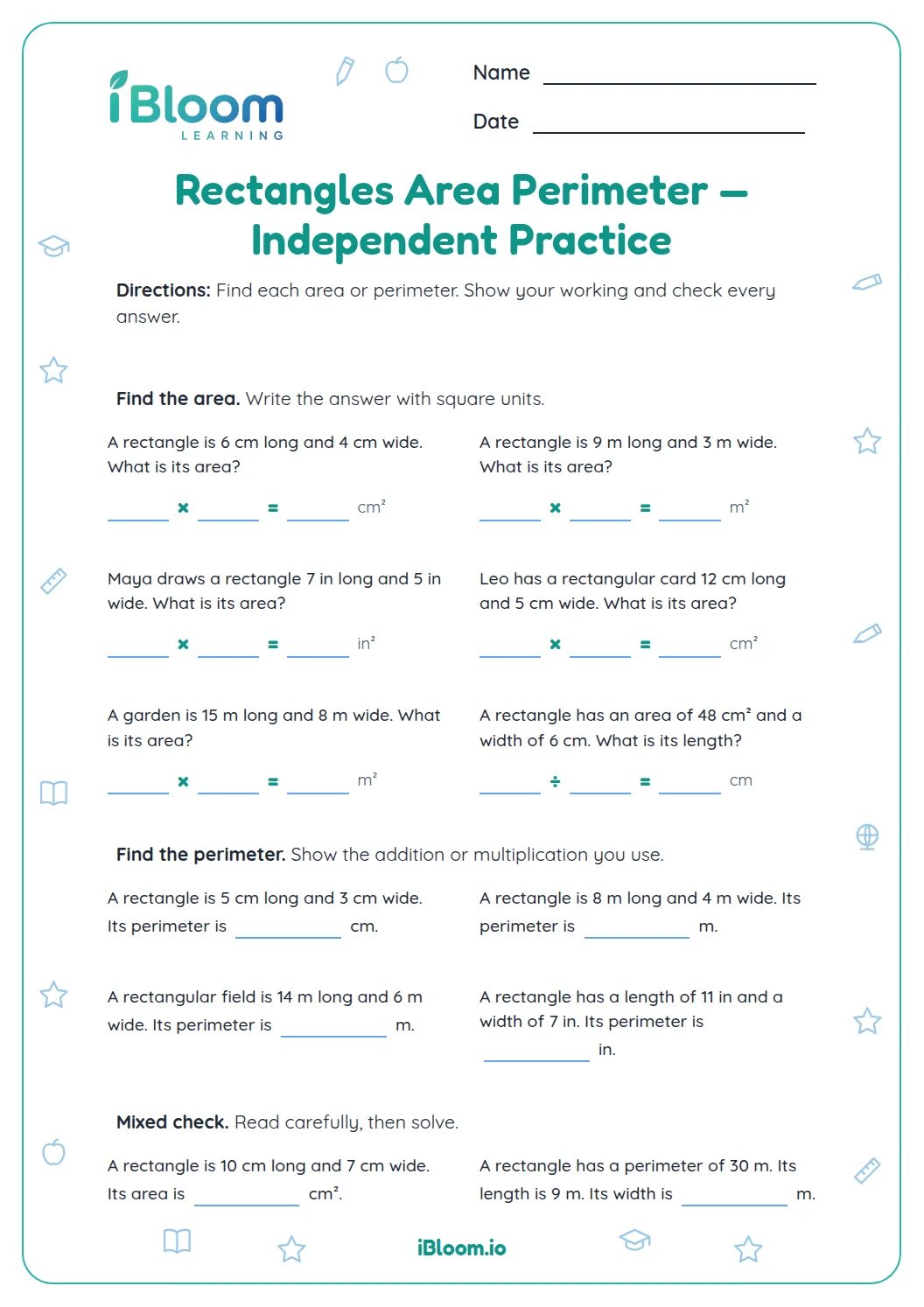
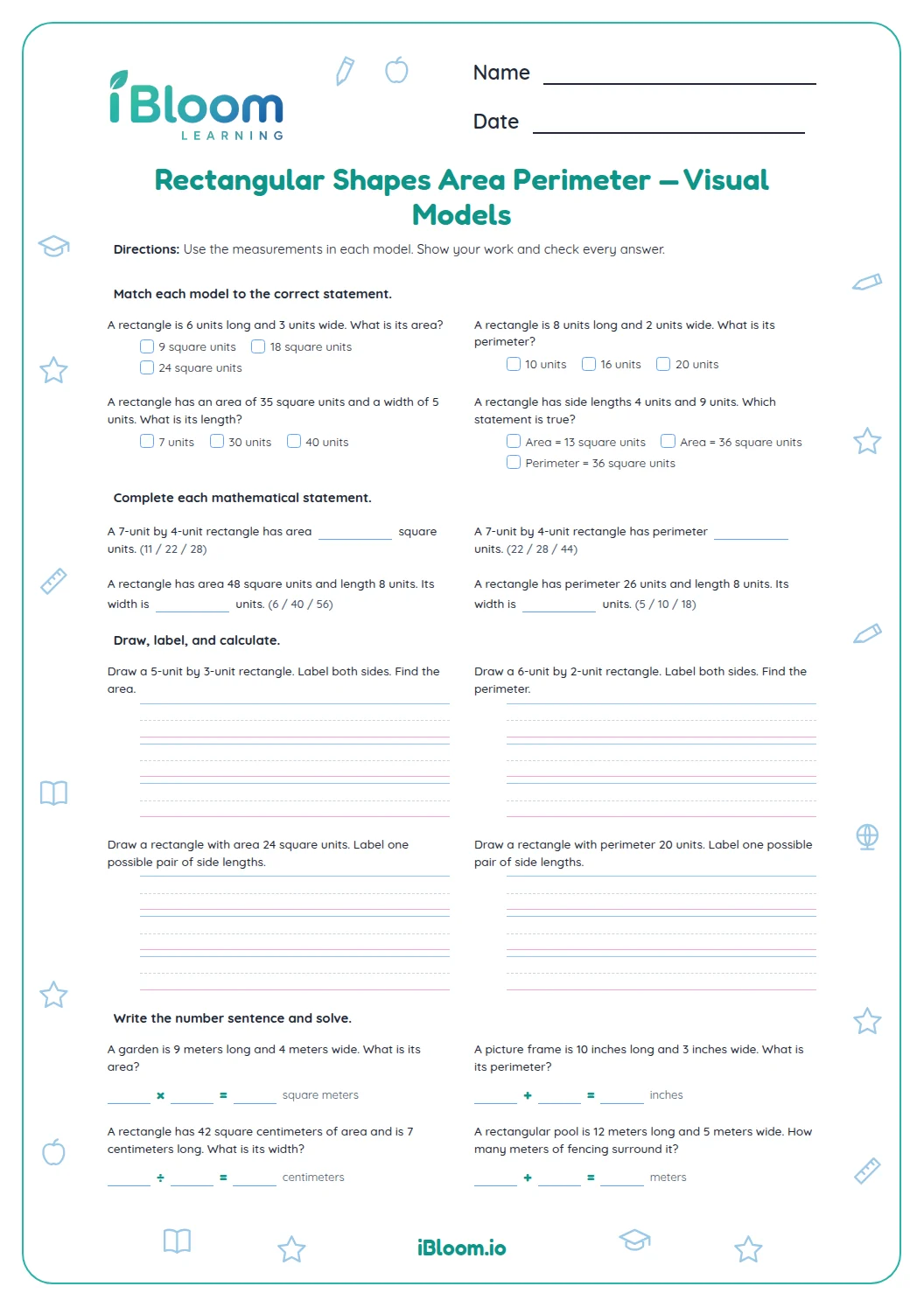
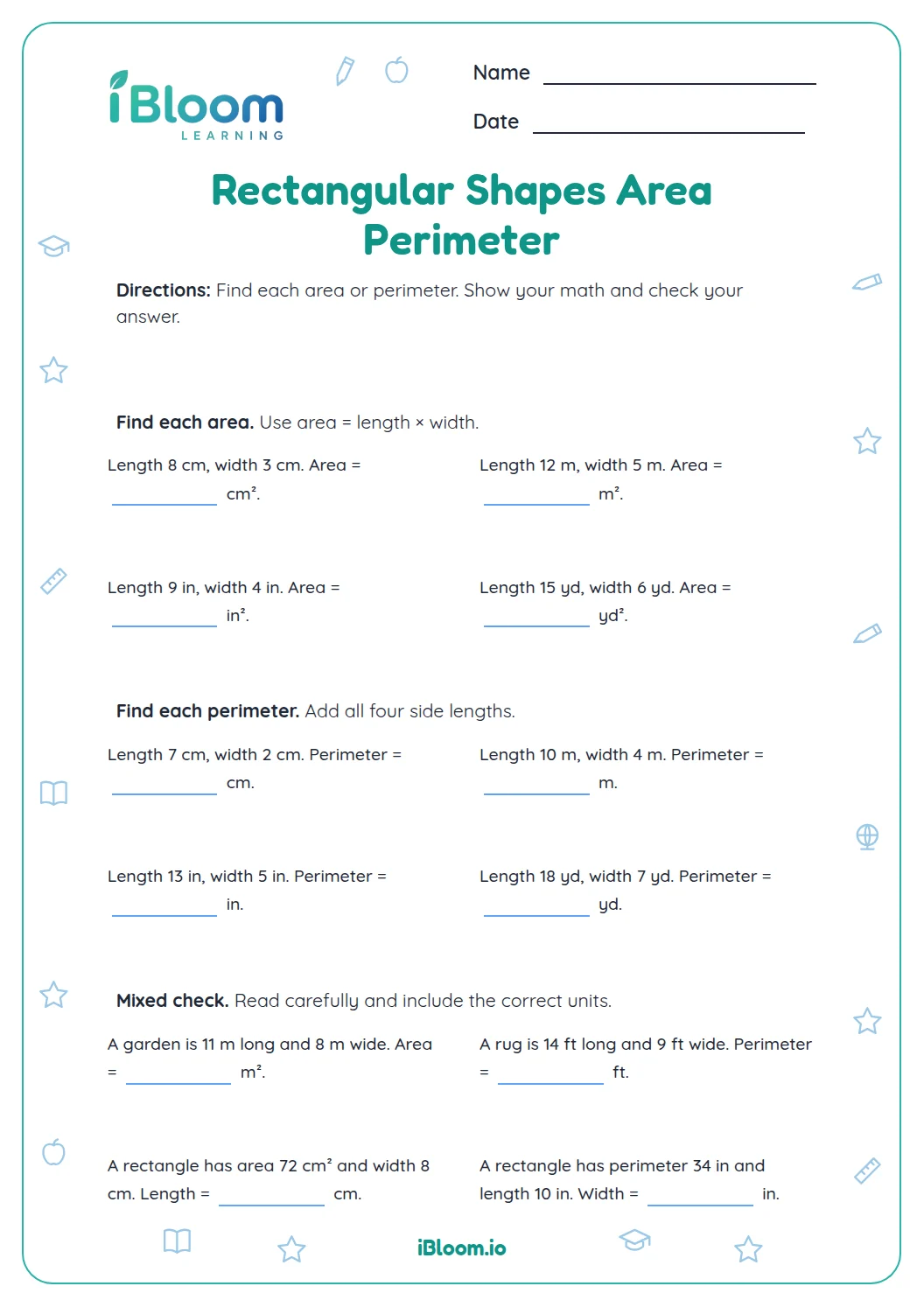
Find area by multiplying length by width, and find perimeter by adding the four side lengths. This independent practice uses centimeters and square centimeters, then asks learners to work backward from a known measure.
Aligned to 4.MD.A.3
How does this practice build rectangle area and perimeter?
Find area by multiplying length by width, and find perimeter by adding the four side lengths. This independent practice uses centimeters and square centimeters, then asks learners to work backward from a known measure.
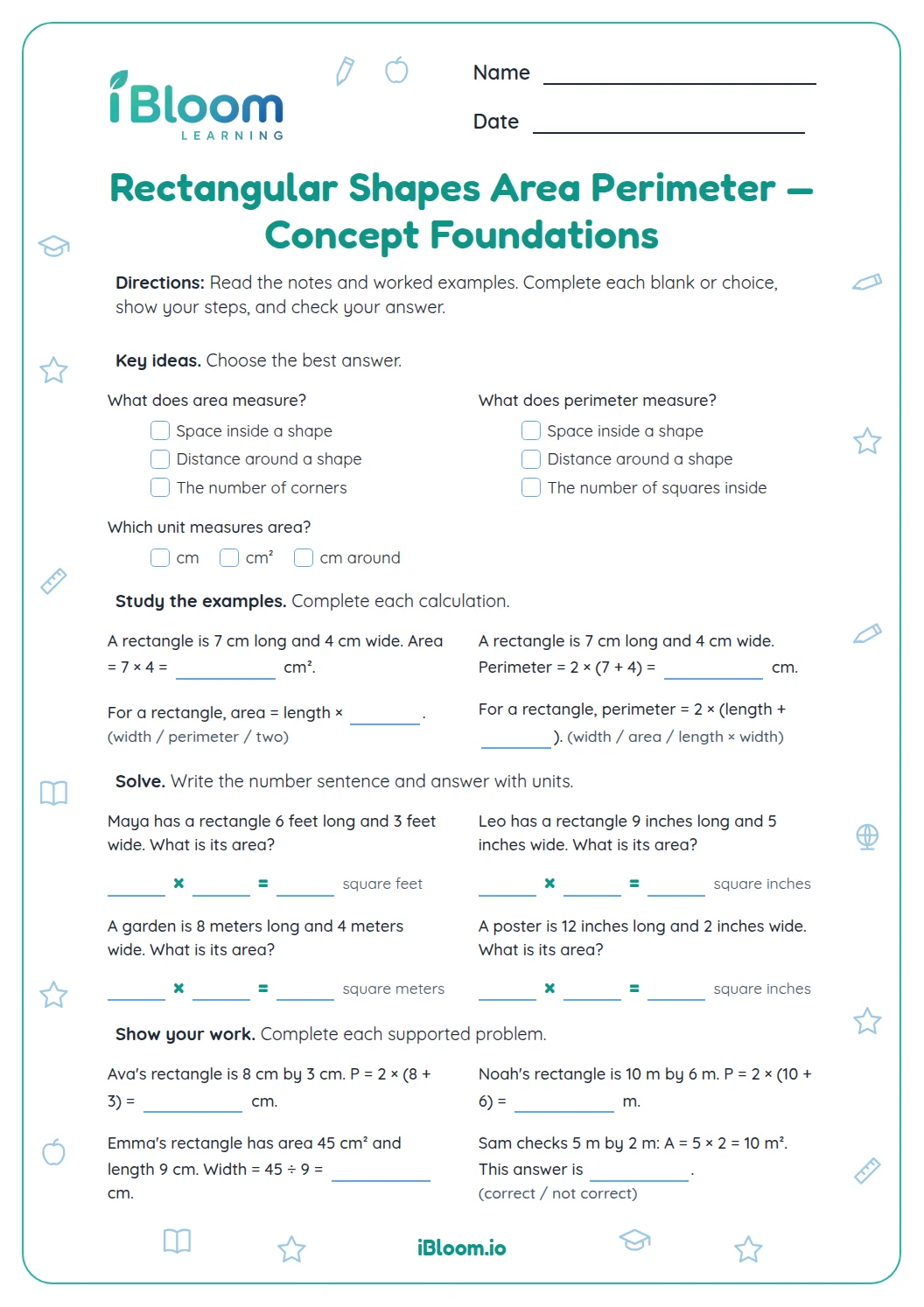
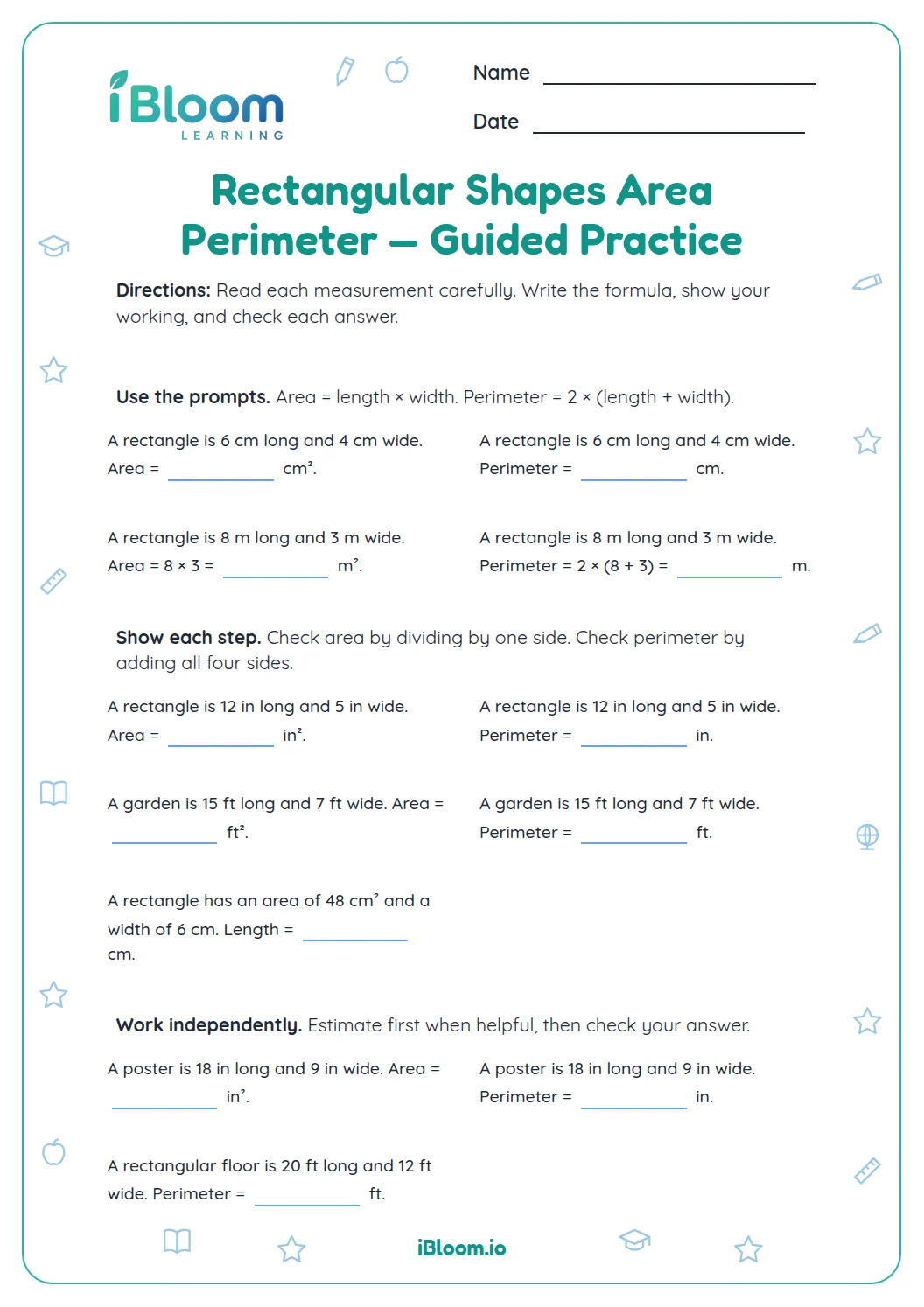
Use this sheet in order: the first part focuses on one skill, and later parts ask learners to apply it in a different way. Check the separate key after the learner has tried each item.
What is on the worksheet?
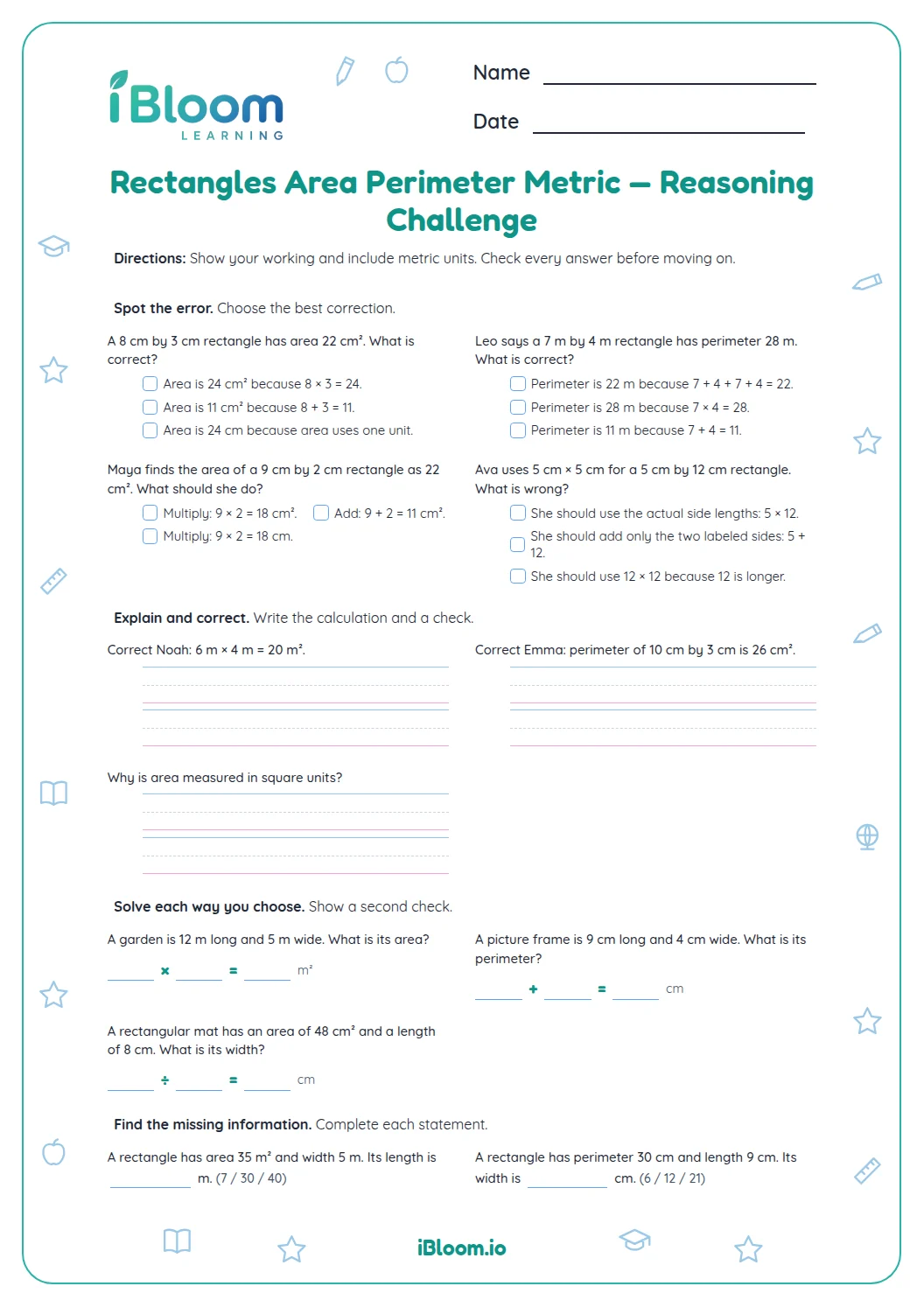
Practice metric rectangle area and perimeter with side lengths in centimeters, missing sides, and a comparison. Includes a separate answer key.
- Part A: Find the area
- Part B: Find the perimeter
- Part C: Choose the measure
How to use the worksheet
- 1Read the direction for the part before starting.
- 2Complete each item and use the provided response space.
- 3For reading or vocabulary items, return to the passage, clue, or word list.
- 4Check the separate answer key after finishing and revisit any missed item.
Check your work
The mistake
Mixing up square units and linear units.
The fix
Label area in cm² and perimeter in cm.
The mistake
Adding only two sides for perimeter.
The fix
Remember opposite sides match: add length + width twice.
The mistake
Using the known side as the missing side without solving.
The fix
Use division for a missing side from area, or subtract known sides for perimeter.
Curriculum alignment
This practice supports the grade-level skill named below.
Apply rectangle area and perimeter formulas to missing-side and comparison problems.
On this sheet:
Show the official wordingHide the official wording
Apply the area and perimeter formulas for rectangles in real world and mathematical problems.
What to practice next
Make more practice
Further reading
Questions parents and teachers ask
What is the difference between area and perimeter?
Area counts the square units that cover a rectangle, so multiply its length by its width and write square centimeters. Perimeter measures the distance around the outside, so add all four sides and write centimeters. Parts A and B give separate practice with each measure before Part C mixes them.
How does the worksheet practice missing side lengths?
Part C gives a rectangle’s area and one side, or its perimeter and one side, then asks for the missing measure. Divide the area by the known side for a missing width or length. For perimeter, subtract the two known long sides and split the remainder between the equal sides.
How many questions are on the printable?
There are 15 questions across three parts. Part A has five area questions, Part B has five perimeter questions, and Part C has five mixed or missing-measure questions. The answer key follows the two practice pages, so the full printable and key take three pages.
What units should learners write?
Write cm² for area and cm for perimeter or a missing side length. The squared unit matters because area counts square units, while perimeter measures a one-dimensional distance around the rectangle. The directions at the top remind learners to include the appropriate unit.
What should I check in the last two problems?
For the comparison, calculate each rectangle’s area before deciding which is greater. For the split rectangle, notice that the 10 cm side is divided into two equal lengths; each small rectangle is 5 cm by 3 cm. The key gives the greater-area choice and each smaller area.