


About this worksheet
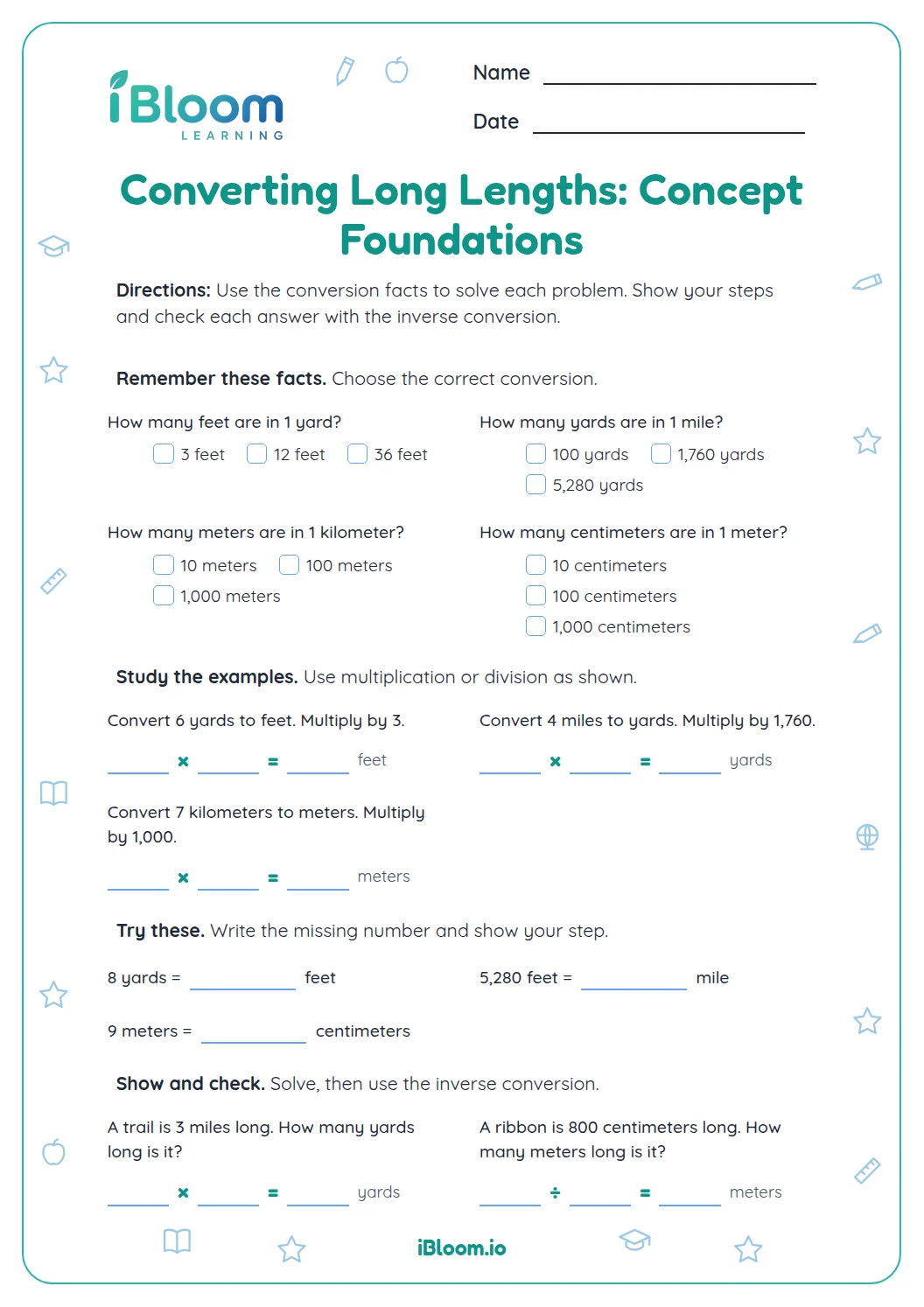
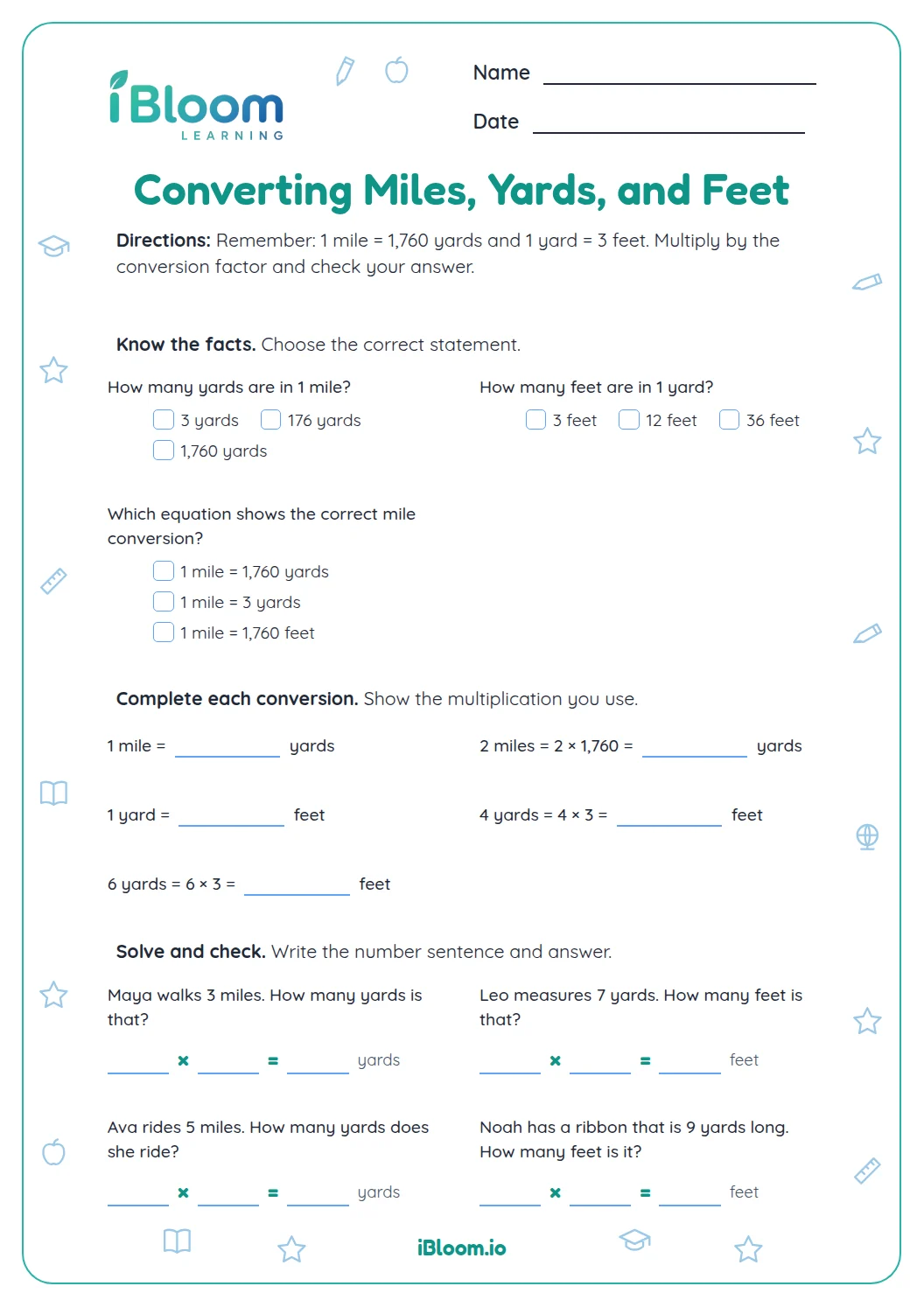
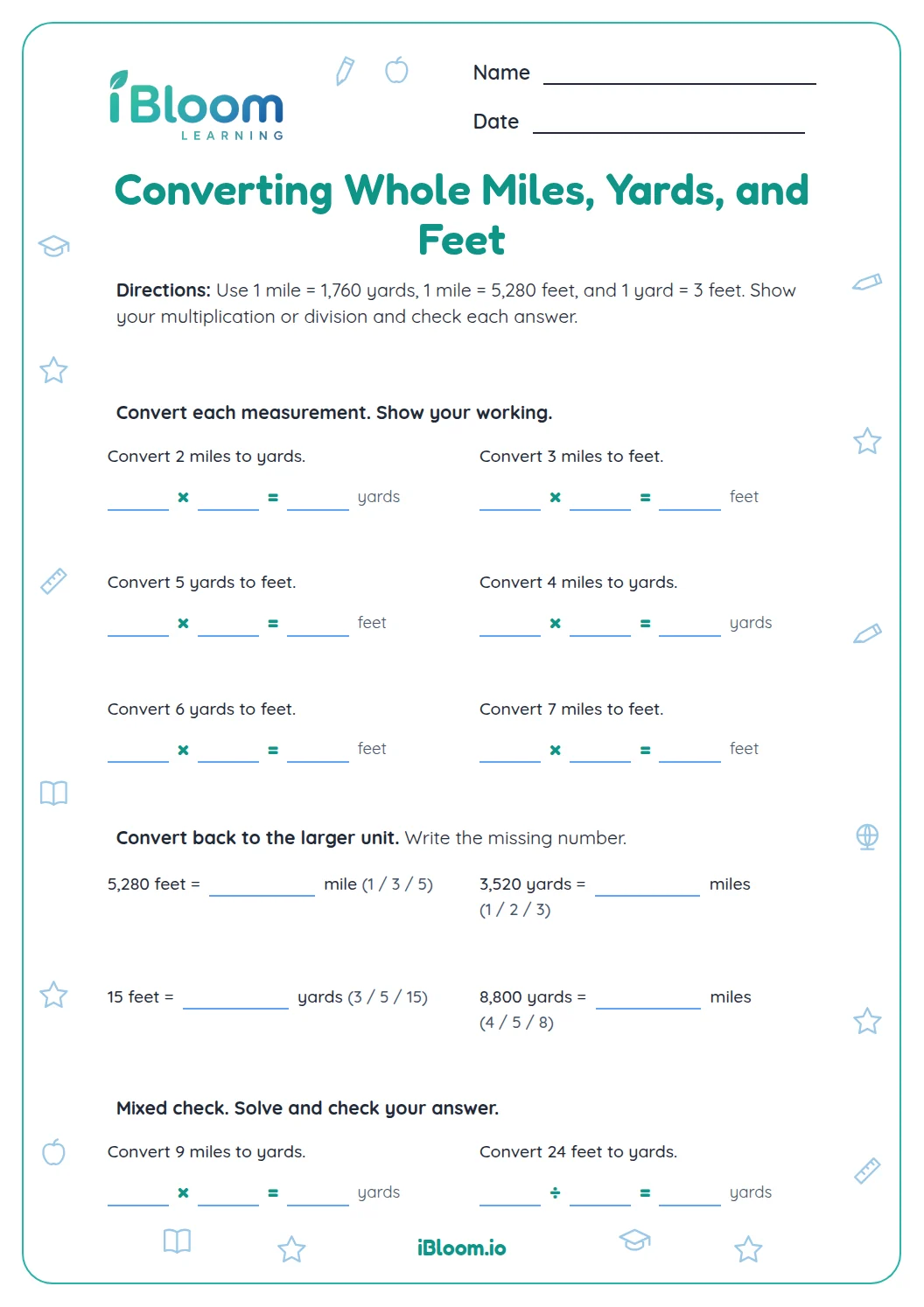
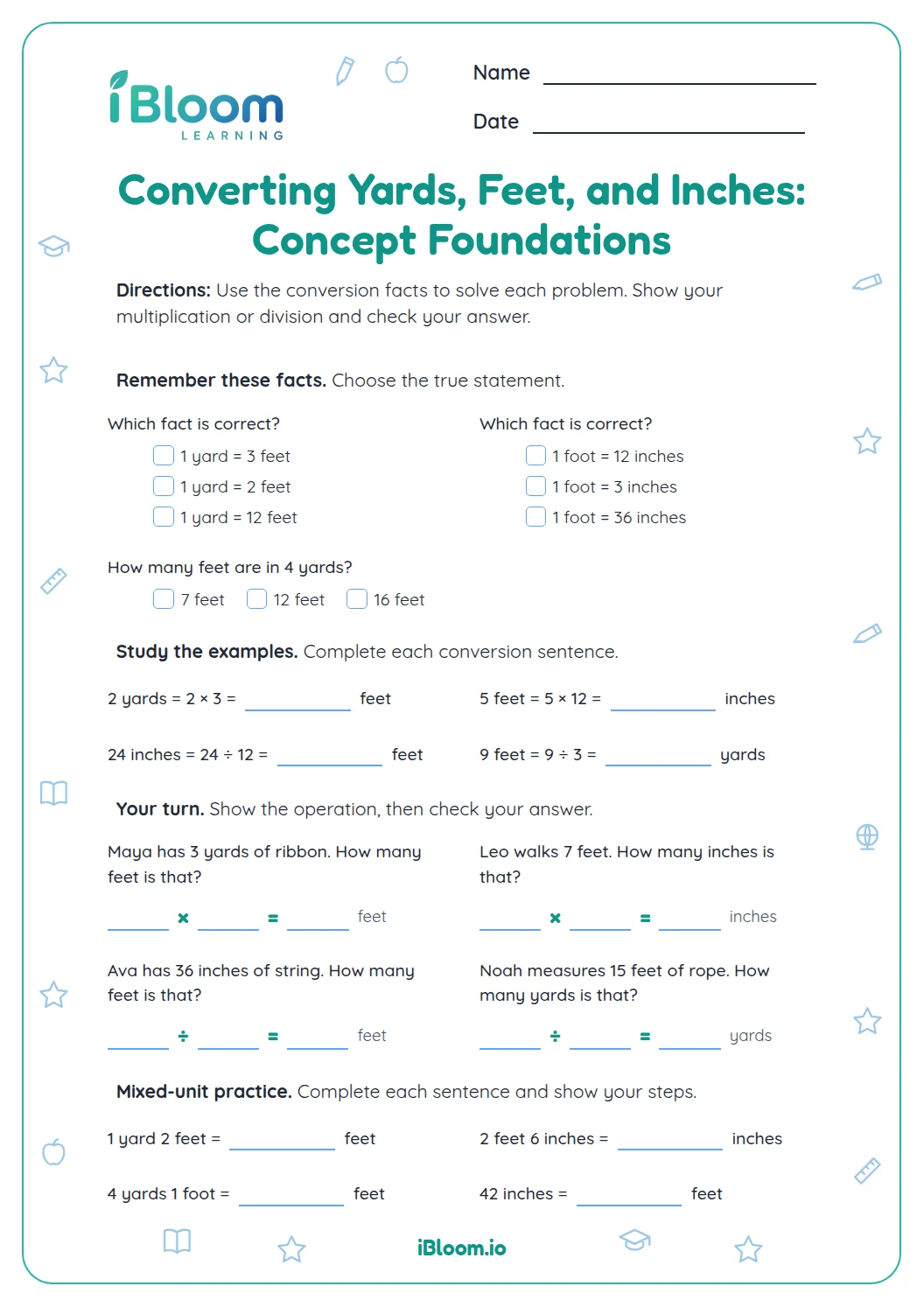
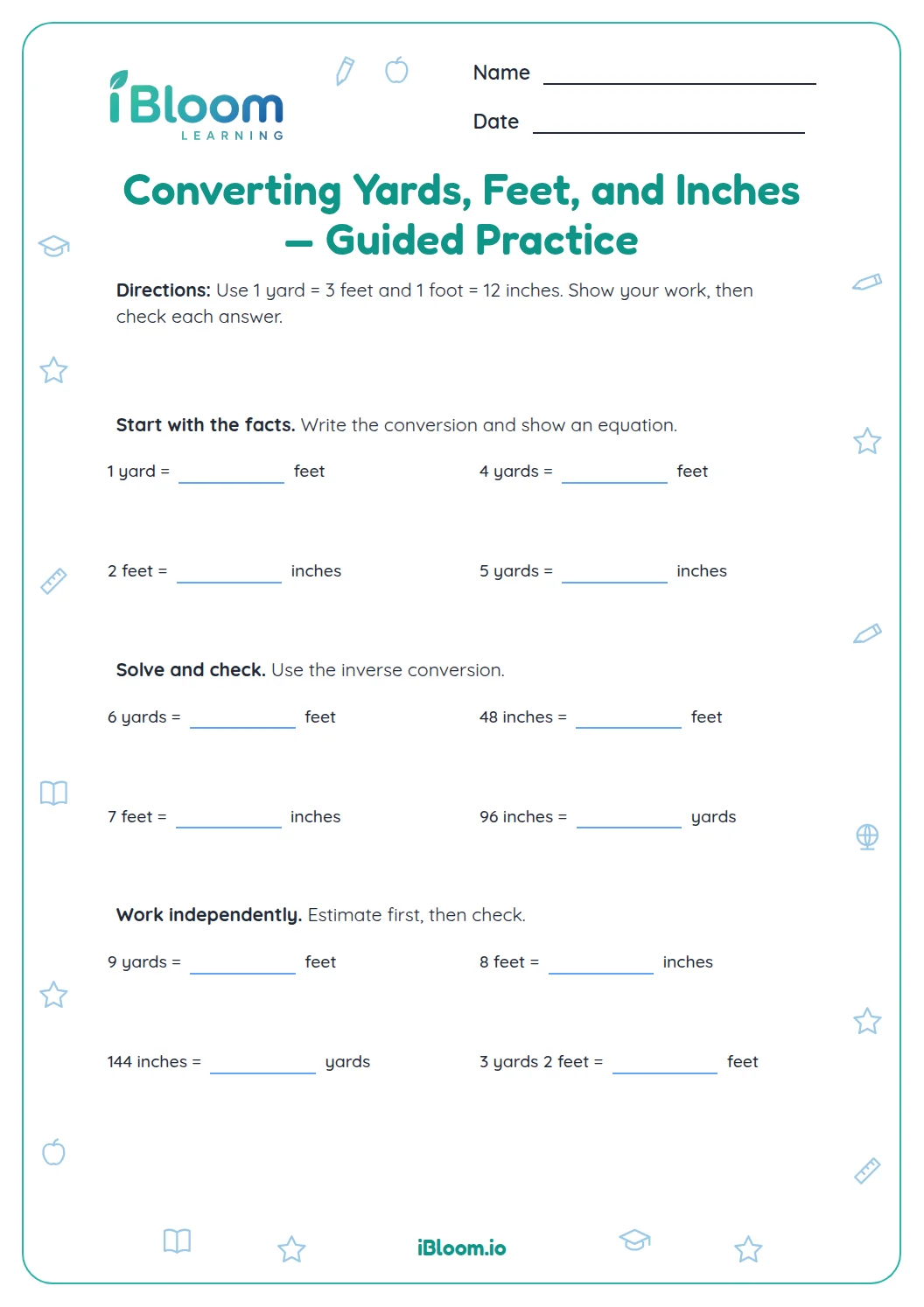
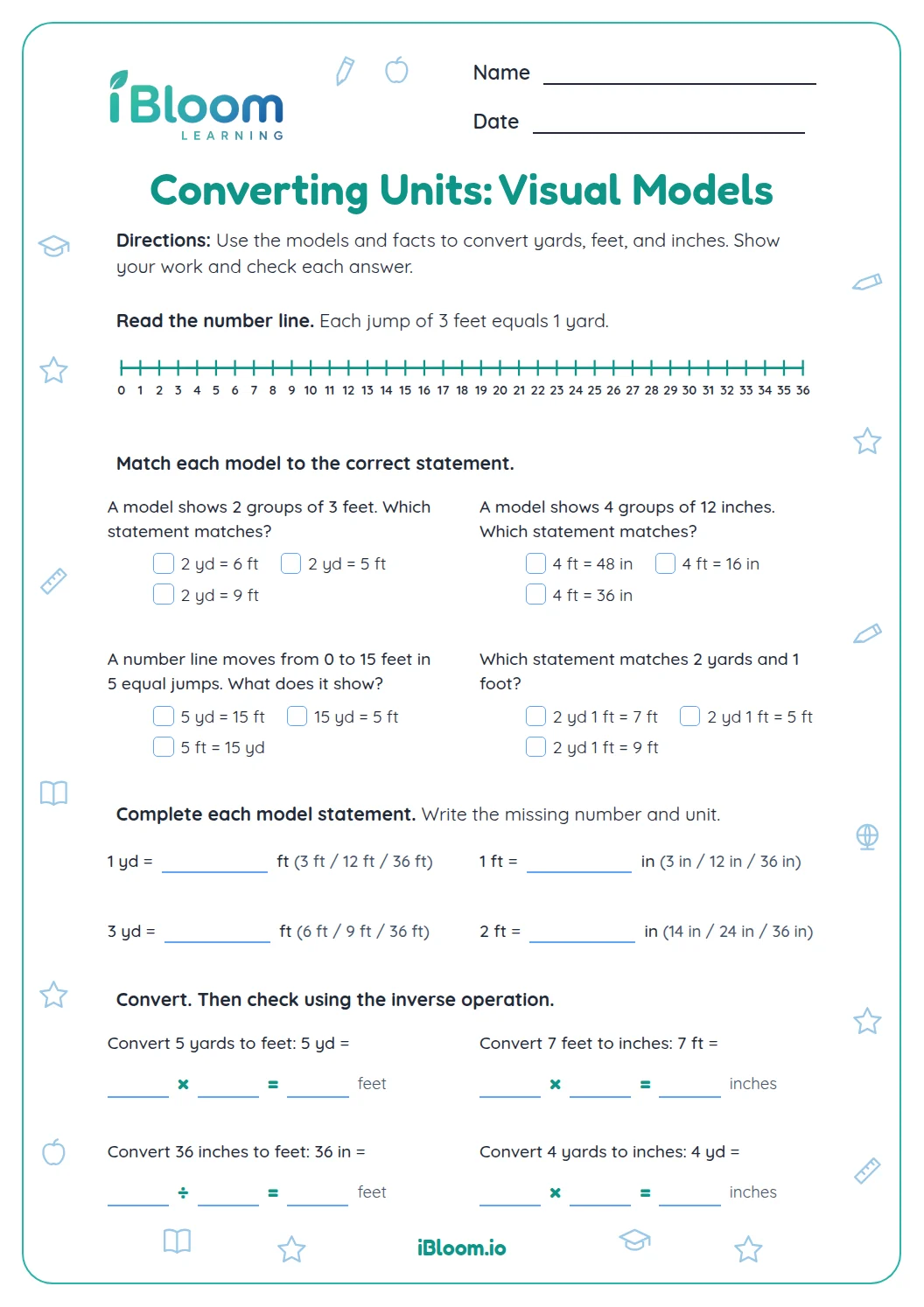
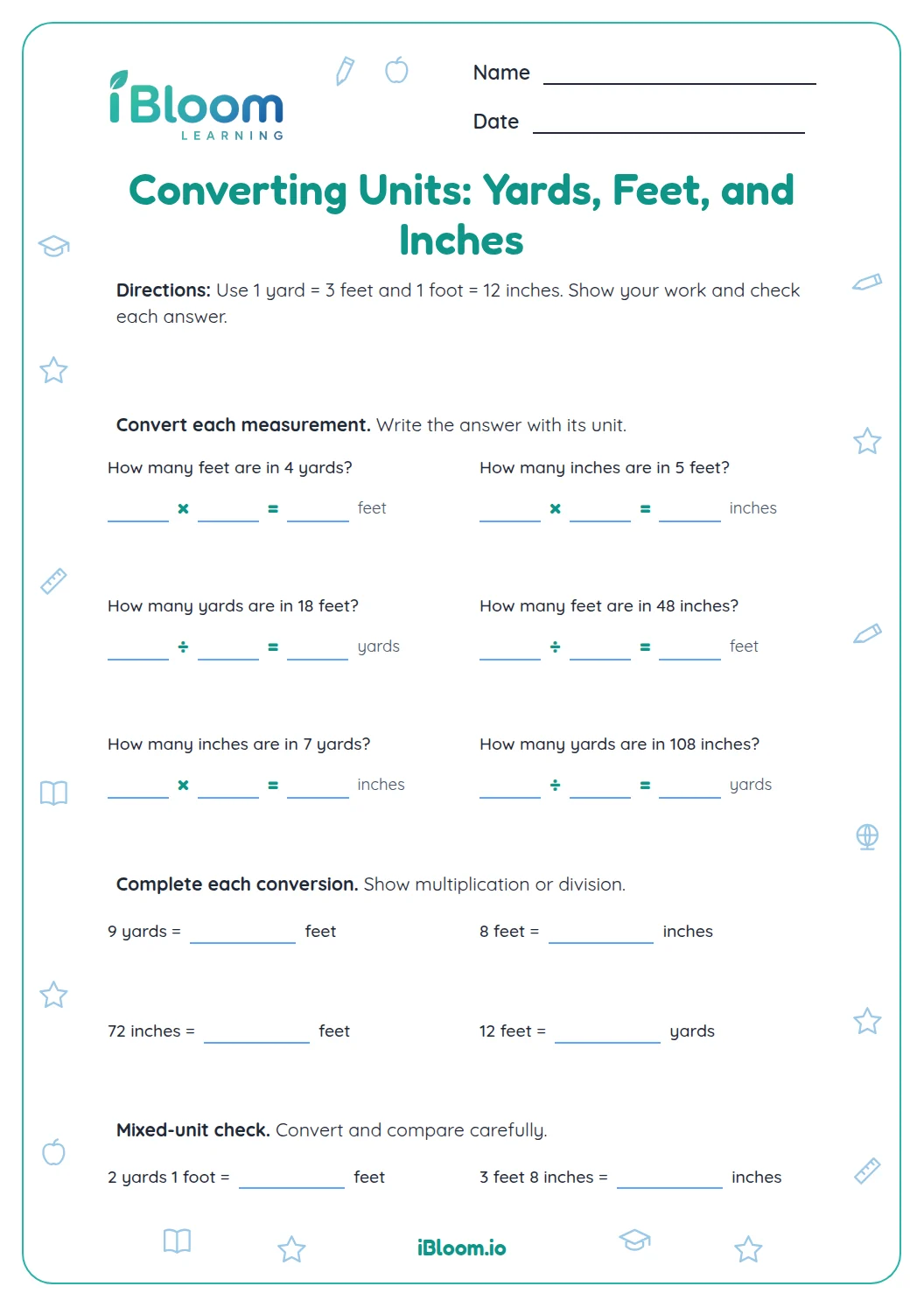
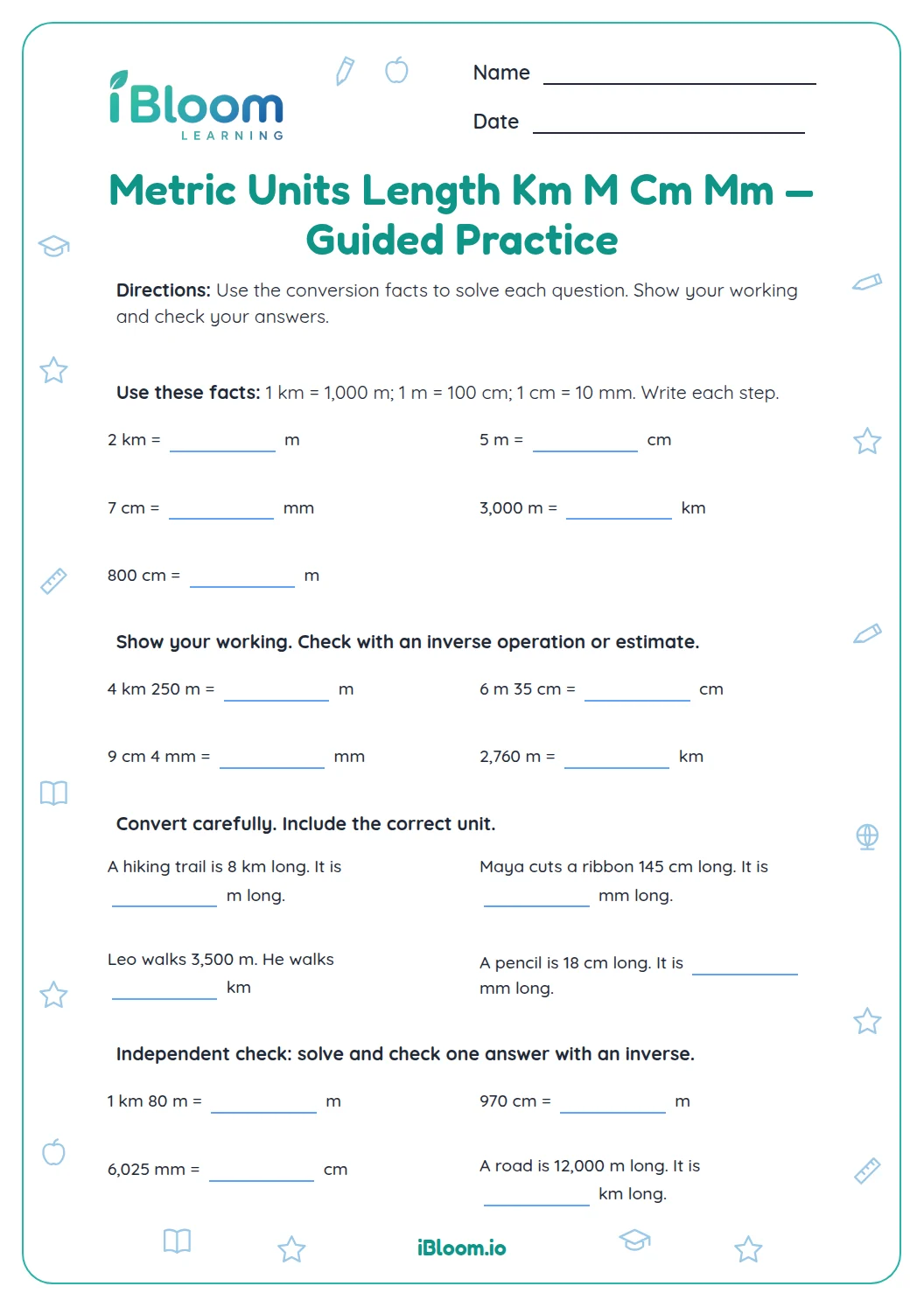
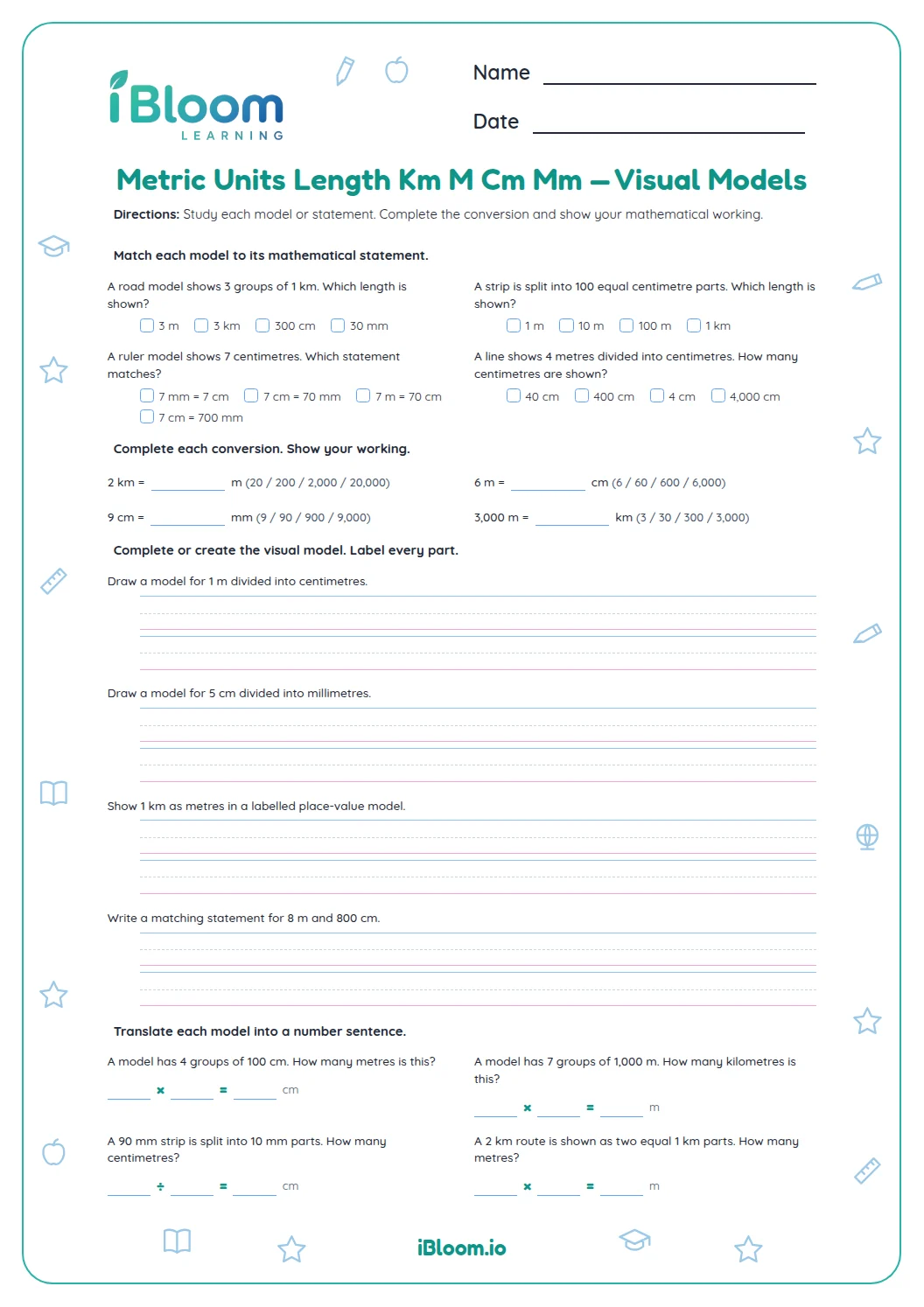
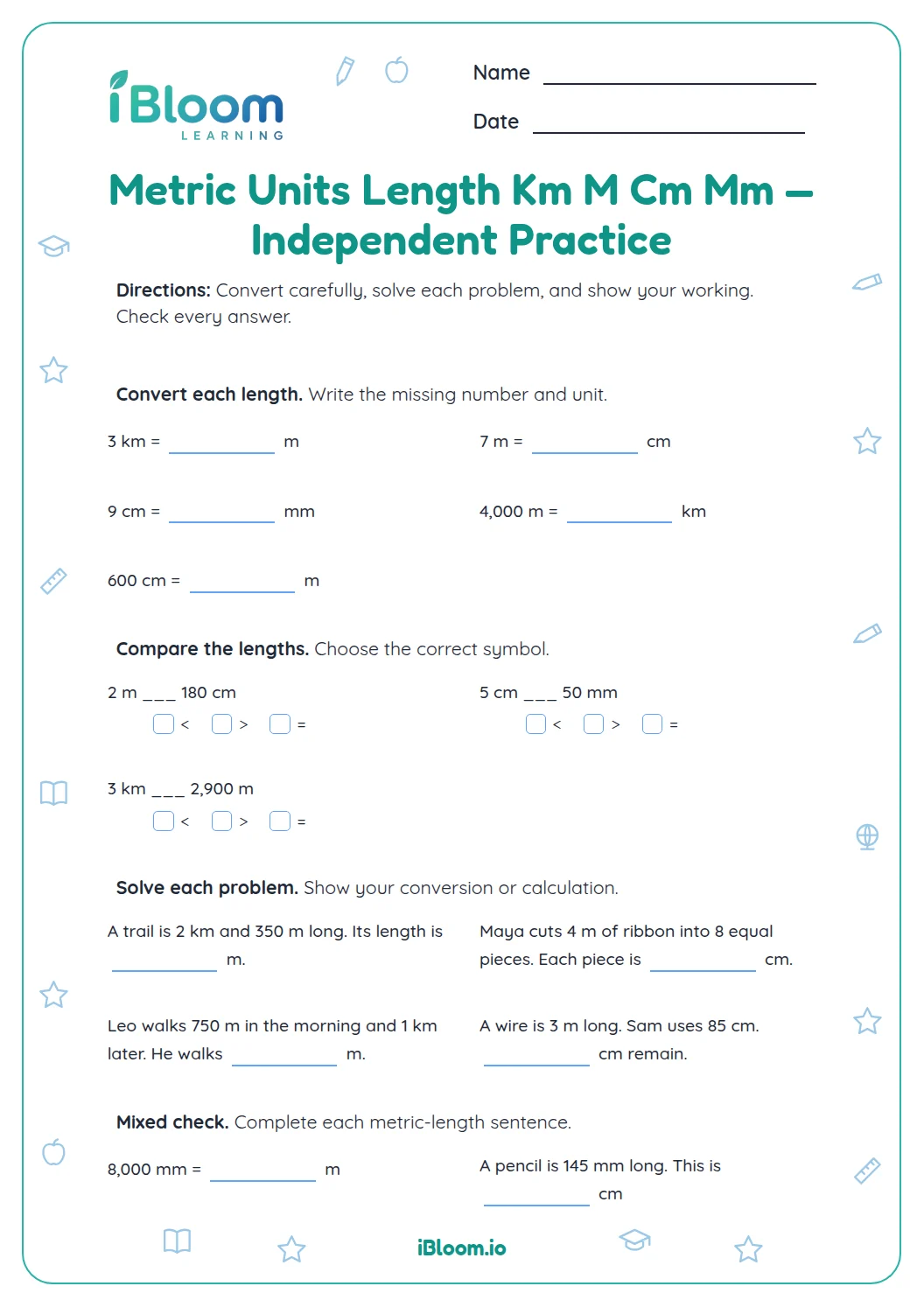
This Grade 5 printable has 16 customary and metric length conversions. Students convert in both directions, combine mixed units, and apply conversions in two multi-step situations. The answer key lists the results, including units for the story problems.
Aligned to CCSS.Math.Content.5.MD.A.1
How are the conversions grouped?
Part A converts larger units to smaller ones by multiplying. Part B converts to larger units by dividing. Part C combines mixed lengths and applies those relationships to two short situations.
How can a conversion help solve a story problem?
For the ribbon question, convert 2.4 meters to 240 centimeters, then add the 35-centimeter bow: 240 + 35 = 275 centimeters. Keep the units consistent before adding.
How can you check customary and metric work?
Use the number of smaller units in one larger unit: 12 inches per foot, 3 feet per yard, 1,760 yards per mile, 100 centimeters per meter, and 1,000 meters per kilometer. The two systems stay separate in these problems.
How to use this worksheet
- 1Identify the starting and requested units.
- 2Choose multiplication for a larger-to-smaller conversion or division for the reverse.
- 3Write the conversion relationship before calculating.
- 4For a mixed length, convert each part into the requested unit before combining.
- 5In a story problem, perform each conversion and operation, then include the unit.
Common mistakes and quick fixes
The mistake
Using a conversion factor in the wrong direction.
The fix
Estimate first: a length in inches should be a larger number than the same length in feet.
The mistake
Adding values that use different units.
The fix
Convert every length to the unit requested before adding or subtracting.
The mistake
Stopping after the conversion in a story problem.
The fix
Reread the question and complete its second step, such as adding the bow or finding the distance left.
Curriculum alignment
This practice aligns with the following Common Core standard.
Students convert lengths within customary or metric systems and solve length problems.
On this sheet: The questions convert length measurements within customary or metric systems and solve multi-step length conversions.
Show the official wordingHide the official wording
Convert among different-sized standard measurement units within a given measurement system (e.g., convert 5 cm to 0.05 m), and use these conversions in solving multi-step, real world problems.
What to practice next
Make more practice
Further reading
Questions parents and teachers ask
Which units does this worksheet convert?
It practices customary units (inches, feet, yards, miles) and metric units (millimeters, centimeters, meters, kilometers). Each question stays within one system, and mixed lengths are rewritten in a single requested unit. Ask the student to write the conversion factor and operation beside each step before checking the final unit.
When should a student multiply or divide?
Multiply when converting to a smaller unit, such as feet to inches. Divide when converting to a larger unit, such as inches to feet; writing the unit relationship first can help keep the direction clear. Ask the student to write the conversion factor and operation beside each step before checking the final unit.
How are the mixed-length questions solved?
Convert each part to the unit requested and then combine the quantities. For example, convert miles to yards before adding the extra yards, or convert meters to centimeters before adding centimeters. Ask the student to write the conversion factor and operation beside each step before checking the final unit.
What do the last two questions ask students to do?
They apply conversion facts in two steps. Students convert the ribbon length before adding a bow, and convert the trail length before subtracting the distance already walked; answers include the final unit. Ask the student to write the conversion factor and operation beside each step before checking the final unit.
How many questions and pages are included?
There are 16 conversion questions on two worksheet pages, followed by a separate two-page answer key. The sets cover smaller-unit conversions, larger-unit conversions, mixed lengths, and two real-world problems. Ask the student to write the conversion factor and operation beside each step before checking the final unit.