




About this worksheet
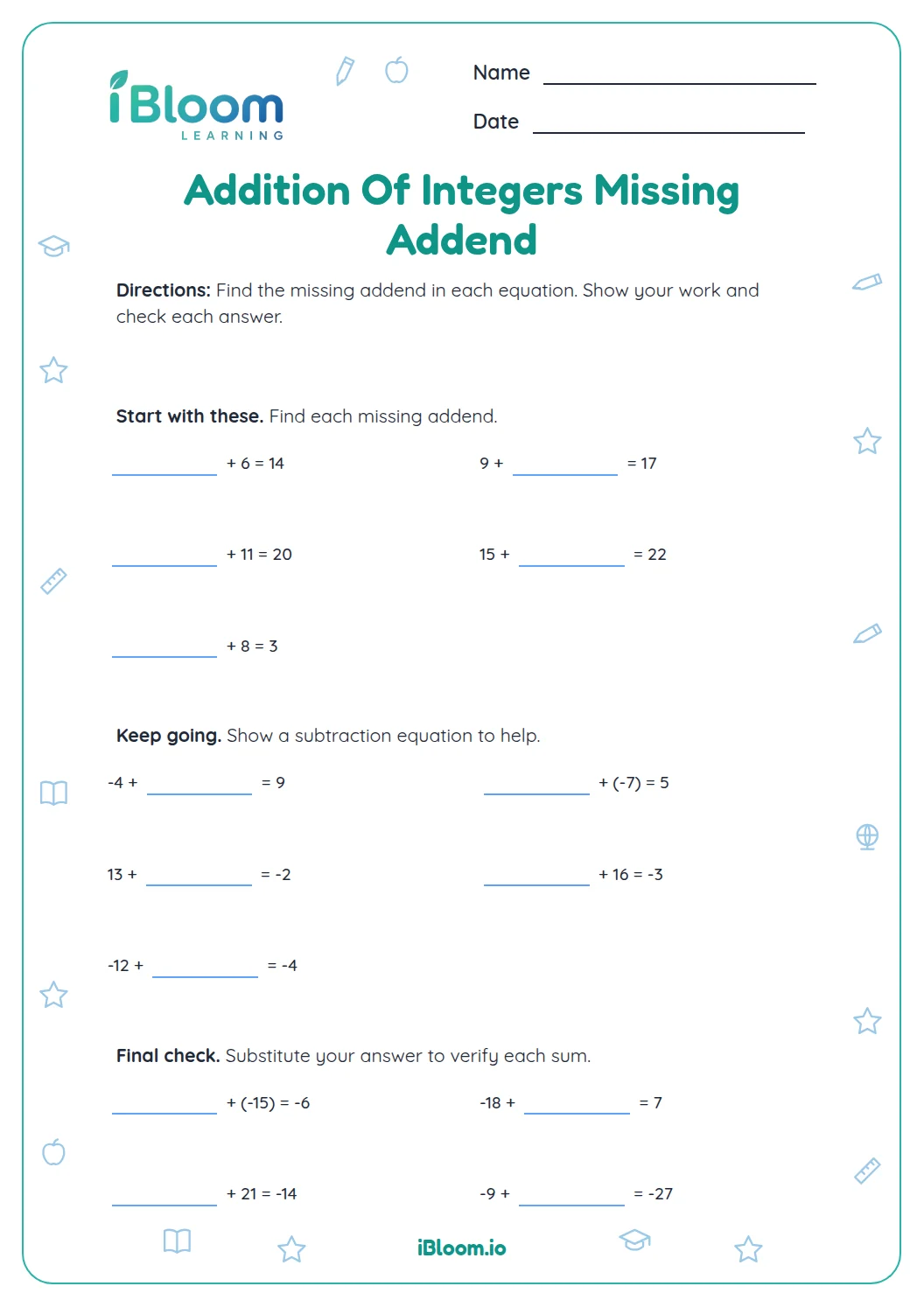
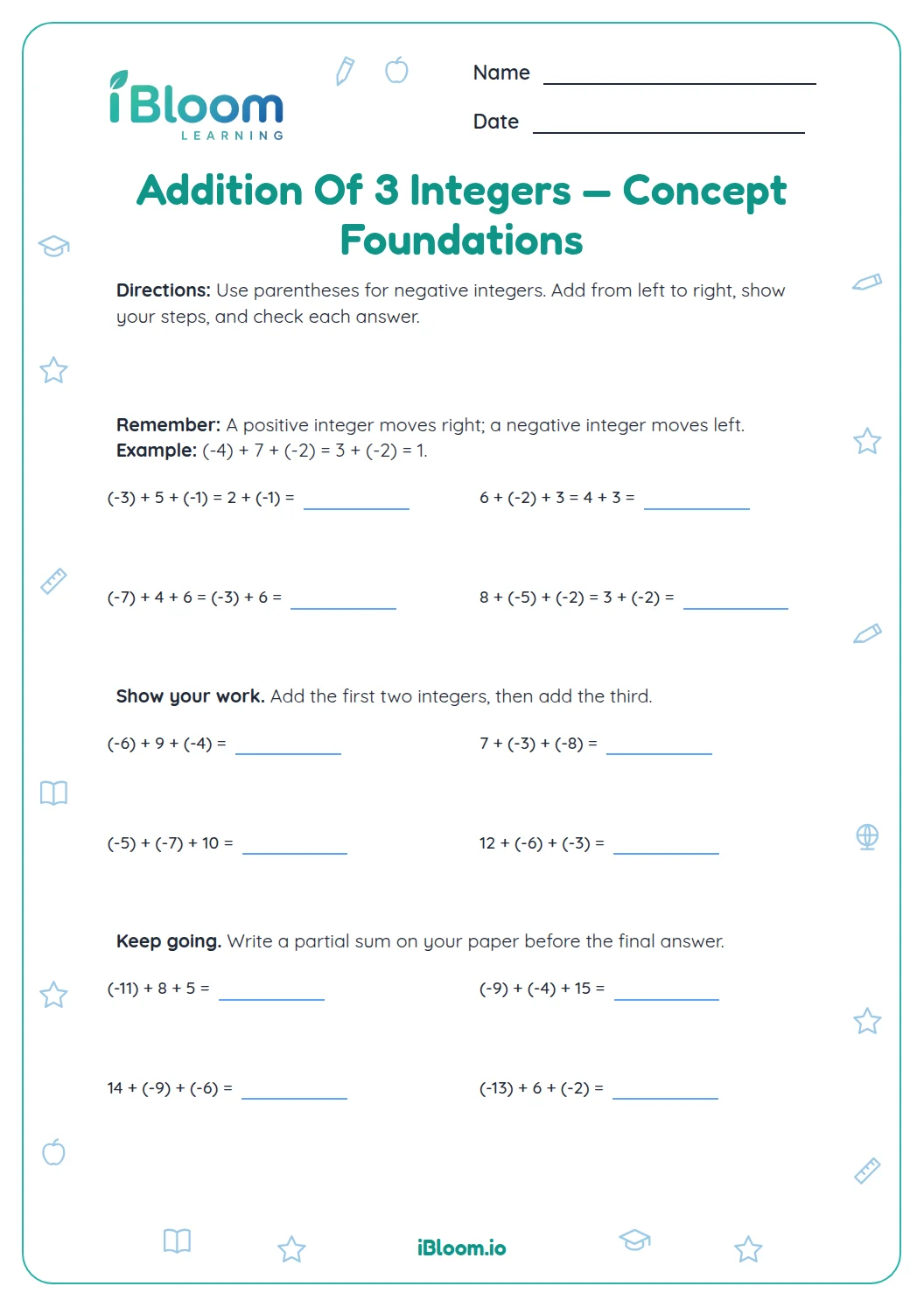
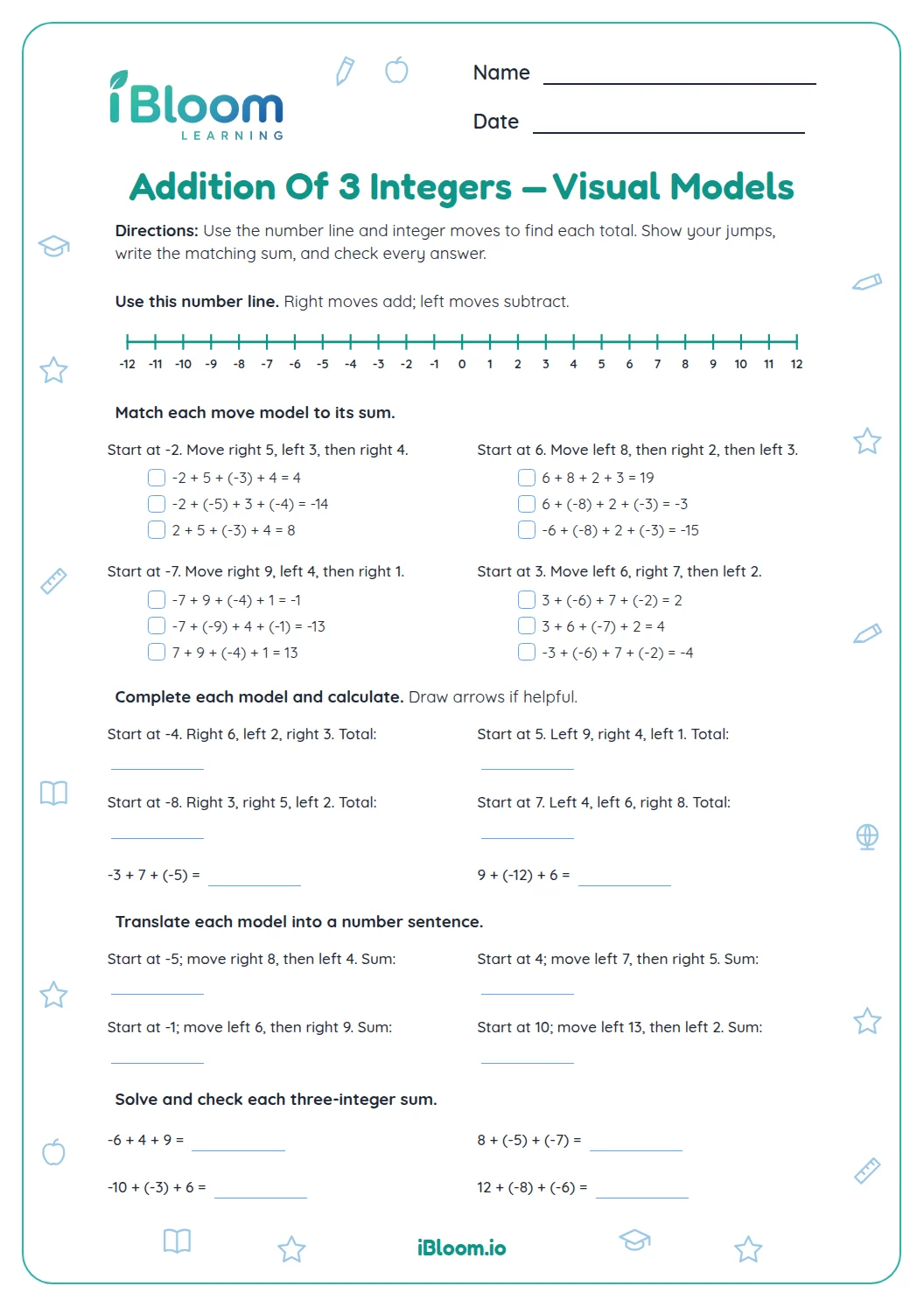
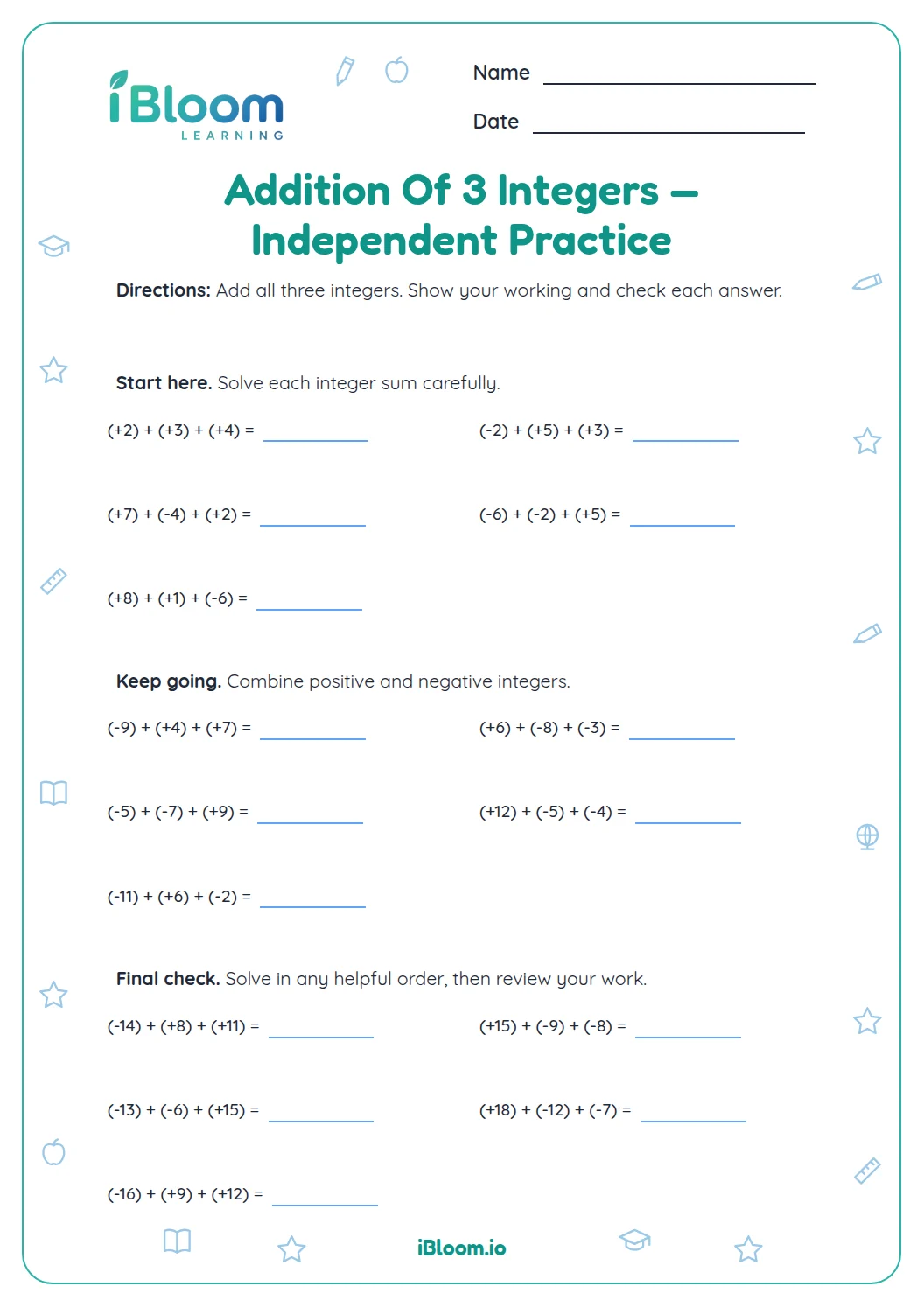
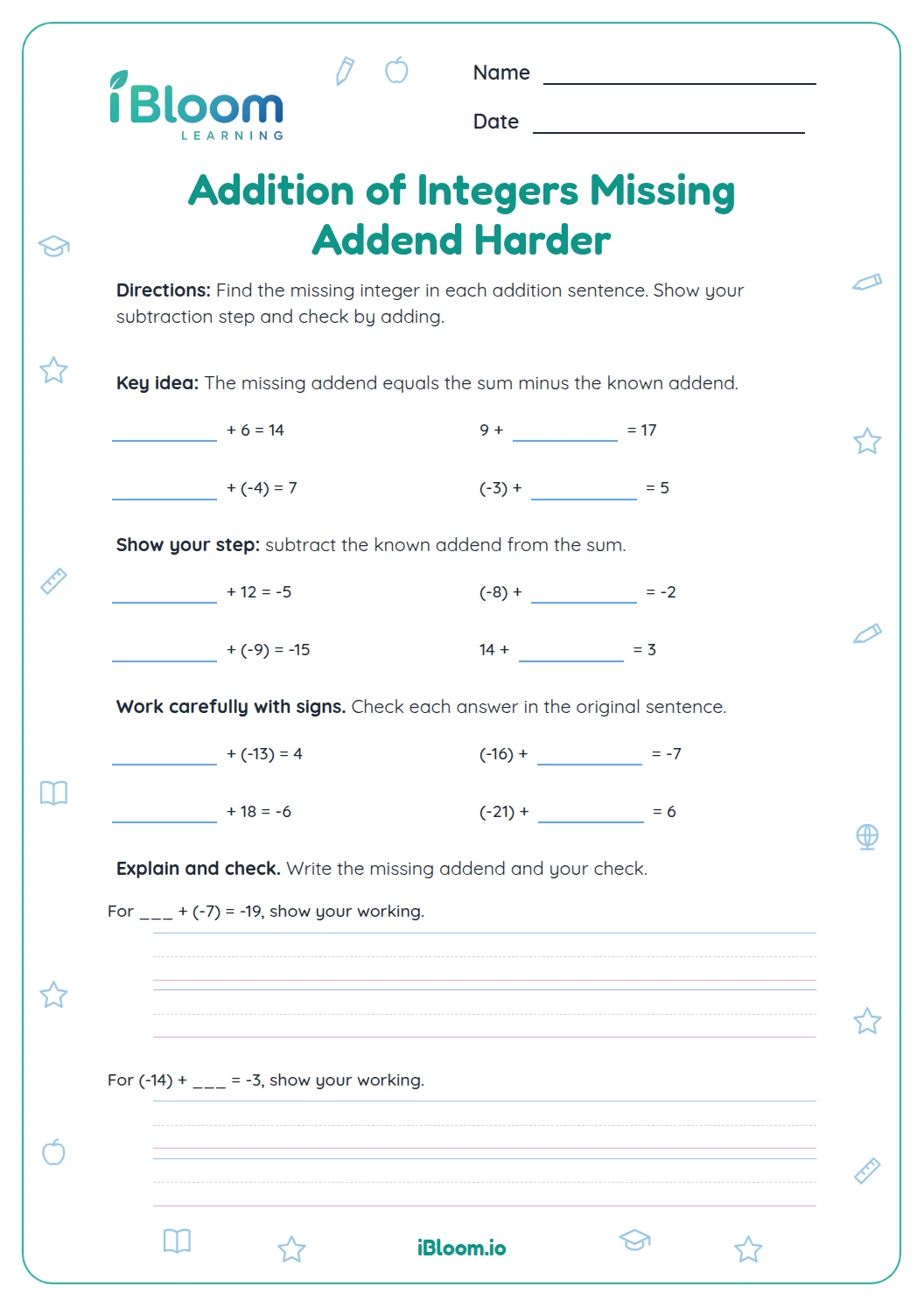
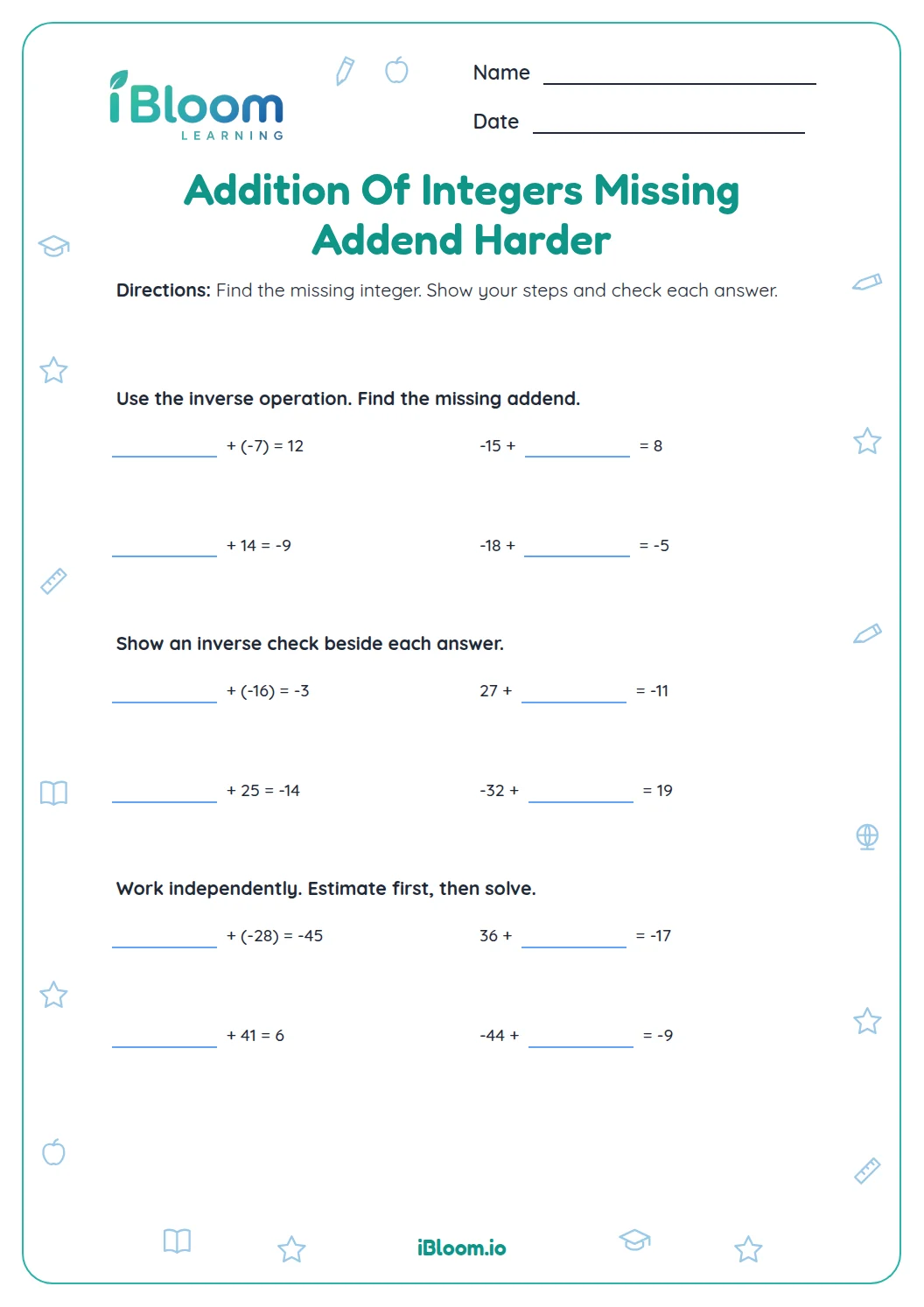
This Grade 6 worksheet gives students 10 real-world situations and six equations involving addition of integers with a missing addend. Students find the missing addend in each story equation, then check that the starting value plus the change equals the ending value. The key lists all 16 answers.
What situations appear in the problems?
The first ten questions use temperatures, elevation, scores, a bank balance, a submarine, a trail, an elevator and a freezer. Each story gives a start and finish; the missing addend represents the signed change. Six number sentences then provide direct practice.
- Keep the sign with each starting and ending value.
- Use a positive change for an increase and a negative change for a decrease.
- Check by adding the change to the starting value.
How do you solve for the missing change?
Think of the equation start + change = end. The change is the amount that moves the start to the end on a number line. A move to the right is positive; a move to the left is negative.
- 1Start at −4 and end at 3.
- 2Count 7 units right, so the change is +7.
- 3Check: −4 + 7 = 3.
When is the missing addend negative?
If the ending value is less than the starting value, the change is negative. For example, moving from −38 meters to −50 meters is a decrease of 12, so the change is −12.
How to use this worksheet
- 1Read the start and end values in the story.
- 2Write them with their signs in an addition equation.
- 3Decide whether the change moves up/right or down/left.
- 4Solve for the missing addend.
- 5Substitute it back to check the ending value.
Common mistakes and quick fixes
The mistake
Dropping a negative sign from a value below zero.
The fix
Write the sign beside each value before calculating.
The mistake
Calling any answer below zero a negative change.
The fix
Compare start and end; a rise from −4 to 3 is a positive change.
The mistake
Subtracting in the wrong order.
The fix
Use change = end − start, or test the addend in start + change = end.
What to practice next
Make more practice
Questions parents and teachers ask
What does the missing addend represent?
It represents the signed change from the starting value to the ending value. A positive answer means the value increased, while a negative answer means it decreased. For example, −12 + 7 = −5 shows a rise of 7 from twelve below zero to five below zero.
How do I handle temperatures below zero?
Keep the negative sign with each temperature and write an addition equation. Moving from −9°C to −2°C is a rise of 7 degrees, because −9 + 7 = −2. The number line direction helps distinguish a positive change from a negative starting value.
Does a negative number always mean the situation is getting worse?
No. A negative number describes a value below a chosen zero point, such as a depth below sea level or a balance below zero. Whether the change is positive or negative depends on whether the final value is greater or less than the starting value.
What is a good way to check each answer?
Add the missing integer to the starting value and see whether the result matches the ending value in the story. If a submarine moves from −38 to −50, check −38 + (−12) = −50. Checking also confirms whether the sign makes sense.
How many story problems are included?
There are 10 real-world situations and six direct equations, for 16 questions total. The stories use temperatures, elevations, points, money and position changes. Each story prints an addition equation with one missing integer, and the answer key lists every value.