

About this worksheet
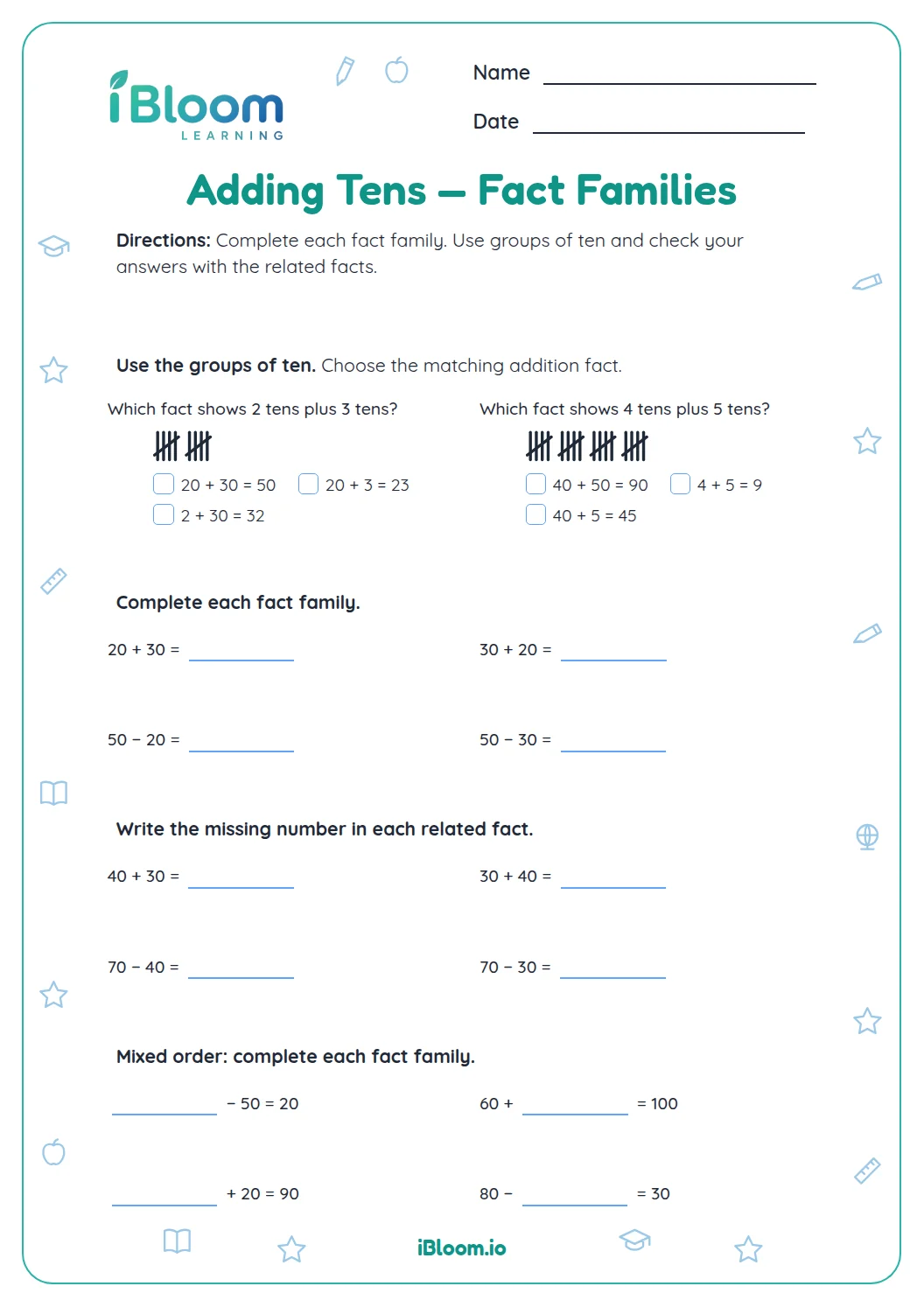
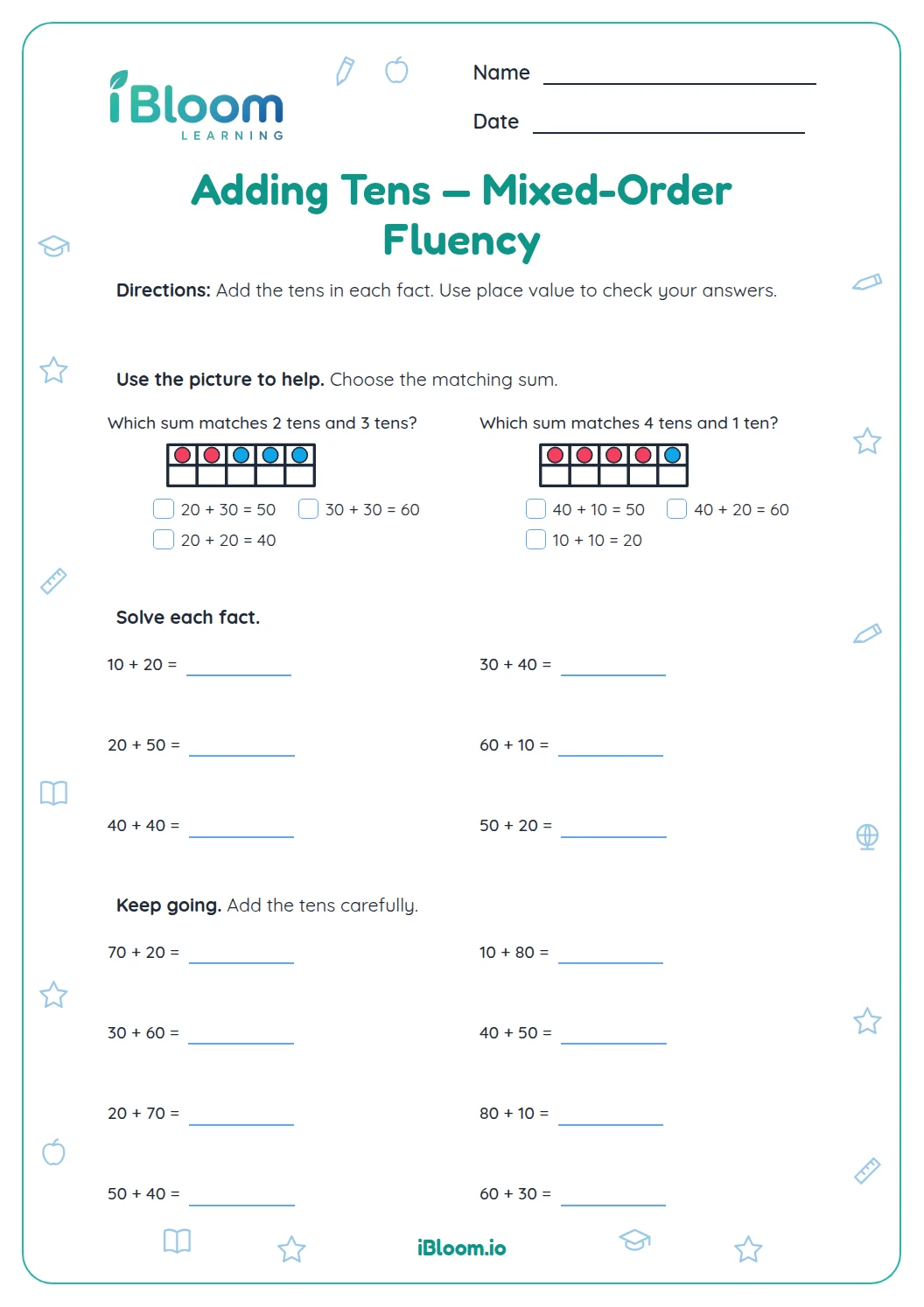
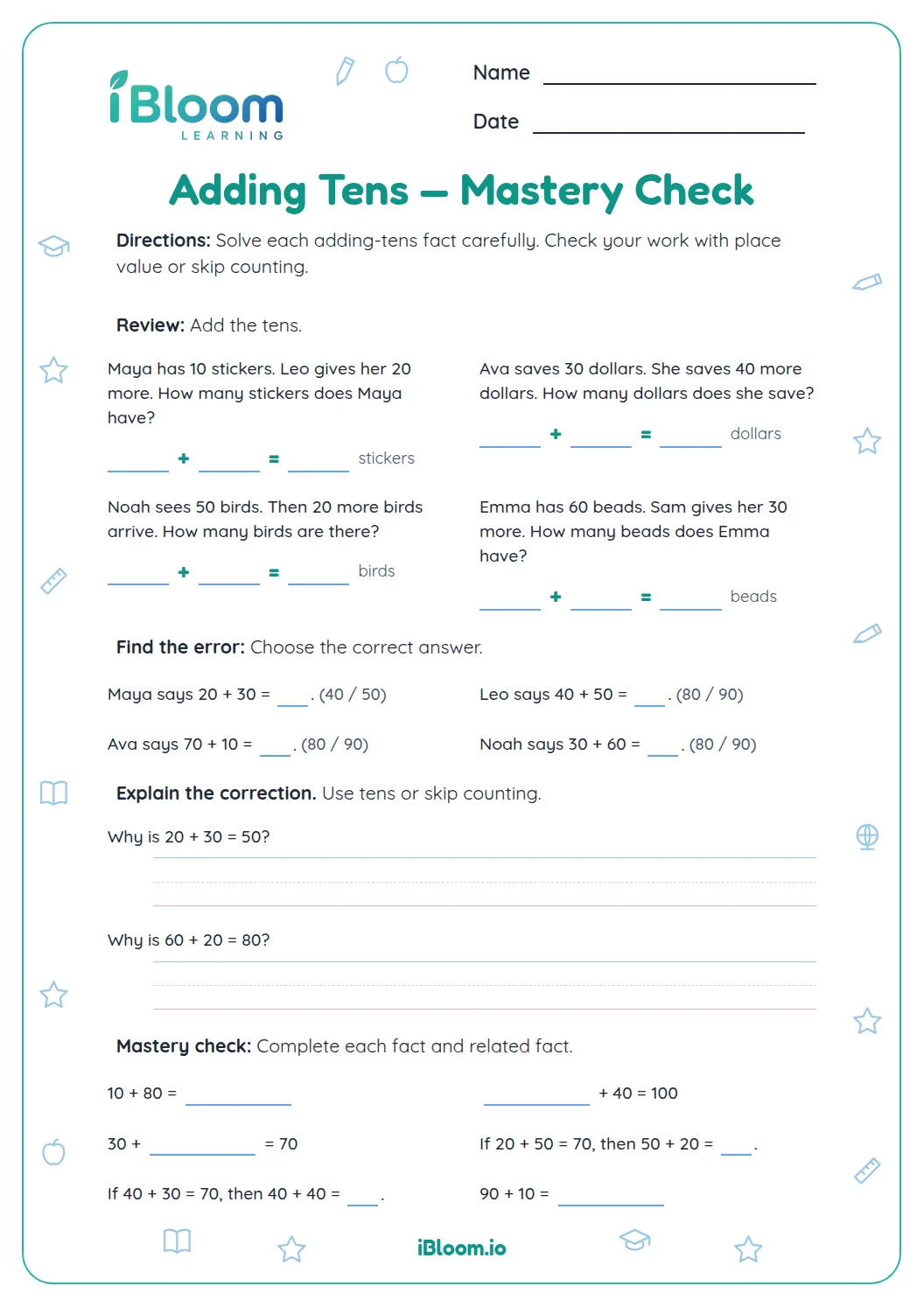
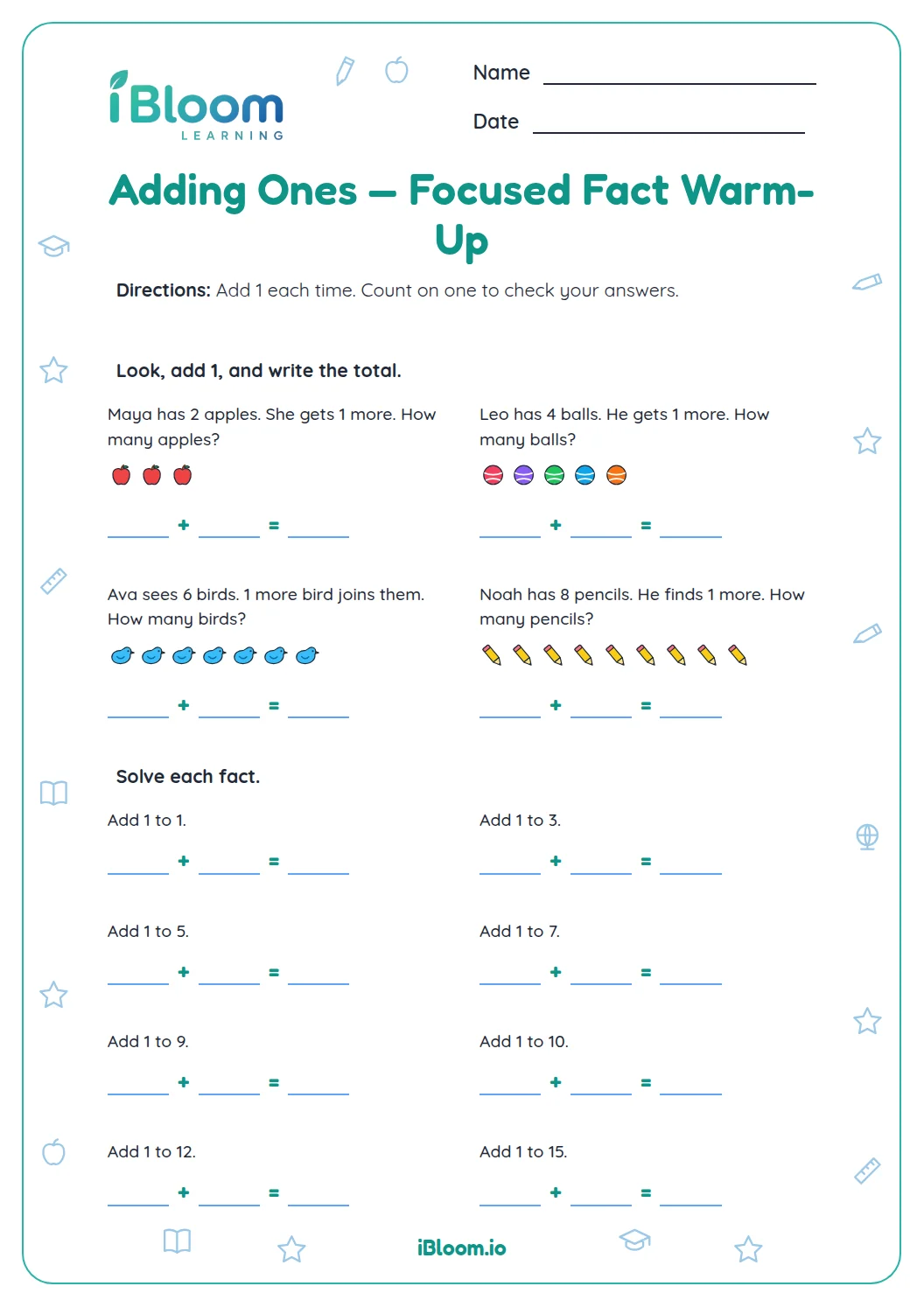
This Grade 1 printable gives children 18 short problems adding whole tens to two-digit numbers. Each sum stays below 100, and the ones digit remains the same, making the place-value pattern easy to check. Timing is optional; the separate answer key supports quick review.
Aligned to 1.NBT.C.4
What changes when you add tens?
The tens digit increases while the ones digit stays the same. For example, 23 + 10 = 33: one ten is added, and the 3 ones remain.
How can children check a sum?
Say the starting number, count forward by the added tens, and check that the ones digit did not change. Use the answer key after completing the page.
How to use this worksheet
- 1Read the starting number and the added tens.
- 2Count forward by that many tens.
- 3Keep the ones digit unchanged.
- 4Write the sum in the blank.
- 5Check the answers; repeat with optional timing if useful.
Check the place value
The mistake
Changing the ones digit.
The fix
Keep the ones digit from the first number.
The mistake
Adding the tens digit as ones.
The fix
Count by groups of ten.
The mistake
Writing a sum above 100.
The fix
Check how many tens were added.
Common Core alignment
This worksheet practices the following Common Core skill.
Add whole tens to two-digit numbers while preserving the ones value.
On this sheet: Add whole tens to two-digit numbers while preserving the ones value. is practiced in the worksheet.
Show the official wordingHide the official wording
Add within 100, including adding a two-digit number and a one-digit number, and adding a two-digit number and a multiple of 10, using concrete models or drawings and strategies based on place value, properties of operations, and/or the relationship between addition and subtraction; relate the strategy to a written method and explain the reasoning used.
What to practice next
Make more practice
Further reading
Questions parents and teachers ask
How many problems are on the page?
There are 24 problems. Each adds whole tens to a two-digit number, and every sum stays below 100. Ask the learner to point to the relevant sentence or number relationship before checking the key; that makes the reasoning visible and helps distinguish a supported answer from a guess.
Is the timed drill required?
No. Children can solve the problems without a timer, then try an optional timed round if that suits the practice session. Ask the learner to point to the relevant sentence or number relationship before checking the key; that makes the reasoning visible and helps distinguish a supported answer from a guess.
What pattern should children notice?
Adding whole tens changes the tens digit while leaving the ones digit unchanged. For example, adding 20 to 41 gives 61. Ask the learner to point to the relevant sentence or number relationship before checking the key; that makes the reasoning visible and helps distinguish a supported answer from a guess.
Is an answer key included?
Yes. A separate answer key lists the sum for each problem so families can check work after the child finishes. Ask the learner to point to the relevant sentence or number relationship before checking the key; that makes the reasoning visible and helps distinguish a supported answer from a guess.
How can a child check a sum?
Count forward by tens from the starting number, then confirm the ones digit is unchanged. The key provides another check after solving. Ask the learner to point to the relevant sentence or number relationship before checking the key; that makes the reasoning visible and helps distinguish a supported answer from a guess.