
About this worksheet
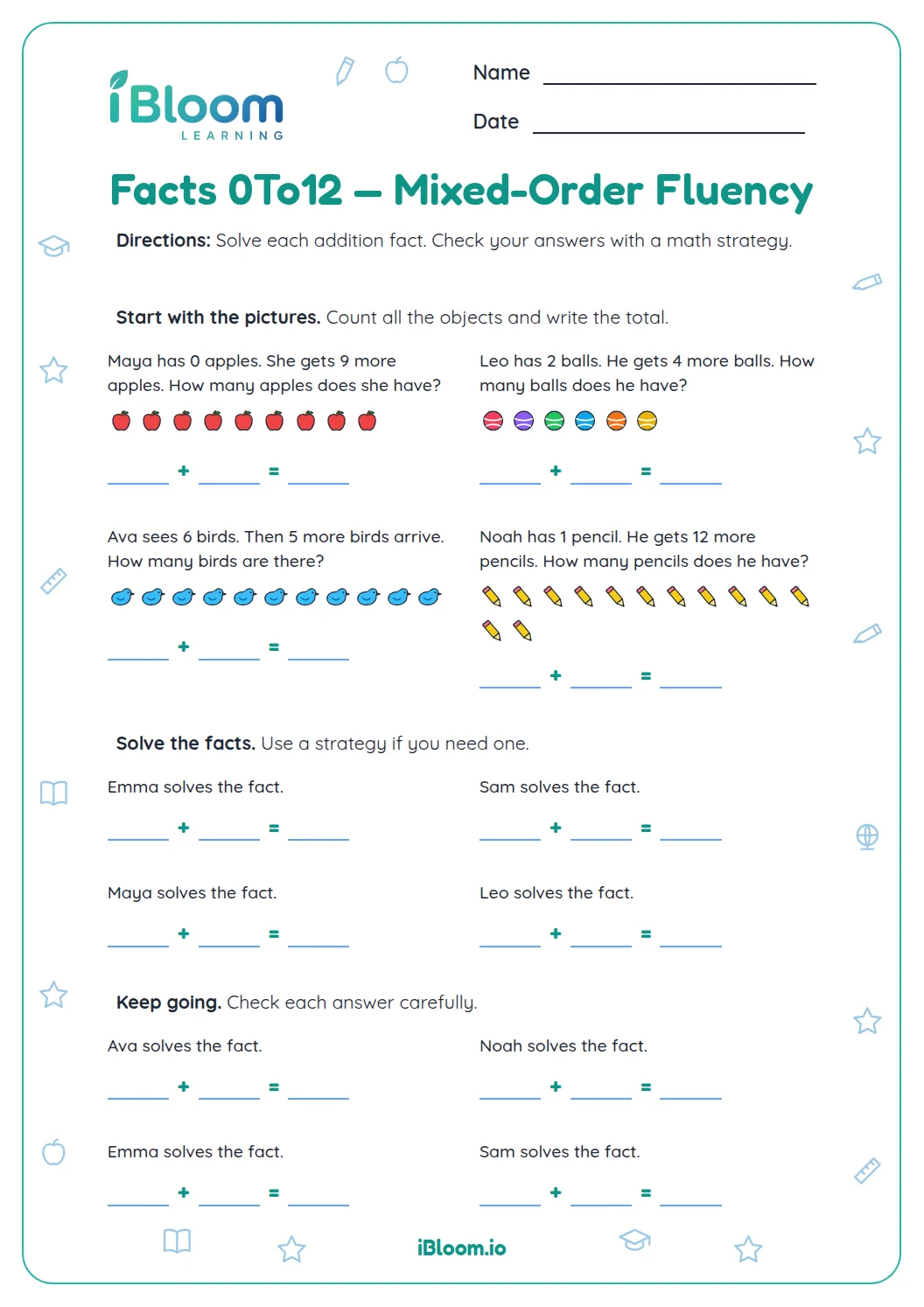
This printable addition drill gives students 100 mixed-order facts with addends from 0 through 10. Sums range up to 20, and each equation appears once. Children can work at a comfortable pace or choose an optional timing goal for their own fluency practice. The separate answer key makes checking straightforward. The worksheet supports addition fact fluency within 20, including Common Core 2.OA.B.2.
Aligned to 2.OA.B.2
What facts appear in the drill?
The equations use addends from 0 to 10 in mixed order. Sums reach 20, and no equation is repeated. Mixed order helps students attend to each pair rather than follow a predictable count.
The timer is optional. Students may pause between pages or work through the full set without a time goal.
How should families use optional timing?
If timing feels useful, record a personal time and compare it only with a later attempt. Accuracy and comfortable recall matter more than racing. An untimed attempt is a complete way to use the sheet.
- 14 + 9 = 13
- 2Combine the addends and check the sum in the key.
How can students check addition facts?
Students can use a known fact or count on from the larger addend. For example, for 8 + 5, start at 8 and count five more. Familiar facts become easier to recall with practice.
How to use this worksheet
- 1Decide whether to work untimed or use a personal timer.
- 2Read the operation sign in each equation.
- 3Solve each sum and write it in the blank.
- 4Pause or split the drill into shorter sessions if needed.
- 5Use the key to check and revisit facts needing practice.
Common mistakes and quick fixes
The mistake
Reading a plus sign as another operation.
The fix
Point to the sign before solving.
The mistake
Counting both addends from zero.
The fix
Start with one addend and count on by the other, or use a known fact.
The mistake
Rushing because a timer is present.
The fix
Keep timing optional and check accuracy at a comfortable pace.
Common Core alignment
This drill practices recall of sums of two one-digit numbers and addition within 20.
Build fluency by solving addition facts within 20 in mixed order.
On this sheet: The drill practices sums of two one-digit addends.
Show the official wordingHide the official wording
Fluently add and subtract within 20 using mental strategies. By end of Grade 2, know from memory all sums of two one-digit numbers.
What to practice next
Make more practice
Further reading
Questions parents and teachers ask
How many problems are on the worksheet?
There are 100 addition equations, using addends from 0 through 10. Each fact appears once, in mixed order, and sums range up to 20. The separate answer key provides matching sums so students or adults can check the full set.
Is the timed drill required?
No. Students can complete every question without a timer. If you use one, treat the time as personal information for comparison with a later attempt. Accuracy and a calm pace are appropriate goals for this optional timed drill.
What is the largest sum on the page?
The largest possible sum from two addends between 0 and 10 is 20. The drill includes one-digit addends throughout, so students practice combinations that build toward that total. The key lists each sum beside its question number for quick checking.
Can the student finish in more than one sitting?
Yes. The mixed-order facts can be completed in sections. A student may finish one portion of the drill, take a break, and return later. Keeping the key available makes it easy to check a completed section before continuing.
How can I help without giving the answer?
Ask the student to name a fact they know, use a ten-frame idea mentally, or start with the larger addend and count on. Then have them write the total and check the key. The goal is to choose a strategy that supports recall.
What practice can come next?
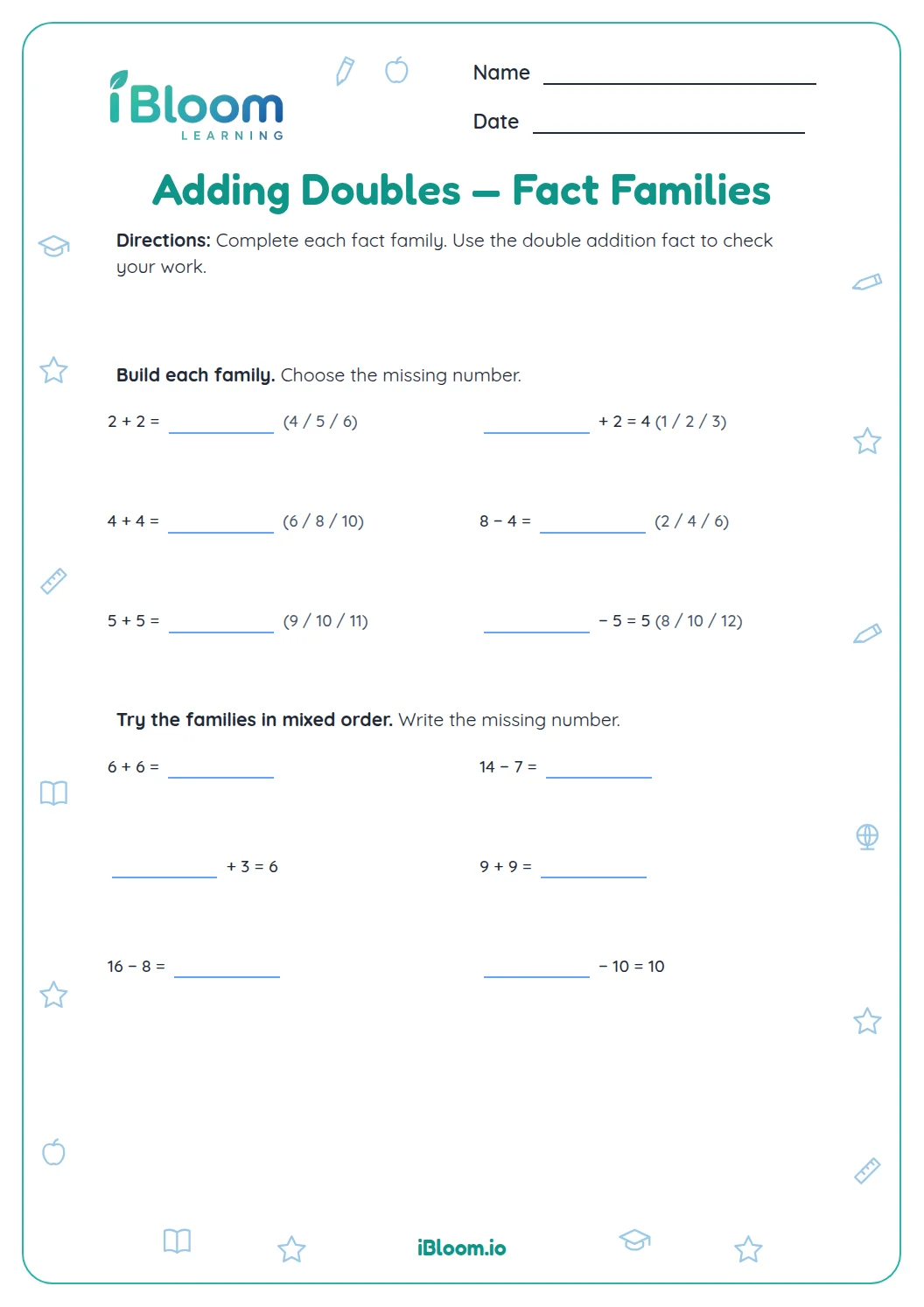
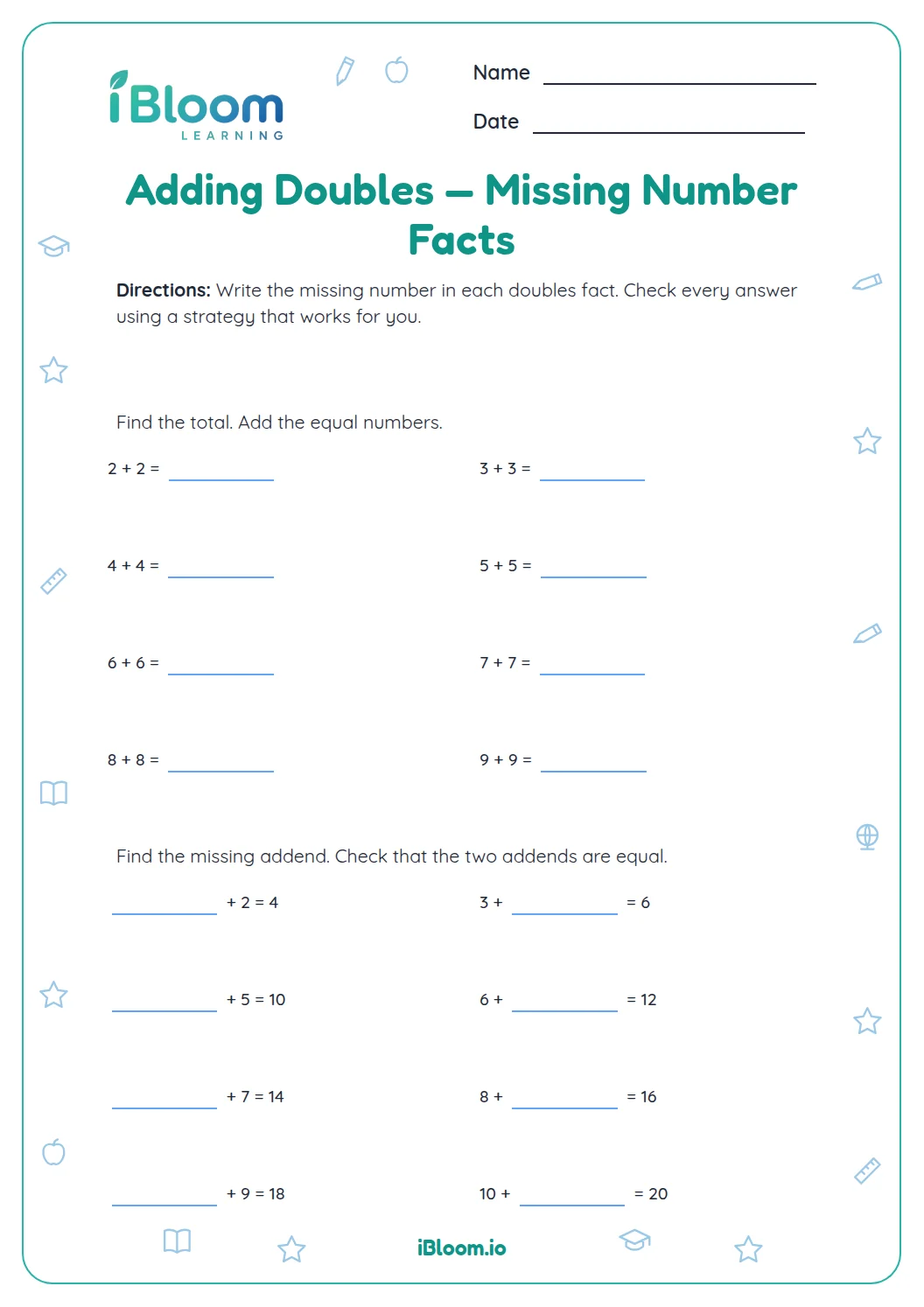
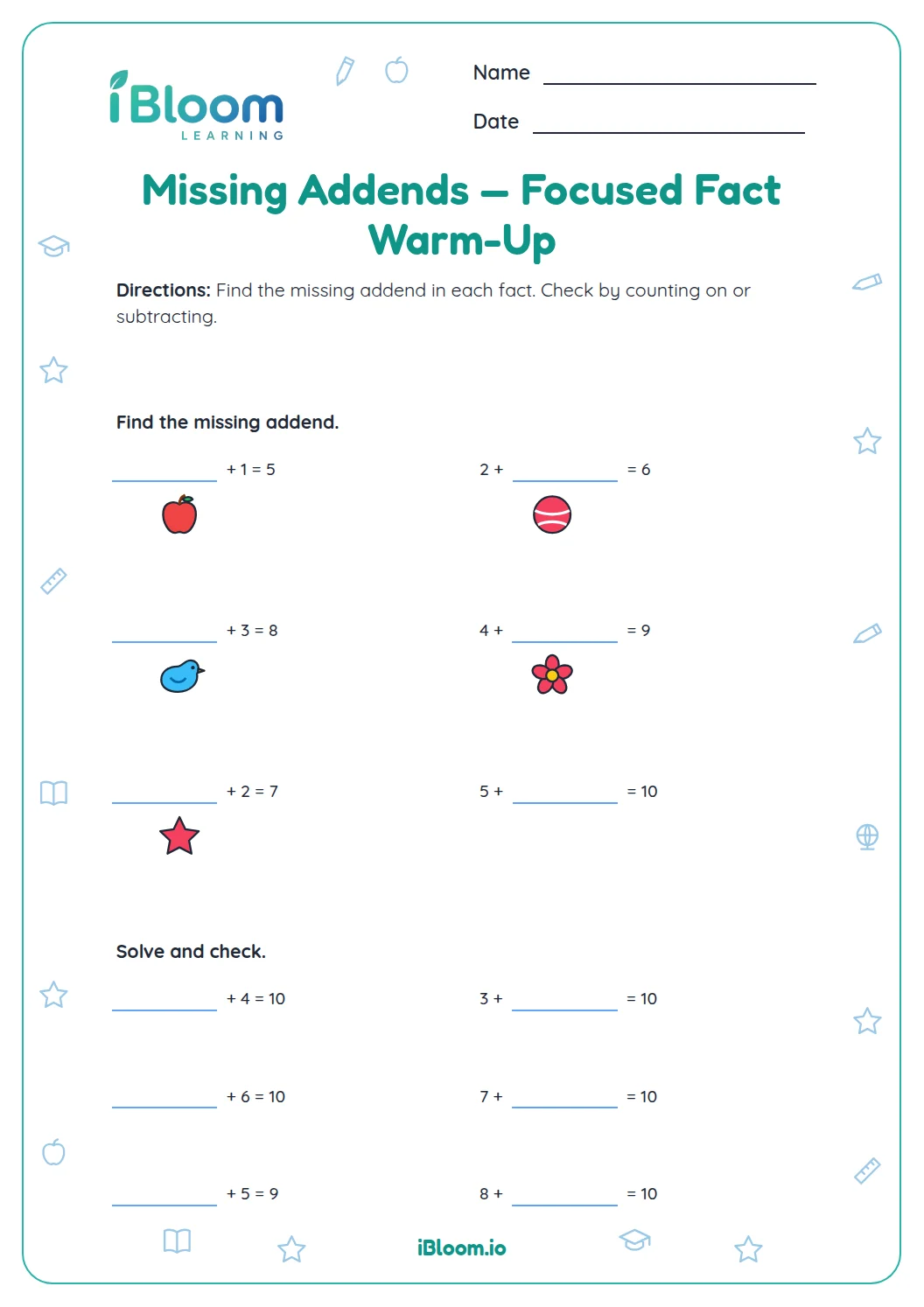
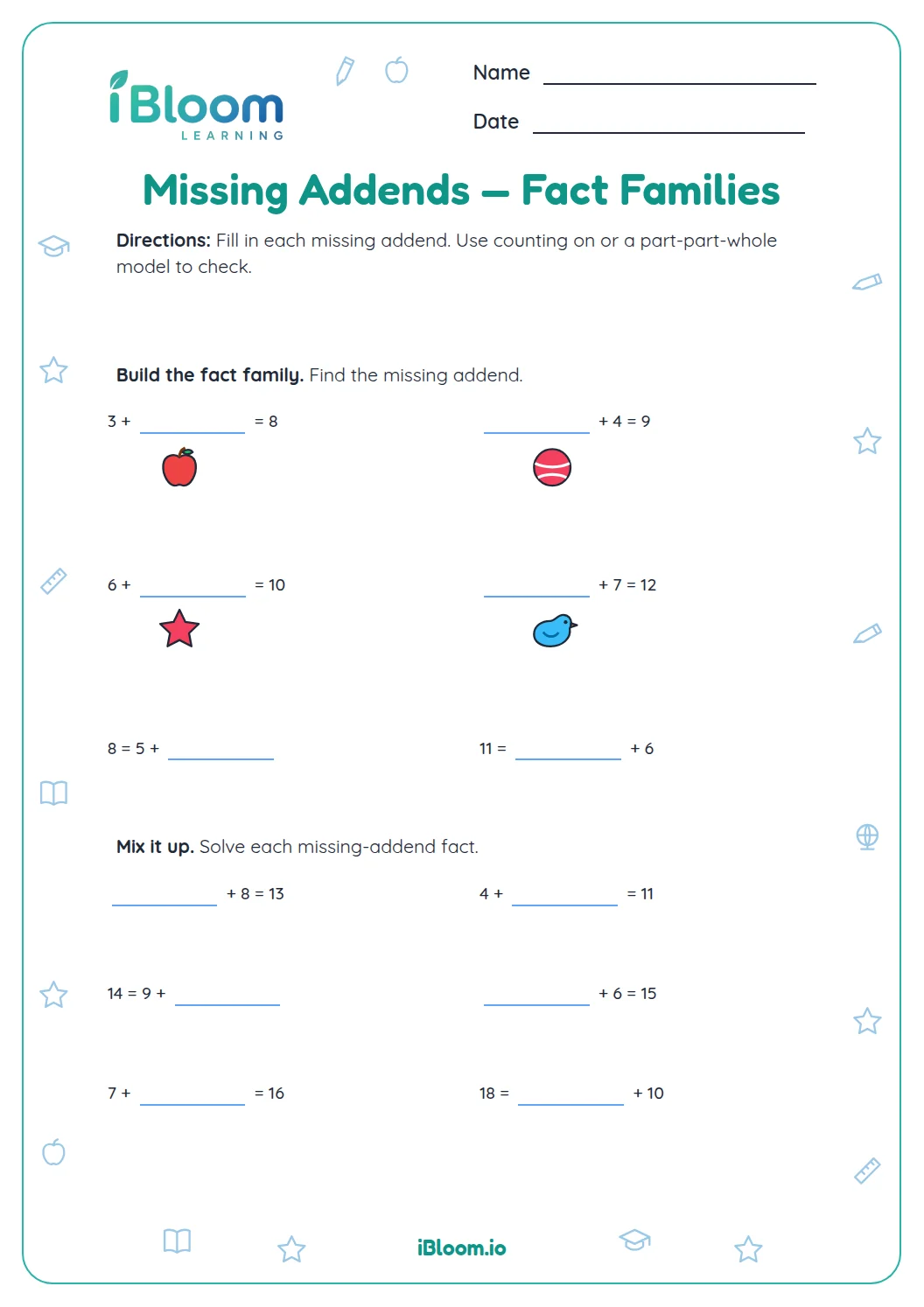
Adding doubles and missing-addend pages use related facts in different ways. Once these sums feel familiar, the linked facts 0 to 12 worksheet extends practice to larger addends. Choose the next page based on which facts the student wants to revisit.