


About this worksheet
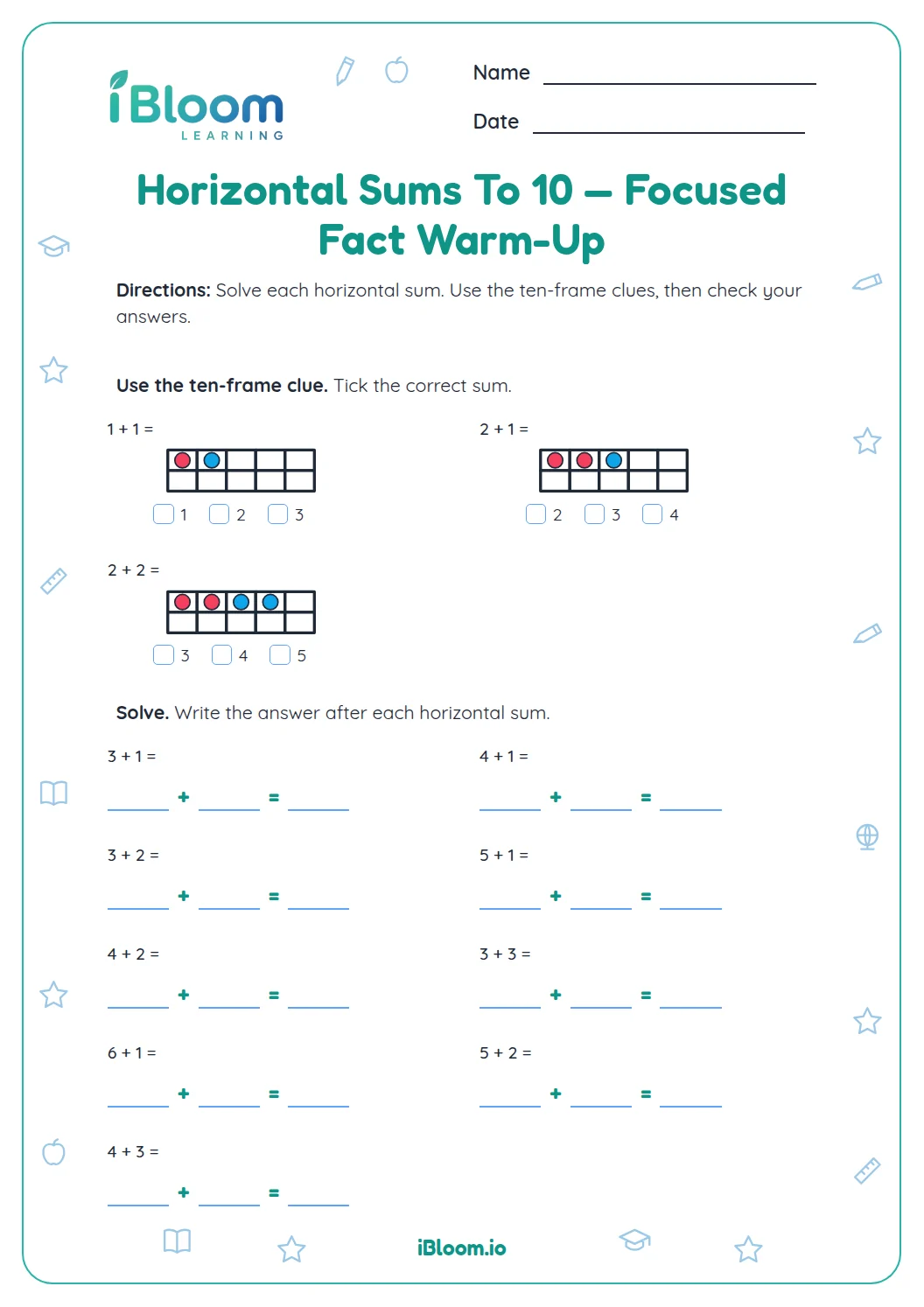
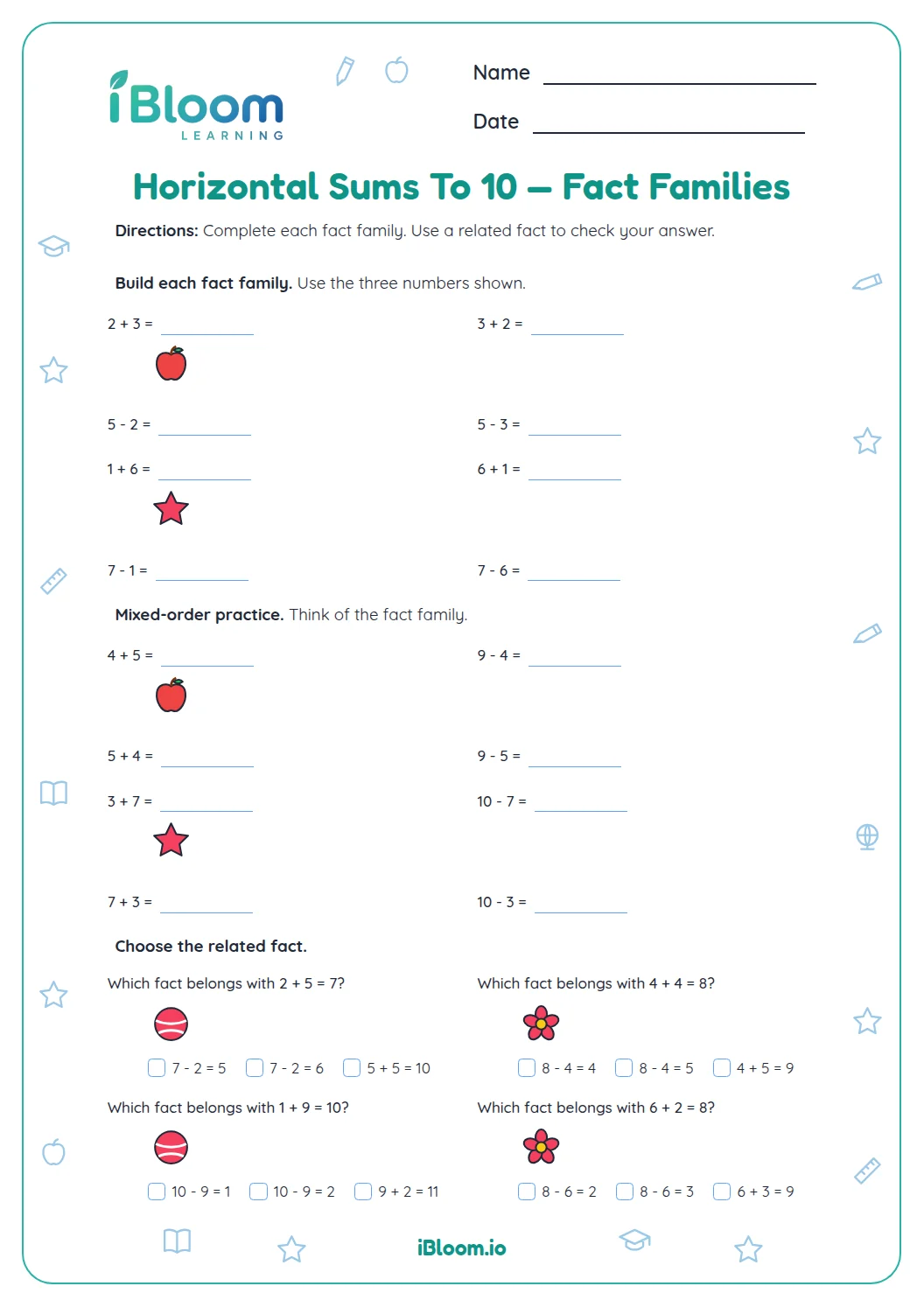
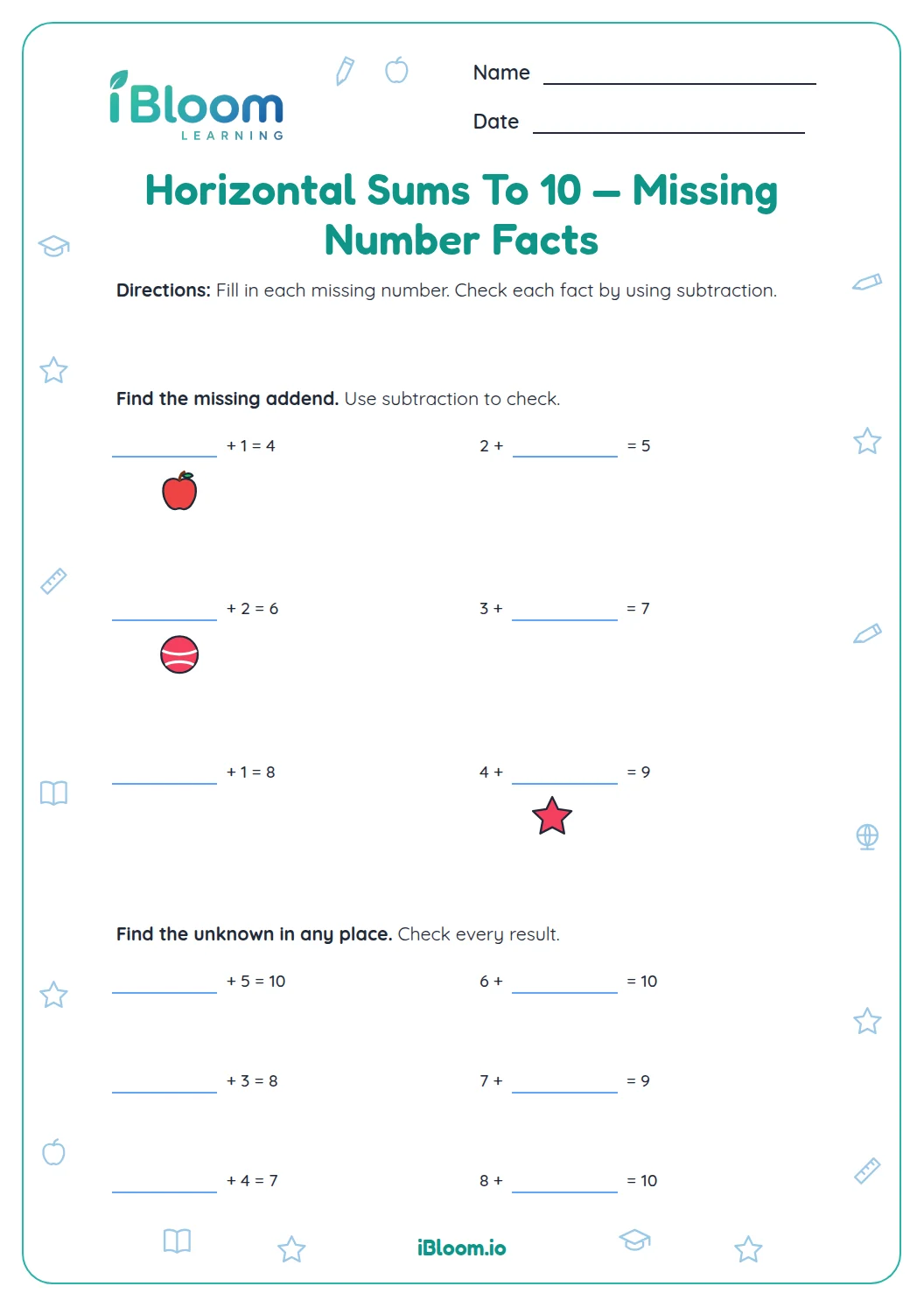
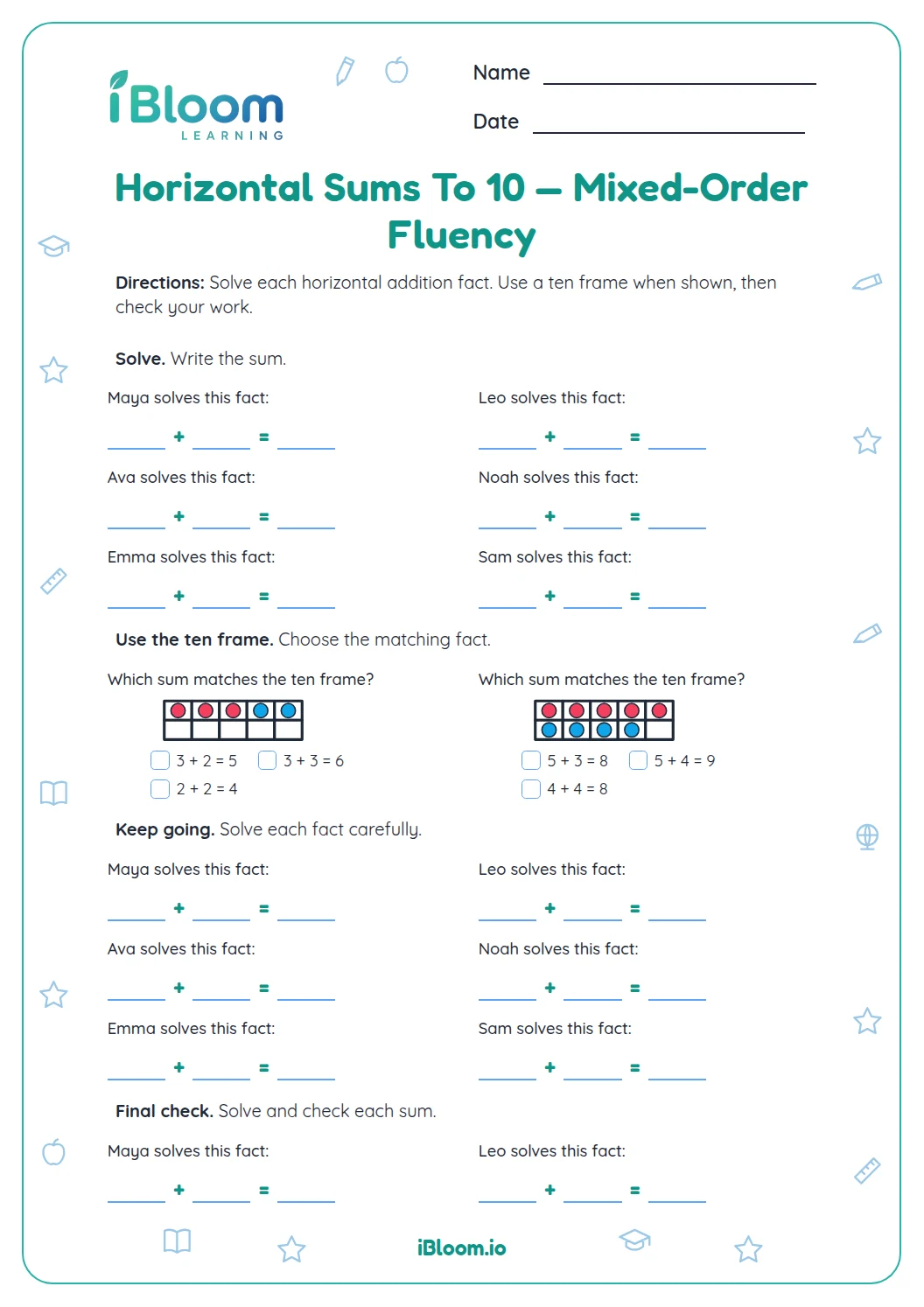
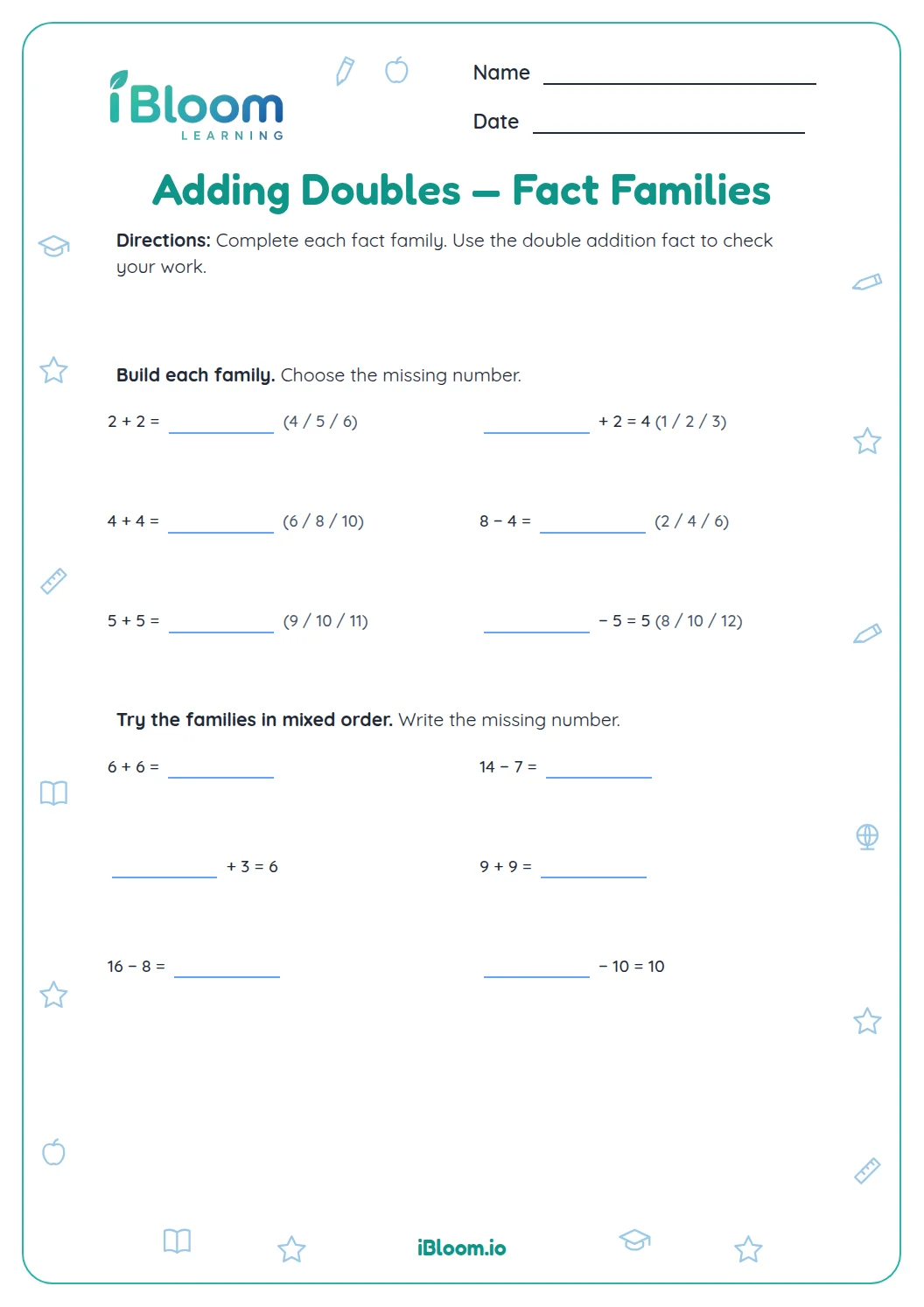
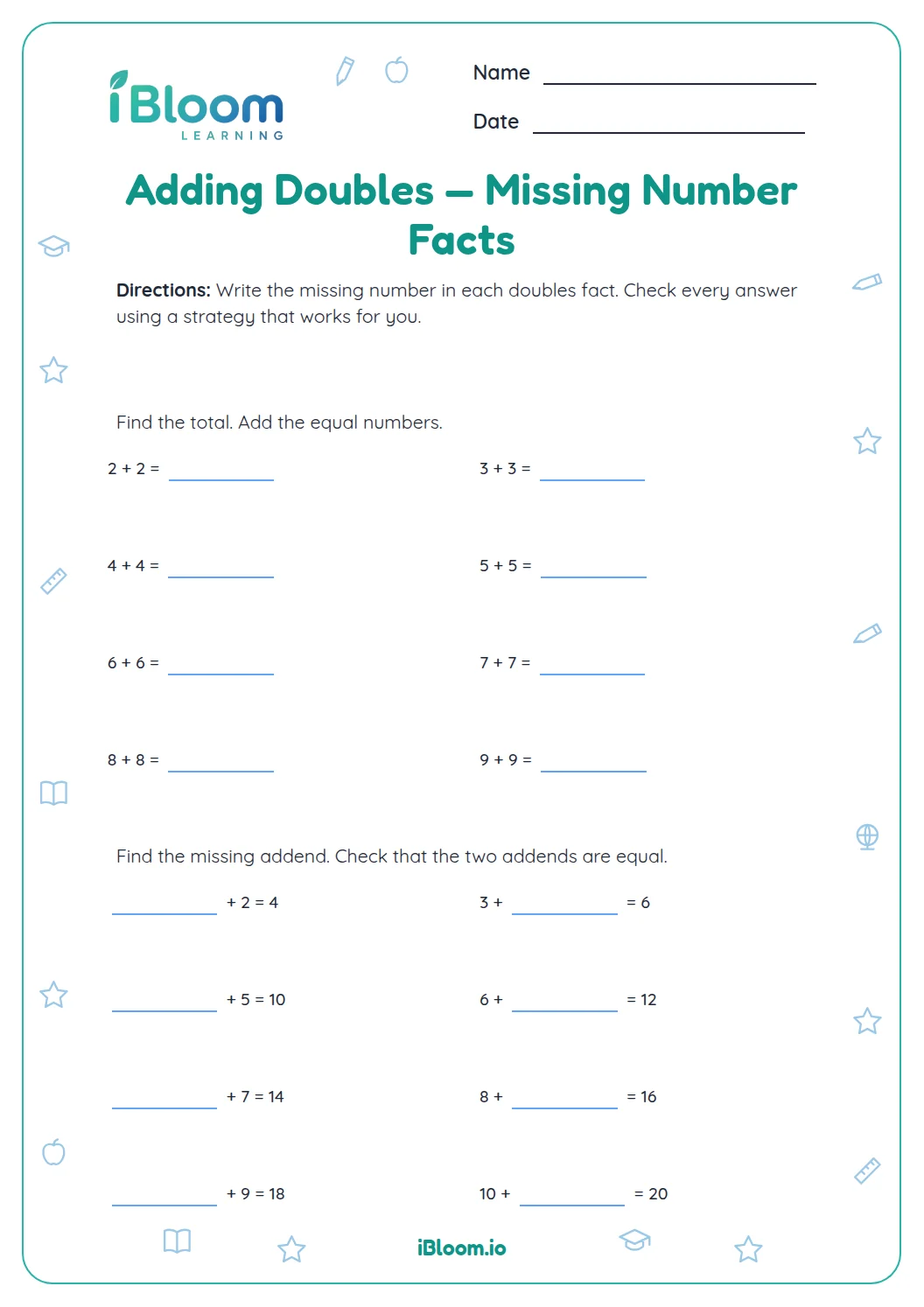
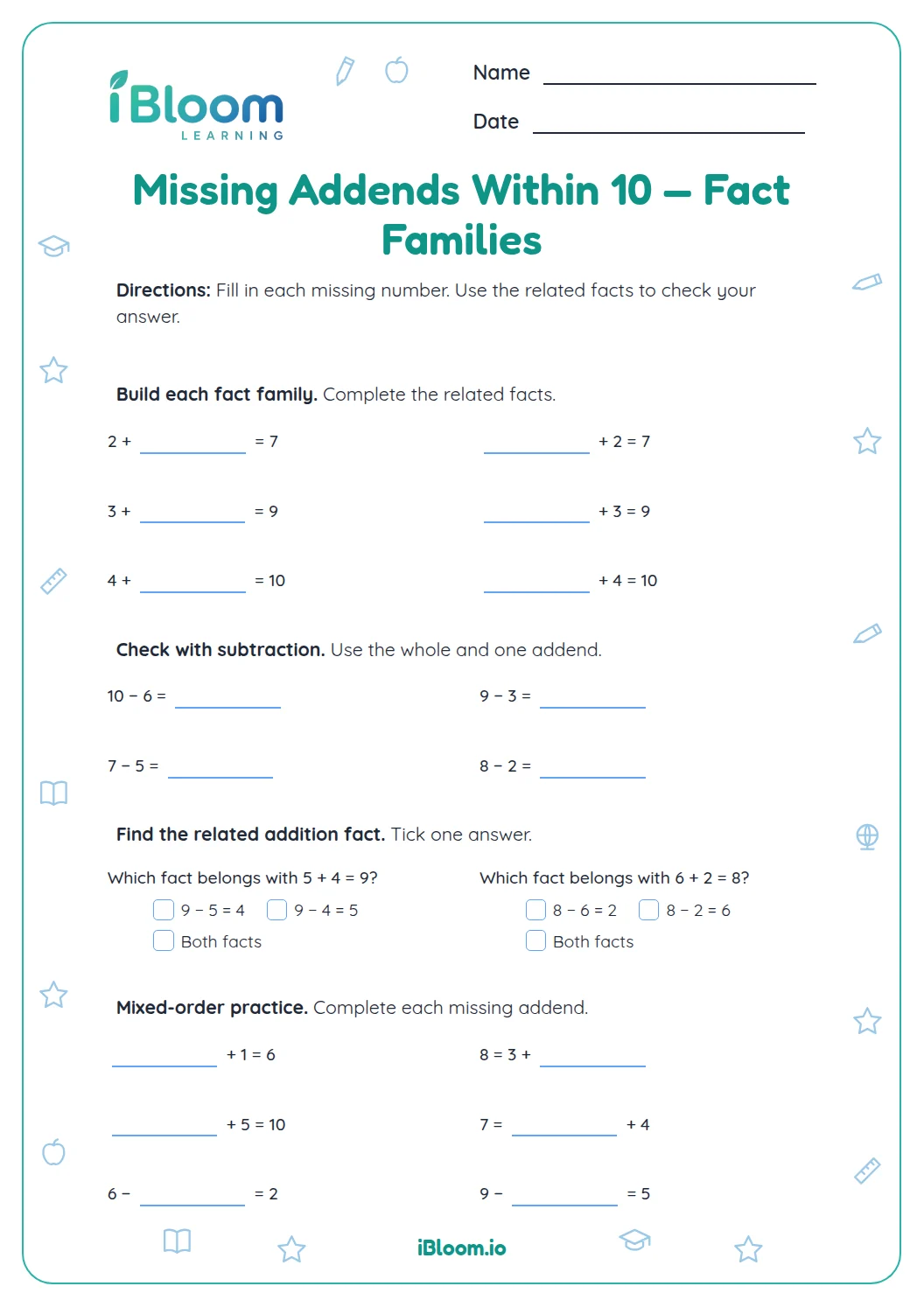
This Grade 1 worksheet gives students 16 horizontal addition facts with sums of 10 or less. The facts include zero, doubles, combinations that make ten, and other pairs, mixed across two parts. Students write each total in the blank and can check their work with the separate answer key. The practice aligns with CCSS 1.OA.C.6, fluency with addition and subtraction within 10.
Aligned to 1.OA.C.6
How do you find each sum?
Read both addends, then count on or use a known fact such as a double. The facts are mixed, so look at each equation rather than assuming the same strategy each time.
How can you check a sum?
For a fact that makes ten, see whether the addends fill the ten. For another fact, subtract one addend from the total; the other addend should remain. For example, 3 + 4 = 7 because 7 − 4 = 3.
How to use this worksheet
- 1Read the two addends in each horizontal equation.
- 2Find the sum by counting on or using a fact you know.
- 3Write one total in each blank.
- 4Check each answer with the key or by subtracting an addend.
Check each fact
The mistake
Mistake: adding only one addend to the next number.
The fix
Count on by the full second addend.
The mistake
Mistake: reversing the operation when checking.
The fix
Subtract one addend from the sum.
The mistake
Mistake: writing an answer above 10.
The fix
Recompute and confirm the total stays within the title range.
Add and subtract within 20, demonstrating fluency for addition and subtraction within 10.
On this sheet: The questions provide direct practice with this skill.
Show the official wordingHide the official wording
Add and subtract within 20, demonstrating fluency for addition and subtraction within 10.
What to practice next
Make more practice
Further reading
Questions parents and teachers ask
Are all the answers 10?
No. Every sum is 10 or less, but the totals vary. Some facts make ten and others have smaller totals, so students need to solve each equation. The directions and title set an upper limit; they do not mean every answer equals ten.
How many facts are on the worksheet?
There are 16 horizontal addition facts split into two parts. Each item has one blank for the total, and the answer key lists all 16 totals. Students can complete one part at a time and check their calculations when finished.
What strategies can students use?
Students can count on from the larger addend, use a double they know, or make ten when the addends fit. They can check a total by subtracting one addend. Different facts may be easier with different strategies, so the sheet mixes the combinations.
What grade is this worksheet for?
The worksheet is labeled Grade 1 and practices addition facts with sums within 10. Students write a number as the answer to each horizontal equation. The facts are mixed across two parts rather than arranged in a repeated sequence.
Is there an answer key?
Yes. A separate answer key page gives the answer to each of the 16 equations, so a student or adult can check the completed work. Encourage the student to solve each fact before looking at the key, then revisit any missed sums.