





About this worksheet
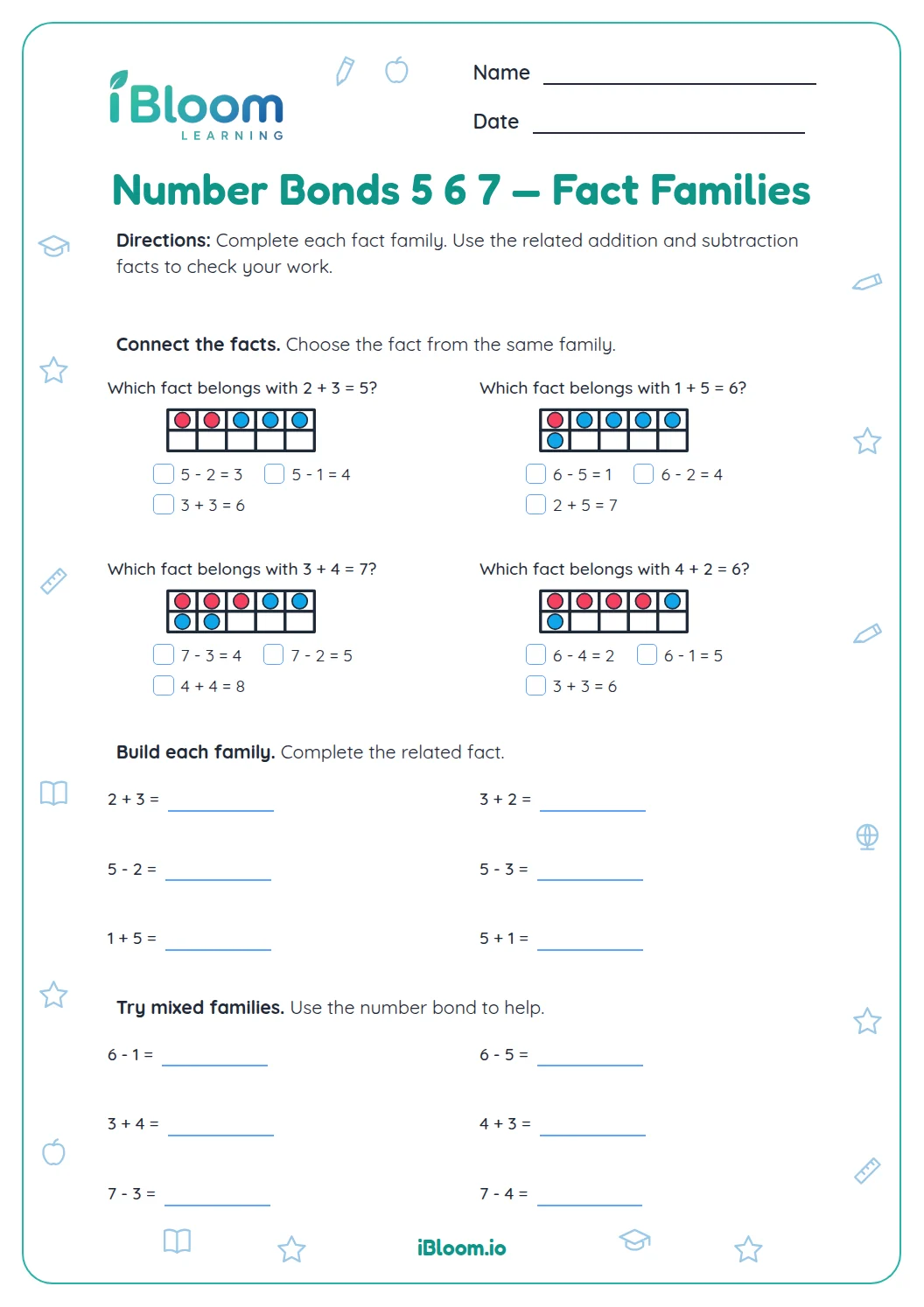
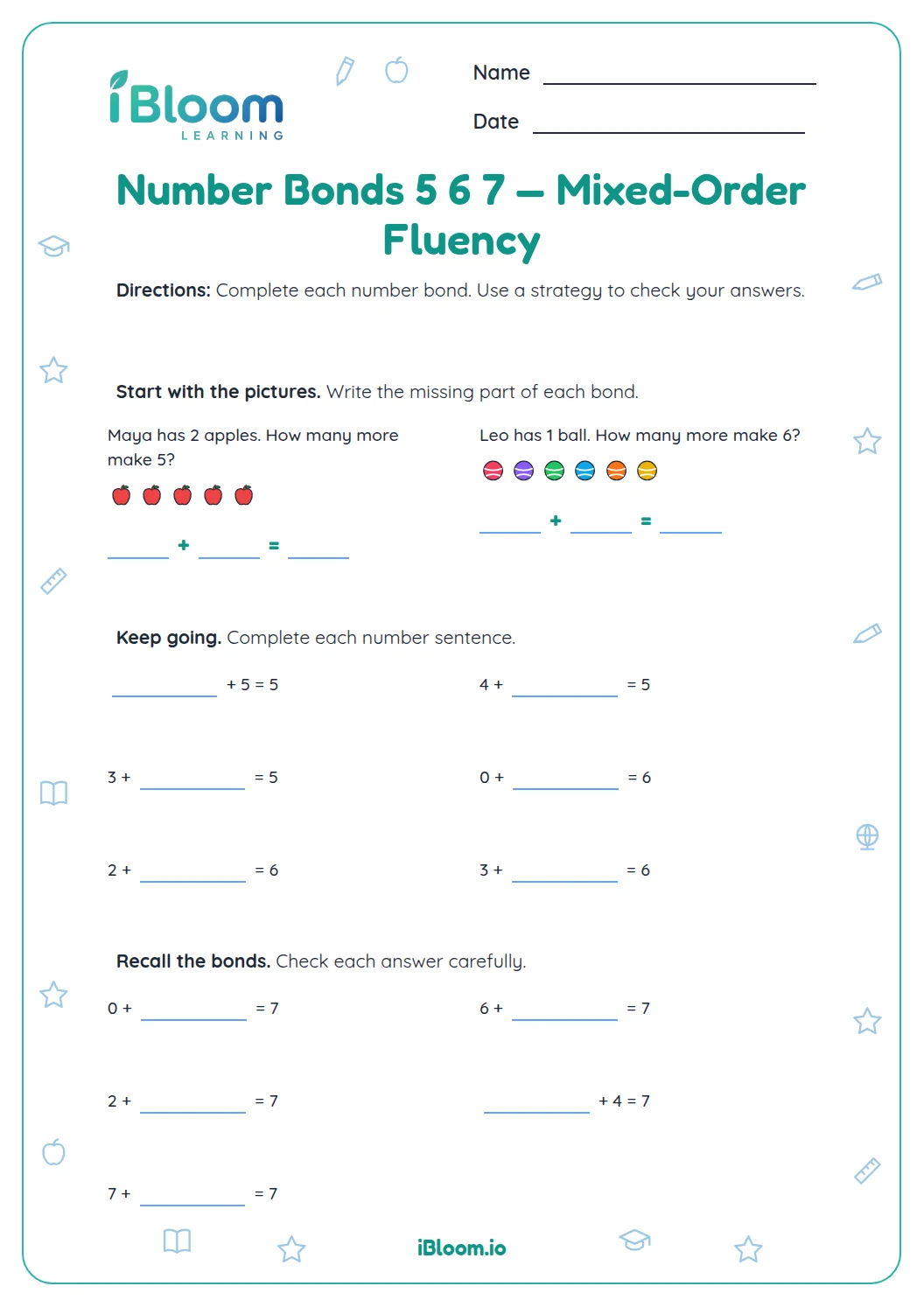
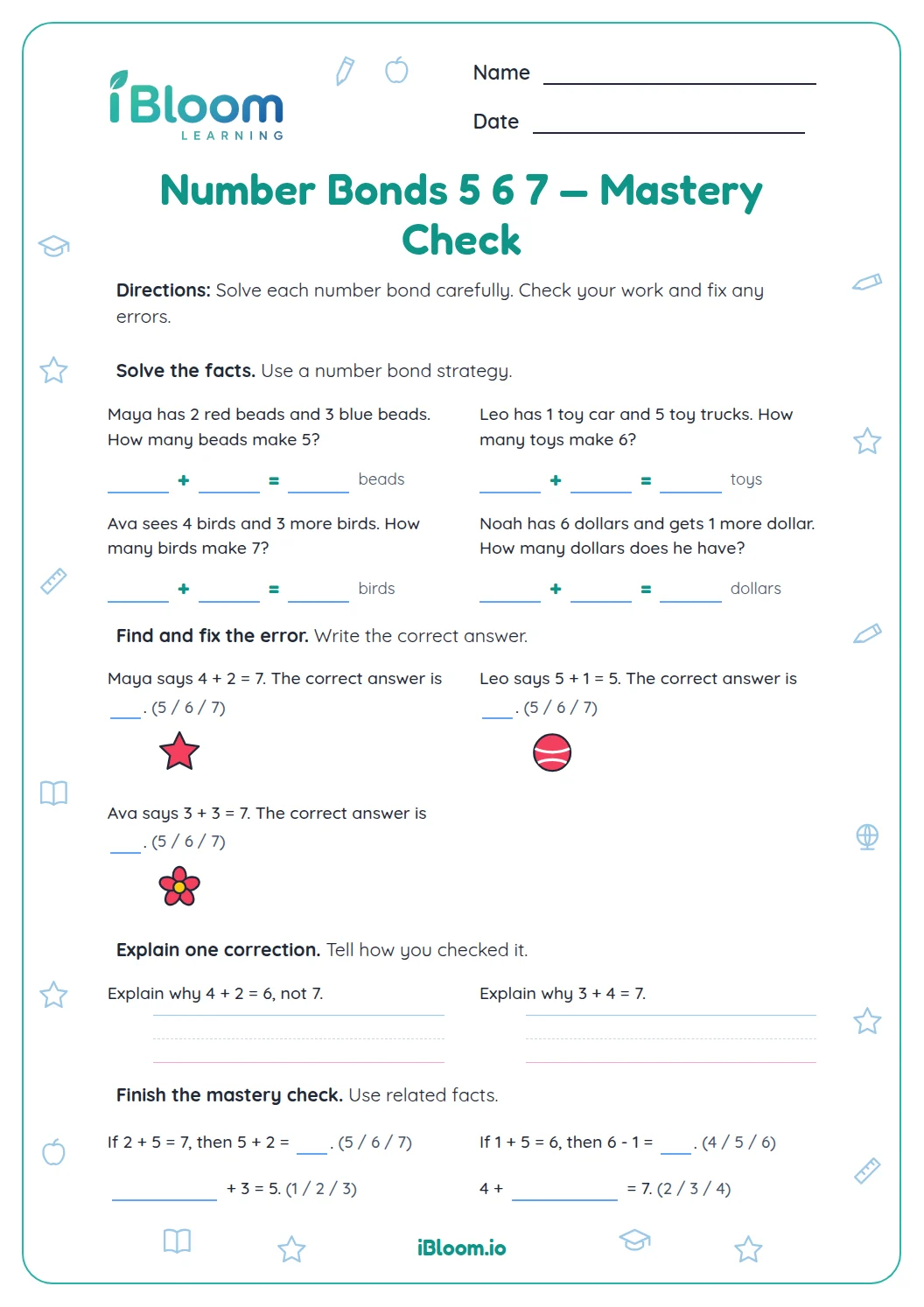
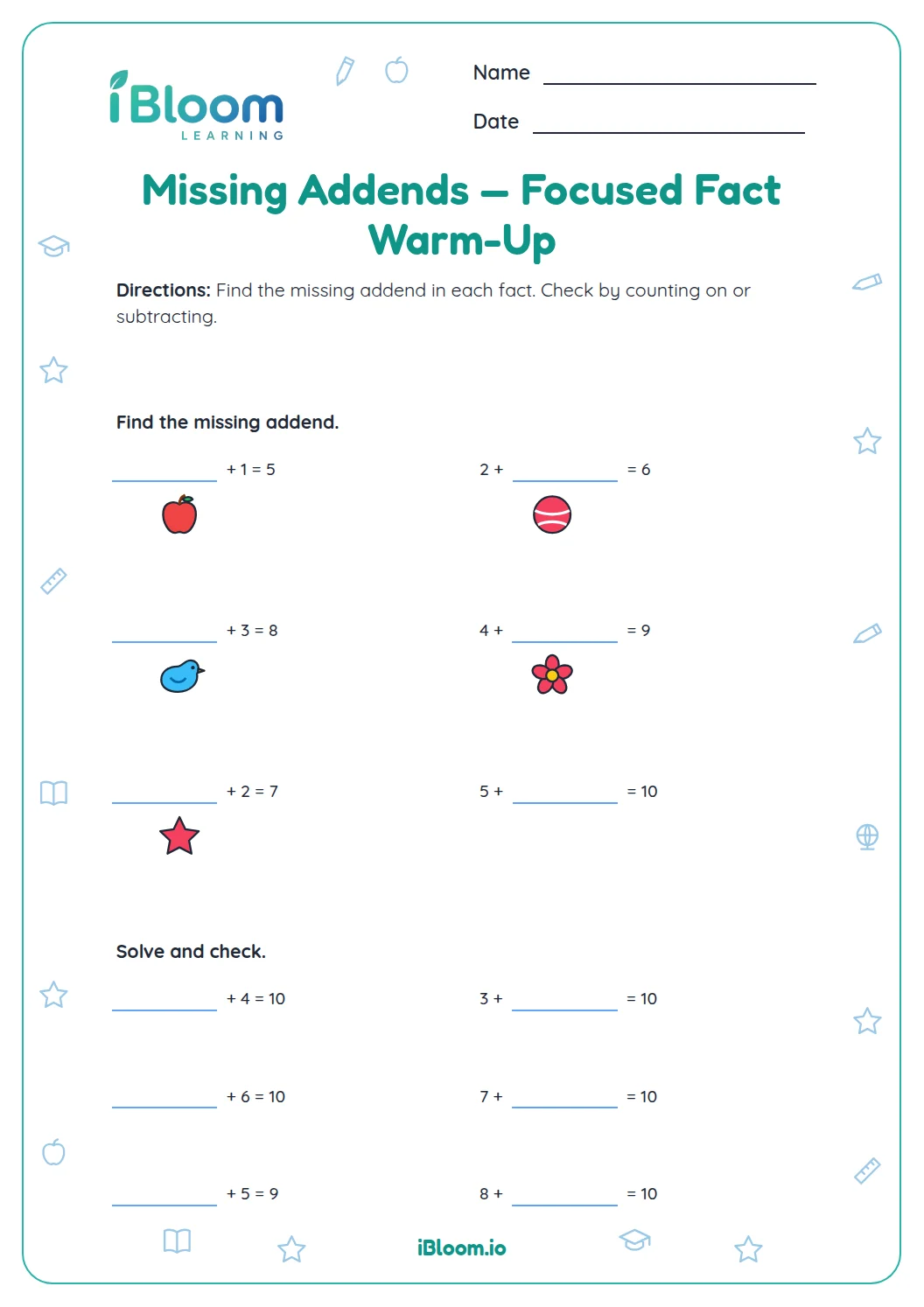
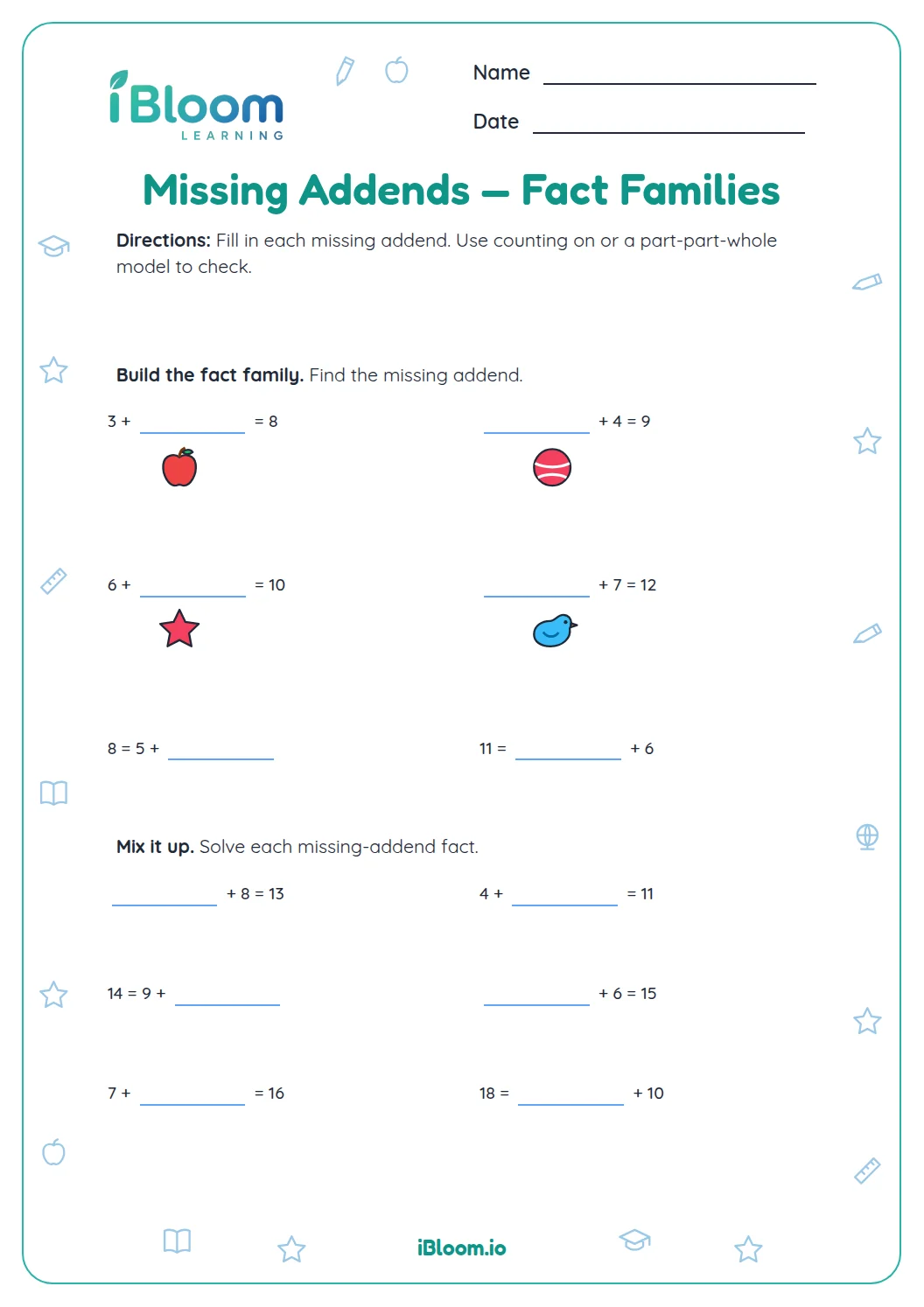
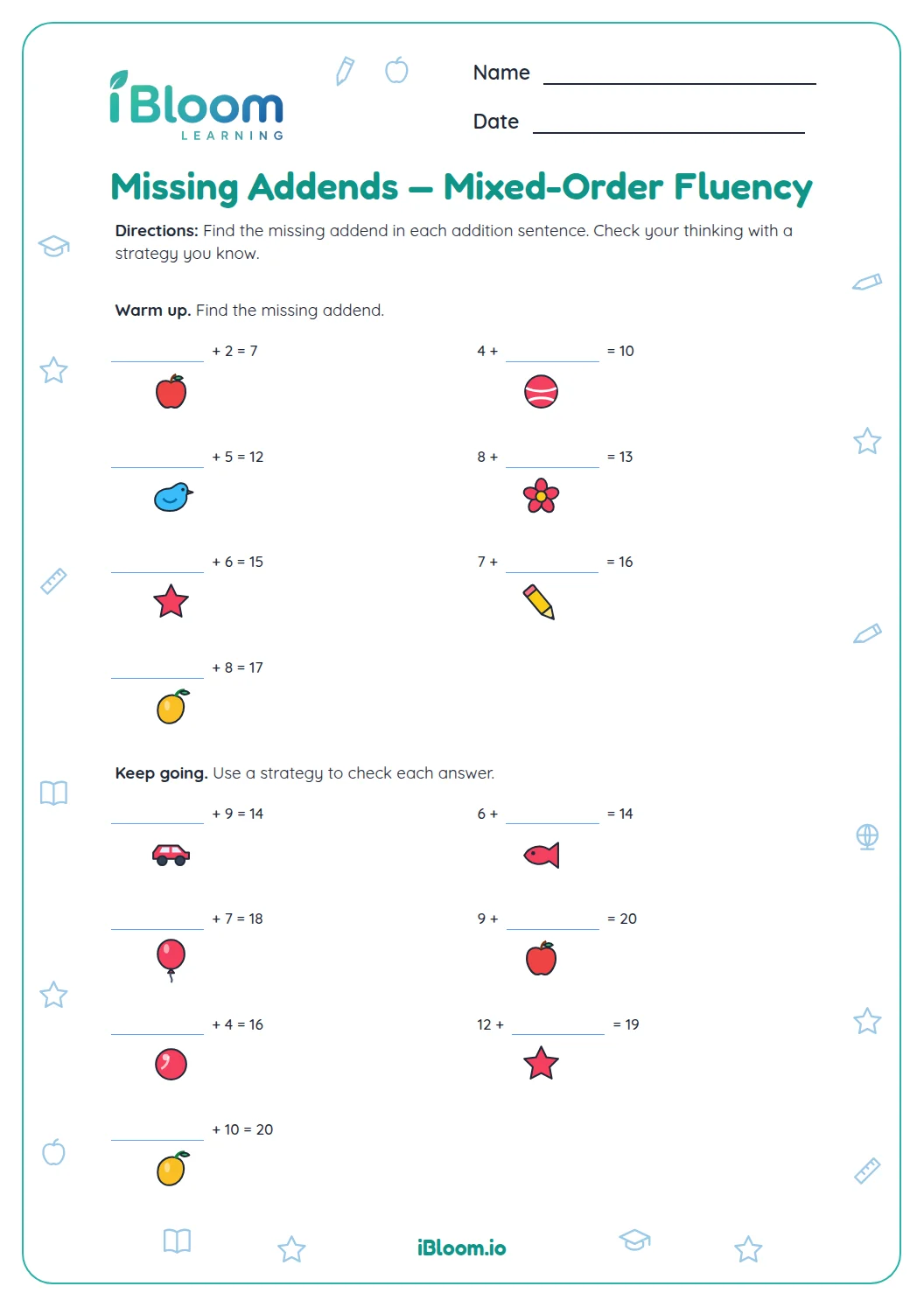
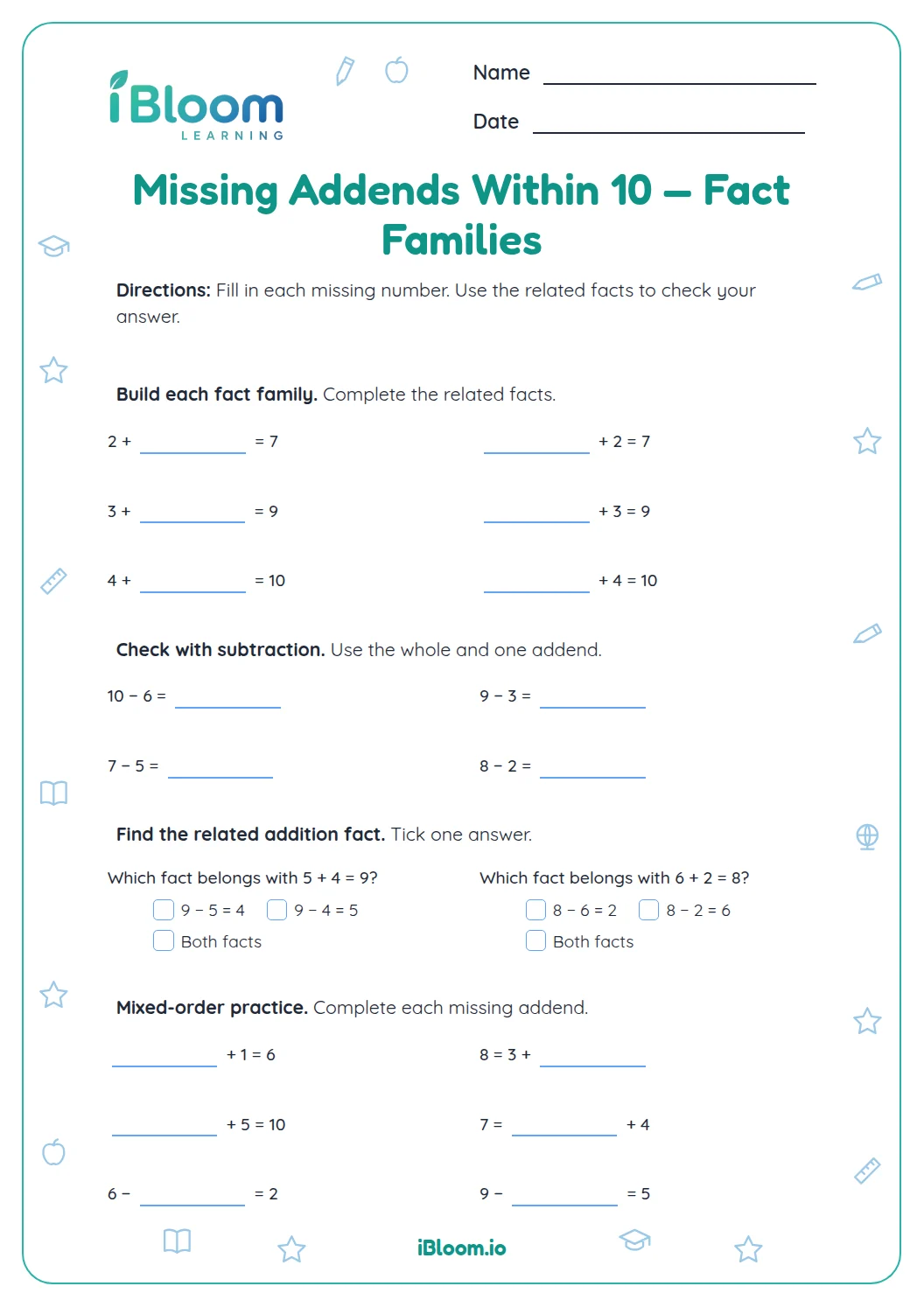
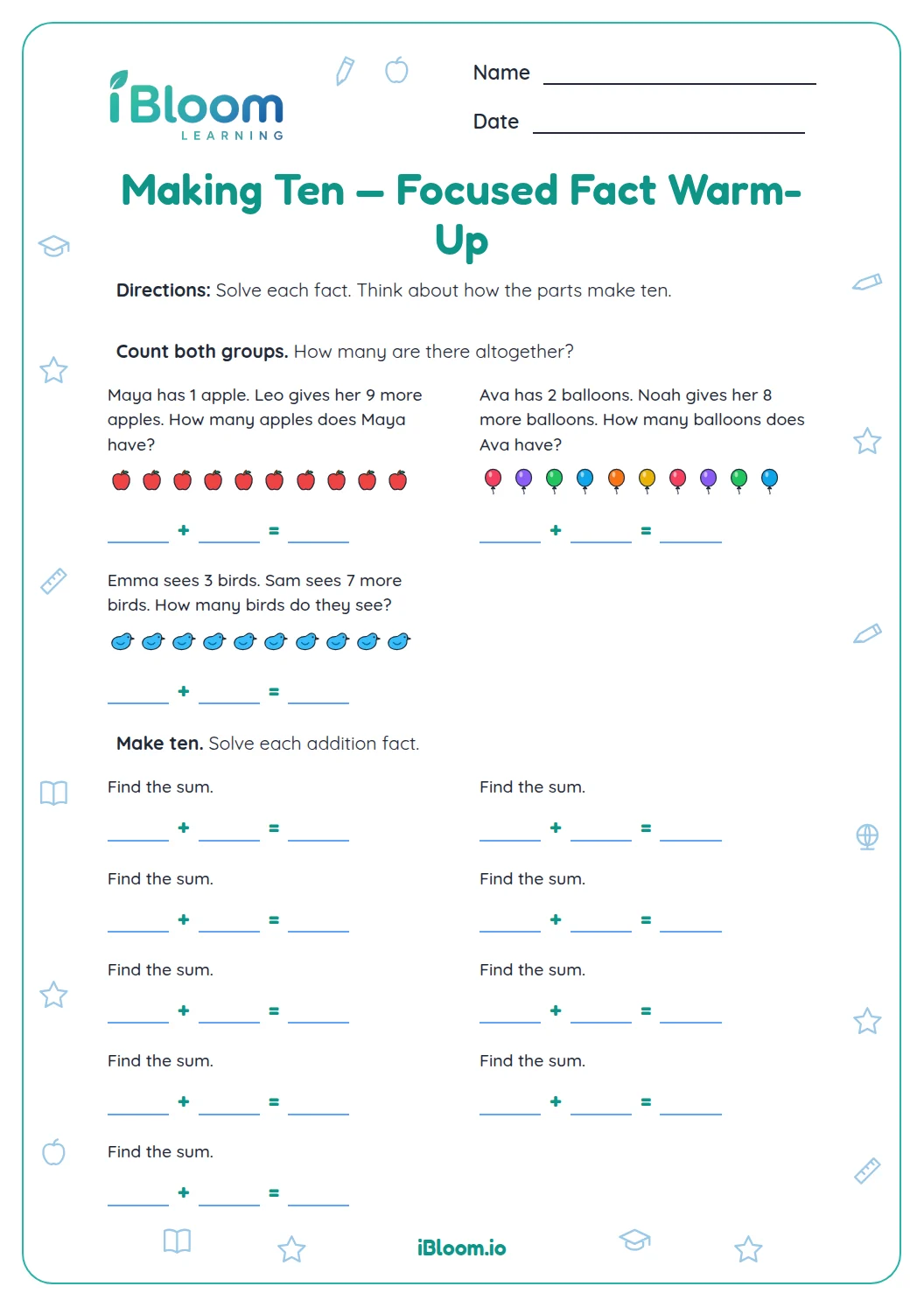
This printable replaces the old bead and story problems with number bond diagrams for 5, 6, and 7, followed by two addition facts. Learners find the missing part in each bond, then use those parts as addition facts. An optional timer can be used after an untimed accuracy round; the answer key is separate.
How do you find a missing part?
The two parts must add to the whole. For q4, the whole is 6 and one part is 3, so the missing part is 3.
- 1Whole: 6; known part: 3
- 26 − 3 = 3, so the missing part is 3.
How do number bonds connect to addition facts?
The last two items write the same part relationship as an addition sentence: 2 + 5 = 7 and 1 + 6 = 7. Check that the addends make the stated total.
When should you use the optional timer?
First complete a round without timing and check accuracy. If a teacher or family member chooses, time a later try and record the time only after finishing.
How to use this worksheet
- 1Read the directions for the part.
- 2Complete each question before checking the key.
- 3Show a step or quick model when it helps.
- 4Review missed answers and try them again.
Common mistakes and quick fixes
The mistake
Writing the known part as the missing part.
The fix
Ask what must be added to the known part to reach the whole.
The mistake
Adding the two parts to a number other than the whole.
The fix
Check that both parts together equal the number at the top.
The mistake
Rushing when using the optional timer.
The fix
Complete an untimed accurate round before adding a time goal.
What to practice next
Make more practice
Questions parents and teachers ask
How many questions are included?
The worksheet includes fourteen items: twelve number bond diagrams with totals of 5, 6, or 7, followed by two addition facts. The answer key shows the missing parts and sums. A timer is optional and should come after an accurate untimed round.
Does the printable include an answer key?
Yes. The printable has a separate answer key that lists the missing parts and matching choices. After a child finishes, compare one response at a time and ask them to name the whole and known part. That quick check reinforces how the two parts make the whole.
How can I use this worksheet at home?
Print the worksheet and read the directions together before starting. Learners can complete the parts independently or talk through one example with an adult, then use the answer key to review their work. Keep the key nearby for checking after a section is complete.
How long should learners spend on it?
Plan for about twenty minutes, with more time for a discussion or a second try. The pace depends on whether learners read and solve independently or pause to explain their reasoning. A short review after each part can make the practice more useful.
What grade is this printable for?
The worksheet is designed for the grade named near its title. An adult may read a direction aloud or model one example, then let the learner complete the remaining questions and check the key. The activities work for home practice, tutoring, or classroom review.