



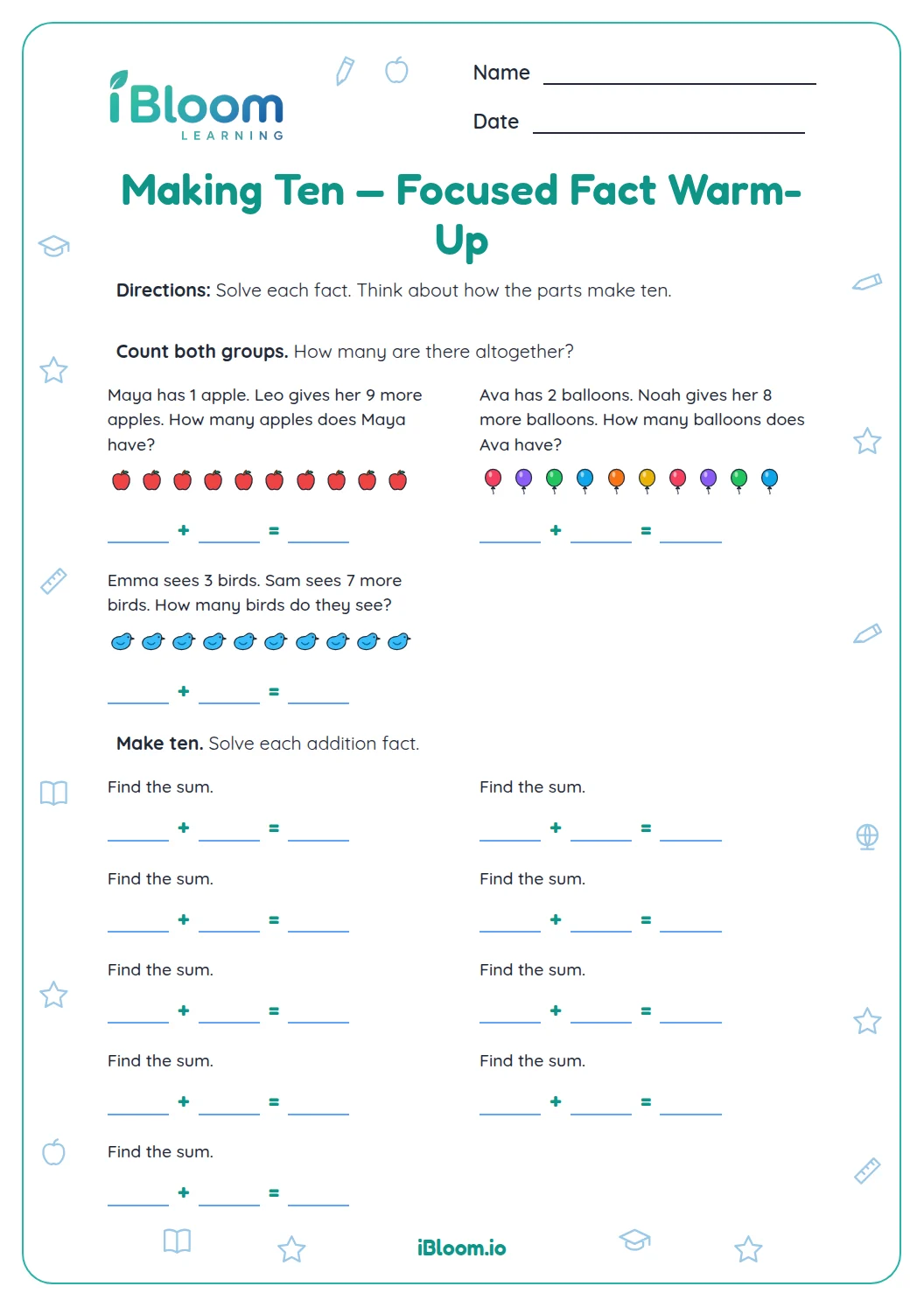

About this worksheet
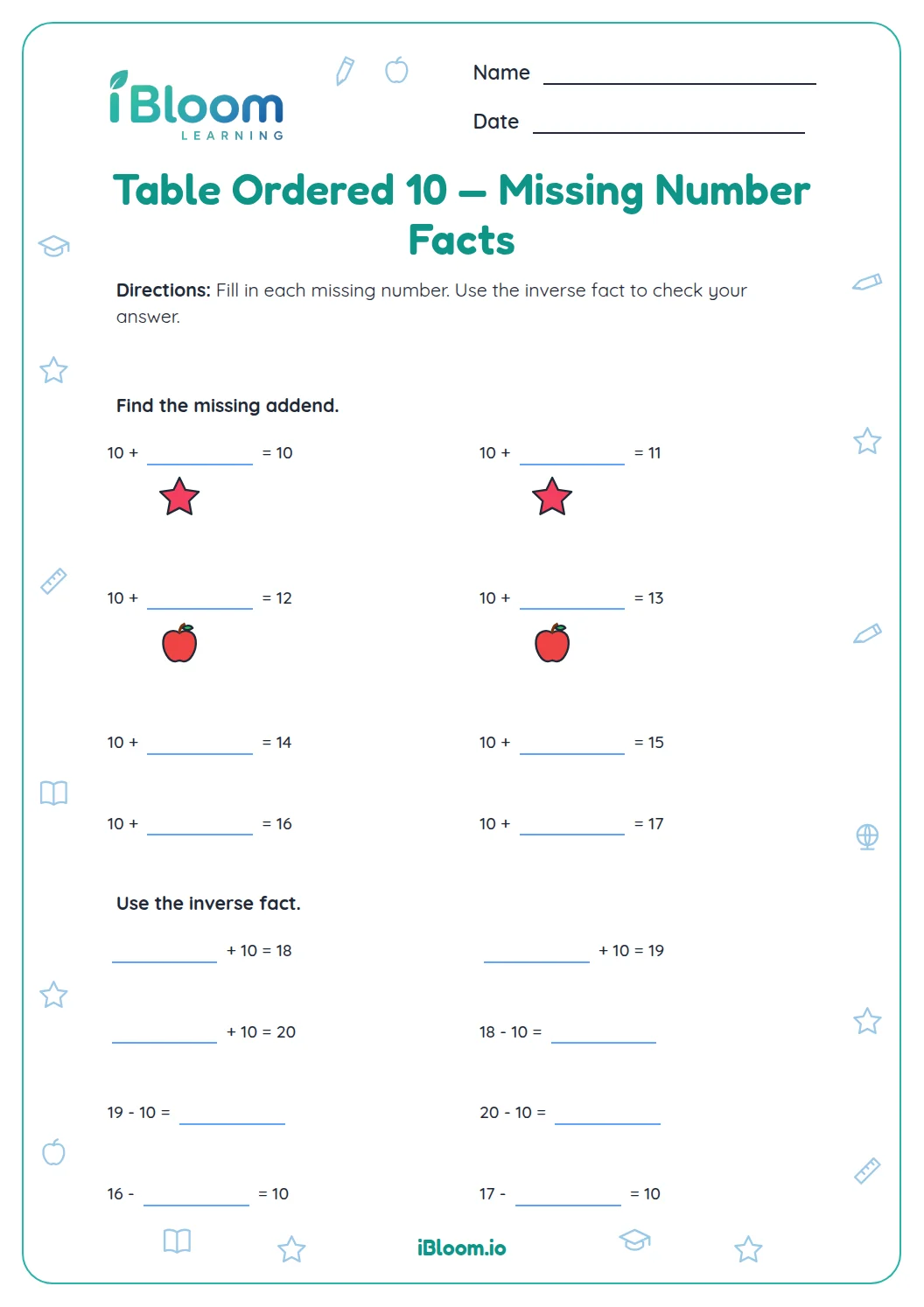
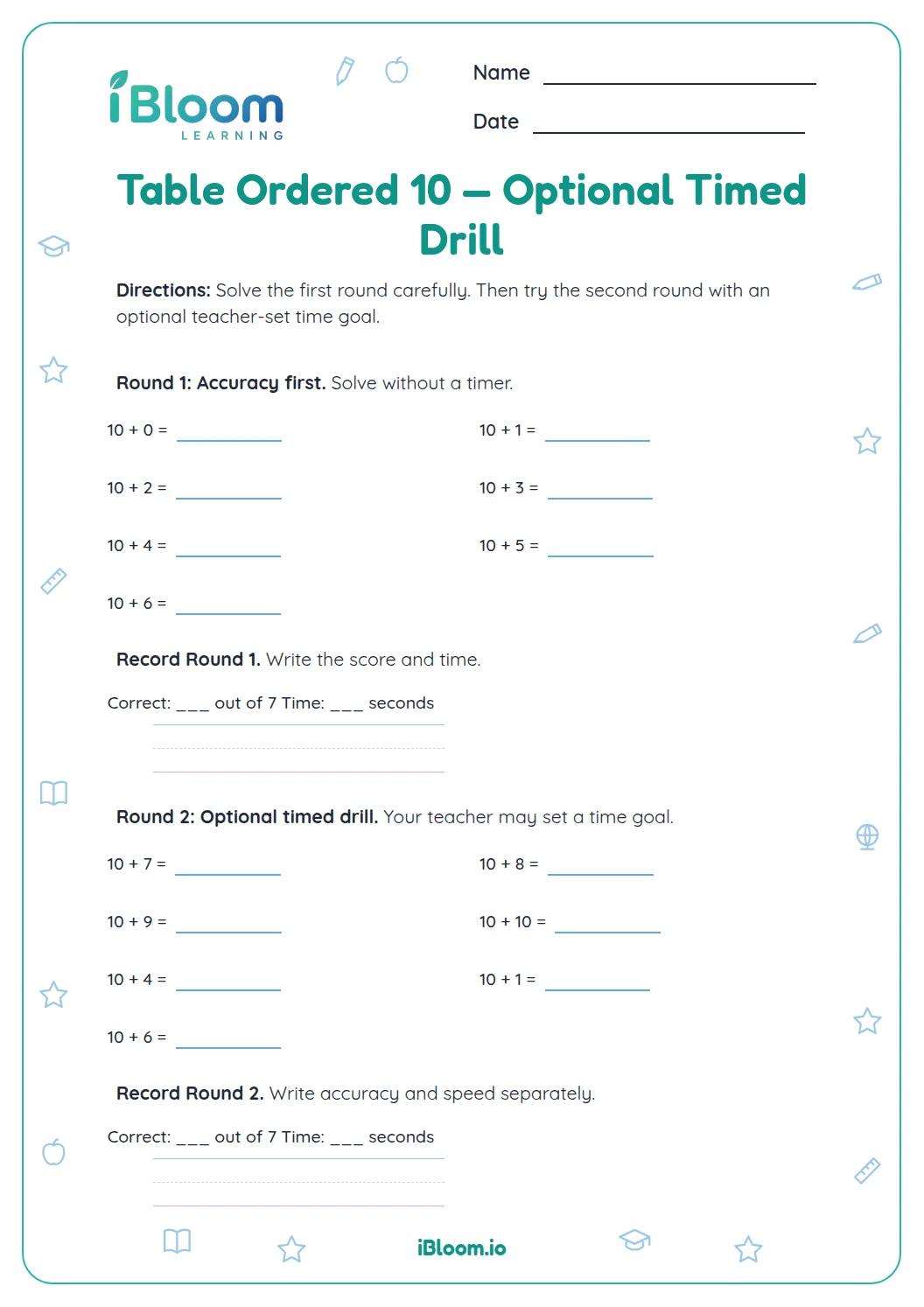
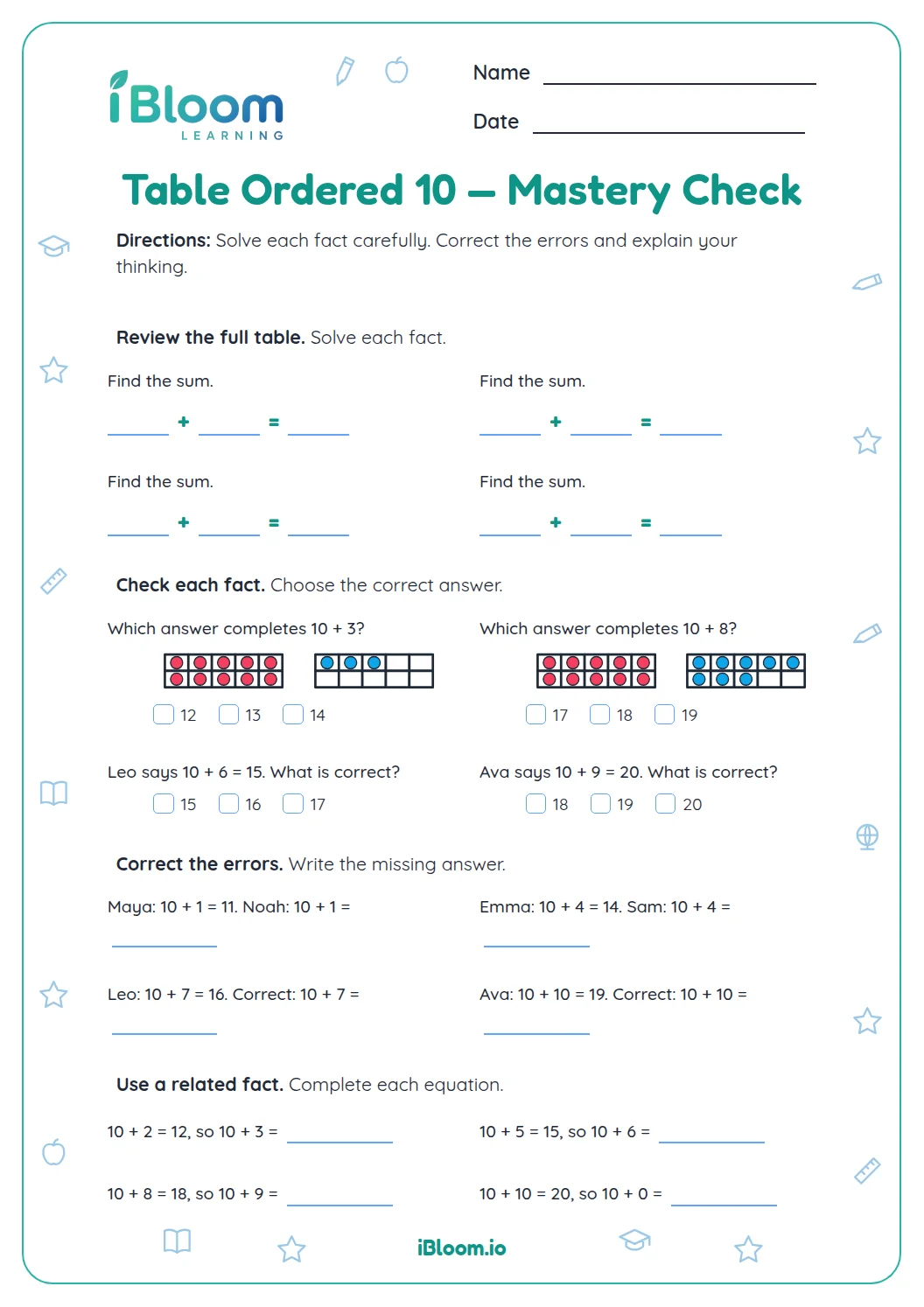
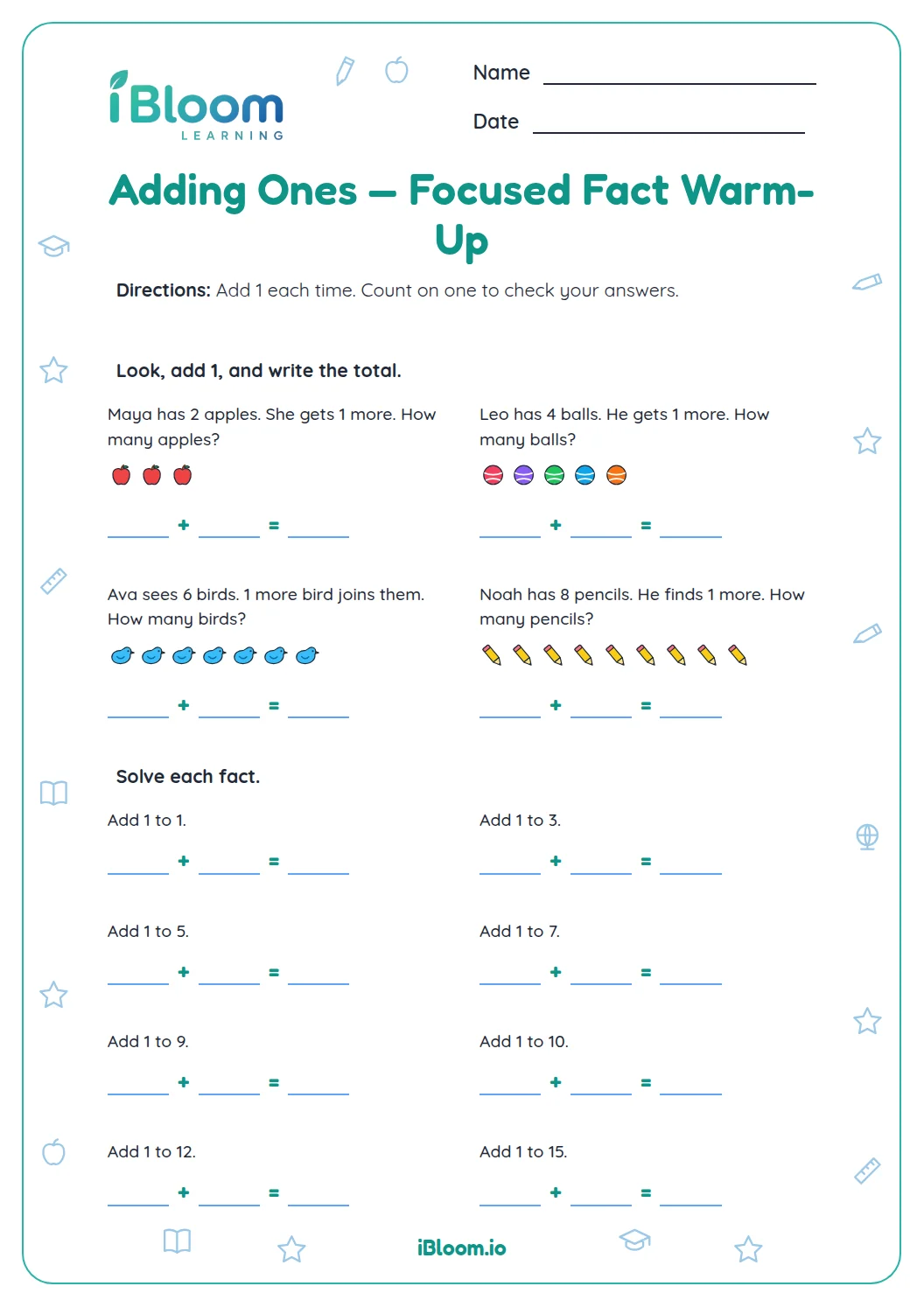
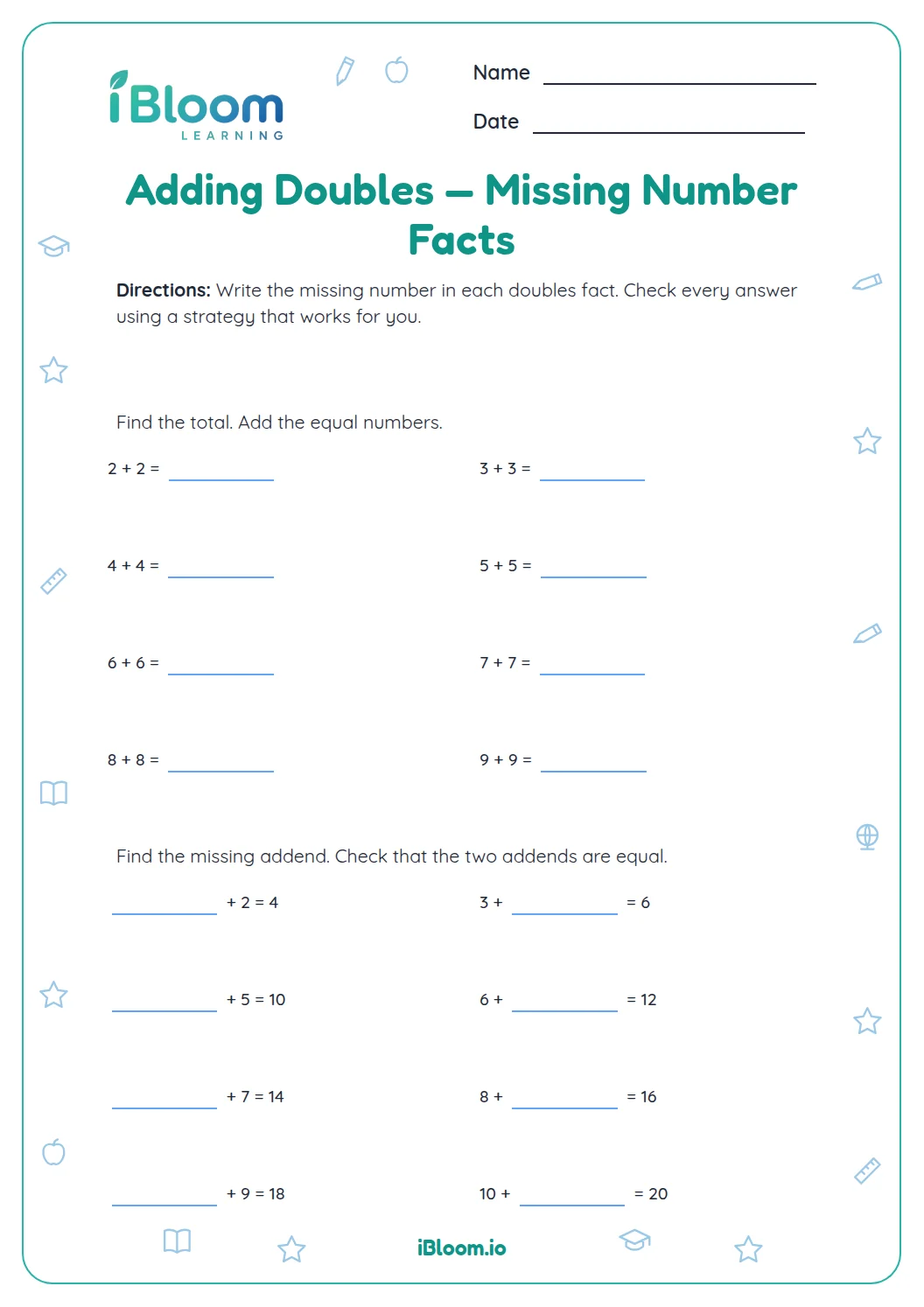
This printable gives Grade 1 and Grade 2 learners 20 addition facts. Children complete 10 + 0 through 10 + 10, then solve nine different pairs that make ten. The answer key lists every sum.
Aligned to 2.OA.B.2
How are the facts grouped?
The first section follows the table from 10 + 0 to 10 + 10. The second section practices nine different pairs that make ten. Children can say each fact aloud before writing its sum.
- 110 + 4 = 14
- 2Adding zero keeps the other addend unchanged.
How can I check an addition fact?
Count on from the larger addend or use a ten pair, then check whether the answer is at least as large as both addends.
What is on the printable?
The 20 facts are split into two parts across two worksheet pages. The key gives all 20 sums on its own pages, so learners can check one part at a time.
How can I use this worksheet?
- 1Start with the first group and say each pair aloud.
- 2Use fingers or counters only when a sum is not yet automatic.
- 3For a ten fact, name the missing partner to 10.
- 4Check the answer key and repeat any missed fact.
What mistakes should I watch for?
The mistake
Adding both numbers incorrectly when counting on.
The fix
Start at the larger addend and count on the smaller number.
The mistake
Thinking adding zero changes a number.
The fix
Say the number aloud and notice that zero adds none.
The mistake
Forgetting a partner to ten.
The fix
Pair 9 with 1, 8 with 2, 7 with 3, 6 with 4, or 5 with 5.
Common Core alignment
This practice connects the worksheet tasks to the standard below.
Add within 20 using mental strategies and known sums.
On this sheet: The ten table and ten pairs build fluency with sums within 20.
Show the official wordingHide the official wording
Fluently add and subtract within 20 using mental strategies. By end of Grade 2, know from memory all sums of two one-digit numbers.
What to practice next
Make more practice
Further reading
Questions parents and teachers ask
What does this addition facts worksheet include?
The sheet has 20 facts: 10 + 0 through 10 + 10, followed by nine different pairs that make ten. The answer key lists every sum. A learner can finish one group before checking it and use missed facts for a quick counter review.
What ages can use this page?
It is labeled Grades 1–2 and includes sums from 10 to 20. Learners may use counters or mental strategies to check each item. The table facts use 10 as one addend; the second group uses two addends that total 10. An adult can choose the group that fits current practice.
How should a child use the answer key?
Finish a section before opening the key. For a missed fact, build both addends with counters, count the total, and solve the same sentence again. Ask the child to explain how the counters match the written numbers, then check the answer once more.
How long does it take?
About 15 minutes is a reasonable estimate for these 20 short facts, but timing varies with a child’s familiarity. Allow extra time to build facts with counters or talk through a strategy. There is no need to turn the page into a speed test.
What is a useful strategy for making ten?
Think of the number that joins an addend to make 10. For example, 8 needs 2, so 8 + 2 = 10. On the second part, notice the two addends and check whether they complete ten before writing the sum.