

About this worksheet
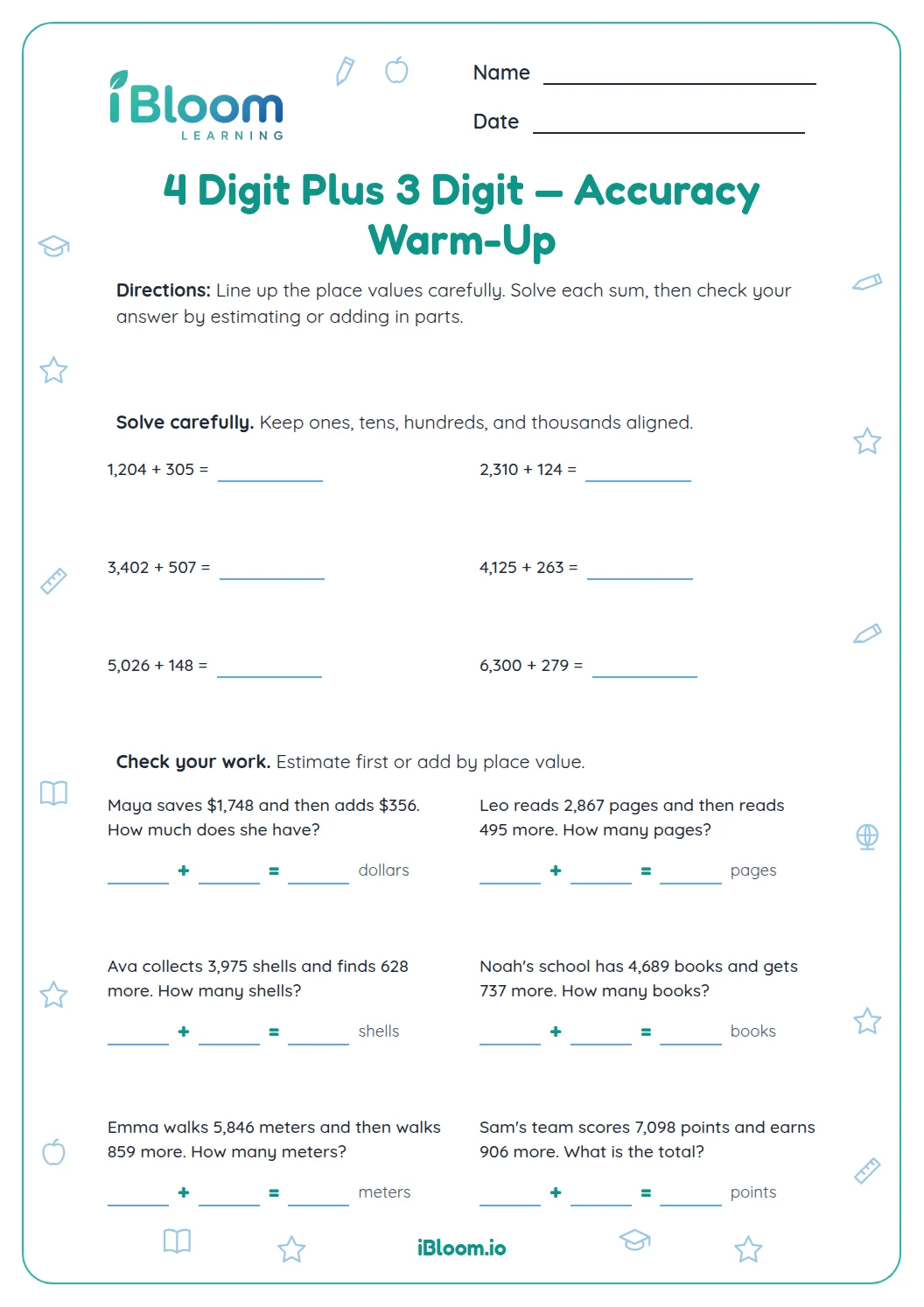
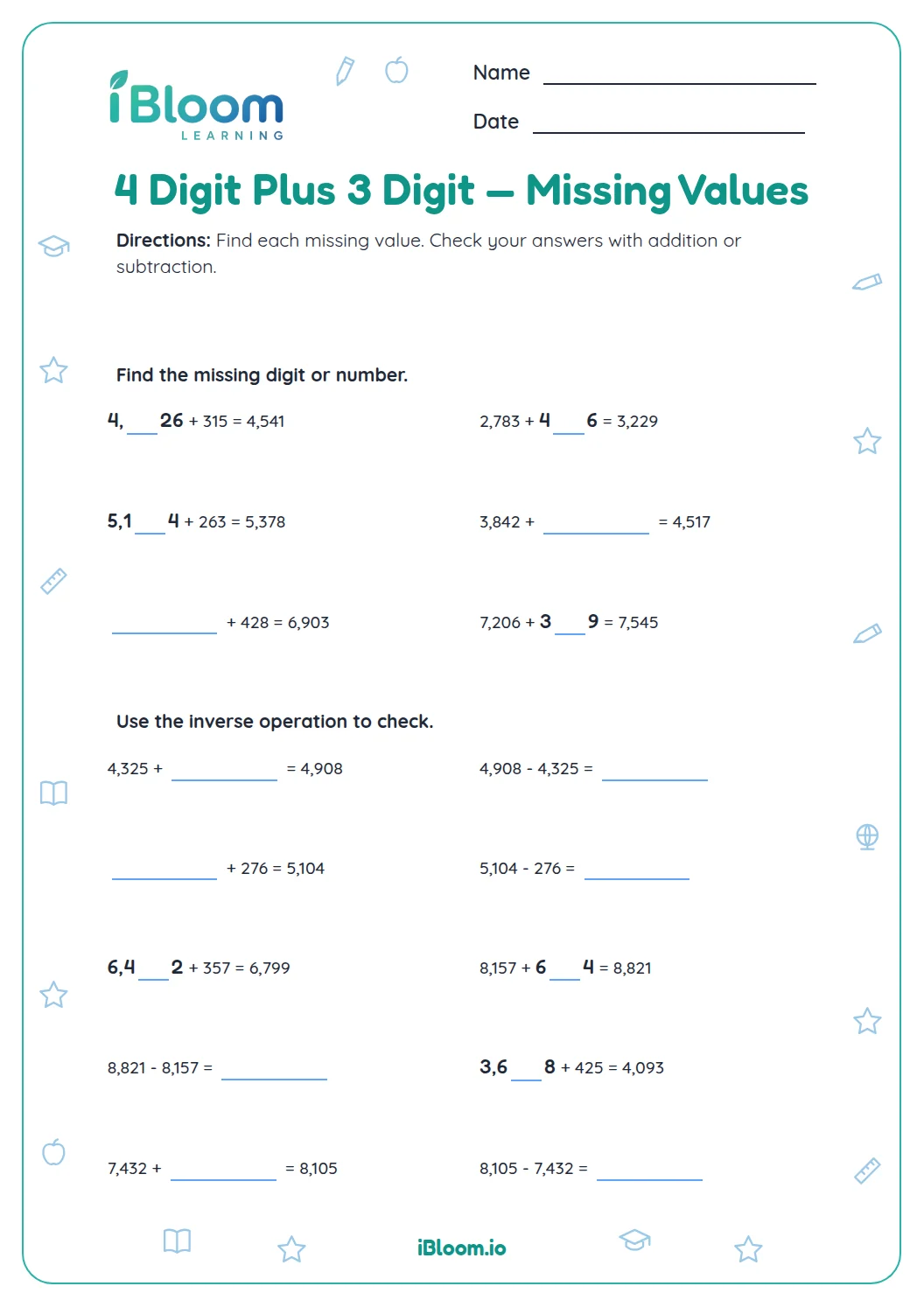
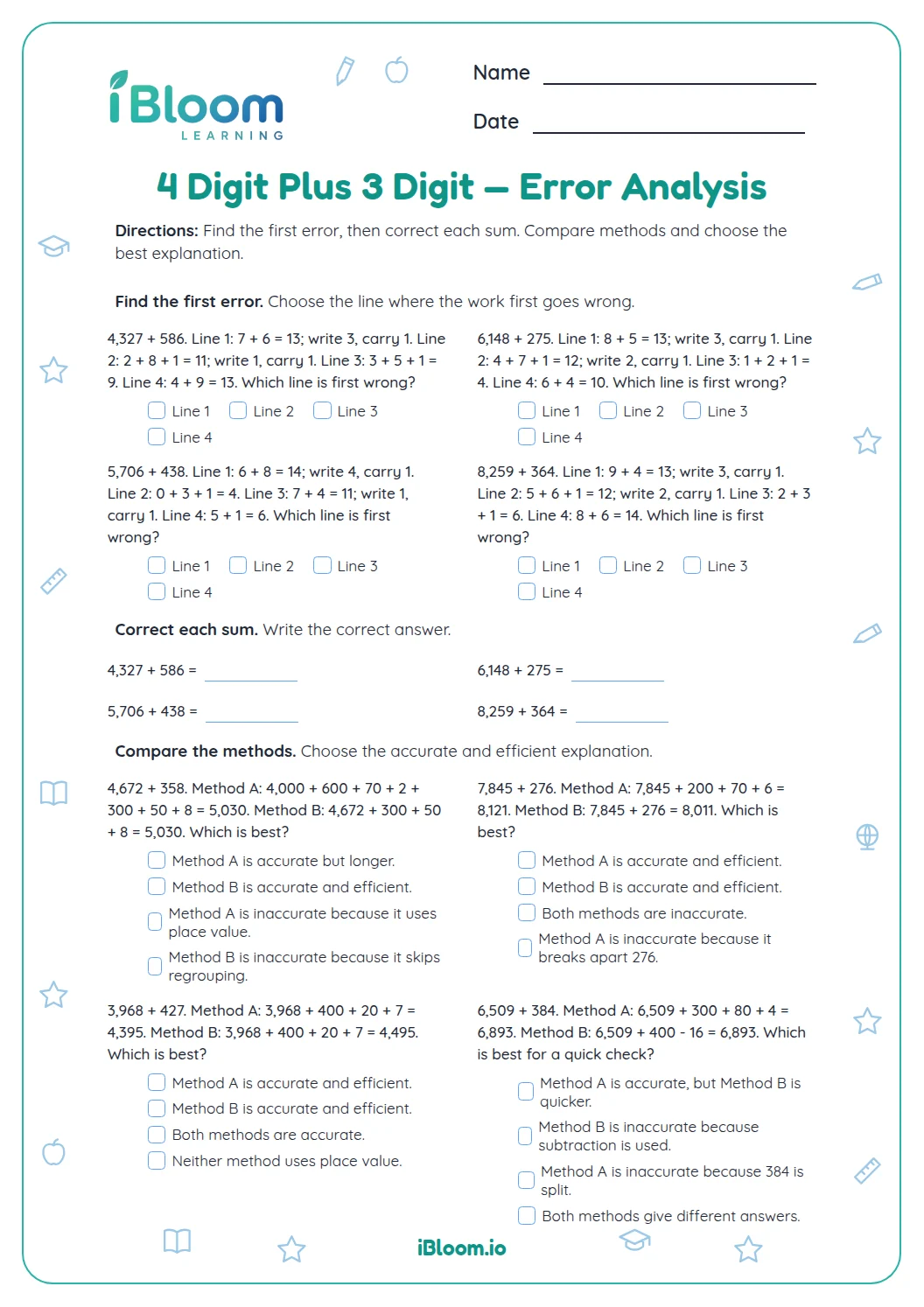
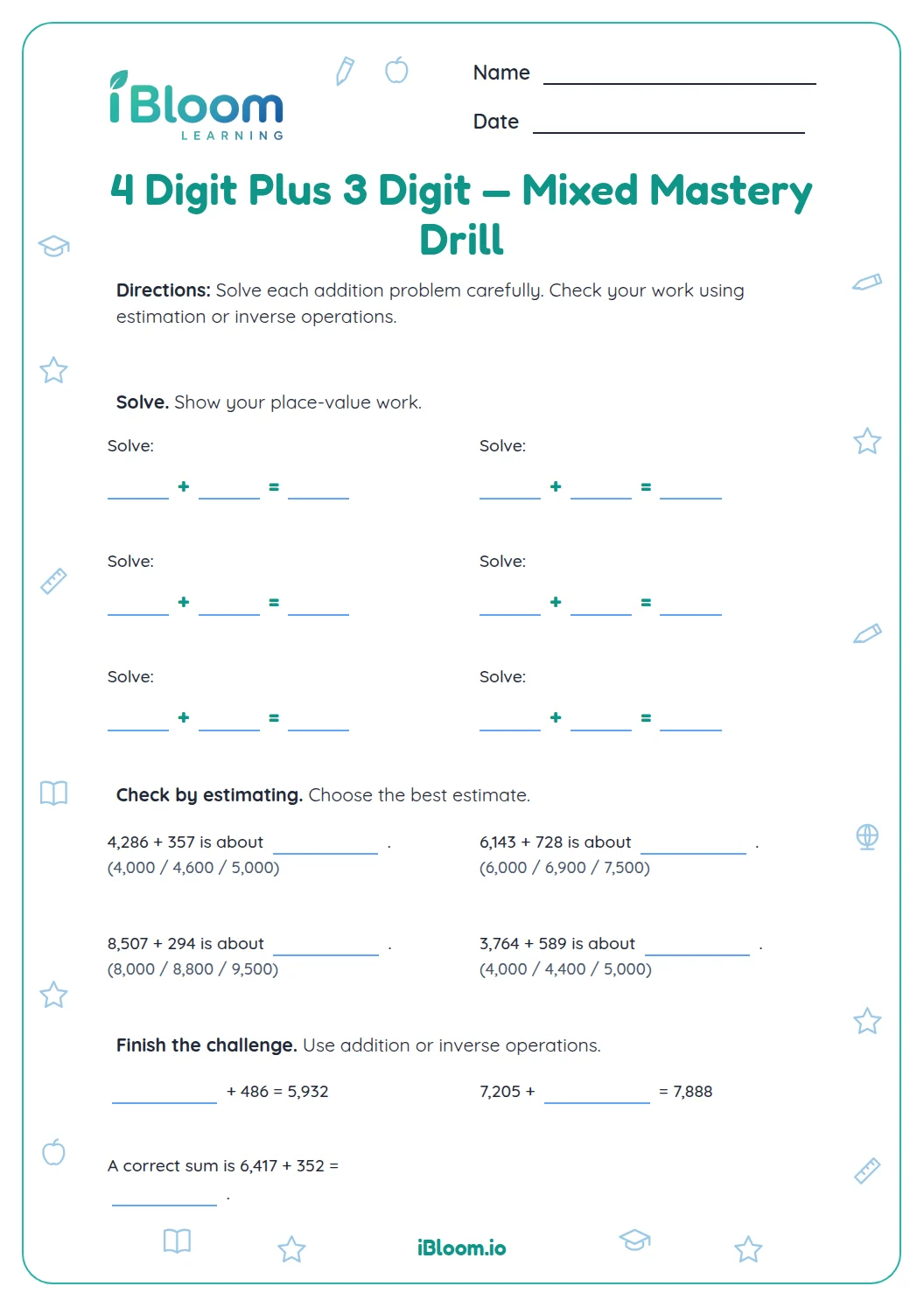
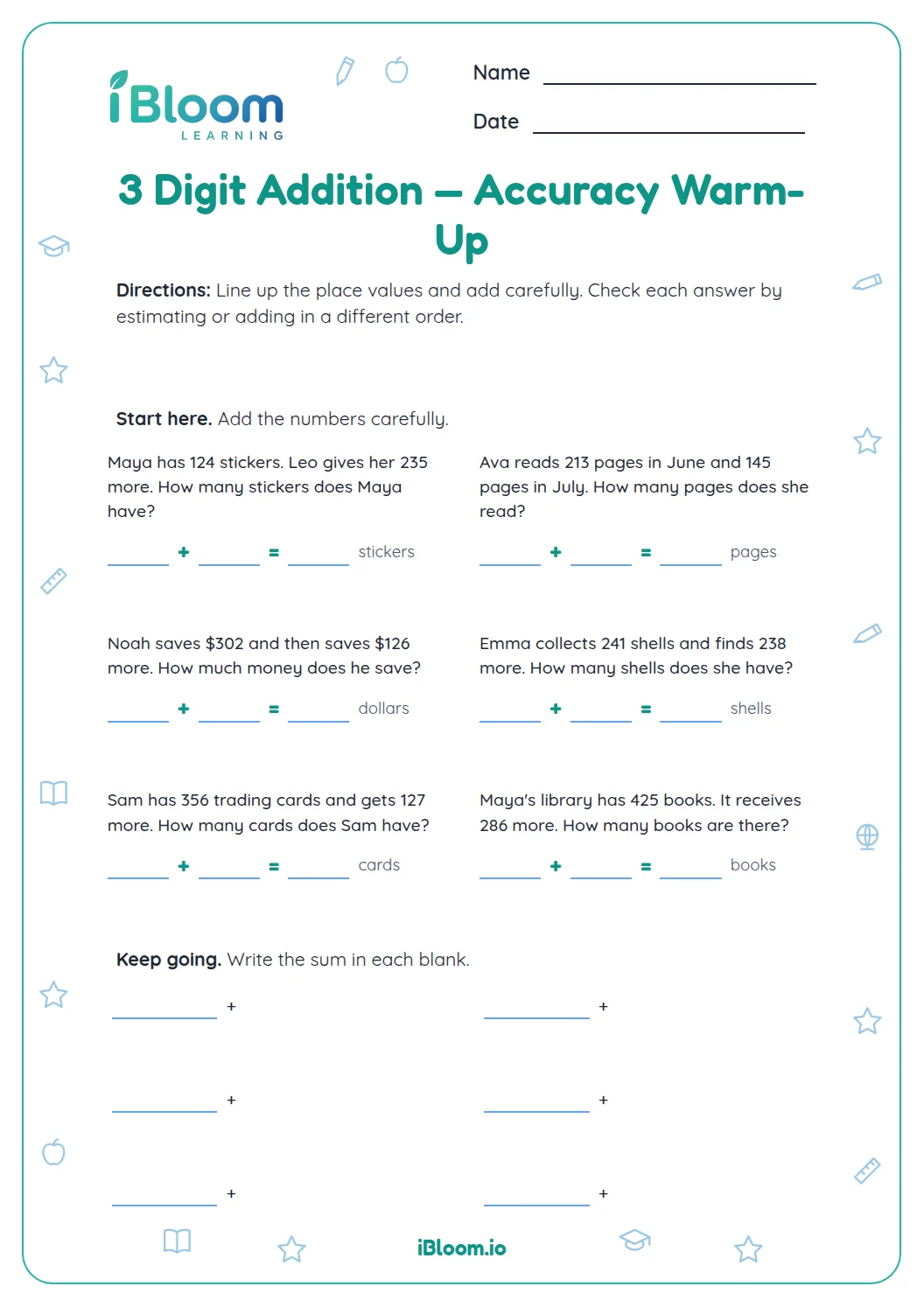
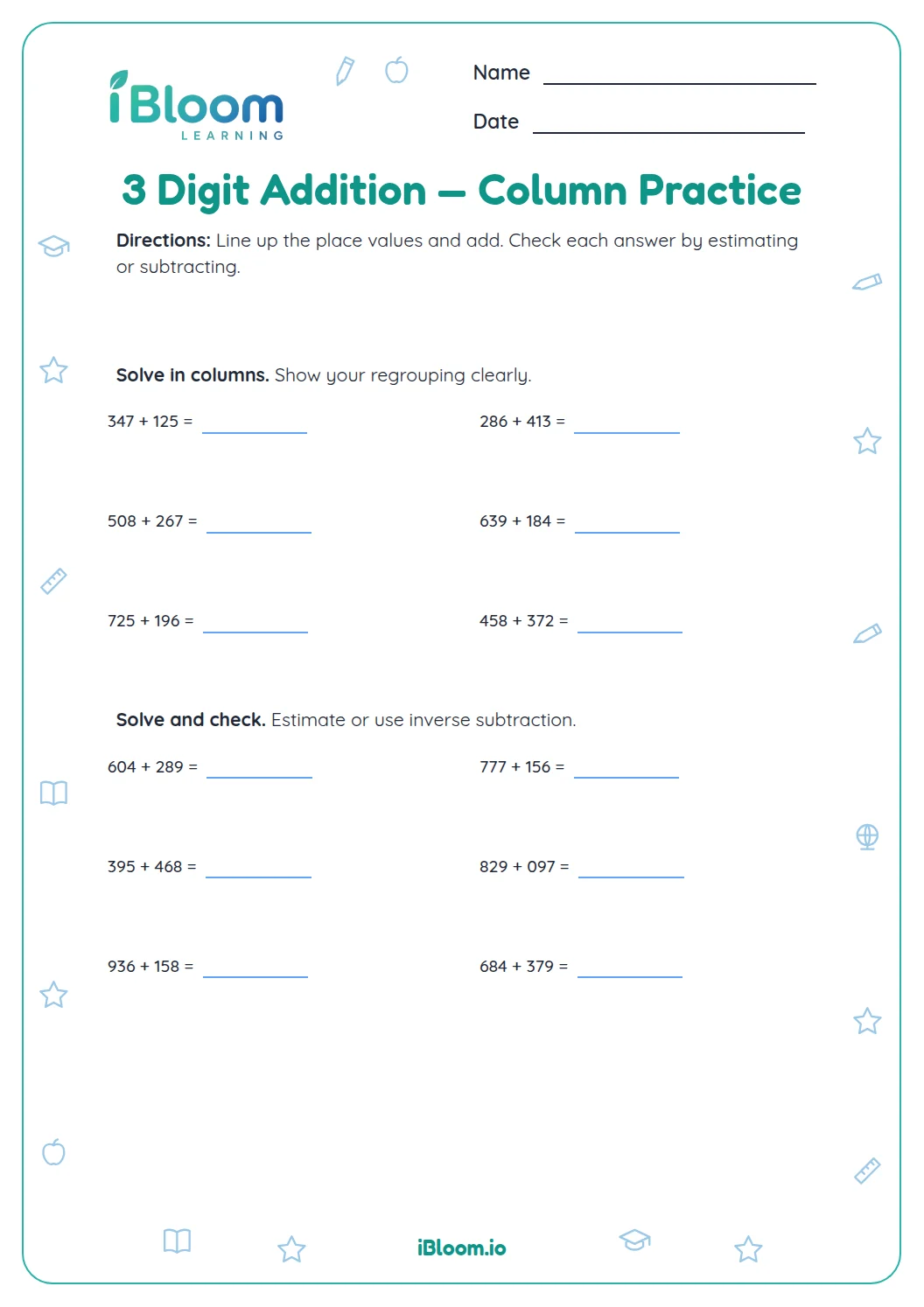
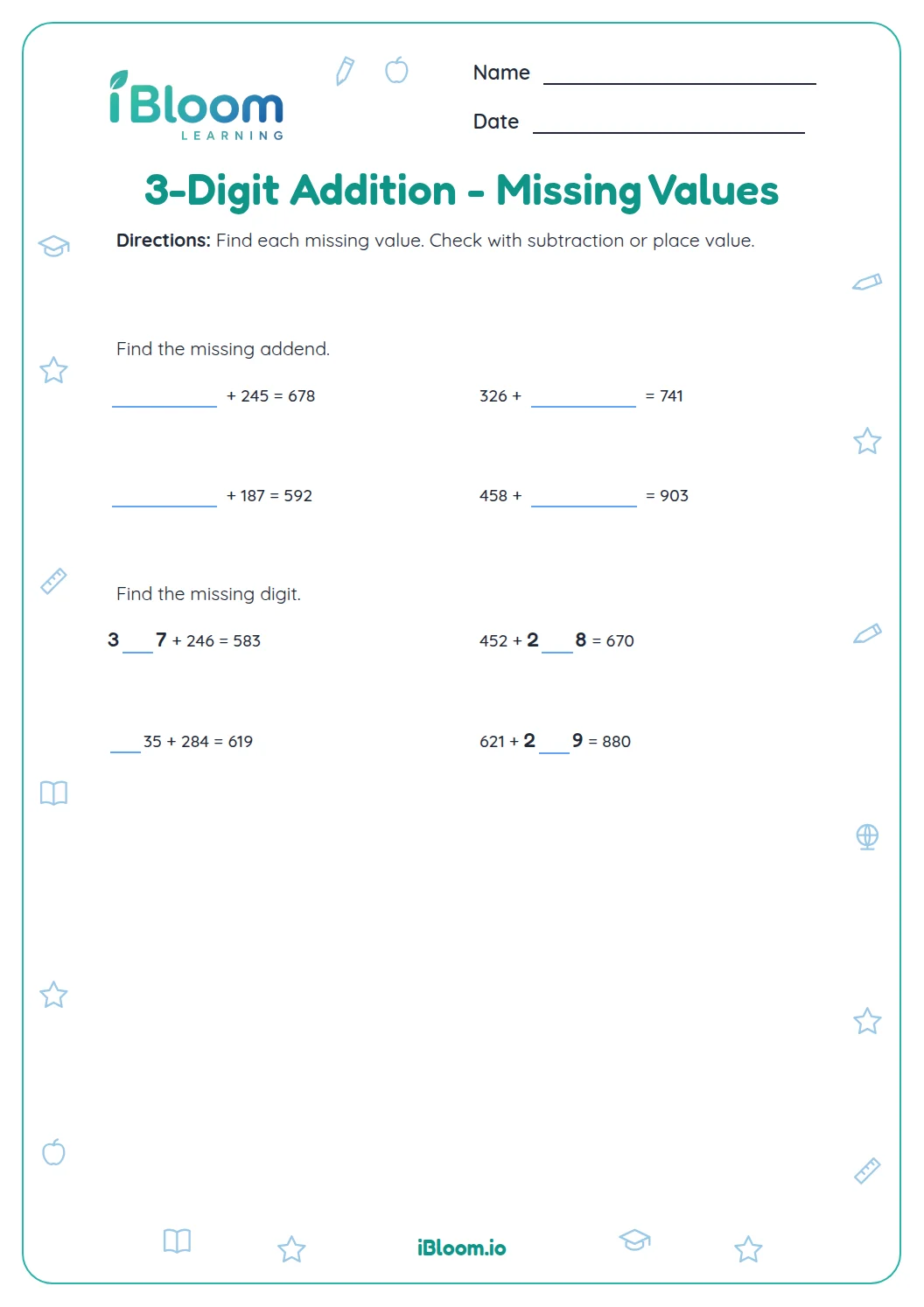
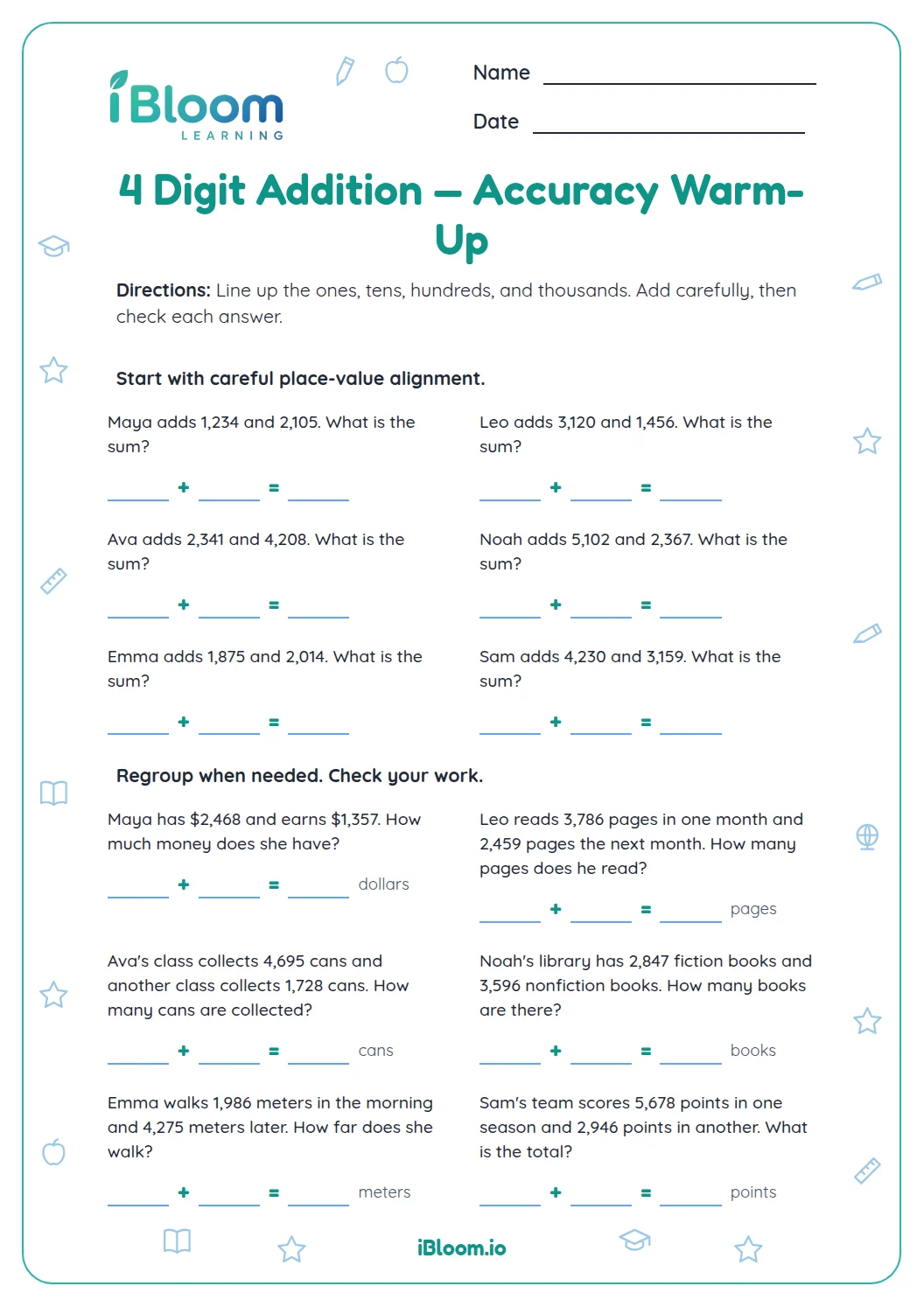
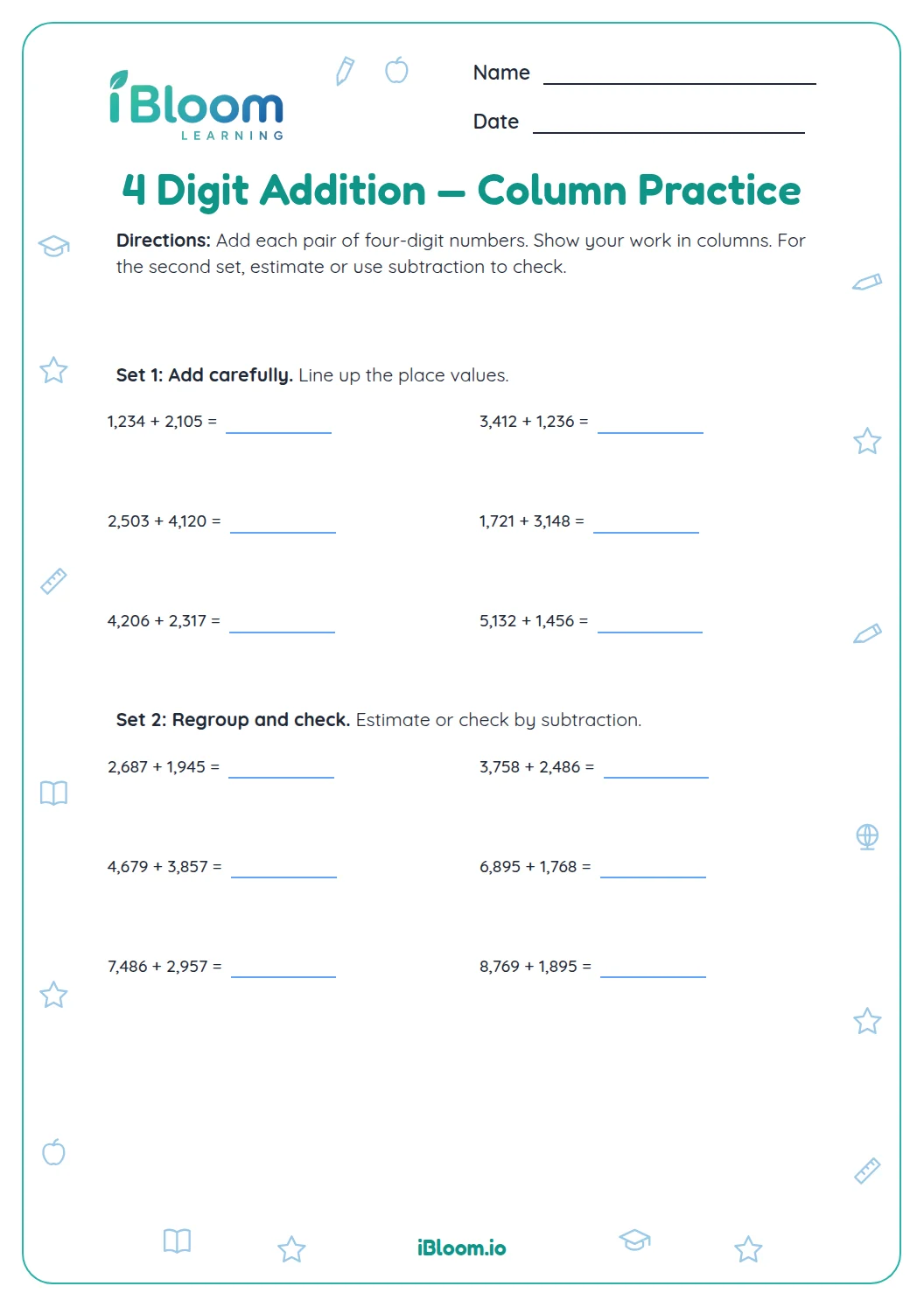
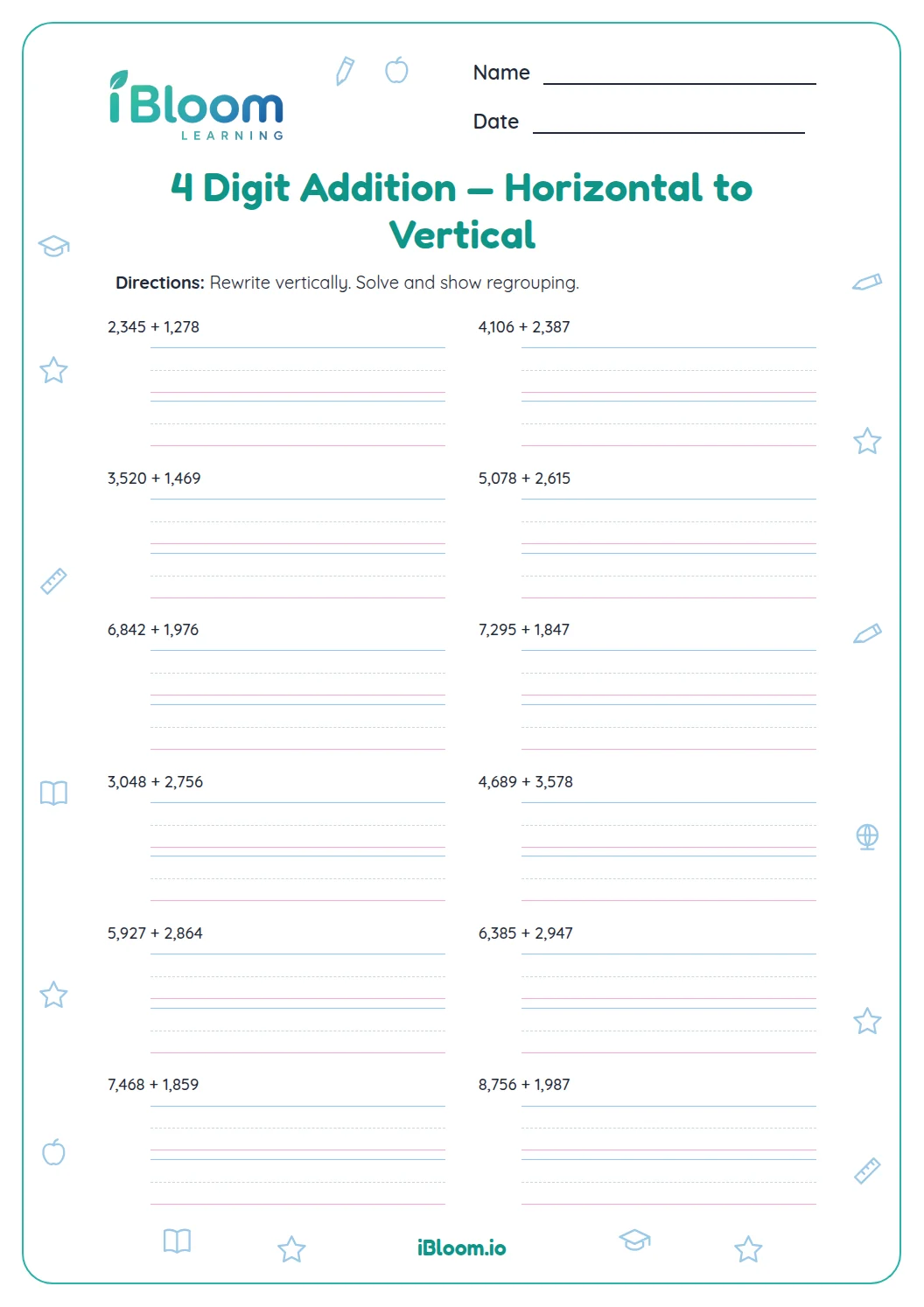
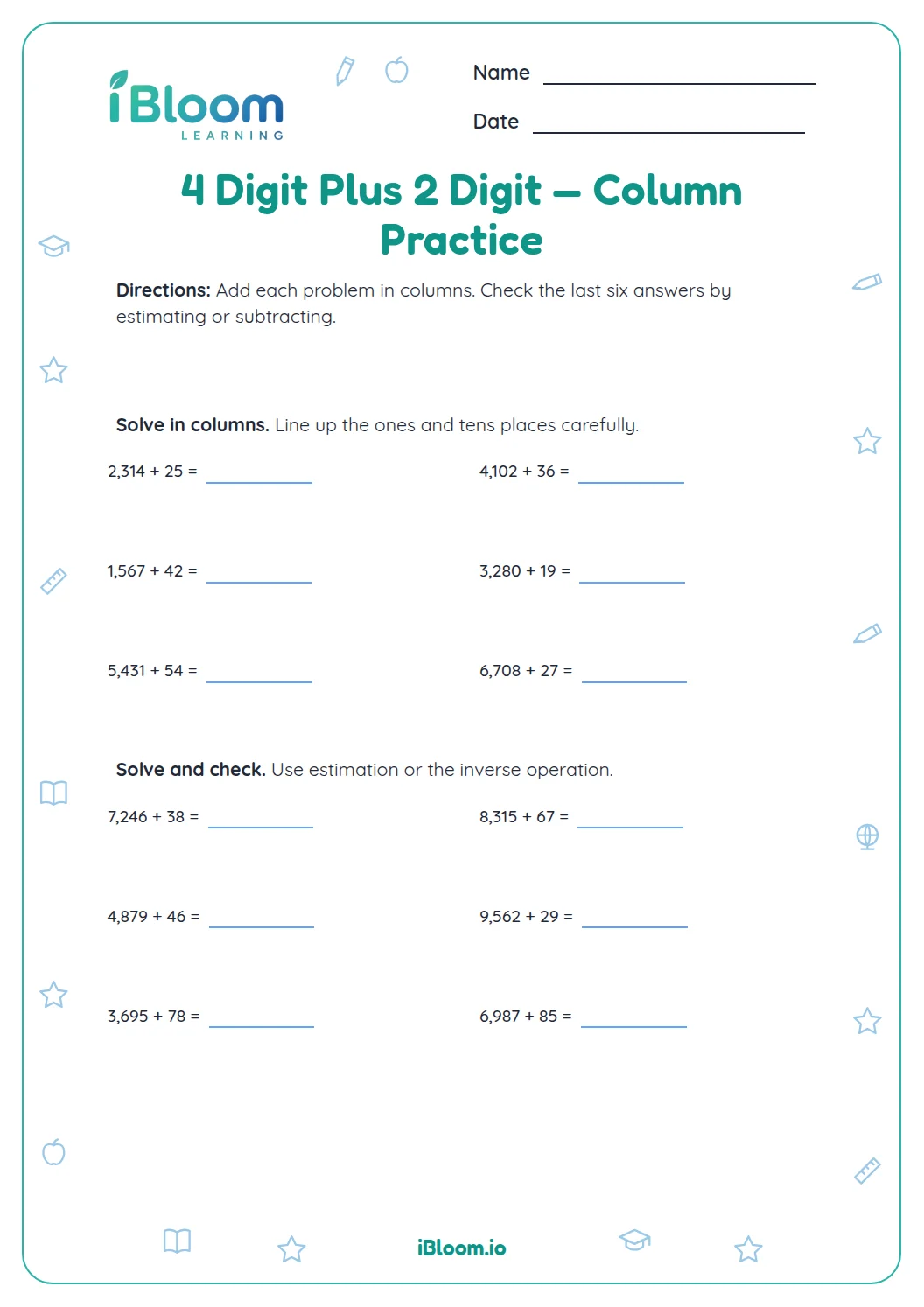
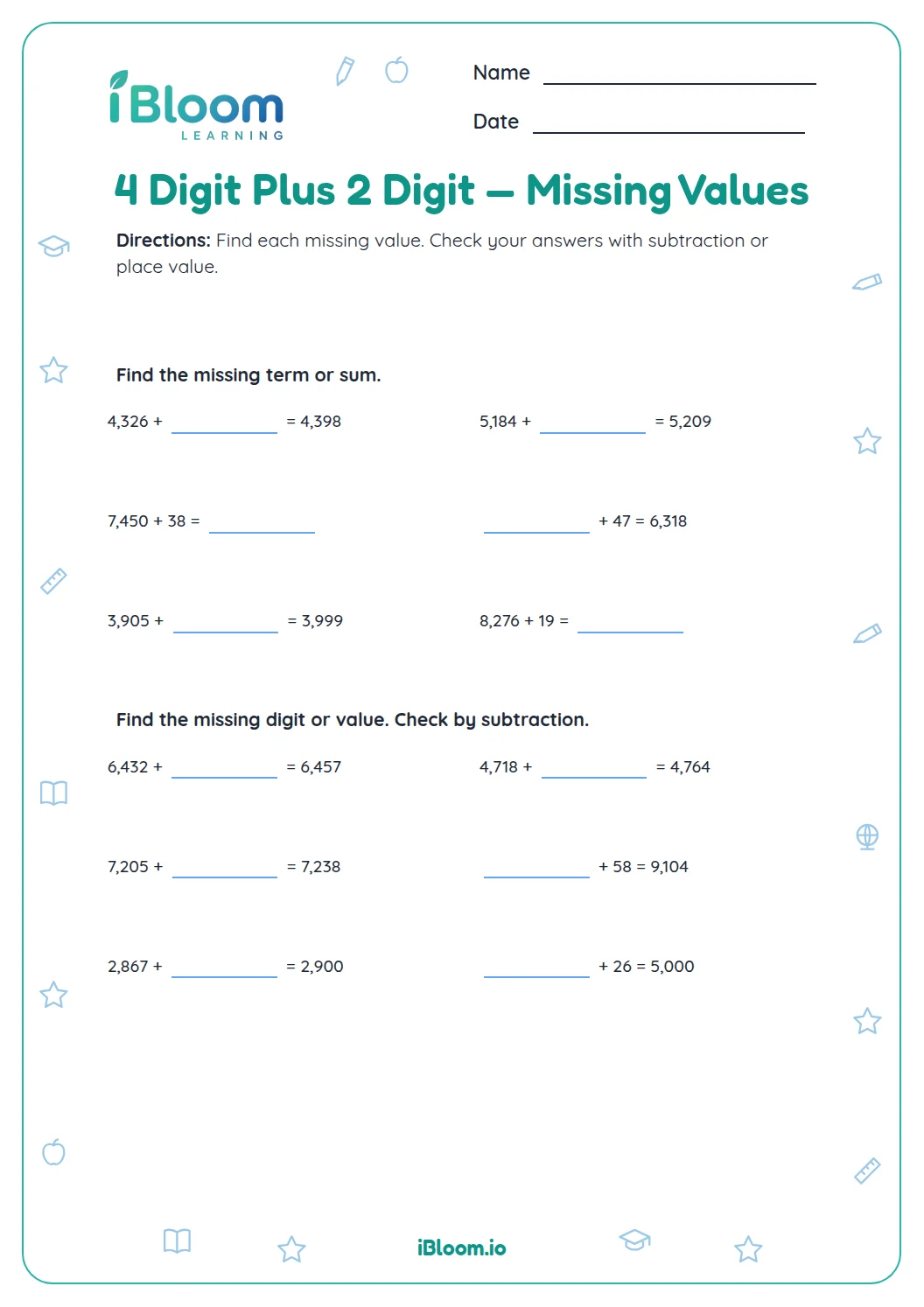
This Grade 4–5 addition worksheet gives students 16 four-digit plus three-digit sums to solve with the standard algorithm. It begins with column practice and then asks students to check a later sum using a different order. The work targets CCSS 4.NBT.B.4: fluently adding multi-digit whole numbers with the standard algorithm. A separate answer key supports quick checking after students have completed both pages.
Aligned to 4.NBT.B.4
How do you add 4-digit and 3-digit numbers?
Write the addends so the ones, tens, hundreds, and thousands line up. Add from right to left, regrouping 10 of a place as 1 in the next place. For example, 3,847 + 526 = 4,373: 7 + 6 makes 13 ones, so write 3 and carry 1 ten.
What changes in the second part?
The same column method continues, with sums that regroup in several places. Question 9 asks students to solve 9,318 + 476, then check by reversing the addends.
How can a student check a sum?
Add the same two numbers in the opposite order or estimate with rounded numbers. If 9,318 + 476 is near 9,800, an answer far from that estimate deserves another look.
How to use this worksheet
- 1Line up digits by place value before adding.
- 2Start with the ones column and write the ones digit of each sum.
- 3Regroup each group of ten into the next column.
- 4Continue through the thousands column.
- 5Check a result by reversing the addends or estimating.
Common mistakes and quick fixes
The mistake
Misaligning digits when one addend has fewer digits.
The fix
Align the rightmost digits; 526 sits under the ones, tens, and hundreds.
The mistake
Writing a two-digit column total without regrouping.
The fix
For 7 + 6 = 13, write 3 in the ones place and carry 1 ten.
The mistake
Forgetting to add a carried ten to the next column.
The fix
Circle each carried digit and include it in the next column total.
This sheet practices the standard algorithm for multi-digit addition.
Add four-digit and three-digit numbers with regrouping in the standard algorithm.
On this sheet:
Show the official wordingHide the official wording
Fluently add and subtract multi-digit whole numbers using the standard algorithm.
What to practice next
Make more practice
Further reading
Questions parents and teachers ask
How many problems are on this worksheet?
There are 16 problems. Each asks students to add a four-digit number and a three-digit number, with regrouping needed in many of the sums. The answer key is on a separate page, so students can complete both worksheet pages before checking their work.
What is the answer to 3,847 + 526?
The sum is 4,373. Add the ones first: 7 + 6 = 13, so write 3 ones and regroup 1 ten. Then add the tens, hundreds, and thousands, including the regrouped ten in the tens column. A place-value chart or scratch paper can keep the carries aligned.
How should students line up the numbers?
Align the rightmost digits so ones sit under ones, tens under tens, and hundreds under hundreds. The three-digit addend begins in the hundreds column, leaving the thousands place above it empty. This setup keeps each digit in its correct place value.
Does every problem require regrouping?
Most problems require at least one regroup, and several require regrouping in more than one column. Students should decide from each column total rather than carry automatically. If a column totals less than 10, write that digit and regroup nothing.
How can students check a sum?
They can add the same numbers in the reverse order because changing the order does not change a sum. They can also round both addends to estimate a reasonable total. For question 9, 9,318 + 476 is close to 9,800.
What standard does the worksheet practice?
The sheet aligns with CCSS 4.NBT.B.4, which calls for fluently adding and subtracting multi-digit whole numbers with the standard algorithm. Every printed problem is multi-digit addition set up for column work and regrouping. Students can use the key to compare each column, not just the final total.