


About this worksheet
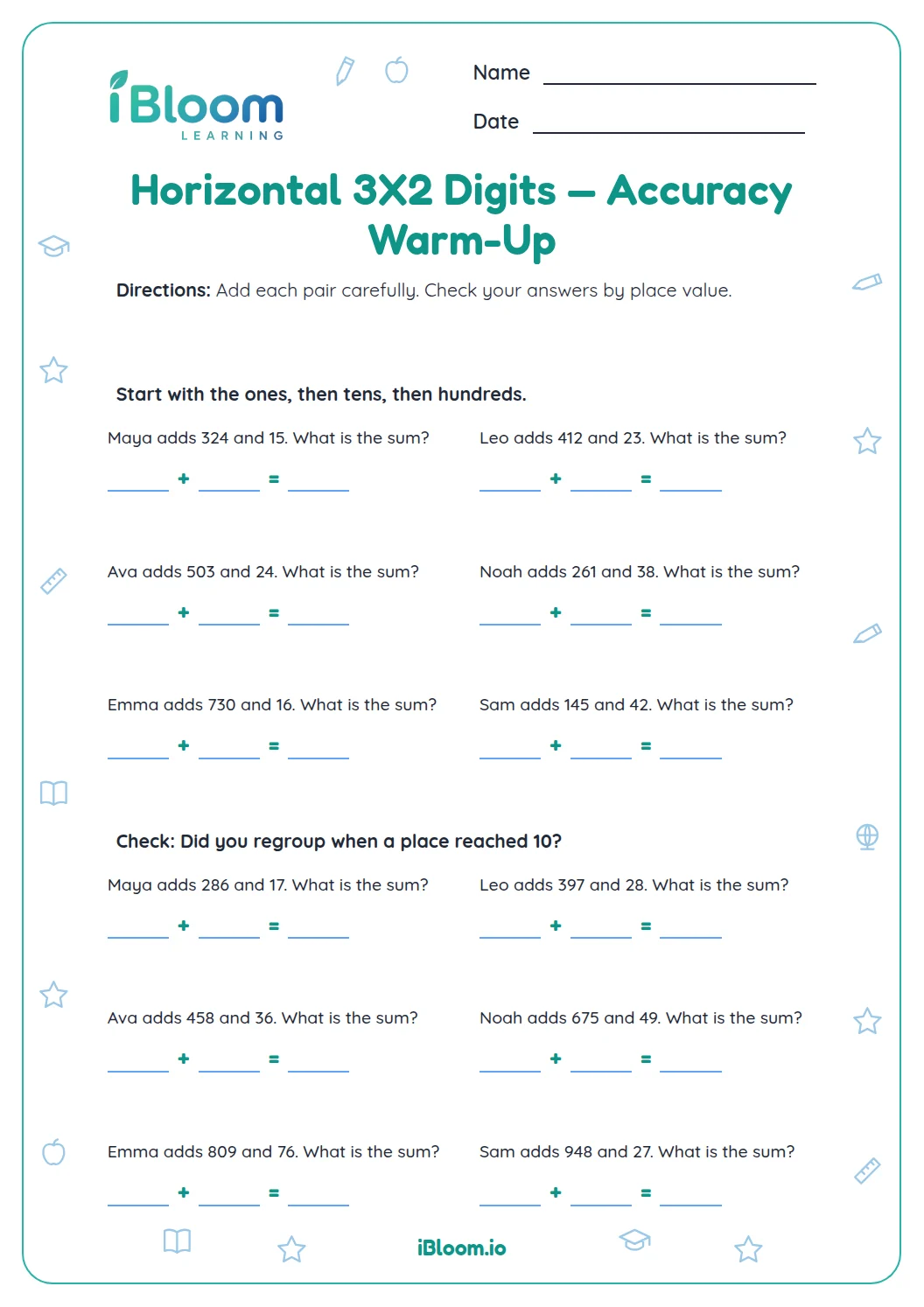
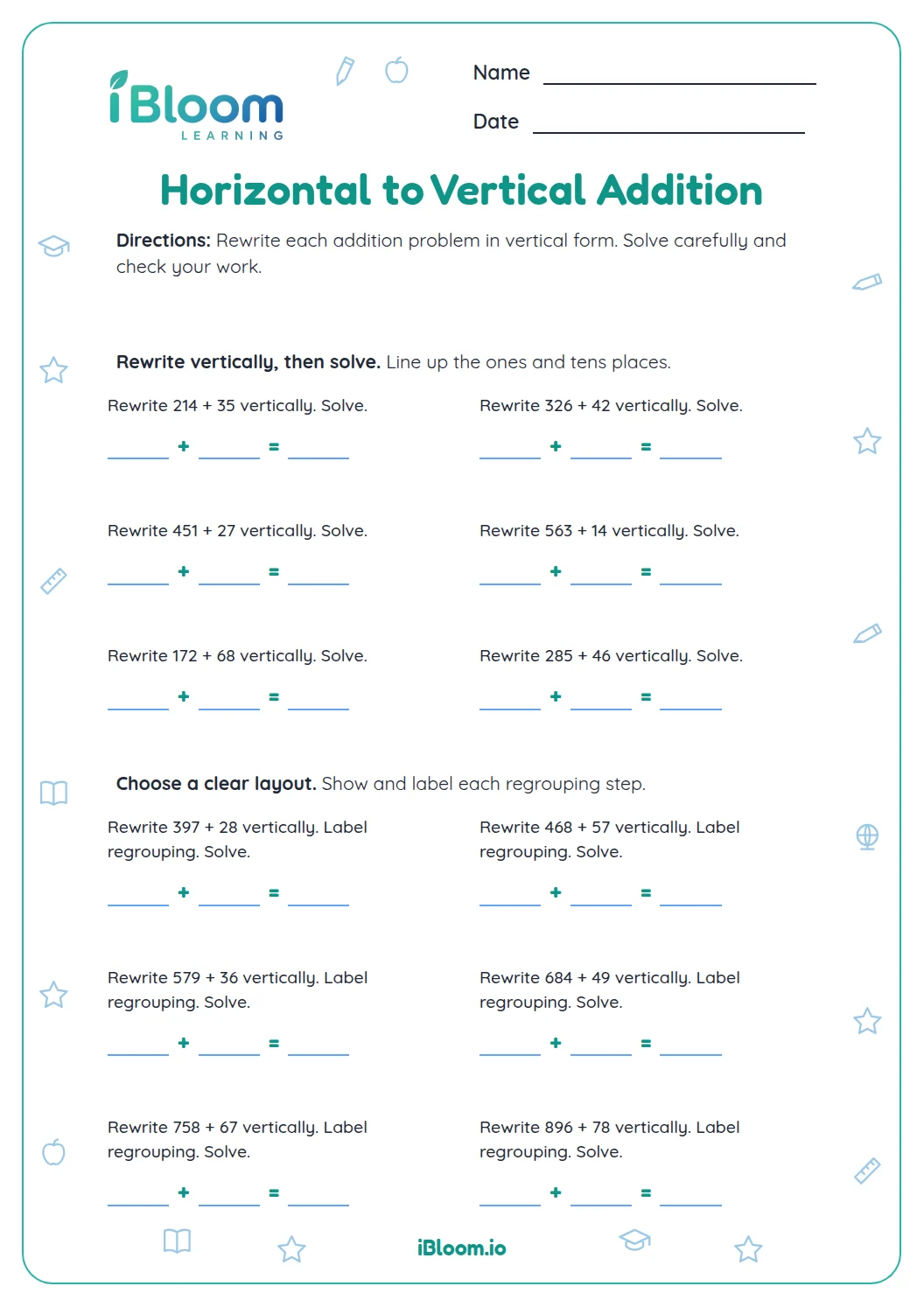
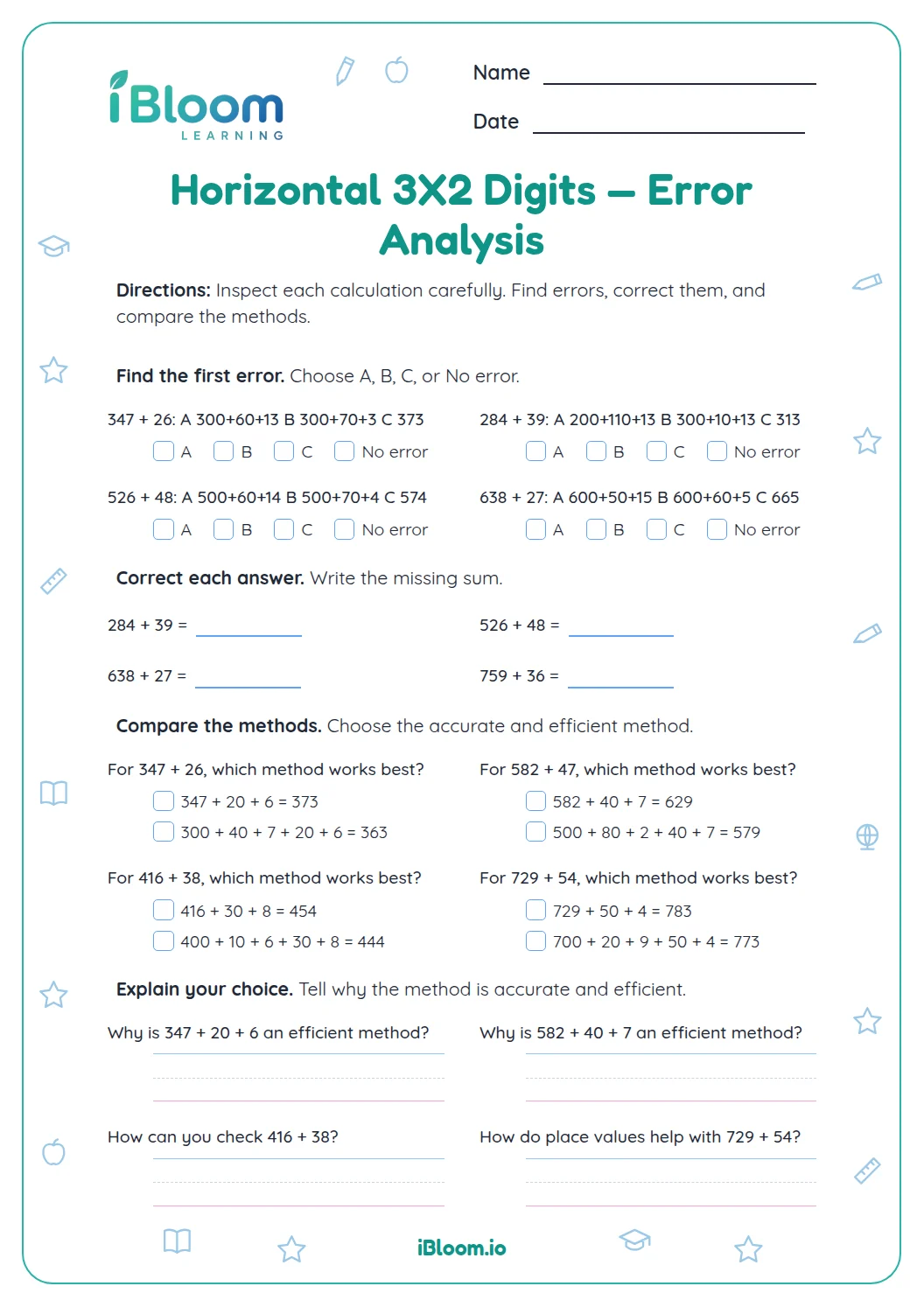
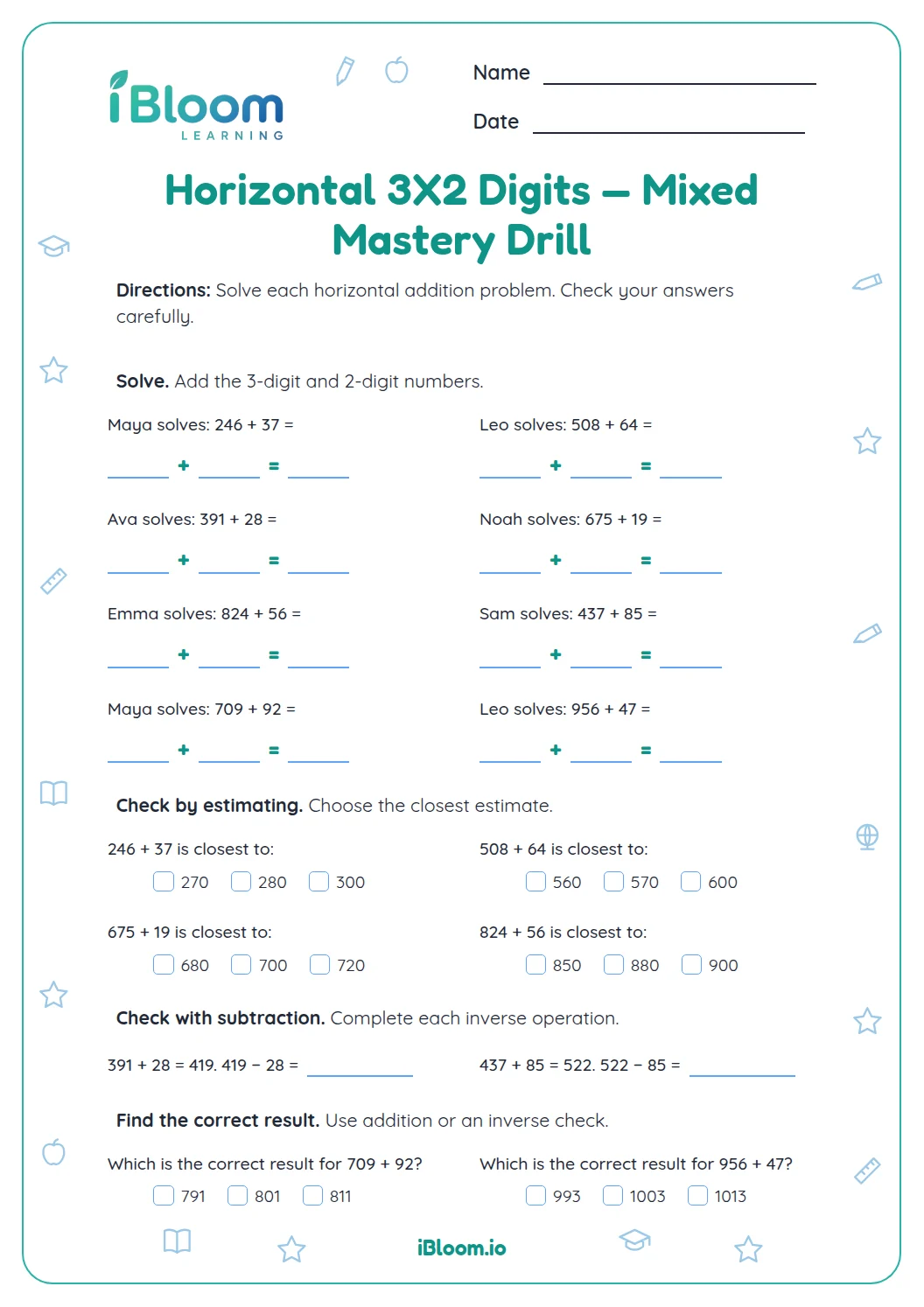
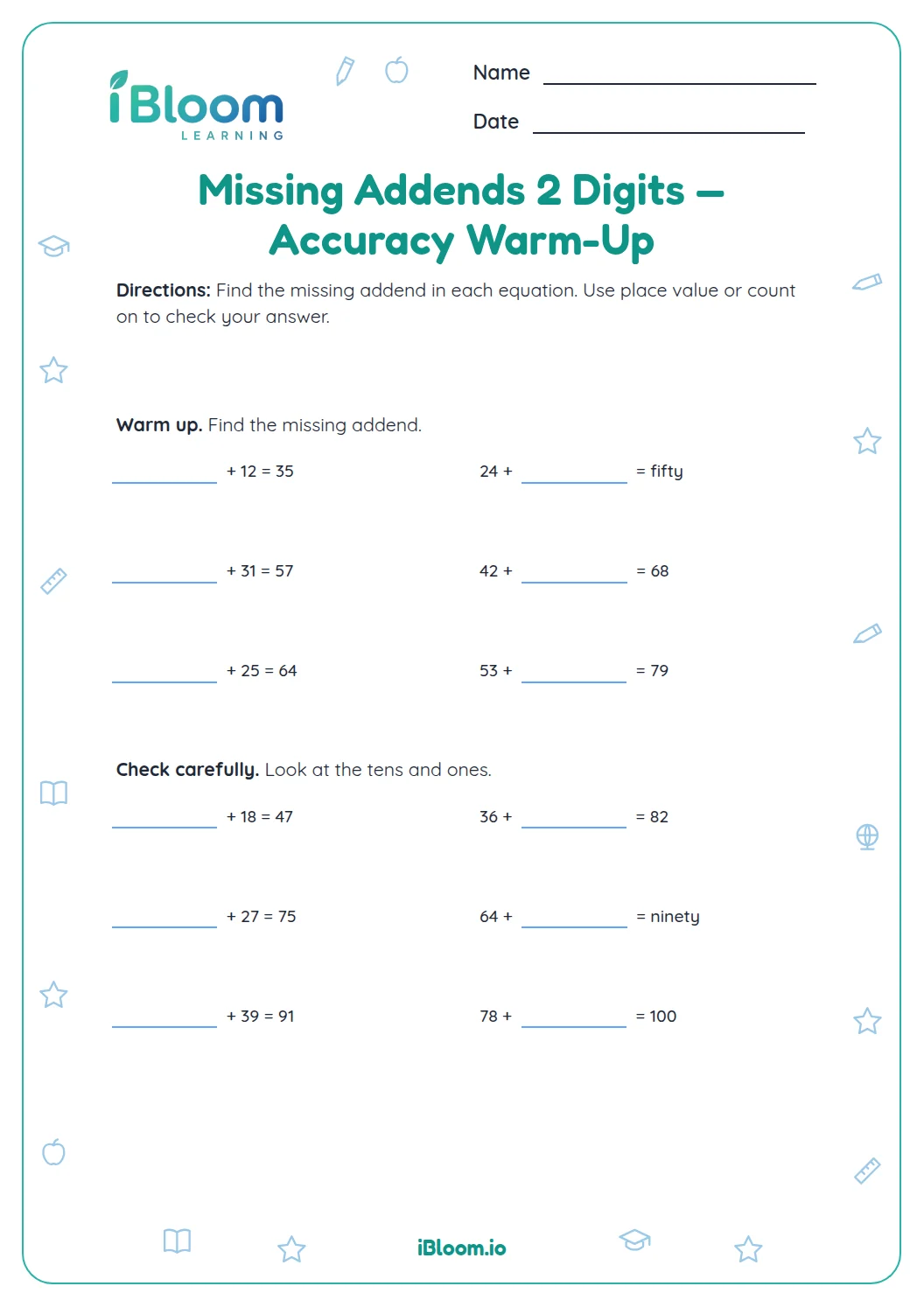
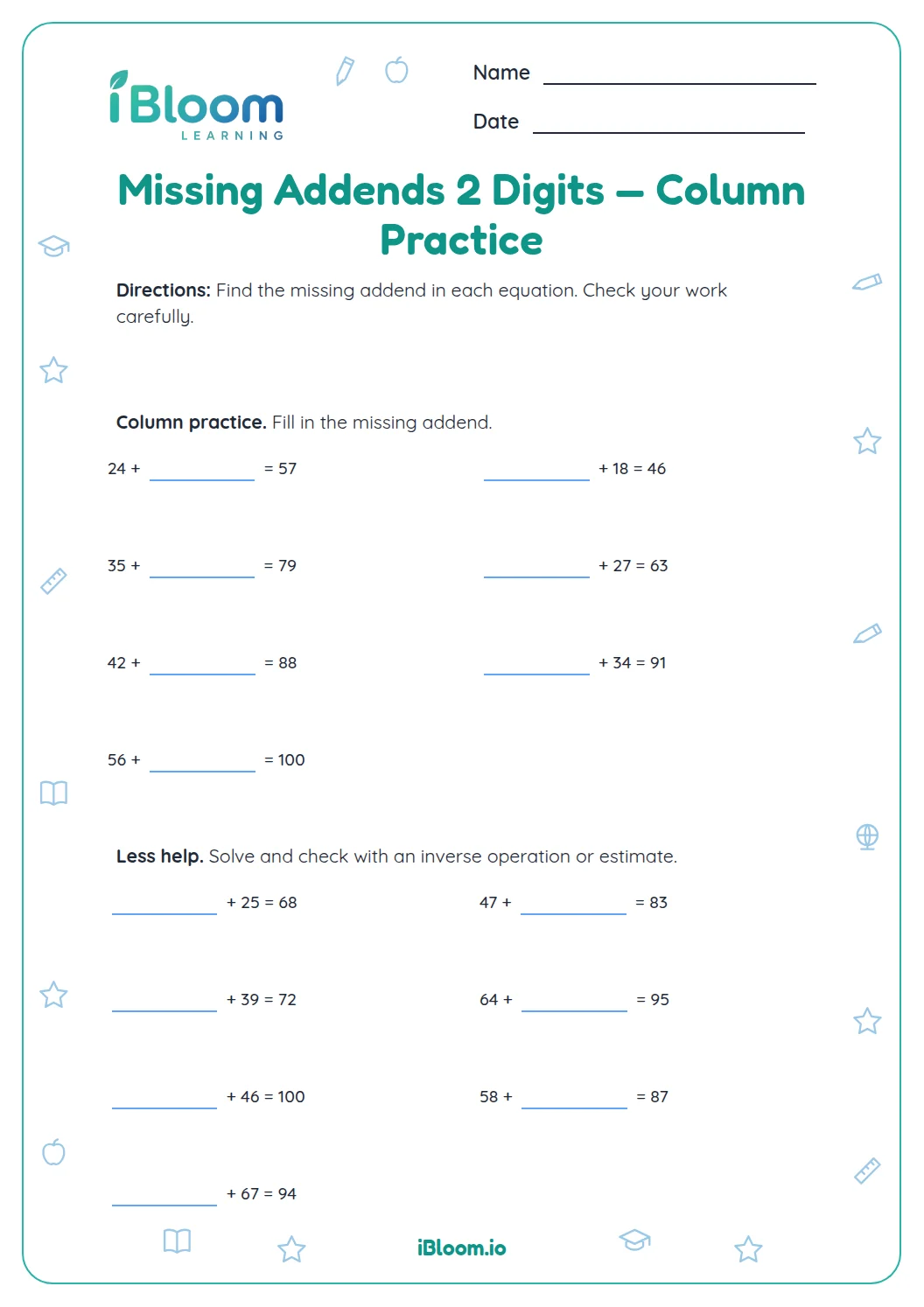
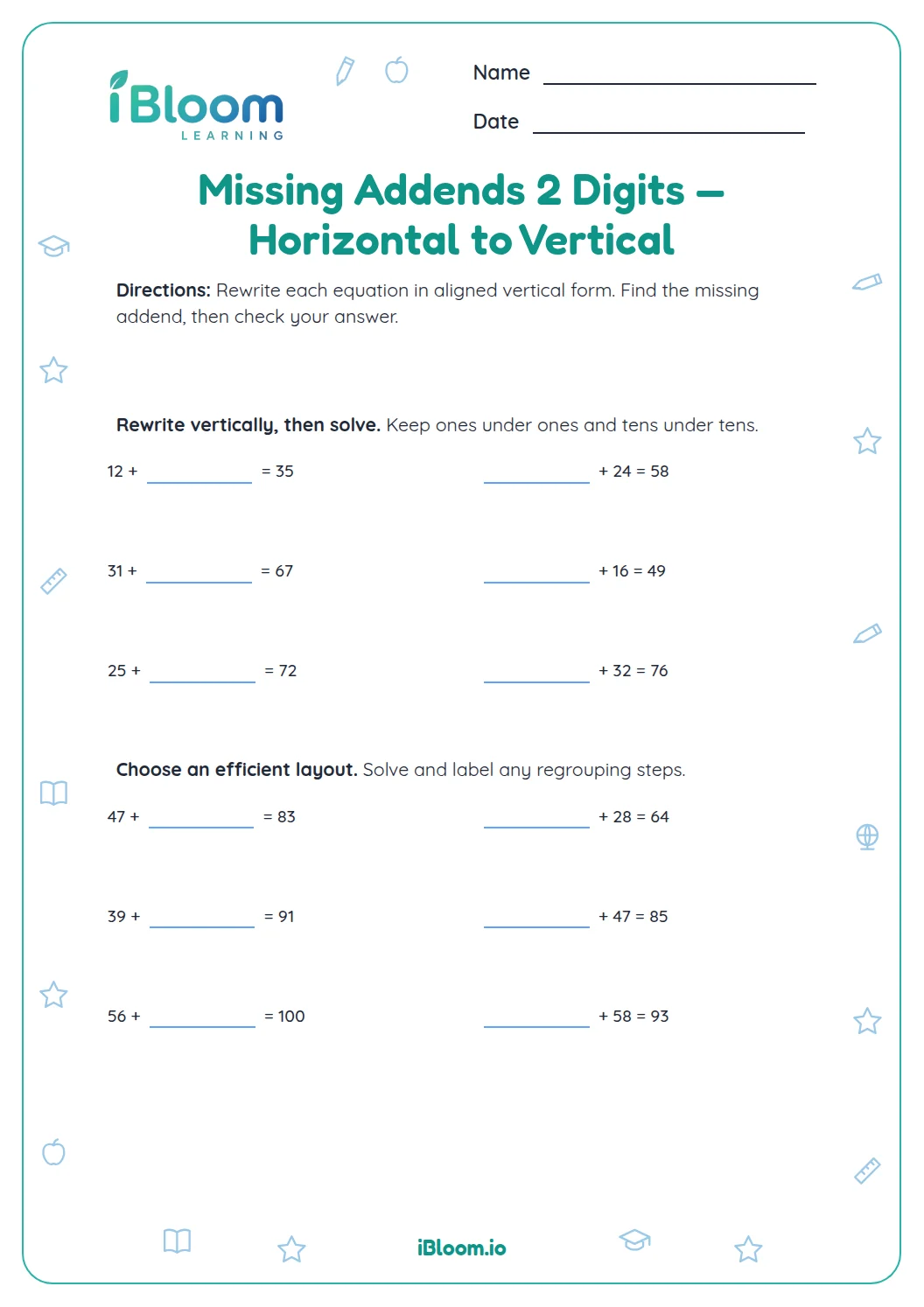
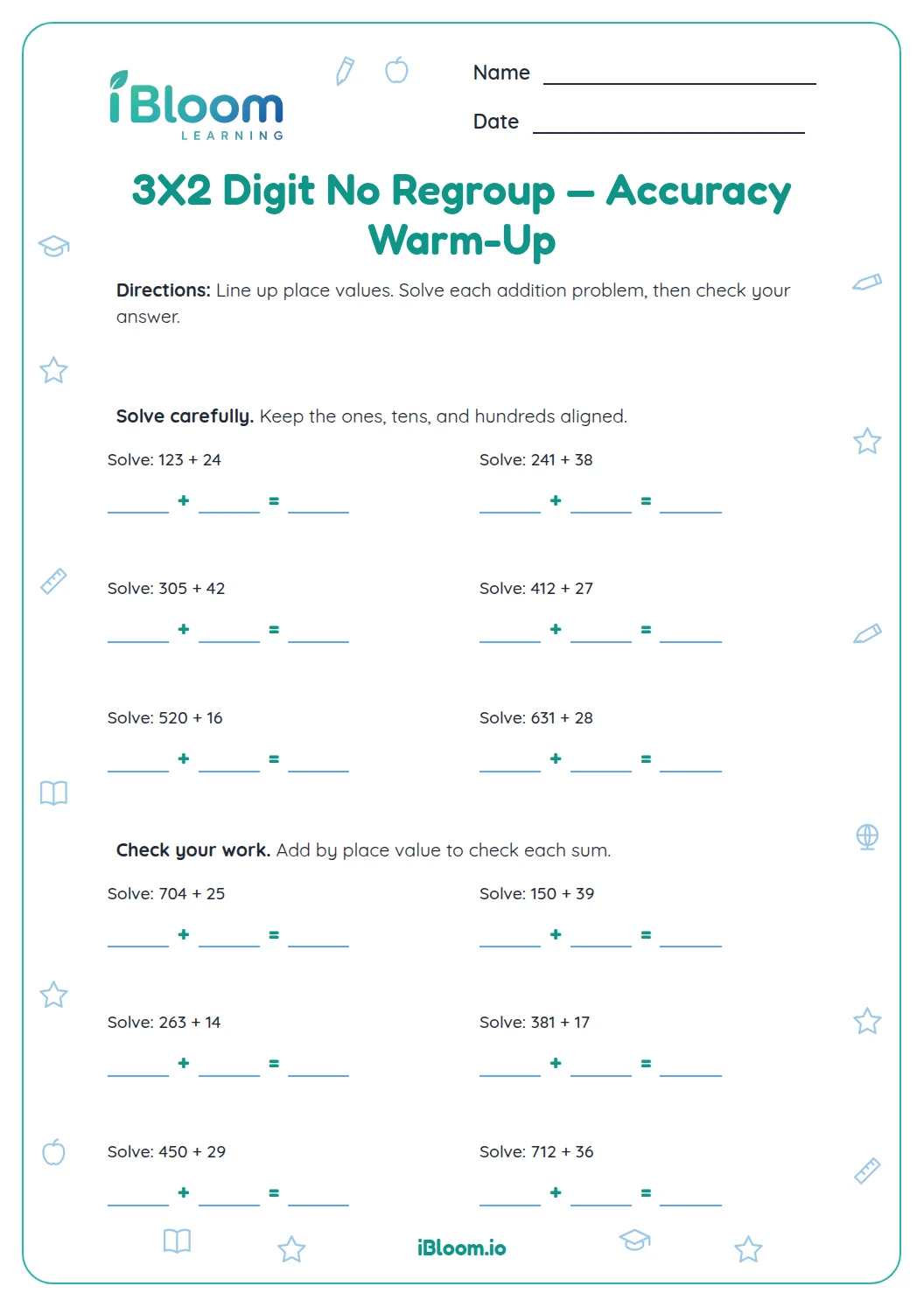
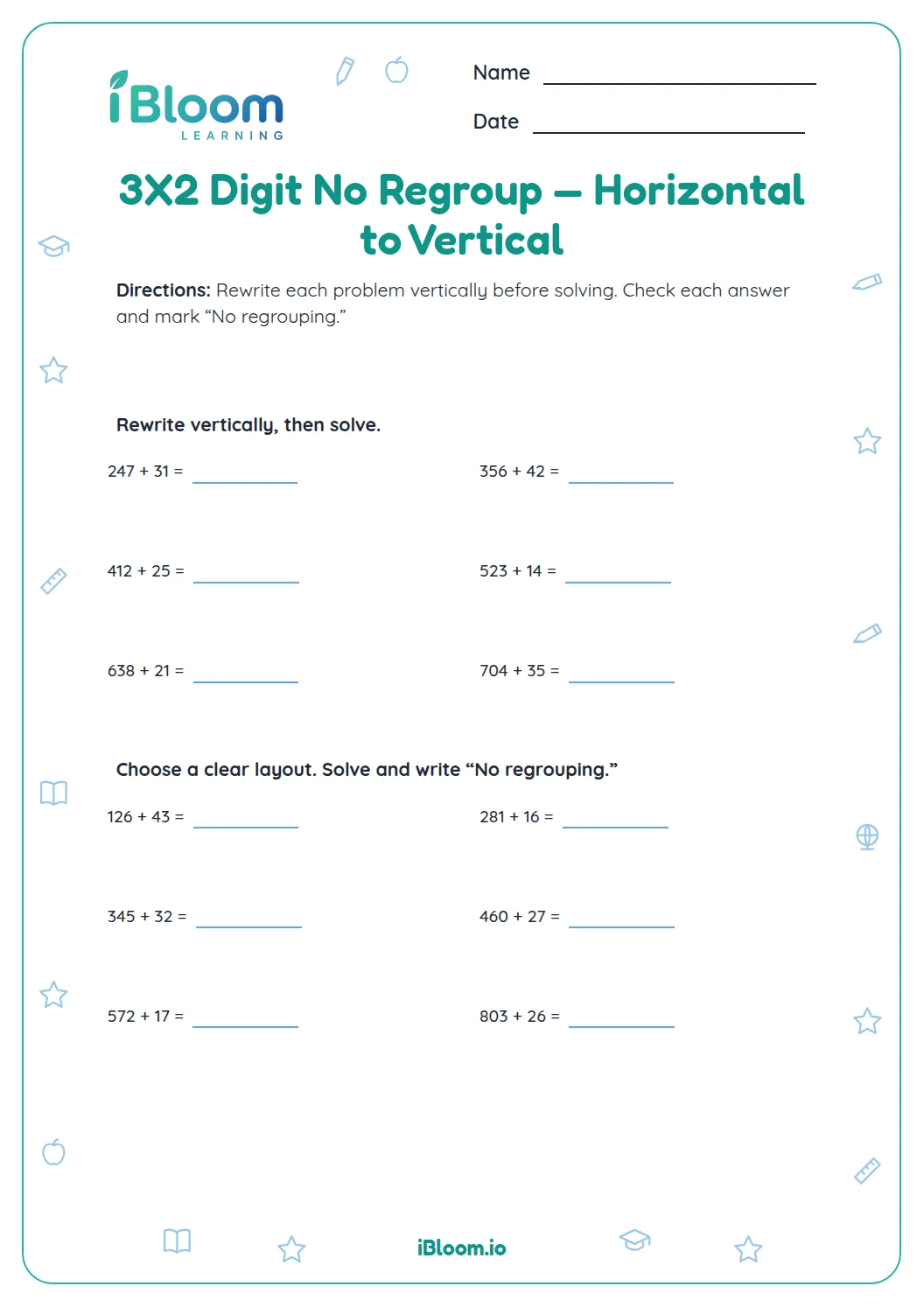
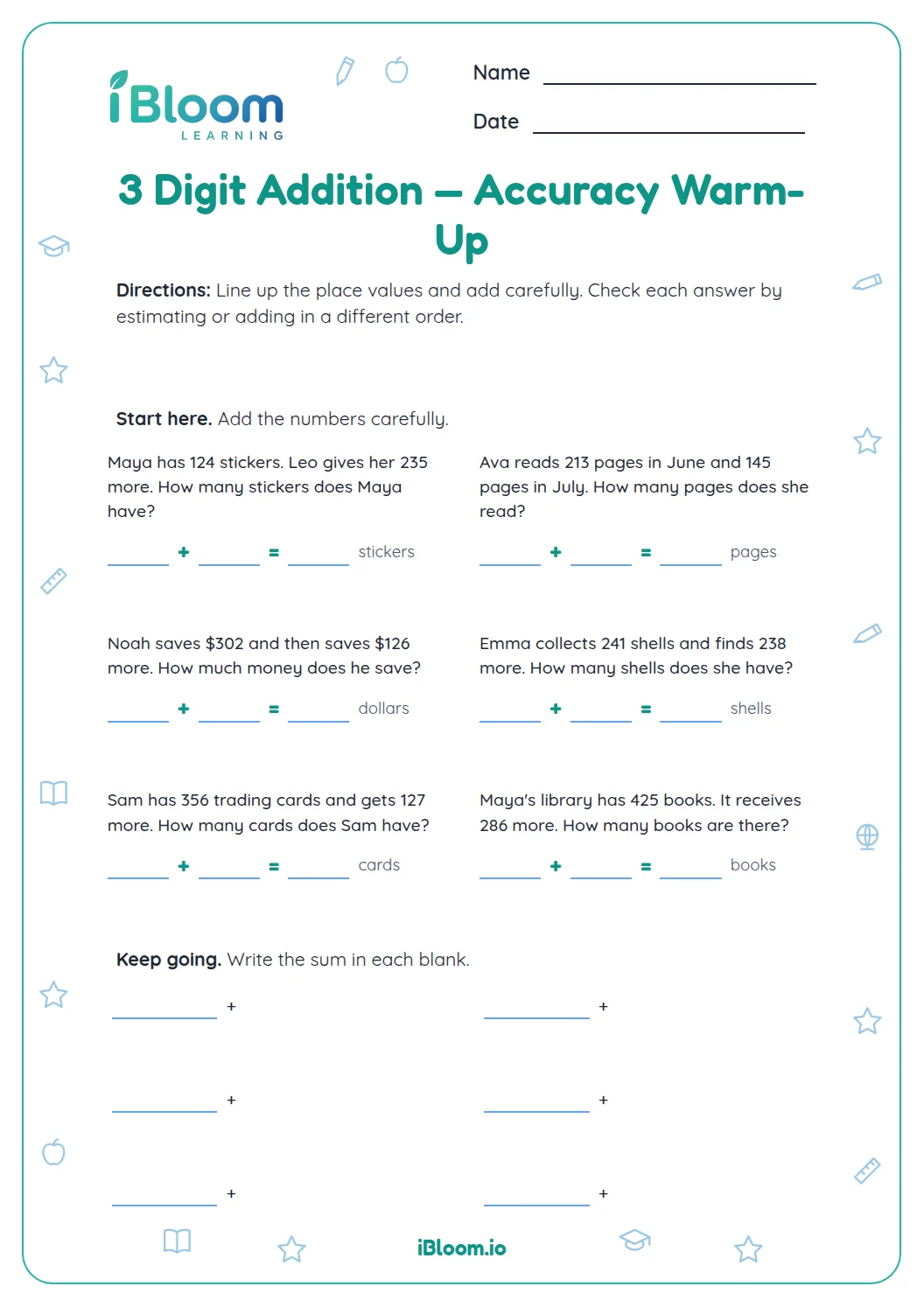
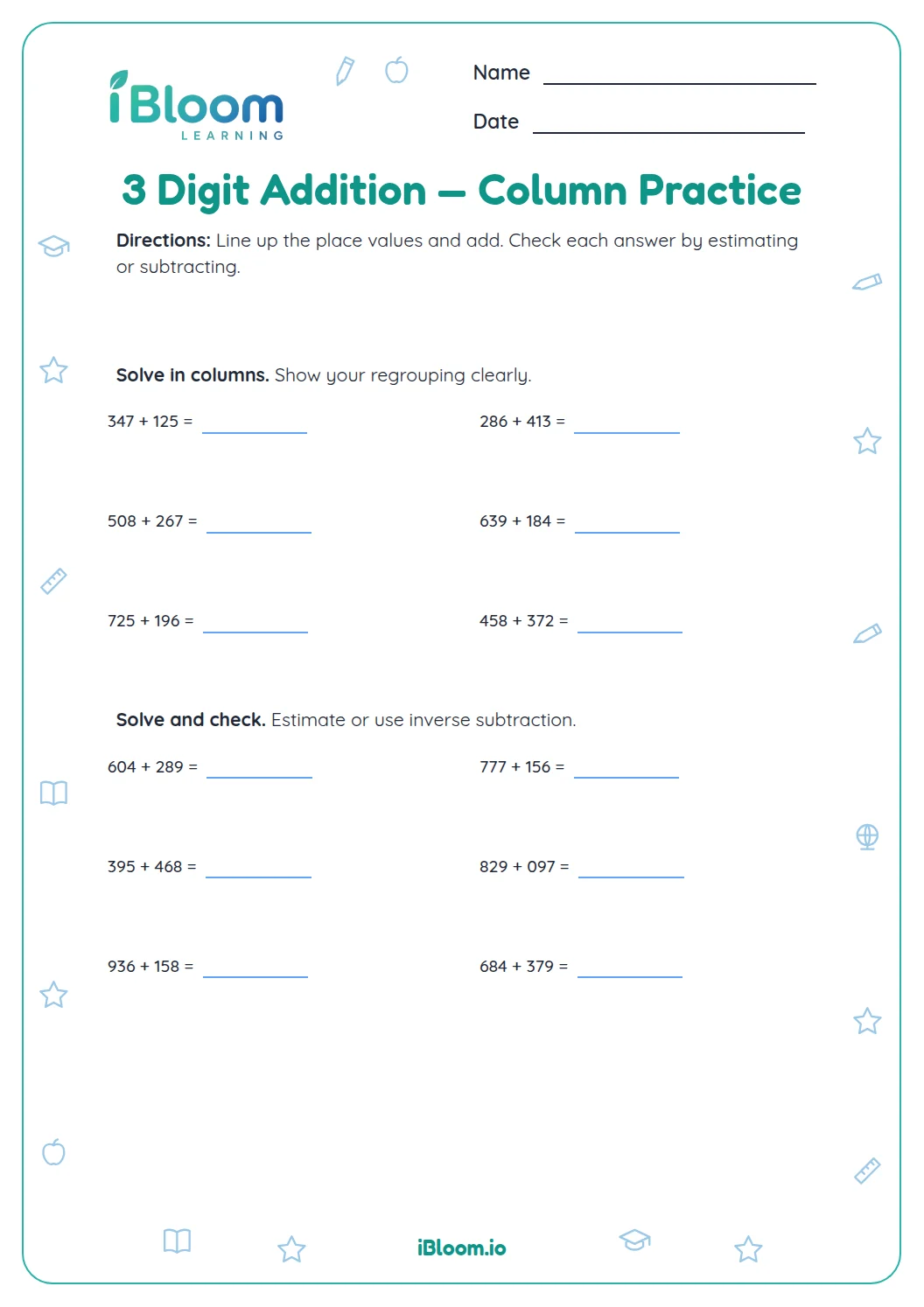
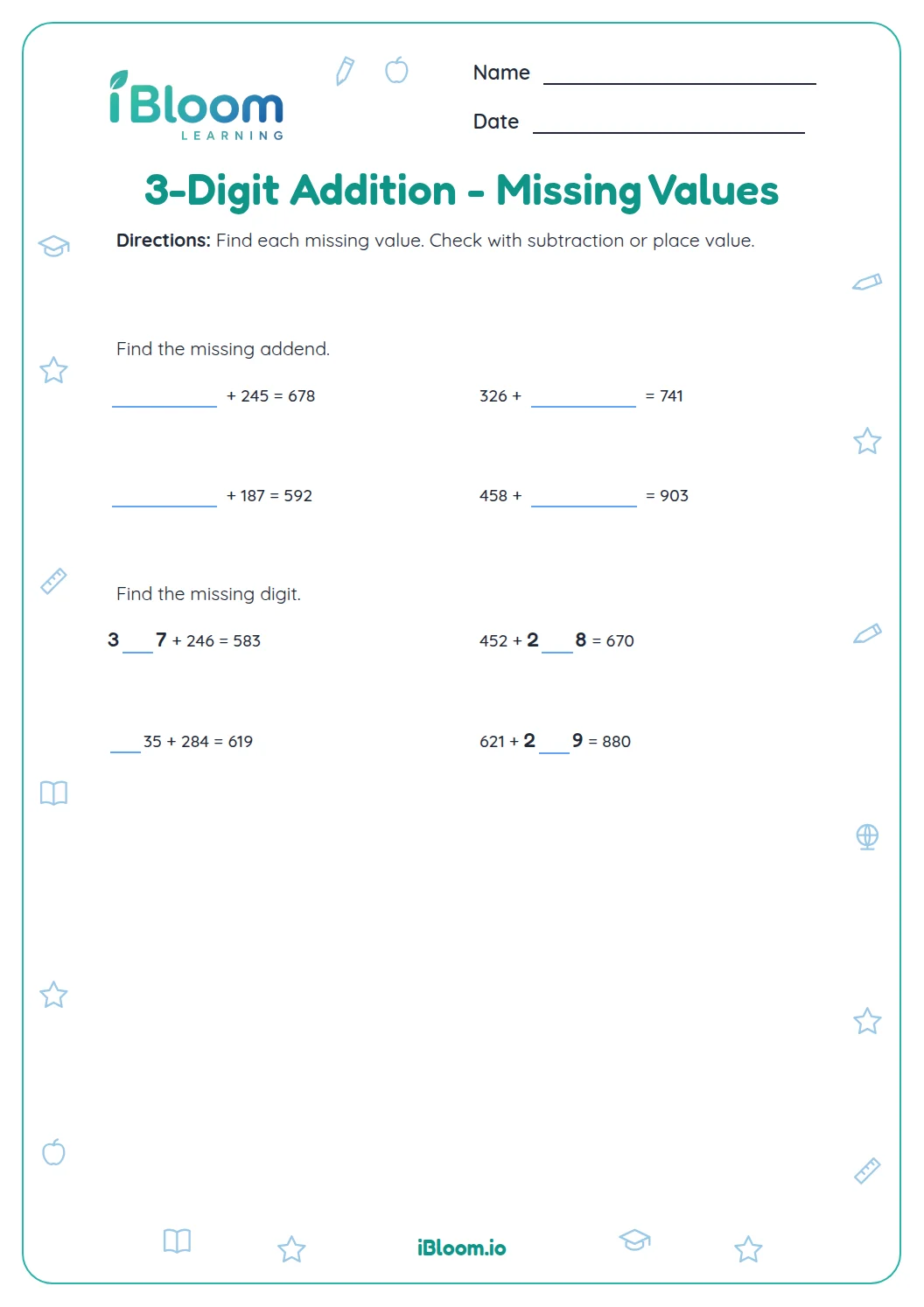
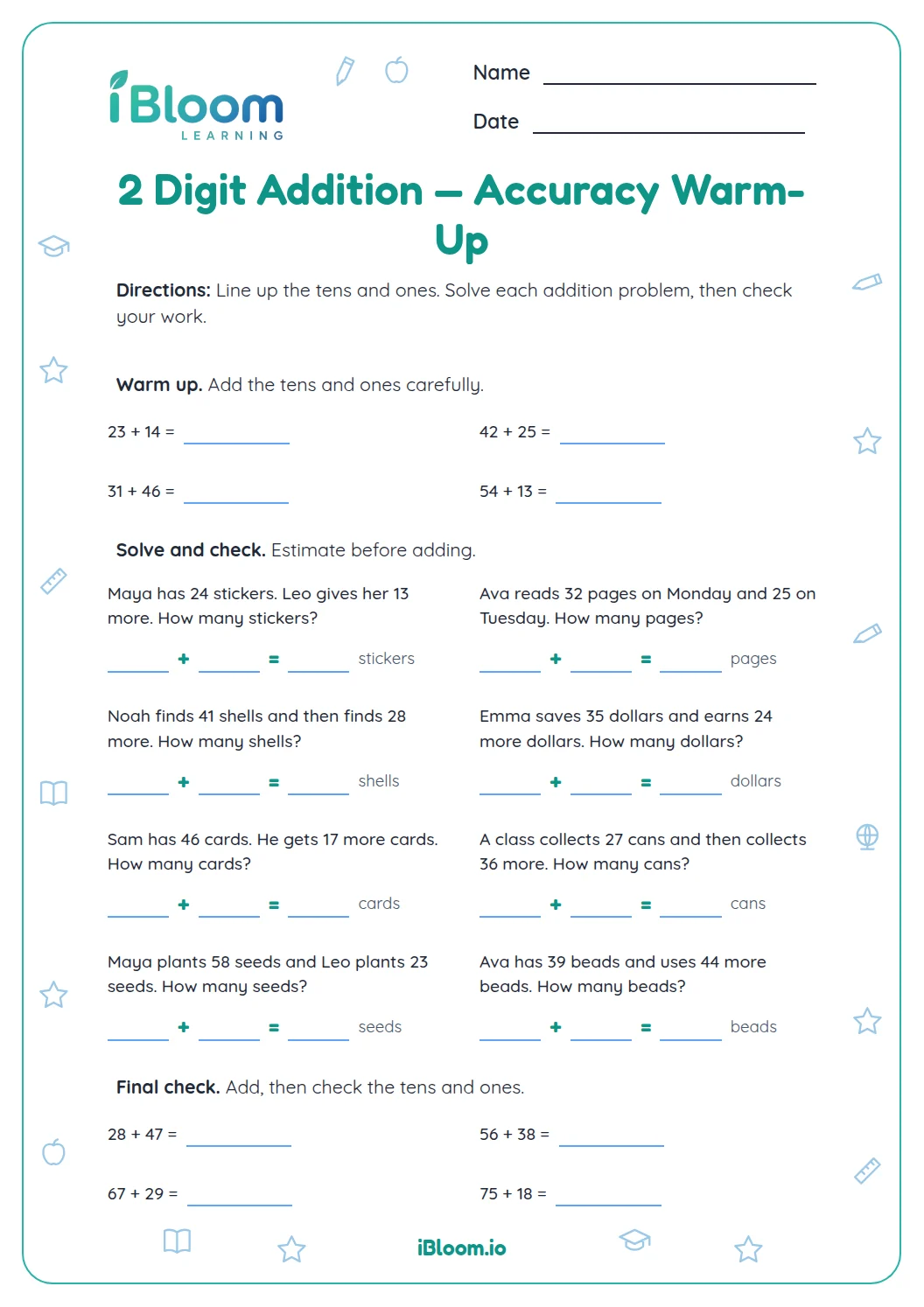
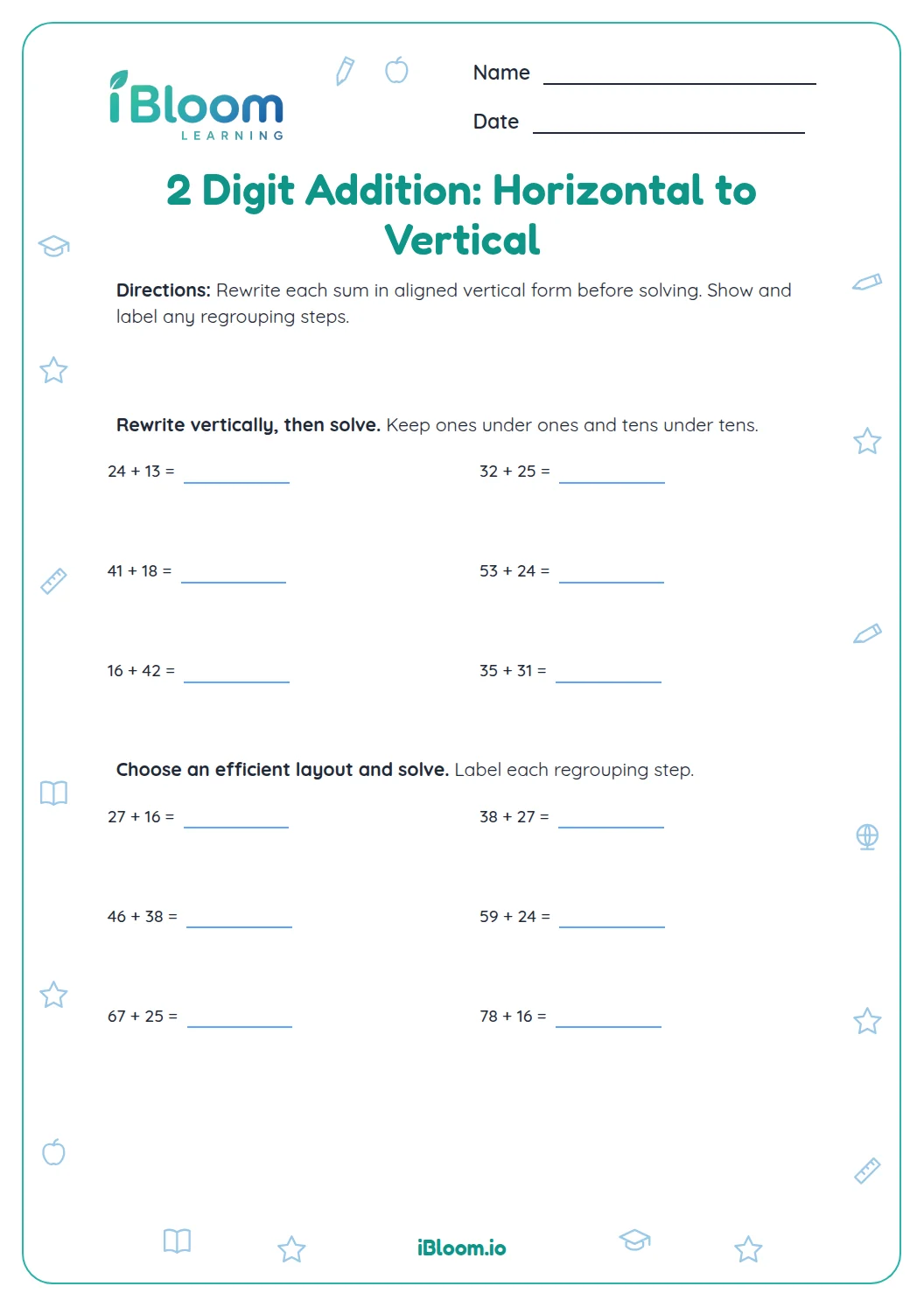
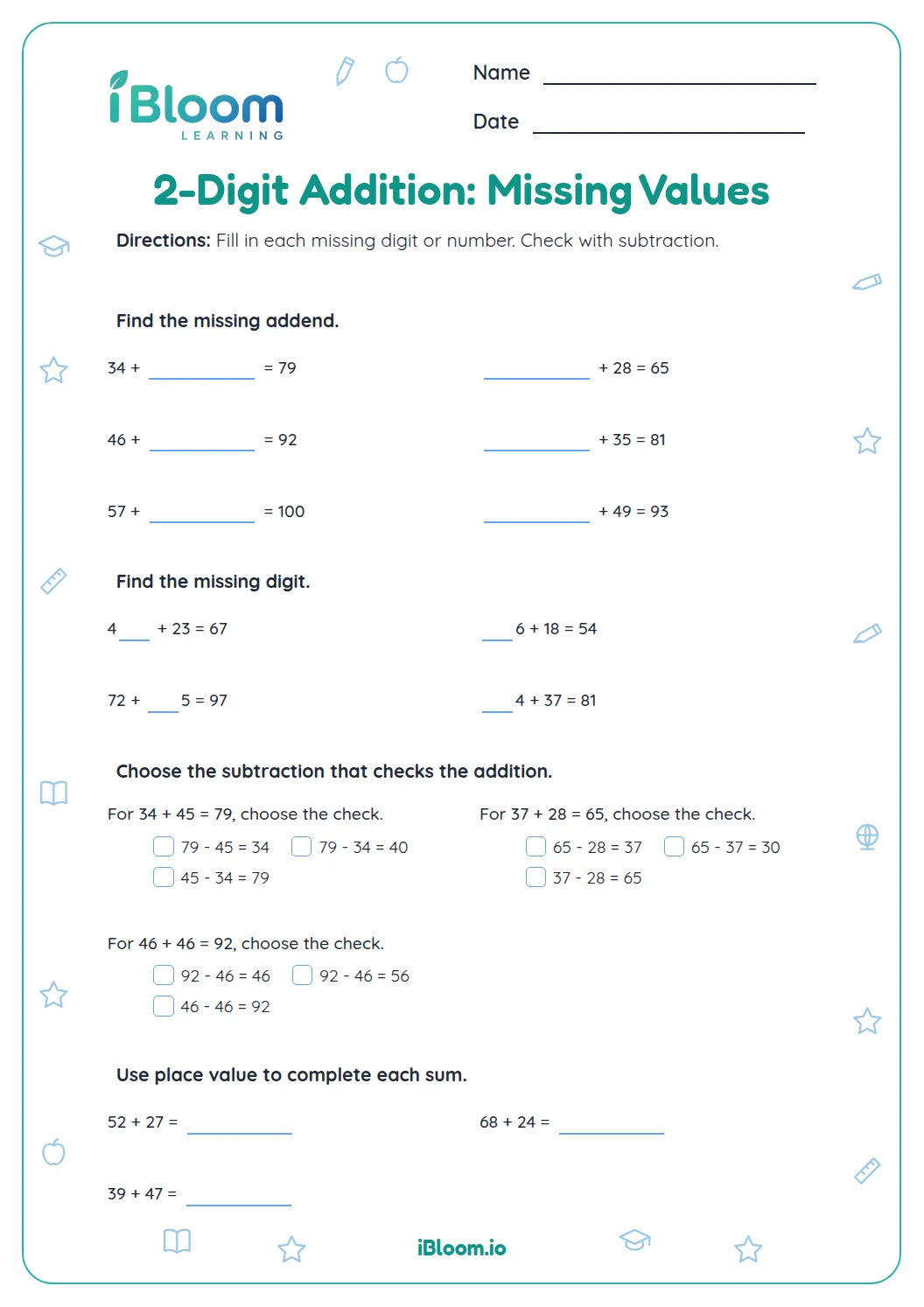
This printable gives Grades 2–3 learners practice with horizontal three-digit plus two-digit addition. Across 20 equations, the blank appears before an addend, after an addend, or in the sum, so children must read each equation before choosing a strategy. The set includes regrouping and totals within 1,000. It practices CCSS 3.NBT.A.2 through addition within 1,000 using place-value strategies and related operations. A separate answer key is included.
Aligned to 3.NBT.A.2
How do you tell which number is missing?
Read the equation from left to right and locate the blank. A blank before or after the plus sign is an addend; a blank after the equals sign is the sum. The position tells you which relationship to use.
How can subtraction reveal a missing addend?
Subtract the known addend from the total. For example, in ___ + 47 = 183, compute 183 − 47 = 136, then check 136 + 47 = 183.
- 1___ + 47 = 183
- 2Subtract: 183 − 47 = 136
- 3Check: 136 + 47 = 183
- 4Answer: 136
How does place value help with a missing sum?
When the blank is the sum, add the ones, tens, and hundreds, regrouping as needed. When an addend is missing, subtract the known addend from the total. In either case, substitute the answer into the original equation to check it.
How to use this worksheet
- 1Read the full equation and identify whether the blank is an addend or the sum.
- 2For a missing addend, subtract the known addend from the total.
- 3For a missing sum, add the two addends by place value.
- 4Write the number in the blank and check the equation.
- 5Use the answer key to review any equation that does not balance.
Common mistakes and quick fixes
The mistake
Subtracting the total from the known addend.
The fix
Start with the total, then subtract the known addend.
The mistake
Adding only the digits in the same place and forgetting a regrouped ten.
The fix
Write a small carry or say the regrouped value aloud before moving left.
The mistake
Assuming every blank is the answer after the equals sign.
The fix
Identify the blank’s position in the equation before choosing an operation.
Common Core alignment
Add within 1,000 using place value and related operations.
On this sheet: The equations practice addition within 1,000, including regrouping and missing addends.
Show the official wordingHide the official wording
Fluently add and subtract within 1000 using strategies and algorithms based on place value, properties of operations, and/or the relationship between addition and subtraction.
What to practice next
Make more practice
Further reading
Questions parents and teachers ask
How do missing-addend problems work?
A missing addend is the number that completes a total. Subtract the known addend from the sum, then add the result back to check. For example, 183 − 47 = 136, so 136 + 47 = 183. Use this approach whenever one addend is missing, even when the blank comes first.
What does this worksheet include?
It has 20 horizontal addition equations with one missing value. Some ask for a missing addend and others ask for the sum. The separate answer key lists each response, and eight questions provide working space. Learners can solve each equation by place value or by using the inverse operation.
What is one example from the page?
For ___ + 47 = 183, subtract 47 from 183 to find 136. Check by adding 136 + 47 and confirming that the total is 183. That check shows the missing addend makes the equation true. This is a useful way to check that the subtraction and addition are connected correctly.
Can children use subtraction to find a missing addend?
Yes. Subtraction reverses addition, so subtracting the known addend from the total reveals the missing addend. Children can also reason by place value, then add the two numbers to confirm the total. The same idea works with a missing number in either addend position.
Does the worksheet include regrouping?
Yes. The equations include examples where ones or tens need regrouping, as well as equations without regrouping. Children can add by place value or use subtraction for missing addends, then check the result in the original equation. Encourage children to name the place values as they regroup.