
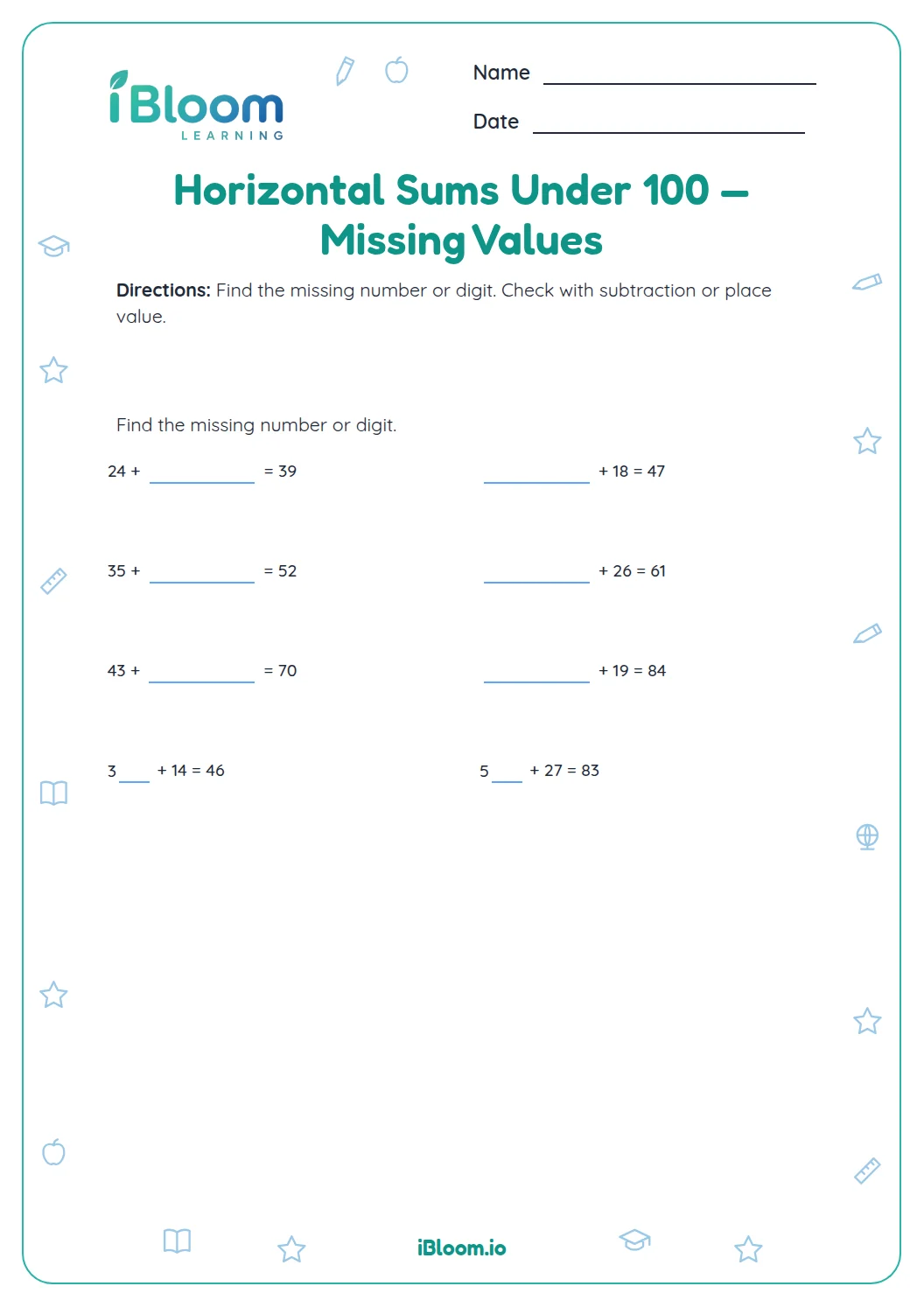
About this worksheet
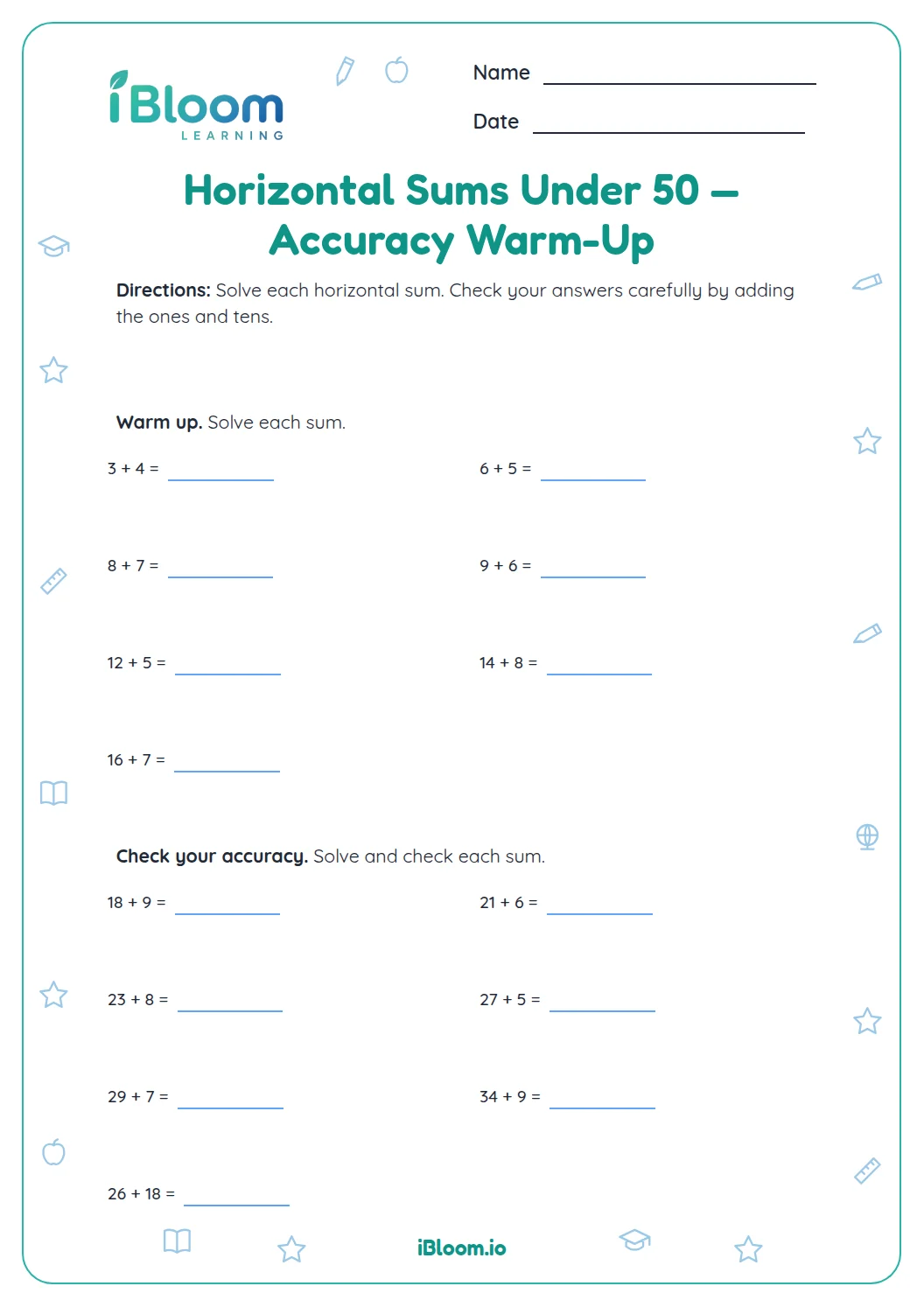
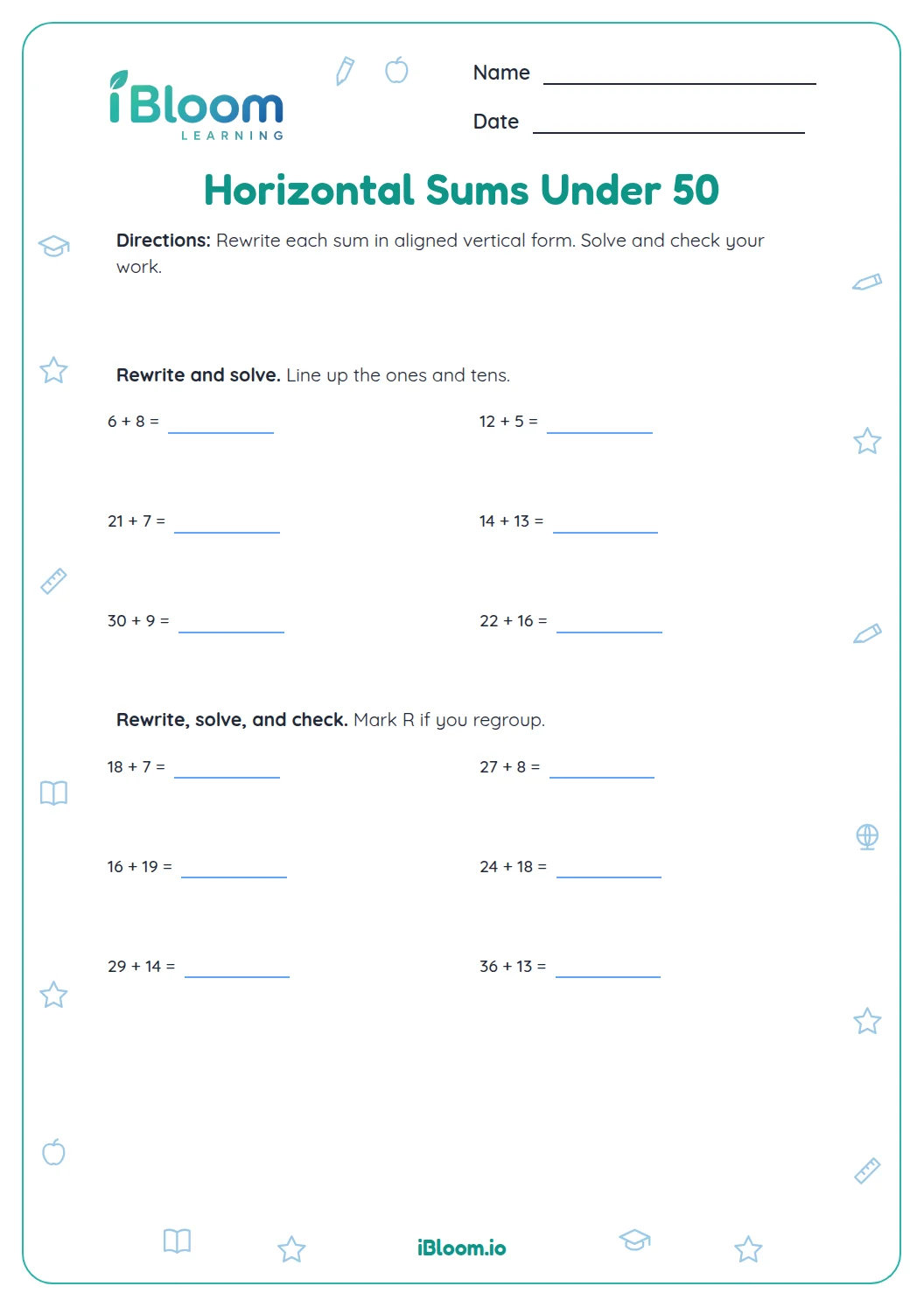
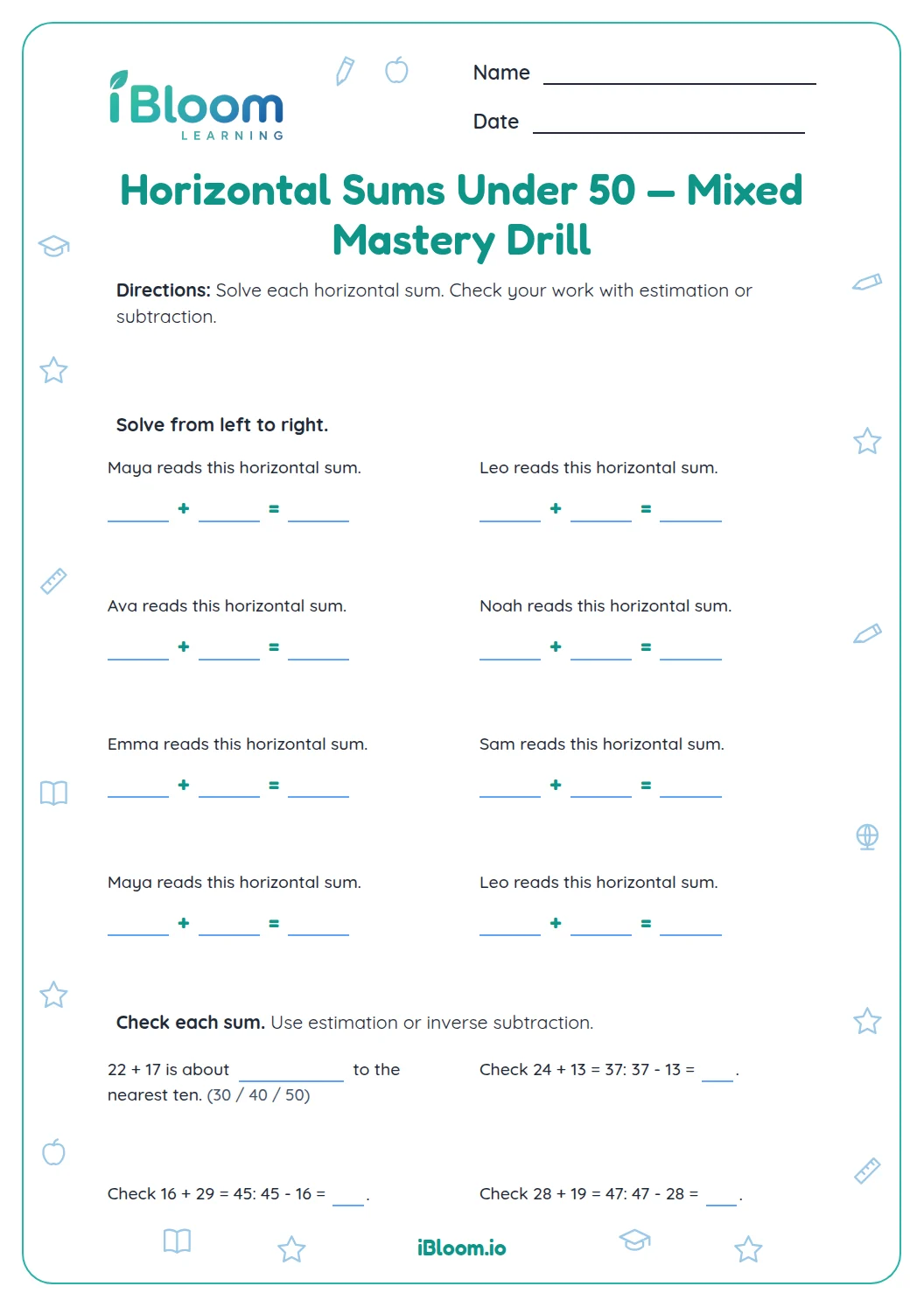
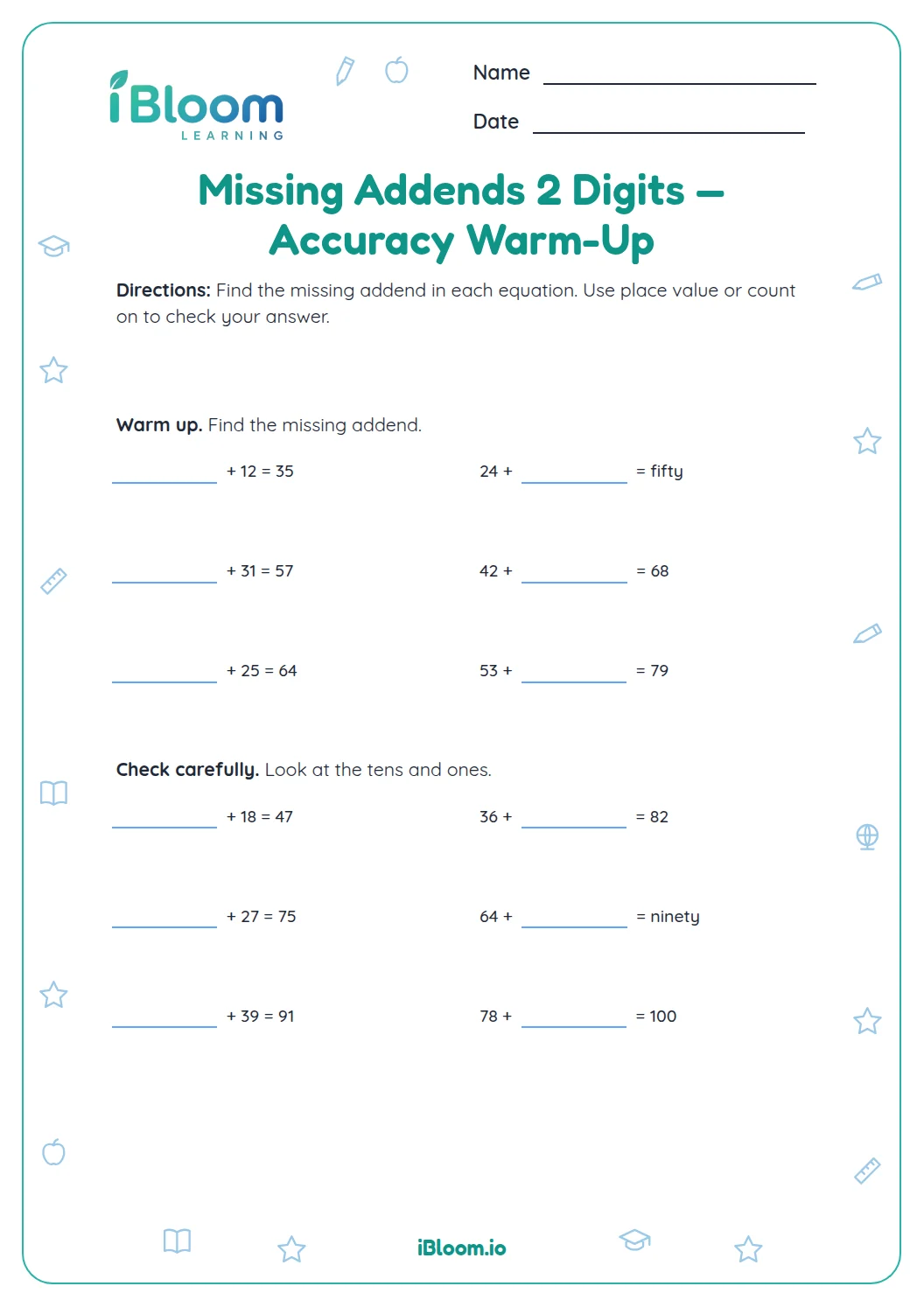
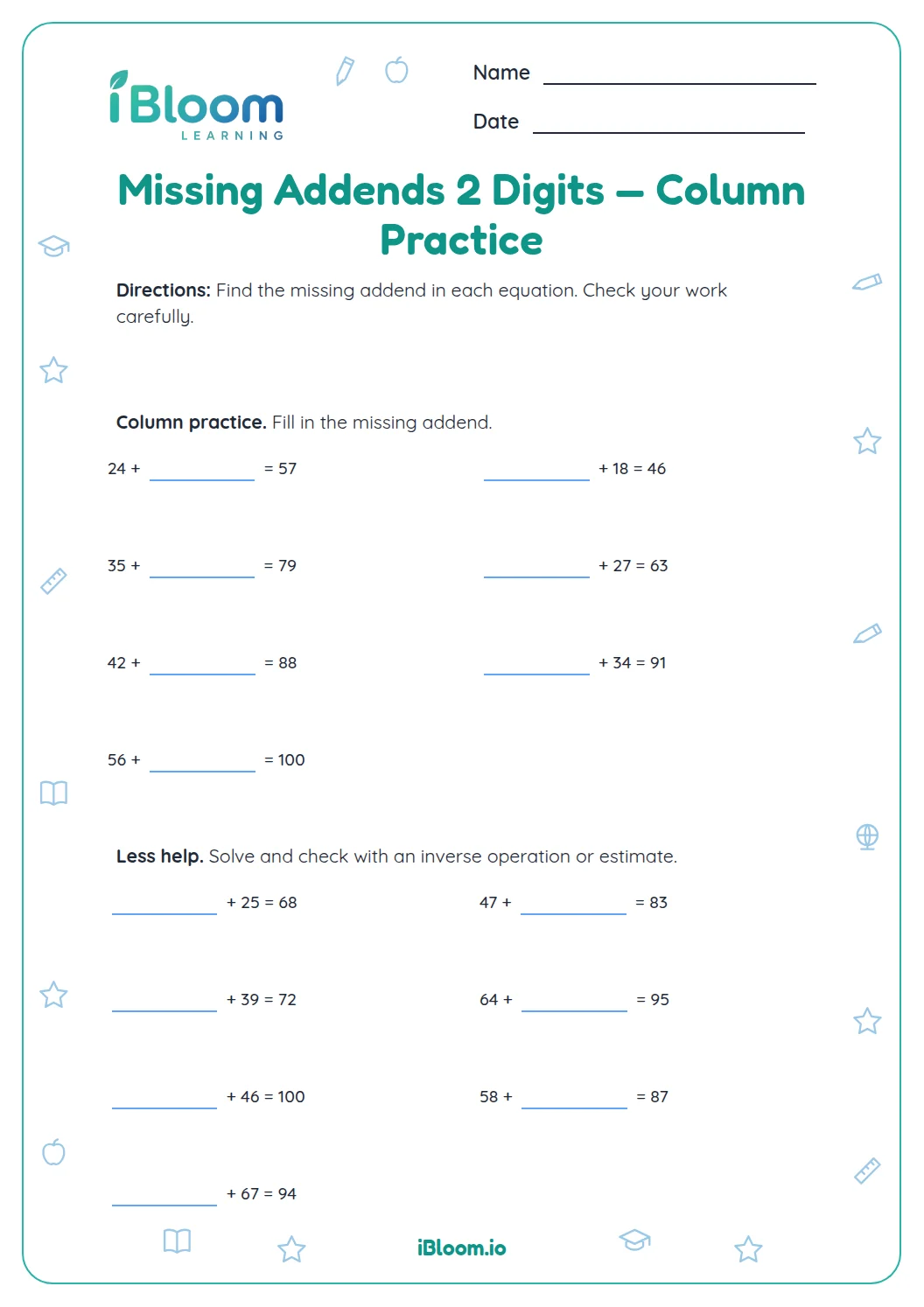
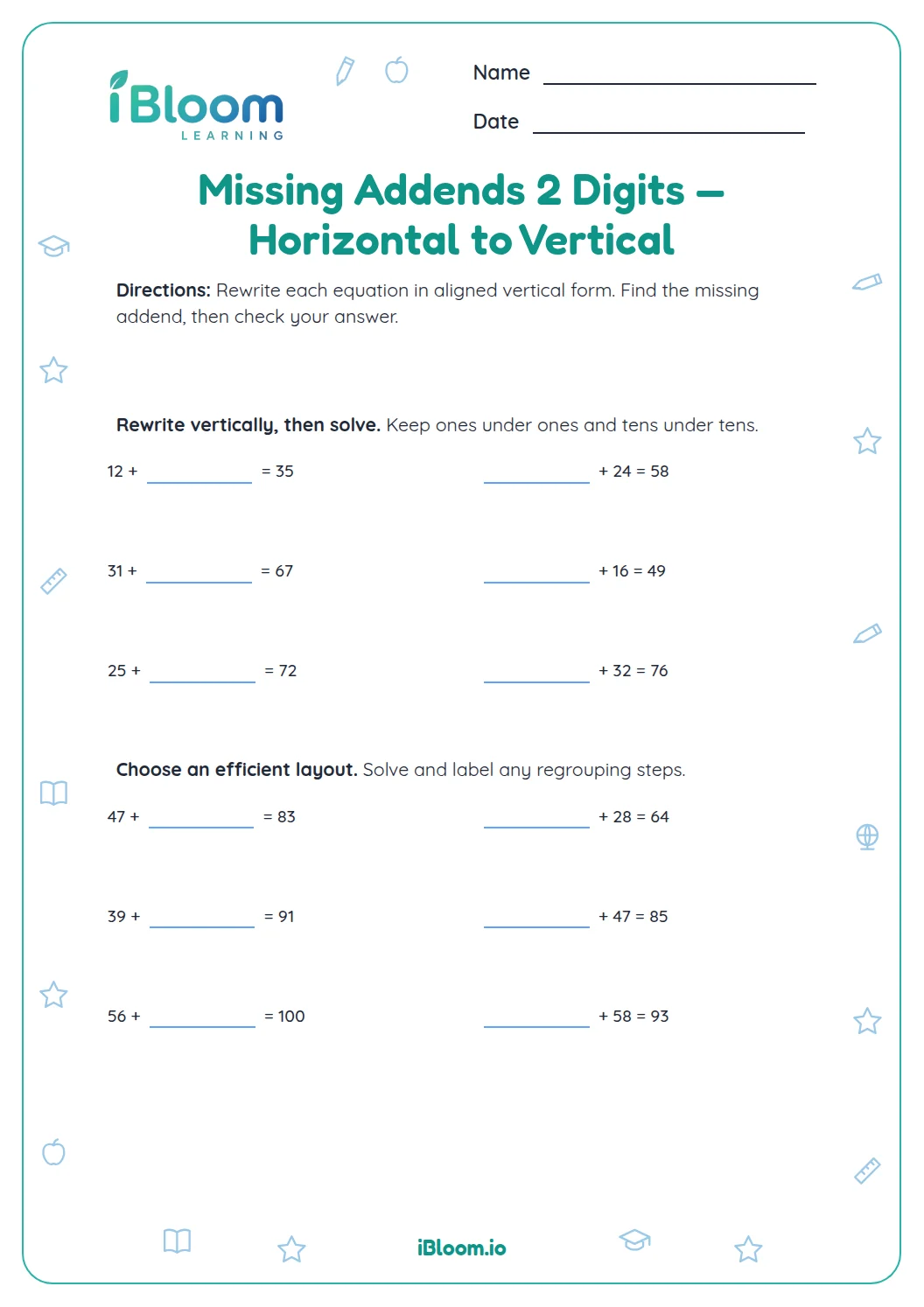
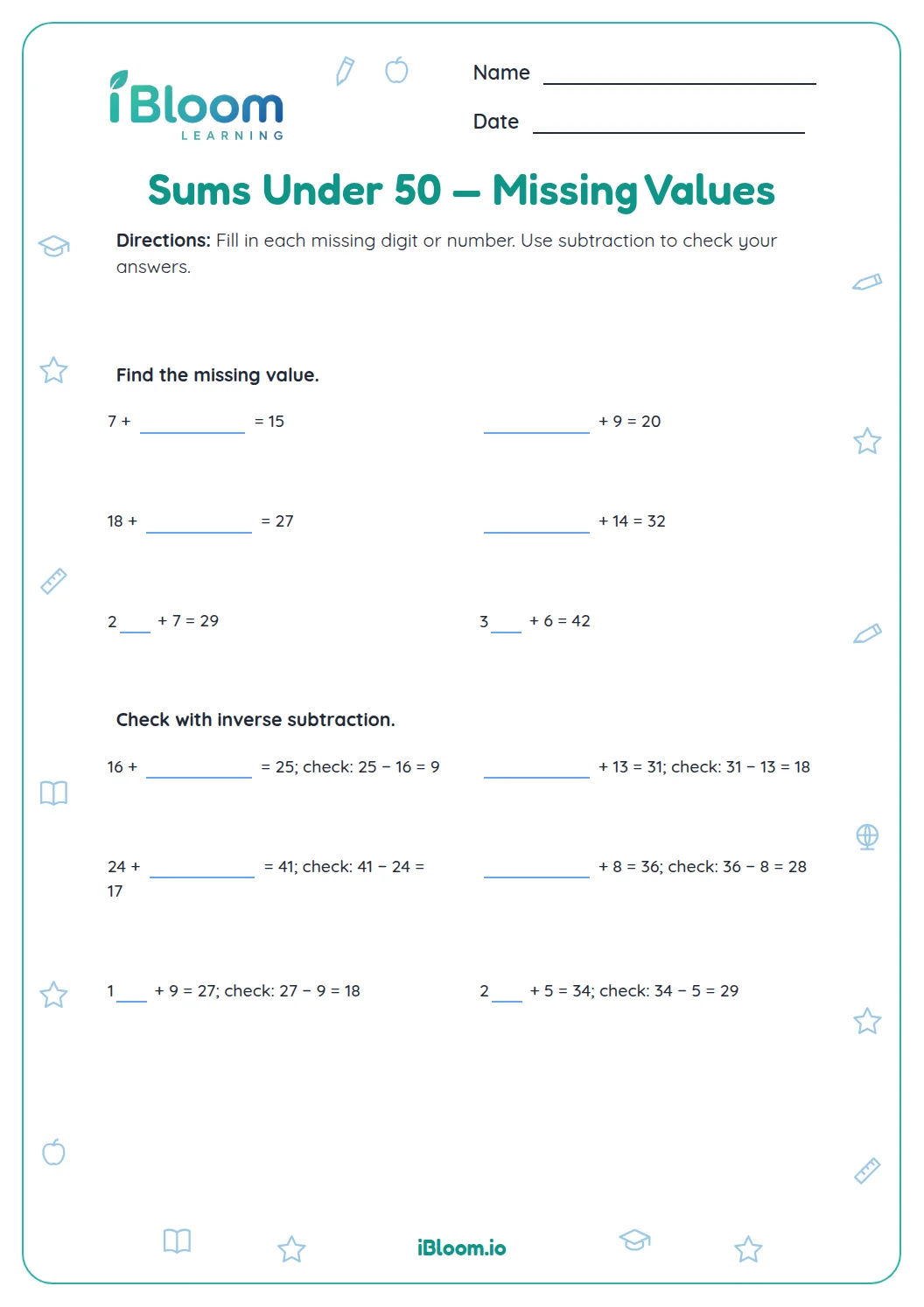
This Grade 2 math worksheet has 16 horizontal addition equations across two pages. Children find the missing addend and use addition or subtraction to check each total, all under 50. A separate answer key follows the practice pages. The work builds addition and subtraction fluency aligned to CCSS 2.NBT.B.5.
Aligned to 2.NBT.B.5
How do you find an unknown addend?
Each equation shows a total and one addend. Find the difference between the total and the known addend; that difference is the missing number. Every total on this sheet is less than 50.
How can a child check an answer?
Subtract the known addend from the total to find the unknown. Then put the two addends back together and confirm they make the given total.
How does question 1 work?
Subtract 7 from the total, 19, to find the missing addend. Then add 7 and 12 to check.
- 17 + ___ = 19
- 219 − 7 = 12
- 3Check: 7 + 12 = 19
How to use this worksheet
- 1Read the addition sentence left to right.
- 2Find the total and the known addend.
- 3Subtract the known addend from the total.
- 4Write the missing value in the blank.
- 5Add your two parts to check.
Common mistakes and quick fixes
The mistake
Adding the total and known addend
The fix
The missing addend is the difference between the total and known addend.
The mistake
Subtracting in the wrong order
The fix
Start with the total, then subtract the known part.
The mistake
Not checking the result
The fix
Put your number back and see whether the sum matches.
Common Core alignment
This worksheet practices 2.NBT.B.5 through grade-level tasks.
Find an unknown addend in addition facts with sums under 50.
On this sheet: Find an unknown addend in addition facts with sums under 50.
Show the official wordingHide the official wording
Fluently add and subtract within 100 using strategies based on place value, properties of operations, and/or the relationship between addition and subtraction.
What to practice next
Make more practice
Further reading
Questions parents and teachers ask
What is a missing addend?
It is an addend hidden in an addition equation. For example, in 7 + ___ = 19, the missing addend is 12 because 7 + 12 equals 19. Subtract the known addend from the total, then add the result back to check. This uses the relationship between addition and subtraction.
How many equations are on this page?
The worksheet has 16 horizontal equations across two pages. Each total is under 50, and a separate answer key follows. Subtract the known addend from the total, then add the result back to check. This uses the relationship between addition and subtraction.
How can a child solve 7 + blank = 19?
Subtract the known addend from the total: 19 − 7 = 12. Then check by adding 7 + 12 to get 19. Subtract the known addend from the total, then add the result back to check. This uses the relationship between addition and subtraction.
Why does the second part mention subtraction?
Subtraction finds the difference between the total and the known addend. Adding the answer back provides a quick check. Subtract the known addend from the total, then add the result back to check. This uses the relationship between addition and subtraction.
Are the answers all less than 50?
Yes. The given totals are below 50, and all missing addends are positive whole numbers that complete the equations. Subtract the known addend from the total, then add the result back to check. This uses the relationship between addition and subtraction.
Is an answer key included?
Yes. A separate answer key lists the missing addend for all 16 equations so children can check their work. Subtract the known addend from the total, then add the result back to check. This uses the relationship between addition and subtraction.