
About this worksheet
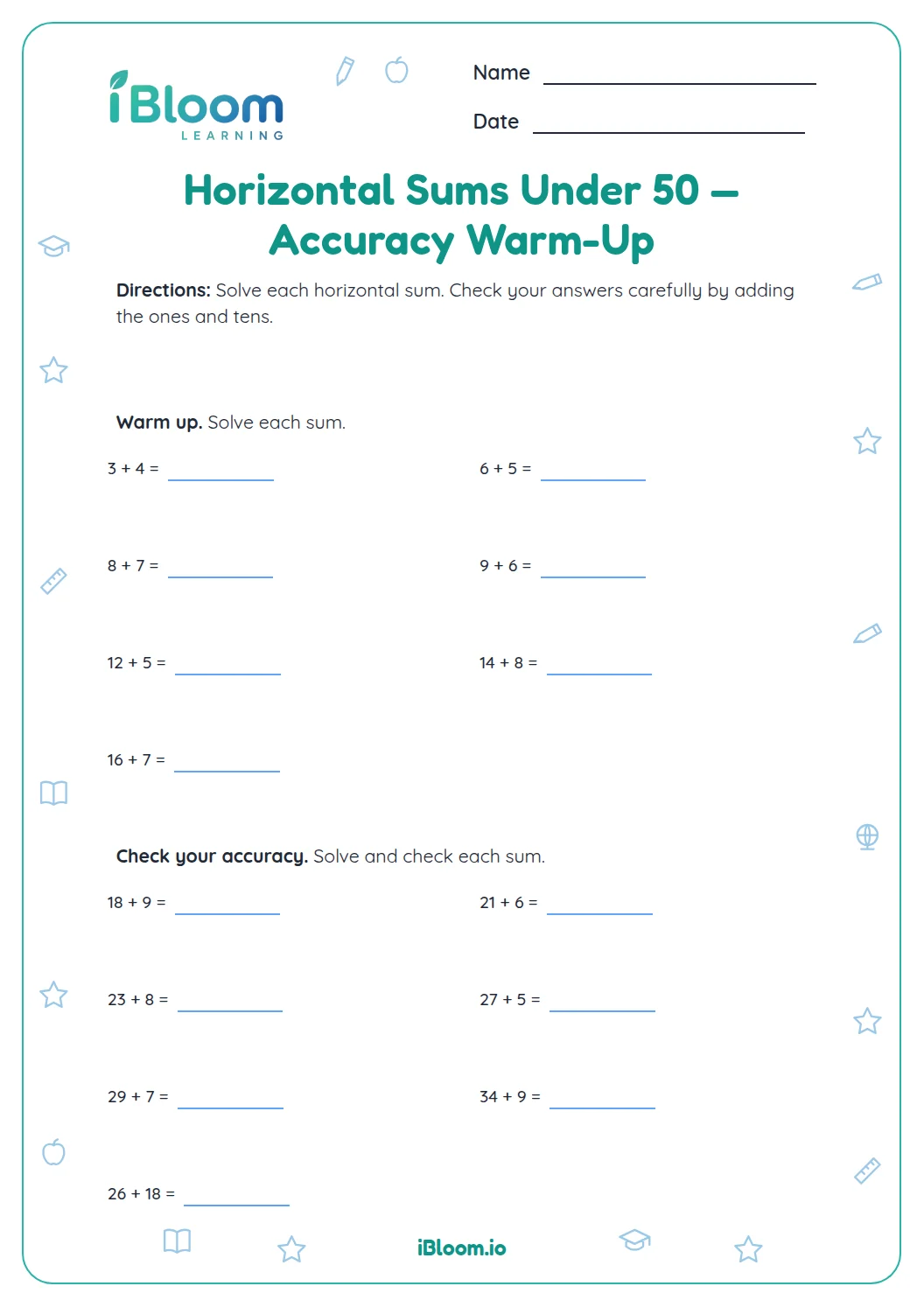
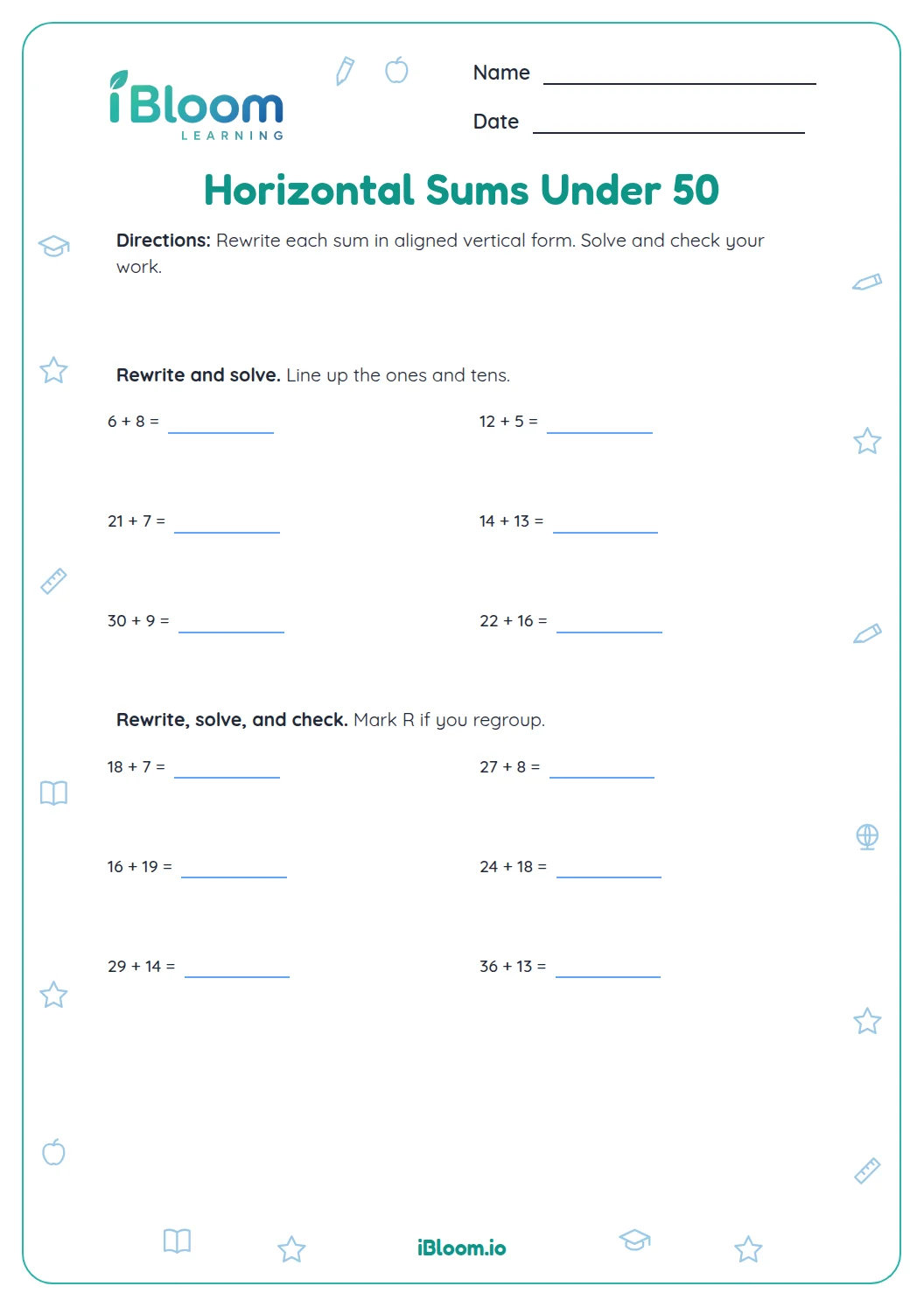
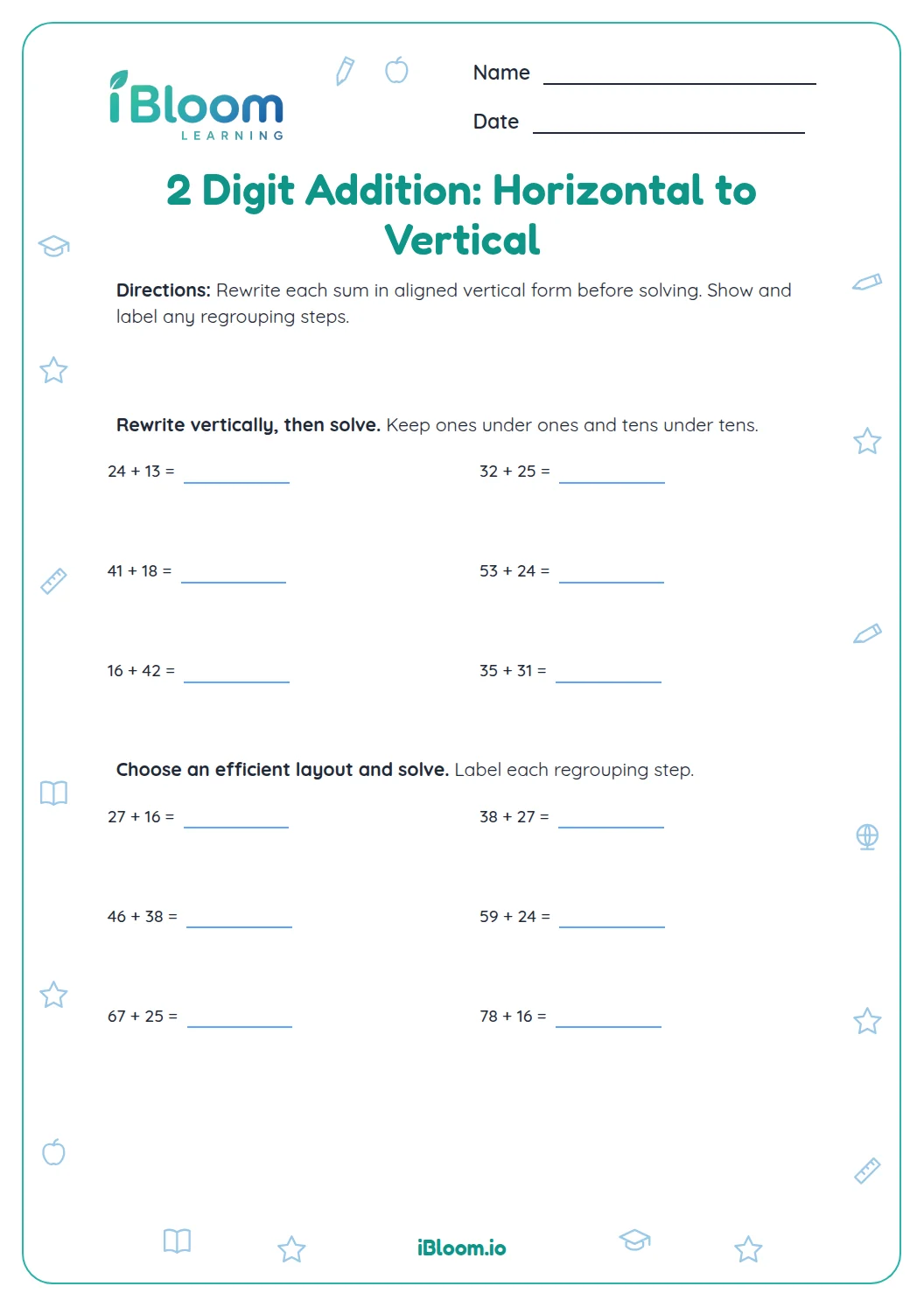
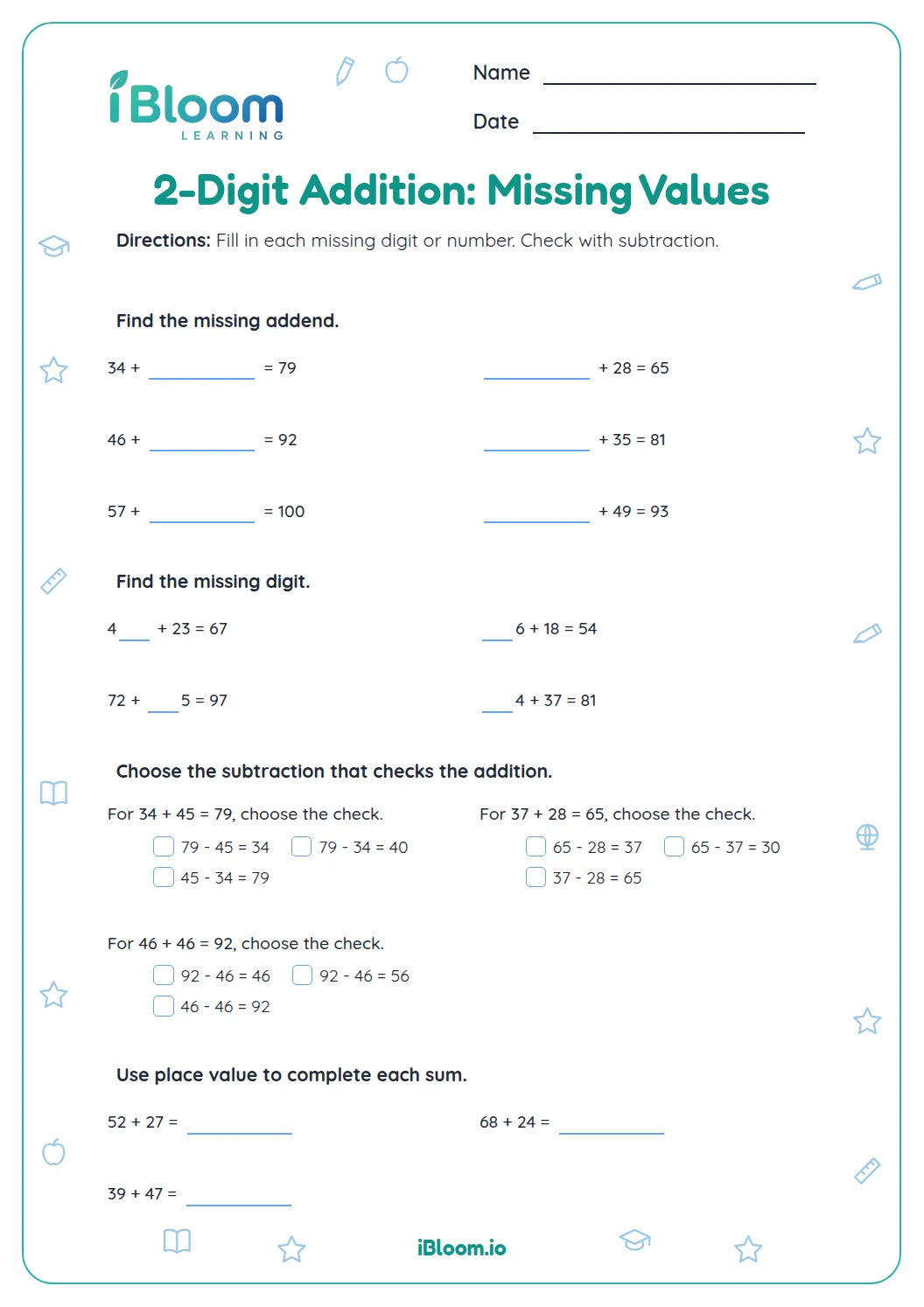
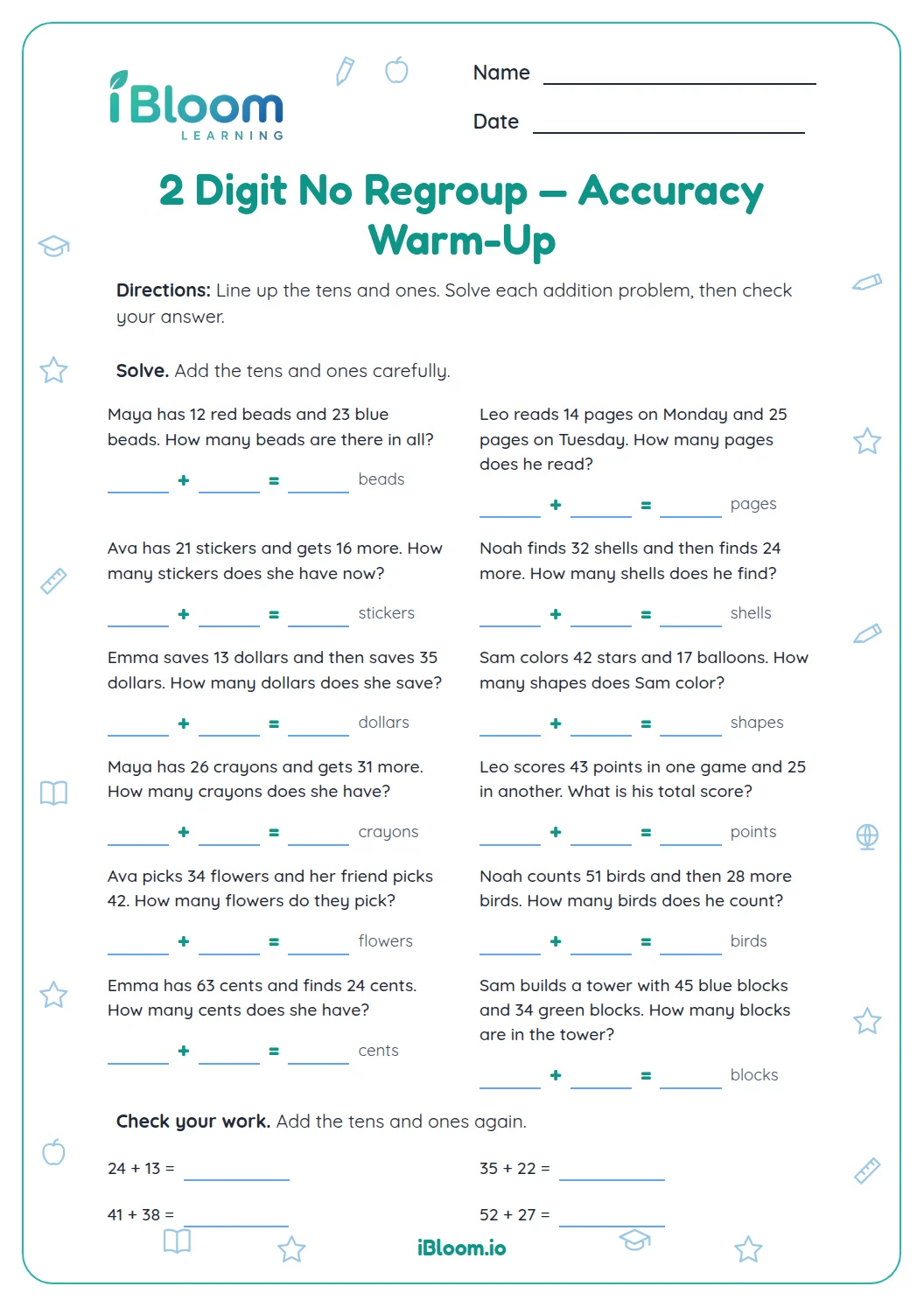
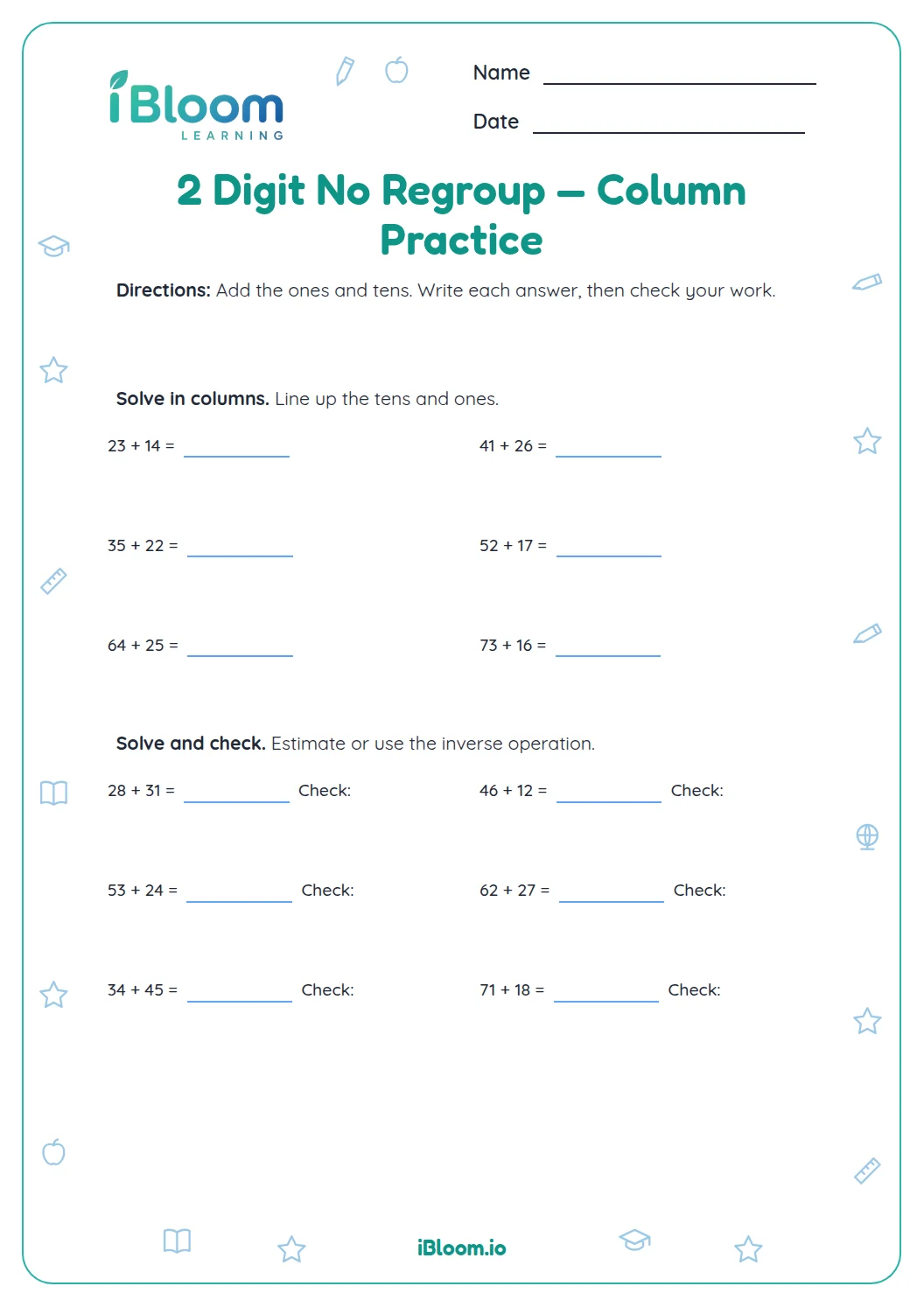
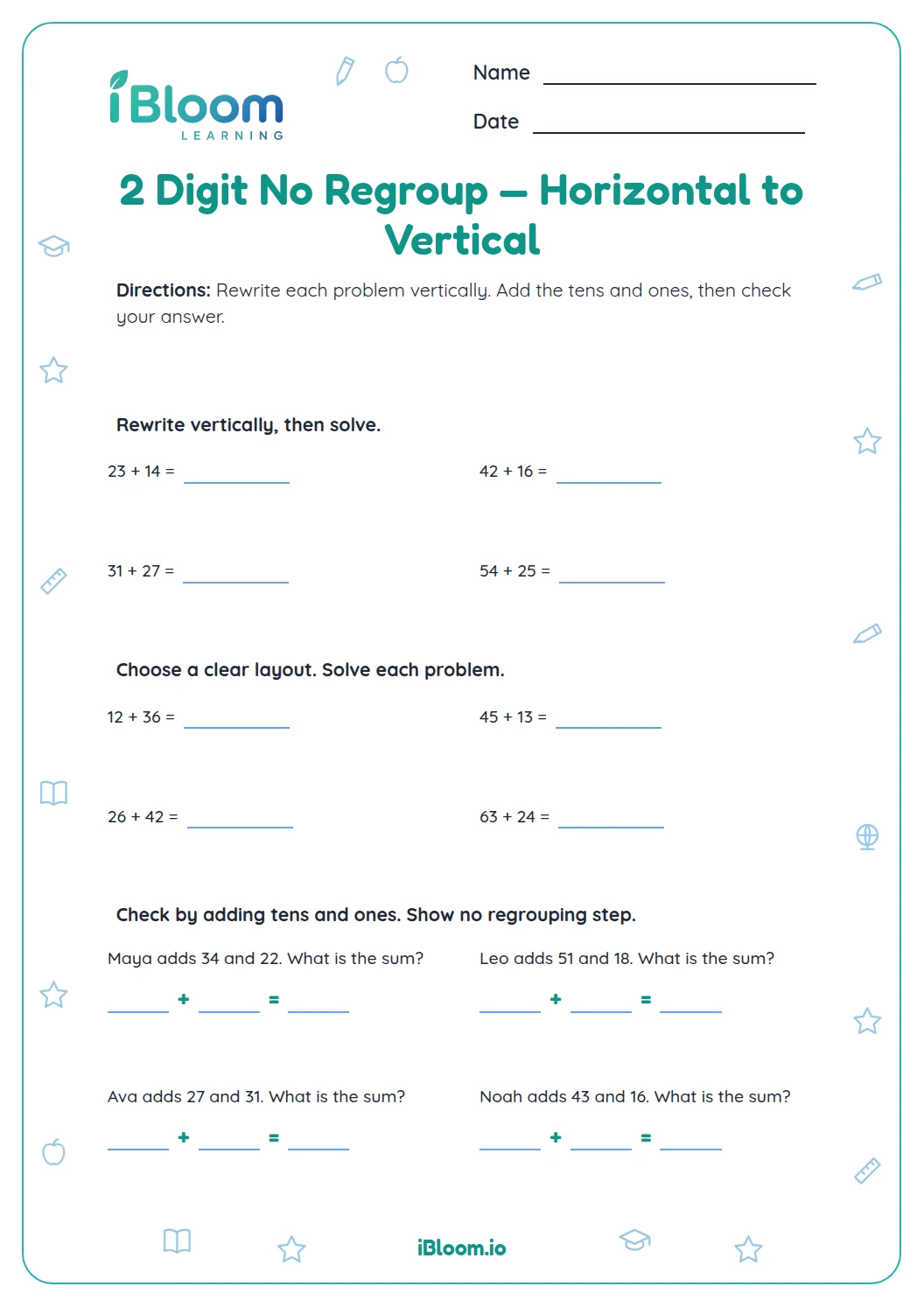
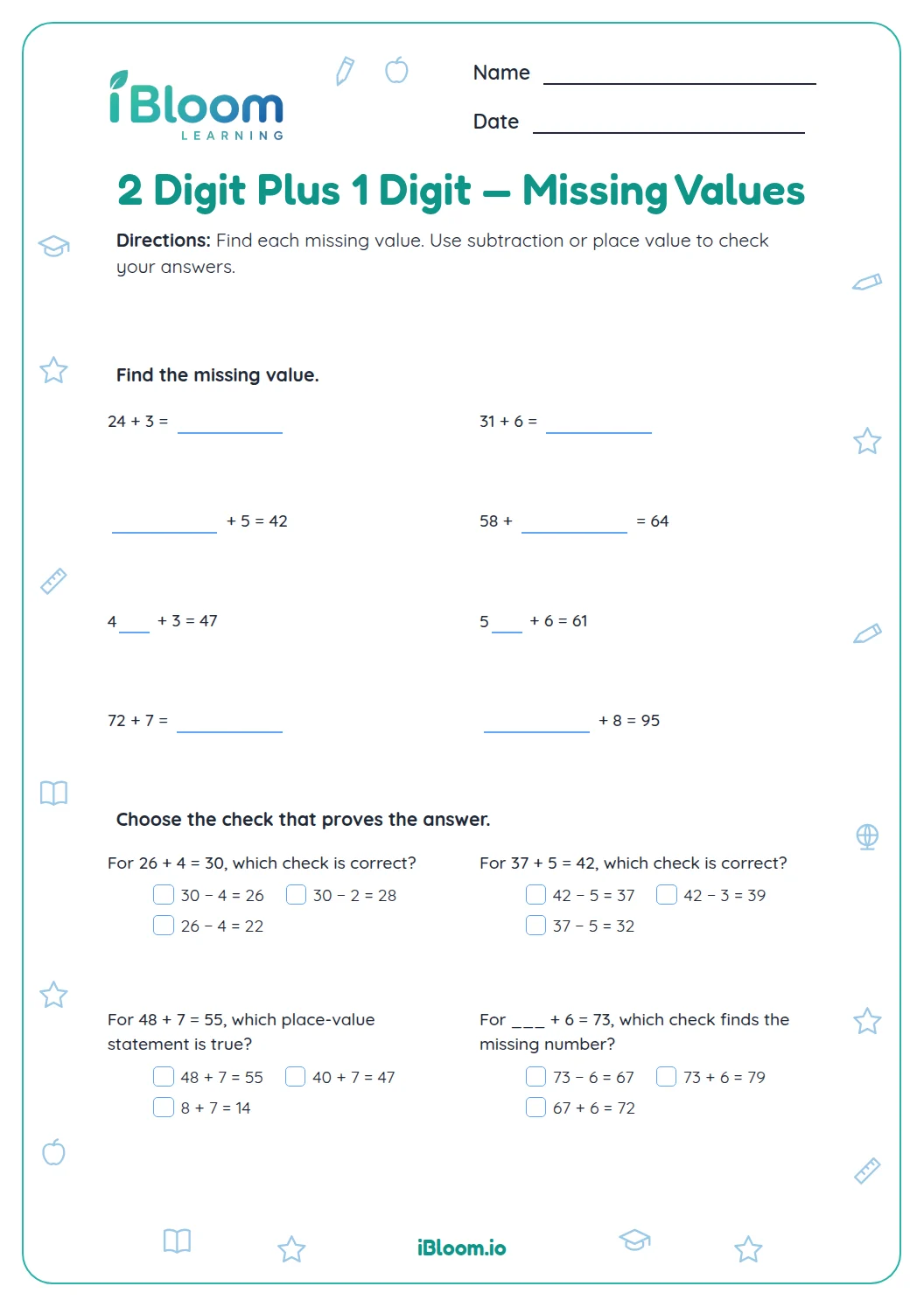
This free Grade 2 worksheet gives children 16 horizontal addition equations with totals below 50. The problems include two-digit plus one-digit and two-digit plus two-digit sums, with several that require regrouping. Children write each answer in the blank and can check their work with the separate key. It practices CCSS 2.NBT.B.5 by building fluency with addition strategies based on place value and known facts.
Aligned to 2.NBT.B.5
What does this worksheet ask children to do?
Each item is written across the page as an equation with a blank for the sum. The totals stay below 50. Some pairs can be added by combining tens and ones directly; when the ones make a new ten, regroup that ten.
- 112 + 7 = ___
- 2Add 2 ones and 7 ones to make 9 ones; keep the 1 ten.
- 312 + 7 = 19
How do the three parts build practice?
Part A starts with four sums, such as 12 + 7 and 31 + 18. Part B has four more, including 27 + 6 and 28 + 19, where a new ten is made in the ones place. Part C gives eight additional sums for independent practice. Each answer is a number, so children can focus on adding accurately.
How can a child check an addition answer?
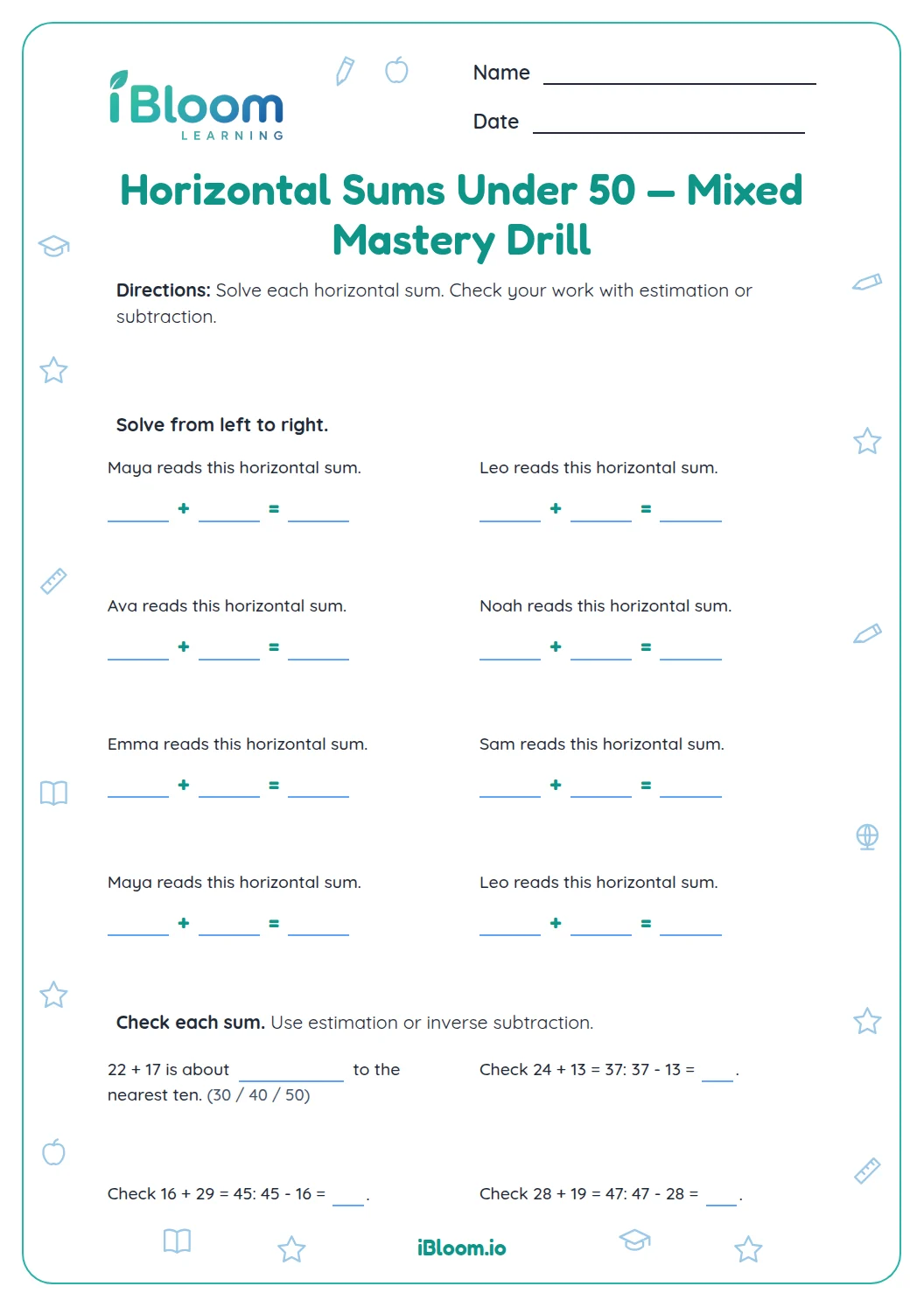
Estimate first, then use the inverse operation to check: subtract one addend from the sum and see whether the other addend remains. For 28 + 19 = 47, check 47 − 19 = 28. The key gives the correct sums for all 16 equations.
How to work through the sums
- 1Read both addends and the plus sign before calculating.
- 2Add the ones digits; regroup a ten if their total is 10 or more.
- 3Add the tens, including any regrouped ten.
- 4Write the sum in the blank and check that it is less than 50.
- 5Use subtraction or an estimate to check, then compare with the answer key.
Common addition slips and fixes
The mistake
Adding tens and ones as if they were the same place, such as treating 24 as 2 + 4.
The fix
Keep each digit in its place: 24 is 2 tens and 4 ones.
The mistake
Forgetting to regroup in 28 + 19 after 8 + 9 makes 17 ones.
The fix
Trade 10 ones for 1 ten, then add the remaining 7 ones.
The mistake
Stopping after adding the ones and leaving out the tens.
The fix
After the ones, add the tens and include any new ten.
Curriculum alignment
This worksheet practices the skill described in the listed standard.
Add two-digit and one-digit numbers using place value and regrouping when needed.
On this sheet: The 16 horizontal equations practice adding within 100 using place-value strategies; all sums here are below 50.
Show the official wordingHide the official wording
Fluently add and subtract within 100 using strategies based on place value, properties of operations, and/or the relationship between addition and subtraction.
What to practice next
Make more practice
Further reading
Questions parents and teachers ask
How many problems are on the addition worksheet?
There are 16 horizontal addition equations on one worksheet page. Every total is below 50, and each problem has a blank for the sum. The separate answer key lists the result for every equation. It can be printed separately when the student is ready to check.
Does the worksheet include regrouping?
Yes. Several sums require regrouping when the ones total ten or more, including 27 + 6 and 28 + 19. Other examples can be solved without regrouping, so children get practice with both types in the same under-50 range. An adult can model one example before independent practice.
What is a good way to solve 28 + 19?
Add the ones first: 8 + 9 = 17, or 1 ten and 7 ones. Add the regrouped ten to the tens in 28 and 19 to make 4 tens. The total is 47. Subtracting 19 from 47 is one way to check.
Is the worksheet set up for column addition?
The problems are printed horizontally, with one blank for each sum. A child may write a vertical calculation beside a problem if that helps keep tens and ones organized, then enter the result in the blank. The provided page itself uses horizontal equations.
How many pages should I print?
Print one worksheet page for the student and one answer key page for checking. Keep the key aside until the 16 equations are complete. The answer sheet is separate, so it can be withheld during independent work. This keeps responses out of view.
What standard does this worksheet practice?
It practices CCSS 2.NBT.B.5, fluently adding and subtracting within 100 with strategies based on place value, properties, or the relationship between operations. This page focuses on addition, with every sum below 50 and several examples requiring regrouping. The problems use place-value ideas.