
About this worksheet
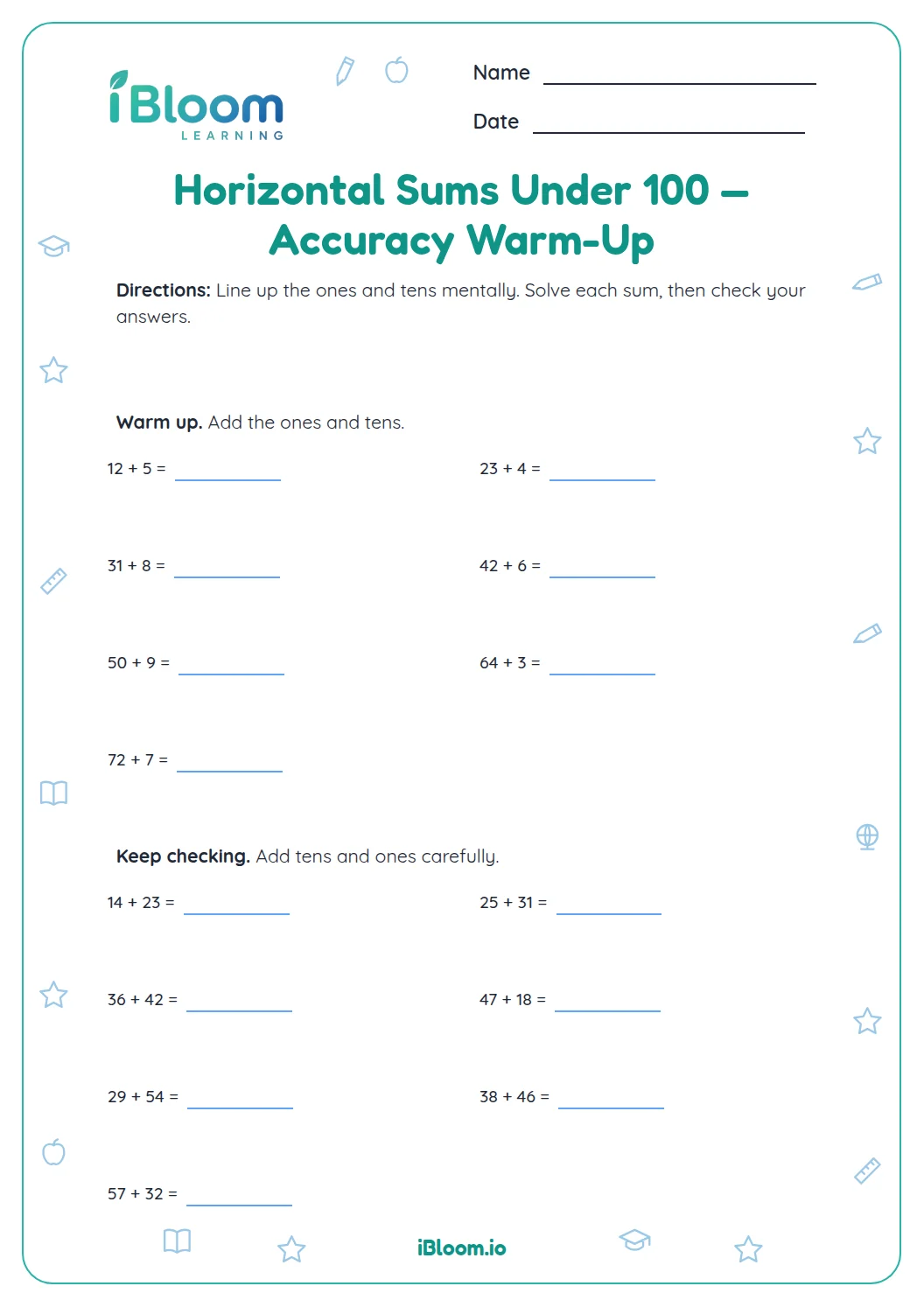
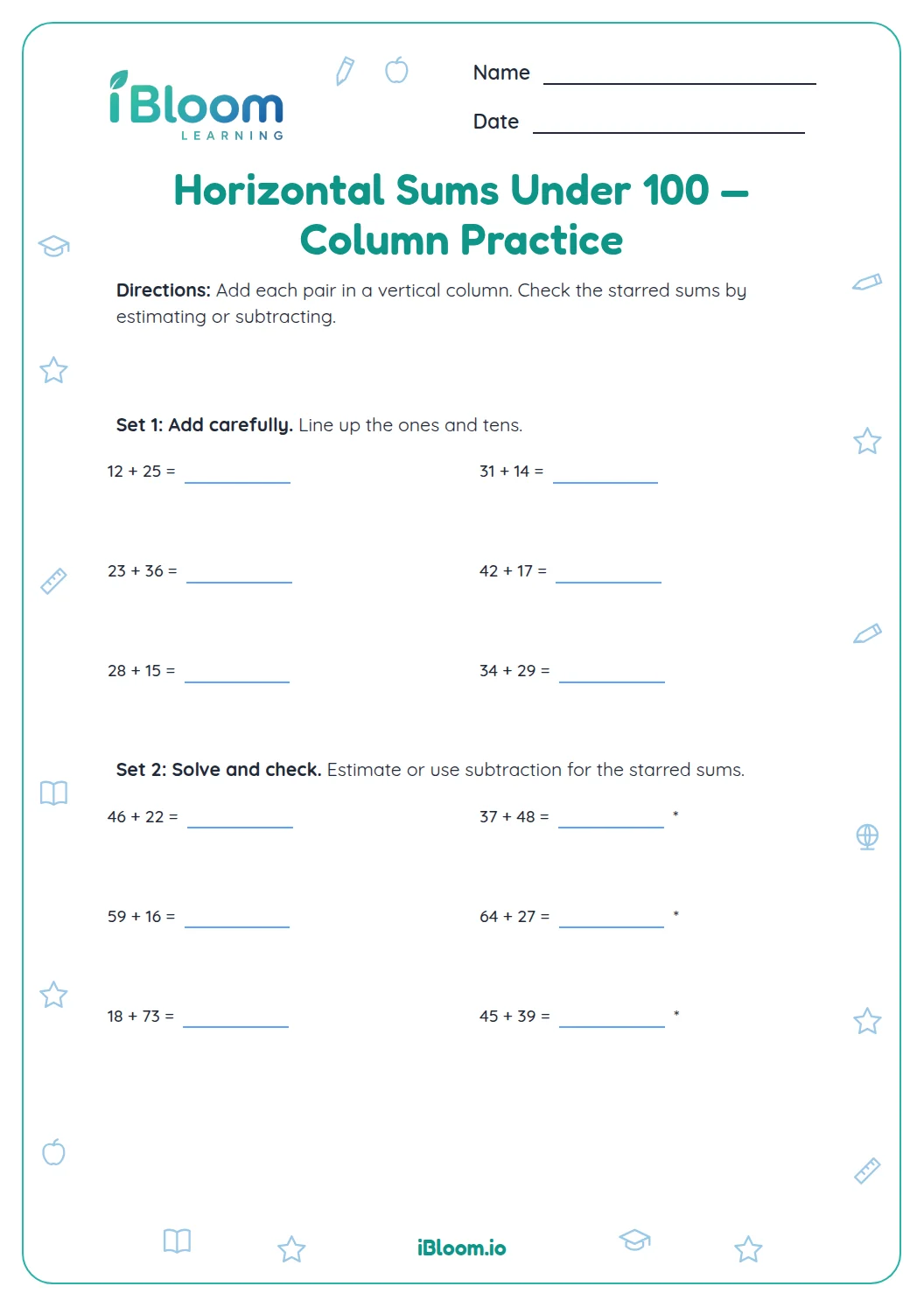
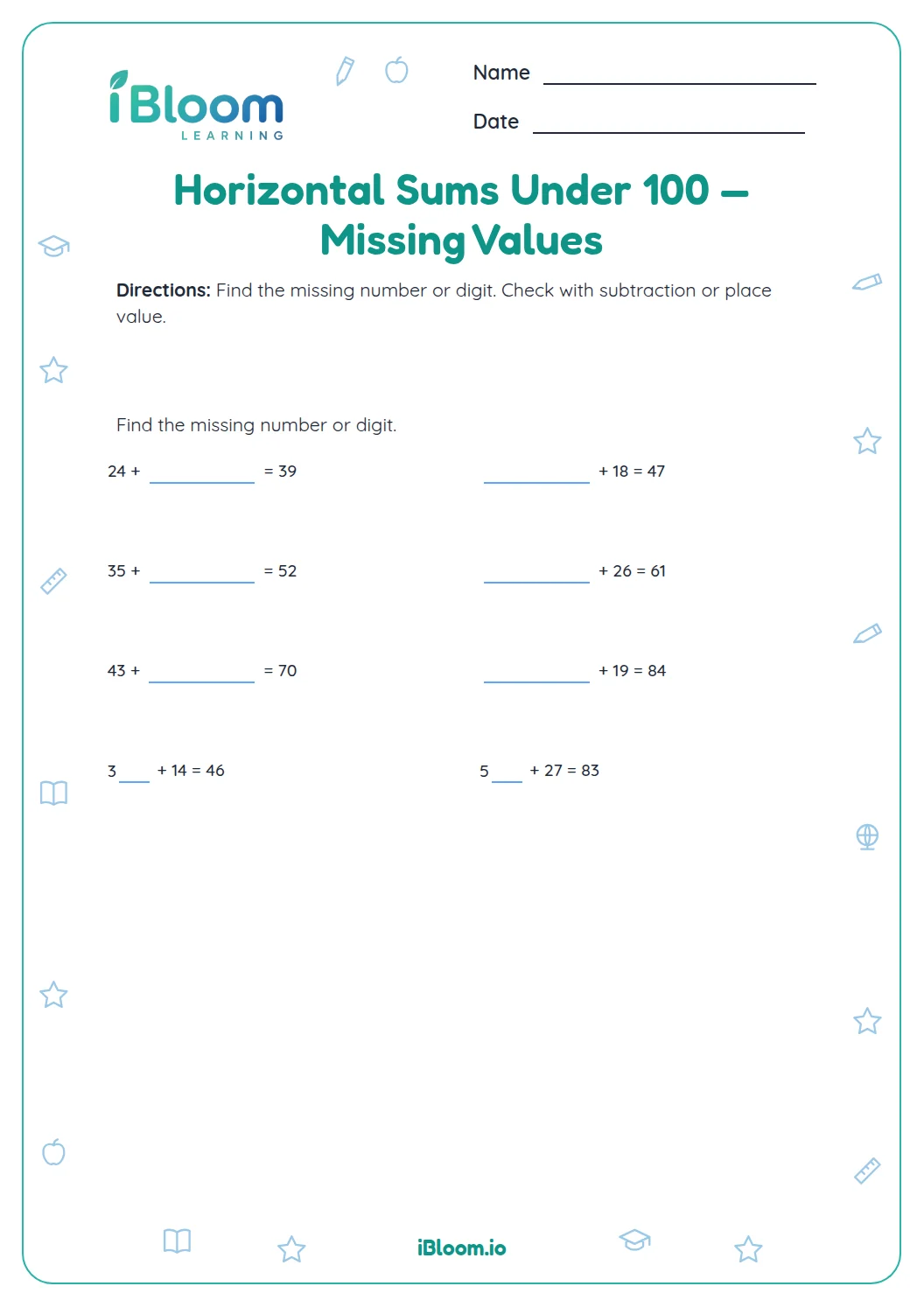
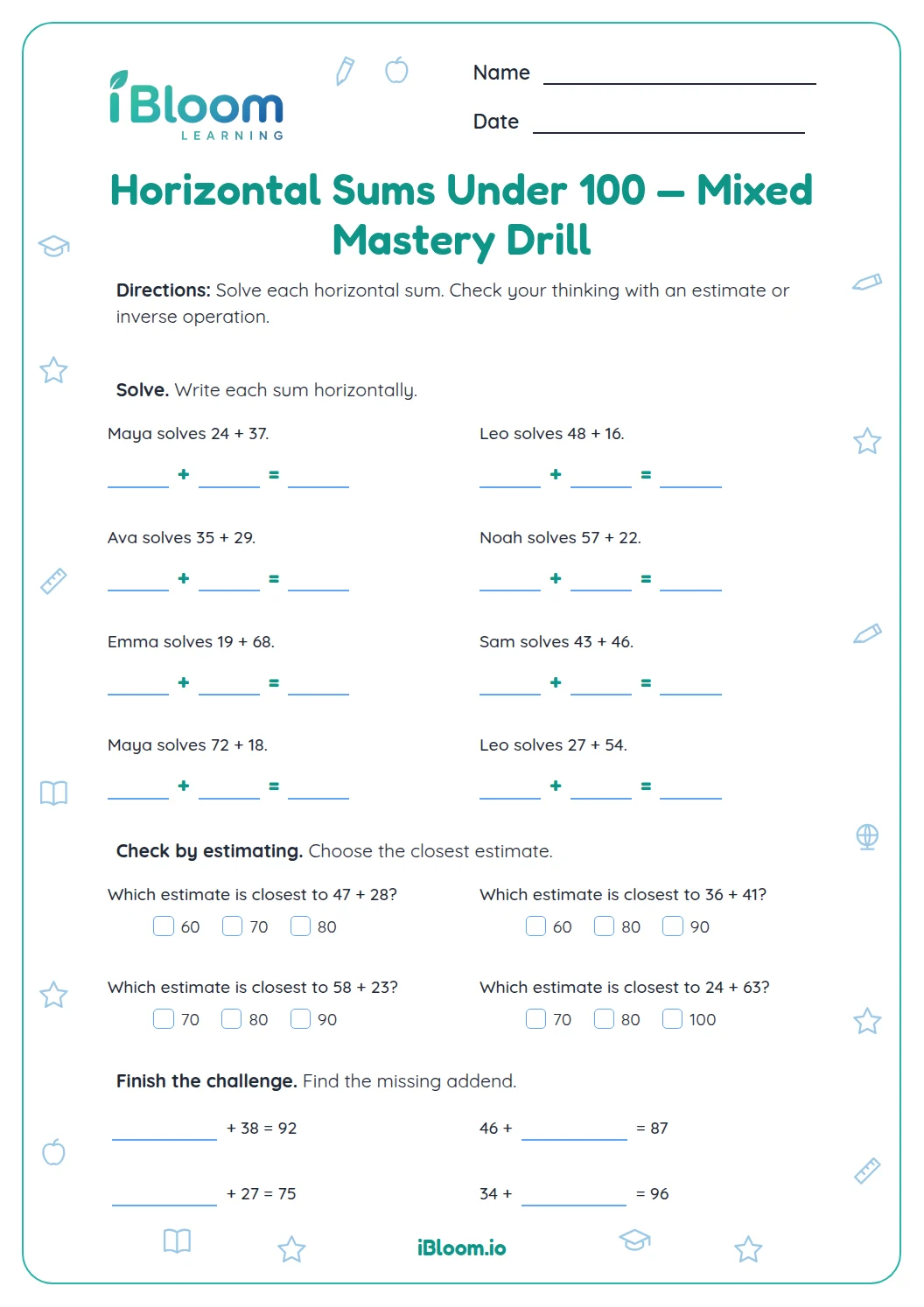
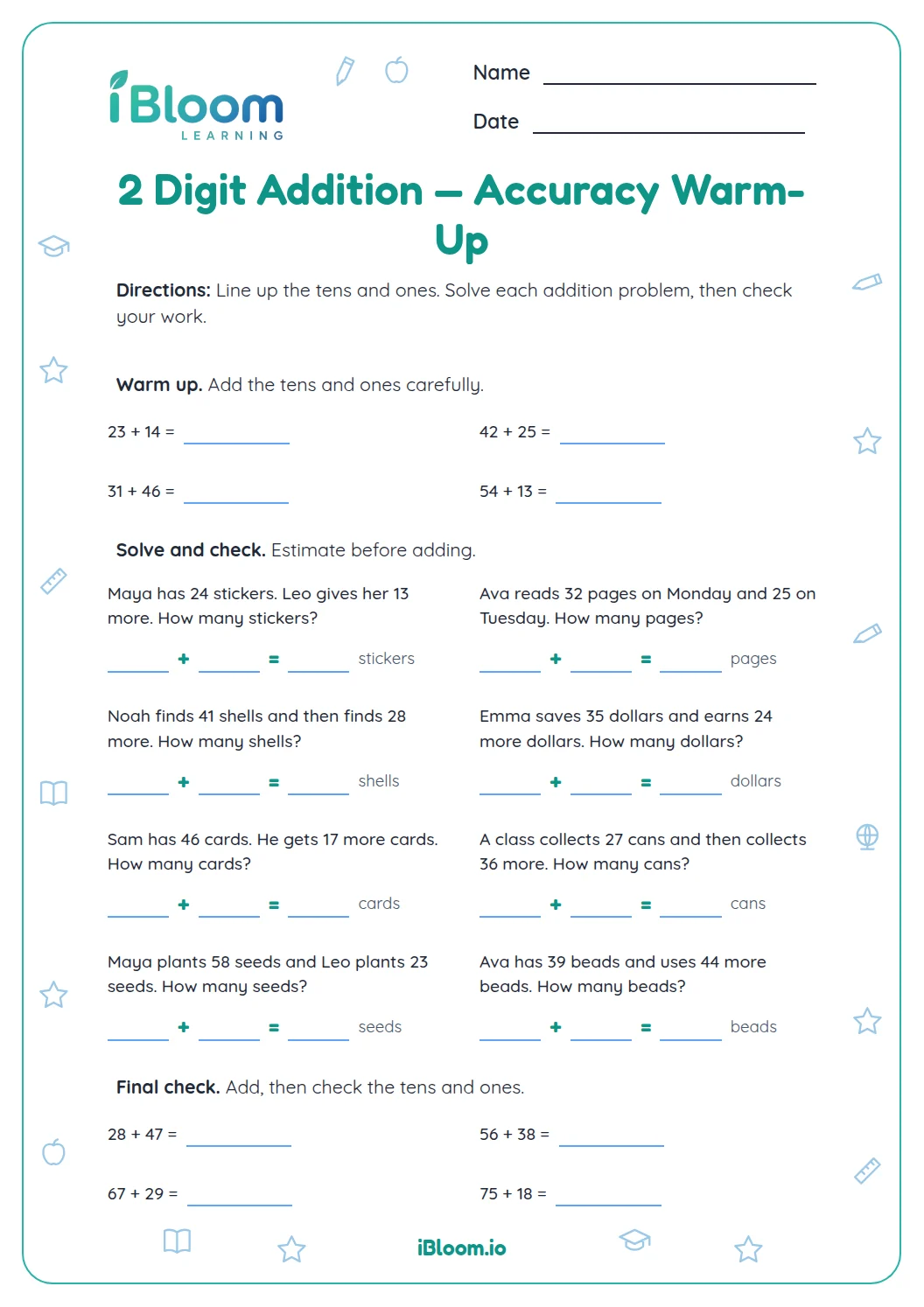
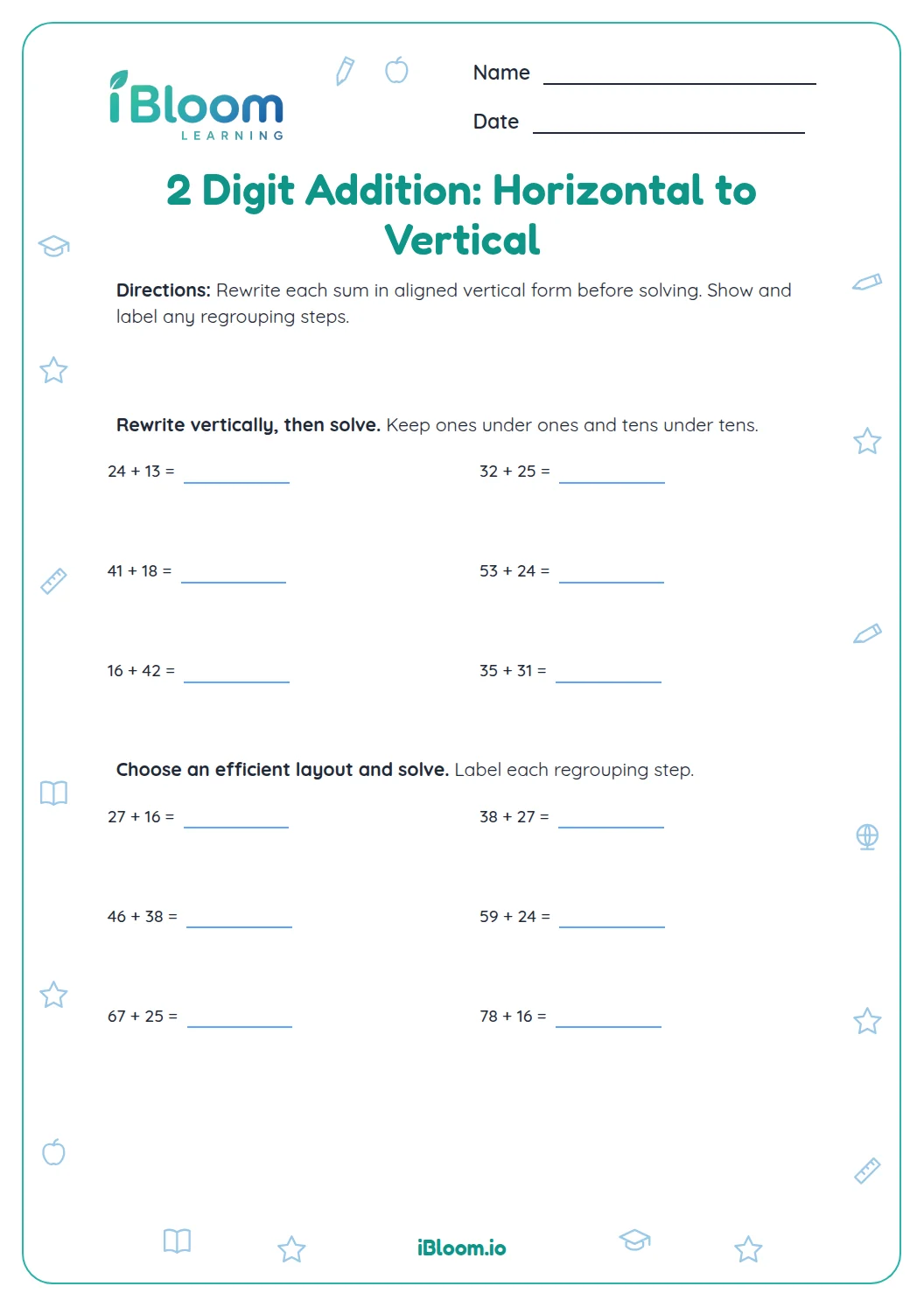
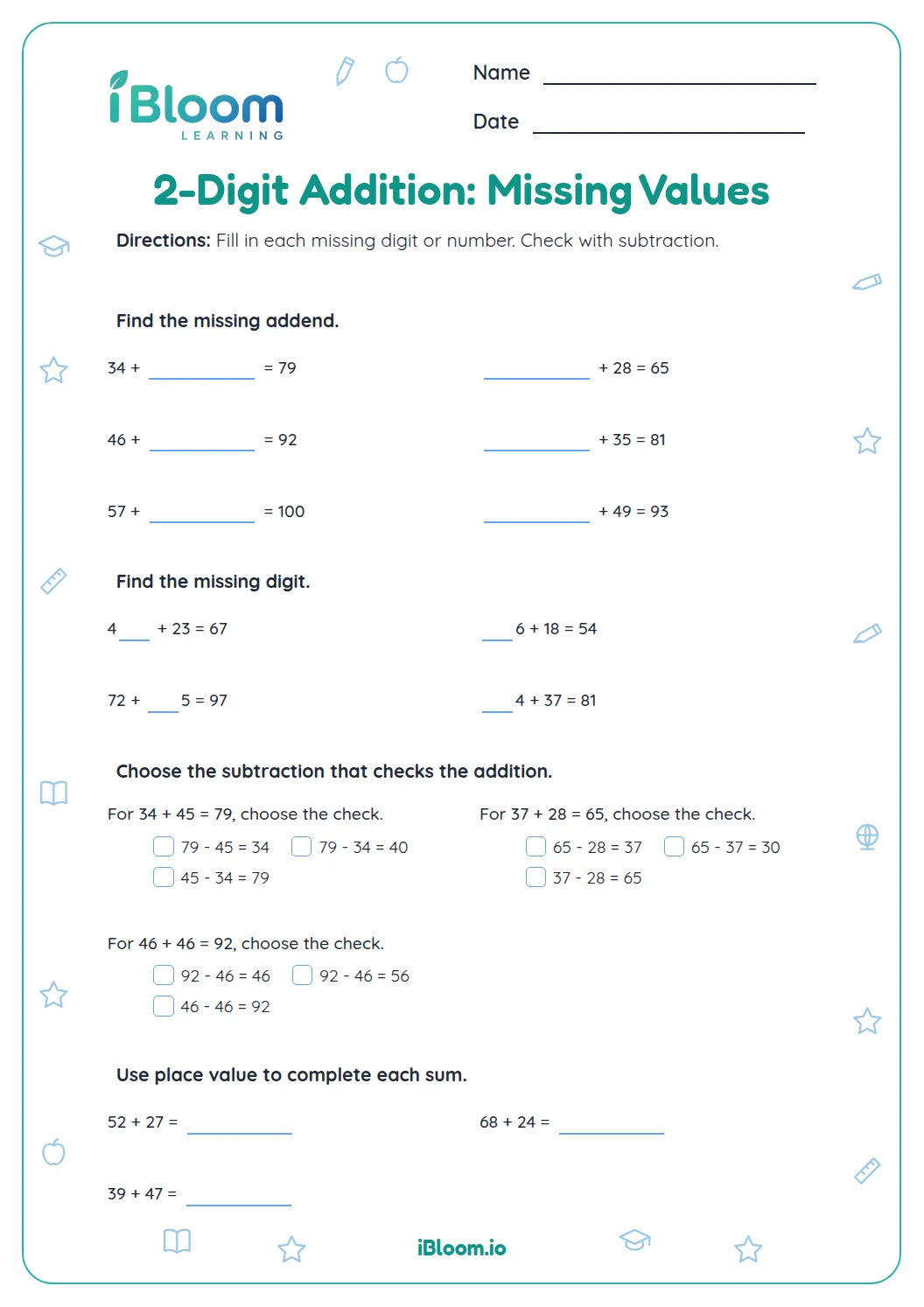
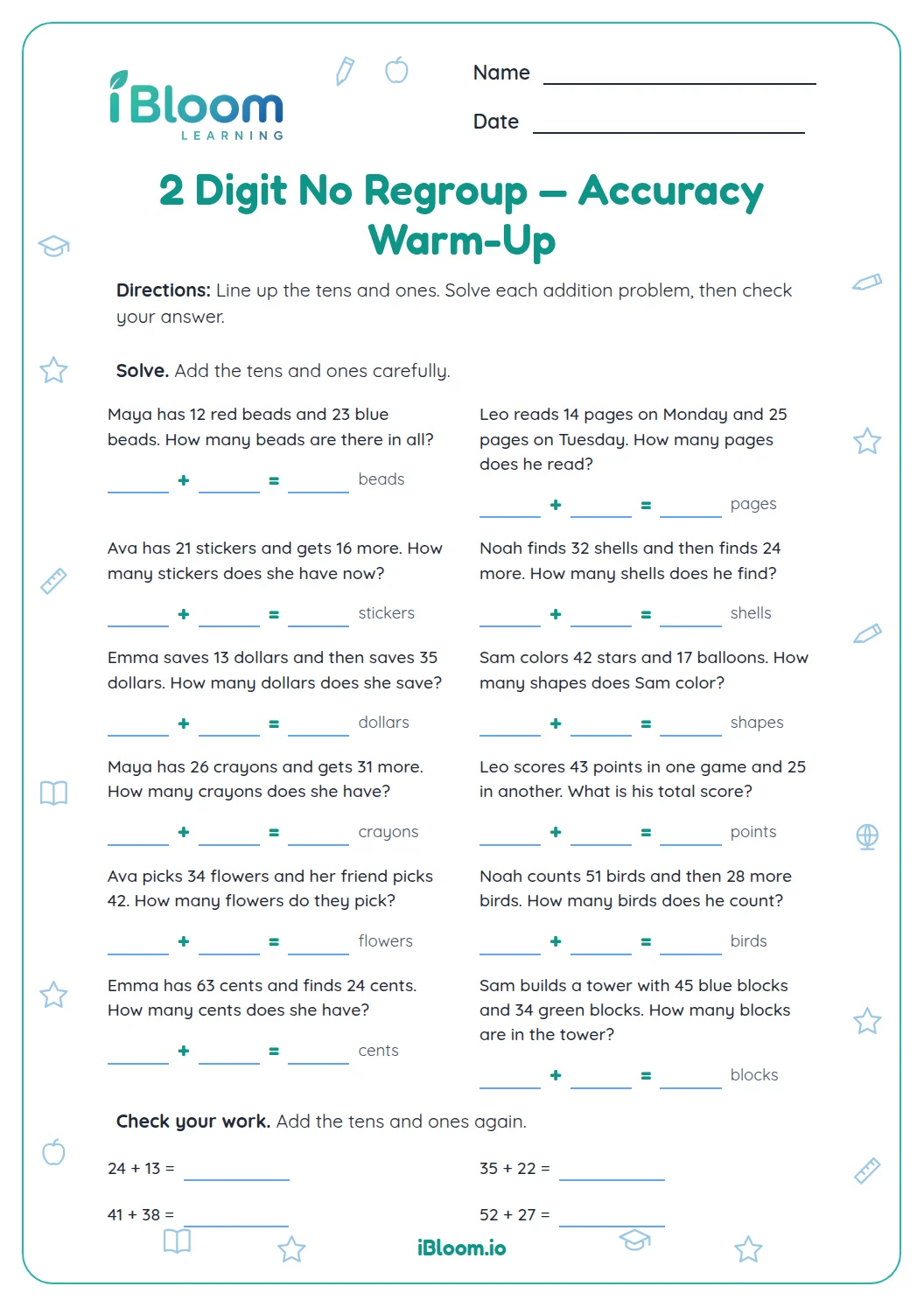
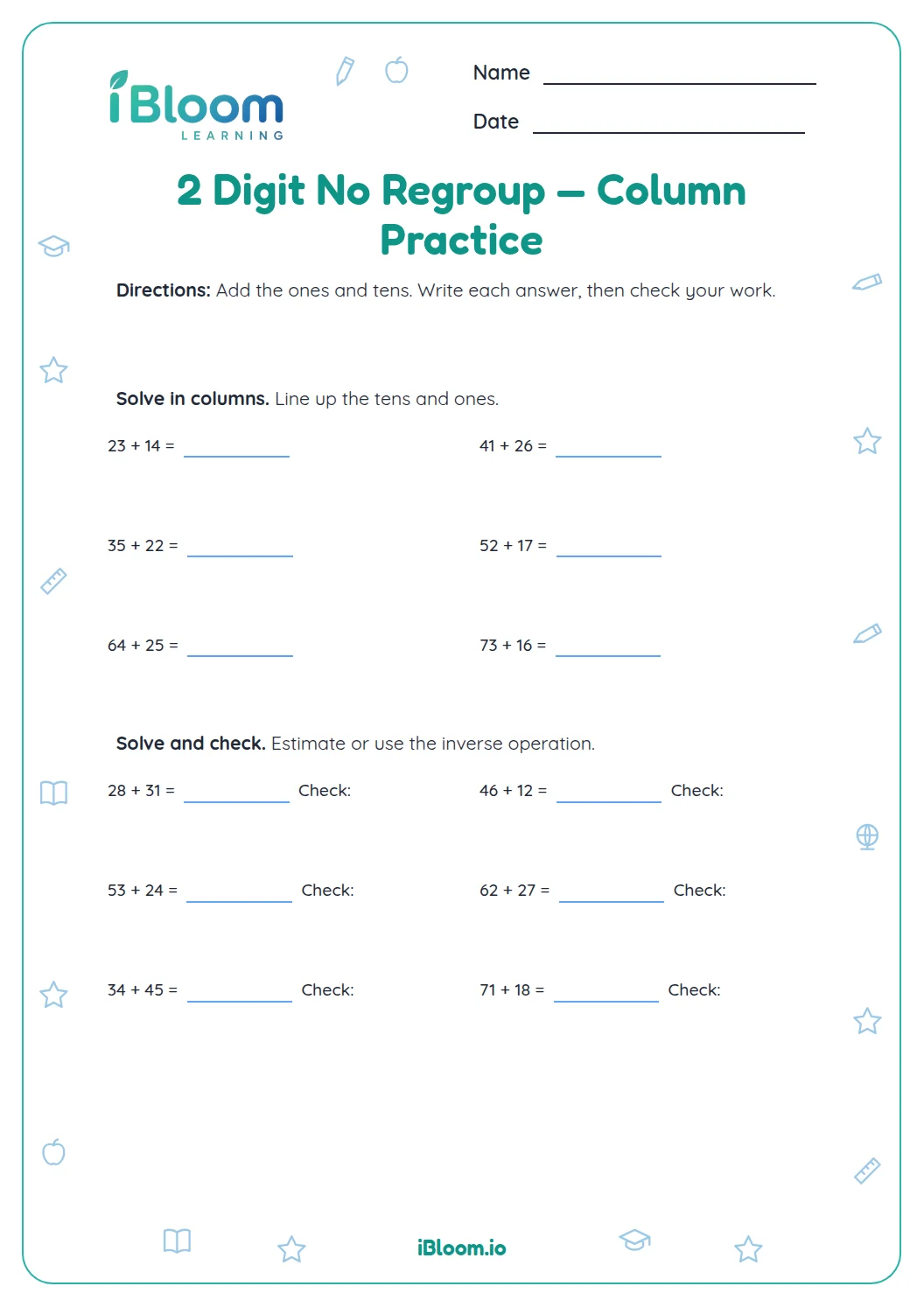
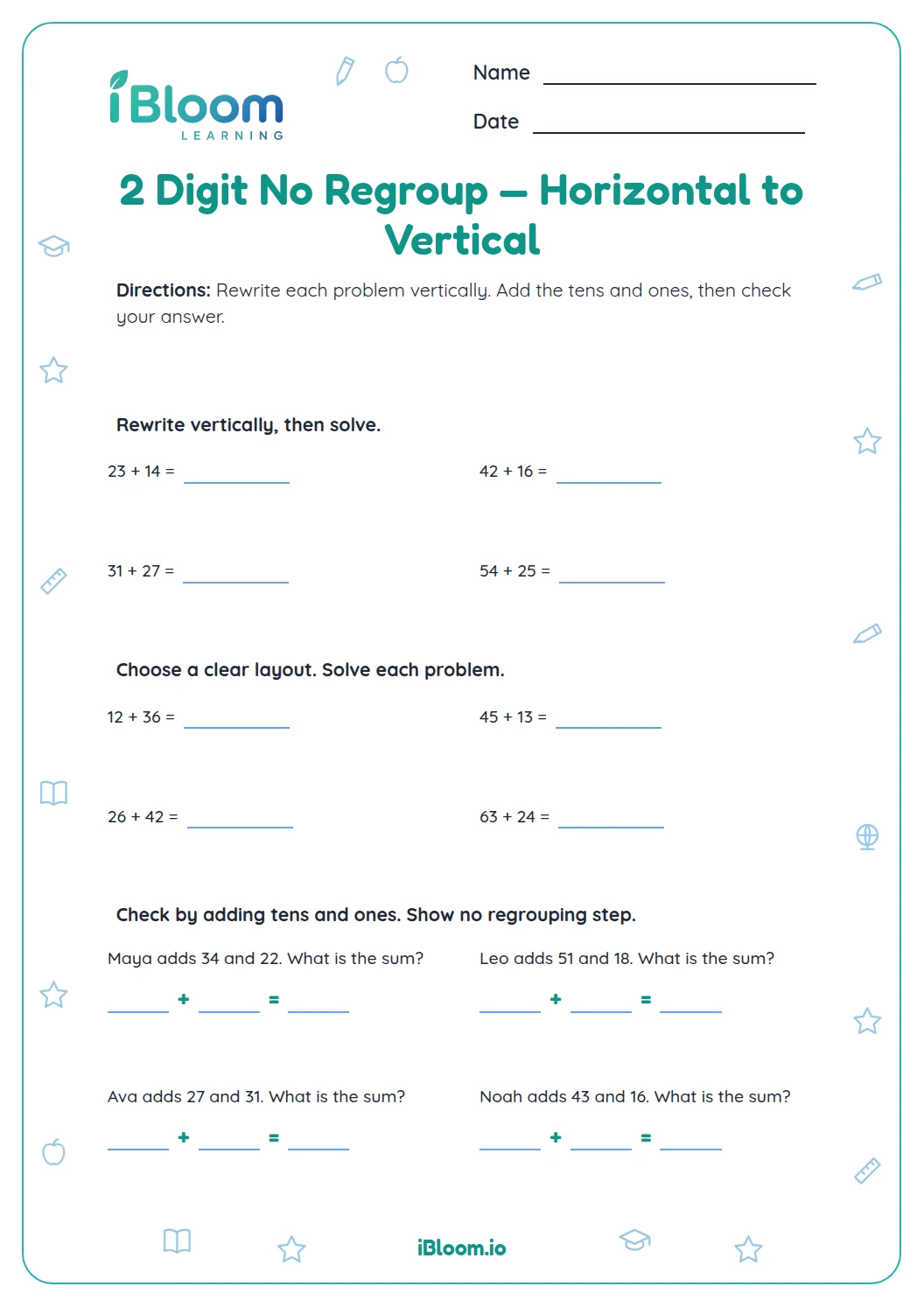
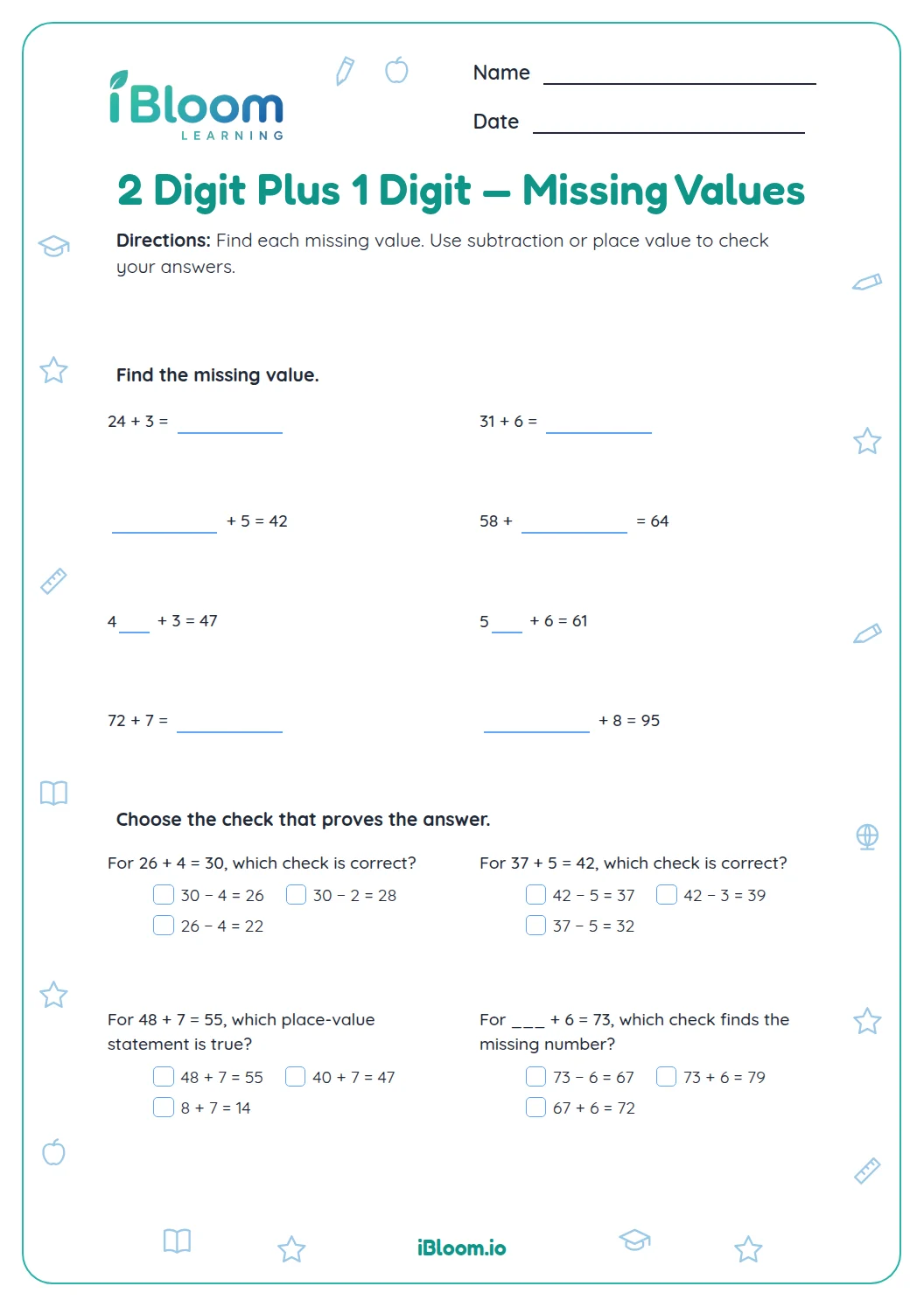
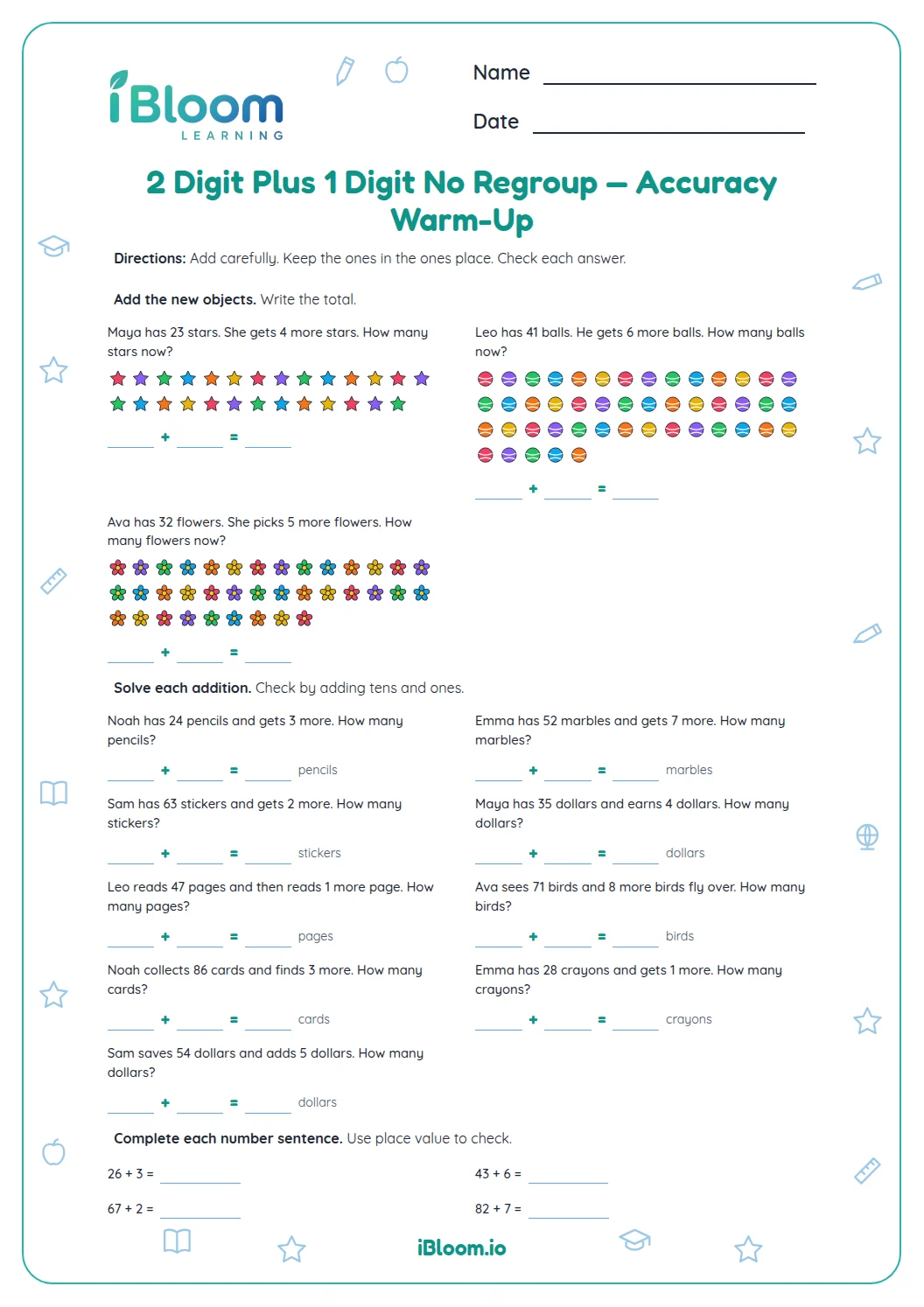
This printable gives Grades 2–4 focused practice changing horizontal two-digit addition into aligned vertical work. Students solve 20 sums under 100, including problems that require regrouping. The first part builds an organized setup; the second mixes regrouping and non-regrouping sums so learners must inspect each ones column. An answer key is included.
Aligned to 2.NBT.B.5
What does this addition page ask students to do?
Each item starts as a horizontal sum. Students rewrite it with the ones digits in one column and the tens digits in another, then record the total. Part B includes regrouping and non-regrouping sums.
This keeps the focus on organizing a familiar sum into a clear vertical calculation.
How can a student check 12 + 23?
Write 12 above 23 with the ones aligned. Add 2 ones and 3 ones to get 5 ones; add 1 ten and 2 tens to get 3 tens. The sum is 35.
Check that the ones and tens stayed in their own columns before recording 35.
- 112 + 23 → 2 + 3 = 5 ones; 1 + 2 = 3 tens.
- 2The sum is 35.
When is regrouping needed?
Regroup when the ones column totals 10 or more. For 46 + 27, 6 + 7 makes 13 ones, so write 3 ones and move 1 ten into the tens column. Then 4 + 2 + 1 makes 7 tens.
A final estimate can help: 46 + 27 is close to 50 + 30, or 80, so 73 is reasonable.
How to use this worksheet
- 1Rewrite each horizontal sum with ones under ones and tens under tens.
- 2Add the ones digits first.
- 3Regroup one ten when the ones total is 10 or more.
- 4Add the tens digits and the regrouped ten, then check the total.
Common mistakes and quick fixes
The mistake
Lining up the left edges instead of the ones digits.
The fix
Align the rightmost digits so ones sit above ones and tens above tens.
The mistake
Forgetting to add the regrouped ten.
The fix
Mark the extra ten above the tens column before adding it.
The mistake
Recording a sum without checking the operation sign.
The fix
Reread the plus sign and estimate whether the total should be larger than either addend.
Curriculum alignment
This page gives students focused practice with a standard that connects to the skill.
Add within 100 by using place-value strategies.
On this sheet: Students align ones and tens and use place-value strategies to add within 100.
Show the official wordingHide the official wording
Fluently add and subtract within 100 using strategies based on place value, properties of operations, and/or the relationship between addition and subtraction.
What to practice next
Make more practice
Further reading
Questions parents and teachers ask
Why does the worksheet ask students to rewrite each sum vertically?
Vertical form keeps the ones and tens in matching columns, which makes each place easier to add. For example, 12 + 23 becomes 2 ones plus 3 ones, and 1 ten plus 2 tens. Students record the sum after setting up the calculation.
Which questions need regrouping?
Regroup whenever the ones digits total 10 or more. In 46 + 27, the ones total is 13, so the student writes 3 in the ones place and carries 1 ten into the tens column. Several other questions can be checked the same way.
What is the answer to 12 + 23?
The answer is 35. Align 12 and 23 by place value, add 2 + 3 ones to make 5, then add 1 + 2 tens to make 3 tens. This sum is question 1; the worked example above shows the setup step by step.
Should students use a timer?
No timer is needed for this page. The goal is to set up each sum clearly and find an accurate total. A student can pause to check the columns or explain a regrouping step before moving to the next problem.
How can I check the answer key?
Compare each recorded total with the separate key. For a quick independent check, estimate with nearby tens, then add the exact numbers. If a total differs, look first for a misaligned digit or a regrouped ten that was not added.