



About this worksheet
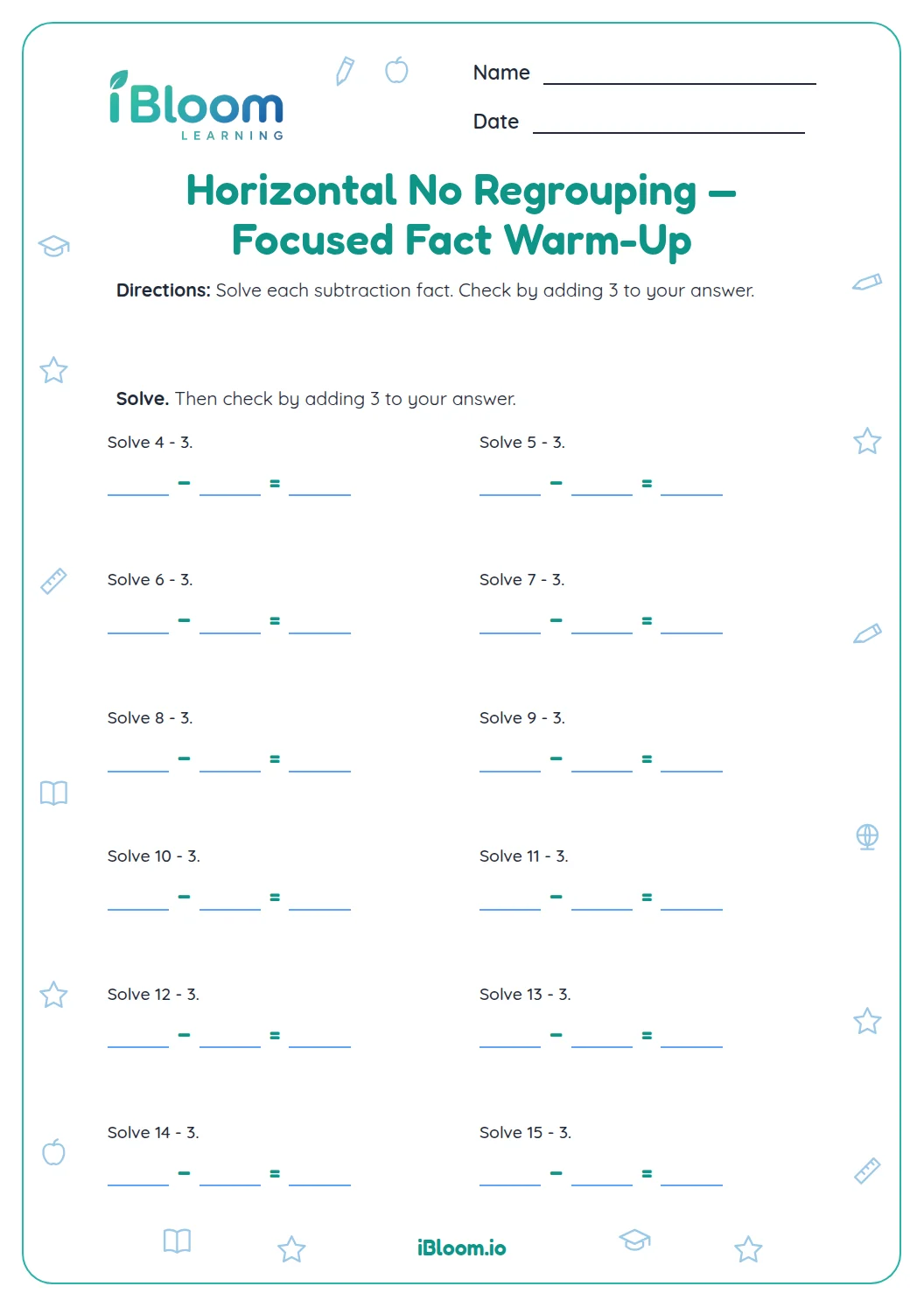
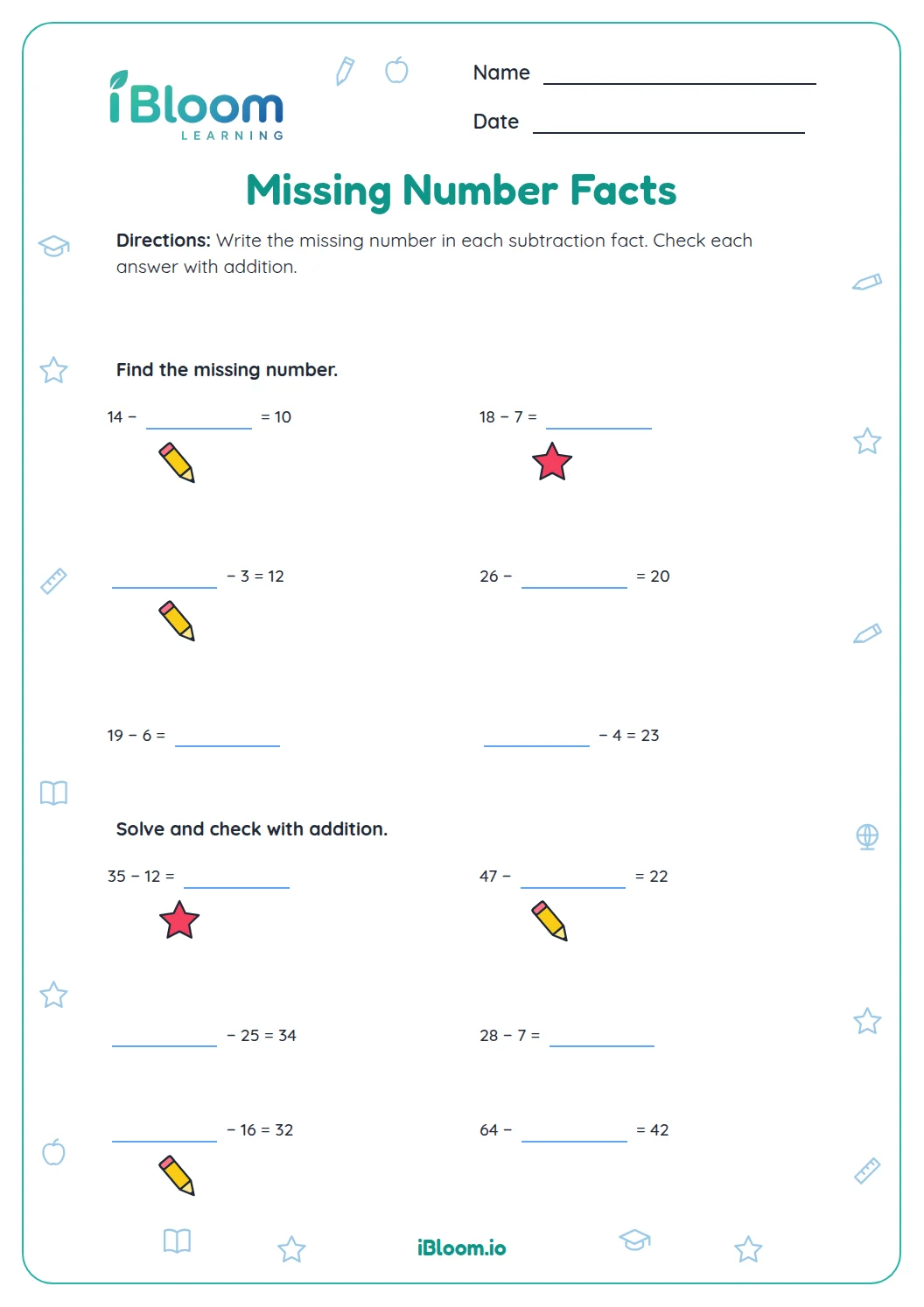
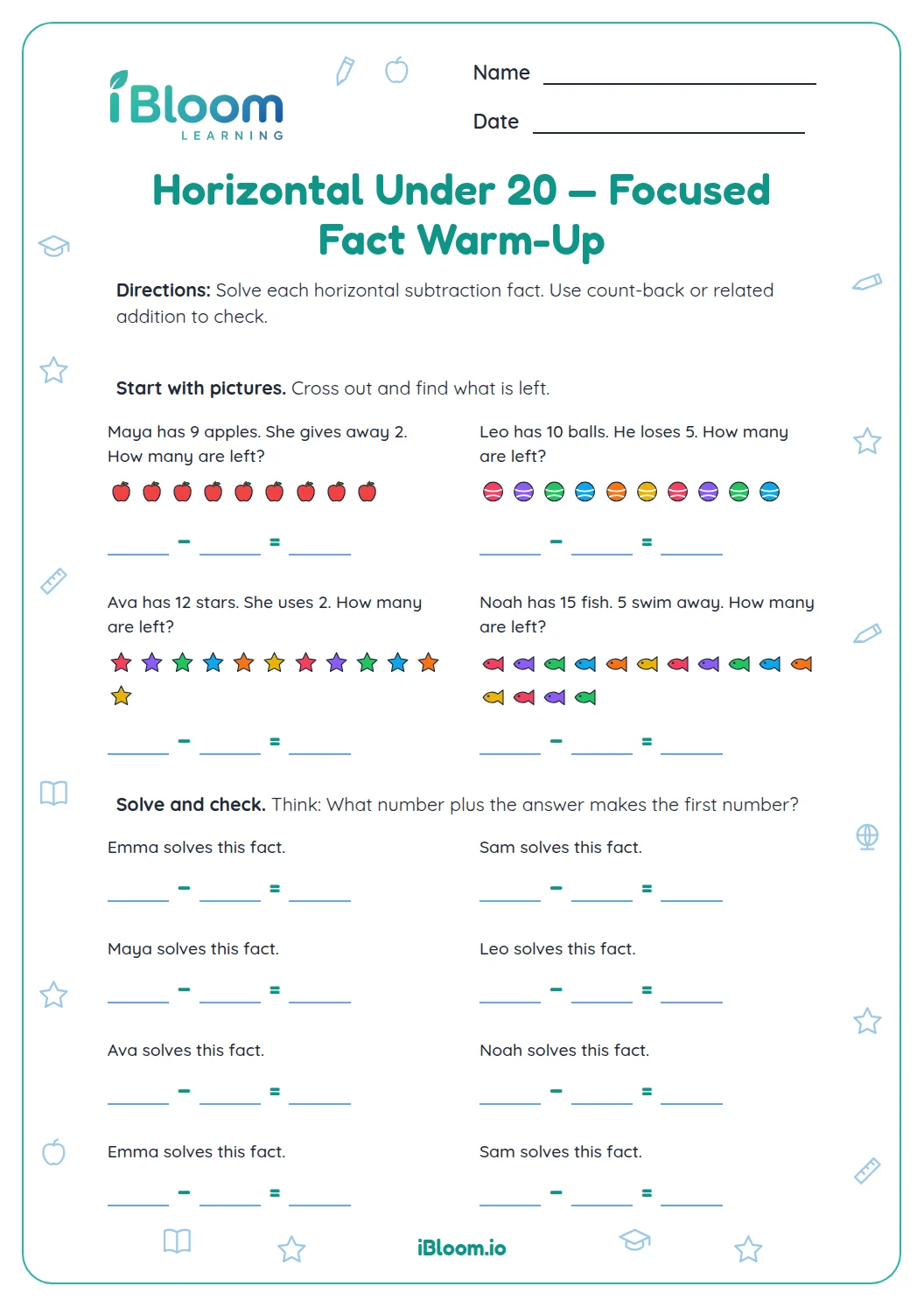
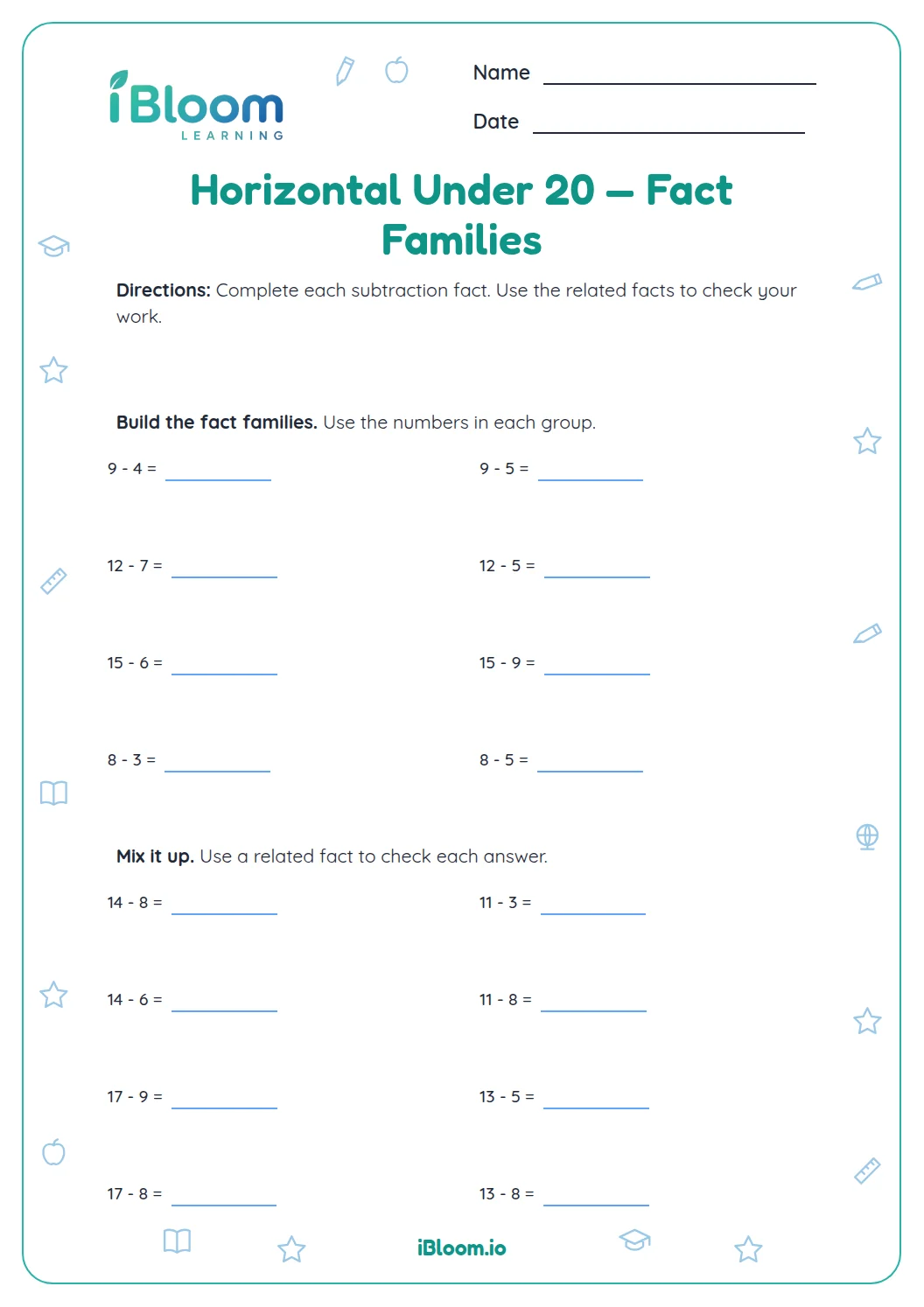
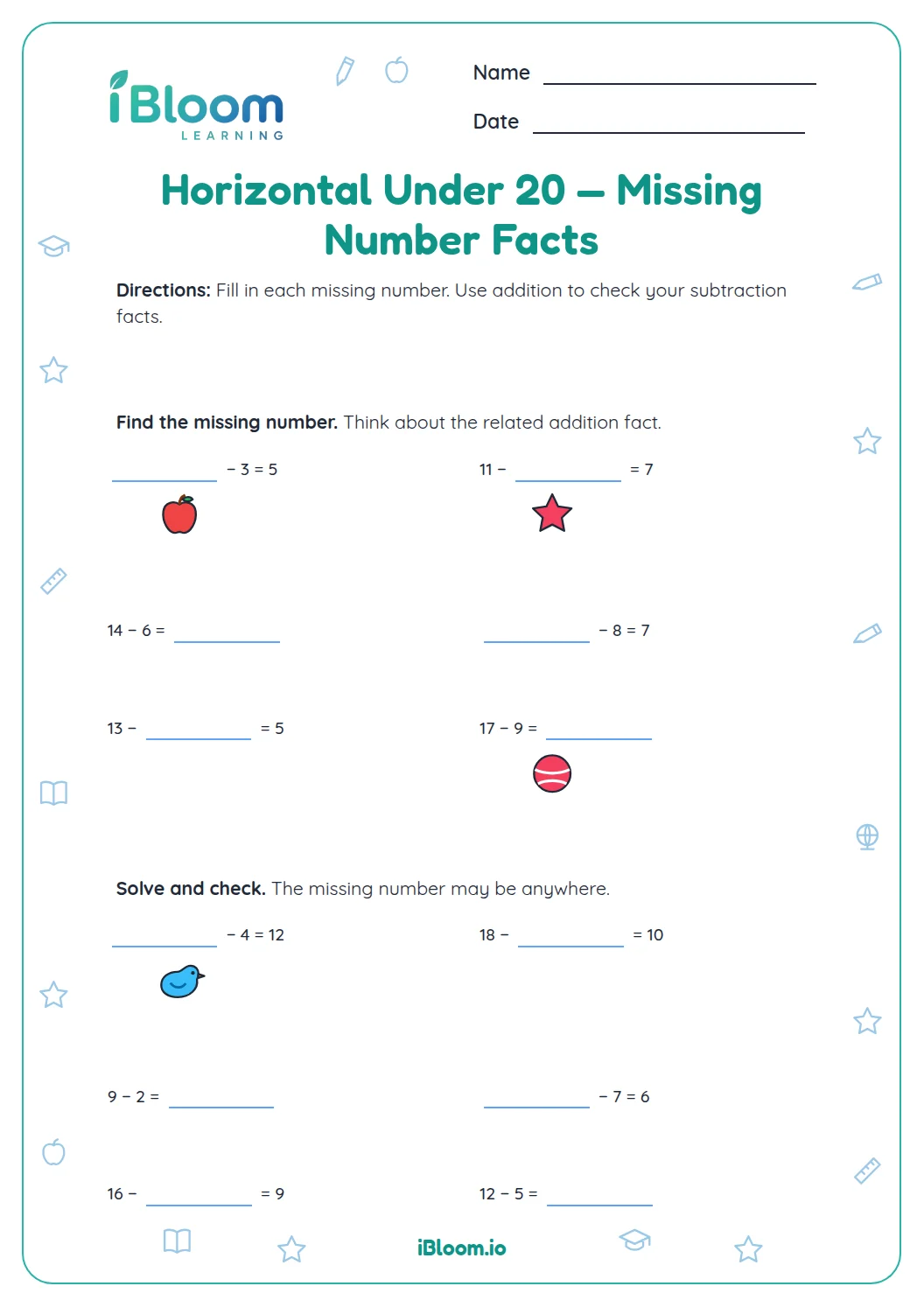
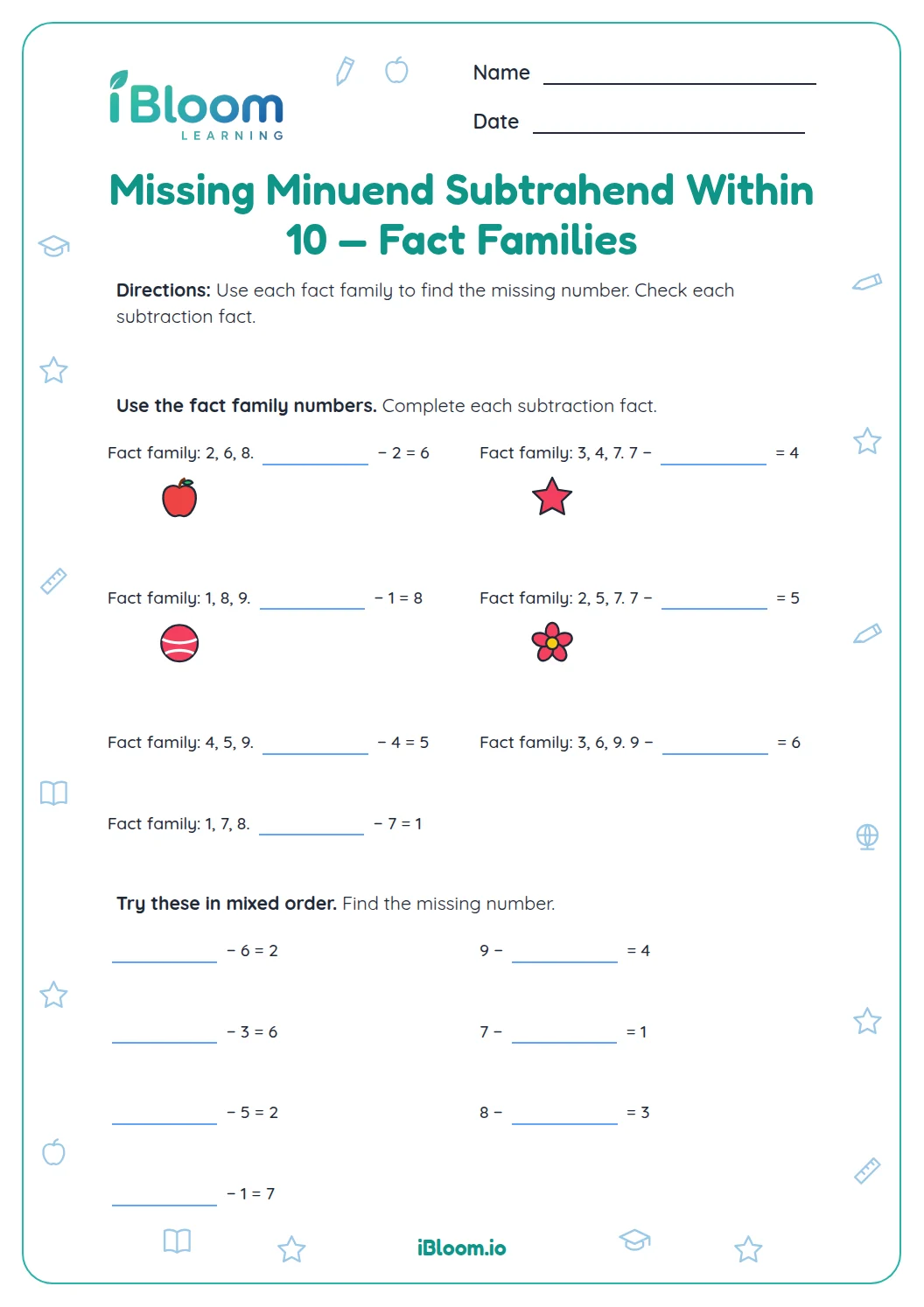
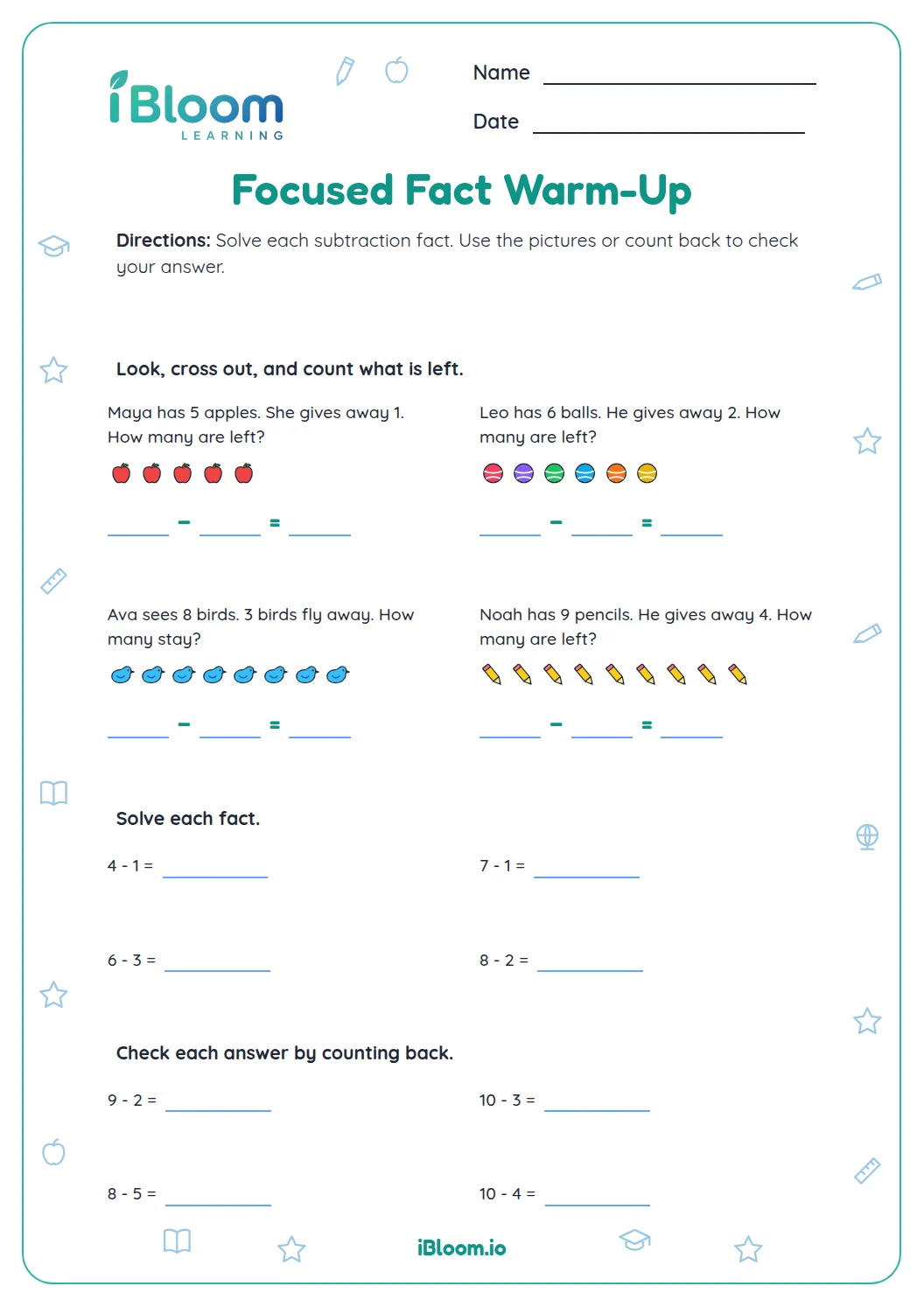
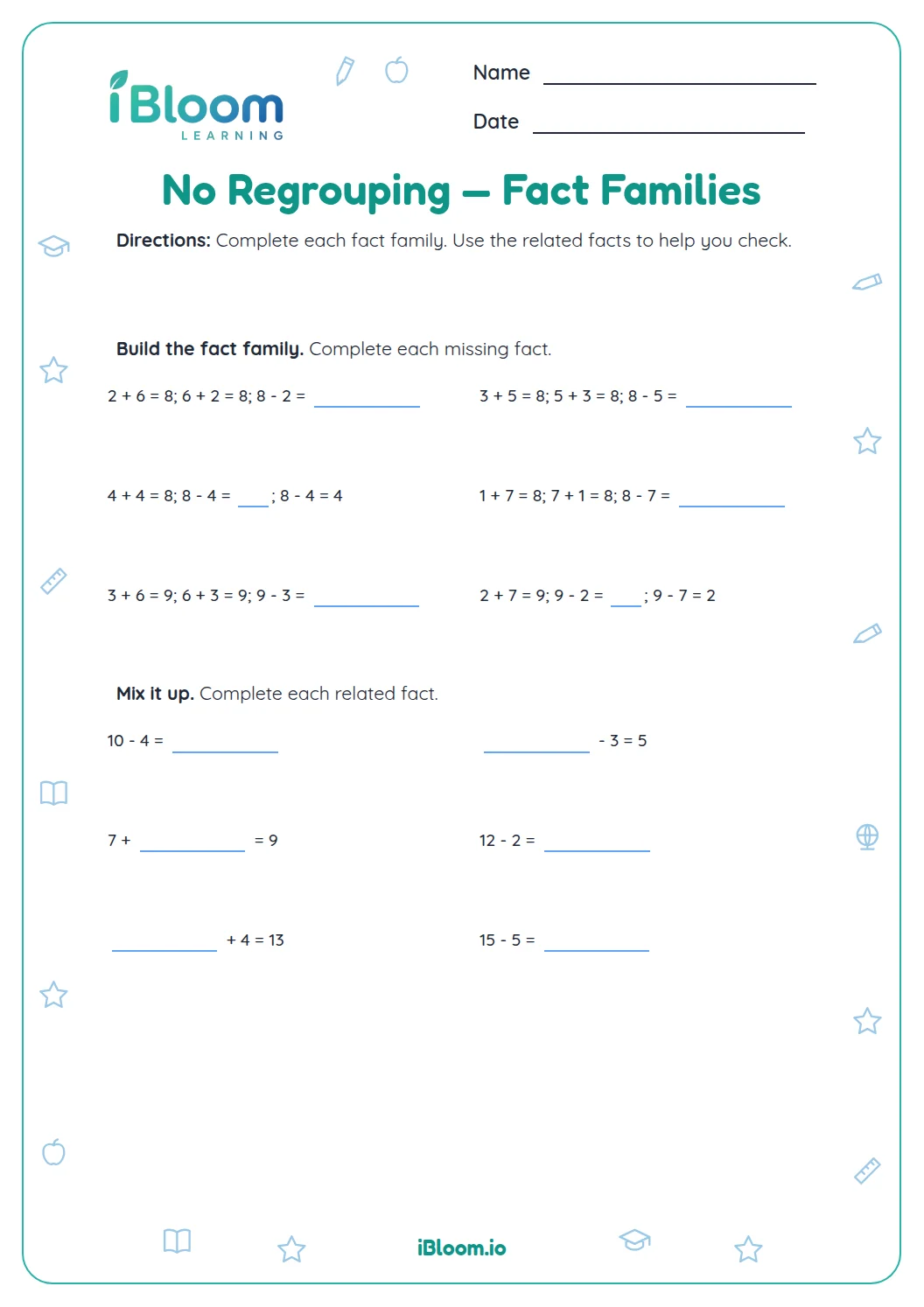
This printable gives Grades 1–2 learners 20 horizontal equations using subtraction facts within 20. Eight problems warm up with subtraction; the remaining problems complete four related fact families. Children use the same three numbers to connect addition and subtraction, then check a difference by adding it back. A separate answer key is included.
How does a subtraction fact family work?
Three numbers can make two addition and two subtraction equations. For example, 7, 9, and 16 belong together because 7 + 9 = 16, 16 − 7 = 9, and 16 − 9 = 7. The worksheet uses related equations so the relationship is visible.
How can addition check a difference?
After finding a difference, add it to the subtrahend. If the sum is the original number, the subtraction is correct. This is especially helpful when a child knows addition facts more securely than subtraction facts.
- 114 − 6 = ___
- 2Find the number that combines with 6 to make 14.
- 36 + 8 = 14
- 4Answer: 8
What should children do when facts feel tricky?
Use a number bond, counters, or a quick count-back to work out the first answer. Then write the related equation. Repeated practice with the same number family helps children see that subtraction reverses addition.
How to use this worksheet
- 1Solve one subtraction equation at a time.
- 2Think of the related addition fact when you need a check.
- 3In Part B, use the three numbers in the family to complete each equation.
- 4Read the operation sign before writing an answer.
- 5Check the key and revisit any family with a mismatched total.
Common mistakes and quick fixes
The mistake
Subtracting the smaller number from the difference.
The fix
Use the whole number as the starting amount: 14 − 6 means start at 14.
The mistake
Changing the operation sign while copying.
The fix
Point to the sign before solving and read the sentence aloud.
The mistake
Treating related facts as unrelated.
The fix
Write the same three numbers together and test each equation.
What to practice next
Make more practice
Further reading
Questions parents and teachers ask
What is a subtraction fact family?
A fact family uses the same three numbers to make related addition and subtraction equations. For 9, 7, and 16, the equations include 9 + 7 = 16, 16 − 9 = 7, and 16 − 7 = 9. The second part of this worksheet asks children to complete related facts.
How can addition help check a subtraction answer?
Add the difference to the number that was taken away. For example, if 14 − 6 = 8, check by adding 8 + 6 and confirming it equals 14. This worksheet places related addition and subtraction facts together so children can notice that connection.
Are these facts meant to be timed?
No timer is needed. Children can work at a steady pace, checking each difference with its related addition fact. Keep accuracy and explaining the number family ahead of speed. The goal is to notice how the same three numbers connect addition and subtraction, not to finish as fast as possible.
What does no regrouping mean for these problems?
No regrouping means these subtraction facts do not require exchanging a ten in a multi-digit subtraction algorithm. Every problem is a horizontal fact within 20, followed by related facts that use the same three numbers. Learners can use a number line, counters, or a count-back strategy when a difference is not immediate.
What answers are in the key?
The separate key lists all 20 answers. Eight questions warm up with subtraction, then 12 questions complete four number families. Each family uses the same three numbers to show two addition facts and two subtraction facts, so children can check a difference by adding back.
How long should this practice take?
About 10 to 15 minutes is a reasonable estimate for 20 short facts. A child who is learning the relationships may take longer to explain each family. Let the child pause to write the three numbers together or use counters, then return to the related equations with the same numbers.