





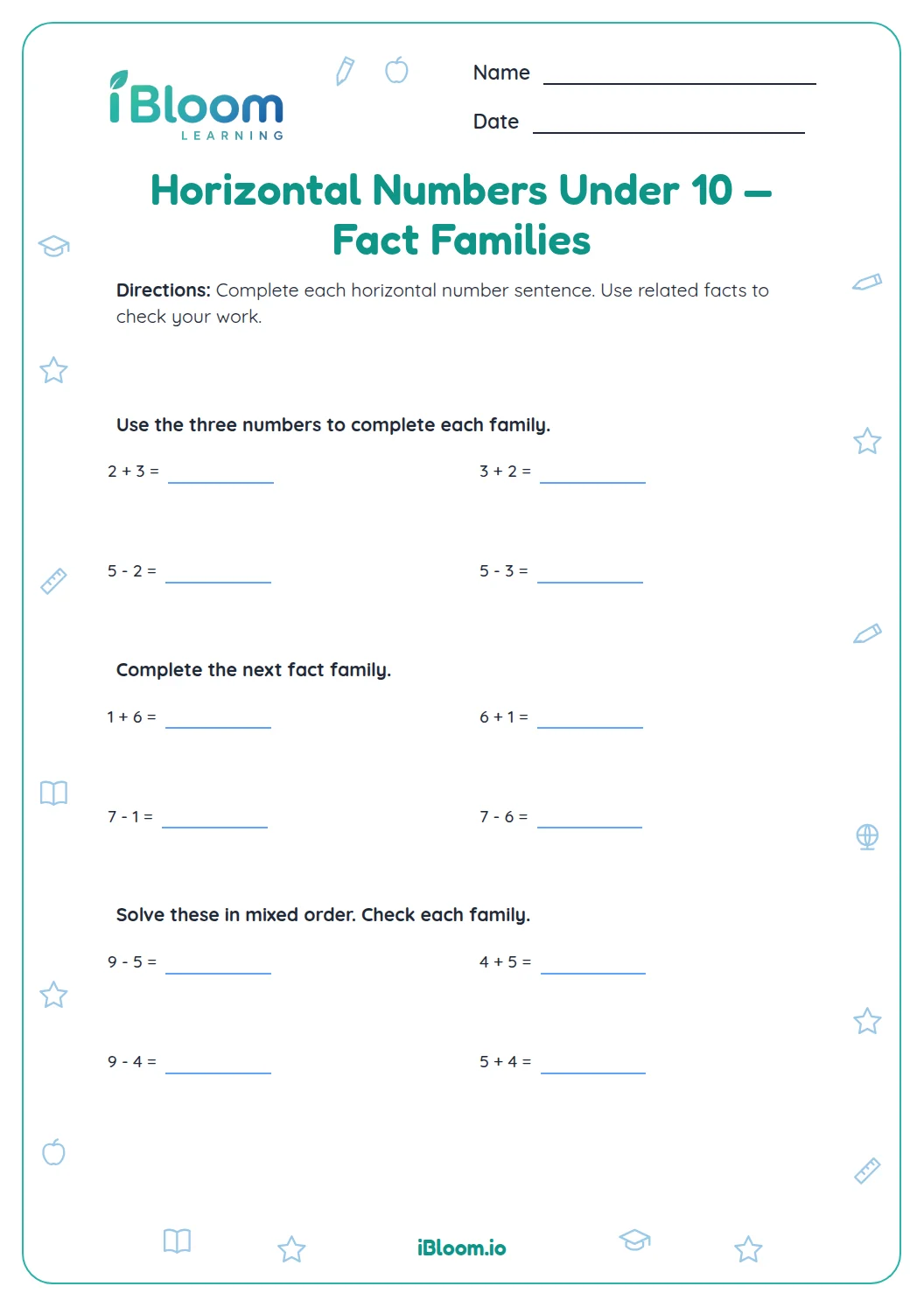

About this worksheet
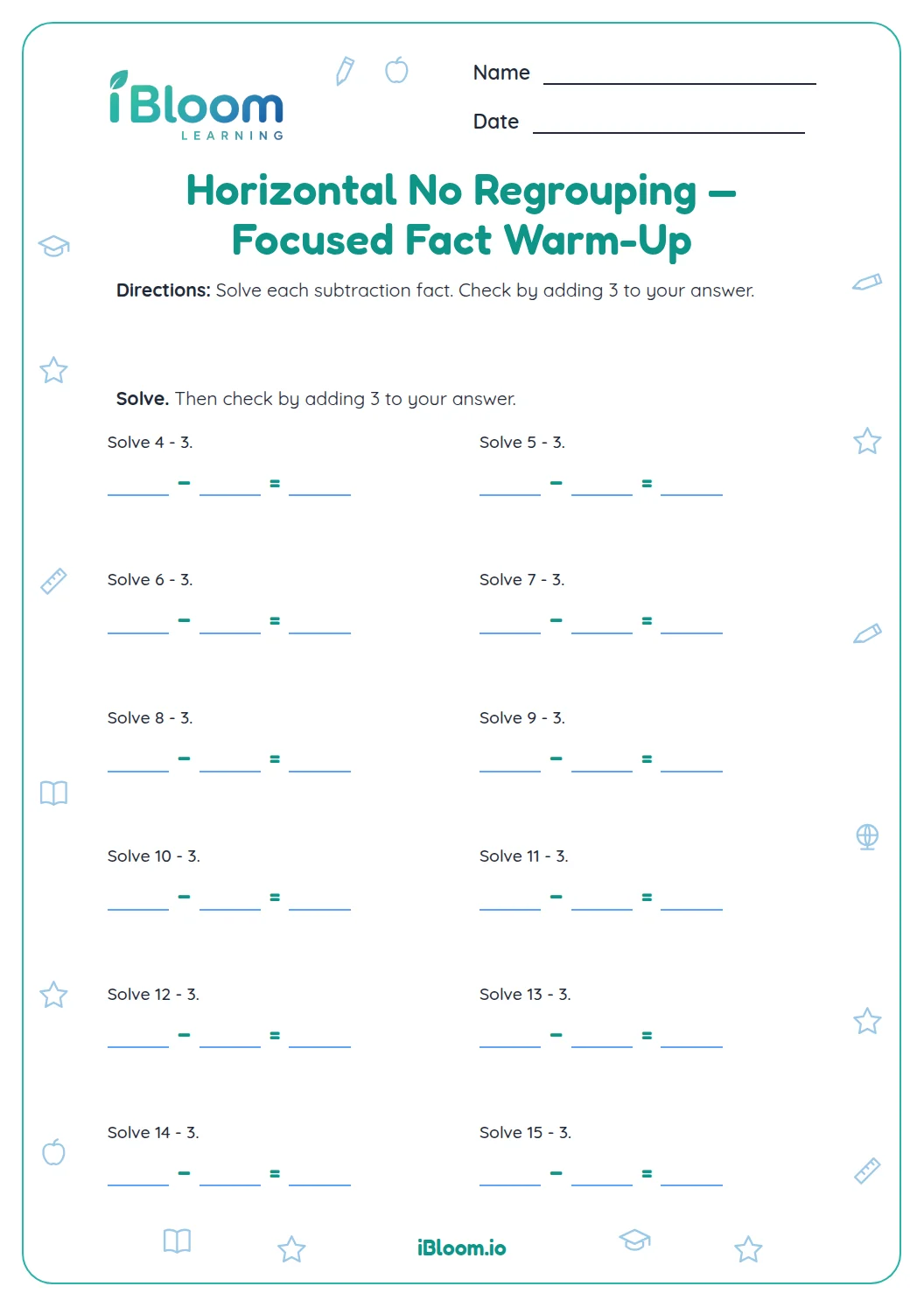
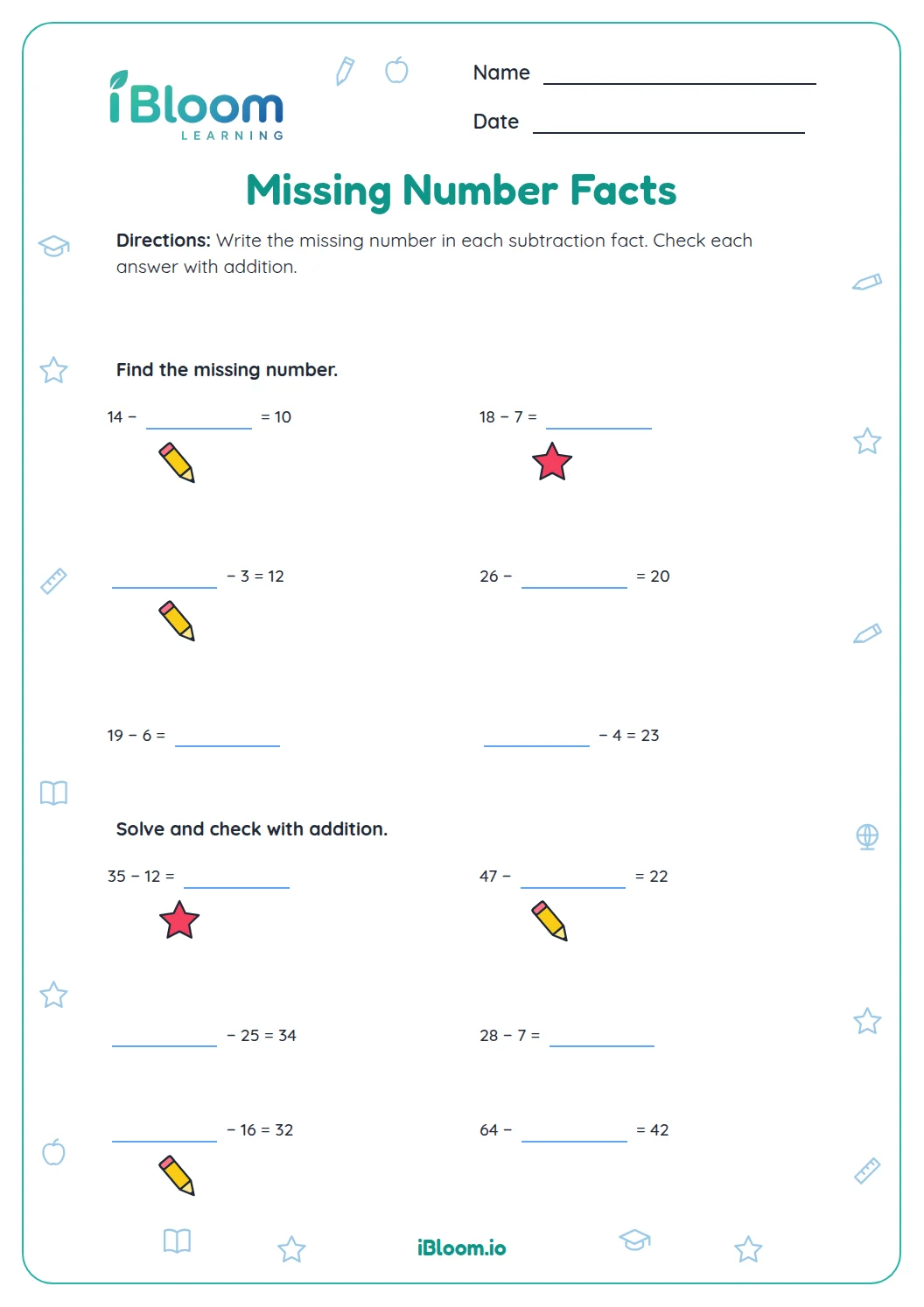
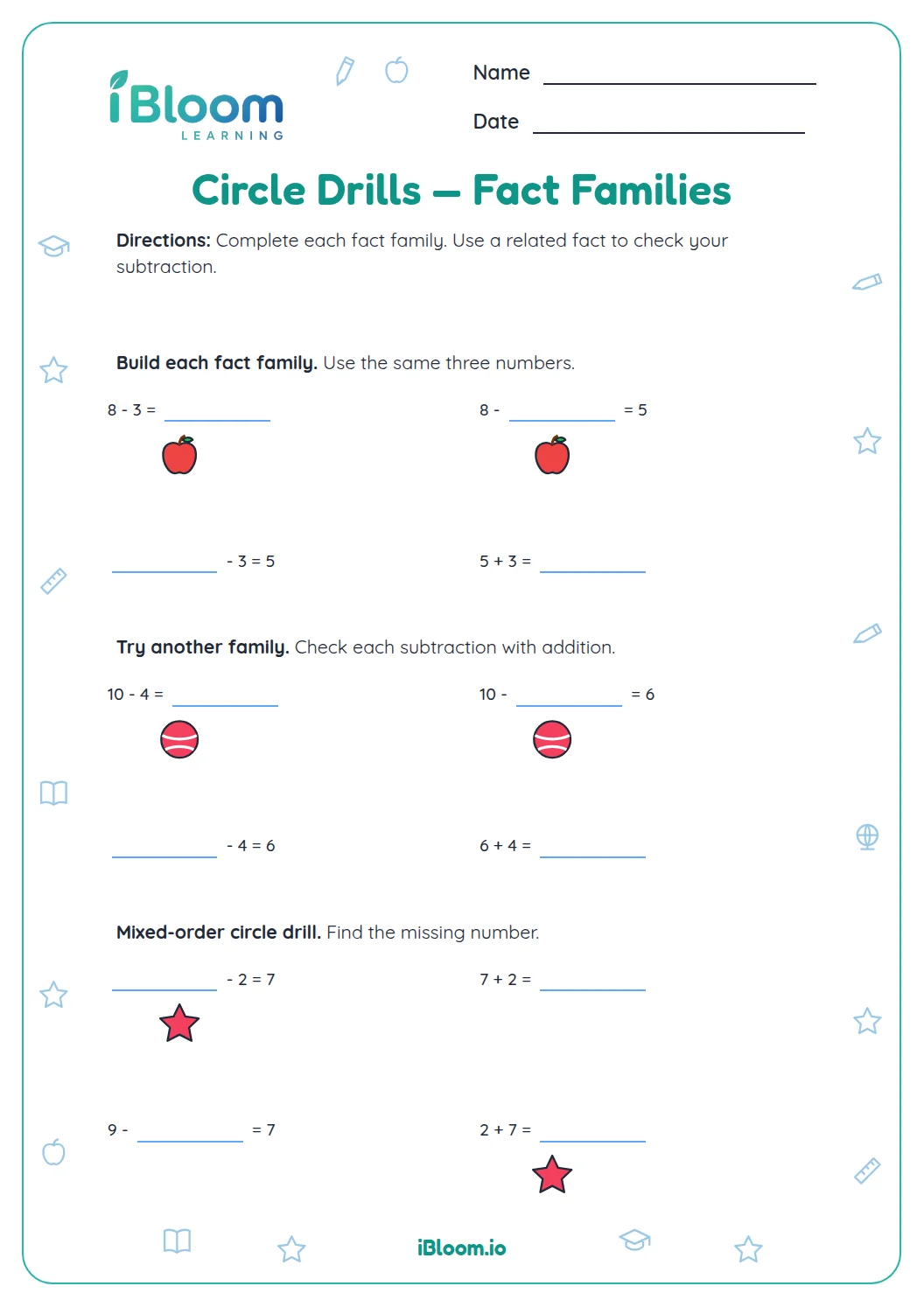
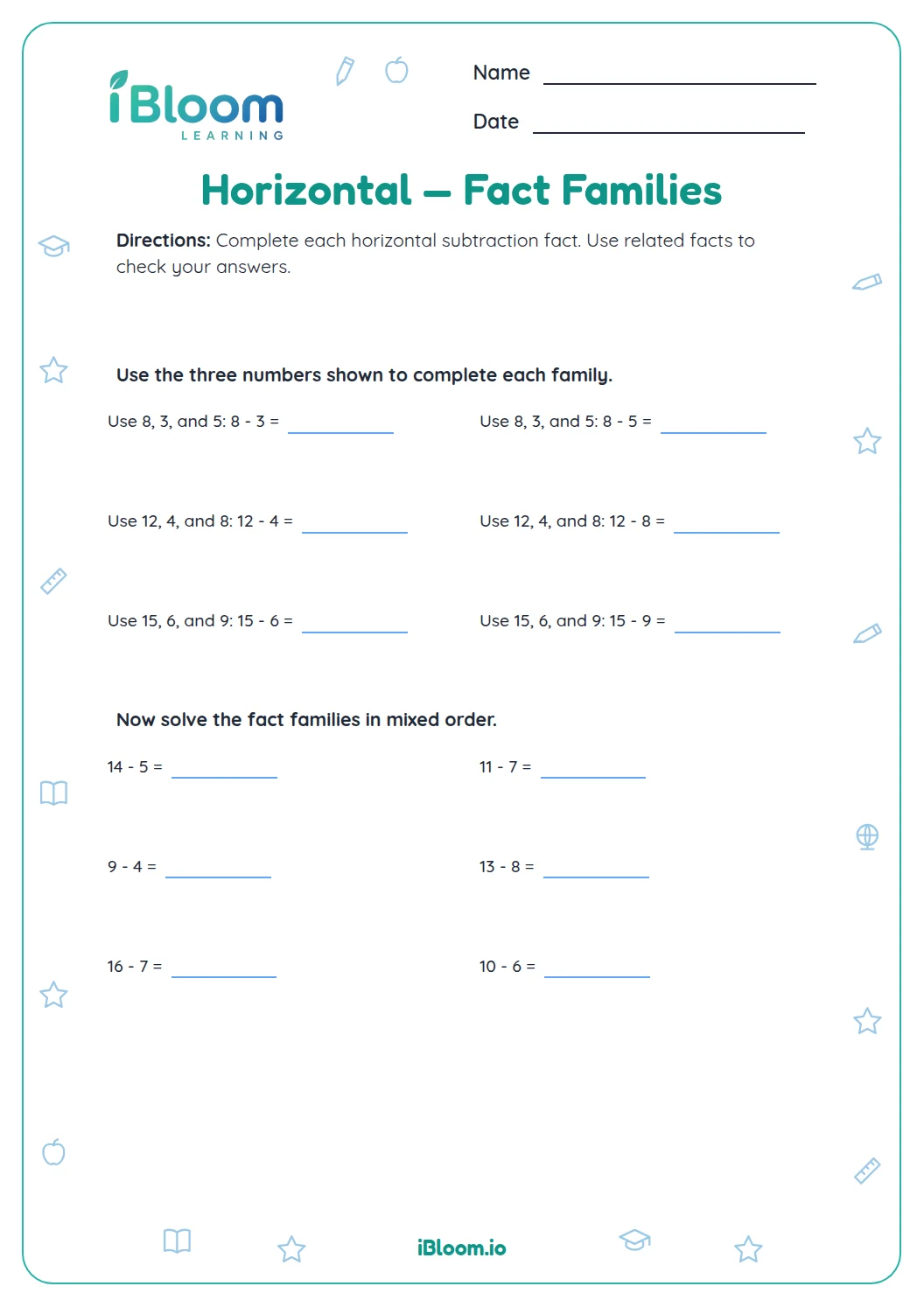
This printable fluency page gives children 18 horizontal subtraction facts in mixed order. Every difference stays within 20, and each fact can be checked by adding the difference back to the number being subtracted. The practice has two parts with mixed starting numbers and amounts subtracted. A separate answer key is included.
How can addition check a difference?
Subtraction asks how many remain or how far apart two numbers are. Once a child finds the difference, adding it to the number taken away should recover the starting number. For question 1, 15 − 4 = 11, and 11 + 4 = 15.
That check works for every problem on the sheet. It can catch a fact that is one too high or too low.
- 115 − 4 = 11
- 2Check: 11 + 4 = 15
- 3The starting number returns.
How is the fluency practice arranged?
The 18 items are short horizontal facts split into two parts. The later set changes the minuends and subtrahends, so students attend to each new fact.
- Part A: 8 mixed facts within 20
- Part B: 10 new mixed facts within 20
- Use addition to check any answer that feels uncertain.
How to use this worksheet
- 1Read the minuend and subtrahend carefully.
- 2Count back or find the distance between the numbers.
- 3Write the difference in the blank.
- 4Add the difference to the subtrahend to check.
- 5Correct any fact that does not return the starting number.
Common mistakes and quick fixes
The mistake
Subtracting in the wrong direction.
The fix
Read left to right: start at the first number and take away the second.
The mistake
Counting the starting number as the first step back.
The fix
The starting number is zero steps back; count each move after it.
The mistake
Writing a difference one too large.
The fix
Add your difference to the subtrahend and check whether you recover the minuend.
What to practice next
Make more practice
Further reading
Questions parents and teachers ask
How can addition check a subtraction fact?
Add the difference to the number that was subtracted. For example, 15 − 4 = 11, and 11 + 4 = 15. If the sum returns the starting number, the subtraction fact checks out. Children can use this inverse relationship after solving any item on the sheet.
What facts are on this worksheet?
The sheet has 18 horizontal subtraction facts with starting numbers from 10 to 20 and differences from 5 to 12. The equations appear in mixed order across two parts, so children solve each one on its own. A separate key lists every result for checking.
Are all the answers within 20?
Yes. Each starting number is 10 through 20, and each amount subtracted is smaller than the starting number. Every result is a whole number from 5 to 12, within 20. Children can count back or use a known subtraction fact to find each difference.
How should a child solve a fact they do not know?
A child can count back from the first number or find the distance from the second number to the first. For 18 − 6, six steps back from 18 gives 12. Adding 12 + 6 checks the result. Encourage careful tracking of each step.
How many pages does the printable include?
The worksheet has one page with 18 horizontal questions in two parts, followed by one answer key page. Children can complete the facts in order, then use the key to check each result. The equations focus on subtraction within 20.
What can children practice next?
When mixed facts feel comfortable, children can move to missing-number subtraction or fact families. Those tasks use the same relationship between a starting amount, a part taken away and what remains. The linked fact family pages extend that connection.