



About this worksheet
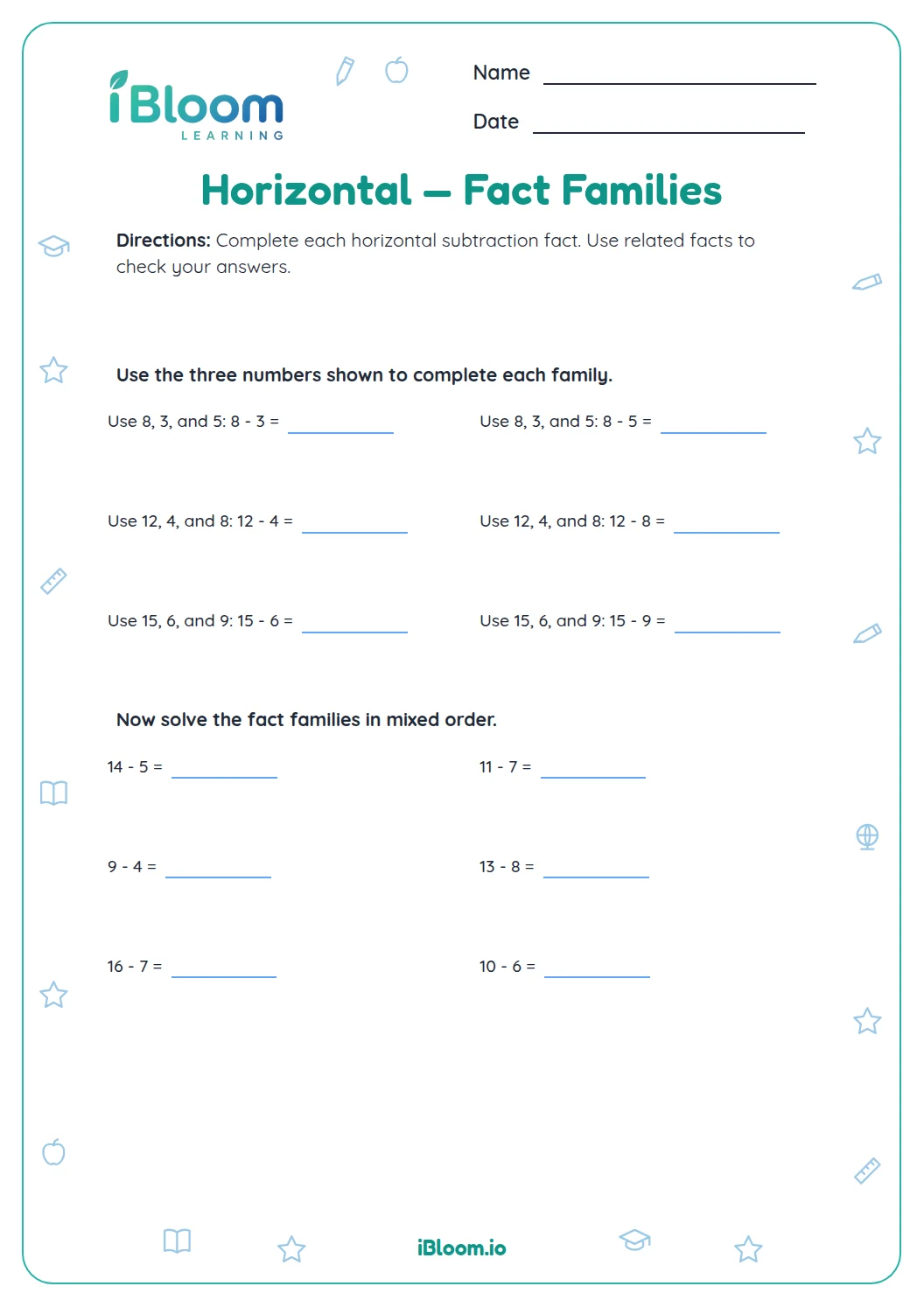
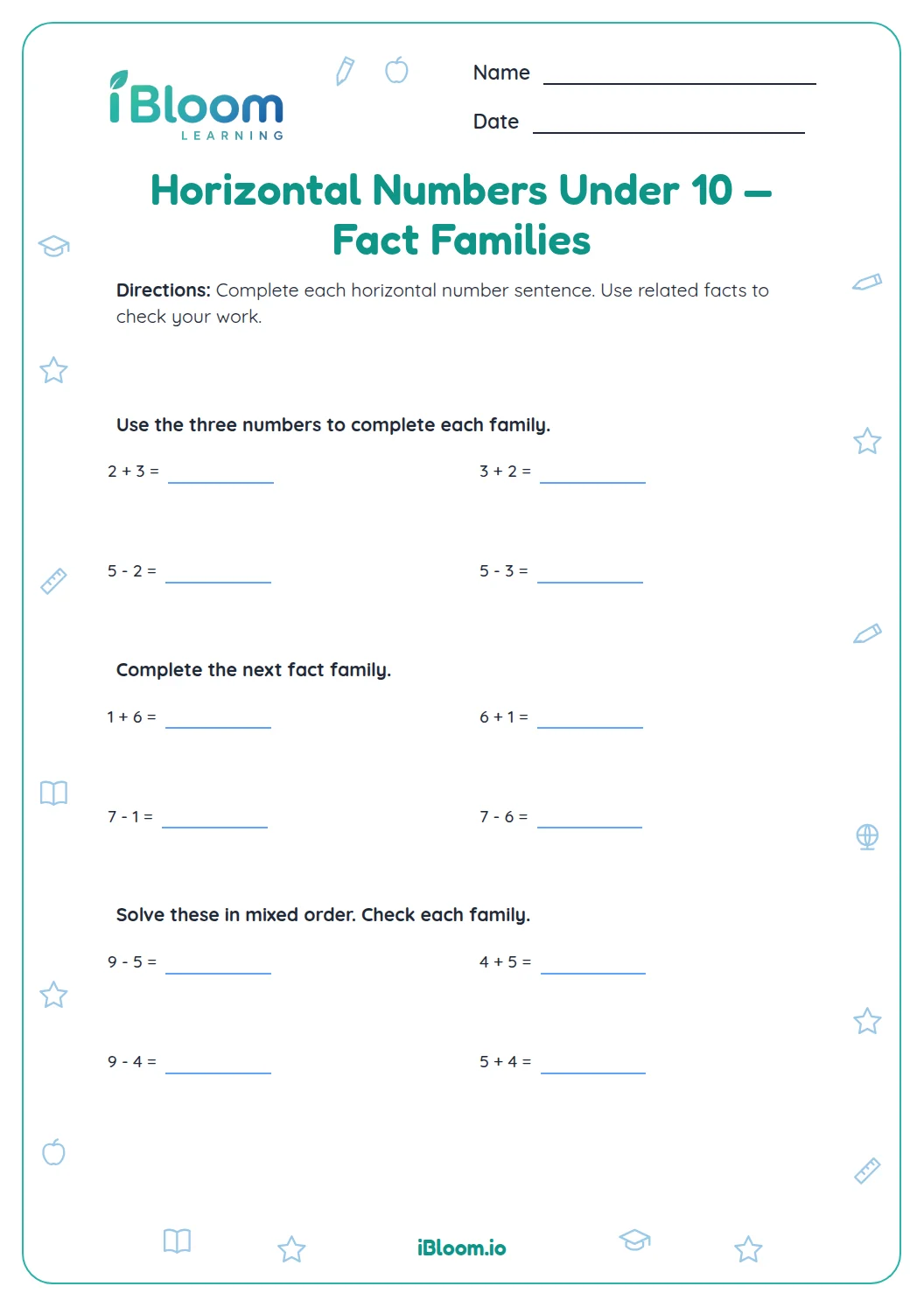
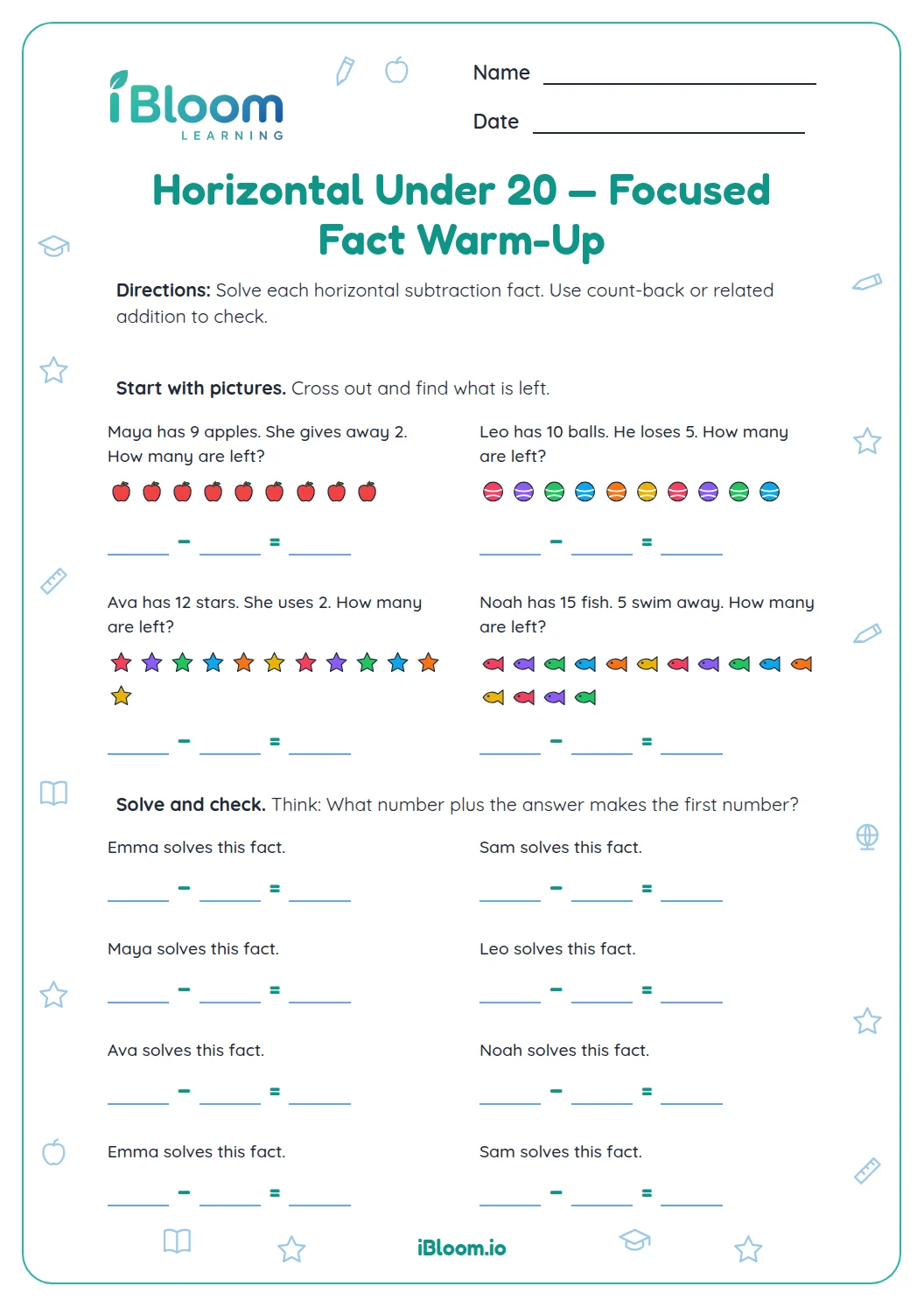
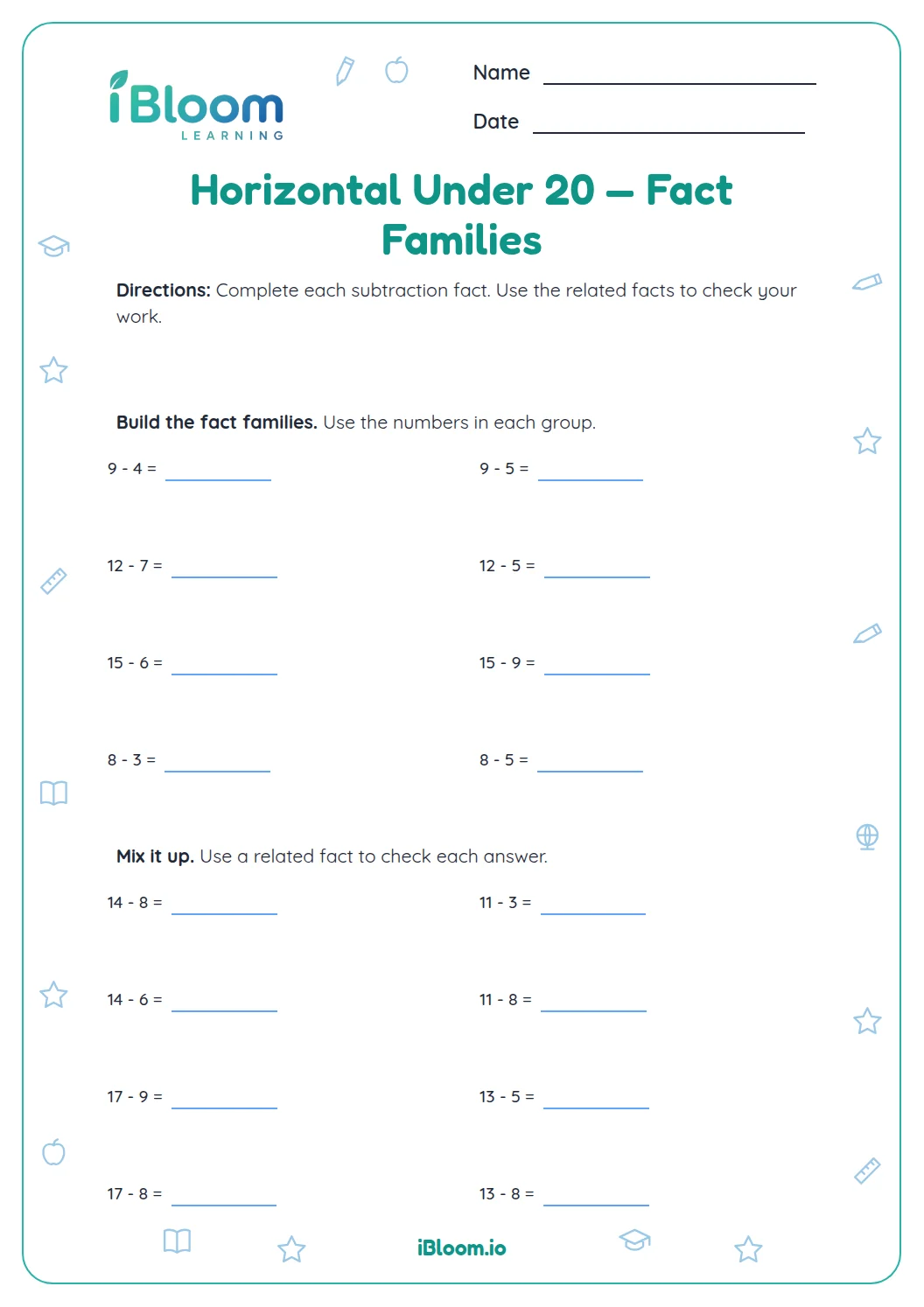
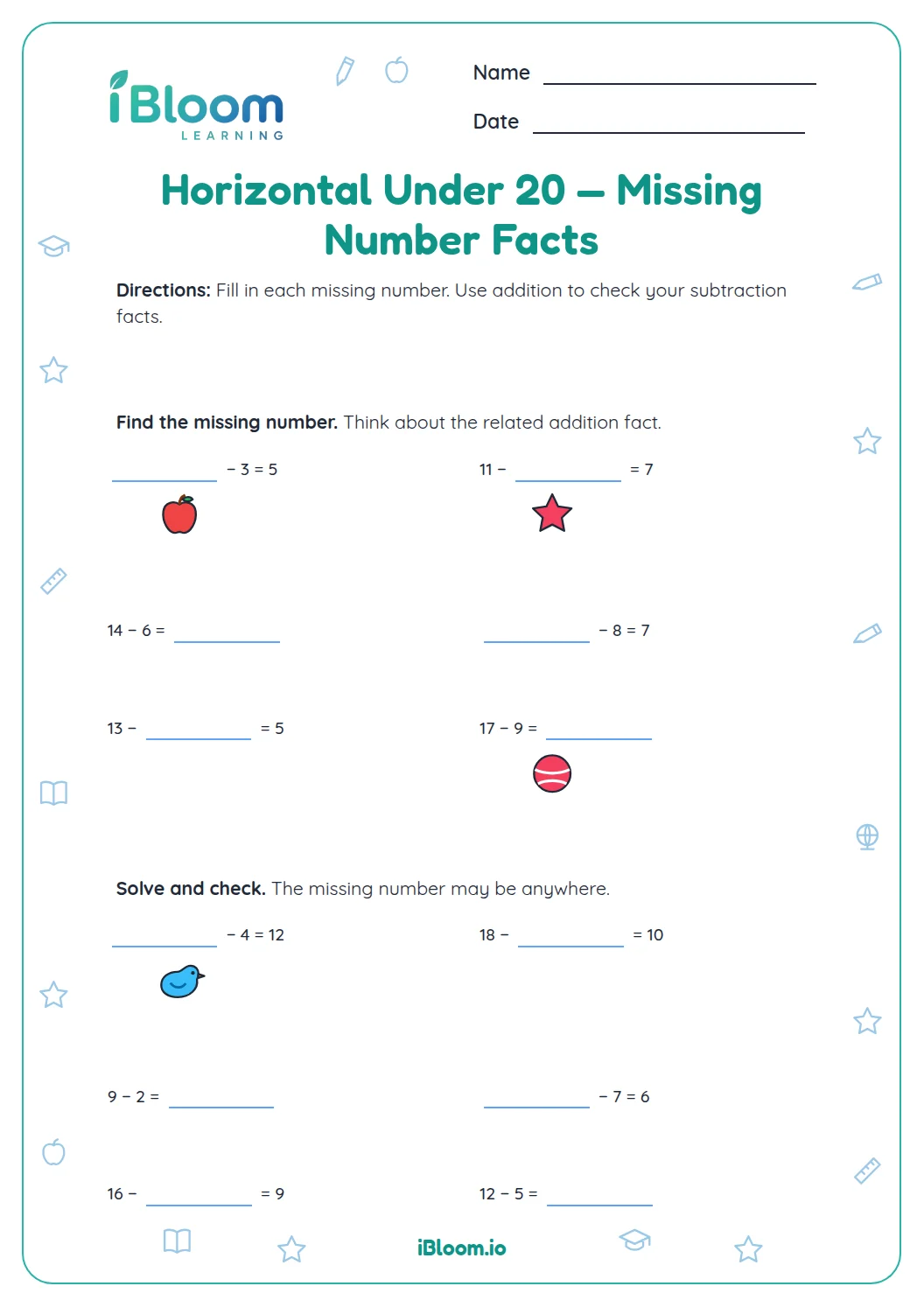
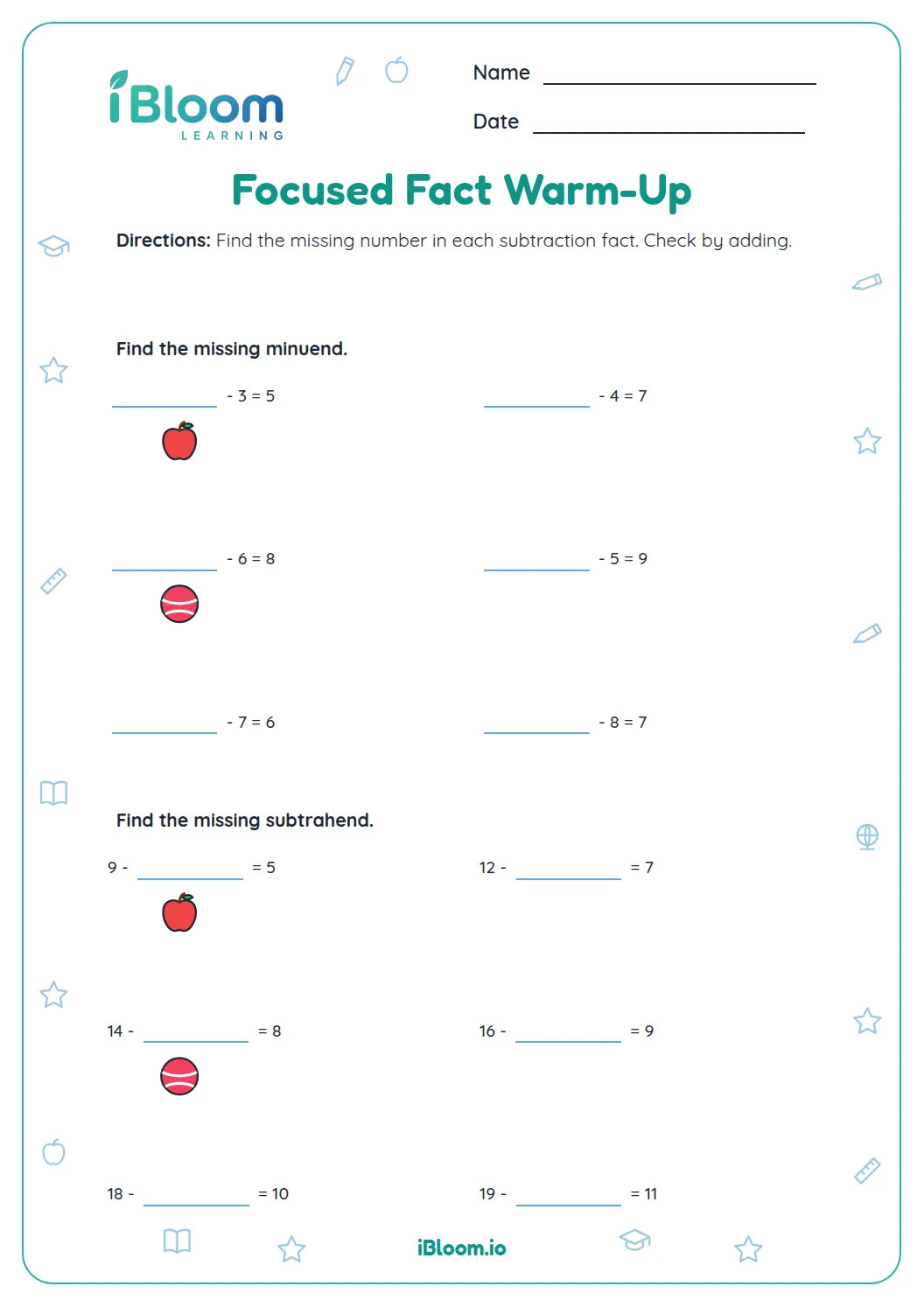
This free printable gives Grades 1–2 learners 20 horizontal subtraction facts with a number missing in different positions. Part A asks for the difference, Part B hides the number being subtracted, and Part C hides the starting number. Learners can use related addition facts to check unknown minuends and subtrahends. The separate answer key lists all 20 answers. This worksheet practices CCSS 1.OA.C.6 through subtraction within 20 and the relationship between addition and subtraction.
Aligned to 1.OA.C.6
What kinds of missing numbers are on the sheet?
Part A gives the two numbers being subtracted and hides the difference. Part B hides the subtrahend. Part C hides the minuend, or starting number. The equations stay horizontal so the position of the blank is easy to notice.
How can addition uncover the missing subtrahend?
In question 7, the difference is 5 and the starting number is 12. Think of the related addition fact: 5 + ___ = 12. The missing number is 7, so 12 − 7 = 5.
- 112 − ___ = 5
- 25 + 7 = 12
- 312 − 7 = 5
How can a learner check each fact?
For a missing minuend, add the subtrahend and the difference. For a missing subtrahend, add the difference and the missing number. Subtracting the answer from the starting number should return the given difference.
How to use this worksheet
- 1Name the position of the blank: start, take-away number, or difference.
- 2For a missing difference, subtract the two given numbers.
- 3For a missing subtrahend, add the difference to the answer.
- 4For a missing minuend, add the subtrahend and difference.
- 5Substitute the answer and check the whole equation.
Common mistakes and quick fixes
The mistake
Subtracting the difference from the starting number when the blank is the subtrahend.
The fix
Use the related addition fact: difference + missing subtrahend = starting number.
The mistake
Putting the difference in the starting-number blank.
The fix
Add the subtrahend to the difference to rebuild the minuend.
The mistake
Checking only the blank instead of the full equation.
The fix
Write the answer in the blank and verify that both sides match.
Common Core alignment
This worksheet gives learners practice with the following Common Core skill.
Subtract within 20 using a strategy and use addition to check.
On this sheet: The missing minuends and subtrahends invite learners to use addition and subtraction as inverse operations.
Show the official wordingHide the official wording
Add and subtract within 20, demonstrating fluency for addition and subtraction within 10. Use strategies such as counting on; making ten (e.g., 8 + 6 = 8 + 2 + 4 = 10 + 4 = 14); decomposing a number leading to a ten (e.g., 13 − 4 = 13 − 3 − 1 = 10 − 1 = 9); using the relationship between addition and subtraction (e.g., knowing that 8 + 4 = 12, one knows 12 − 8 = 4); and creating equivalent but easier or known sums (e.g., adding 6 + 7 by creating the known equivalent 6 + 6 + 1 = 12 + 1 = 13).
What to practice next
Make more practice
Further reading
Questions parents and teachers ask
How many subtraction facts are included?
There are 20 horizontal equations in three parts. Six ask for the difference, seven hide the subtrahend, and seven hide the minuend. The key is on separate pages so an adult can check the full set after the learner finishes.
What is a minuend?
The minuend is the number a subtraction problem starts with. In 12 − 7 = 5, the minuend is 12. When that number is missing, add the subtrahend and the difference to find it, as in ___ − 7 = 5.
What is a subtrahend?
The subtrahend is the number being taken away. In 12 − 7 = 5, the subtrahend is 7. If it is missing, use the related addition fact: 5 + ___ = 12, so the blank is 7. For example, after finding a missing subtrahend, add it to the difference to recover the starting number.
Can addition help with subtraction?
Yes. Addition can check a subtraction fact and find either missing part. If 12 − ___ = 5, then 5 plus the missing number must equal 12. If ___ − 7 = 5, the starting number is 7 + 5.
Is an answer key included?
Yes. A separate answer key shows all 20 missing numbers in worksheet order. Ask the learner to try the inverse check on a missed item before looking at its answer, then substitute the number to confirm the original subtraction fact.