





About this worksheet
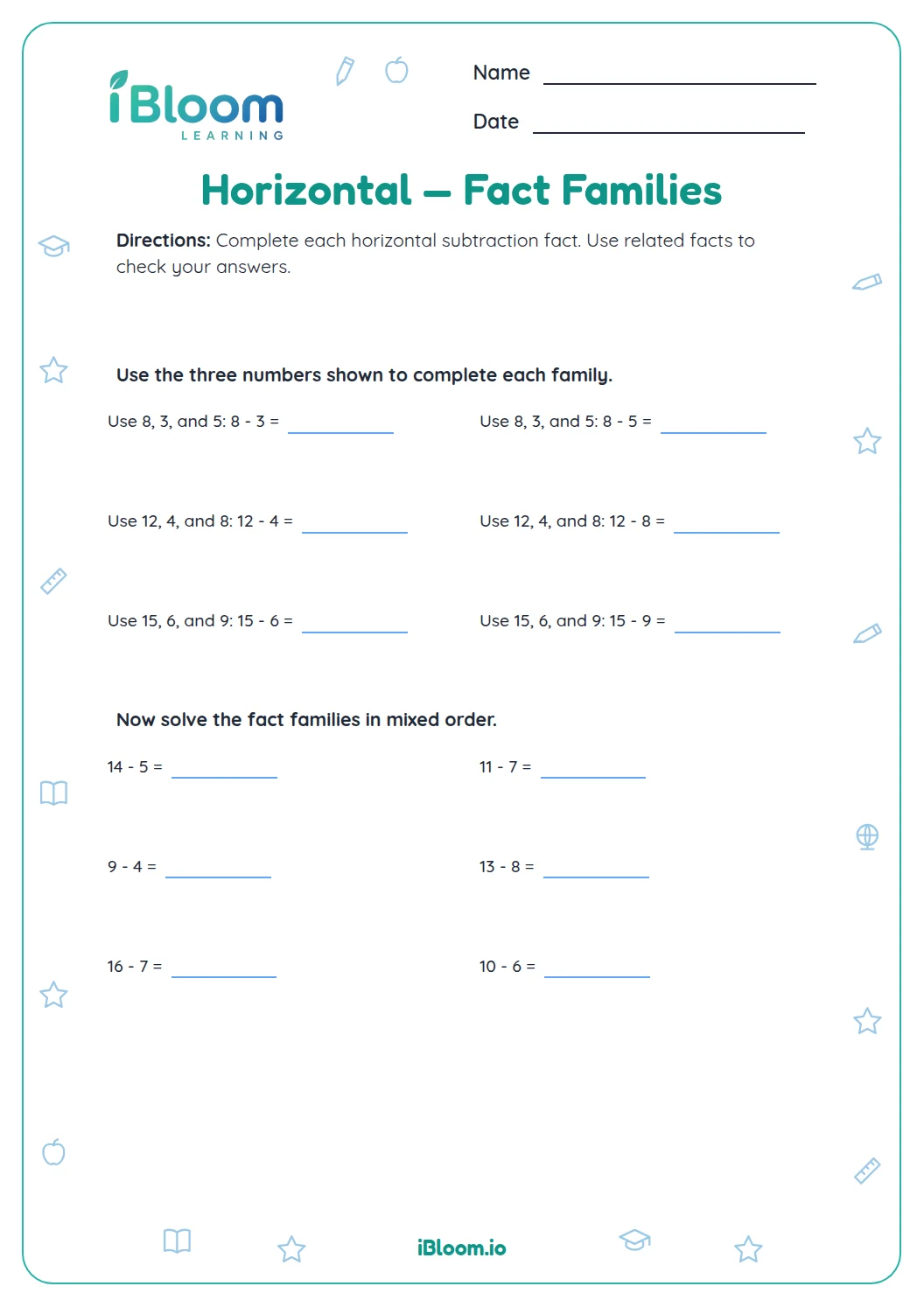
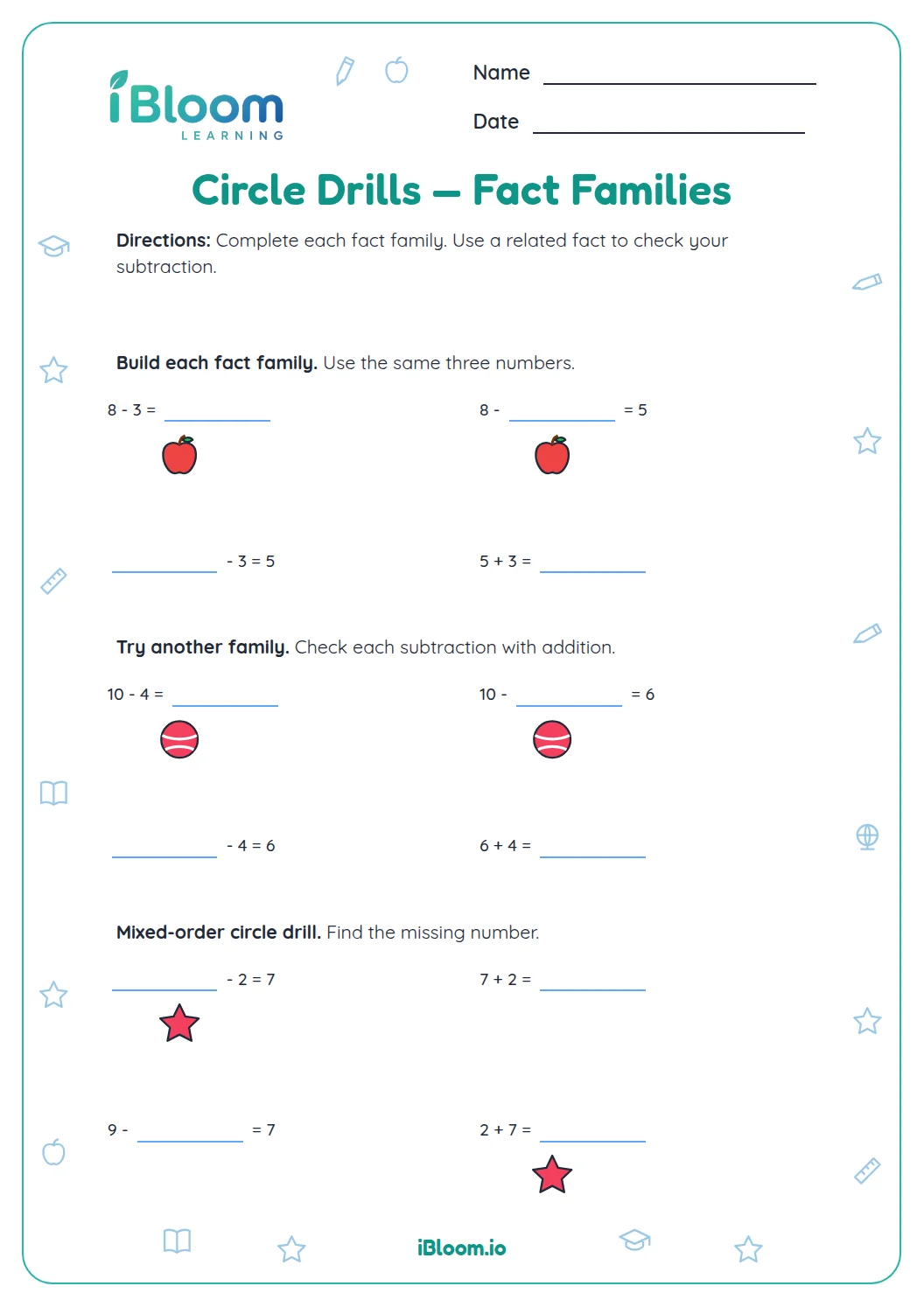
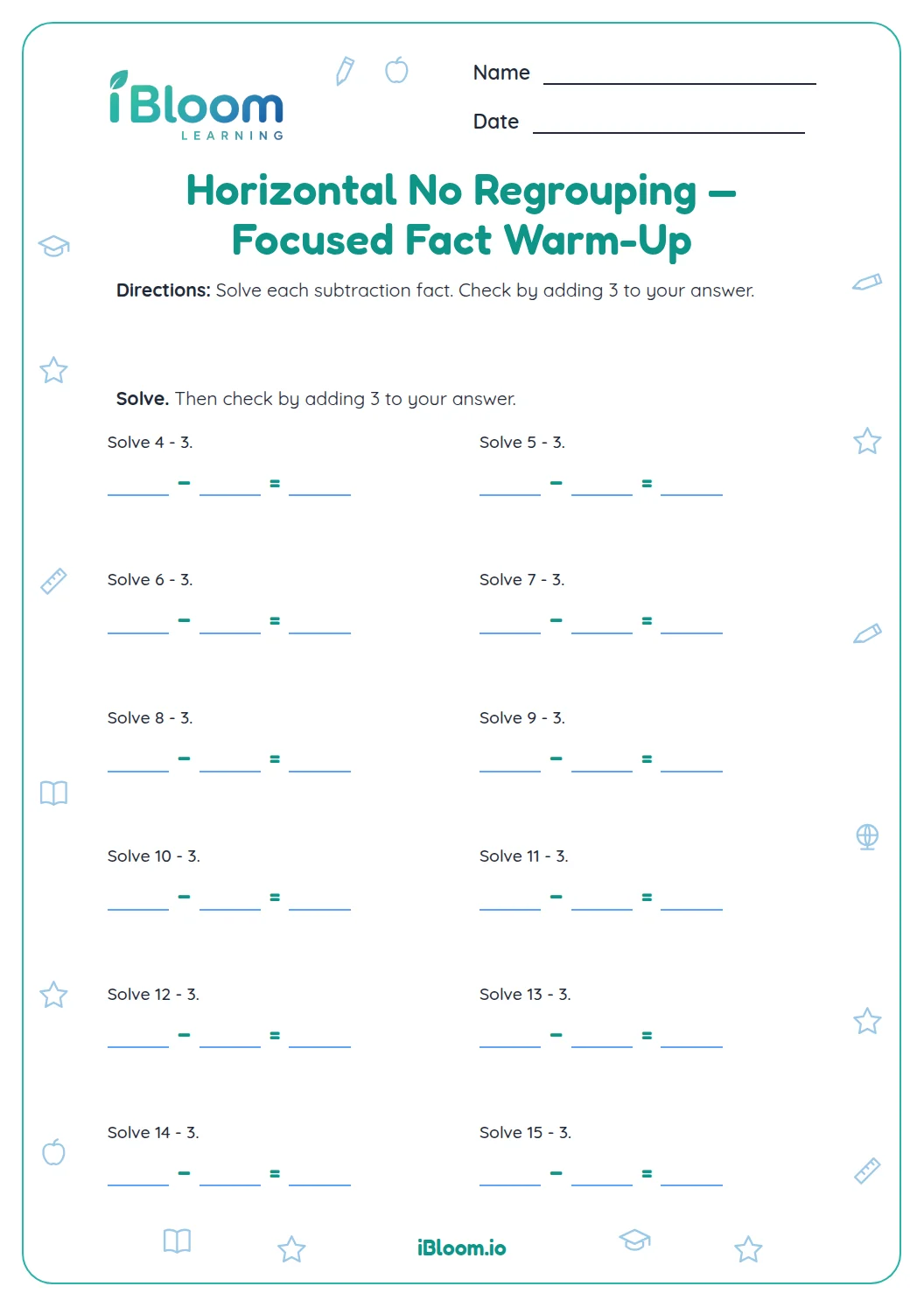
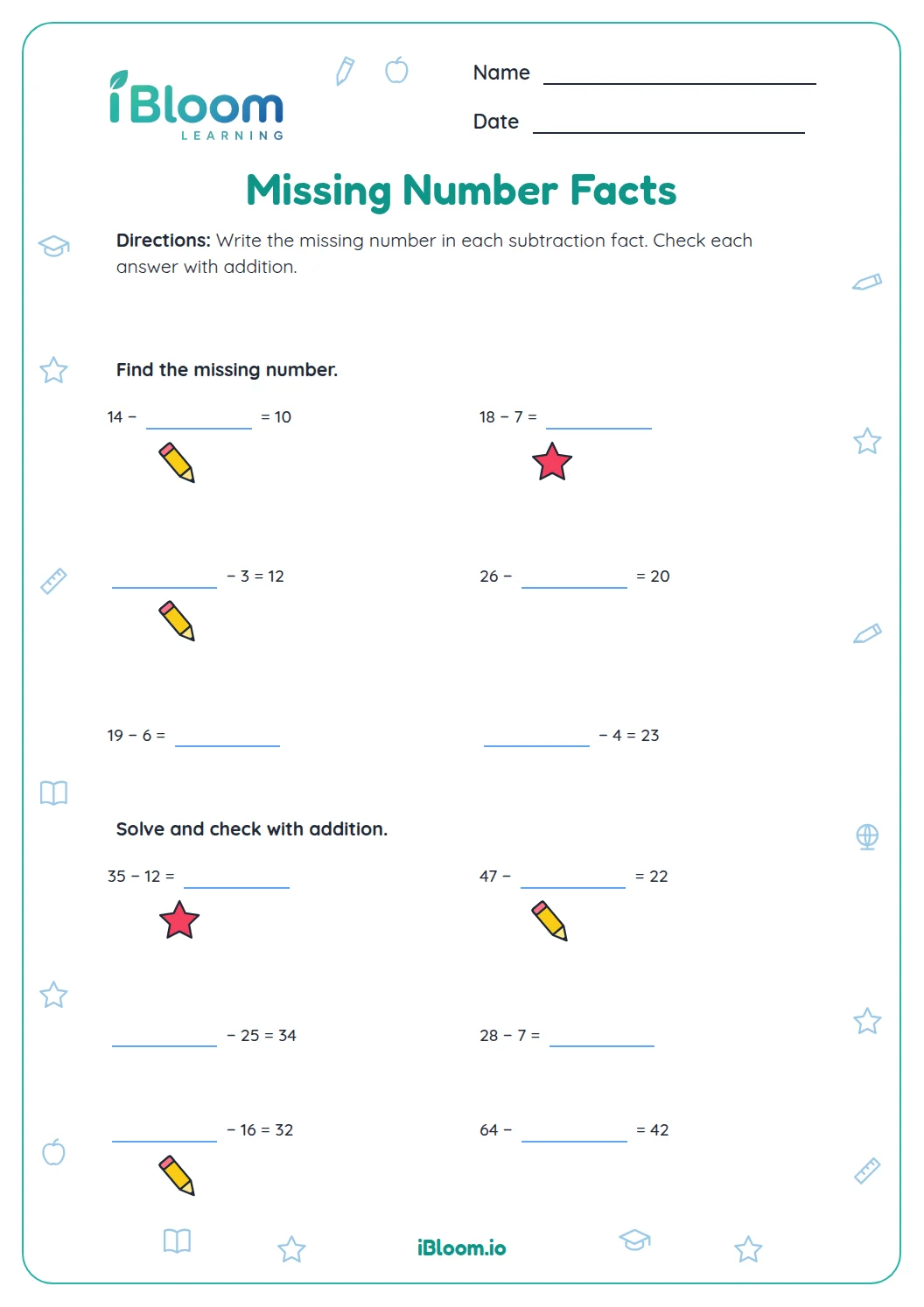
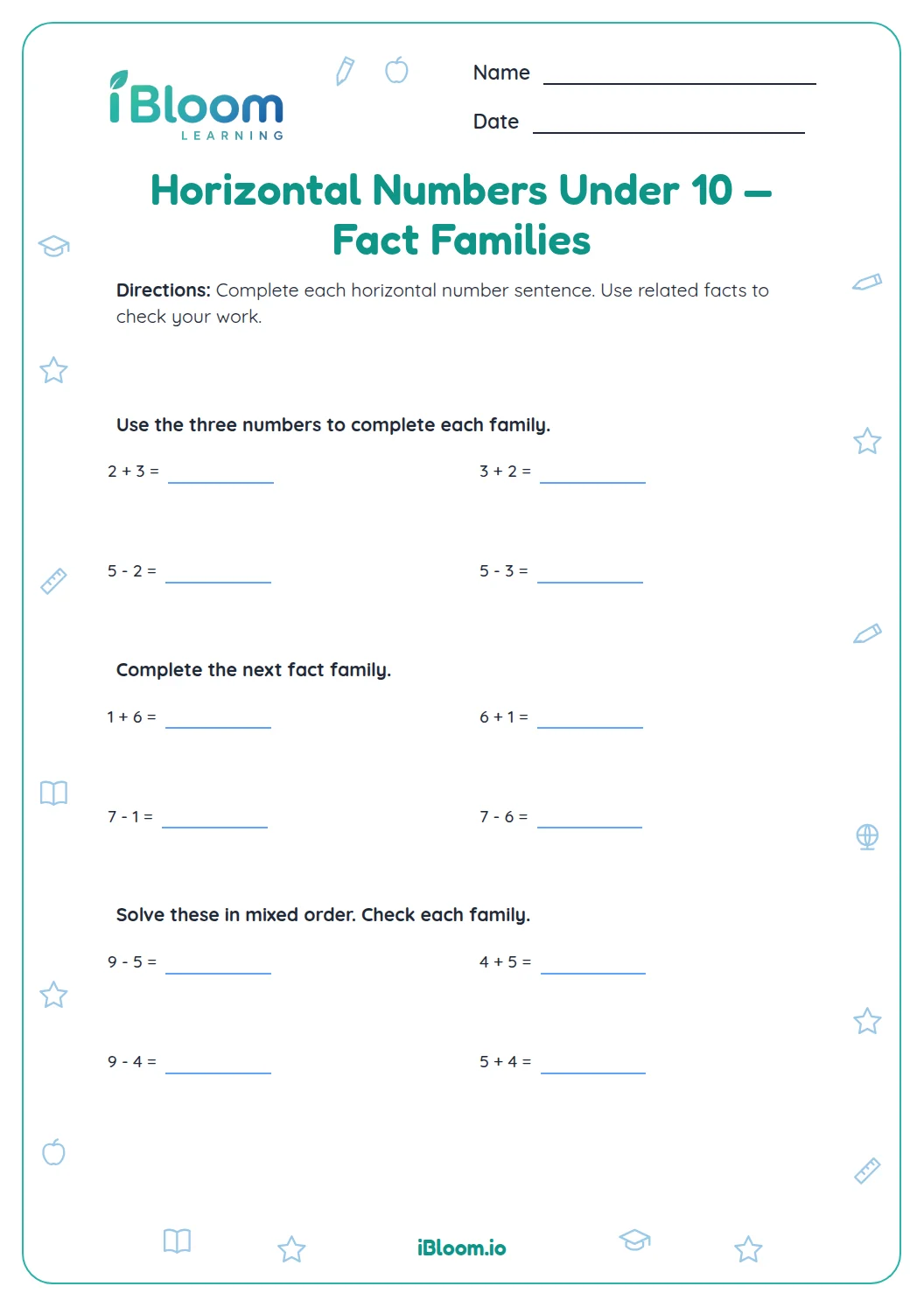
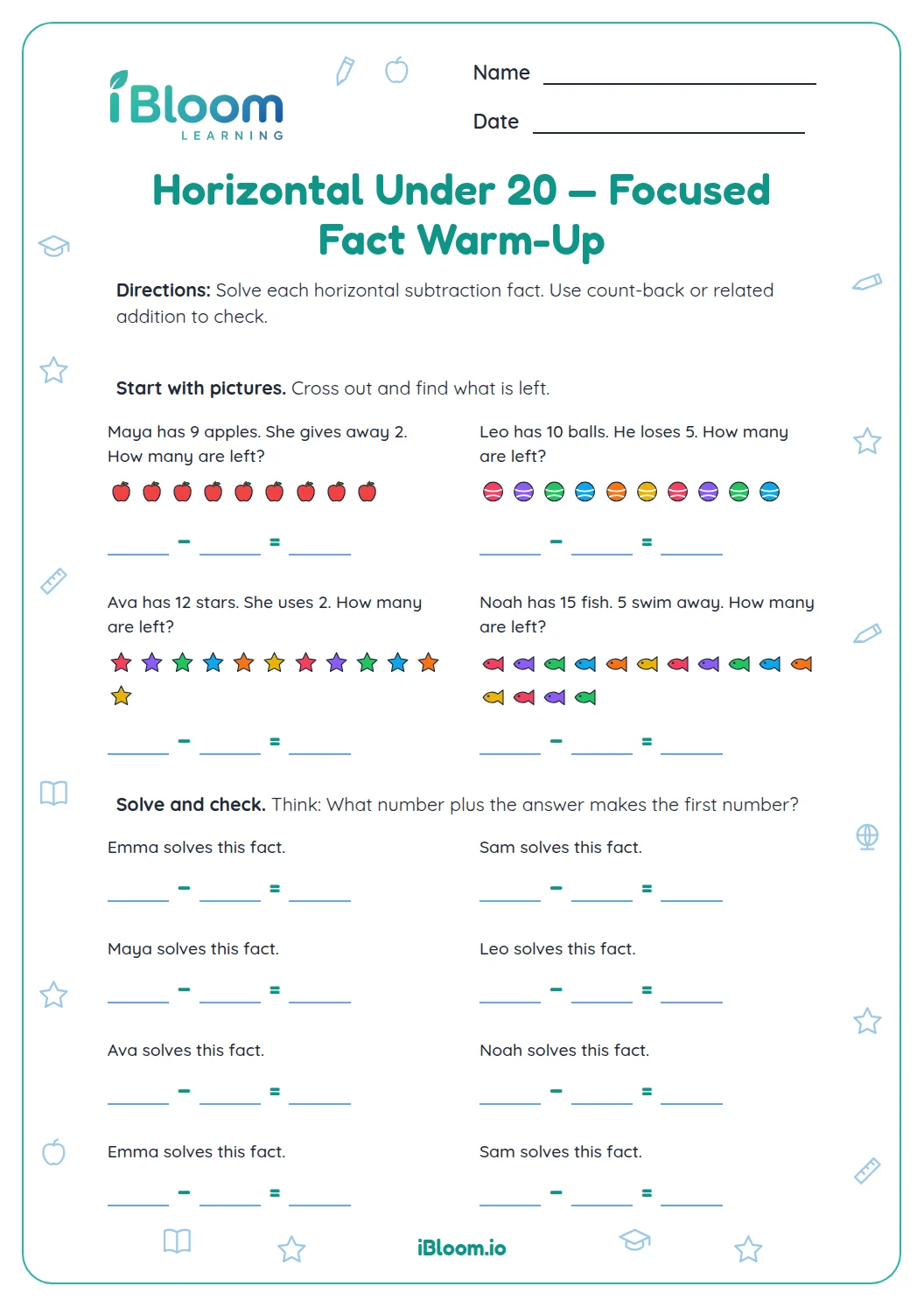
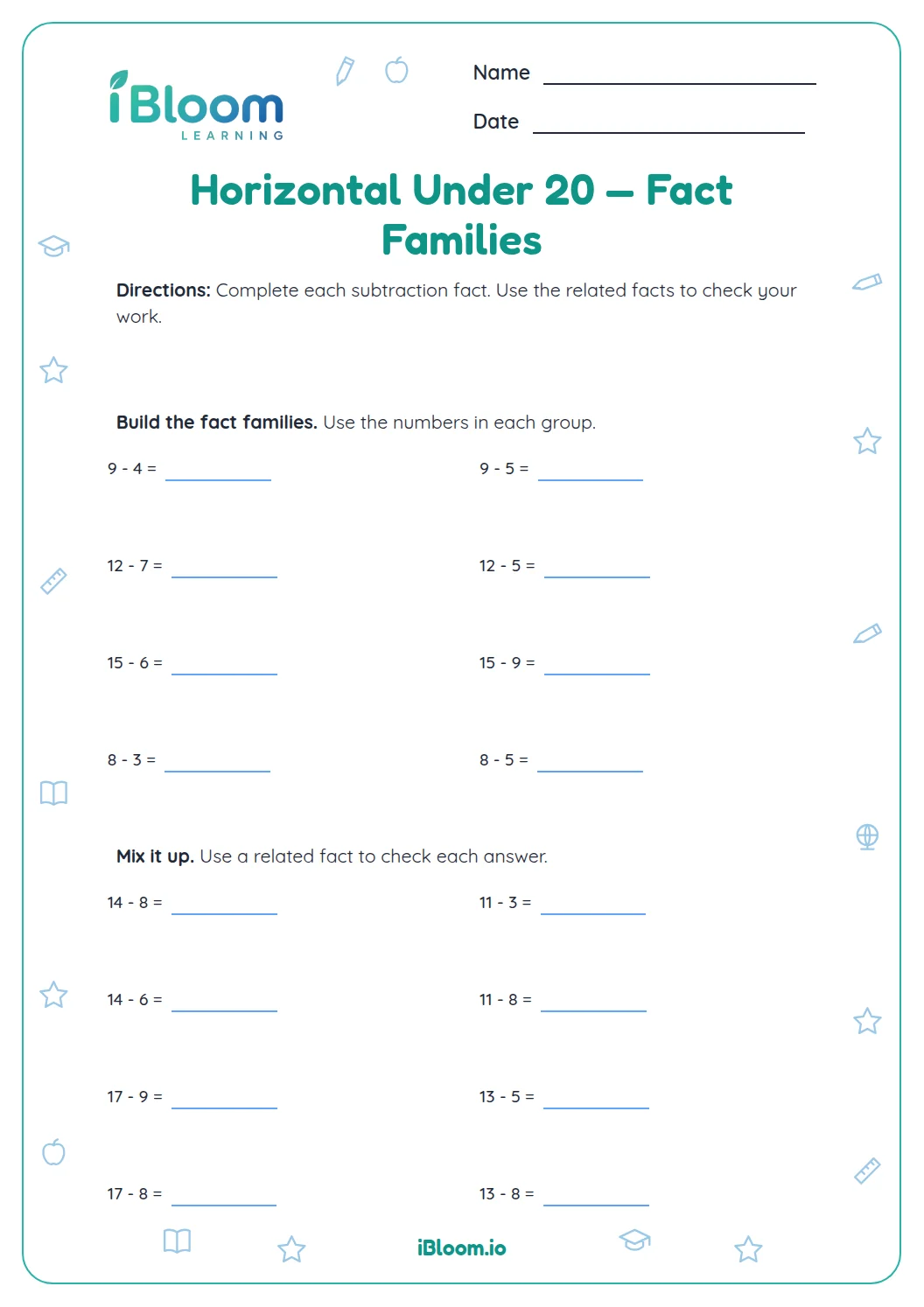
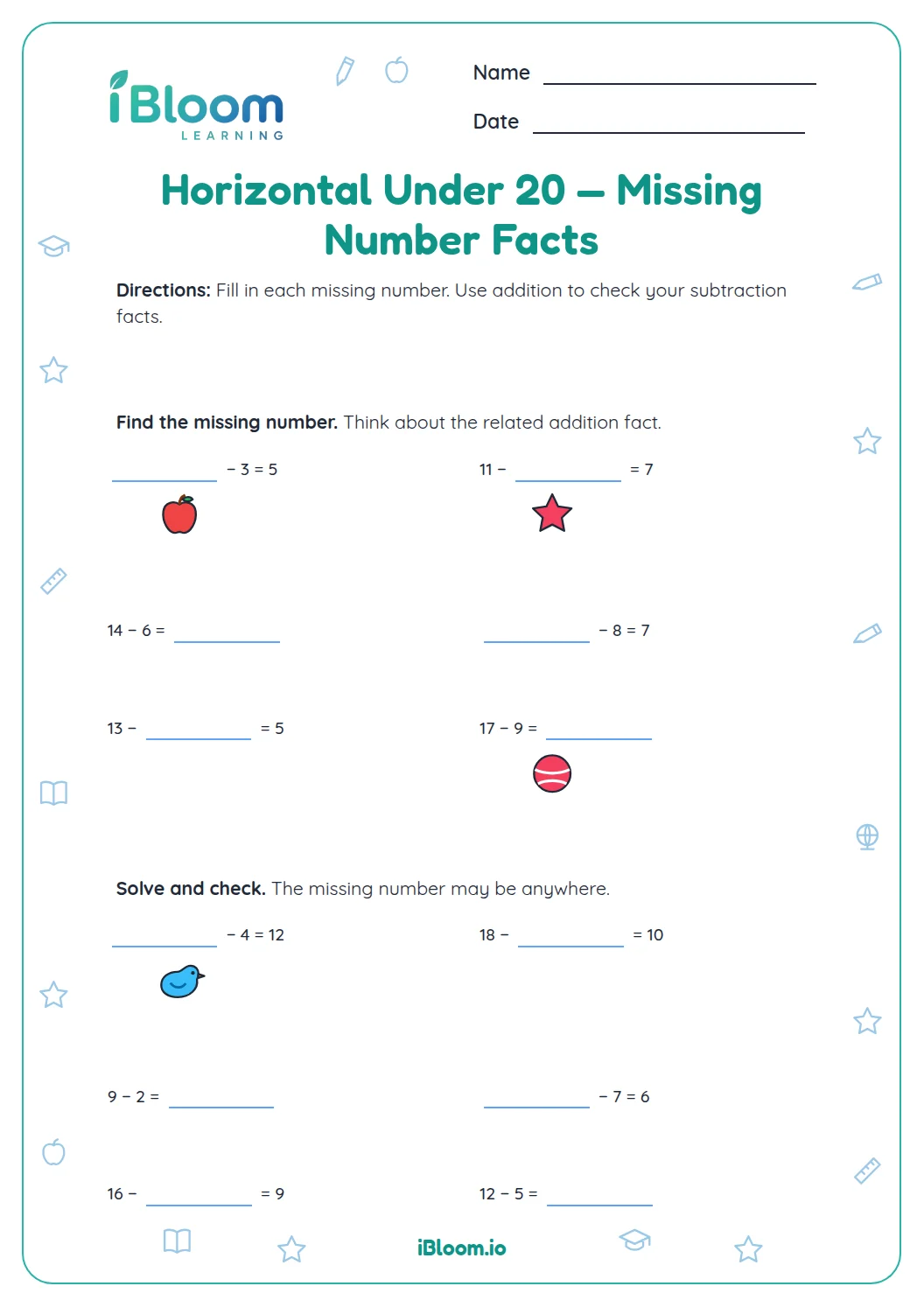
This printable warm-up gives students in Grades 1–2 focused practice subtracting within 20. Eighteen horizontal number sentences offer a short, varied set for building accuracy and fluency. Students find each difference, then use the separate answer key to check their work. The facts vary the starting number and amount subtracted so children practice the relationship in different combinations rather than repeating one pattern.
Aligned to 1.OA.C.6
What does a subtraction fact ask?
Subtraction tells how many remain or how far apart two numbers are. In 14 − 6, start with 14 and take away 6 to find the difference. Students can count back, use a known addition fact, or break apart a number to make a friendly ten.
Which strategy can help find a difference?
A child who knows 6 + 8 = 14 can use that related addition fact to see that 14 − 6 = 8. Another strategy is to count back six steps from 14. Encourage the learner to use a strategy that is accurate and easy to explain.
- 114 − 6 = 8
- 2Think: 6 + 8 = 14.
- 3So the missing difference is 8.
How should children use a fact warm-up?
Work steadily through the horizontal facts, writing one difference for each. After checking, revisit any missed fact and say the related addition sentence aloud. Short, focused practice helps a learner notice facts that are already familiar and facts that need another strategy.
A quick routine for subtraction facts
- 1Read the starting number and the number being subtracted.
- 2Choose a strategy: count back, use a related addition fact, or make a ten.
- 3Write one difference in each blank.
- 4Check each result with addition.
- 5Practice any missed fact again after a short break.
Common errors and fixes
The mistake
Subtracting the larger number from the smaller one by habit.
The fix
Start with the first number and take away the second number.
The mistake
Counting the starting number as the first step when counting back.
The fix
Say the starting number, then count one step for each number taken away.
The mistake
Writing the number being subtracted instead of the difference.
The fix
Use addition to check: the difference plus the amount taken away should equal the starting number.
Common Core alignment
This worksheet gives children direct practice with the stated grade-level skill.
Use subtraction within 20 and build fluency with related addition facts.
On this sheet: Every item asks students to subtract two whole numbers within 20 and find the difference.
Show the official wordingHide the official wording
Add and subtract within 20, demonstrating fluency for addition and subtraction within 10. Use strategies such as counting on; making ten (e.g., 8 + 6 = 8 + 2 + 4 = 10 + 4 = 14); decomposing a number leading to a ten (e.g., 13 − 4 = 13 − 3 − 1 = 10 − 1 = 9); using the relationship between addition and subtraction (e.g., knowing that 8 + 4 = 12, one knows 12 − 8 = 4); and creating equivalent but easier or known sums (e.g., adding 6 + 7 by creating the known equivalent 6 + 6 + 1 = 12 + 1 = 13).
What to practice next
Make more practice
Further reading
Questions parents and teachers ask
What does “horizontal” mean on this worksheet?
Each subtraction fact is printed from left to right on one line, such as 14 − 6 = ___. Students can write the answer in the blank without setting up a vertical column. The layout keeps attention on recalling and checking the fact.
Are all the answers within 20?
The worksheet has 18 horizontal subtraction facts with answers within 20. Students can solve mentally, use a known addition fact, or count back. The answer key lets an adult check each difference after the child completes both practice groups.
Can my child use fingers or a number line?
It is a short practice set for building fluency with subtraction facts. Ask the child to explain one strategy, such as counting back or using a related addition fact. Repeated practice with different facts supports quick and accurate recall.
How many facts are included?
There are 20 questions: 18 horizontal subtraction facts within 20 and two multiple-choice addition checks. They appear on two worksheet pages, followed by a two-page answer key. The check questions use addition to confirm a subtraction difference after the child solves the facts.
How should I review a missed fact?
Encourage the child to solve the fact, then check by adding the difference to the number being subtracted. For example, 14 − 6 = 8 can be checked with 8 + 6 = 14. The answer key shows the expected difference for every item.