





About this worksheet
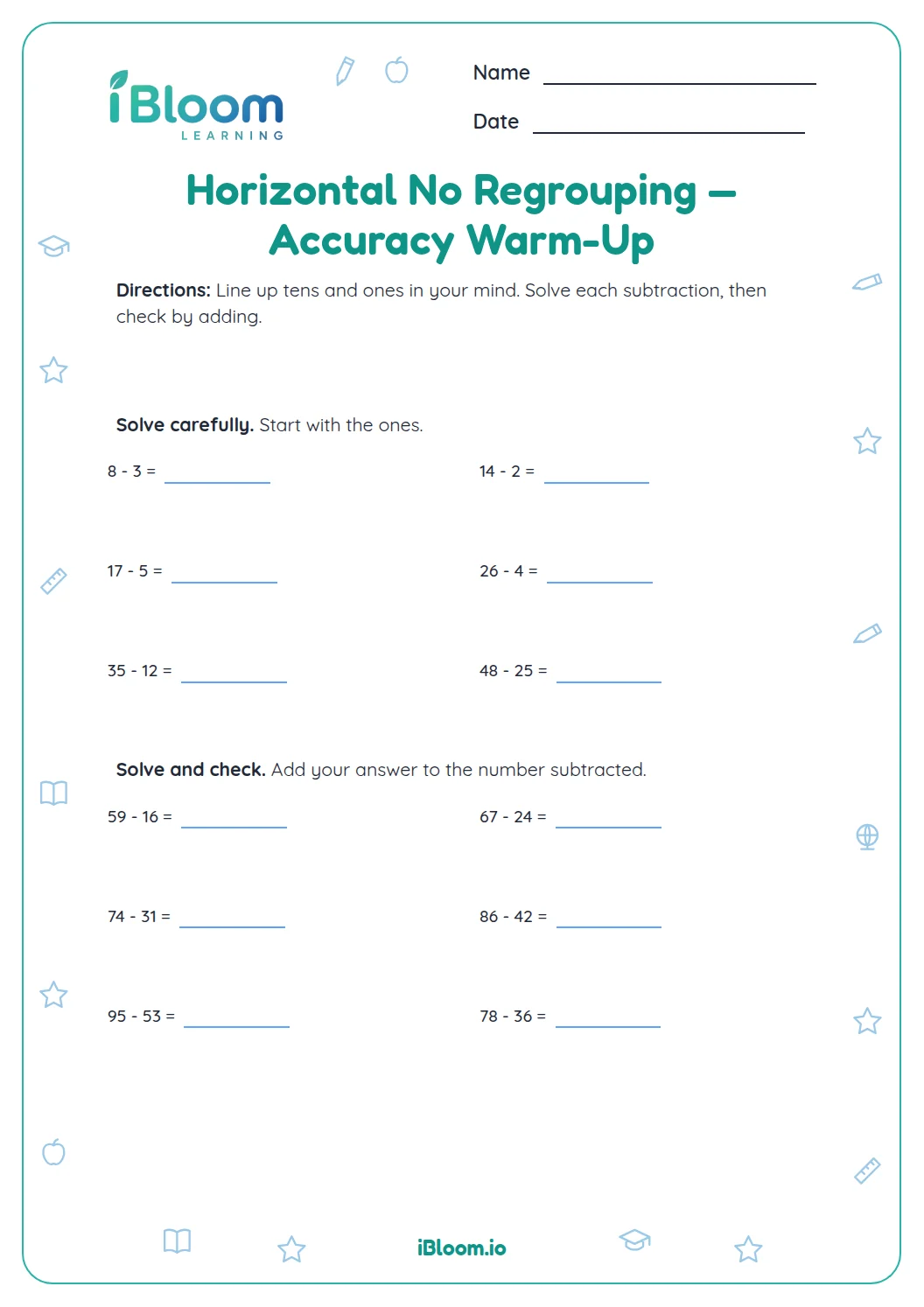
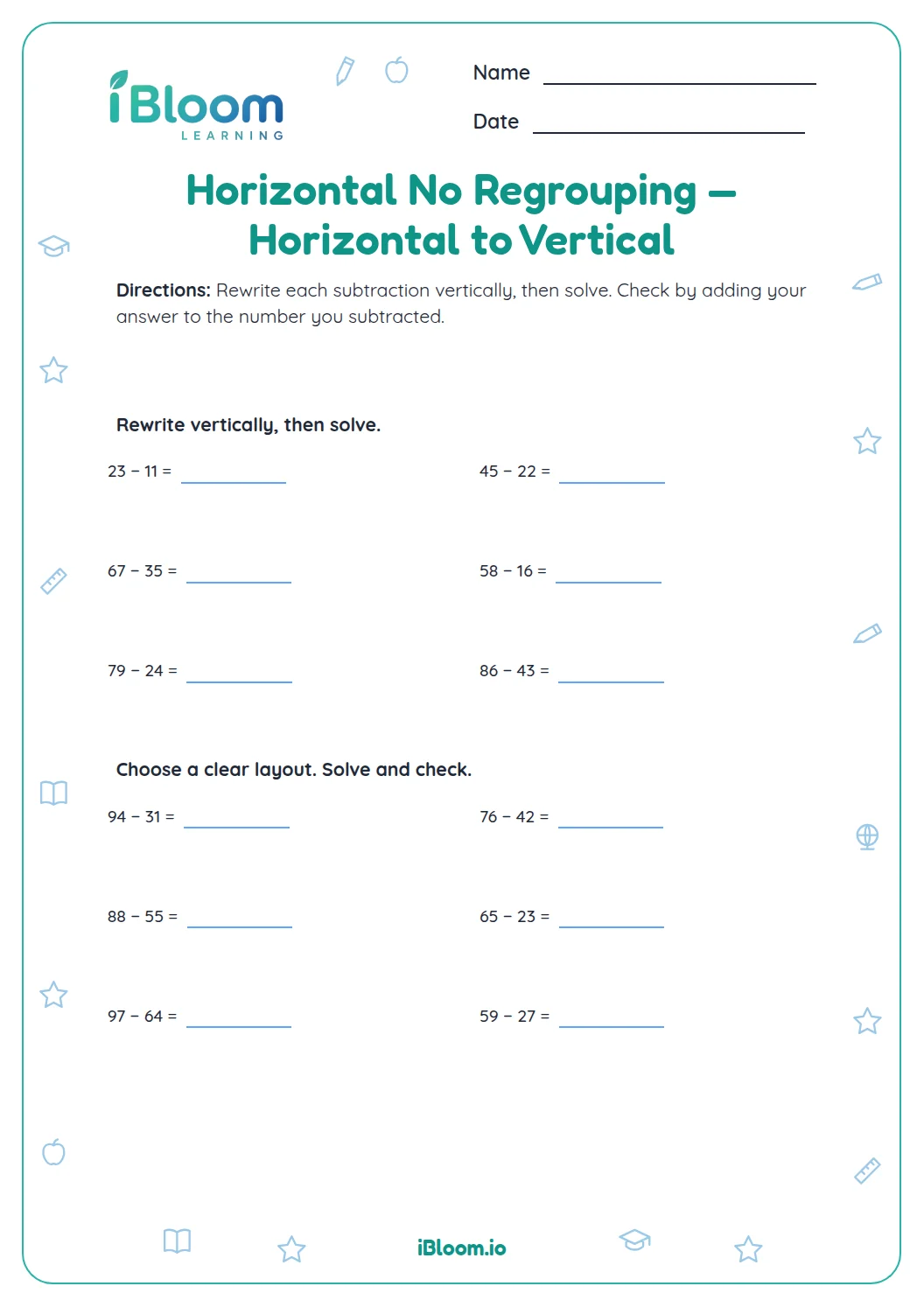
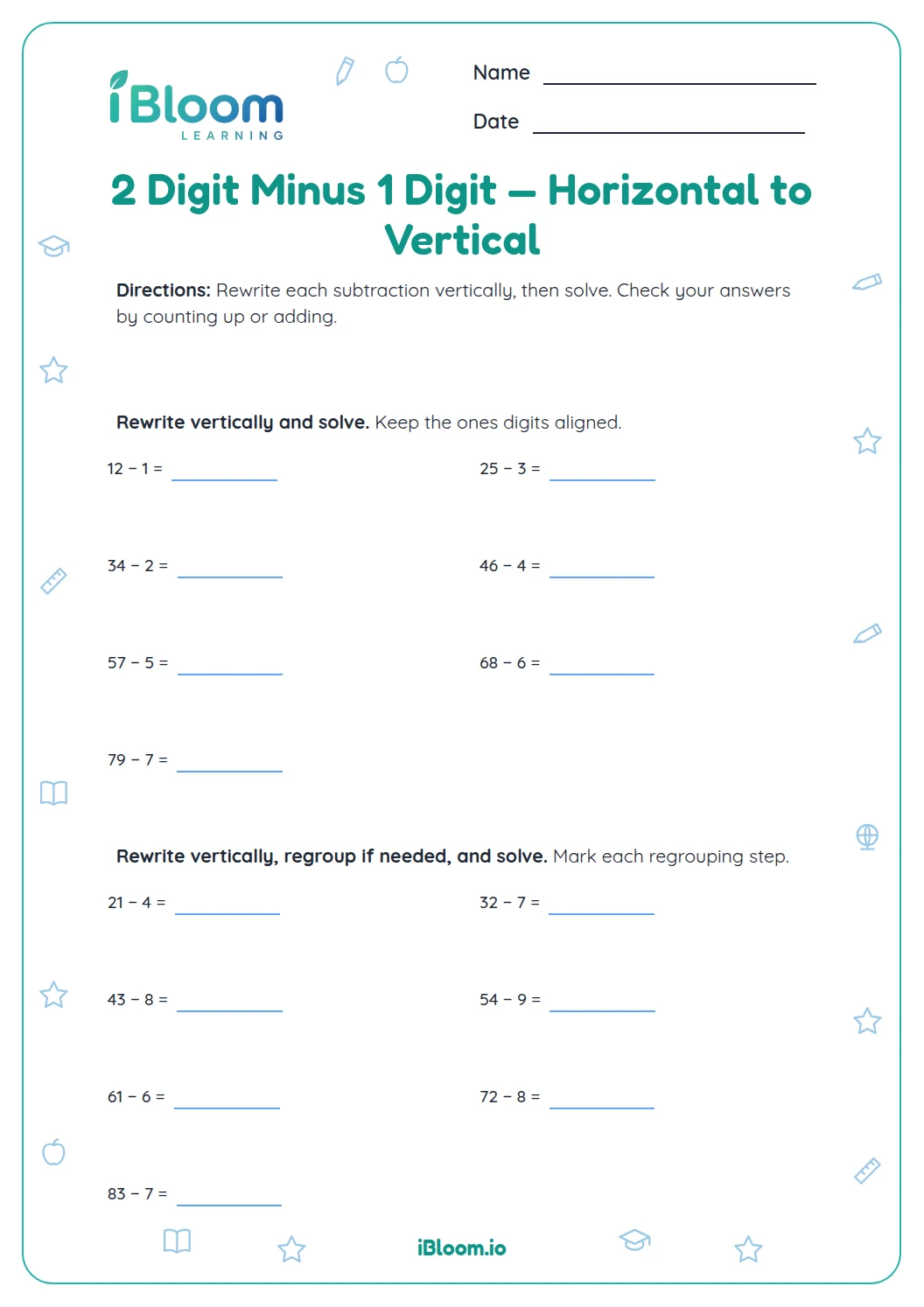
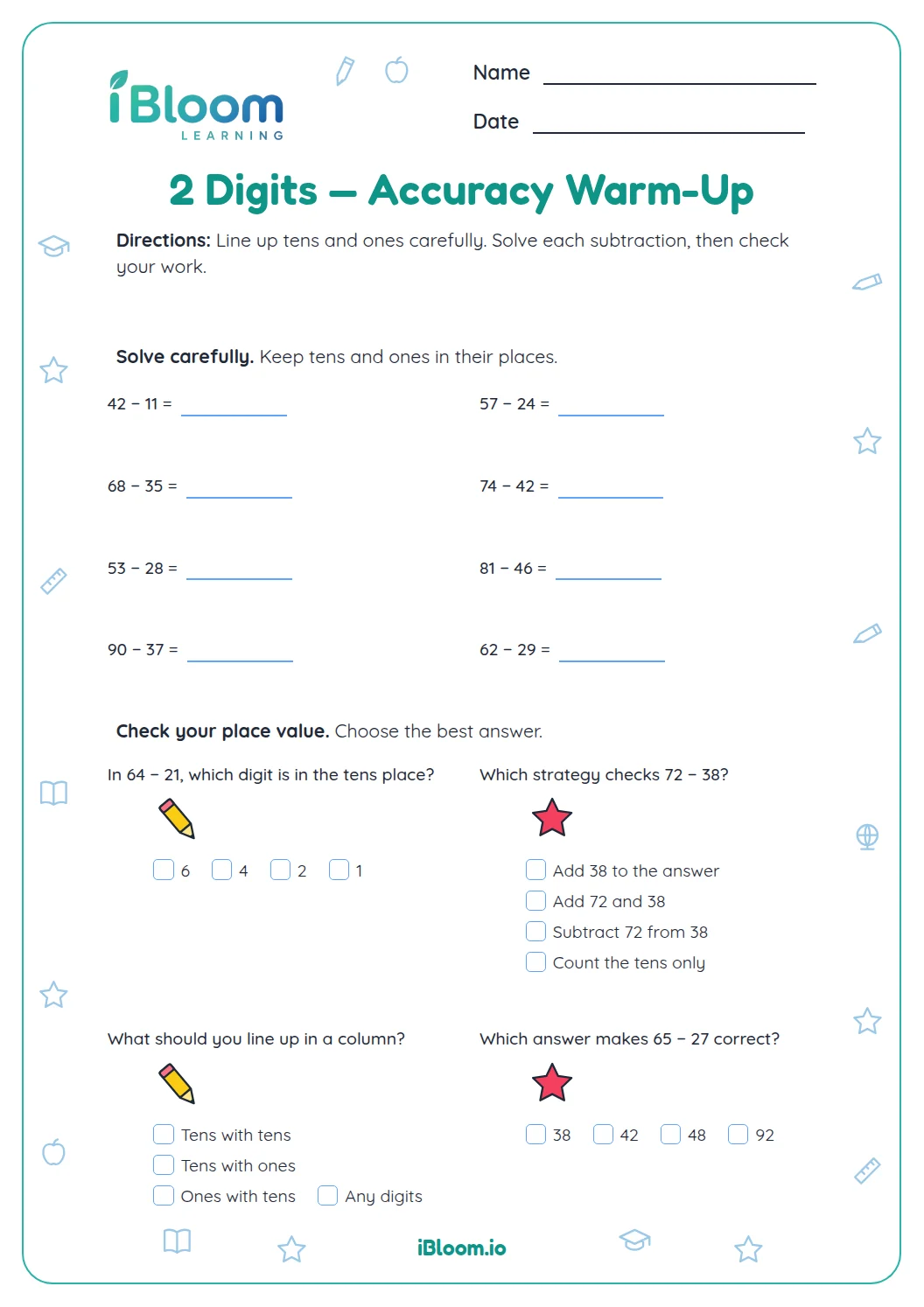
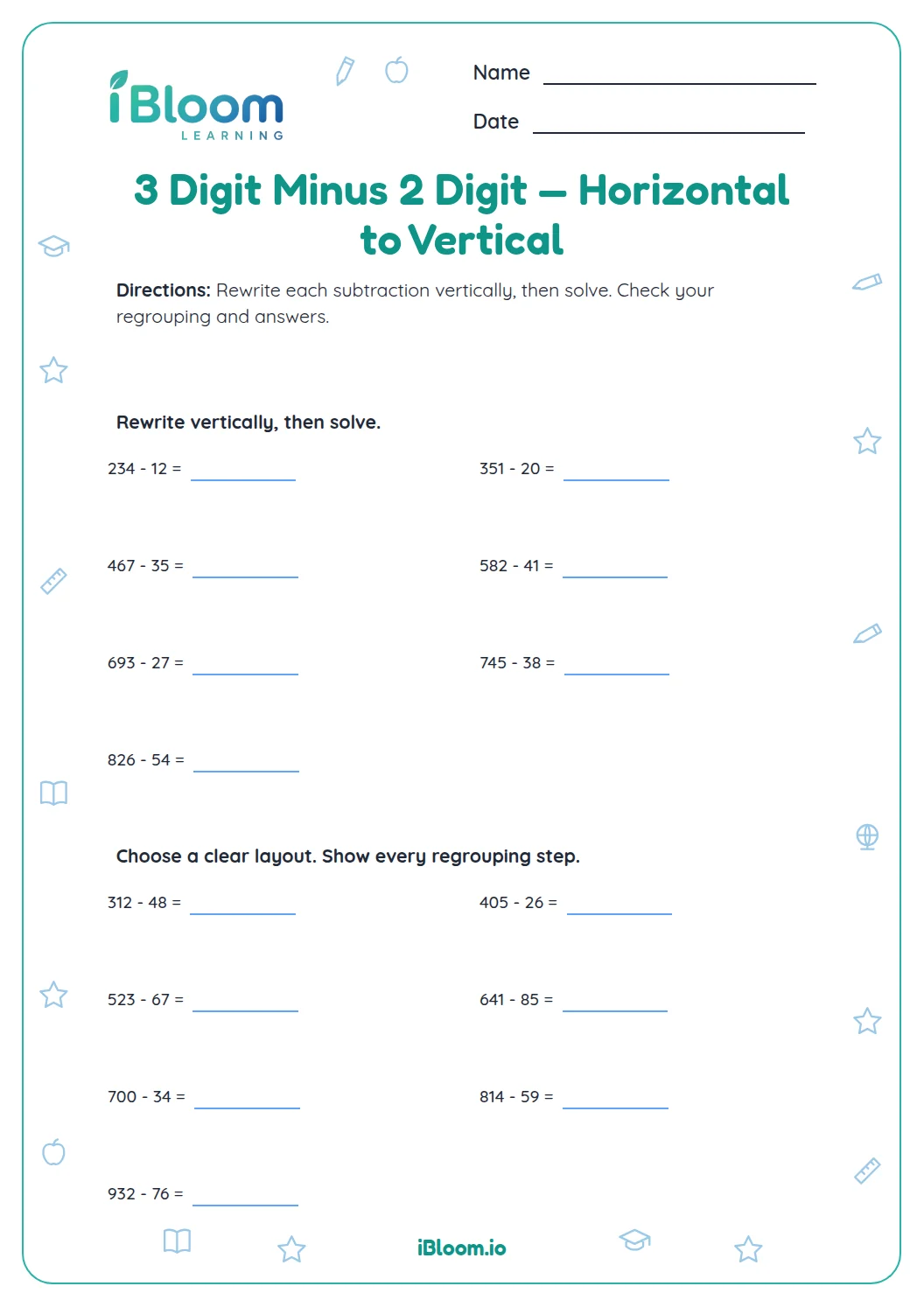
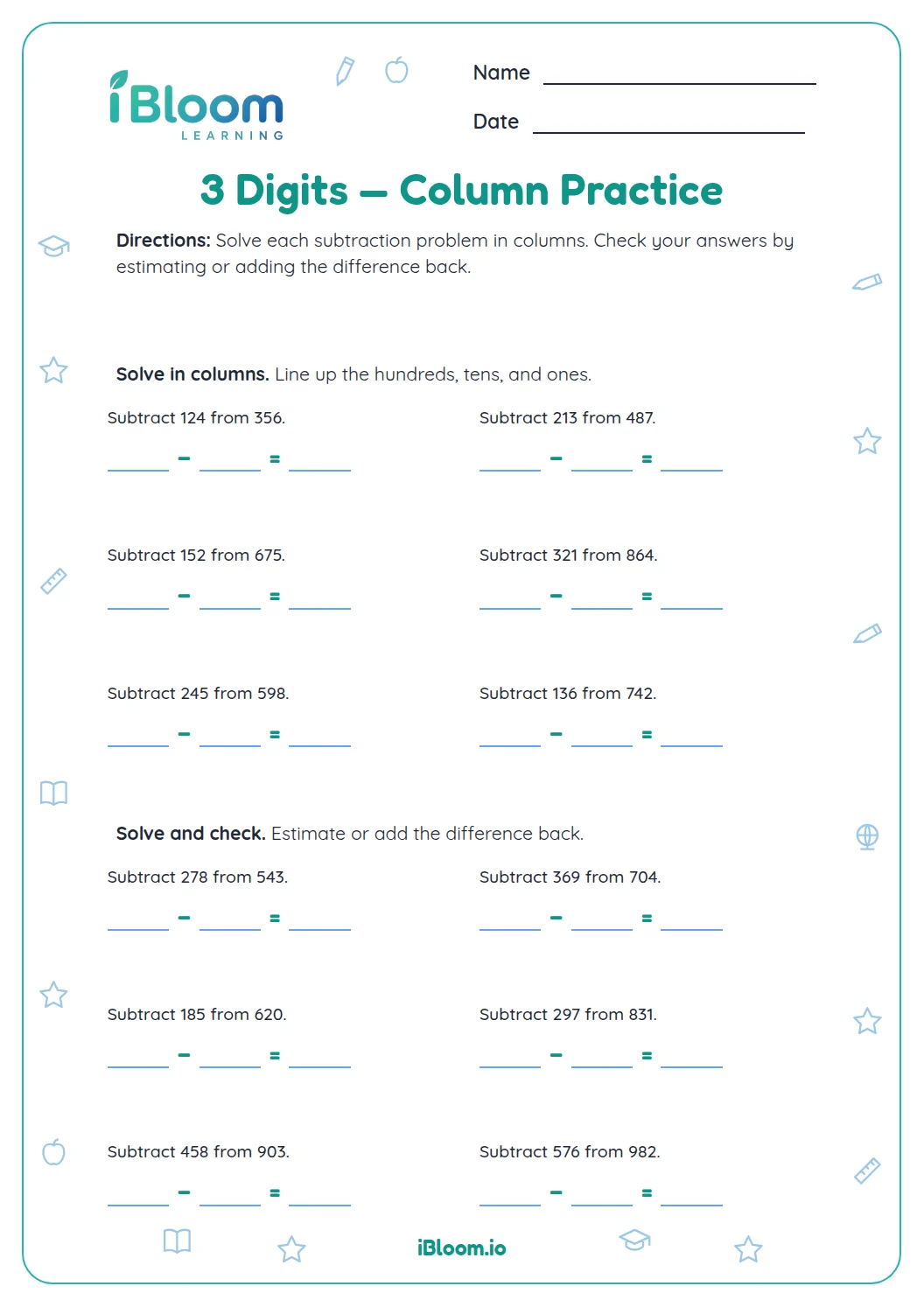
This free printable subtraction worksheet provides 20 horizontal problems without regrouping. Part A has six two-digit facts; Part B has fourteen three-digit facts. Every ones, tens, and hundreds digit can be subtracted directly, and learners may line up place values to work. The worksheet and separate answer key each span two pages.
Aligned to 3.NBT.A.2
What subtraction problems are included?
Part A practices six two-digit differences. Part B moves to fourteen three-digit differences. In every problem, each digit in the top number is greater than or equal to the digit in the same place below it, so no regrouping is needed.
- 20 horizontal subtraction equations
- 6 two-digit problems
- 14 three-digit problems
How can a learner solve a problem without regrouping?
Subtract ones from ones, tens from tens, and hundreds from hundreds. Keep each answer in its place-value position.
- 147 − 25 = ___
- 27 − 5 = 2 ones; 4 tens − 2 tens = 2 tens. The answer is 22.
How can learners check a difference?
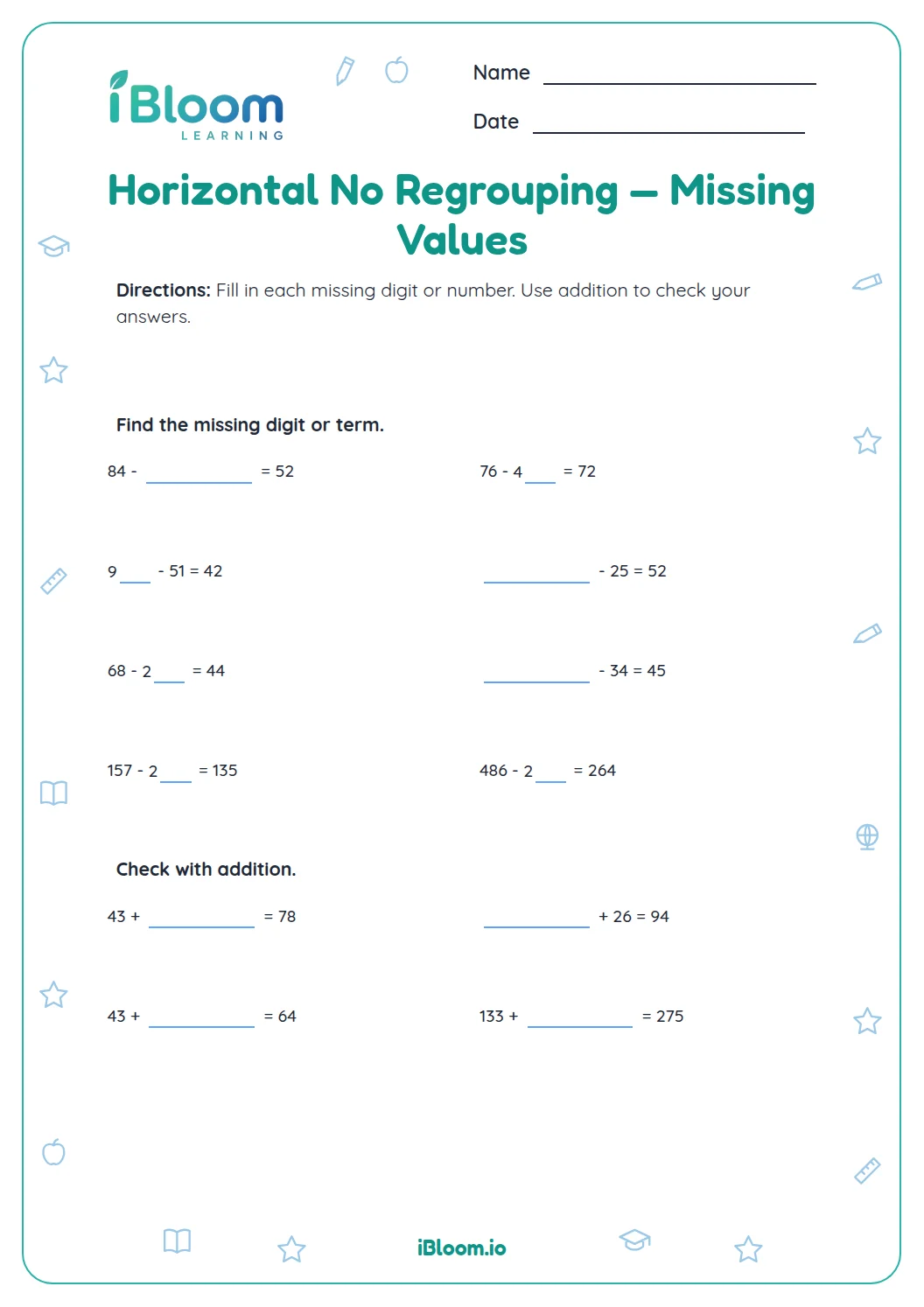
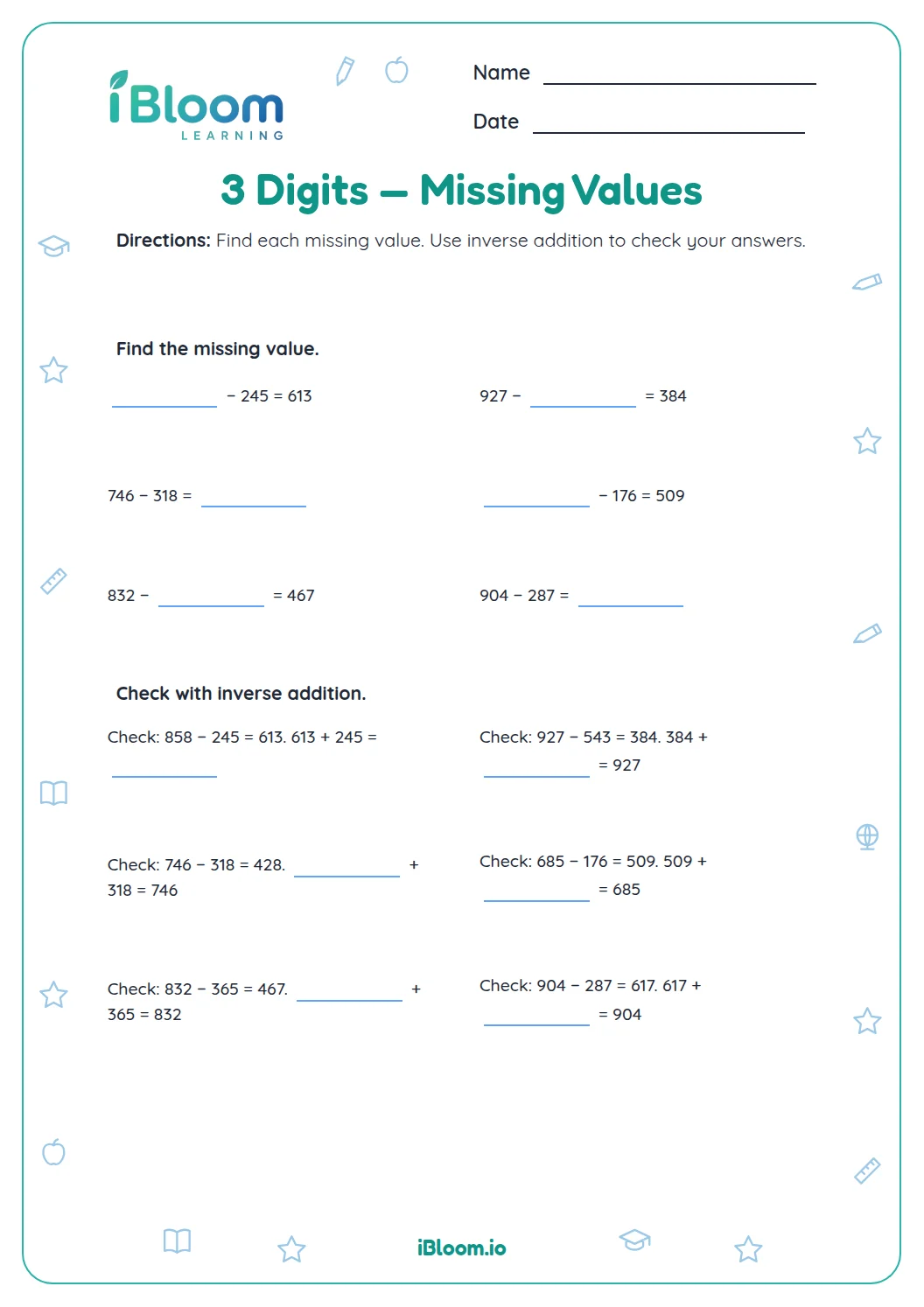
Add the difference to the number subtracted. For 47 − 25 = 22, check 22 + 25 = 47. If the sum does not return to the starting number, revisit the place-value subtraction.
How can adults support place-value work?
Have the learner line up ones, tens, and hundreds if the horizontal format is hard to track. Ask them to estimate whether the difference should be closer to the first number or much smaller before checking with addition.
How to use this worksheet
- 1Read the instruction line and look over the first part together.
- 2Complete the first question as a model, naming the clue or step used.
- 3Finish the rest of that part independently.
- 4Move to the next part and use the same strategy on the new format.
- 5Check answers with the key and revisit any missed item.
Subtraction mix-ups and quick fixes
The mistake
Subtracting the larger digit from the smaller digit in a column.
The fix
Read the problem from top to bottom in each place; these problems do not require regrouping.
The mistake
Misaligning the hundreds, tens, and ones in a three-digit problem.
The fix
Write digits in columns or mark the place values before subtracting.
The mistake
Adding the two numbers to check a difference.
The fix
Add the difference to the number subtracted; the sum should equal the starting number.
Common Core alignment
This worksheet practices the listed skill through short, explicit examples.
Subtract within 1,000 using place value or an inverse check.
On this sheet: The 20 worksheet questions give direct practice with subtraction without regrouping.
Show the official wordingHide the official wording
Fluently add and subtract within 1000 using strategies and algorithms based on place value, properties of operations, and/or the relationship between addition and subtraction.
What to practice next
Make more practice
Further reading
Questions parents and teachers ask
How many problems are on this subtraction worksheet?
There are 20 horizontal equations in two parts: six two-digit and fourteen three-digit problems. Every digit can be subtracted by place without regrouping. A separate two-page key lists the differences. The two-page worksheet and separate key make it easy to print practice and check responses afterward.
What does “without regrouping” mean on this sheet?
In 47 − 25, the ones digits give 7 − 5 and the tens digits give 4 tens − 2 tens. The place-value results combine to make 22, which is the answer shown in the key. The two-page worksheet and separate key make it easy to print practice and check responses afterward.
How can a child check a subtraction answer?
Adding the difference to the number subtracted checks the result. If that sum does not equal the original starting number, revisit the subtraction in each place and compare it with the answer key. The two-page worksheet and separate key make it easy to print practice and check responses afterward.
Should children write the problems vertically?
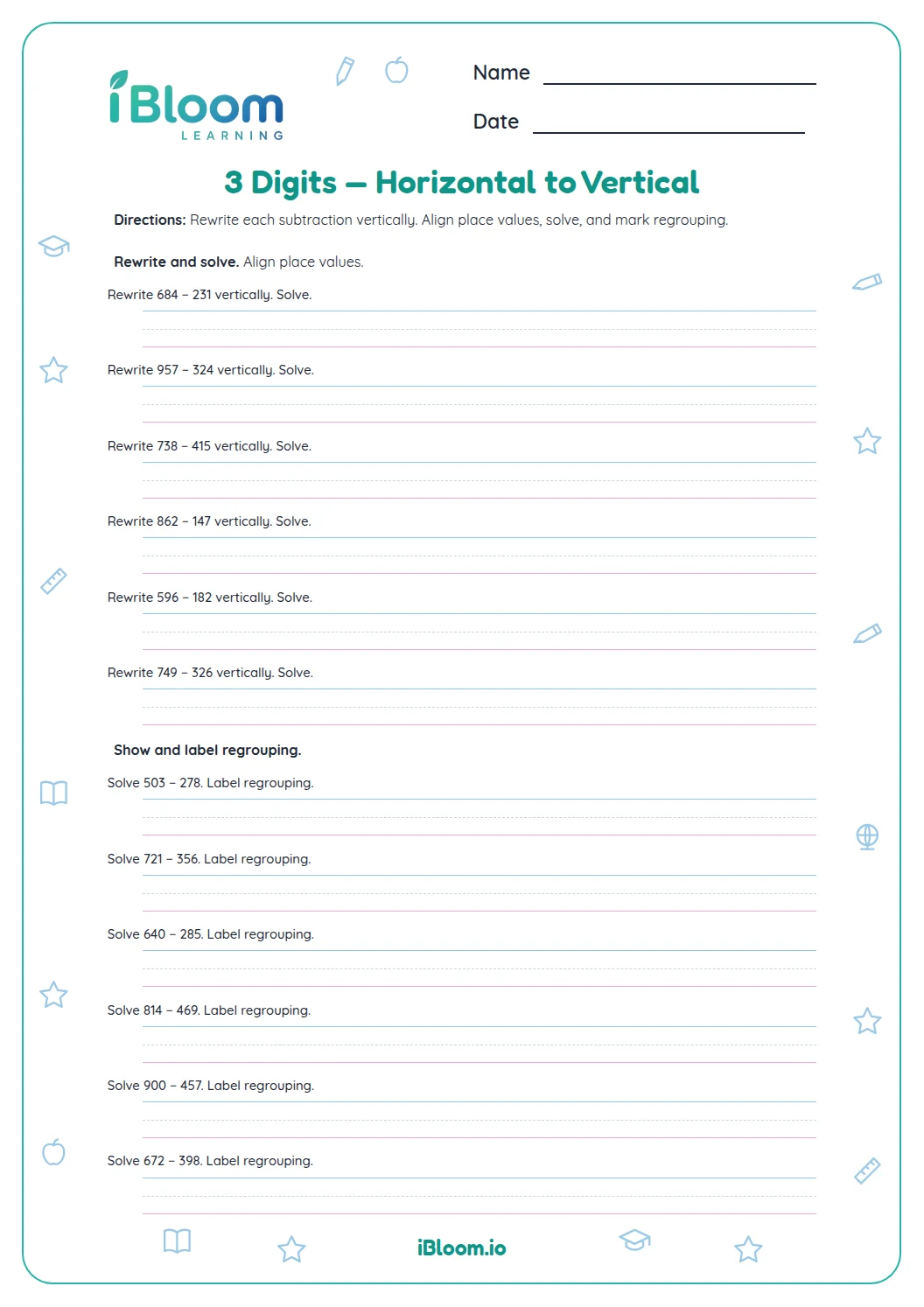
The equations print horizontally, but learners can rewrite them vertically to line up corresponding place values before subtracting. Record each difference in the answer space printed after the equation. The two-page worksheet and separate key make it easy to print practice and check responses afterward.
What if a child gets a different answer from the key?
Use the key after checking the place values. Adding the difference to the number subtracted provides another check: the sum should return to the original starting number. The two-page worksheet and separate key make it easy to print practice and check responses afterward.