


About this worksheet
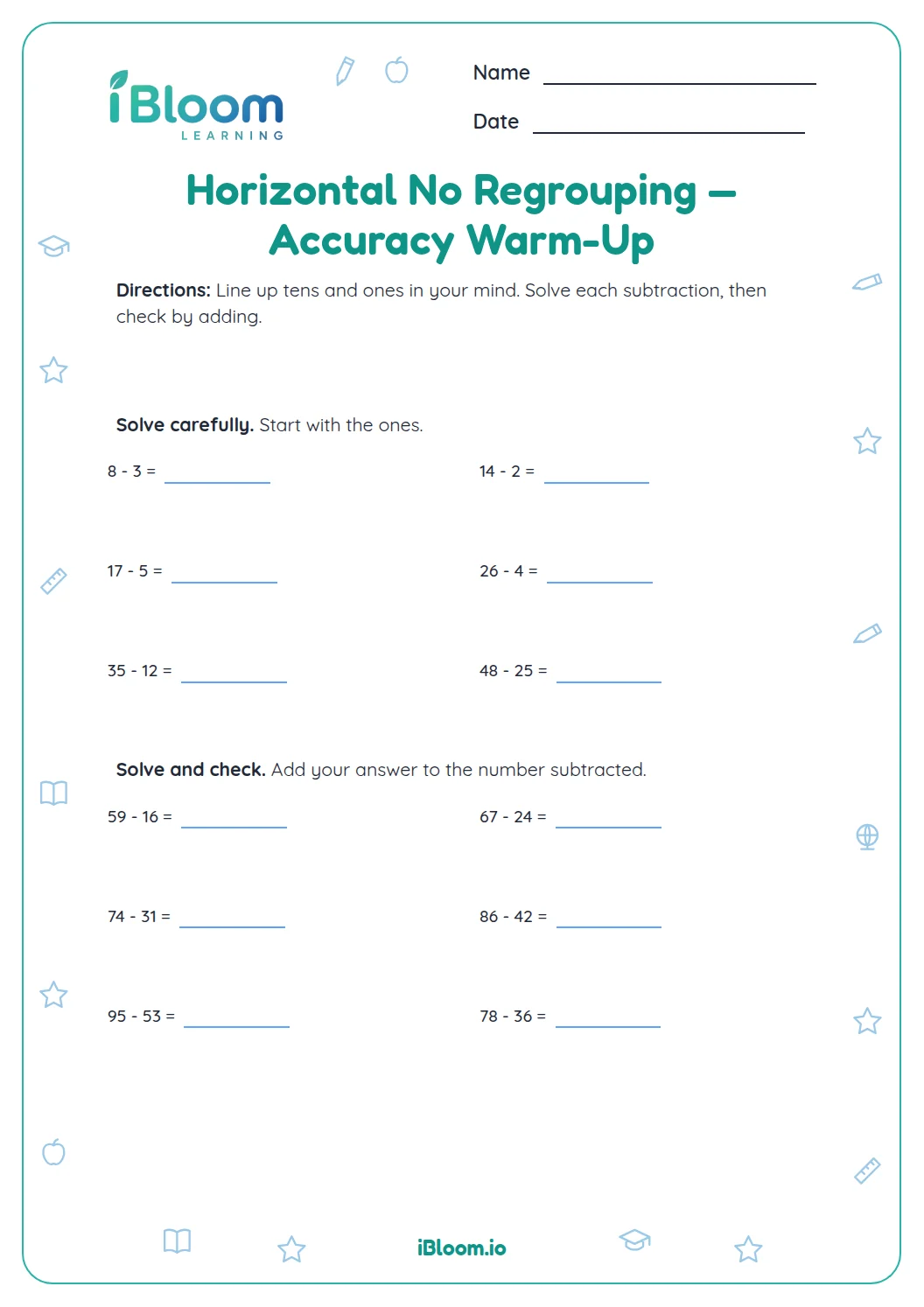
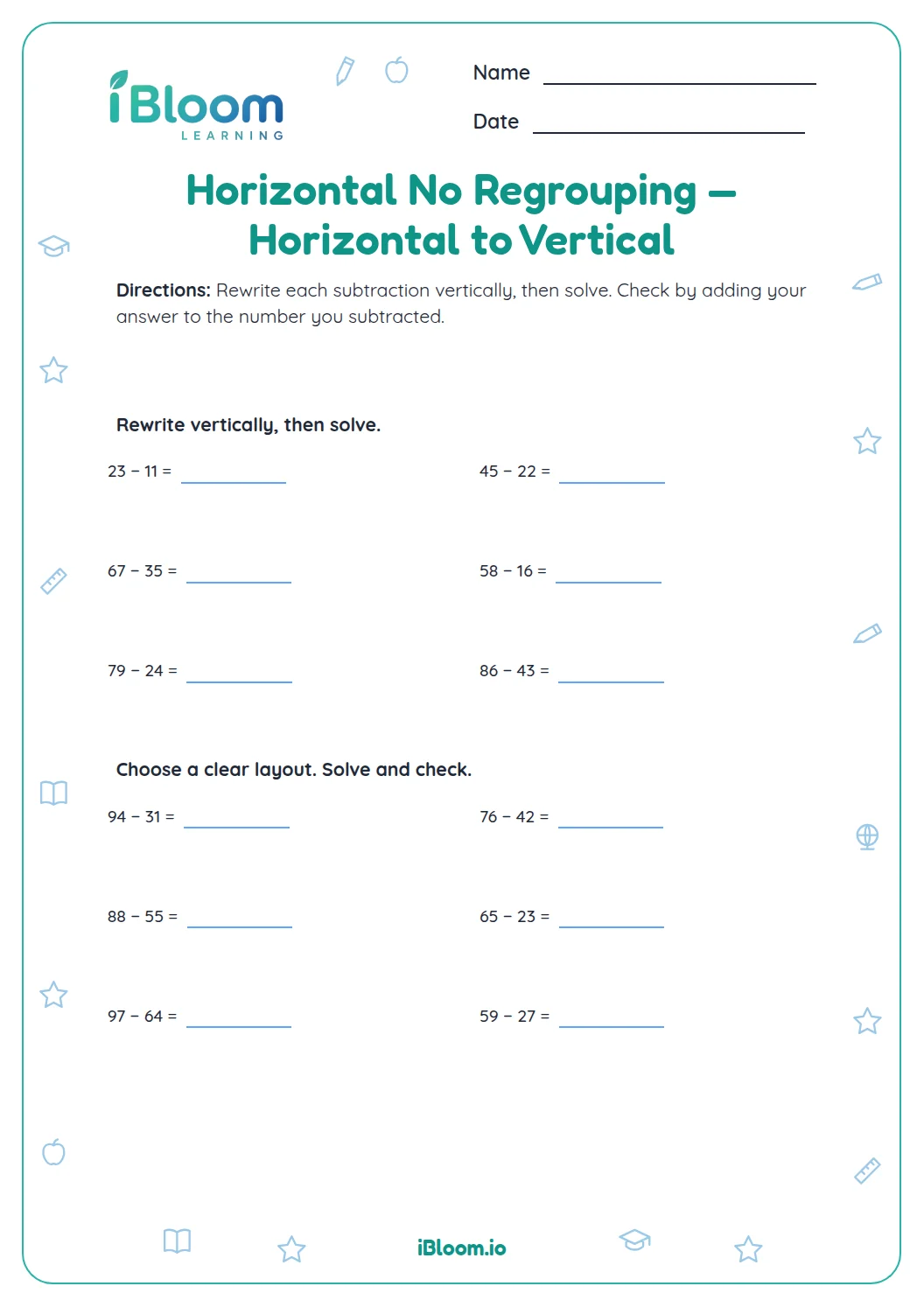
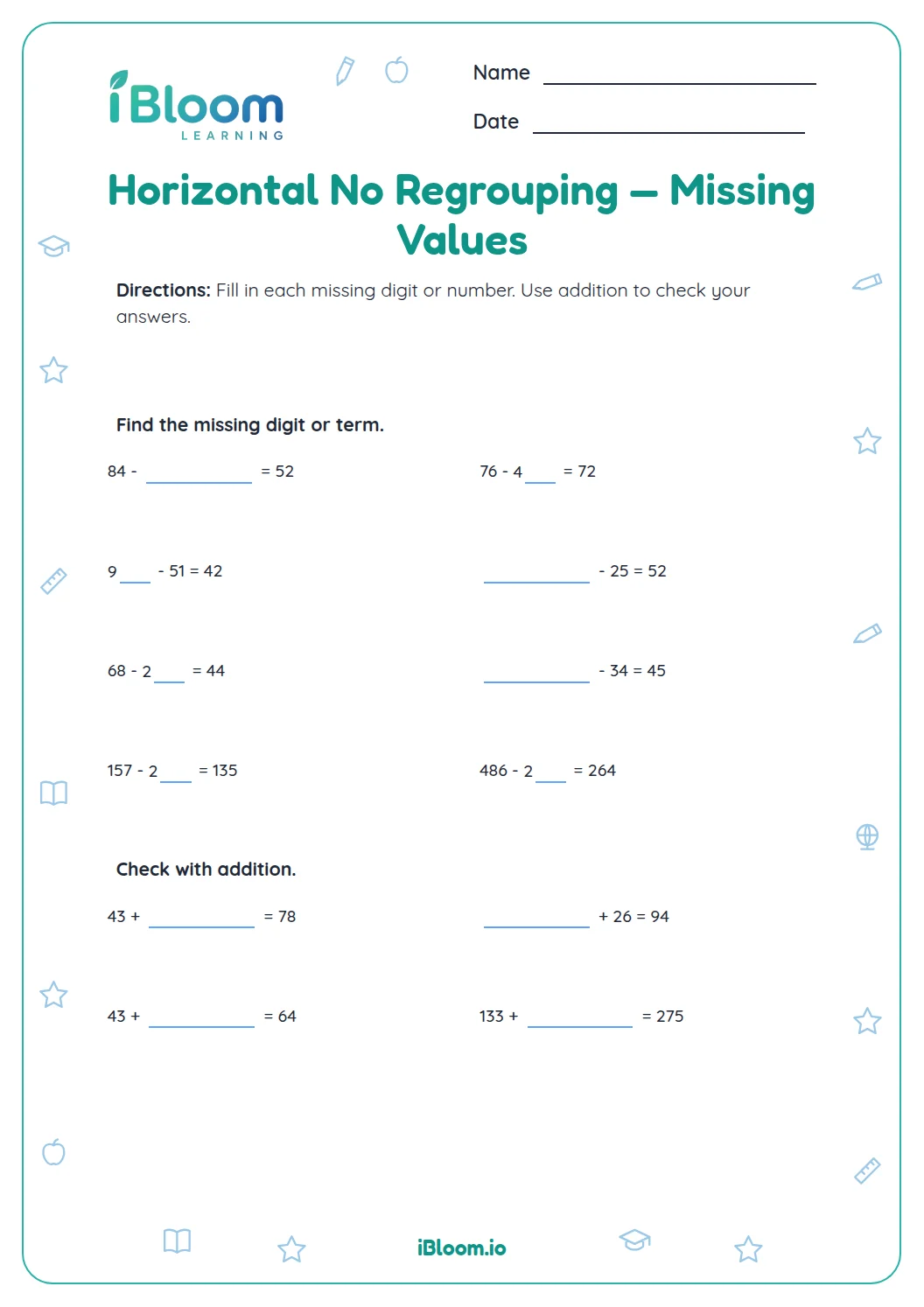
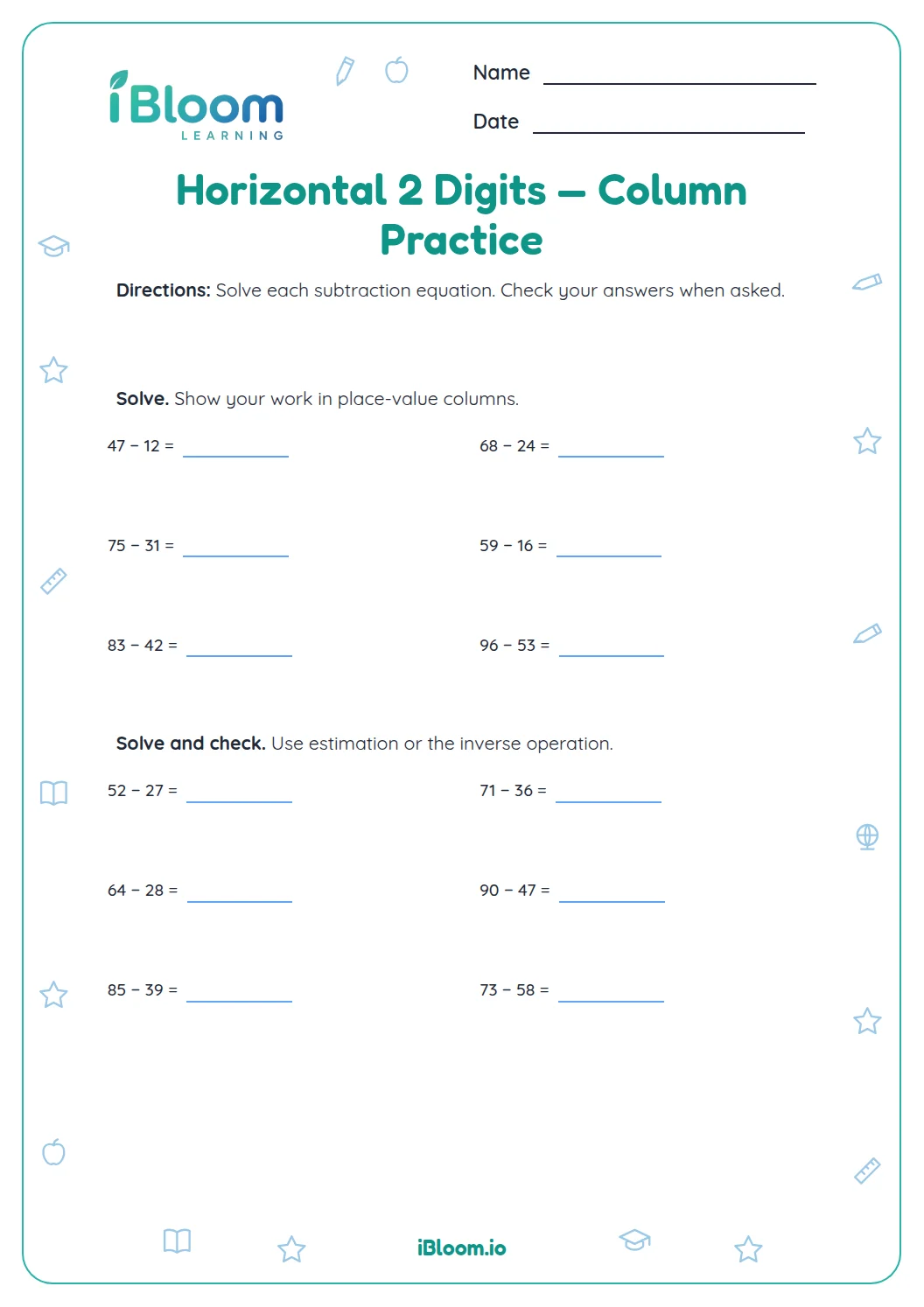
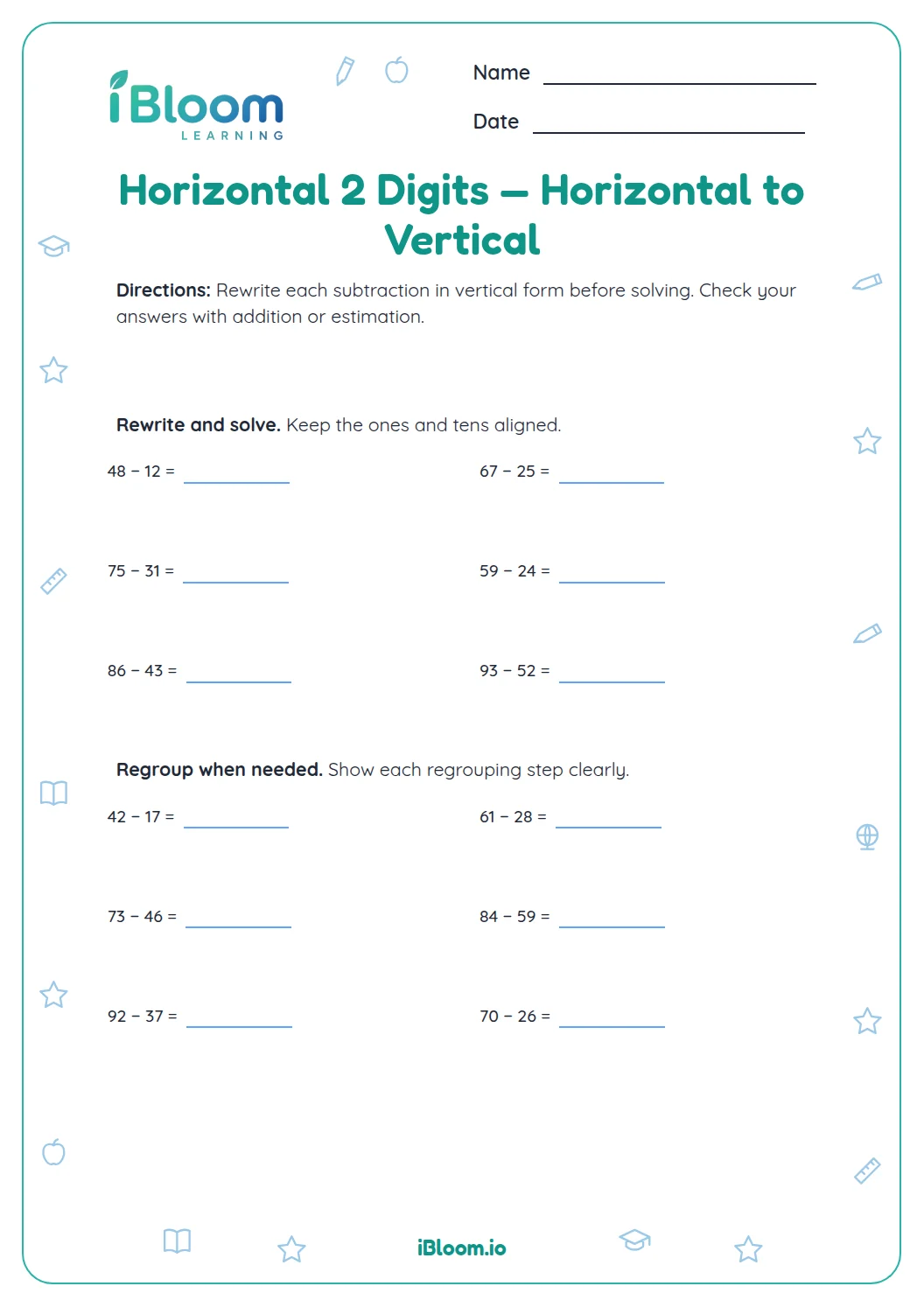
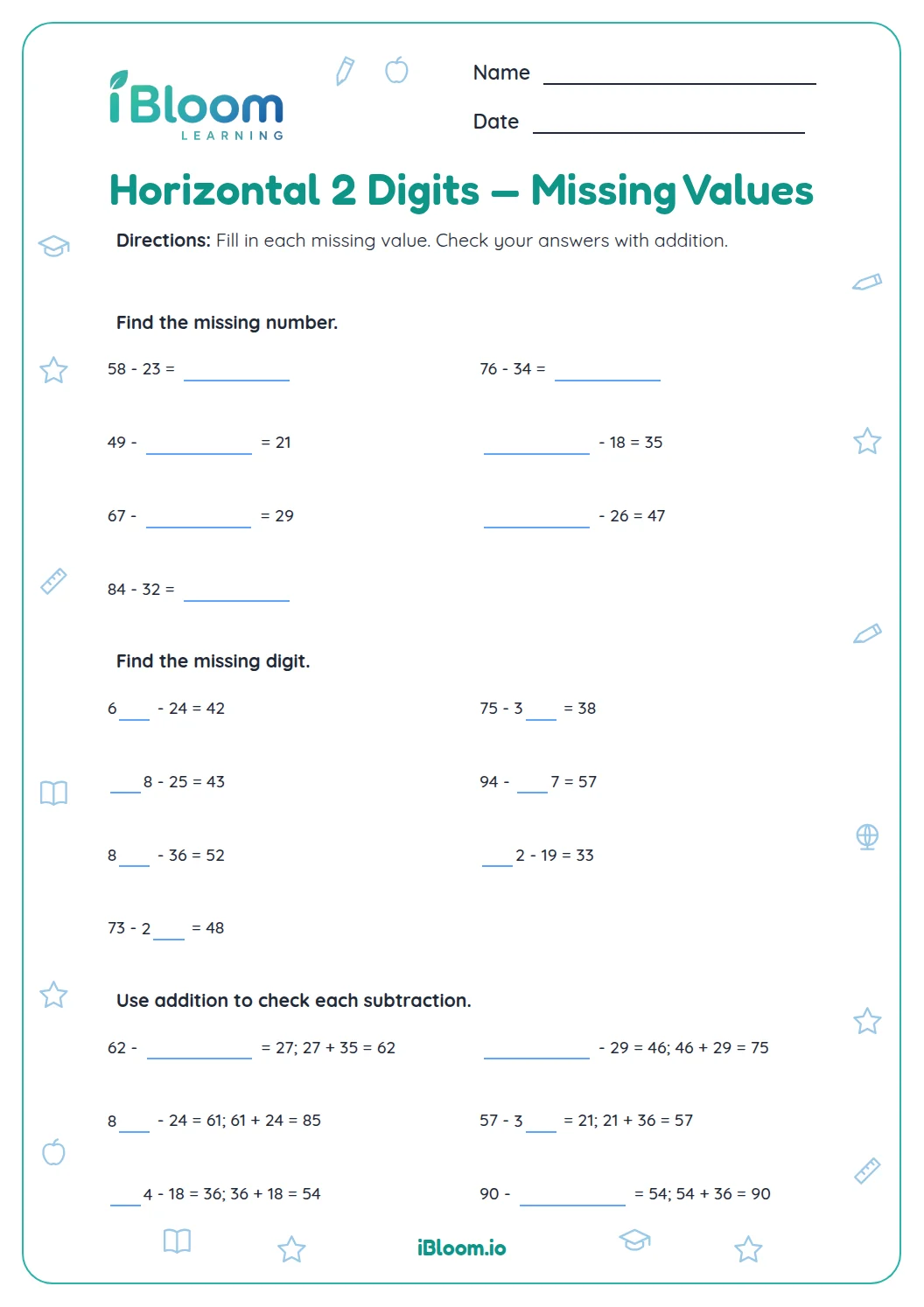
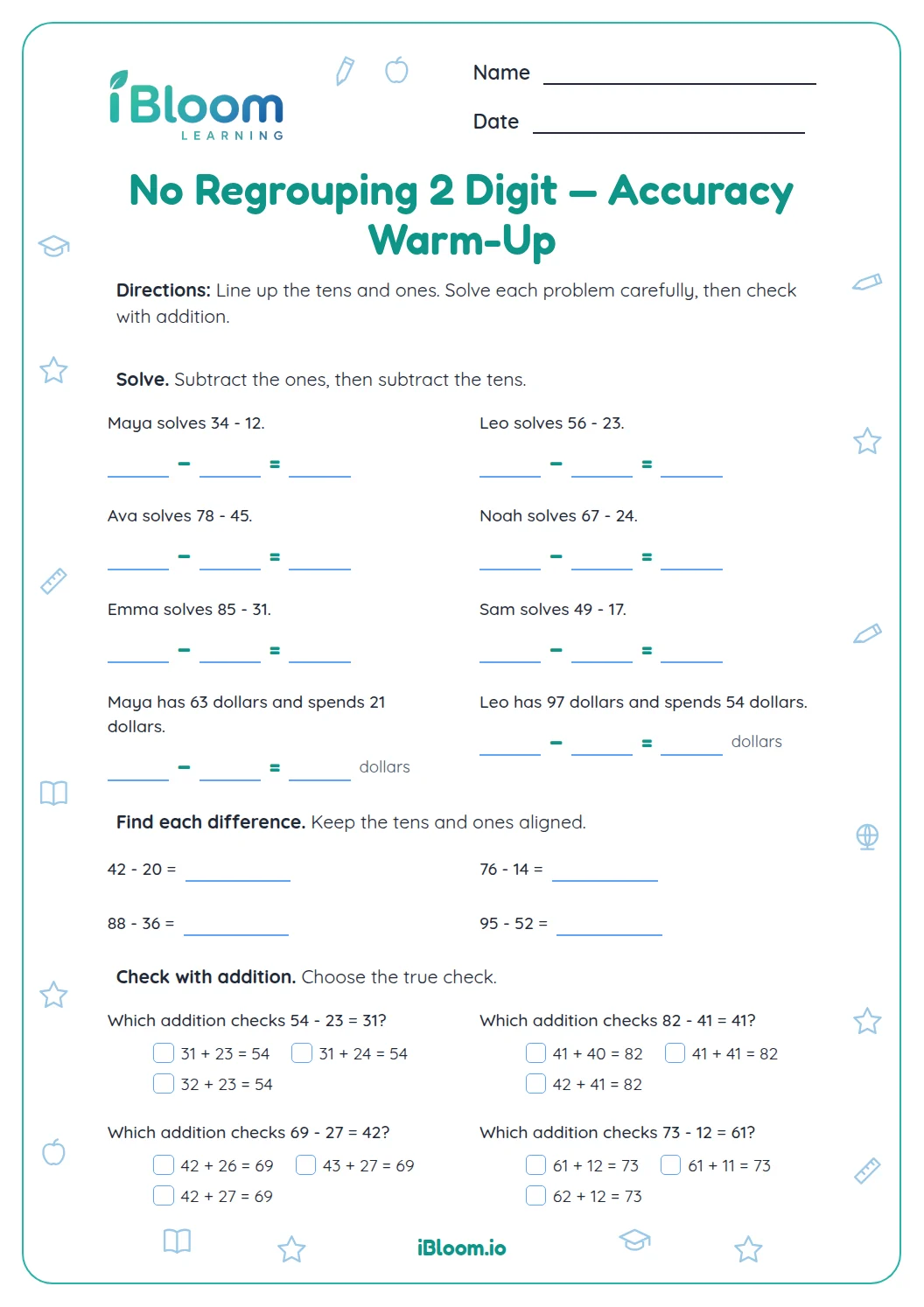
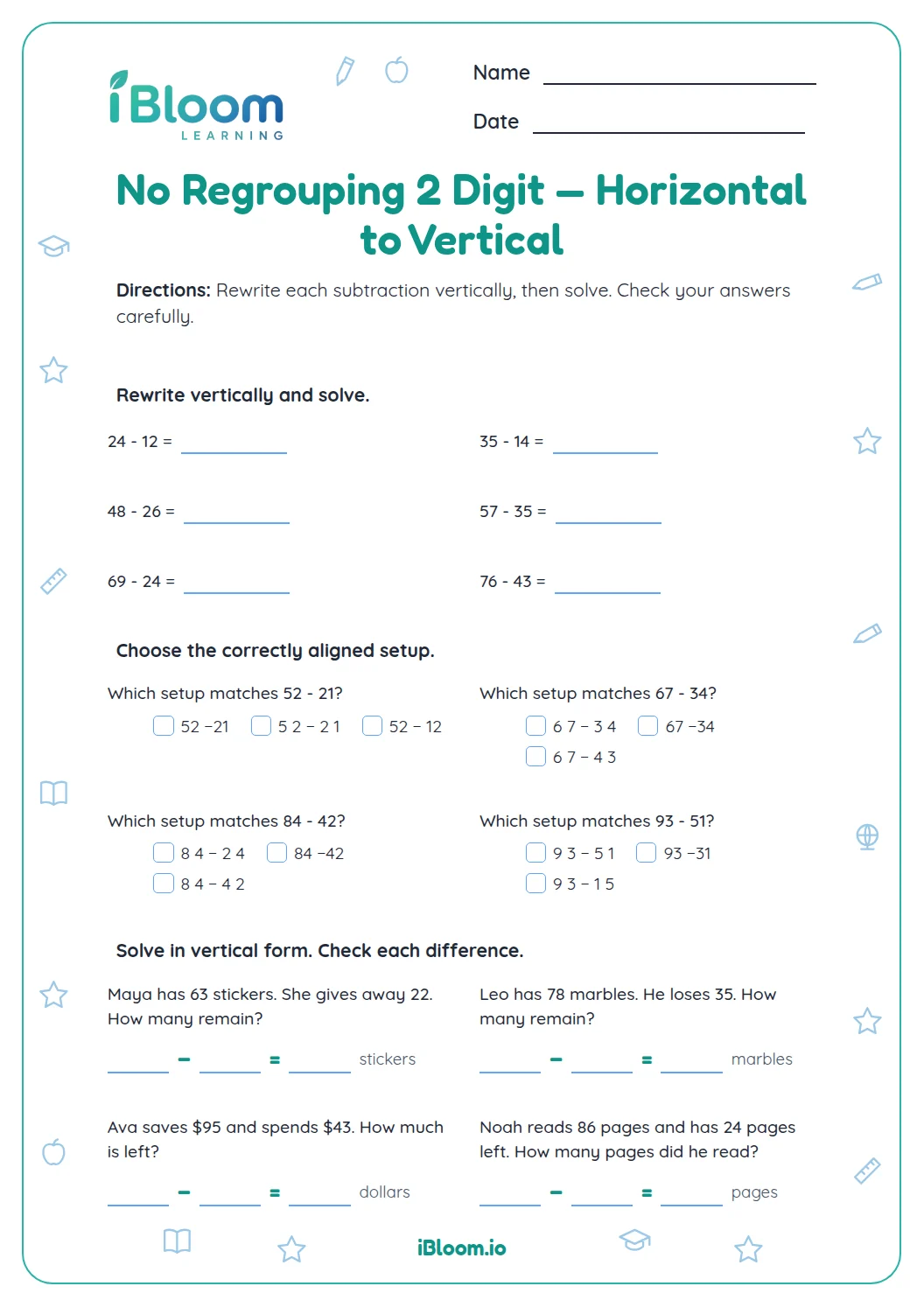
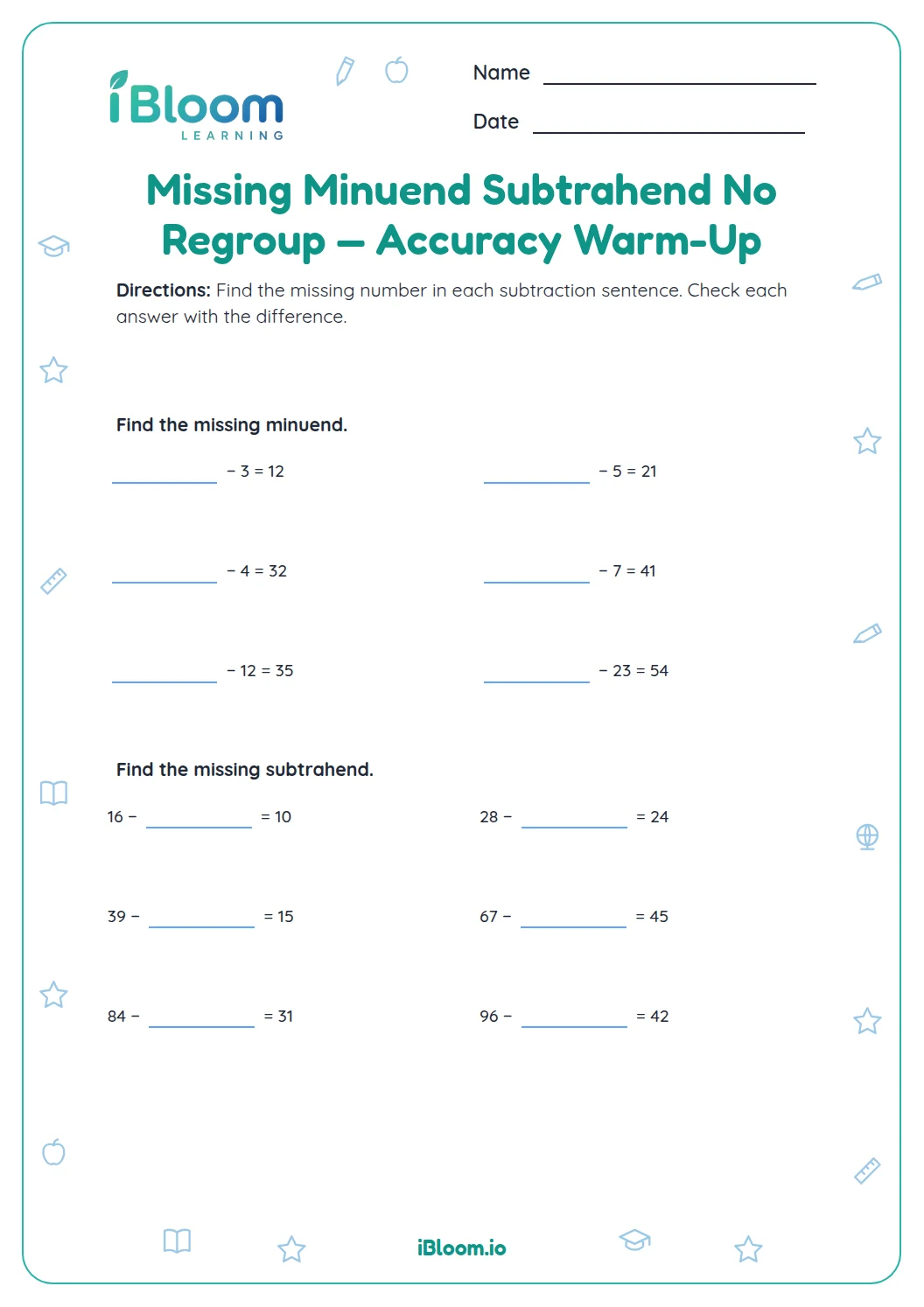
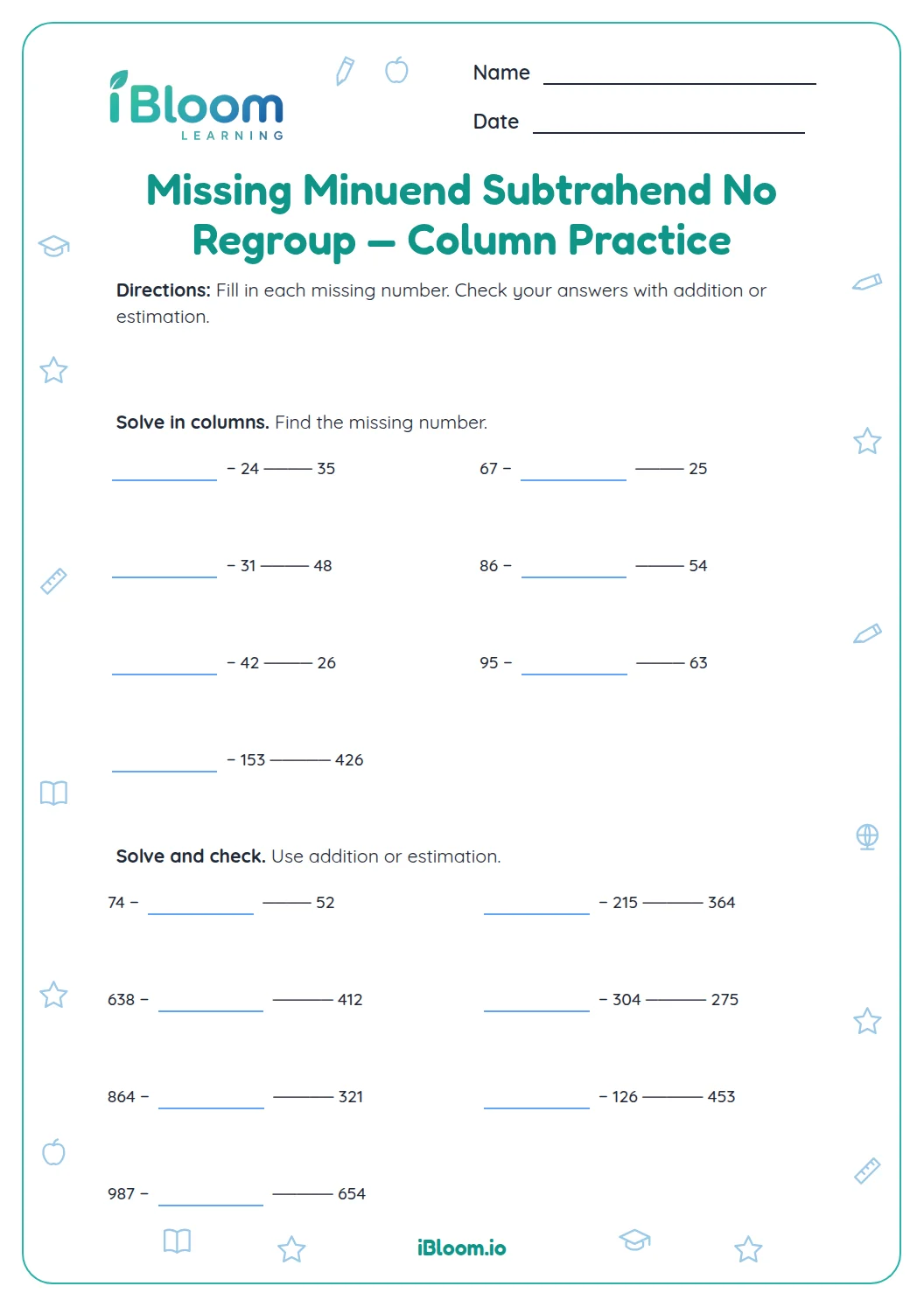
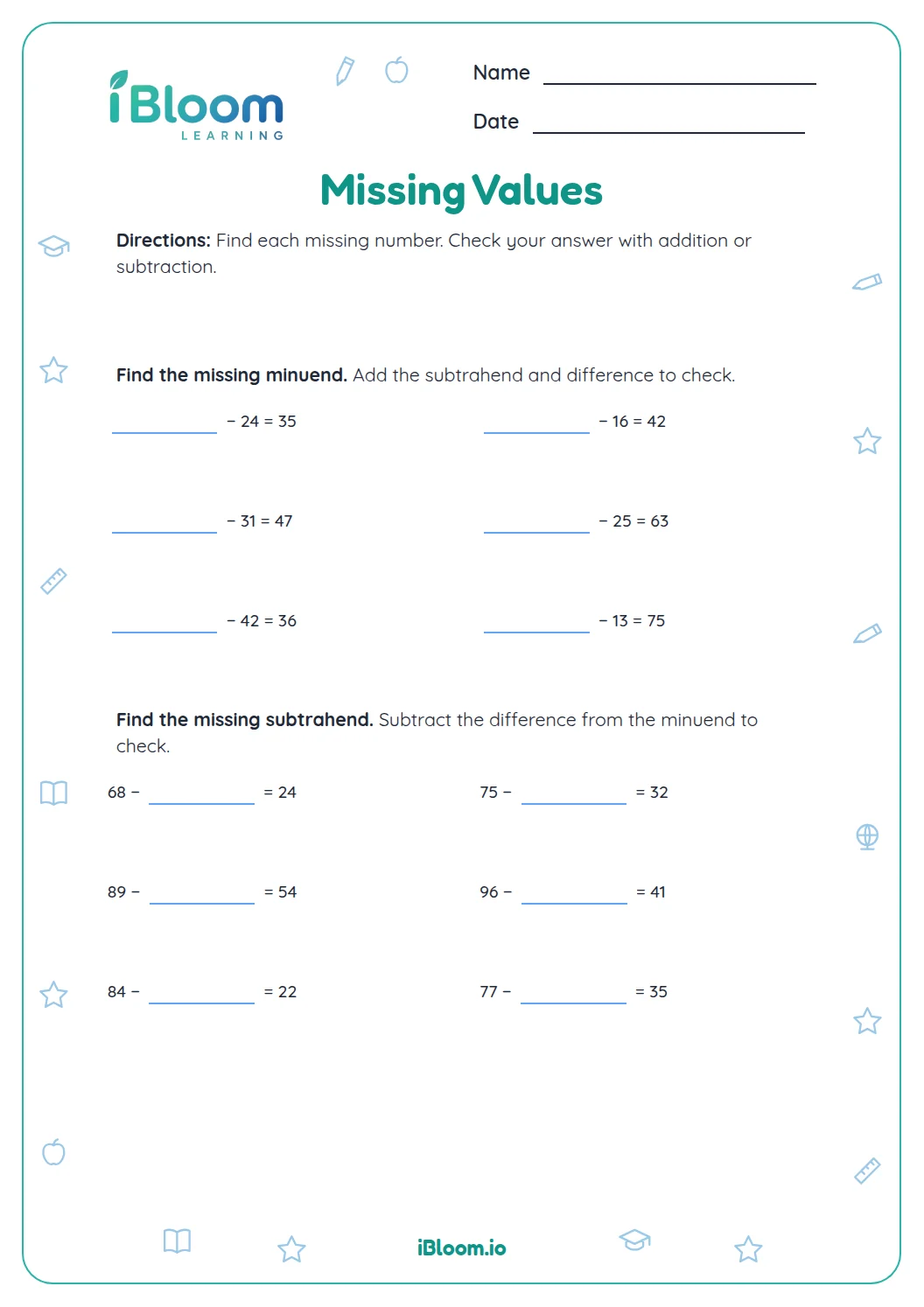
This printable worksheet helps students check horizontal two-digit subtraction without regrouping. It begins with worked claims to judge, continues with direct computations, and ends with incorrect results to repair. Each subtraction can be checked by adding the difference back to the subtrahend. The activities practice place-value subtraction within 100, with numbers chosen so no regrouping is needed. A separate key includes the correct results.
Aligned to 2.NBT.B.5
How can students spot a subtraction error?
Check whether the ones and tens were subtracted in their own place-value columns. Then solve the problem independently rather than trusting the displayed result. The first set asks students to choose a correct solution or check.
What is a reliable way to subtract horizontally?
Read the digits by place: subtract the ones, then subtract the tens. Since the ones digit being subtracted is no larger than the starting ones digit, and likewise for the tens, these examples do not require regrouping.
- 186 − 34
- 2Ones: 6 − 4 = 2
- 3Tens: 8 tens − 3 tens = 5 tens
- 4Difference: 52
- 5Check: 52 + 34 = 86
How do students correct a wrong result?
Recompute from the original expression and write the corrected difference. For a check equation, add the answer to the subtrahend; the sum should return to the minuend.
How to use this worksheet
- 1Read the entire subtraction expression.
- 2Subtract ones from ones and tens from tens.
- 3Recompute any result that a student claims.
- 4Add the difference to the subtrahend as a check.
- 5Use the answer key to locate and correct a place-value slip.
Common mistakes and quick fixes
The mistake
Subtracting the smaller digit from the larger digit in each place without tracking which number is minuend.
The fix
Keep the order: top number minus the number after the minus sign.
The mistake
Subtracting tens as ones, such as treating 8 tens as 8.
The fix
Name the place aloud: 8 tens minus 3 tens is 5 tens.
The mistake
Accepting a difference without checking it.
The fix
Add the difference and subtrahend; the sum should equal the minuend.
Common Core alignment
Subtract within 100 by using place-value strategies and checking with addition.
On this sheet: The horizontal two-digit calculations use place-value subtraction without regrouping.
Show the official wordingHide the official wording
Fluently add and subtract within 100 using strategies based on place value, properties of operations, and/or the relationship between addition and subtraction.
What to practice next
Further reading
Questions parents and teachers ask
What does no regrouping mean?
The difference is 52. Subtract 4 ones from 6 ones to get 2 ones, then subtract 3 tens from 8 tens to get 5 tens. Check the result because 52 + 34 equals 86. Ask the student to name both places while explaining the check.
What is the answer to 86 − 34?
Checking a claim encourages students to compute instead of copying a result. When an answer is wrong, recomputing the subtraction and using addition helps locate the place where the error occurred in the place-value work. The correction should change the incorrect result while keeping the original subtraction expression intact.
Why does the worksheet ask students to analyze errors?
The 14 items include four multiple-choice checks, six missing-difference computations, and four written corrections. The answer key gives the right result for every item, including each corrected subtraction and check equation. The formats give practice judging work, calculating, and repairing an answer.
Are the questions all multiple choice?
Add the difference and the subtrahend. If their sum equals the minuend, the subtraction is correct. For 75 − 23 = 52, check 52 + 23 = 75 to confirm the difference. If the sum is different, revisit the subtraction digits and check the order of the numbers.
How do I check a subtraction difference?
No regrouping means each digit in the top number is large enough to subtract the matching digit below it. In 86 − 34, 6 is at least 4 and 8 tens is at least 3 tens. Students should keep each subtraction in its original order, even when one digit is smaller.