
About this worksheet
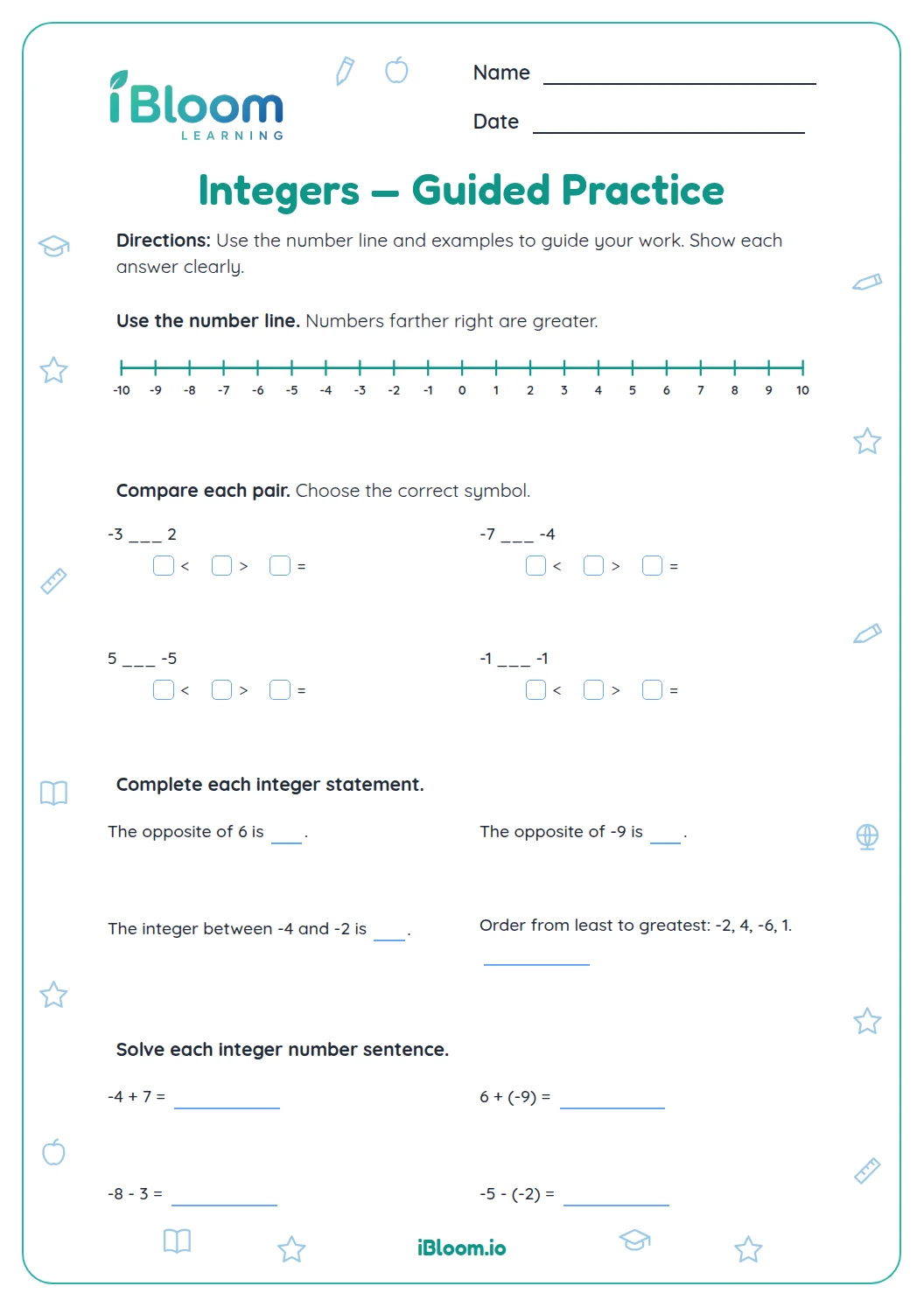
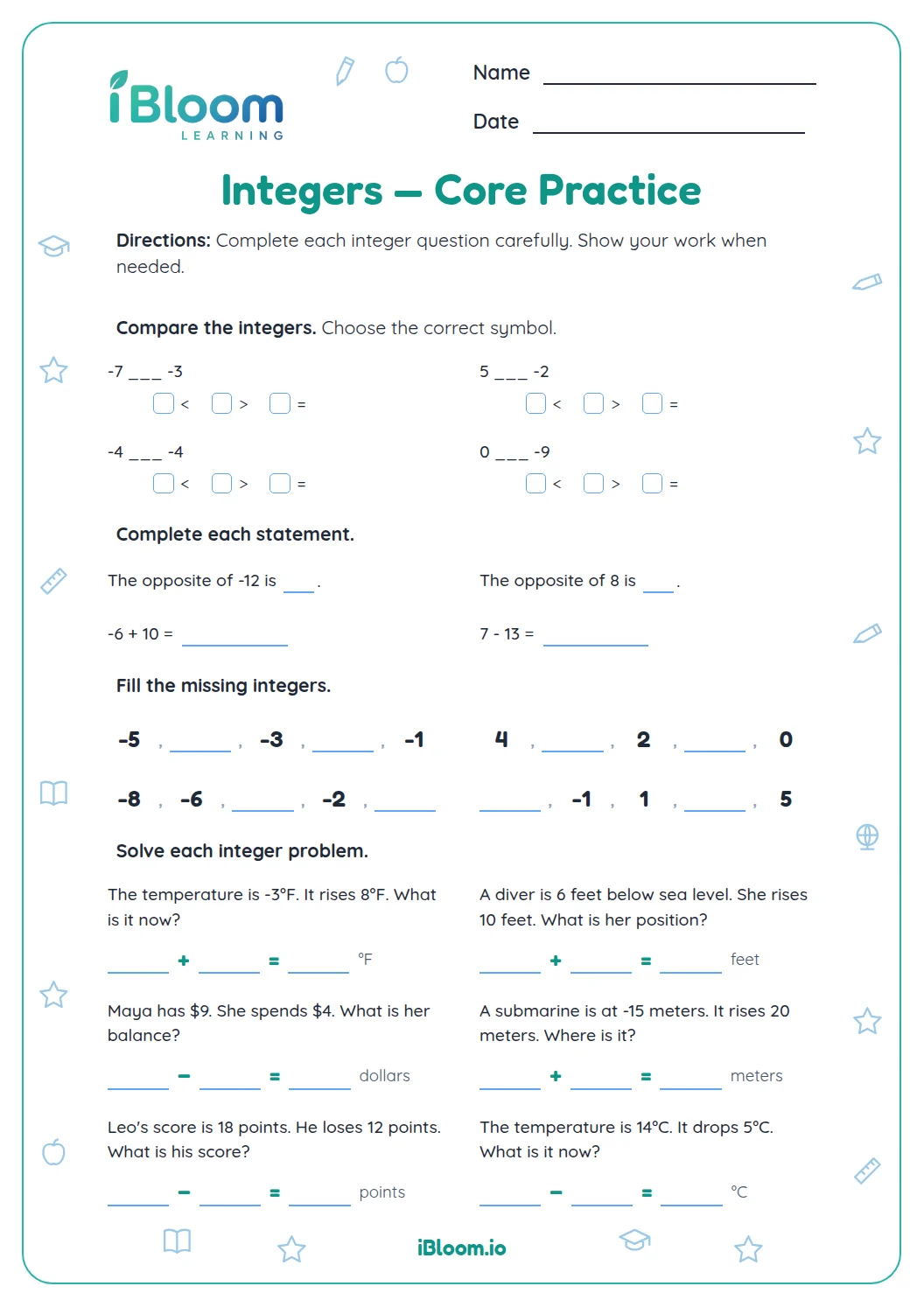
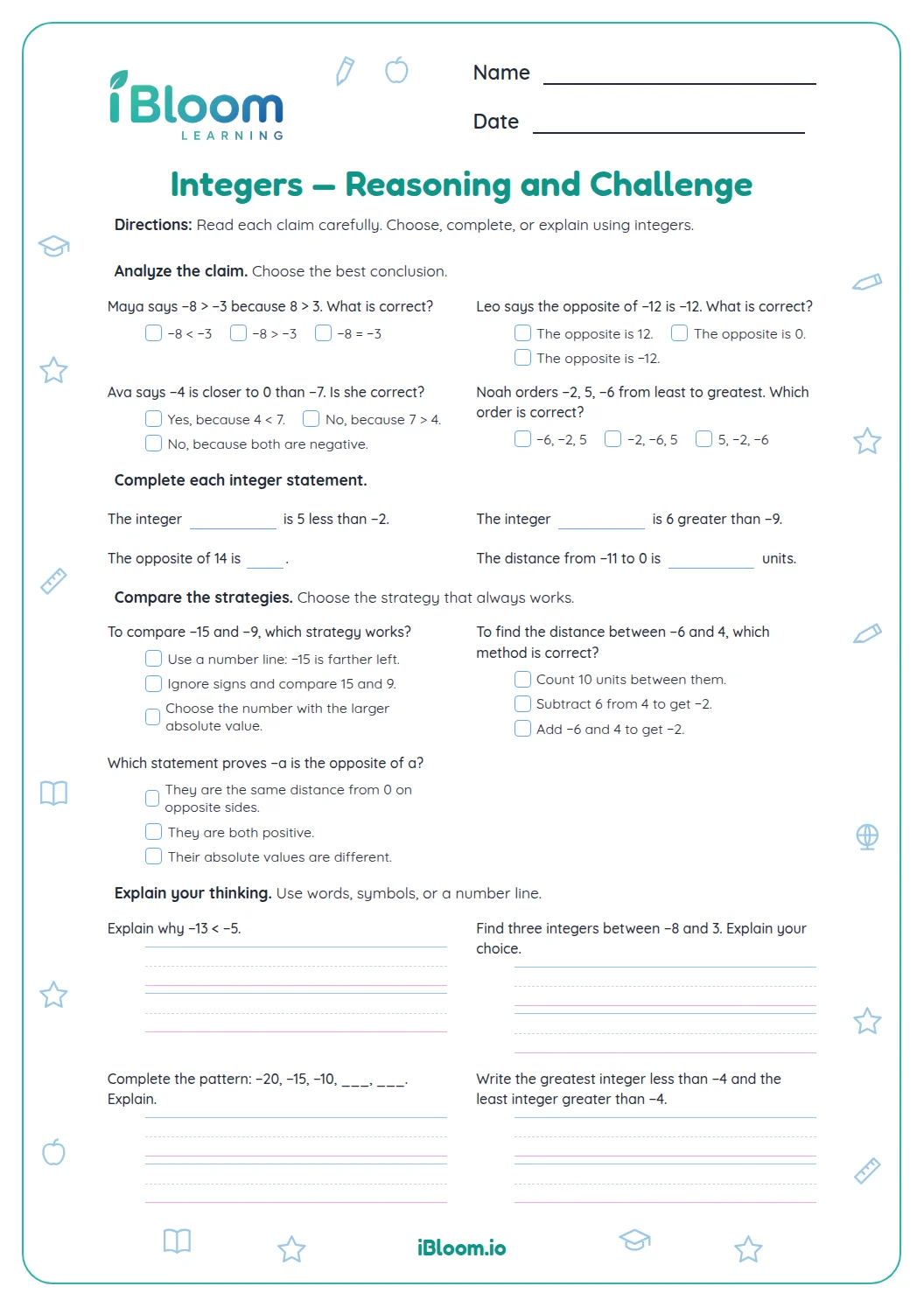
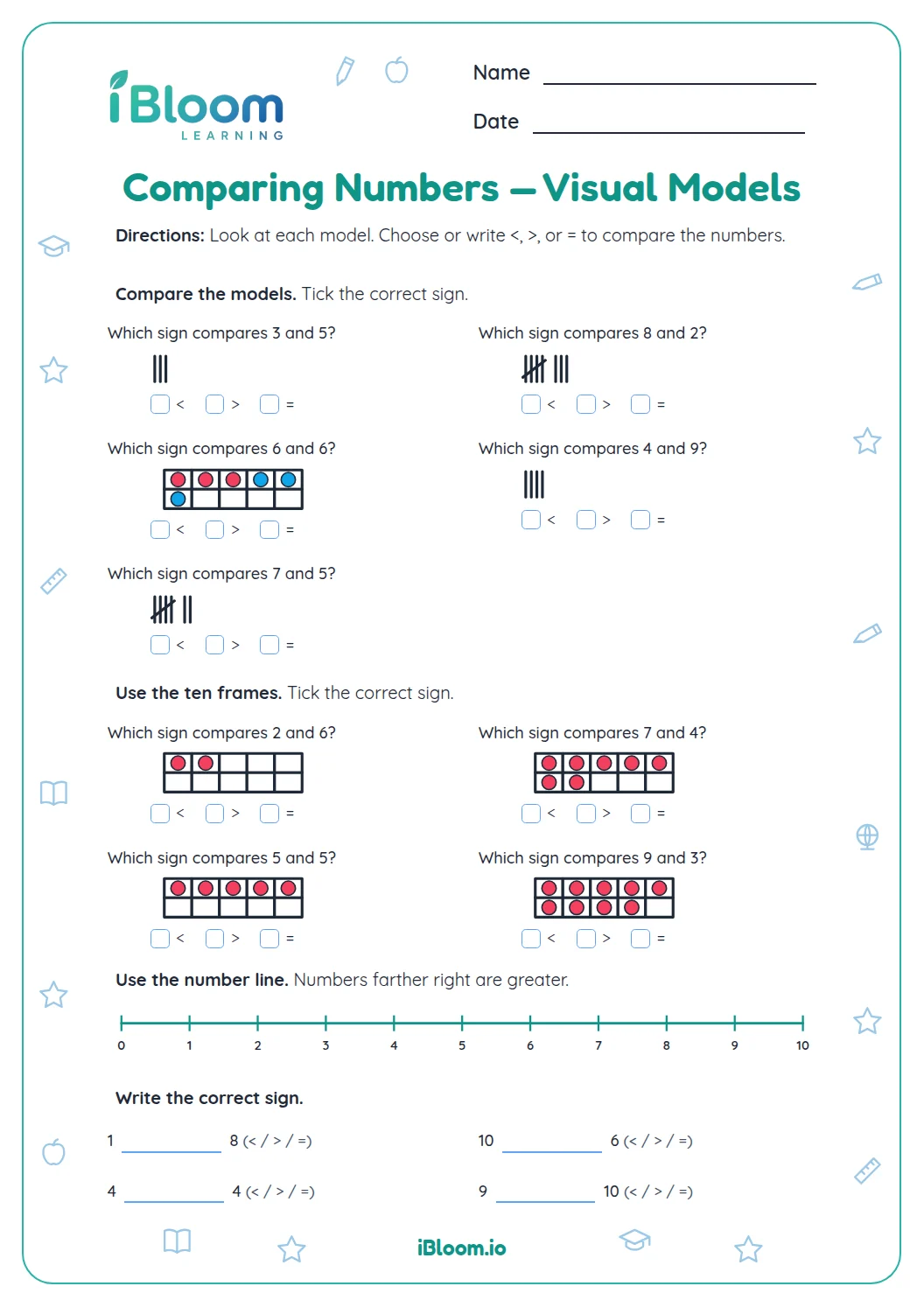
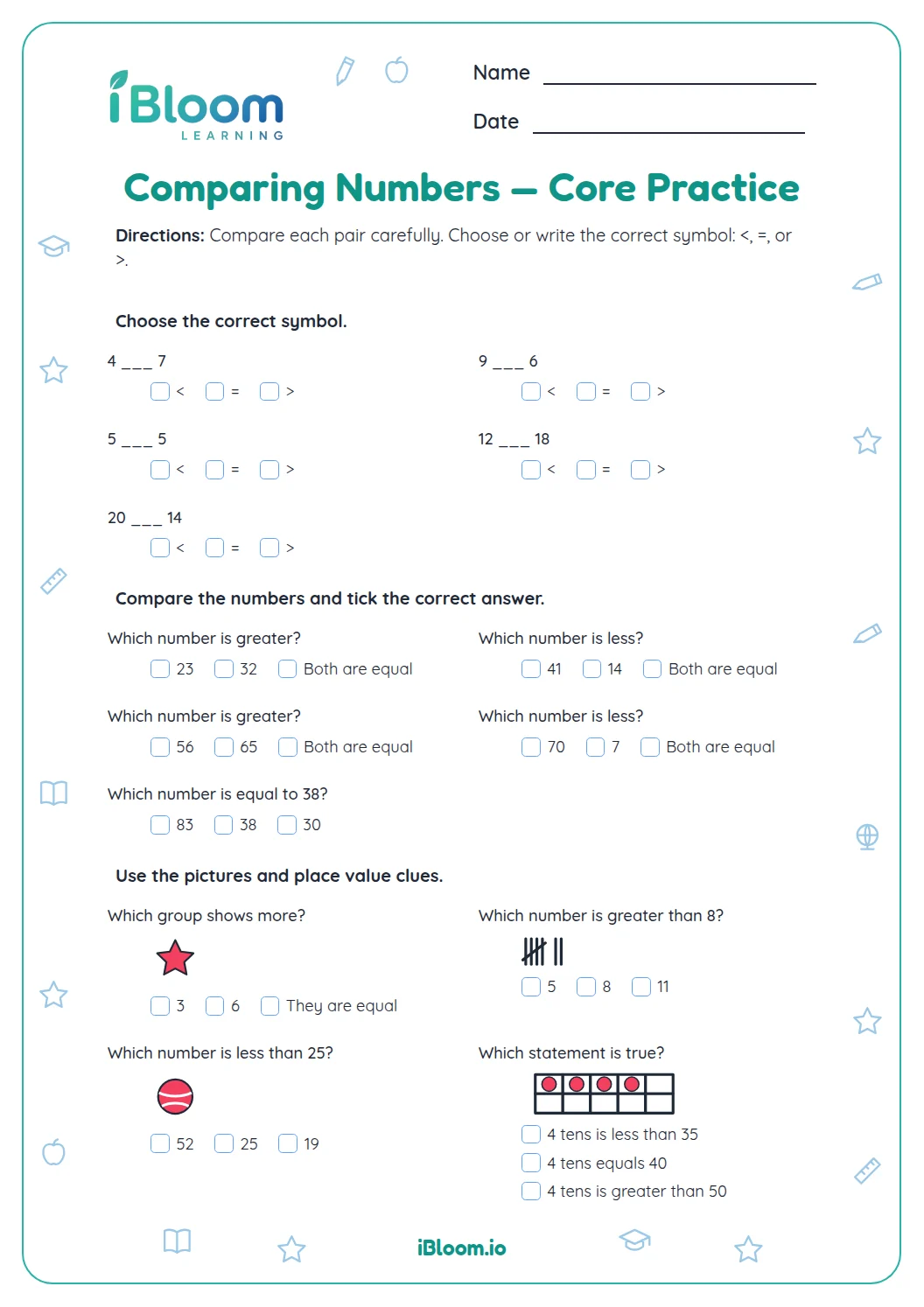
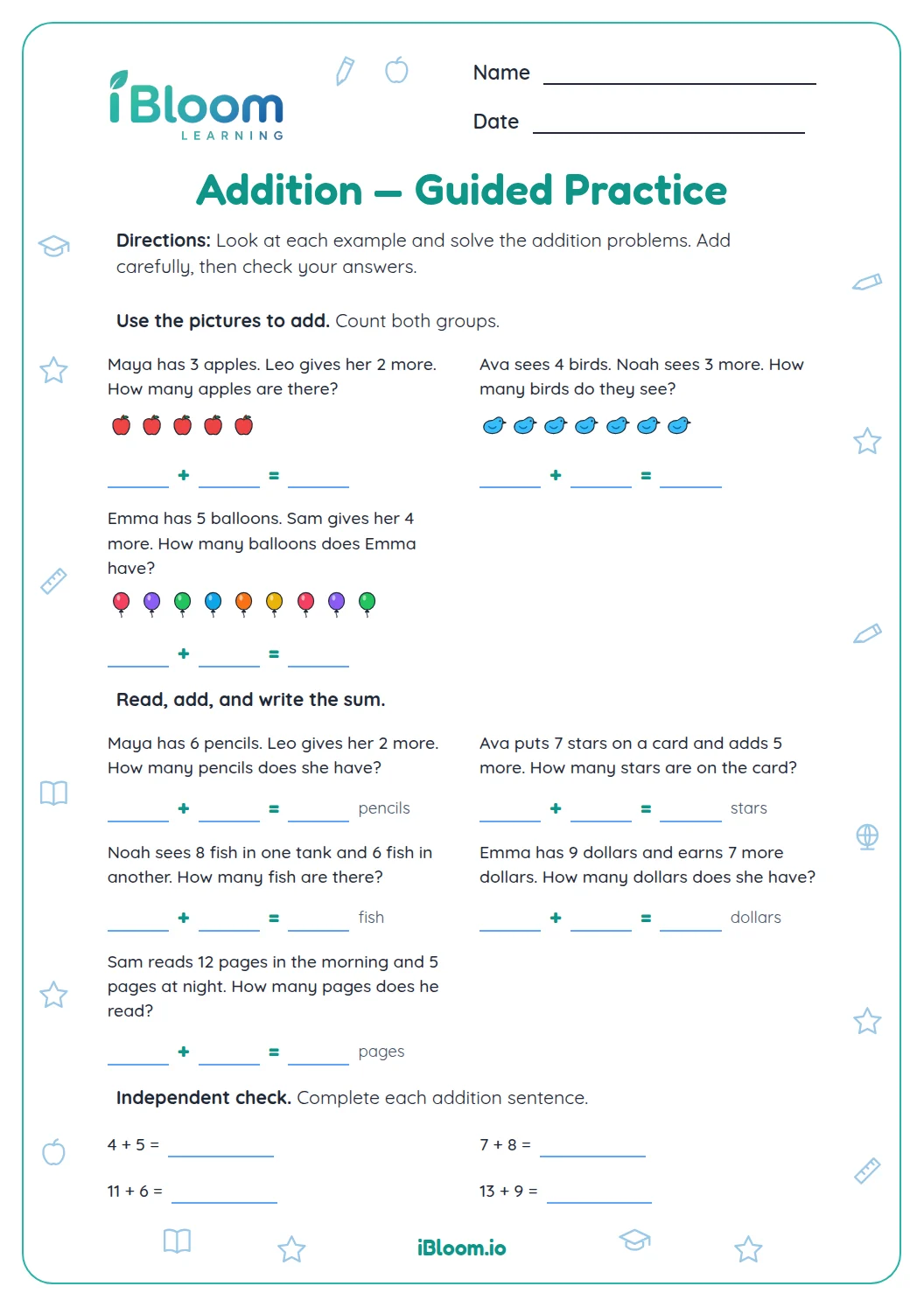
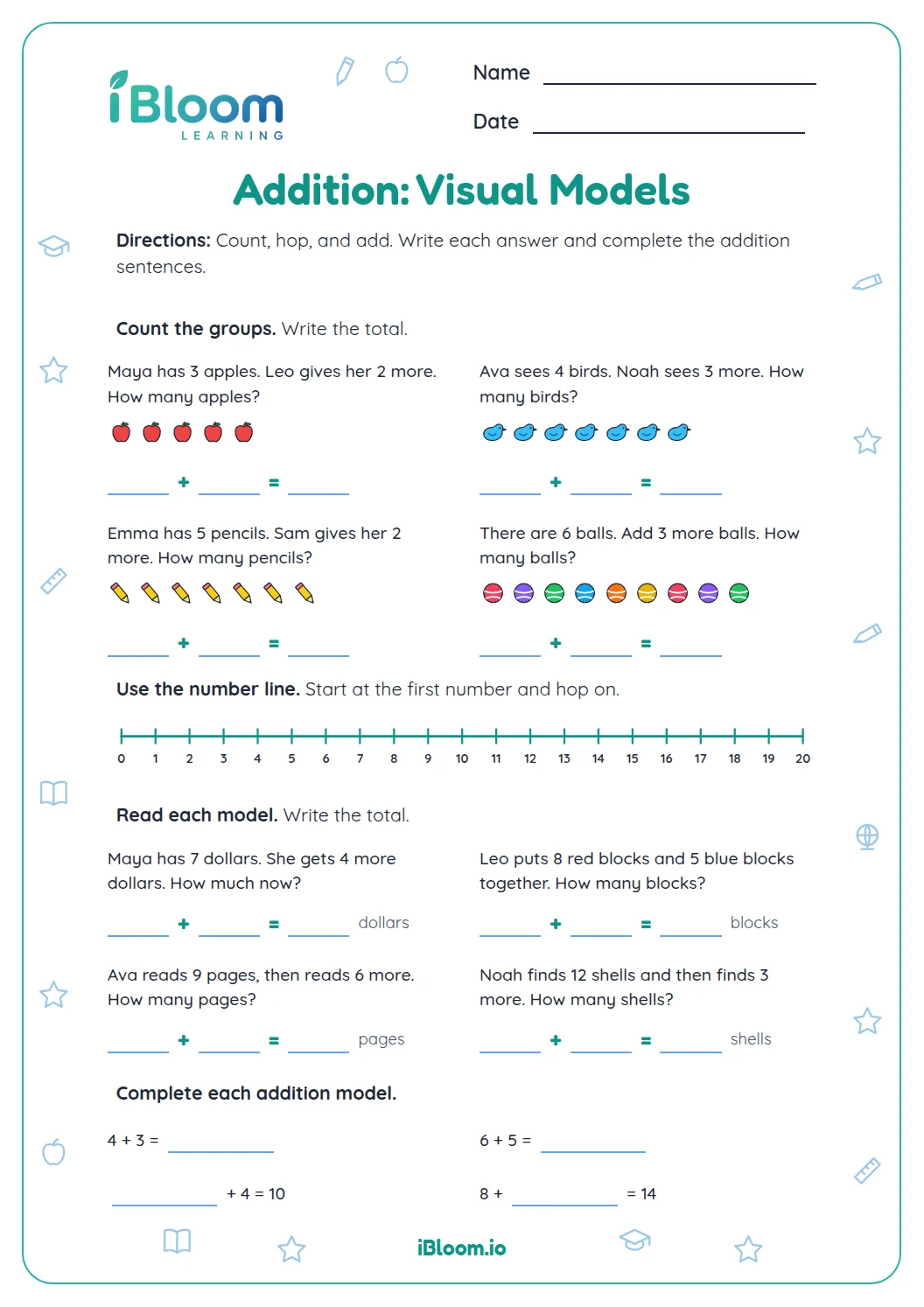
This printable Grade 6 worksheet uses number lines to make integers visible. Students read and compare positions, identify opposites, and model positive or negative changes in short equations. The separate answer key includes the results for all 16 questions.
How do number lines model integers?
Zero separates positive and negative values. Moving right increases a value; moving left decreases it. The questions apply these ideas to positions, opposites, and signed changes.
What will students practice?
There are 16 questions in three parts. For example, starting at 1 and moving 4 units left lands at −3, so 1 − 4 = −3.
- Read labeled integer points
- Compare and order integers
- Model signed addition and subtraction
How to use this worksheet
- 1Find zero and identify which direction is positive.
- 2Read labeled points by counting intervals from zero.
- 3For a positive change, move right; for a negative change, move left.
- 4Compare integers by their positions on the line.
- 5Check computations and ordering with the answer key.
Common mistakes and quick fixes
The mistake
Treating −5 as greater than −2 because 5 is larger
The fix
The point farther left is smaller.
The mistake
Moving right for a negative change
The fix
Negative changes move left.
The mistake
Calling zero positive or negative
The fix
Zero is the boundary between the two directions.
What to practice next
Make more practice
Questions parents and teachers ask
What is the opposite of an integer?
Its opposite is the same distance from zero on the other side. The opposite of −4 is 4, and the opposite of 6 is −6. This short routine gives the learner time to notice the details and explain the answer in their own words.
How do I compare two negative numbers?
On a number line, the value farther left is smaller. For example, −5 is less than −2 because −5 lies farther left. This short routine gives the learner time to notice the details and explain the answer in their own words.
How do number lines model integer changes?
Start at the first number. Move right for a positive change and left for a negative change; the ending point is the result. This short routine gives the learner time to notice the details and explain the answer in their own words.
What does zero mean on a number line?
Zero is the boundary between positive and negative numbers. It represents no positive or negative amount in a signed context. This short routine gives the learner time to notice the details and explain the answer in their own words. This short routine gives the learner time to notice the details and explain the answer in their own words.
How many questions are on the worksheet?
The worksheet contains 16 questions in three parts, including number-line reading, signed changes, comparisons, and ordering. A separate answer key is included. This short routine gives the learner time to notice the details and explain the answer in their own words.