







About this worksheet
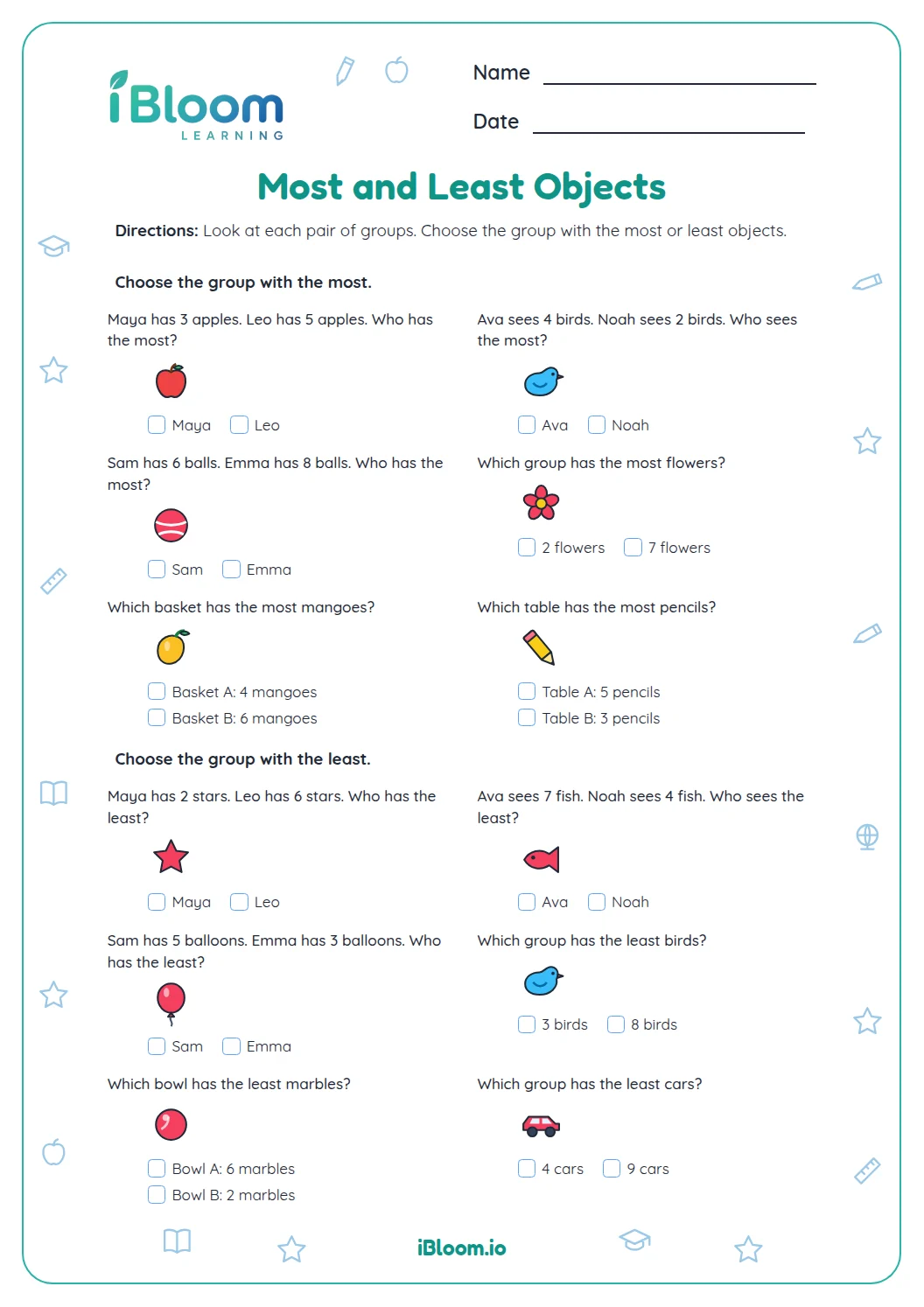
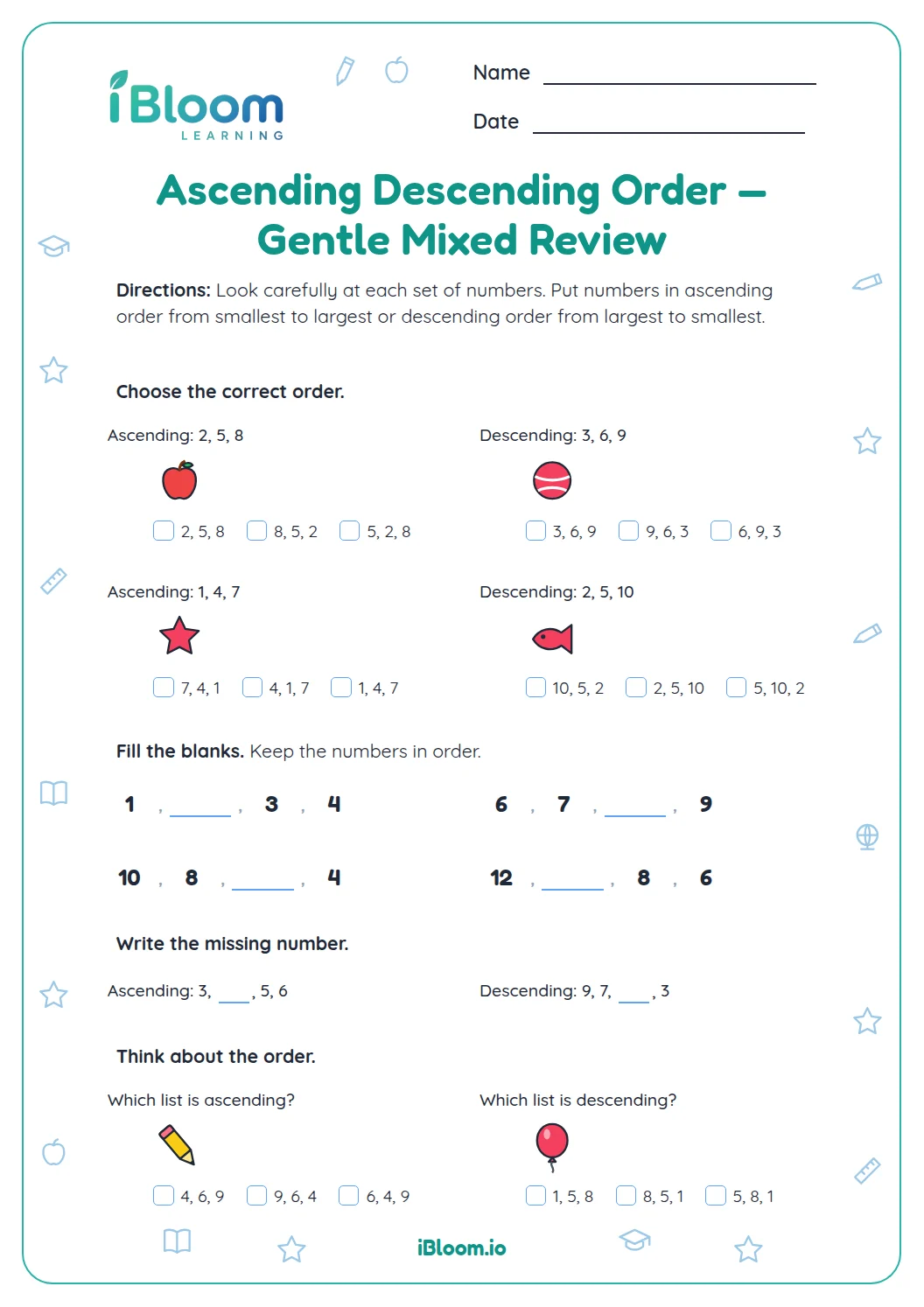
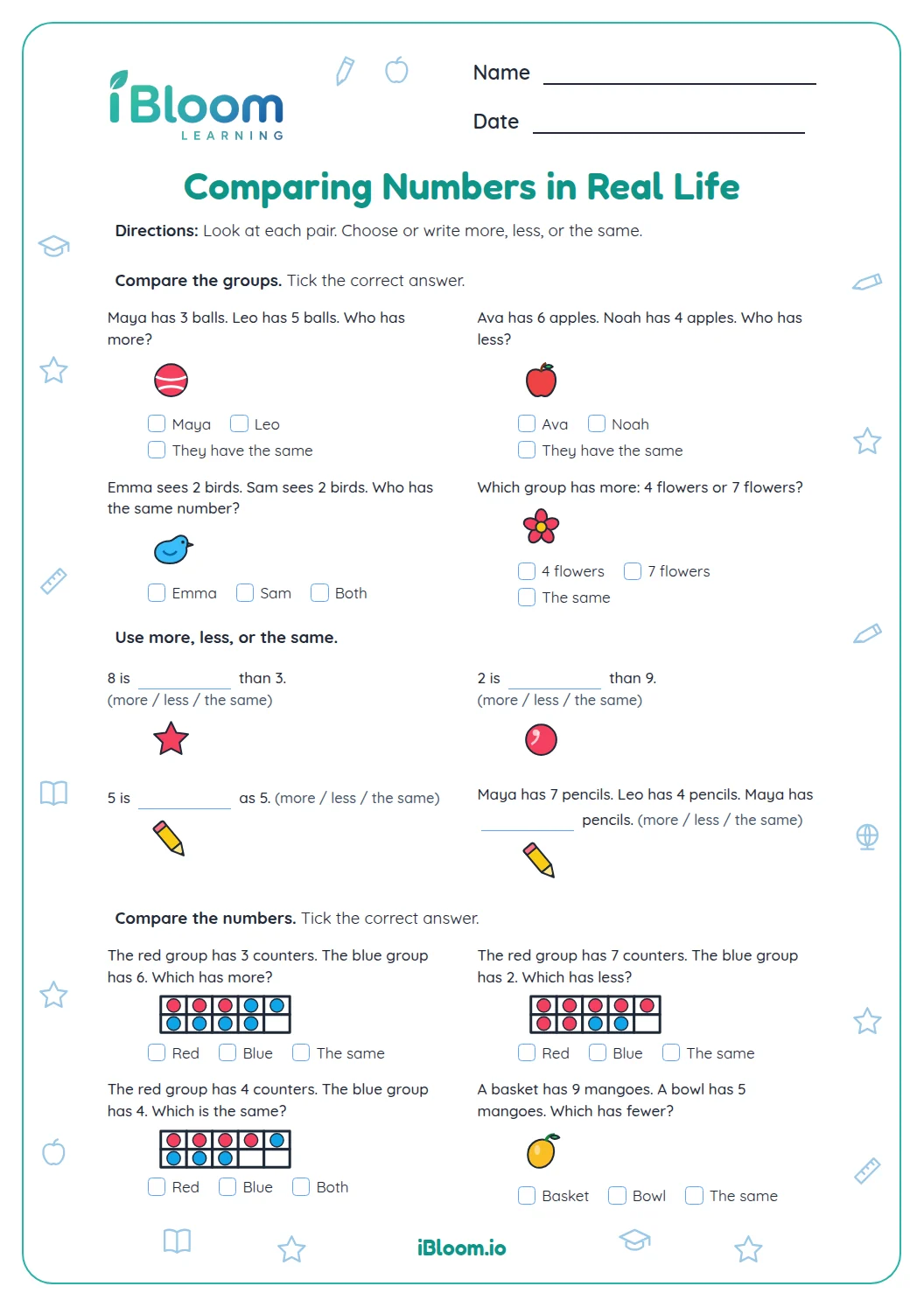
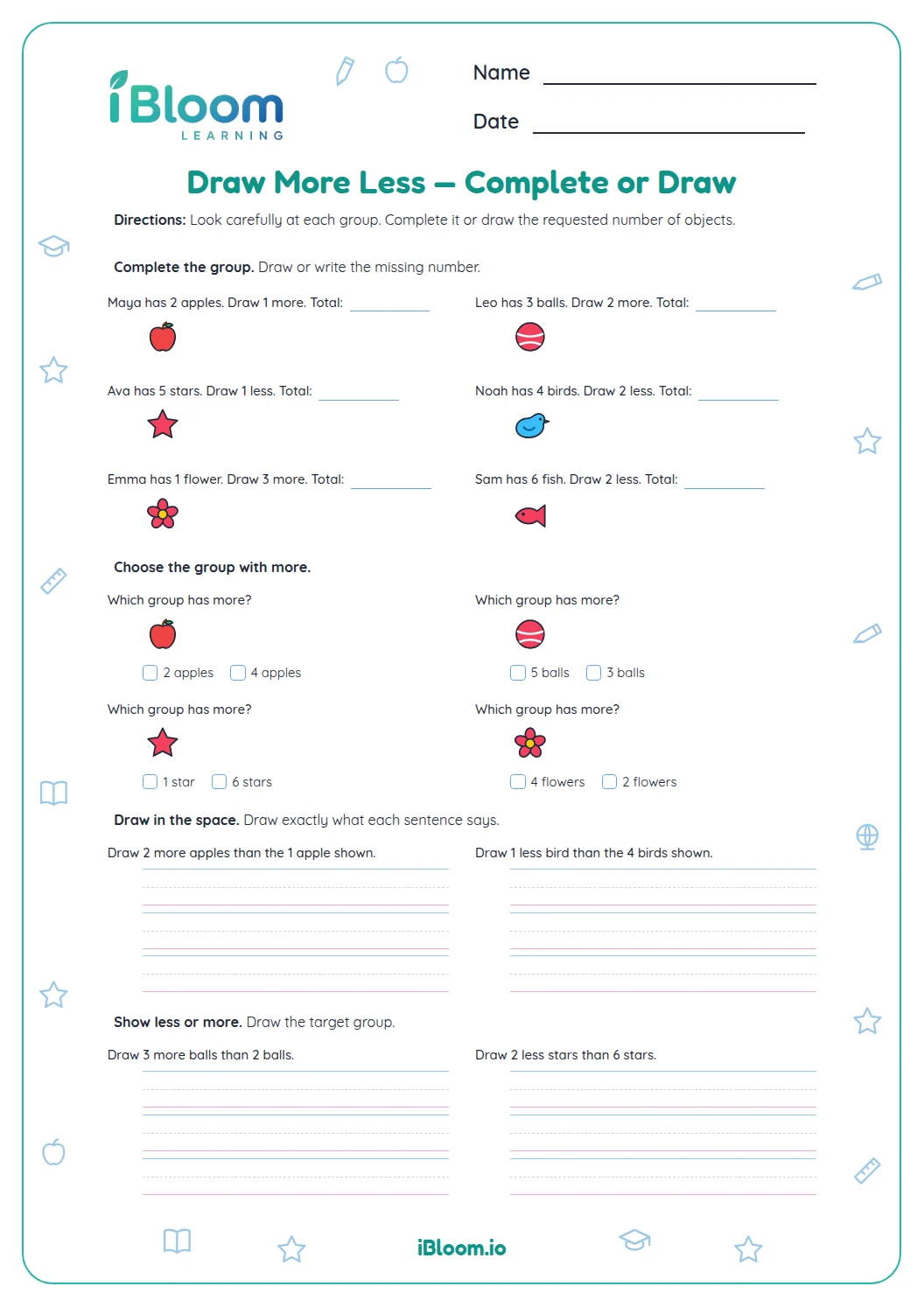
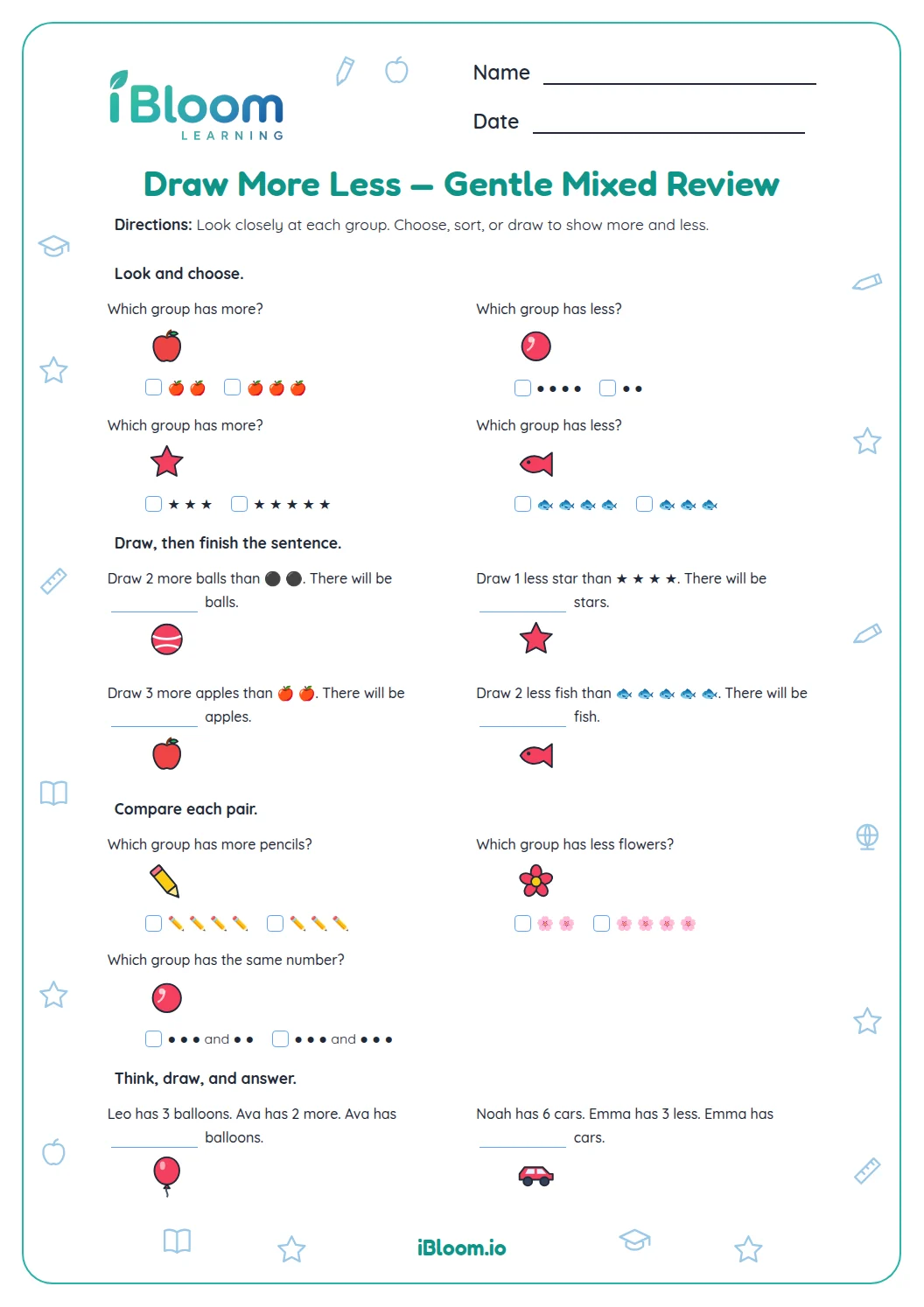
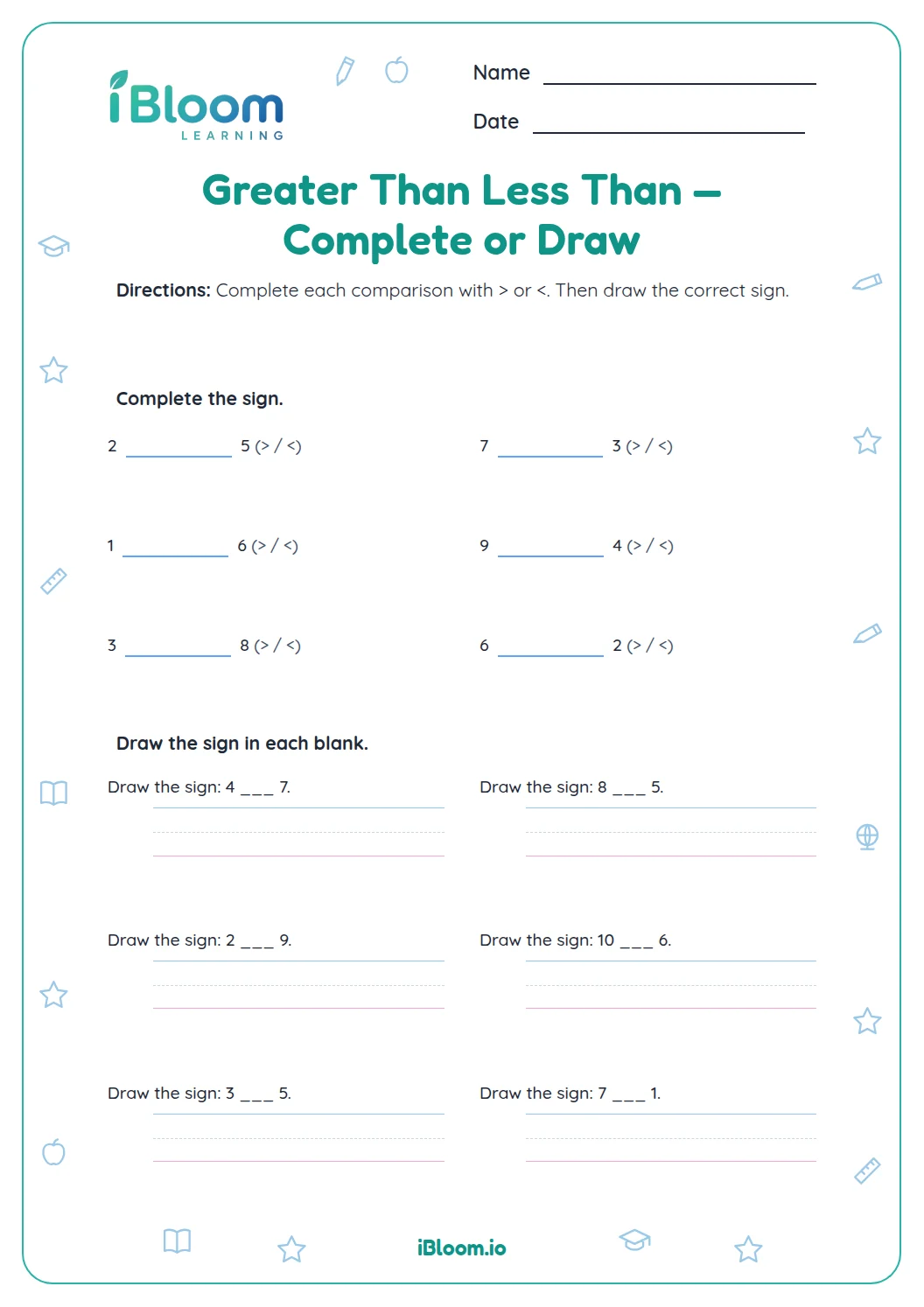
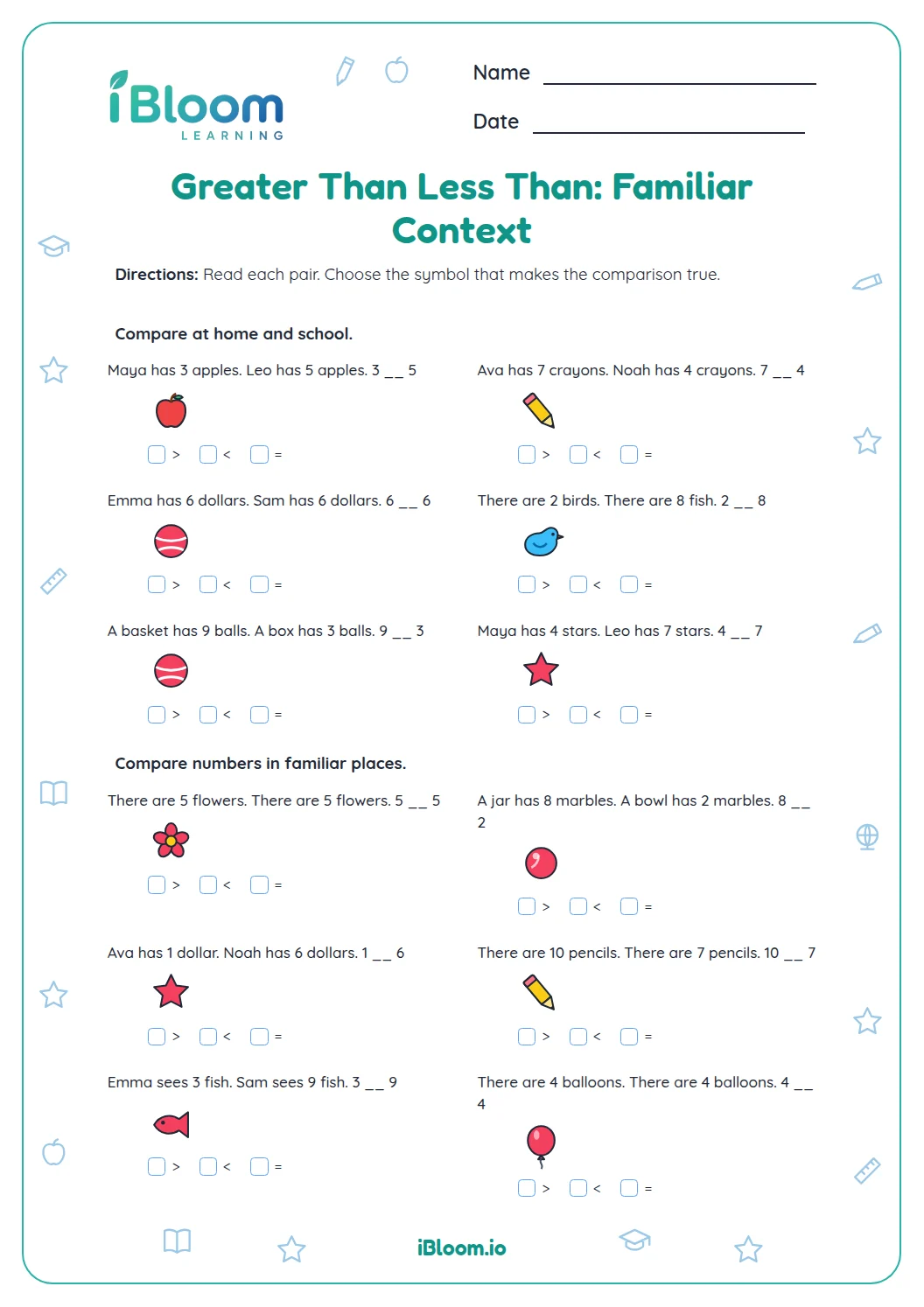
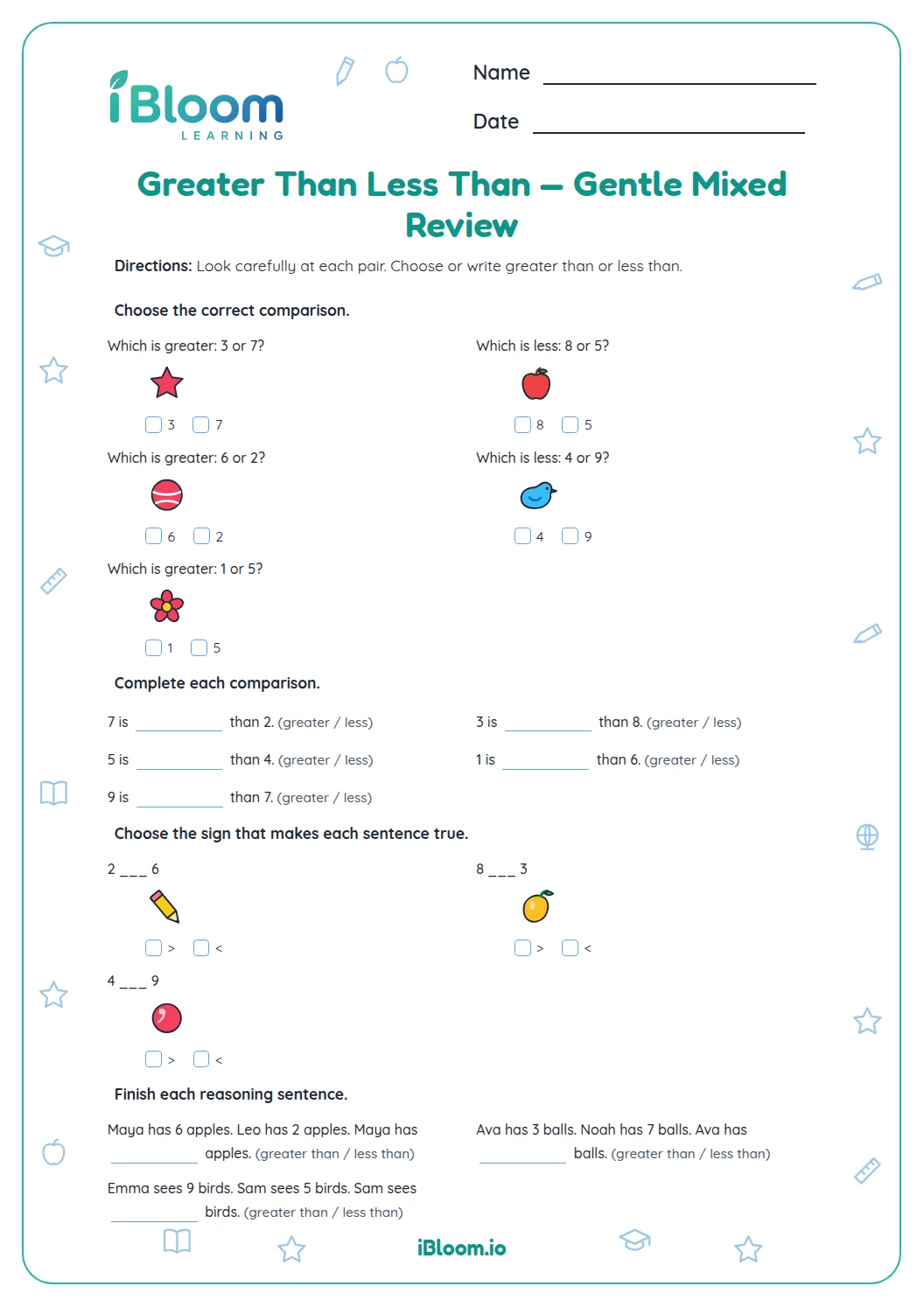
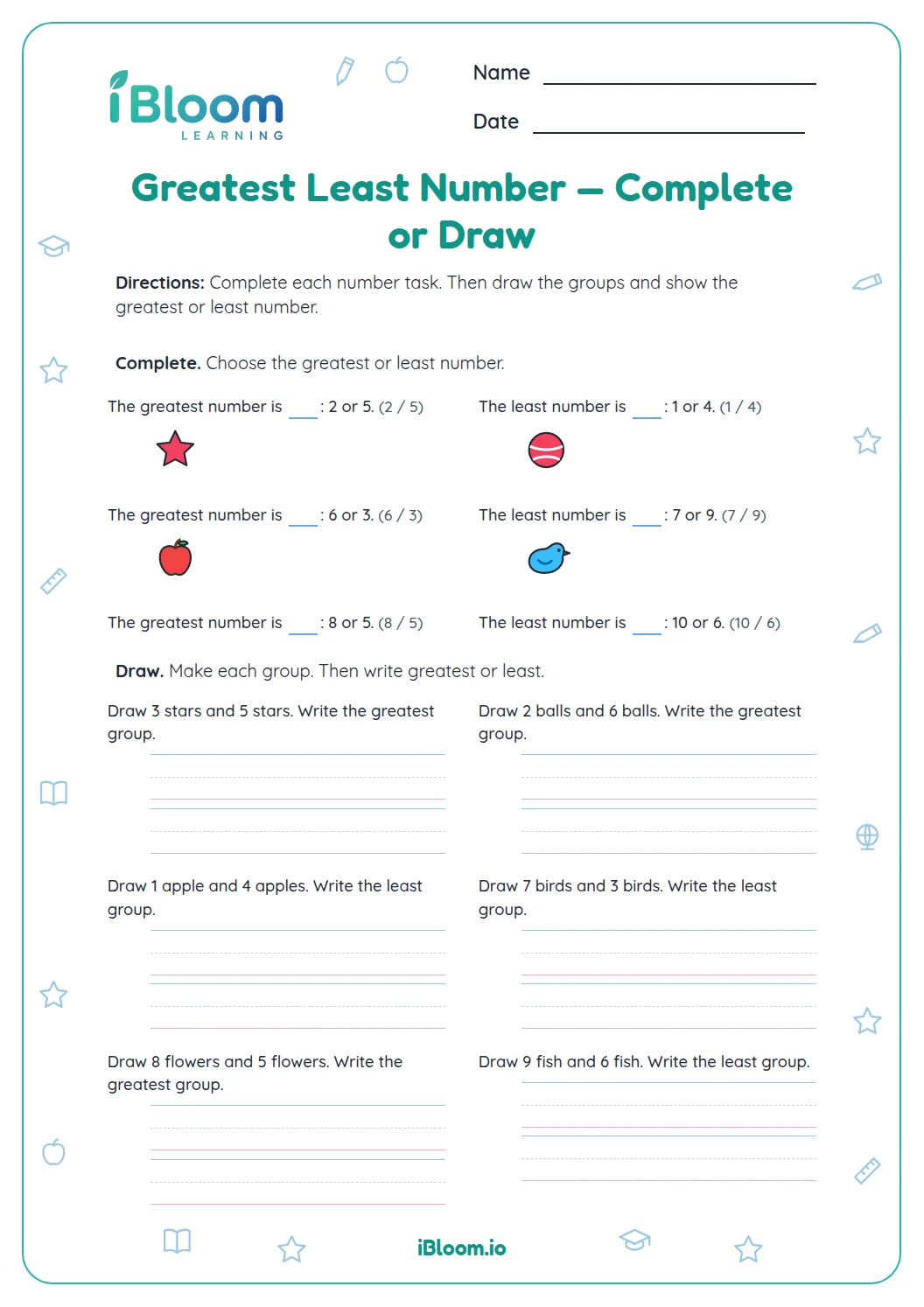
This preschool and kindergarten math sheet uses repeated pictures to compare two groups. Learners choose which group has more or fewer objects, identify equal groups, and finish a gentle mixed review. The pictured objects keep the counting concrete, as on the original sheet, while the answer key gives a clear response for each of the 14 questions. It practices comparing groups by counting, aligned with CCSS K.CC.C.6.
Aligned to K.CC.C.6
How can children compare two pictured groups?
Count the objects in each group, then compare the totals. A group with more objects has the most; a group with fewer objects has the least. When both totals match, the groups have the same number.
- 1Group A: 3 apples
- 2Group B: 5 apples
- 35 is more than 3
- 4Answer: Group B has the most.
What kinds of comparisons are included?
Across 14 questions, learners compare picture groups for most, least, and same. The object pictures and small group sizes support counting before comparing.
How to use this worksheet
- 1Read the direction at the start of each part.
- 2Work through the first example slowly and name the important quantities.
- 3Record each calculation or comparison before writing the answer.
- 4Estimate or inspect the model to see whether the result is reasonable.
- 5Use the answer key after finishing and redo any item that needs correction.
Common mistakes and quick fixes
The mistake
Choosing a method before identifying what the question asks.
The fix
Underline the quantity or relationship the question asks you to find.
The mistake
Writing a result without checking its place value or size.
The fix
Compare the answer with an estimate or the visual model.
The mistake
Skipping a step when the numbers are close together.
The fix
Write one calculation at a time, then reread the prompt.
Common Core alignment
This sheet provides practice with the mathematics described below.
Compare groups to tell which has more, fewer, or the same number.
On this sheet: The questions count small groups and compare which amount is most or least.
Show the official wordingHide the official wording
Identify whether the number of objects in one group is greater than, less than, or equal to the number of objects in another group, e.g., by using matching and counting strategies.
What to practice next
Make more practice
Further reading
Questions parents and teachers ask
What does “most” mean on this worksheet?
Most means the group with the greatest number of objects. Children can count the pictures in each group and compare the totals. For example, a group of five apples has more than a group of three apples, so the group of five has the most.
What does “least” mean?
The least group has the smallest number of objects. Count each set of pictures, then identify the lower total. Several questions use familiar objects such as fish, balloons, and fruit, giving children concrete groups to compare as they practice the word least.
Are there equal groups too?
Yes. One question asks which groups have the same number. Children count both picture groups and notice that neither group has more or fewer when the totals match. This connects the word same with equal amounts using a concrete visual comparison.
Can a child use the pictures to count?
Yes. Repeated object pictures appear in the group comparisons. Children can point to each picture as they count, then compare the two totals and choose Group A, Group B, or Same. The pictures keep the task concrete for beginning learners.
Is an answer key included?
Yes. The answer key shows the expected response for all 14 questions. Use it after the child attempts the page, or review one comparison at a time by counting the pictured objects together and checking whether the selected group has the most, least, or same amount.
What skill does this practice build?
The questions ask children to count small pictured groups and compare their quantities. The worksheet includes most, least, and equal-group comparisons, so learners practice the comparison words along with counting. The answer choices identify Group A, Group B, or Same.