






About this worksheet
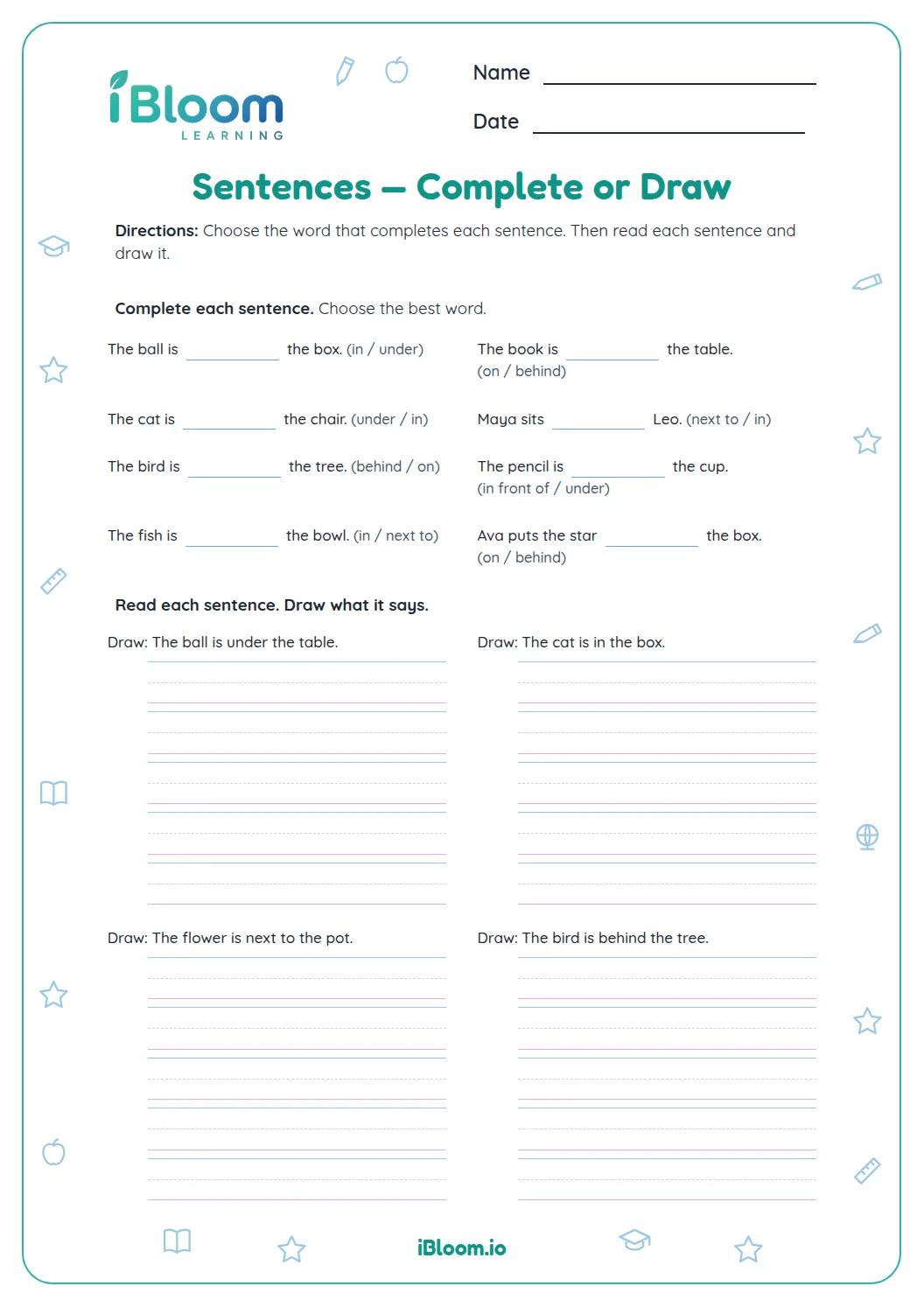
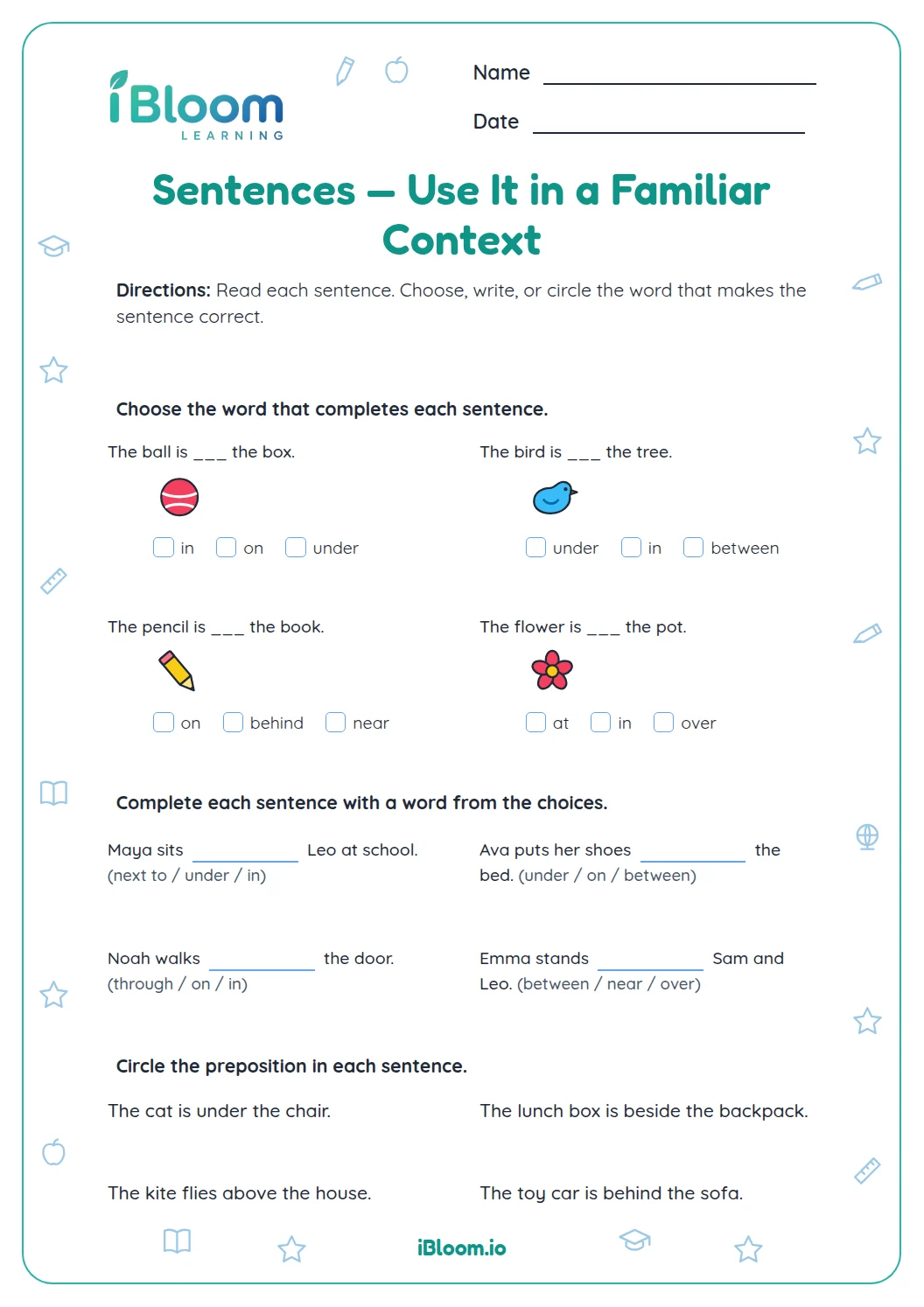
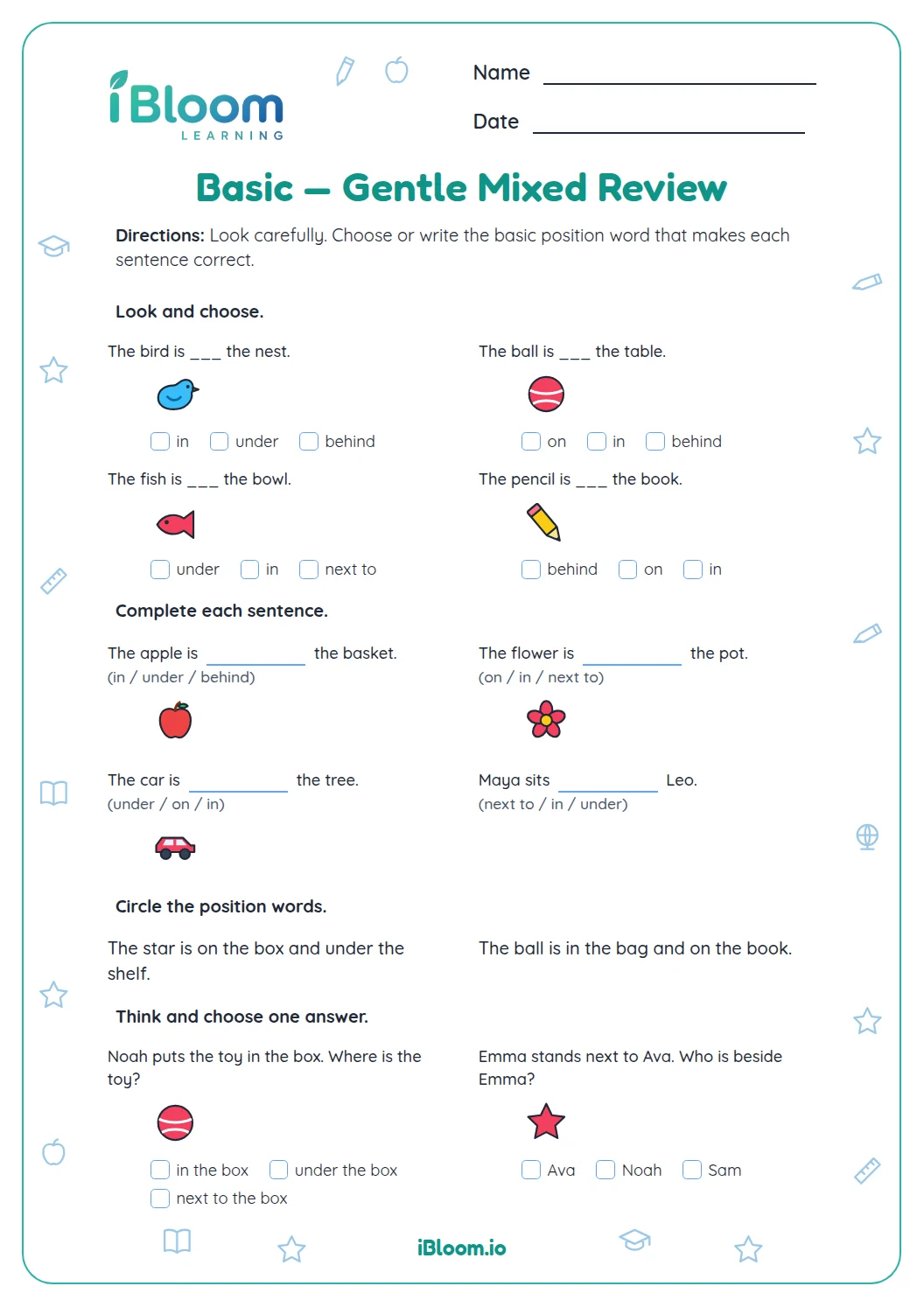
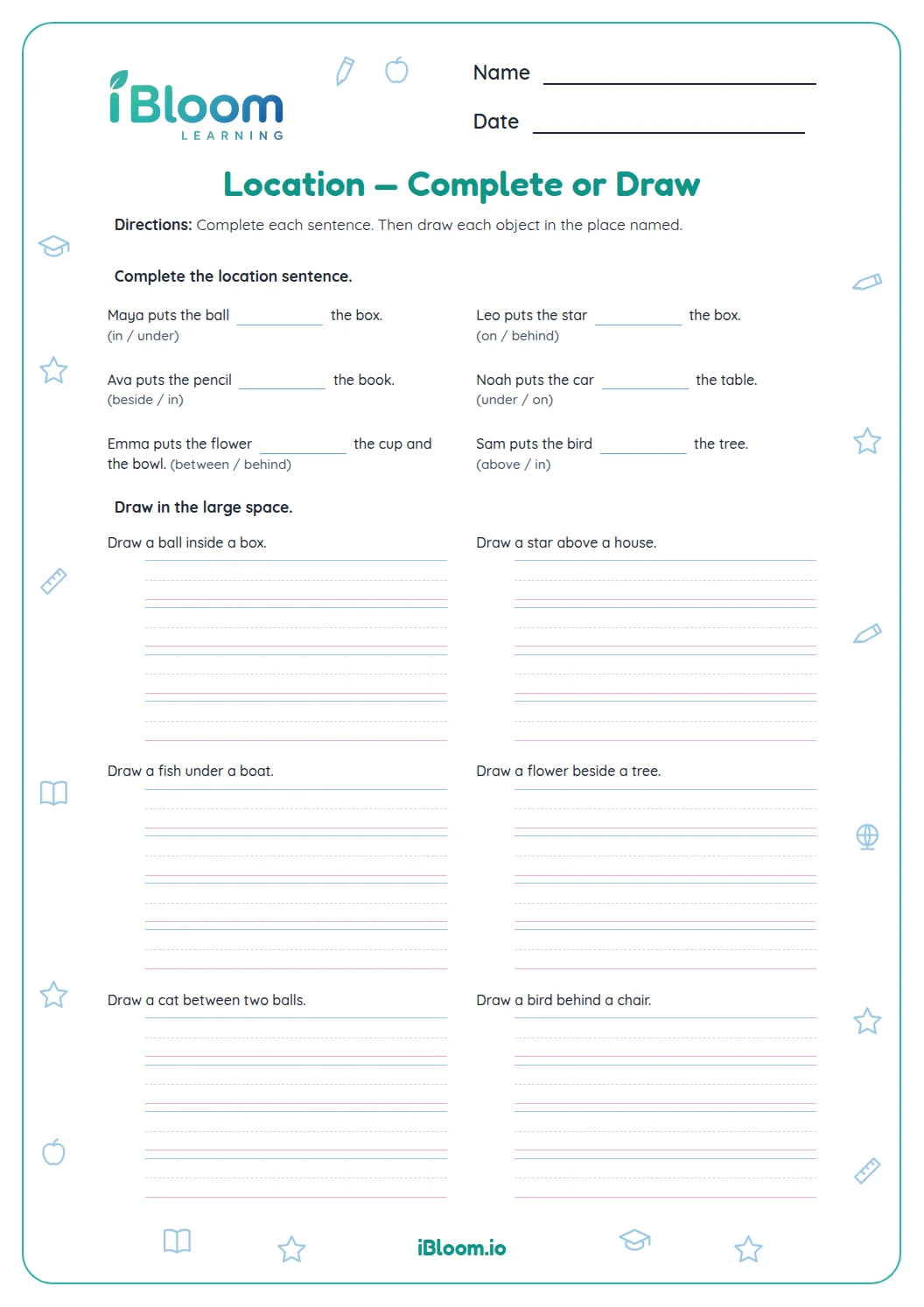
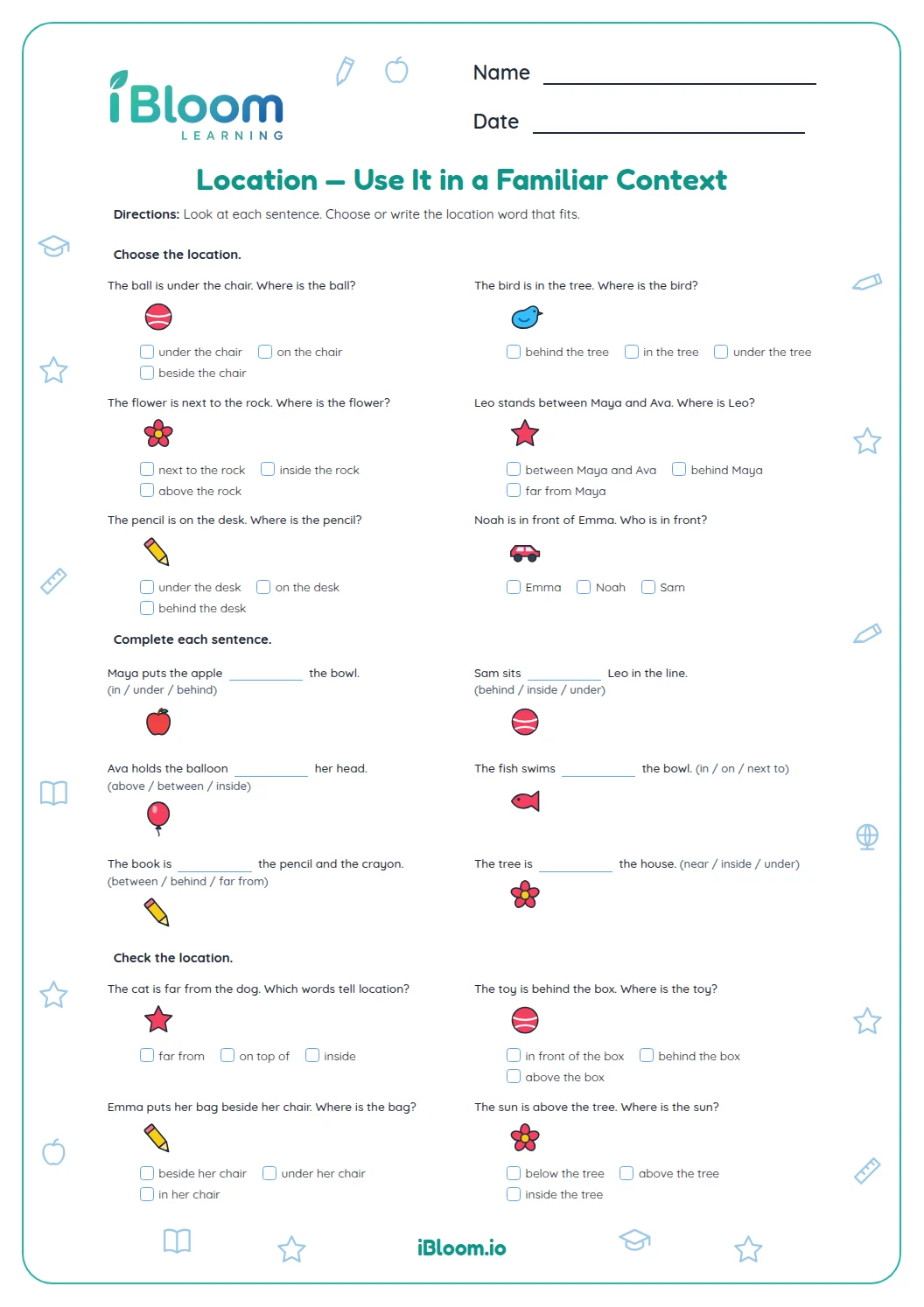
This printable Kindergarten worksheet practices prepositions that tell where. Children match four picture-supported location clues to a preposition, then circle the location word in ten short sentences. A separate answer key supports checking.
How do you work through recognizing prepositions that tell where in short sentences?
In q3, the sentence says, “The apple is beside the bowl.” The picture icons identify the apple and bowl, while the sentence tells their relationship. “Beside” is the word that tells where.
What does the practice include?
Part A uses familiar objects and synonym clues to choose a location word. Part B asks children to circle the preposition in ten short sentences, including in, under, near, beside, and behind.
How should students check their work?
After finishing, compare each answer with the key. For a mismatch, reread the exact prompt, redo the step, and explain which clue supports the corrected answer.
A simple way to use this page
- 1Read the entire short sentence.
- 2Look at the object icons to identify the nouns.
- 3Choose the word that tells where the object is.
- 4Say the sentence again with the chosen word.
- 5Check the answer key with an adult.
Common mistakes and quick fixes
The mistake
Choosing a naming word instead of a where word.
The fix
Ask which word tells the object's location.
The mistake
Looking only at the icons for the answer.
The fix
The icons show the nouns; use the sentence to find the location word.
The mistake
Skipping the whole sentence.
The fix
Read from the object through the location phrase before choosing.
What to practice next
Make more practice
Questions parents and teachers ask
What does this worksheet ask children to do?
Children read 14 short sentences and choose the preposition that tells where. Object icons illustrate the nouns in each sentence, and the printed sentence gives the location relationship. The separate answer key lists the correct location word for every item.
What is a preposition in these sentences?
A preposition is the word that tells where one thing is in relation to another. In “The bird is in the nest,” the word “in” tells where the bird is. Students choose that location word from the options.
Do the pictures show where each object is?
The object pictures show the nouns named in each sentence, such as a fish and water. The printed sentence supplies their relationship. Children use the words to identify the preposition rather than infer a position from the icons. This keeps the picture clue and reading task clear.
Which location words appear?
The choices include common location words such as in, on, under, beside, behind, and near. Each sentence has one intended word that completes its meaning. The answer key can help an adult review any unfamiliar word with the child.
How can an adult support a new reader?
Read one sentence aloud and pause at the location phrase. Ask, “Which word tells where?” The child can point to the two pictured nouns, then choose the location word in the printed sentence. Complete the other items independently as reading confidence allows.