






About this worksheet
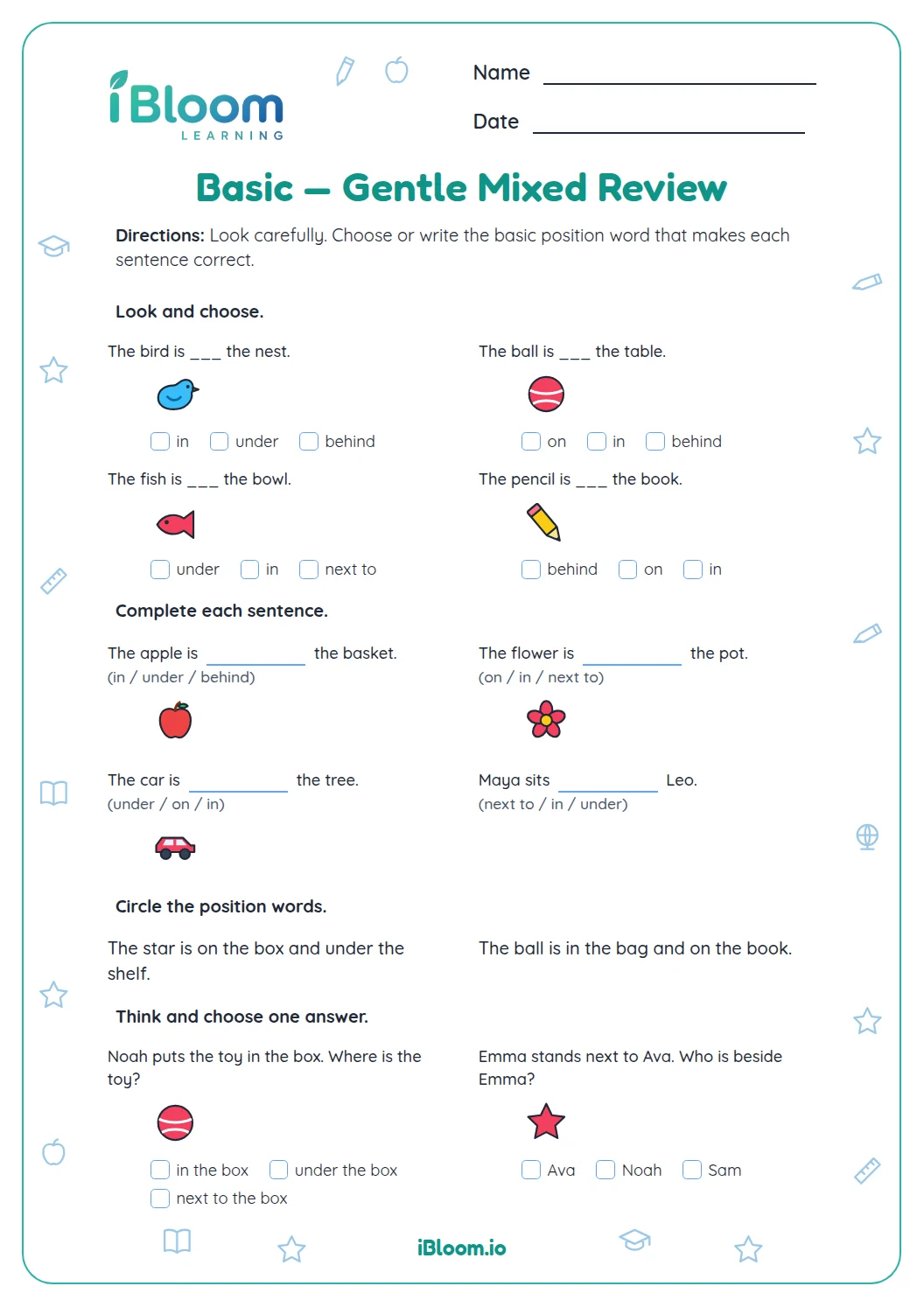
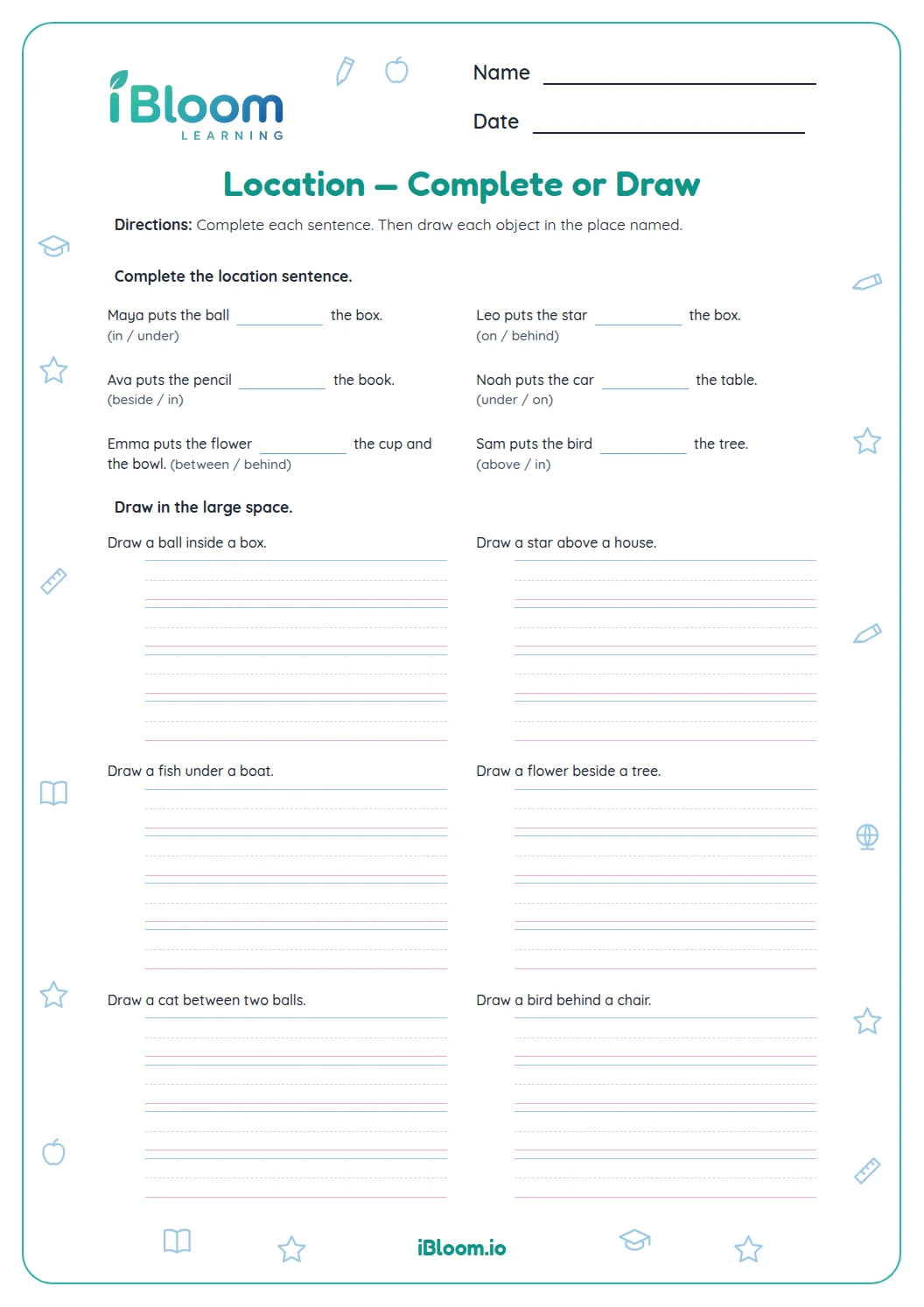
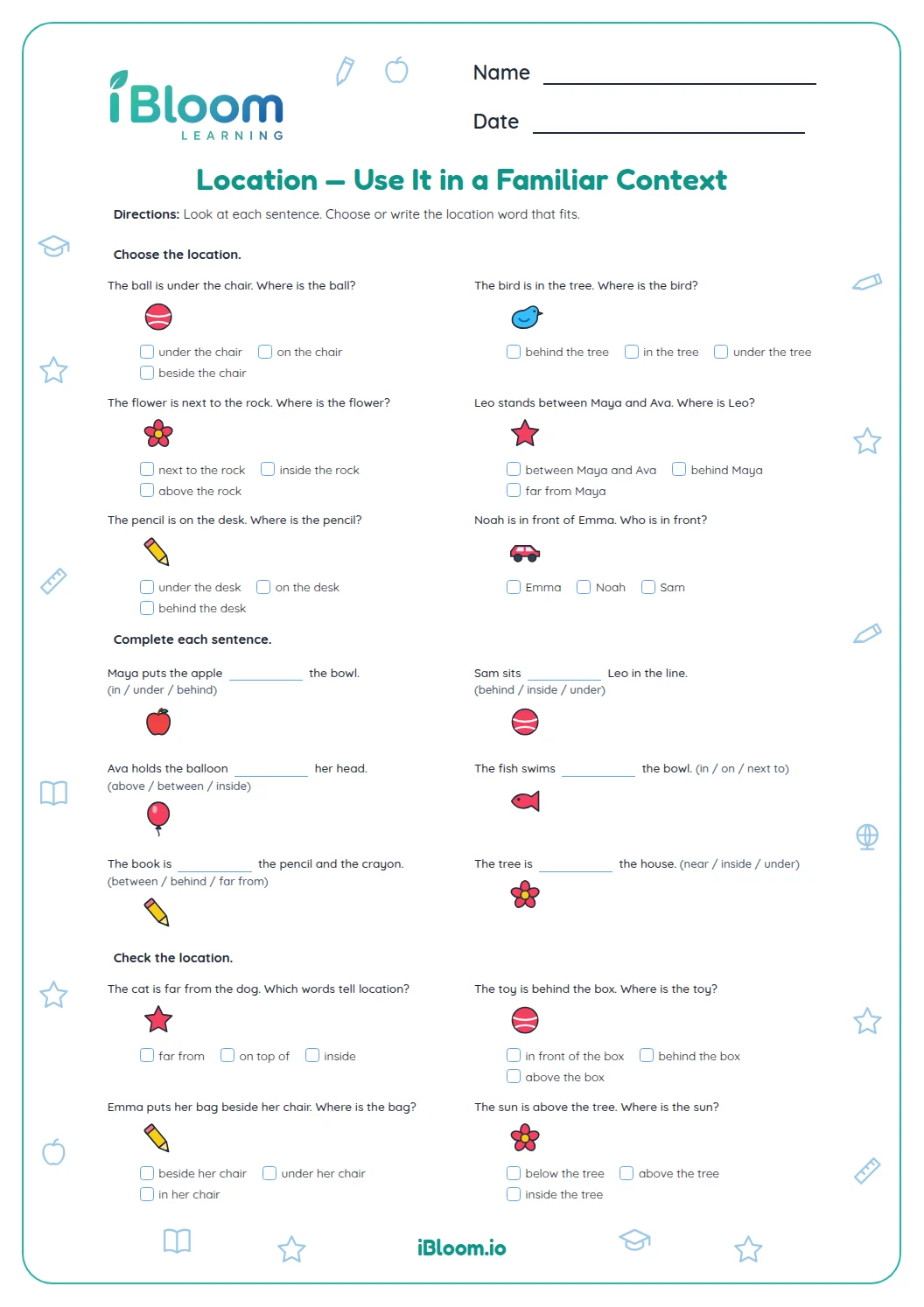
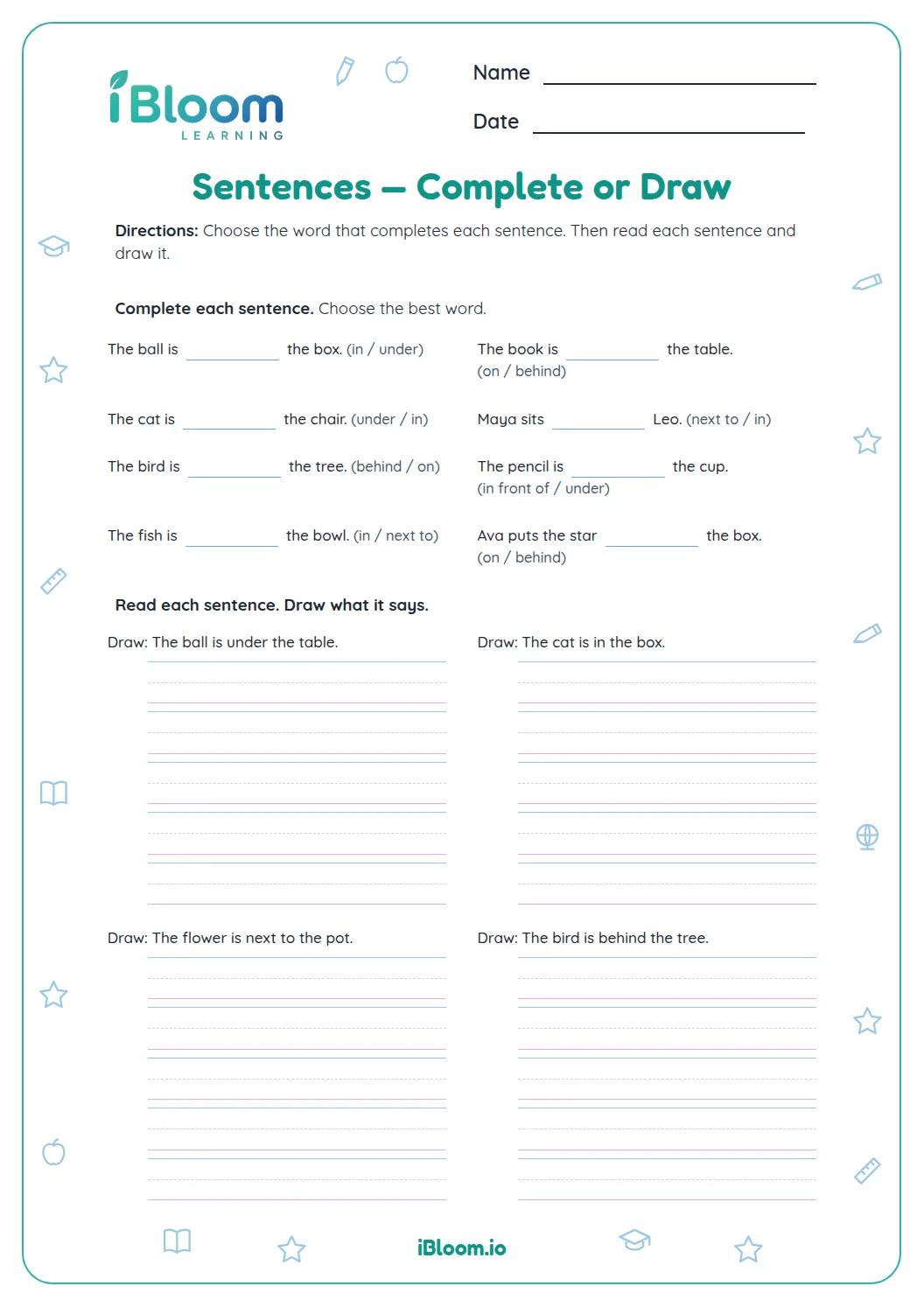
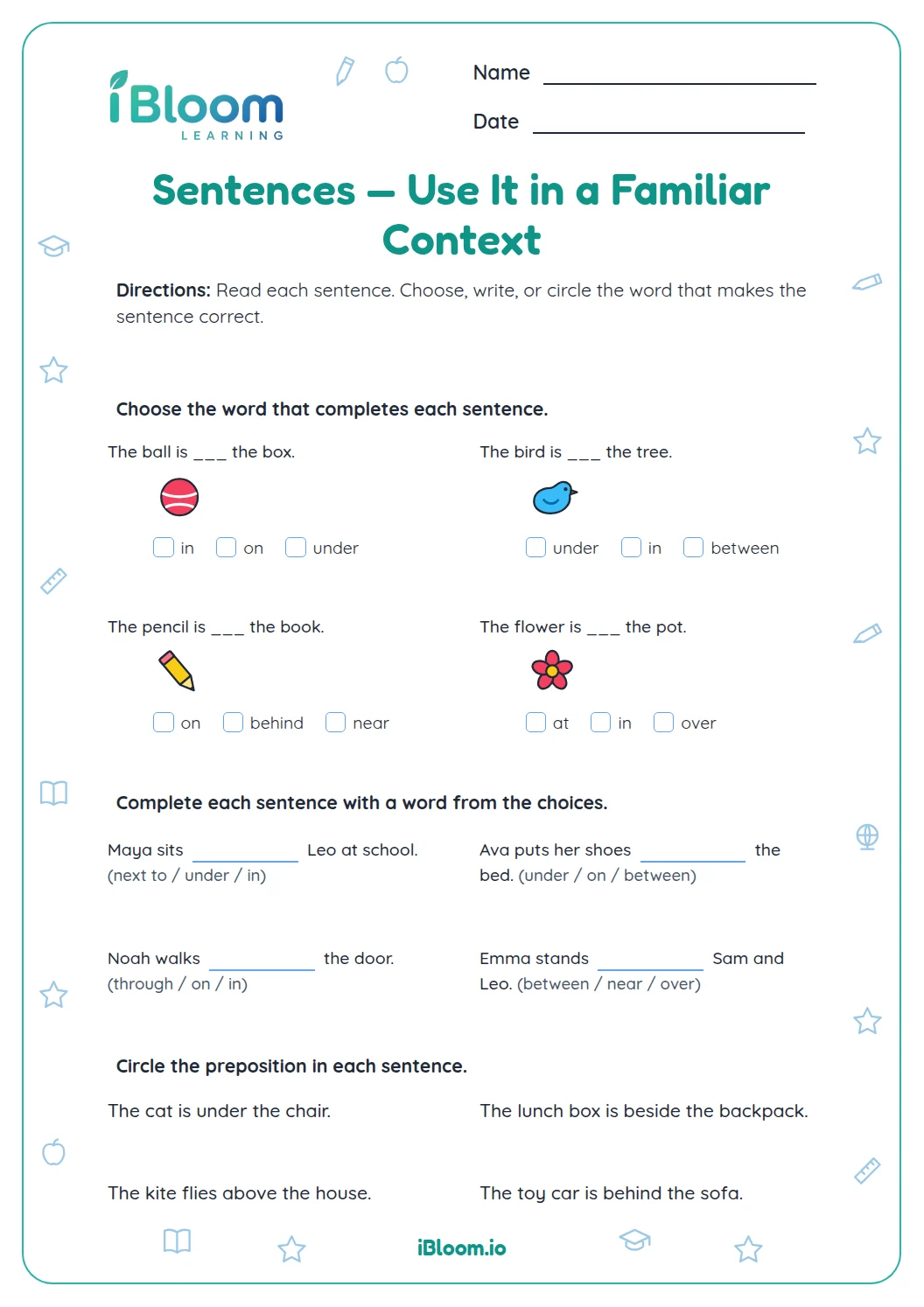
This free preschool and kindergarten worksheet practices common position words in, on, under, and beside. Children answer 12 short meaning clues, then complete two short sentences with a position word. A separate answer key lists the missing words. The activity gives young learners practice hearing a location relationship and matching it to a useful preposition.
Aligned to L.K.1.e
How do children choose the position word?
Each of the first 12 items names a relationship in simple language and shows the familiar objects. The learner chooses the matching word from three choices.
- 1“Inside a box” describes in.
How does the sentence practice work?
The last two prompts ask children to use in and on in a complete sentence. Accept other clear sentences that use the named word correctly.
How can an adult help?
Read the clue aloud and invite the child to act out the relationship with a toy and a box or table. Then say the word together before choosing.
How to use this worksheet
- 1Read a clue aloud if needed.
- 2Notice the objects named in the clue.
- 3Say the relationship in the clue.
- 4Choose the position word that matches it.
- 5Complete the final two sentences with a position word.
- 6Check answers with the key.
Common mix-ups
The mistake
Choosing on for every object pair.
The fix
Listen for the relationship: inside, next to, or below.
The mistake
Mixing up in and on.
The fix
In means inside a space; on means resting on a surface.
The mistake
Writing only the position word in a sentence item.
The fix
Include the object and a complete thought.
Common Core alignment
This worksheet connects its practice to a Common Core learning goal.
Use common prepositions to describe where objects are.
On this sheet: Children choose common location words and complete simple spoken-style sentences.
Show the official wordingHide the official wording
Use the most frequently occurring prepositions (e.g., to, from, in, out, on, off, for, of, by, with).
What to practice next
Make more practice
Further reading
Questions parents and teachers ask
Which position words are included?
The page practices in, on, under, and beside. The first 12 questions pair familiar objects with short meaning clues. The last two ask the learner to write complete sentences using in and on. The answer key includes a sample for each written response.
Do the pictures show the position?
The short clue supplies the relationship, such as an object being enclosed by a box or next to a chair. Children use that meaning to choose a position word, then reread the complete sentence to see whether their choice fits.
Can I read the clues aloud?
Yes. Read each clue slowly, then ask the child to say the position word that matches it. Acting out a relationship with a small toy and a box or table can make the meaning concrete before the child chooses an answer.
What should the last two answers look like?
The final two items show a short sentence with a blank and ask the learner to add its position word. Read the completed sentence aloud to check it. The answer key lists the missing words, and the pictures identify the familiar objects.
How many questions are there?
There are 14 questions in two parts: 12 meaning-clue choices and two sentence-completion prompts. The worksheet has two pages, and its answer key also has two pages. The key models possible sentences for the final written items. Read them aloud together to hear how each word works in a complete thought.