








About this worksheet
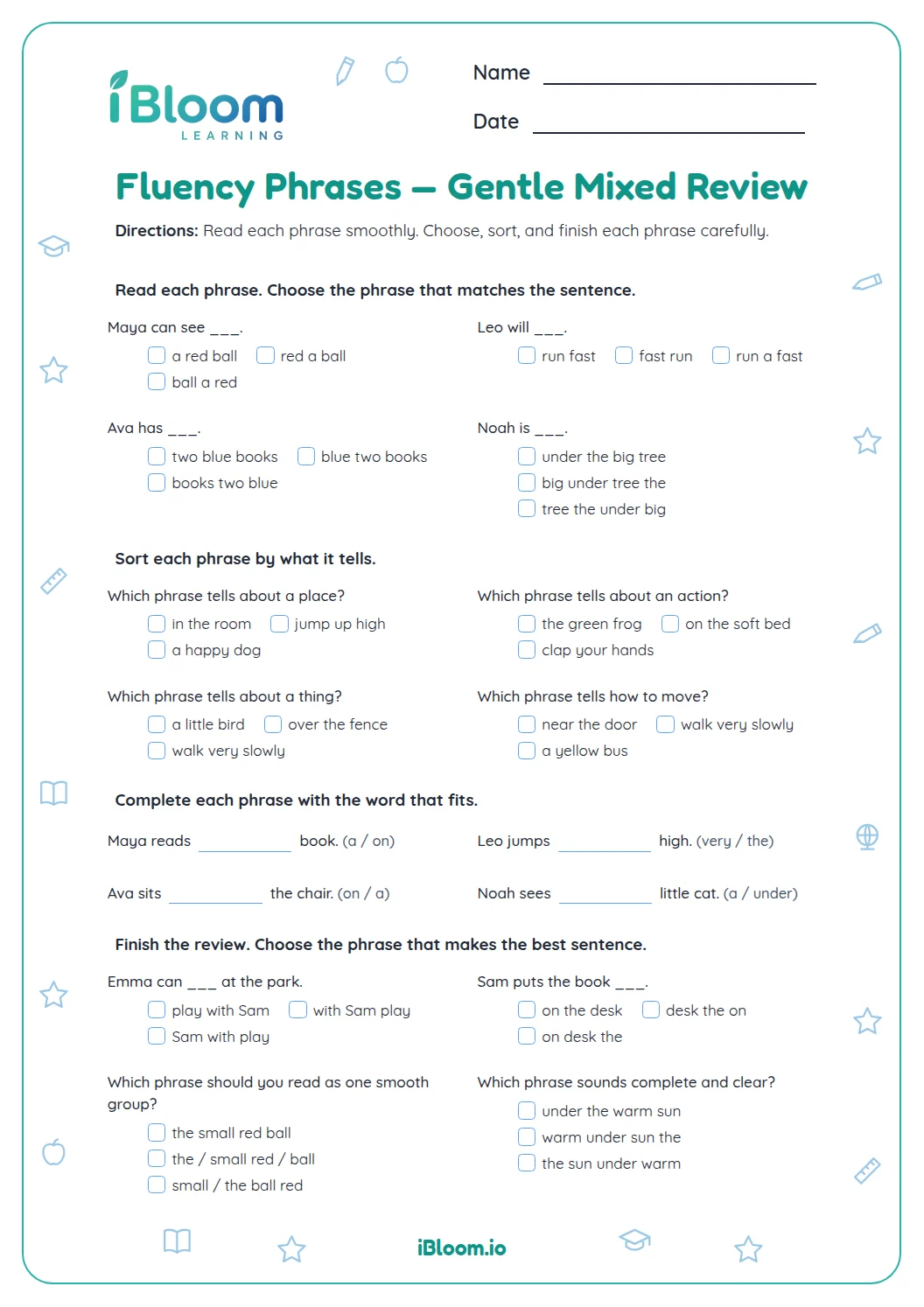
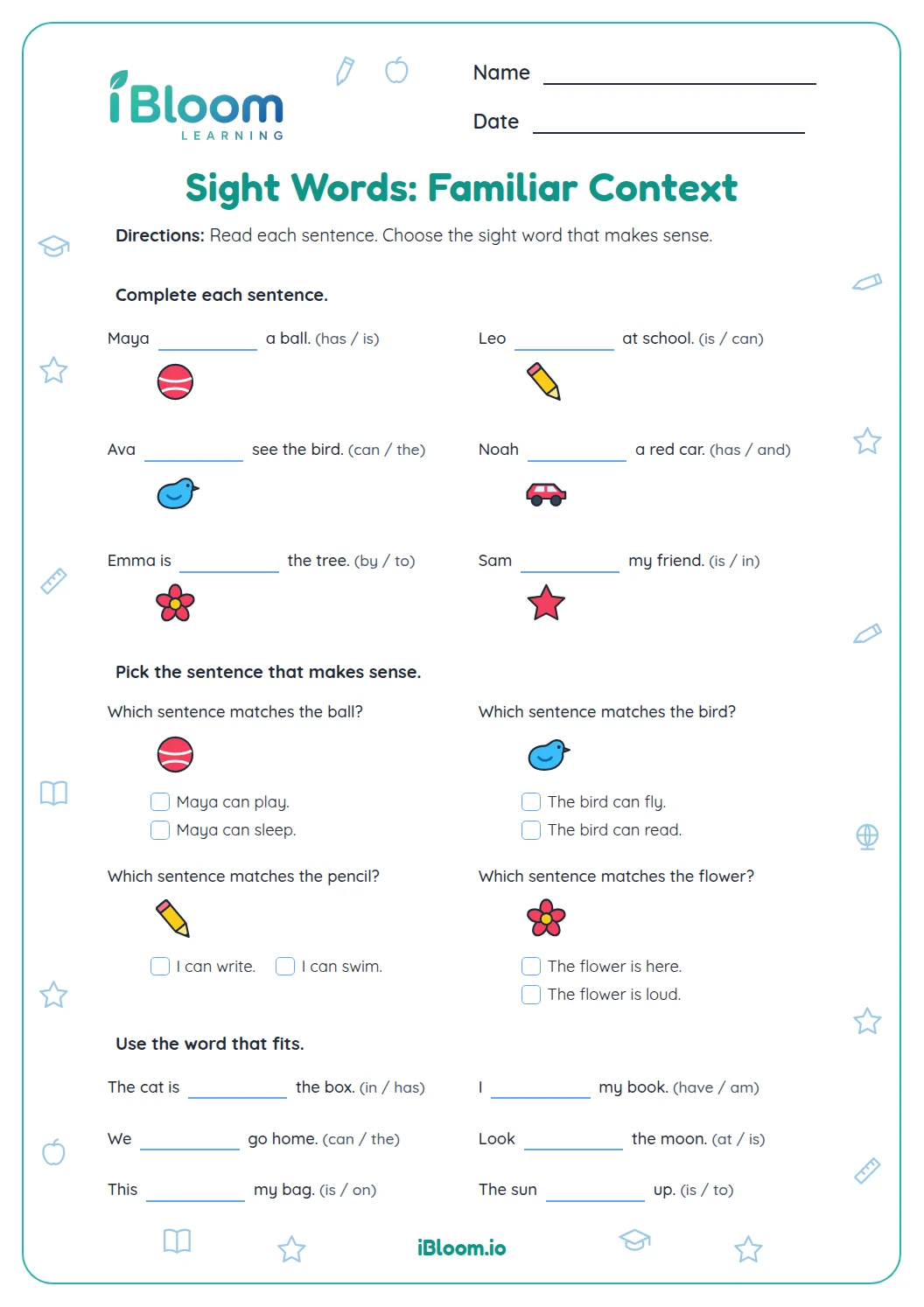
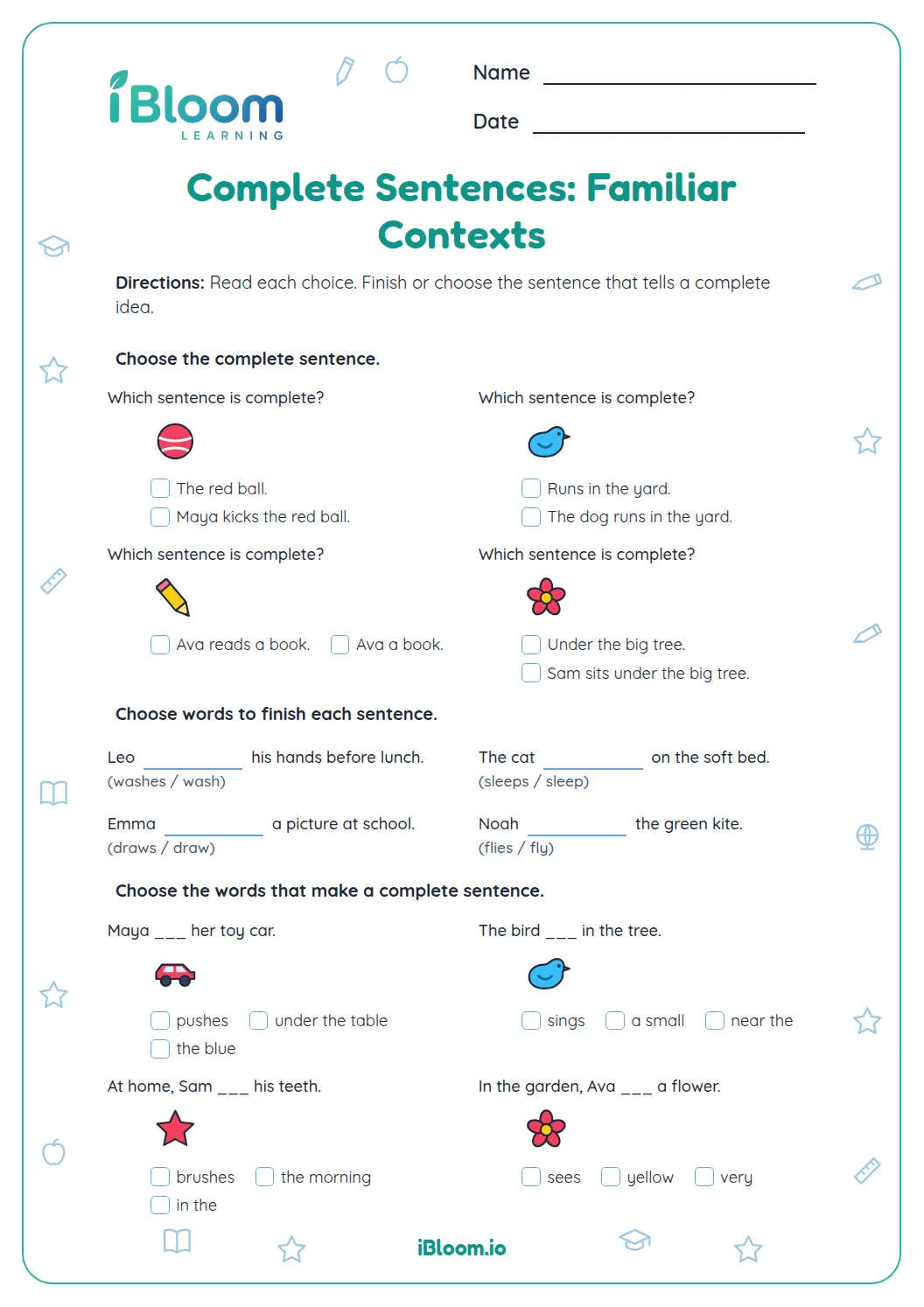
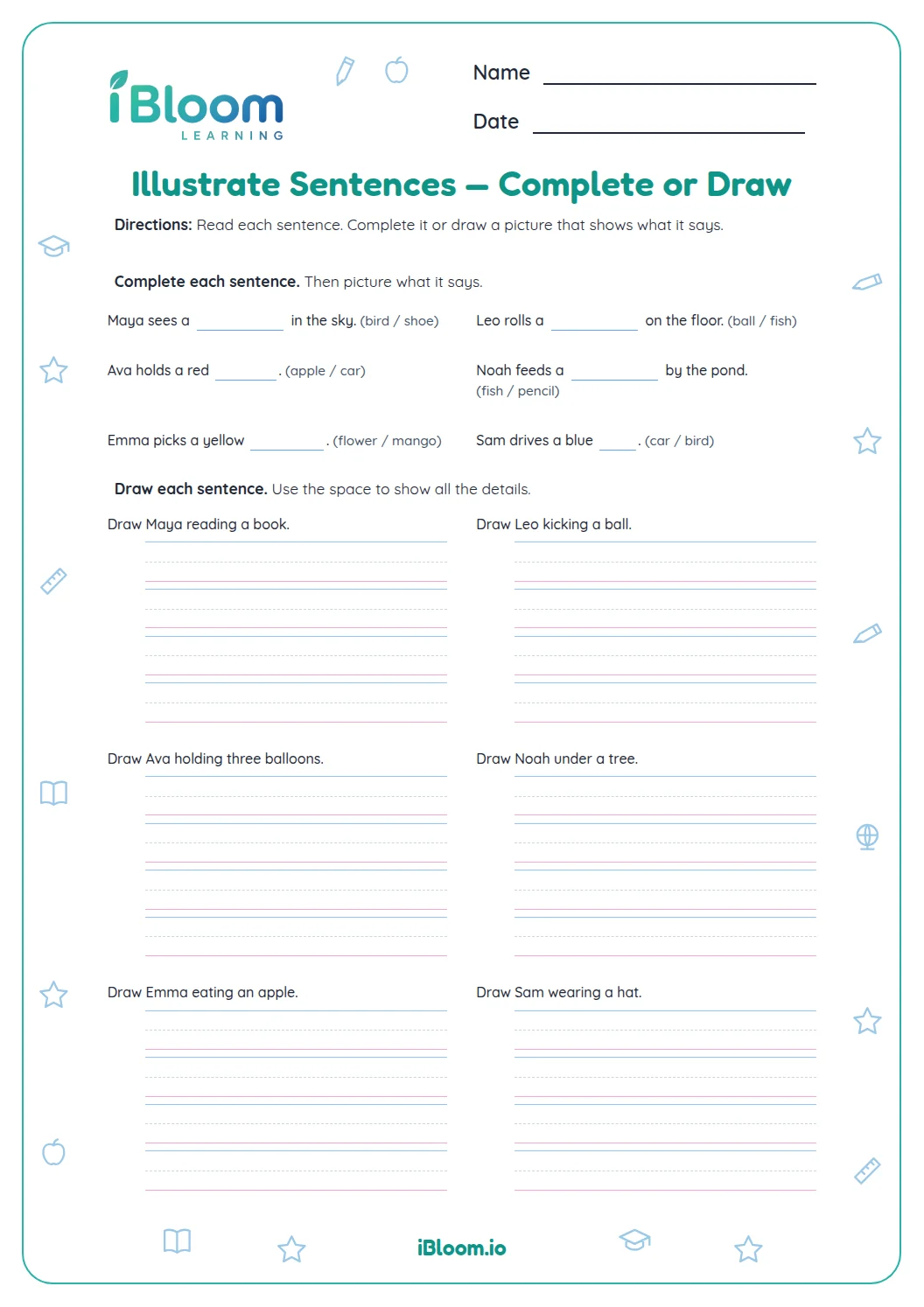
This free printable worksheet helps preschool and Kindergarten children read short sentences for meaning. Part A uses picture clues and two word choices to complete sentences. Part B asks children to use sentence meaning, Part C asks them to read and draw two simple scenes, and Part D returns to picture-supported sentence completions. After choosing a word, children reread each complete sentence aloud as one connected thought. The 20 items practice emergent reading with purpose and understanding, and a separate answer key supplies the missing words and drawing details.
Aligned to RF.K.4
How do children complete the short sentences?
Part A uses a cat, a sun, a hat and a fish as picture clues. Children choose between two words, then read the completed sentence aloud. The words are printed beside answer bubbles so children can show their choice without copying a whole sentence.
Part B keeps the two choices and asks children to use the sentence itself. “The bird can ___” takes fly, while “I can ___ a book” takes read. The choices include words that do not fit so children have a reason to reread.
What does a smooth rereading sound like?
Begin by reading accurately at a comfortable pace. Help with a word when needed, then return to the start and read the whole sentence together. A smooth rereading keeps the words connected while preserving their meaning.
In question 5, the child selects fly rather than bed. Read “The bird can fly” as one thought, then invite the child to say it again while following the words.
- 1The bird can ___.
- 2Choices: bed / fly
- 3Choose fly: The bird can fly.
- 4Reread the complete sentence aloud.
Which details belong in the two drawings?
The first drawing should include a cat on a mat. The second should include a sun above a tree. The position words on and over matter: they tell children where to put each object.
The dashed boxes leave space for simple sketches. A few clear shapes are enough. Ask children to point to each part of their drawing while rereading the words; artistic detail is optional.
Read, complete and draw
- 1Read the directions and name the four Part A picture clues together.
- 2Have the child read each sentence, choose a word and reread the completed sentence.
- 3In Part B, try the two choices aloud if the child needs help deciding.
- 4Read each Part C sentence before the child starts drawing.
- 5Use the answer key to check words and drawing details, then reread a favorite sentence.
Mistakes to watch for
The mistake
Choosing the picture word without reading the sentence.
The fix
After choosing, return to the first word and read the entire completed sentence aloud.
The mistake
Reading “The bird can bed” without noticing the meaning.
The fix
Ask what a bird can do, then try fly in the blank and reread.
The mistake
Drawing a cat beside the mat instead of on it.
The fix
Point to on in the prompt. Move the cat onto the mat in the drawing.
Common Core alignment
Read short sentences for meaning, complete them, and draw details that match the words.
On this sheet: Children reread completed sentences aloud, choose meaningful endings and illustrate two short sentences.
Show the official wordingHide the official wording
Read emergent-reader texts with purpose and understanding.
What to practice next
Make more practice
Further reading
Questions parents and teachers ask
Is this worksheet suitable for preschool children?
Completing a sentence asks a child to read the words together and choose an ending that makes sense. Drawing a cat on a mat checks the meaning, while rereading gives another chance to say the sentence smoothly. Adults can model the first rereading.
Do children have to write the missing words?
They can select the word by marking its answer bubble. All eight completion items give two choices, so a child can focus on reading and meaning. If you also want writing practice, invite the child to copy a completed sentence on separate paper after finishing the worksheet.
Should we time the rereading?
A timer is optional and unnecessary for this activity. Focus on saying the words accurately and understanding the sentence. After the child chooses a word, read the sentence together and invite another reading. Stop to explain a confusing word or a detail that does not match the drawing.
What counts as a correct drawing?
A correct drawing includes the objects and positions named in its sentence. The cat should be on the mat, and the sun should be above the tree. Simple shapes are fine. Ask the child to explain the sketch while pointing to the matching words in the printed prompt.
What does the answer key show?
The key marks the correct word for each of the eight completion questions and gives short descriptions for the two drawings. Use those descriptions to check the objects and their positions. The child’s artwork can look different from someone else’s and still show the sentence accurately.