




About this worksheet
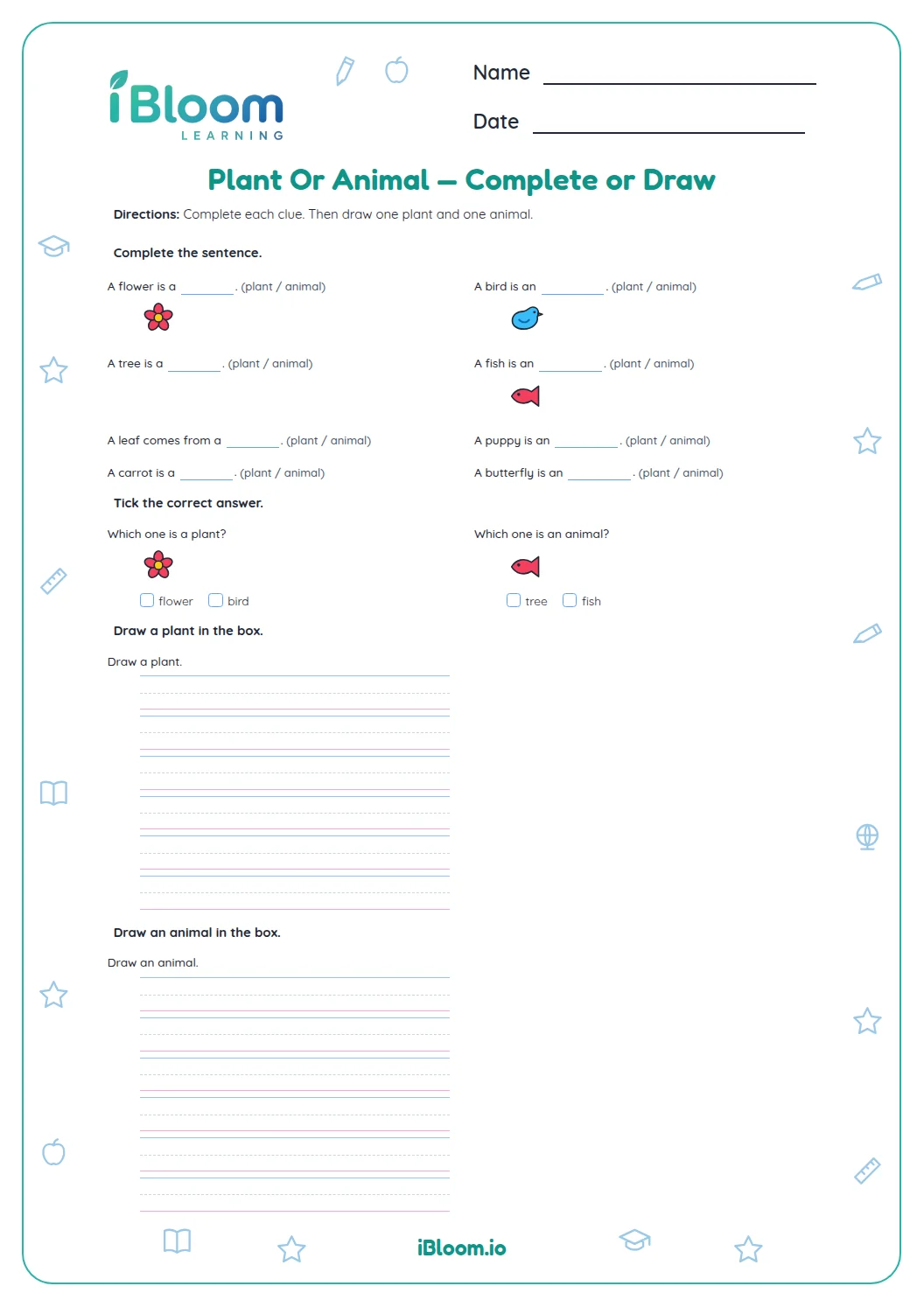
This preschool and kindergarten science sheet uses clear pictures of plants and animals for classification, then asks what living things need and where plants take in water. Children finish by drawing one plant, one animal, and a need for each. The answer key accepts clear examples for open drawing work.
Aligned to K-LS1-1
What do children identify and draw?
Part A pairs six familiar pictures with a plant-or-animal question. In Part B, children name needs such as water, light, and food, and identify roots as the part that takes in water. Part C asks them to draw one plant and one animal and add a need for each.
The pictures and short prompts keep the activity concrete. For the drawing, accept a clear example that includes the living things and a fitting need.
- Classify pictured plants and animals
- Name water, light, and food as needs
- Connect roots with water uptake and draw an example
How to use the worksheet
- 1Name each picture together before choosing an answer.
- 2Ask what the plant or animal needs to live.
- 3Let the child draw freely in Part C and describe the drawing aloud.
- 4Use the answer key as a guide; accept clear drawings with the requested details.
Helpful prompts for adults
The mistake
A child says a plant is not alive because it does not move around.
The fix
Point out that plants grow and need water and light.
The mistake
A child says every living thing eats the same way.
The fix
Explain simply that animals eat food, while plants use light as they grow.
Next Generation Science Standards alignment
Children use familiar pictures and prompts to identify resources plants and animals need to survive.
Use observations to describe patterns in what plants and animals need to survive.
On this sheet: Children observe familiar examples and identify needs such as water, light, and food.
Show the official wordingHide the official wording
Use observations to describe patterns of what plants and animals (including humans) need to survive.
What to practice next
Further reading
Questions parents and teachers ask
Can children draw different examples in the final activity?
Yes. The answer key gives one possible response, but accept any clear drawing that includes a plant, an animal, and one reasonable need for each. A child may explain the picture aloud if writing is not yet comfortable. The goal is to communicate an example, so drawings can look different from the key.
What do plants and animals both need to survive?
Both plants and animals need water. Plants also need light, while animals take in food. Familiar examples help children notice these patterns and talk about what living things need in the world around them. Ask the child to point to the picture clue that helped them choose each answer.
What level is this living-things worksheet for?
It is designed for Preschool and Kindergarten learners. An adult may read questions aloud, name the pictures, or help the child connect each living thing with a basic need. The drawing can be completed independently or together. Use it as a short introduction rather than expecting formal written explanations.
Which science standard does the worksheet support?
NGSS K-LS1-1 asks kindergarten students to use observations to describe patterns in what plants and animals need to survive. The picture choices and drawing prompt offer an introductory chance to notice and explain those patterns. Children can say their observations aloud while an adult records their ideas if needed.