




About this worksheet
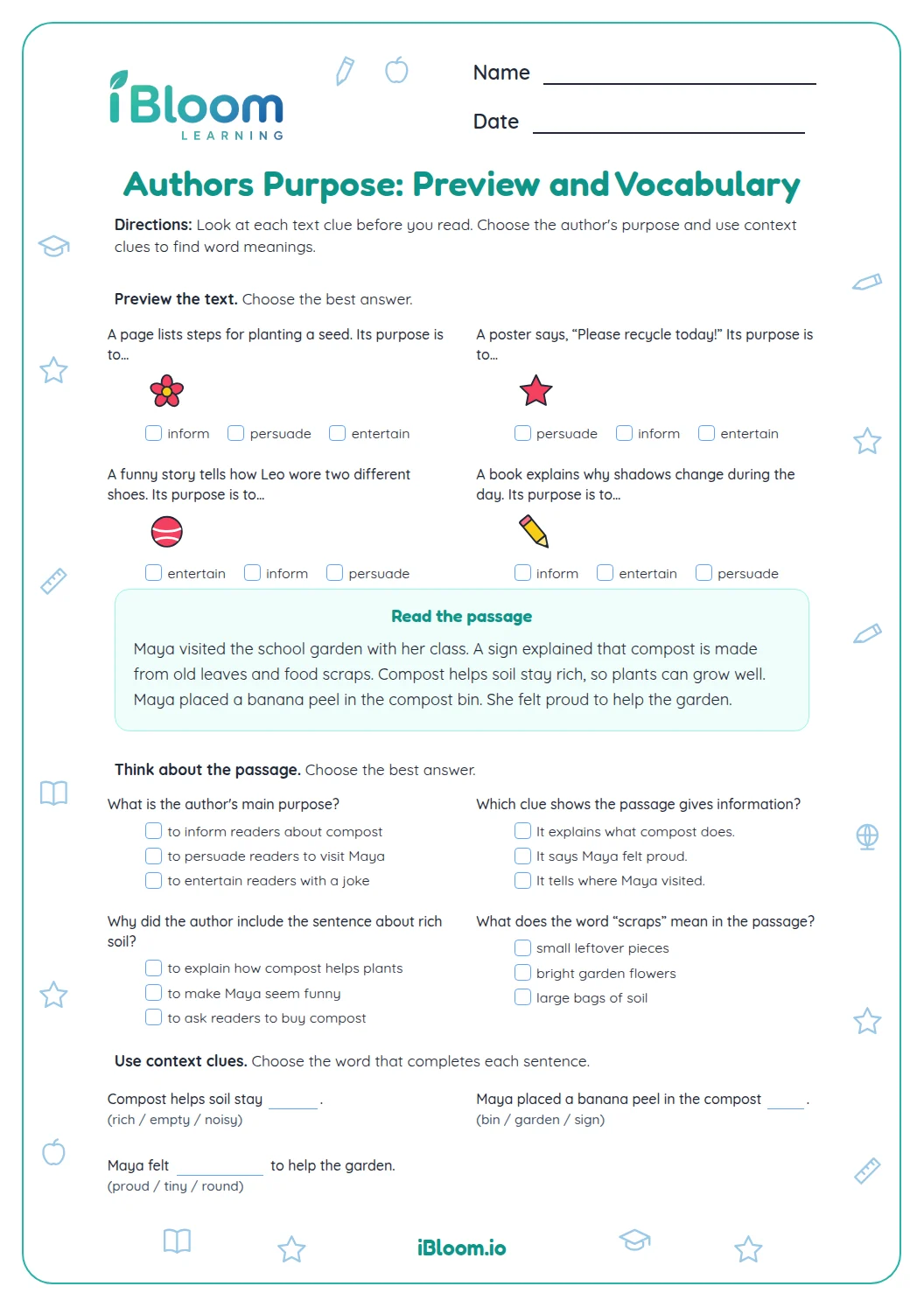
This Grade 2 worksheet gives students three short texts about a school garden: an information paragraph, an event poster, and a playful story. In 15 questions, children identify whether a text teaches, invites, or entertains, then support answers with details. The final five prompts provide writing lines for complete responses. The skill aligns with Common Core RI.2.6, which asks readers to identify a text’s main purpose. A separate key includes sample written answers.
Aligned to RI.2.6
What kinds of text will students read?
The page includes a garden description, a poster inviting families to an event, and a silly tomato story. Their different formats make each author’s goal visible.
Questions 1–5 identify a text or purpose; 6–10 check details; 11–15 ask for a purpose plus evidence.
- Text A shares garden facts.
- Text B invites families to Garden Day.
- Text C entertains with an imaginary tomato adventure.
How can a reader find an author’s purpose?
Ask what the author wants the reader to learn, do, or enjoy. Then point to a detail that supports that answer. An event time can signal an invitation; a sequence of facts can describe a topic.
- 1“Come at 2:00!” is a clue that the poster wants families to attend Garden Day.
What makes a strong written response?
Name the purpose first, then include a detail from the same text. The key offers sample answers; another response is also correct when it uses accurate evidence.
How to use this worksheet
- 1Read all three texts before answering.
- 2For each text, ask whether it teaches, invites, or entertains.
- 3Answer detail questions with the information stated.
- 4For the final five, name the purpose and add a matching detail.
- 5Compare responses with the key; accept other accurate evidence.
Common mistakes and quick fixes
The mistake
Naming a purpose without evidence.
The fix
Add a detail, such as the event time or an unusual story action.
The mistake
Using a detail from the wrong text.
The fix
Check the text label before writing evidence.
The mistake
Calling every text an invitation.
The fix
Ask whether the text wants readers to learn, attend, or enjoy a story.
Common Core alignment
The questions practice naming a text’s main purpose and connecting that purpose to its content.
Name each text’s main purpose and what its author wants readers to do.
On this sheet: Students identify the main purpose of short texts and cite a clue.
Show the official wordingHide the official wording
Identify the main purpose of a text, including what the author wants to answer, explain, or describe.
What to practice next
Make more practice
Further reading
Questions parents and teachers ask
How many texts are on the worksheet?
There are three short garden-themed texts: a description, an event poster, and a playful story. Each has a different purpose. Students answer five multiple-choice questions, five detail questions, and five written-response questions, practicing how to name purposes and support ideas with text evidence.
What author purposes do students practice?
The texts model describing information, inviting readers to an event, and entertaining with an imaginary story. The poster is a clear invitation, while the tomato story uses a silly event. Students base each answer on words and details instead of guessing from the title alone.
Do students need to write complete sentences?
The last five items ask students to explain a purpose and point to a detail, so complete sentences are useful. Earlier short-answer questions can be answered with a word or phrase when they ask for a specific fact. Sample written responses appear in the key.
How should I use the answer key?
Use it to check facts and compare written responses with sample answers. Written answers can vary, so accept a response that names a reasonable purpose and uses an accurate detail from the correct text. The key can guide a short discussion about evidence.
How long should the worksheet take?
Plan for about 20 minutes, with extra time if students read the texts aloud or discuss evidence. Multiple-choice and detail items are brief; the final five take longer because students write explanations. Timing is a flexible estimate for home or classroom use.
What is a simple follow-up?
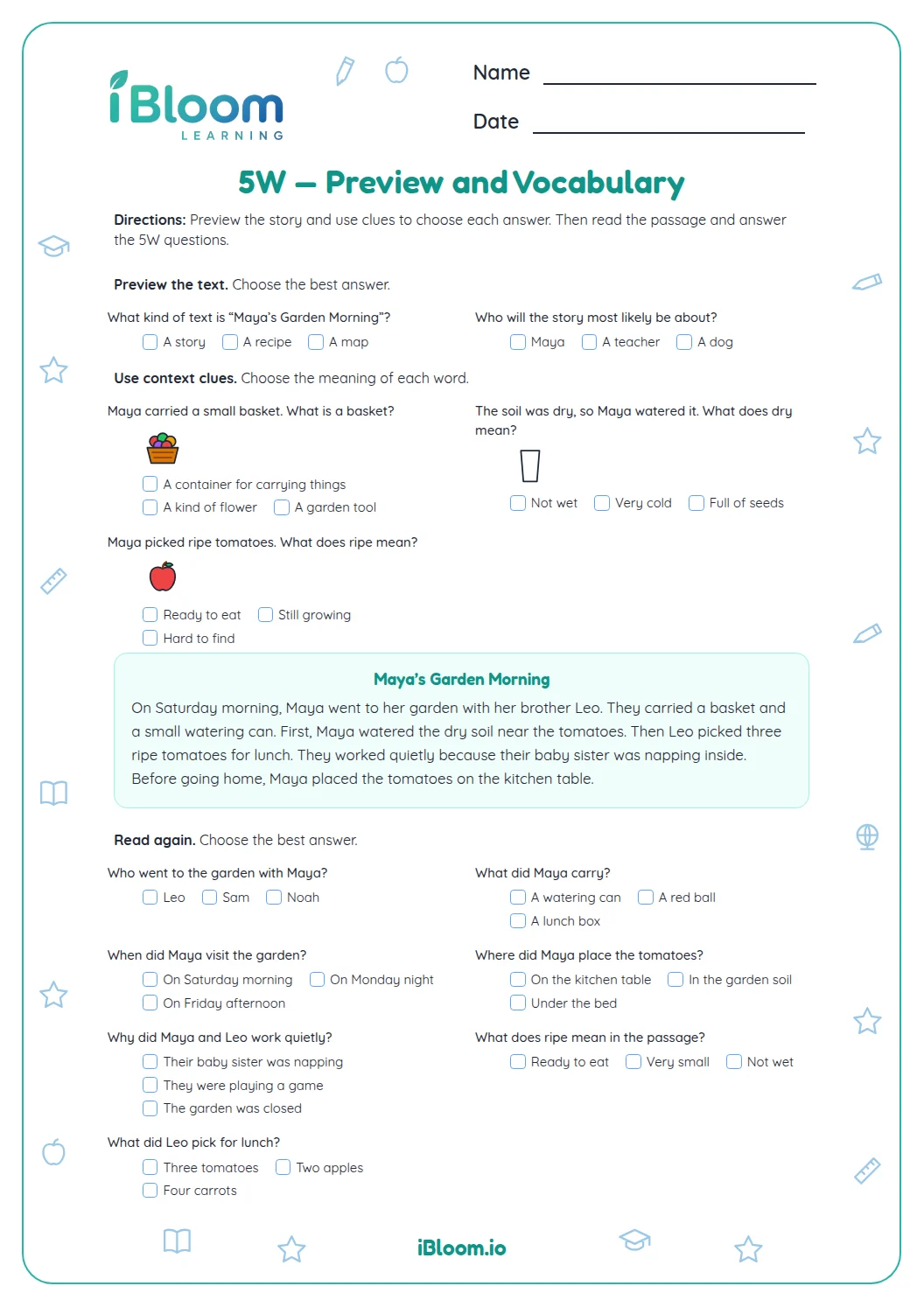
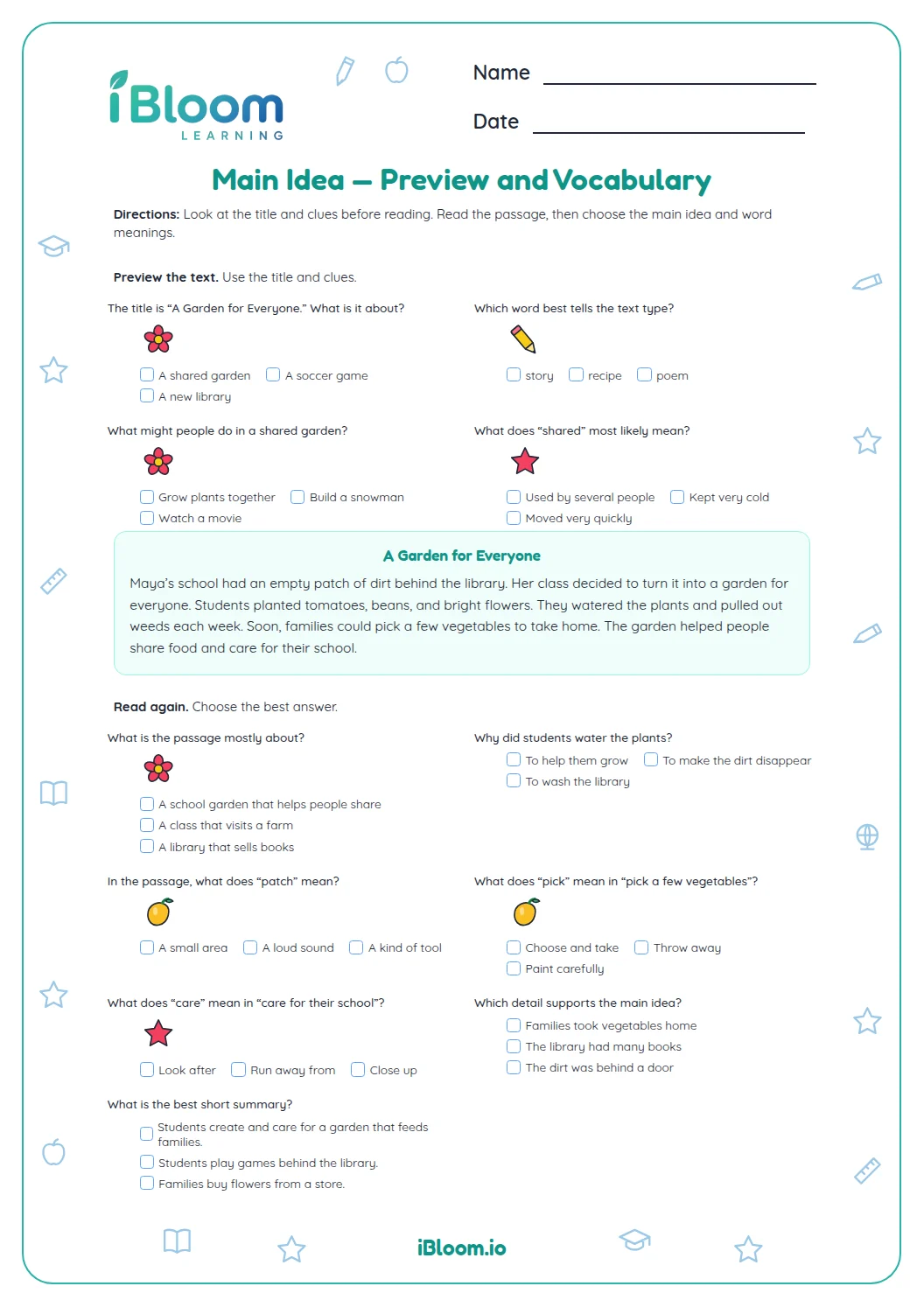
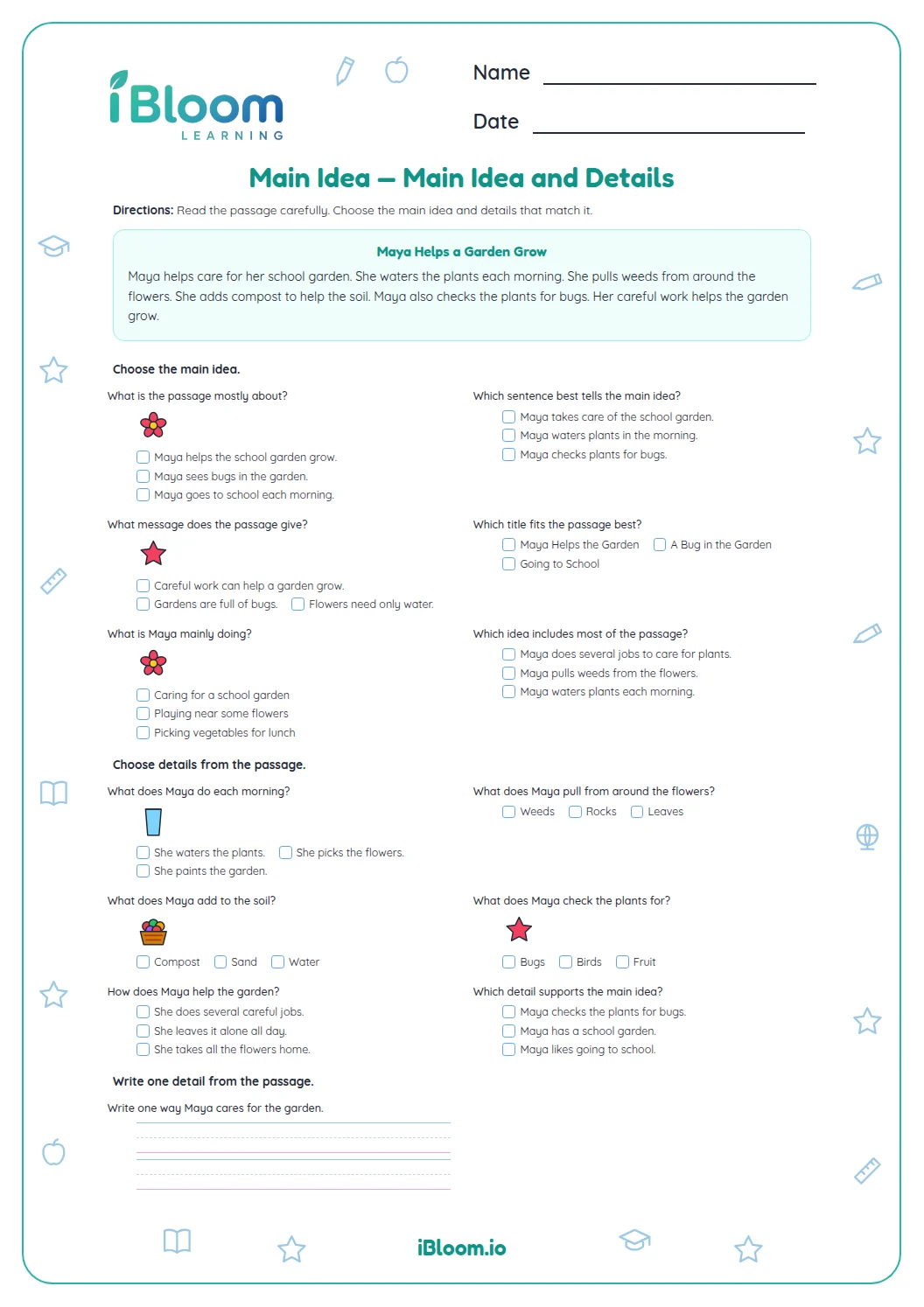
Ask the student to find a poster, short article, or story and explain why its author wrote it. Have them point to one phrase that supports the answer. The linked 5W and main-idea worksheets offer another way to notice how a text works.