


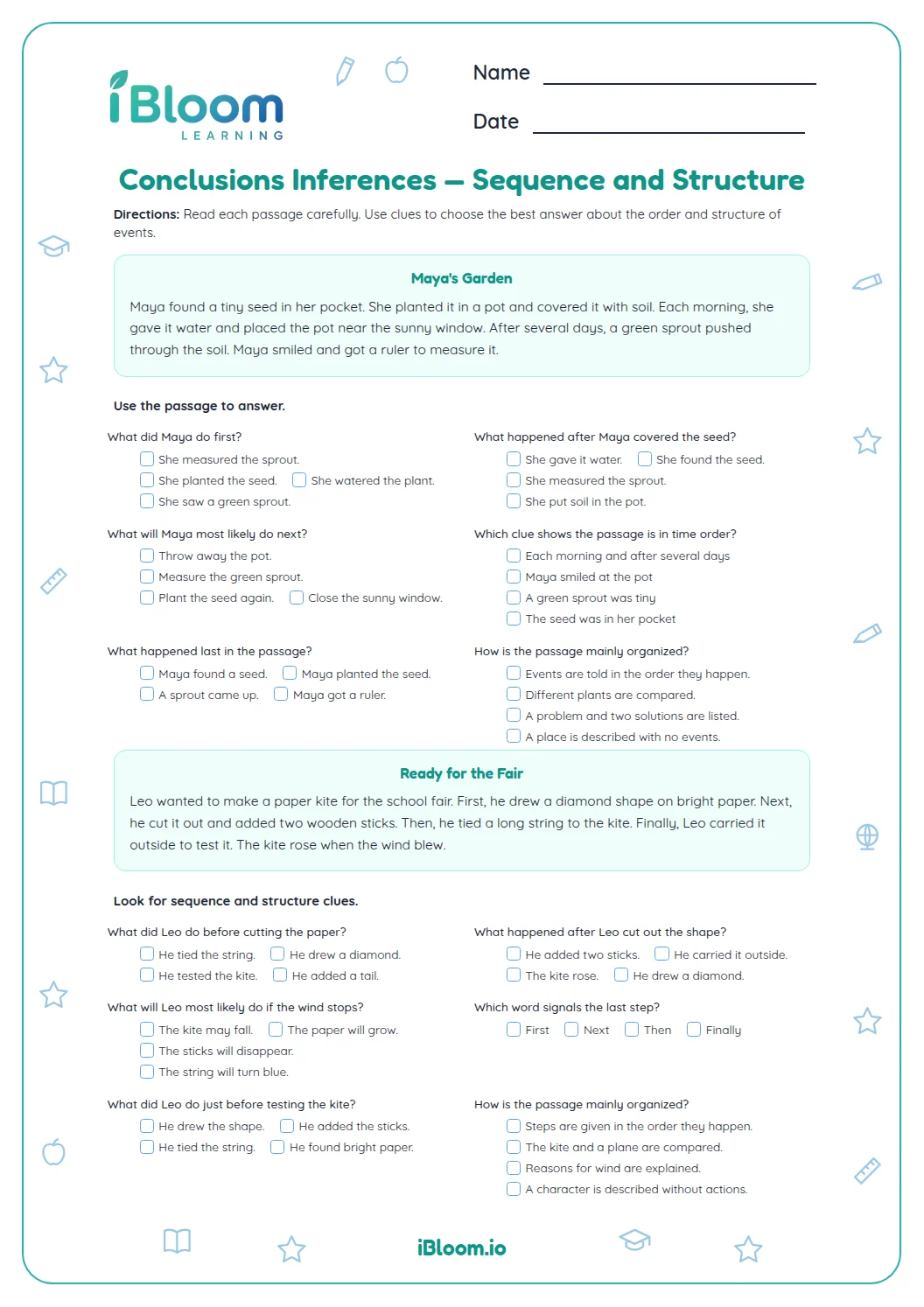
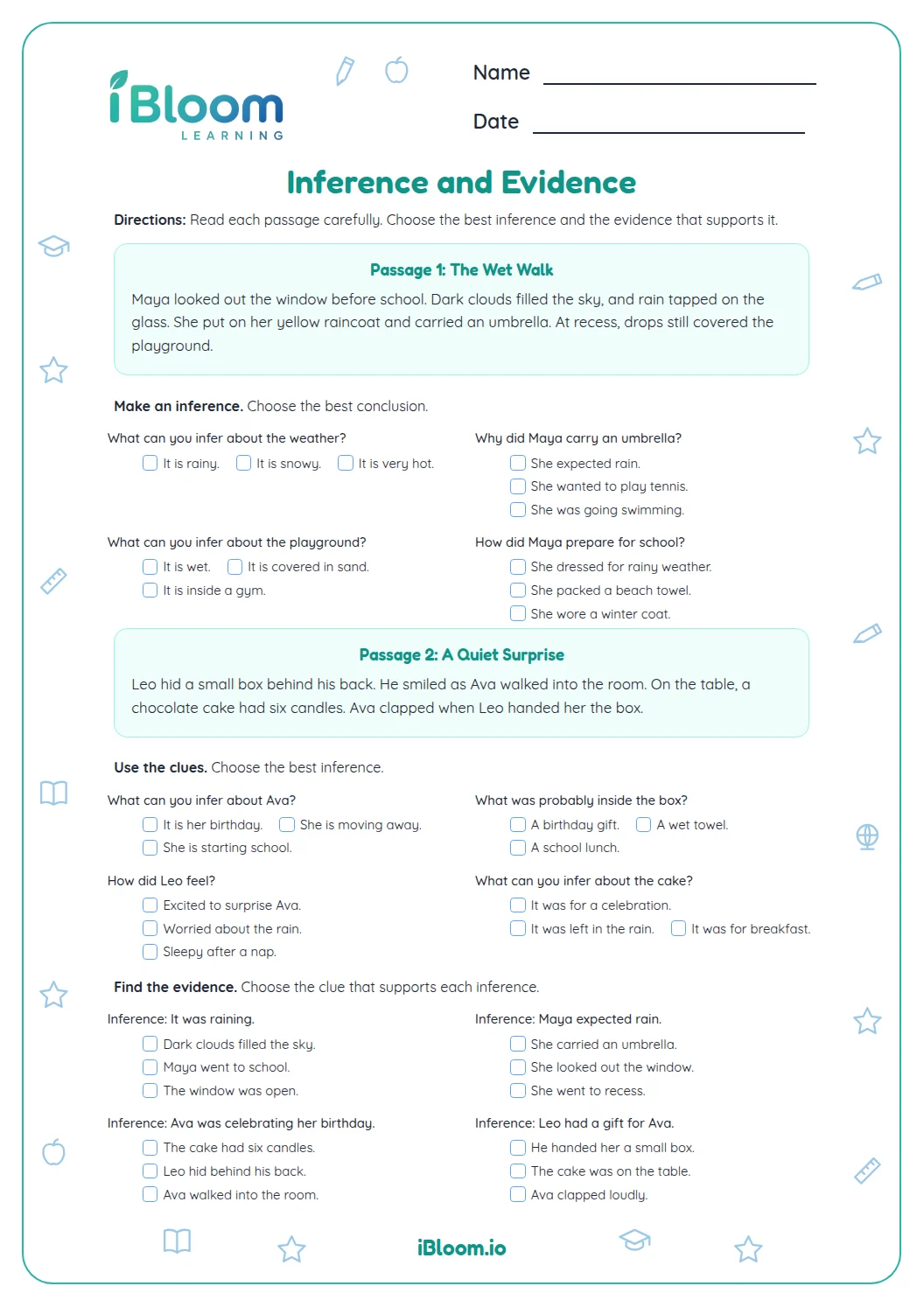
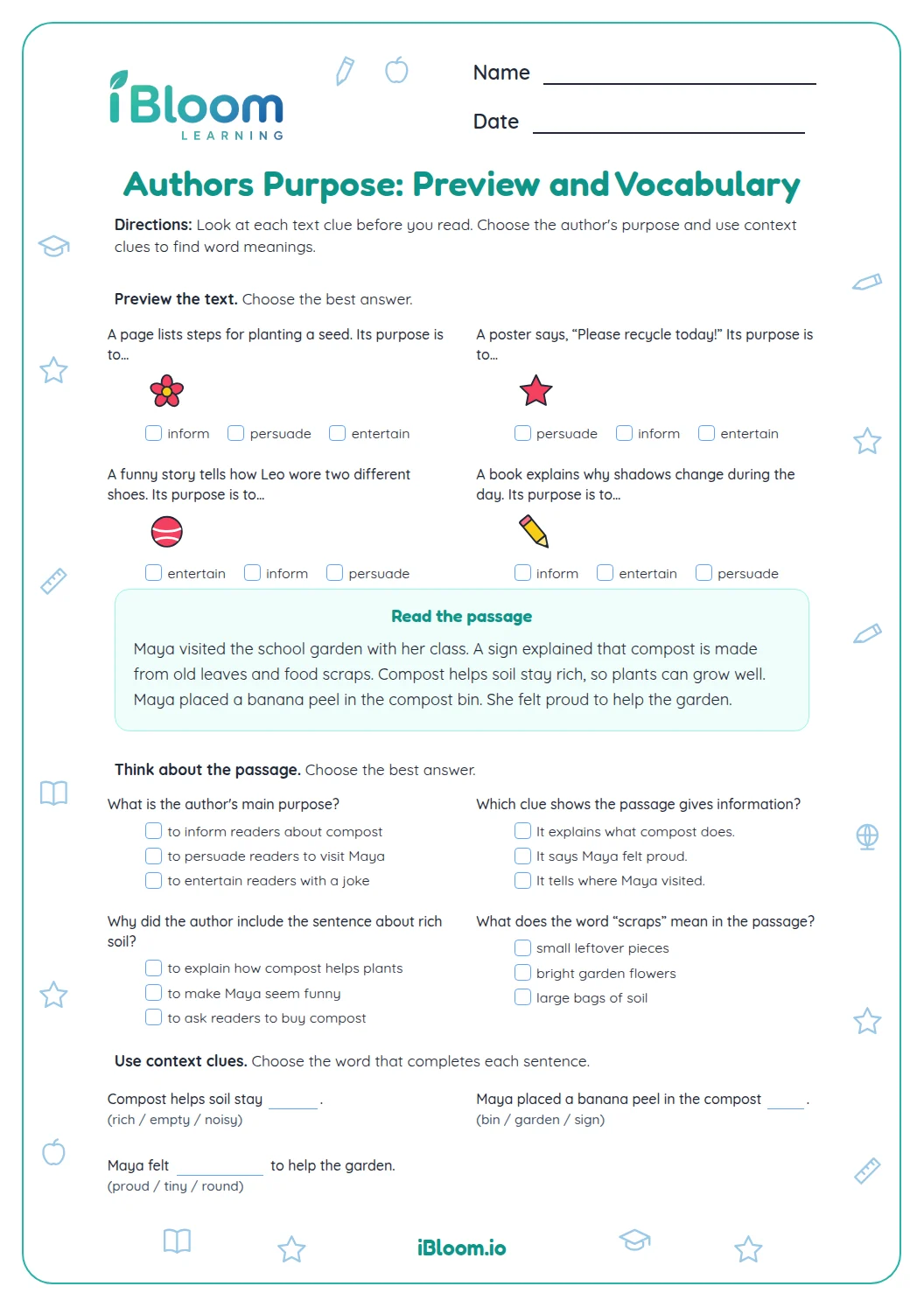


About this worksheet
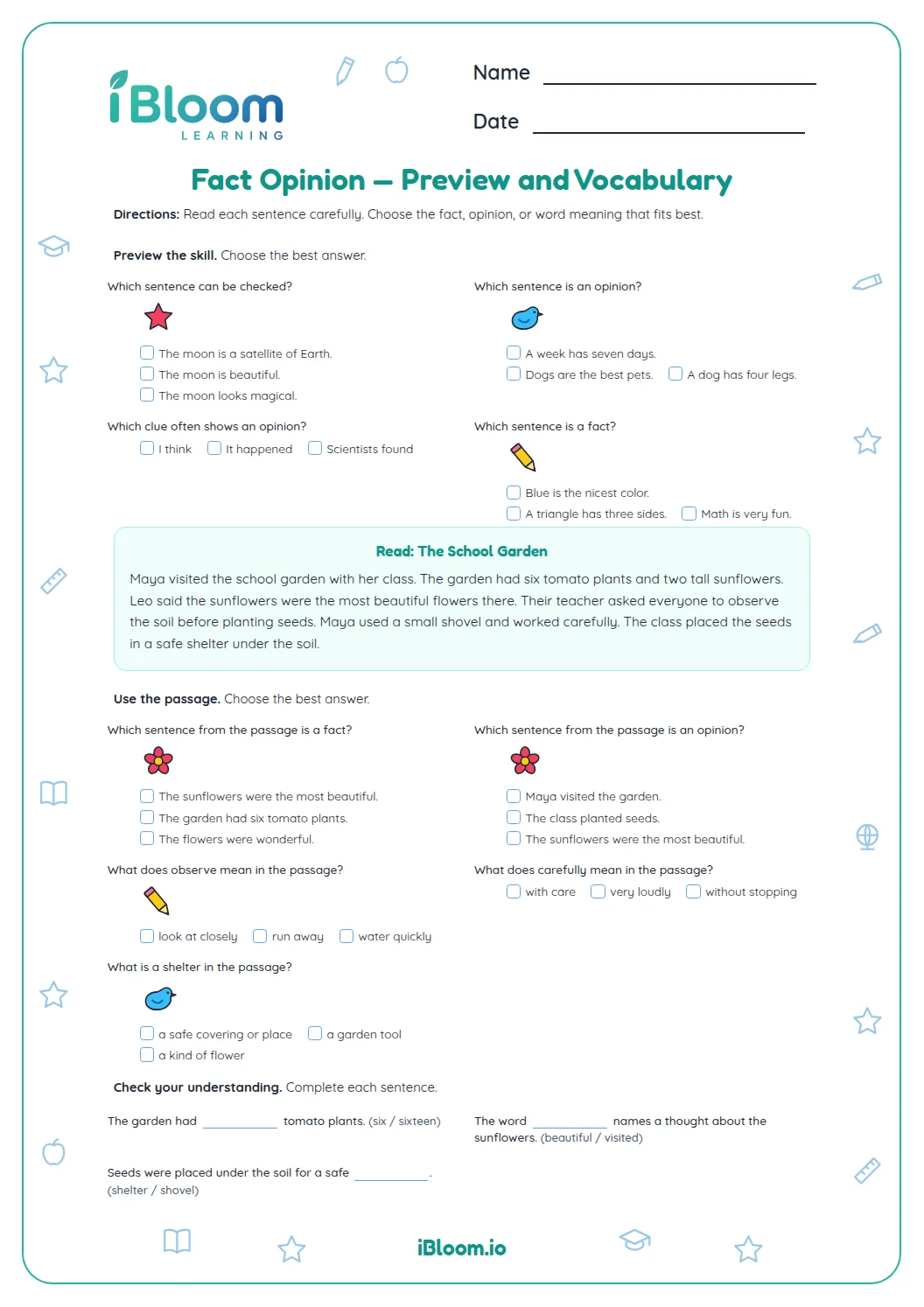
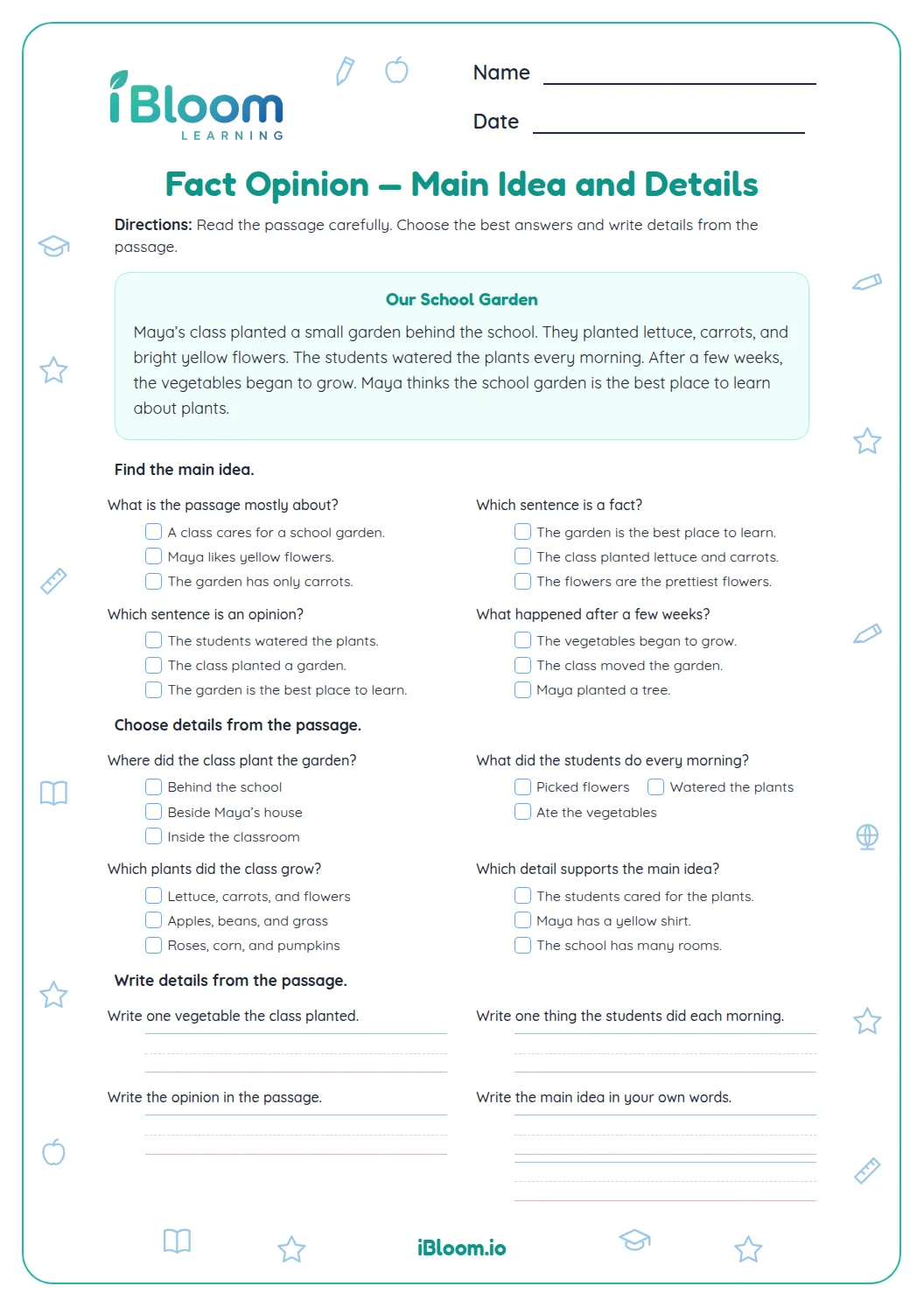
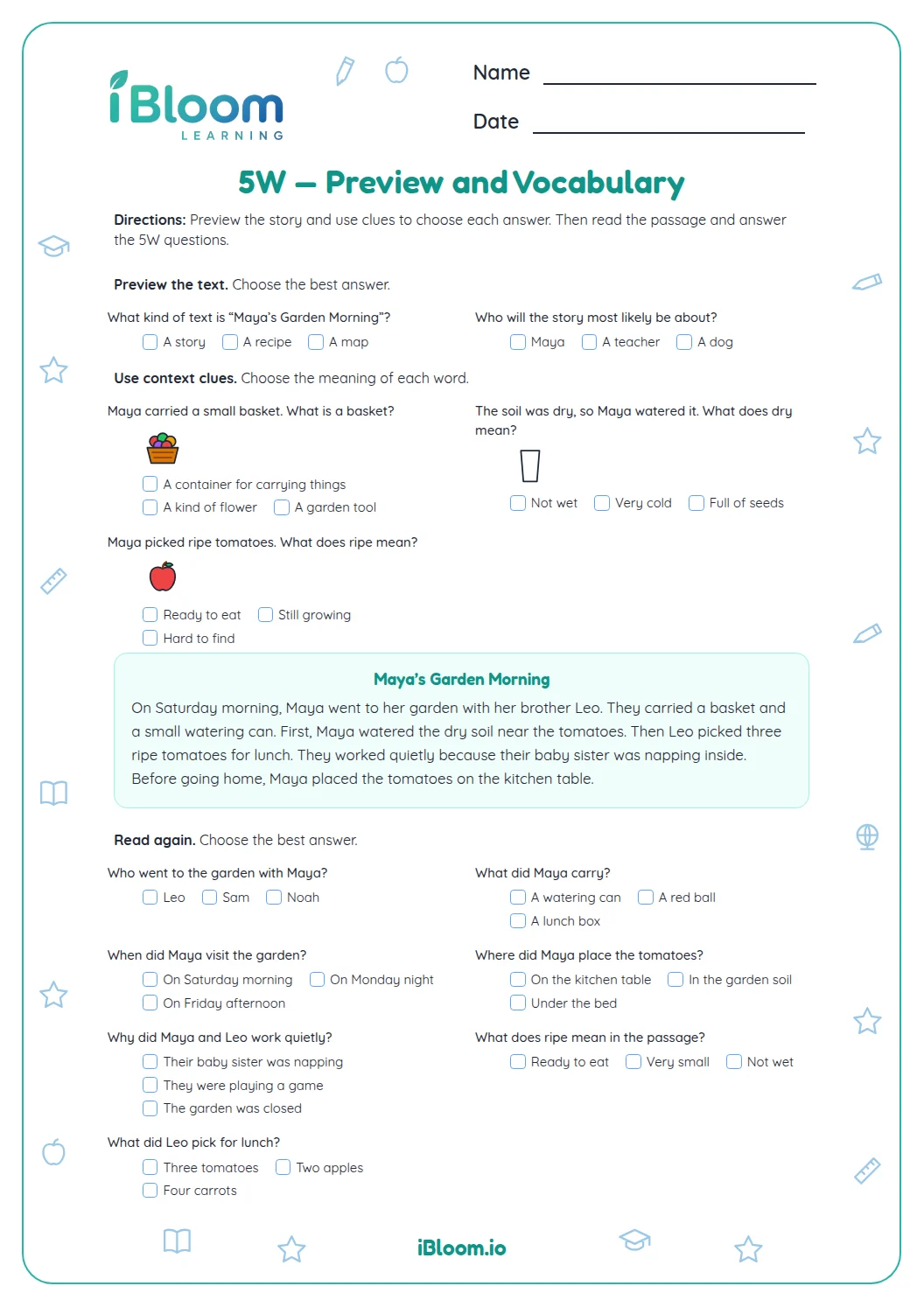
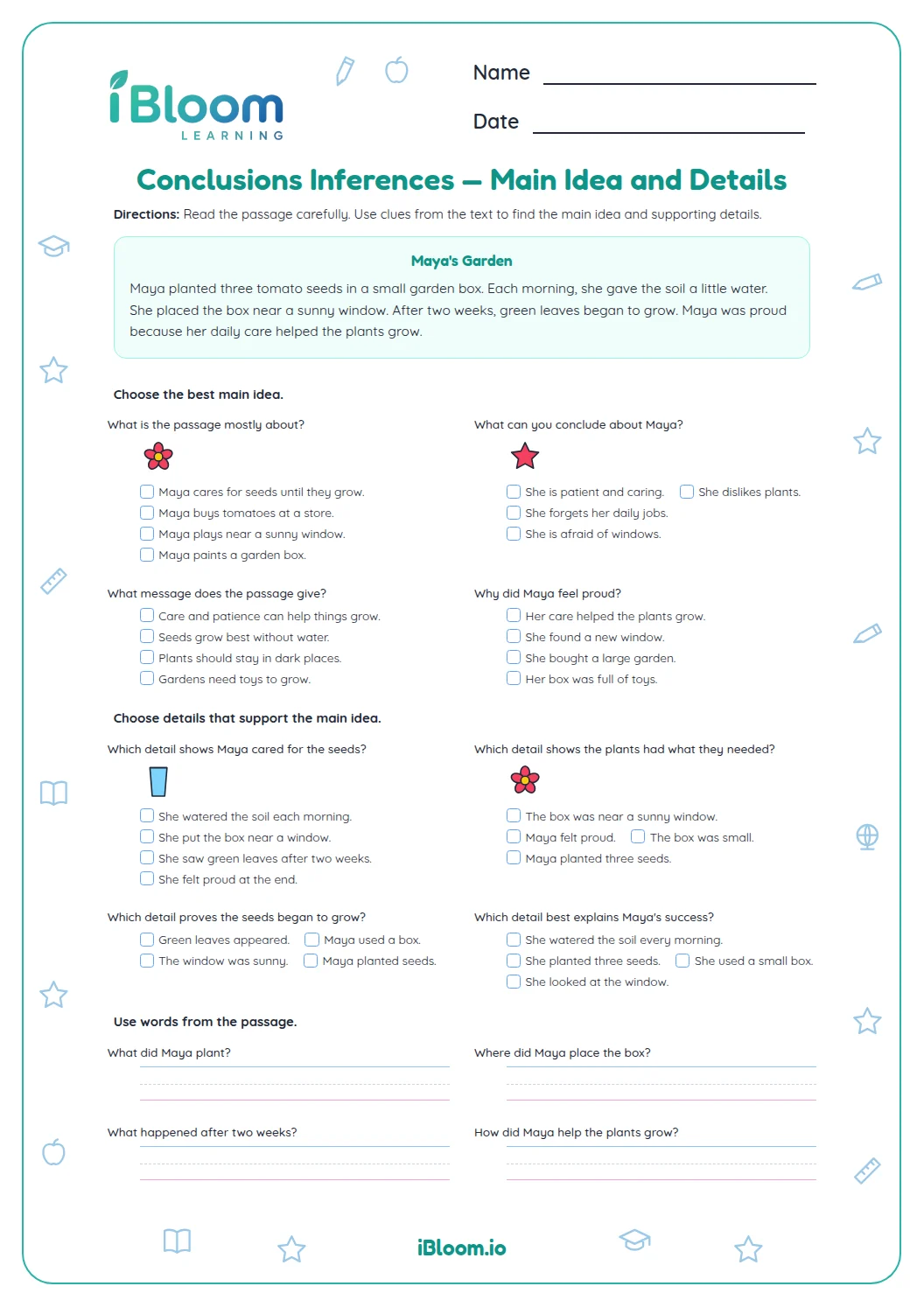
This Grade 2 printable uses a short passage about Room 12’s bean seedlings to practice fact, opinion, inference, and evidence. Children classify statements, infer why students put the cups by a sunny window, and find details that support what they think. The 14 questions refer to the passage so readers can check each answer against its words.
Aligned to RI.2.1
Which statements are facts or opinions?
Part B asks readers to sort six statements. A fact is checkable, such as the number of seeds planted; an opinion expresses a judgment, such as whether the garden is pretty.
What can the garden details help you infer?
Part C asks why students placed the cups near a sunny window and what daily watering suggests. The answer should connect a passage detail to a reasonable idea.
- 1Clue: Each morning, two students watered the cups.
- 2Inference: The students cared for the plants.
- 3The action in the passage supports the inference.
Which detail supports an answer?
Part D returns to the text for evidence. Children identify checkable measurements, actions, and reactions rather than relying on a personal preference.
How to use this worksheet
- 1Read the passage and notice who did each action.
- 2For each statement, ask whether it can be checked or expresses a judgment.
- 3For an inference, name the passage clue first.
- 4Choose evidence that directly supports the idea in the question.
- 5Use a passage detail for the fact in the final response.
Common mistakes and quick fixes
The mistake
Calling a statement an opinion just because it sounds interesting.
The fix
Ask whether the statement can be checked against a measurement or event.
The mistake
Treating an inference as a detail stated word for word.
The fix
Connect a reasonable idea to a specific action or description in the passage.
The mistake
Choosing evidence that is true but unrelated to the answer.
The fix
Check that the selected detail supports the exact inference being made.
Common Core alignment
Children answer who, what, and why questions about a short informational passage and support responses with its details.
Answer questions about the garden passage and use its details to support inferences.
On this sheet: The worksheet questions practice this skill directly.
Show the official wordingHide the official wording
Ask and answer such questions as who, what, where, when, why, and how to demonstrate understanding of key details in a text.
What to practice next
Make more practice
Further reading
Questions parents and teachers ask
What is the difference between a fact and an opinion?
A fact can be checked against evidence, such as the number of seeds or the height Maya measured. An opinion shares a judgment or feeling, such as saying the seedlings are exciting to watch. Readers can return to the classroom garden passage to check the detail behind each answer.
What passage does the worksheet use?
The passage, “A Window Garden,” describes Room 12 planting bean seeds, watering them, measuring a sprout, and planning to move the seedlings outdoors. All 14 questions use details from this classroom garden. Readers can return to the classroom garden passage to check the detail behind each answer.
What does an inference question ask children to do?
An inference question asks readers to connect a stated clue with a reasonable idea. For example, students watering the cups each morning supports the inference that they cared for the plants. Readers can return to the classroom garden passage to check the detail behind each answer.
How can a child choose strong evidence?
Look for a sentence that directly supports the answer. If the inference is that the plants need water, the passage detail about students watering the cups is stronger evidence than the detail about where the cups sat. Readers can return to the classroom garden passage to check the detail behind each answer.
What is in the answer key?
The key identifies the fact and opinion choices, gives supported sample inferences, and lists passage details for evidence questions. The final open response has a sample fact and opinion; other accurate examples are acceptable. Readers can return to the classroom garden passage to check the detail behind each answer.